What Is Clear Braces? In 2023, 17 million people had been treated with clear aligners, up from 10.9 million in 2020 and 5 million in 2018. In everyday language, clear braces is an umbrella term that usually refers to either ceramic fixed brackets or removable clear aligners like Invisalign, and the difference matters for comfort, cost, and daily routine.
A lot of Miami patients ask about this because they want a straighter smile without the look of metal, but they're not always asking about the same treatment. The right answer depends on how much control a case needs, how visible the appliance can be, and how disciplined the patient is willing to be from breakfast to bedtime.
Table of Contents
- What Clear Braces Really Means
- How Ceramic Clear Braces Work
- How Clear Aligners Like Invisalign Work
- Clear Braces vs Clear Aligners Side by Side
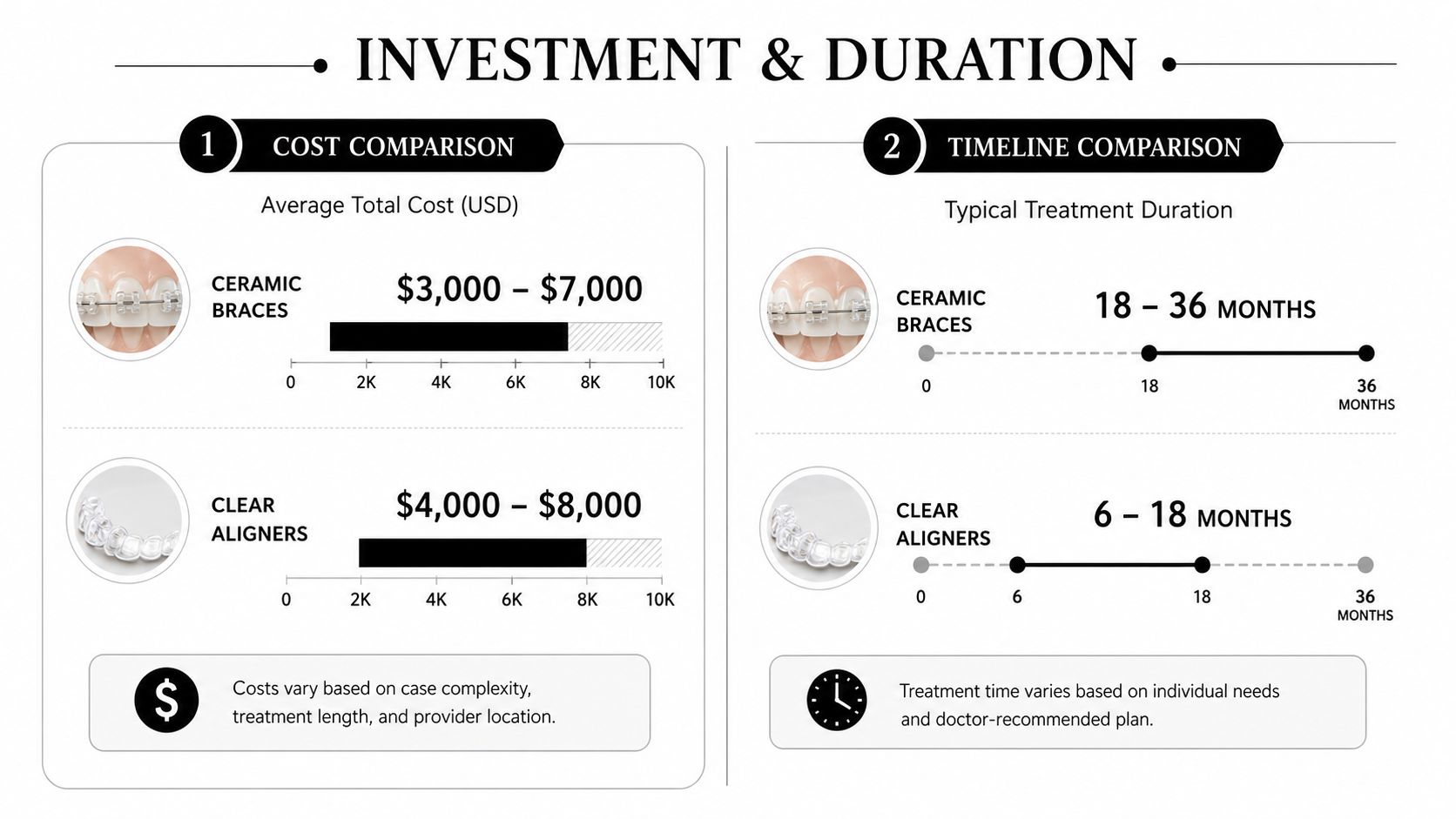
- Cost, Insurance, and Treatment Timelines
- Who Makes a Good Candidate for Each Option
- Maintenance Tips for Long-Lasting Results
- Your Next Step Toward a Clear, Confident Smile in Miami
What Clear Braces Really Means
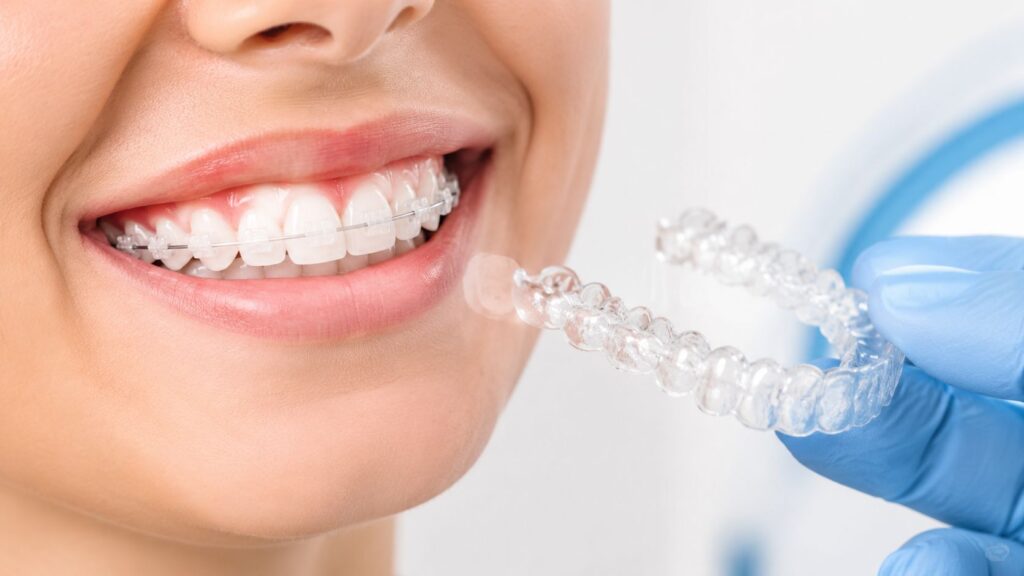
Patients searching what is clear braces usually expect one simple answer, but the term is used in two different ways. In one office, it means ceramic brackets that bond to the teeth and stay fixed in place. In another conversation, it means clear aligners, the removable trays people often associate with Invisalign.
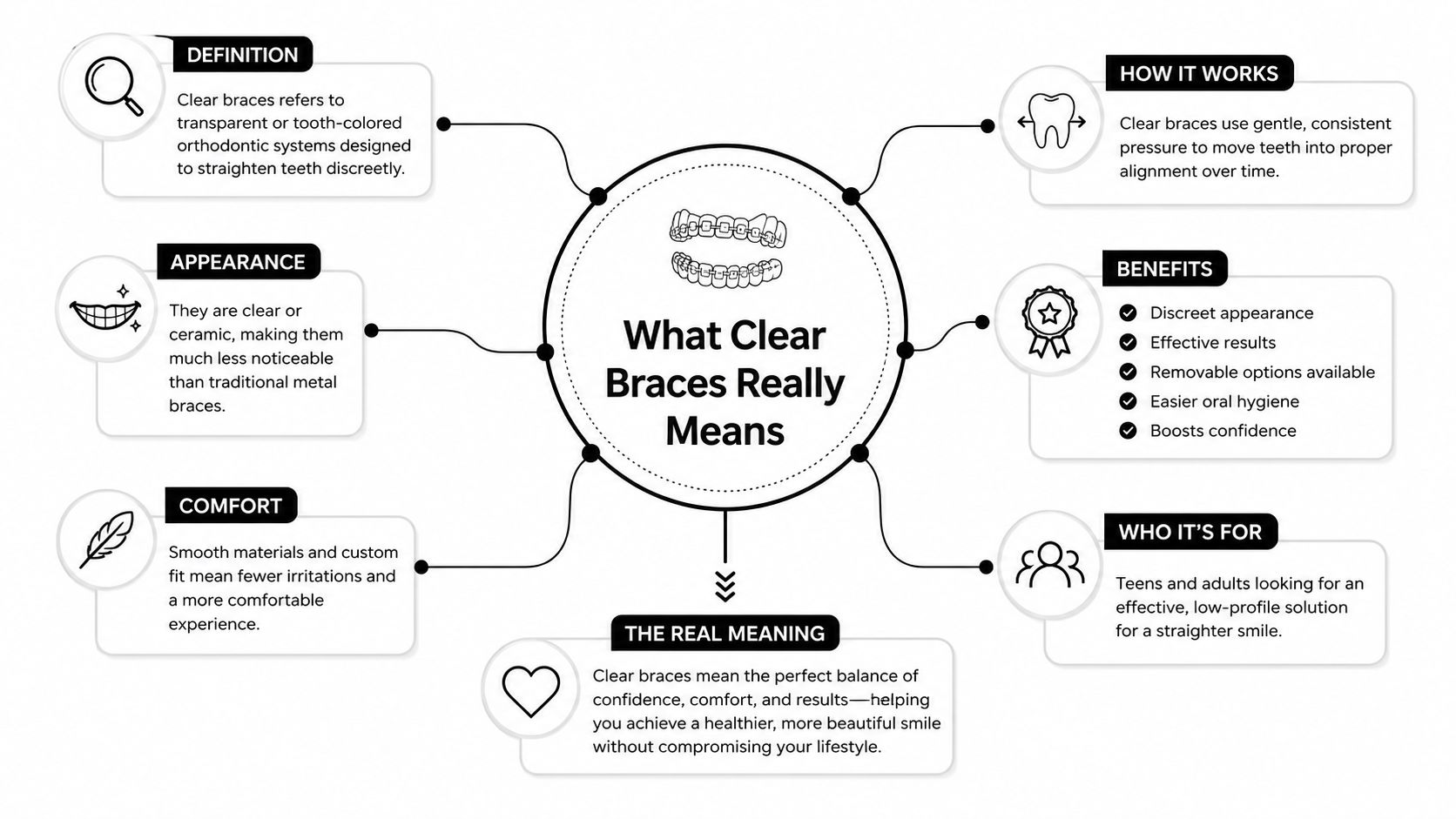
The difference matters because each option fits a different routine. Ceramic braces work like traditional braces, but their tooth-colored or translucent parts make them less noticeable while they stay on the teeth all day. Clear aligners come out for meals and brushing, so they depend more on the patient's daily follow-through. That is why two people can use the same search phrase and still end up with very different treatment plans.
Why the distinction matters in Miami
In Miami, people often want treatment that fits work meetings, dinners out, and family schedules without drawing attention. A patient who needs a fixed appliance and a patient who wants removable trays are not making the same decision, even if both started by typing the same phrase into a search bar. That is why a careful consultation matters before anyone commits.
Practical rule: if the appliance stays on the teeth all day, it is a bracket-and-wire system. If it comes out, it is an aligner system.
Ultra Smile DentalSpa serves Downtown Miami, Midtown Miami, and Hallandale Beach, and that local context helps patients compare options in a real-world way. One treatment may feel easier to manage around work lunches, while the other may feel more reassuring because it cannot be forgotten or removed too often. Once the terminology is clear, the comparison becomes much easier to make.
How Ceramic Clear Braces Work
Ceramic clear braces are built around brackets that bond to the front of each tooth. FDA-cleared descriptions for systems such as 3M Clarity Advanced note a translucent alumina body and a glass-grit bonding base, which is part of why they blend more naturally with tooth color while still holding up under orthodontic force. The bracket is just one part of the system, though. A wire runs through the brackets and guides the teeth into better alignment over time.
The material choice matters because ceramic gives a more discreet look, but it is also harder and more brittle than stainless steel, so manufacturers refine the shape and surface to balance appearance with strength. Some designs also use self-ligating mechanics, which means they do not rely on elastic ties. Ormco's Damon Clear 2 describes this as passive self-ligation, with low ligation force to reduce friction and no elastomerics that can stain or collect bacteria.
What happens at a visit
A ceramic braces visit usually feels familiar to anyone who has seen conventional braces care. The clinician checks each bracket, updates the wire if needed, and makes small adjustments that keep the teeth moving. The appliance stays fixed between visits, so the patient doesn't have to remember to put anything back in after lunch or after brushing.
Simple way to think about it: ceramic braces do the work continuously because they never leave the teeth.
That fixed design is exactly why many patients find them reassuring. There's less room for missed wear time, and the system keeps applying force around the clock. For patients who want a less visible version of braces without relying on tray discipline, that steadiness can be the deciding factor.
How Clear Aligners Like Invisalign Work
Clear aligners are different from braces because they're removable trays rather than fixed brackets and wires. RealSelf notes that aligner trays are usually replaced about every two weeks, and they need to be worn 20 to 22 hours per day except when eating, drinking hot liquids, brushing, and flossing. That routine is what makes them effective, but it also means the patient has more responsibility day to day.
The trays are custom-shaped to the teeth and changed in sequence as treatment progresses. Each new set nudges the teeth a little further, so the overall plan feels staged rather than continuous. That staged approach is appealing to many adults who want a discreet option that doesn't interrupt photos, meetings, or special events.
The daily rhythm
Aligner treatment changes a few ordinary habits. Meals require tray removal, and anything hot needs extra caution because heat can affect the plastic. Brushing and flossing also become more important because the trays cover the teeth for most of the day, and anything trapped underneath stays trapped until the aligners come out.
Patients often like the flexibility, but that flexibility has a condition attached to it. The trays only work as intended when they stay in for the recommended wear time.
Clear aligners can be a good fit for people who want a low-profile look, but they only stay low-profile when they're worn consistently.
Many Miami patients feel this trade-off most sharply. The treatment can feel easier socially, yet it requires more self-management than fixed braces. That difference is often the deciding detail, not the appearance alone.
Clear Braces vs Clear Aligners Side by Side
Ceramic braces and clear aligners can both be subtle, but they don't ask for the same lifestyle. Ceramic braces stay on the teeth all day, while aligners come out for meals and cleaning. That one difference changes everything from how often the appliance can be seen to how much responsibility sits with the patient.
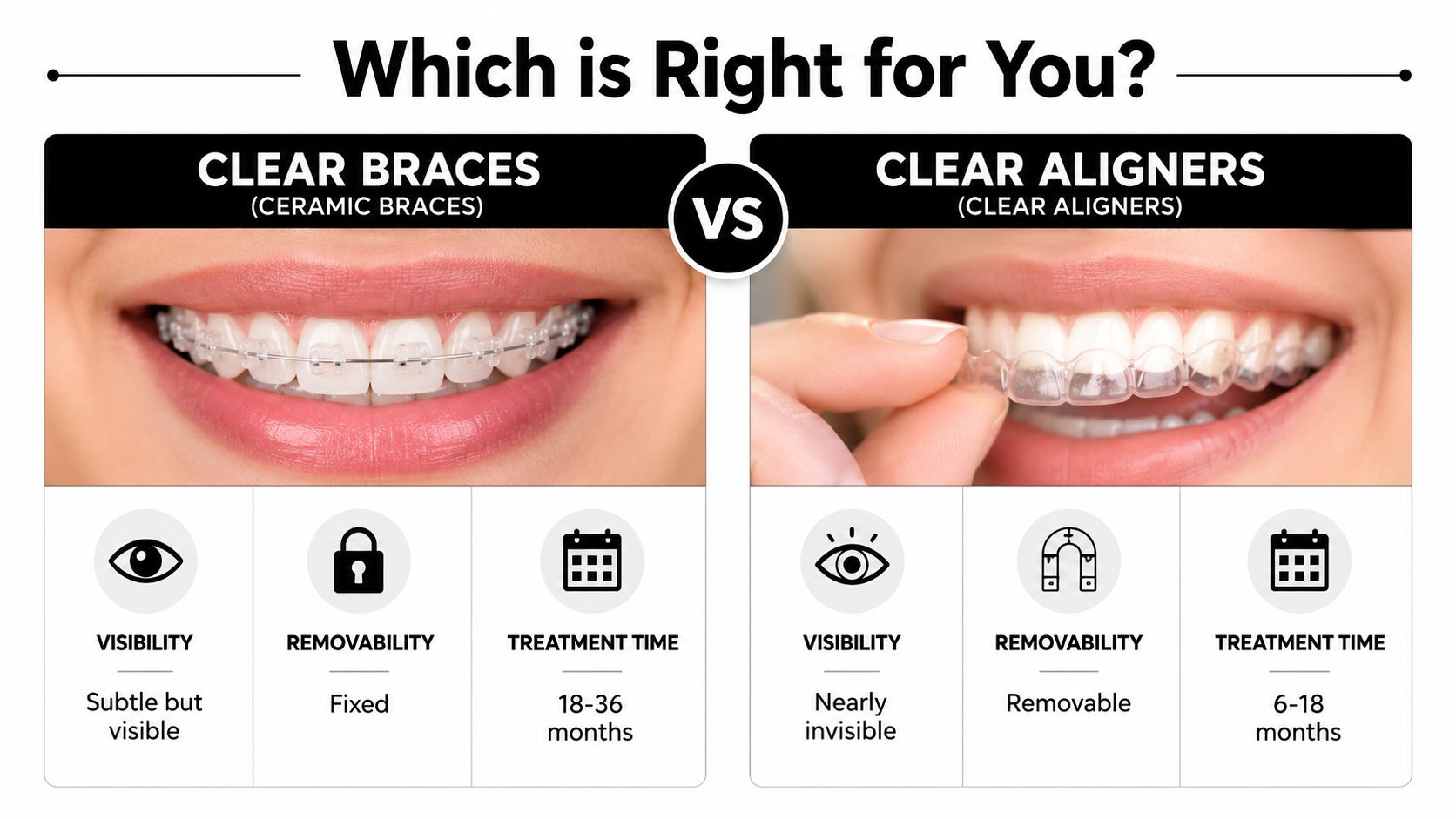
| Factor | Ceramic Clear Braces | Clear Aligners (Invisalign) |
|---|---|---|
| Visibility | Subtle, but still fixed to the teeth | Nearly invisible in many settings |
| Removability | Fixed | Removable |
| Eating | No removal needed, but food care matters | Removed for meals |
| Cleaning | Brushing around brackets and wire | Trays and teeth need regular cleaning |
| Follow-up | Regular adjustment visits | Tray checks and progress visits |
| Discipline | Lower daily compliance burden | Higher daily compliance burden |
A helpful way to choose is to ask what would be harder to forget. For some patients, remembering to wear trays for most of the day feels easy. For others, that same requirement becomes the weak point, and fixed braces feel more reliable.
An orthodontic consult can clarify whether the bite is simple enough for aligners or better served by brackets. Ultra Smile DentalSpa also references its Invisalign vs braces comparison for patients who want a deeper side-by-side look: Invisalign vs braces guide.
Cost, Insurance, and Treatment Timelines
Money and time often shape the final choice as much as appearance does. In the broader orthodontic market, the clear aligner segment was estimated at $5.13 billion in 2023 within an invisible orthodontics market of $6.1 billion ConsumerAffairs statistics, which shows how central aligner-style treatment has become in modern care. Even with that growth, the cost for any one patient still depends on the case itself, not the trend line.
What affects the total
The main factors are case complexity, treatment length, materials, and insurance coverage. A simpler smile correction usually asks for less chair time and fewer visits than a more involved bite correction. More complex movement tends to take longer and require more monitoring, whichever appliance is chosen.
A review in 2024 reported average treatment times of 18 months for Invisalign versus 24 months for conventional braces, with effectiveness rates of 88% for Invisalign versus 90% for conventional braces PMC review. Those numbers suggest that both approaches can work well in many mild-to-moderate cases, but the daily routine and timeline can still differ. The same review also reported 92% compliance at 12 months in the clear aligner group versus 87% with traditional braces, although the difference was not statistically significant, as noted above.
Patients usually make the best decision when they budget for the treatment they can realistically follow, not just the one that sounds simplest at first.
Ultra Smile DentalSpa supports transparent treatment planning and accepts insurance, which helps patients map out the practical side of care before they begin. For busy people near Downtown Miami, Midtown Miami, and Hallandale Beach, that early planning can make orthodontic treatment easier to schedule around work and family life.
Who Makes a Good Candidate for Each Option
The right appliance usually comes down to the bite, the routine, and how much control the treatment needs. Clear aligners tend to fit patients who can wear trays consistently and whose alignment needs are mild to moderate. Ceramic braces often make more sense when steady, fixed force is the safer choice or when the patient wants less daily responsibility.
Adults often lean toward discreet treatment because they're in meetings, client-facing roles, or family photos more often than they'd like to think about. Teens may like the less visible look too, especially when parents want treatment that feels more acceptable at school and in social settings. Patients who have had orthodontic relapse in the past may prefer the structure of fixed brackets if compliance has been a challenge before.
A simple candidacy check
- Choose ceramic braces when: the teeth need fixed, steady movement, the patient wants less day-to-day upkeep, or the routine is too unpredictable for tray wear.
- Choose aligners when: the case is appropriate for removable treatment, the patient can wear trays most of the day, and flexible eating or brushing matters a lot.
- Ask about other dental needs first: active decay, gum disease, and unstable restorations should be addressed before tooth movement starts.
Dr. Neda Bahmadi, DMD, and the team at Ultra Smile DentalSpa can also coordinate orthodontic planning with other care such as cleanings and exams, dental x-rays, cosmetic dentistry, restorative dentistry, dental implants, tooth extraction, and emergency dentist visits when those services are needed in the same overall treatment plan. That coordinated approach matters because orthodontics works best when the mouth is healthy first.
Maintenance Tips for Long-Lasting Results
Treatment doesn't end when the appliance comes off. The protection comes from daily habits that keep the teeth, gums, and final alignment stable over time. Ceramic brackets need careful brushing around the wire and around the edges of the brackets, while aligner trays need to stay clear and clean so they don't trap residue or odors.
Patients who wear aligners should remove them for meals and avoid leaving them out too long. Patients with ceramic braces should be careful with foods that can pull on the wire or make cleaning harder, because the appliance stays fixed and collects more debris than a smooth tooth surface does. Retainers then help hold the new position after treatment, which is the step that keeps the smile from slowly drifting back.
A helpful habit is to treat oral hygiene like part of the orthodontic appointment itself. That means brushing well, cleaning between teeth, and following the wearing schedule exactly as prescribed.
Maintenance is what protects the money and time already invested in treatment.
For patients who want a practical cleaning guide for trays, Ultra Smile DentalSpa also offers a dedicated resource on aligner care: how to clean Invisalign aligners. Patients who complete treatment at the practice also receive complimentary yearly whitening, which helps keep the final smile bright after orthodontic work is finished.

Your Next Step Toward a Clear, Confident Smile in Miami
The biggest difference is still simple. Ceramic clear braces are fixed brackets that stay on the teeth all day, while clear aligners are removable trays that depend on consistent wear. One option gives the clinician more built-in control, and the other gives the patient more flexibility.
For Miami patients, that choice usually comes down to lifestyle, bite complexity, and how visible the appliance can be during the workweek. Someone who wants a set-it-and-forget-it routine may prefer ceramic braces. Someone who values removability for meals and brushing may feel more comfortable with aligners.
Ultra Smile DentalSpa in Downtown Miami, Midtown Miami, and Hallandale Beach provides personalized orthodontic planning in a calm, spa-like setting. The team can help sort out which treatment fits the smile, the schedule, and the long-term goals.
Ultra Smile DentalSpa helps Miami patients compare ceramic clear braces and clear aligners with a treatment plan built around real daily life. If the next step is a straighter smile with guidance from a dentist in Miami, FL, visit Ultra Smile DentalSpa to schedule a consultation and find out which option fits the bite, the routine, and the look that feels right.