Starting Invisalign is exciting, but most patients in Miami have the same immediate question after they leave the office with their first set of trays, how do you keep these aligners clear, comfortable, and working the way they should? The answer is simpler than it sounds, but it matters every day. Clean aligners help protect the cosmetic results you're investing in, and they also help keep your mouth healthier while treatment moves forward.
For those seeking a dentist near me, dentist in Miami, FL, or a cosmetic dentist near me, aligner care is part of the treatment, not an afterthought. At Ultra Smile DentalSpa, patients in Downtown Miami, Midtown Miami, and Hallandale Beach often ask how to keep Invisalign from getting cloudy, smelly, or scratched. The good news is that the best routine is usually gentle, consistent, and easy to build into a normal morning and night.
Table of Contents
- Your Guide to Clean Invisalign from a Miami Dentist
- Creating Your Simple Daily Aligner Cleaning Routine
- Deep Cleaning Methods for Stubborn Buildup
- Common Aligner Cleaning Mistakes to Avoid
- The Link Between Clean Aligners and Your Oral Health
- Partner with Your Miami Dentist for a Perfect Smile
Your Guide to Clean Invisalign from a Miami Dentist
At Ultra Smile DentalSpa, we remind new Invisalign patients that aligner care becomes part of daily life right away. The trays come out for meals, go into a case or pocket between uses, and go back in after brushing. That routine may feel minor, but it affects whether the aligners stay clear, comfortable, and discreet or start to look cloudy and worn.
Our recommendation is simple. Rinse the aligners every time they come out, then clean them more thoroughly once a day with gentle care. A basic routine usually includes a rinse with water, a careful pass with a soft-bristled toothbrush and clear liquid soap, then another rinse before the trays go back into their case. We advise patients to keep the process consistent, because consistency protects both the aligners and the treatment plan.
Why the routine matters so much
Clear aligners are meant to stay subtle, but buildup changes both their appearance and their feel. Abrasion and residue retention can affect the finish of the trays and make them less pleasant to wear over time Vizcaya Dental Arts. A gentle routine prevents that kind of wear better than any aggressive scrubbing ever will.
Practical rule: if an aligner has been out of the mouth, rinse it before it dries out.
That small habit keeps plaque and saliva from setting on the plastic, where they become harder to remove later. It also helps the trays feel cleaner and more comfortable when they go back in. In Miami, where patients move from work to meals to evening plans, a quick rinse is usually easier to keep up than a complicated cleaning method.
We see Invisalign as part of a larger cosmetic dentistry investment. Clean aligners help protect the appearance of the trays and the rhythm of treatment. That matters whether the goal is a straighter smile, a future teeth whitening visit, or a broader smile makeover supported by restorative dentistry.
Creating Your Simple Daily Aligner Cleaning Routine
A good daily routine does not need special equipment or a long checklist. It needs consistency, cool water, and a gentle touch. The goal is to clear away saliva, plaque, and tiny food particles before they dry on the plastic, because dried residue is much harder to remove later.
The morning and evening sequence
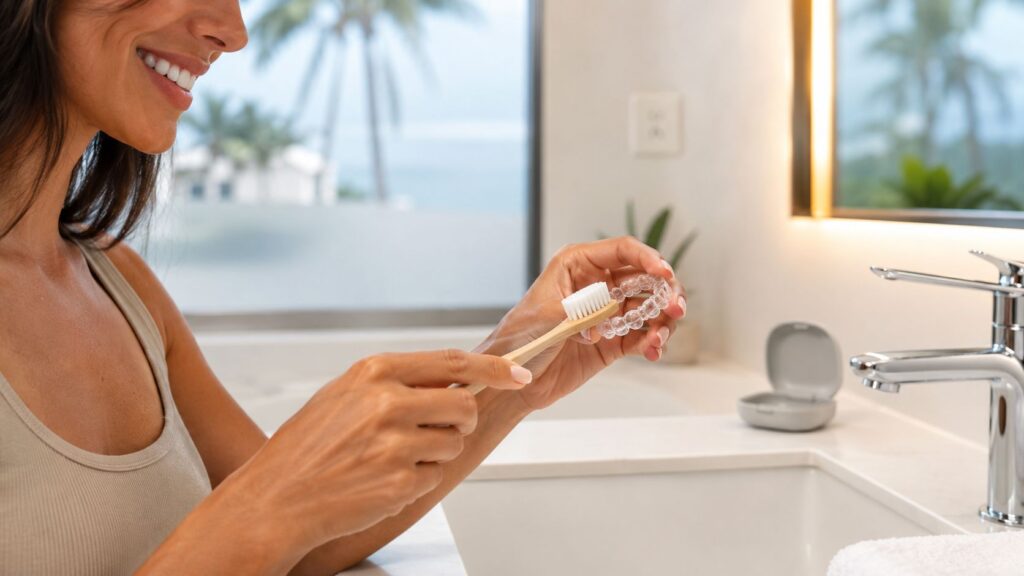
Start with a cool or barely lukewarm rinse every time the aligners come out. Then use a separate soft-bristled toothbrush reserved for the aligners, along with clear, unscented soap or gentle liquid soap Freeman Ortho. After brushing, rinse thoroughly so no soap film stays behind. This simple sequence gives the trays a clean surface without the kind of aggressive scrubbing that can dull the finish.
The final step is storage. Aligners should go into their case whenever they are not in the mouth. Leaving them on a napkin, counter, or sink edge makes them easy to lose and exposes them to more contamination than many patients realize.
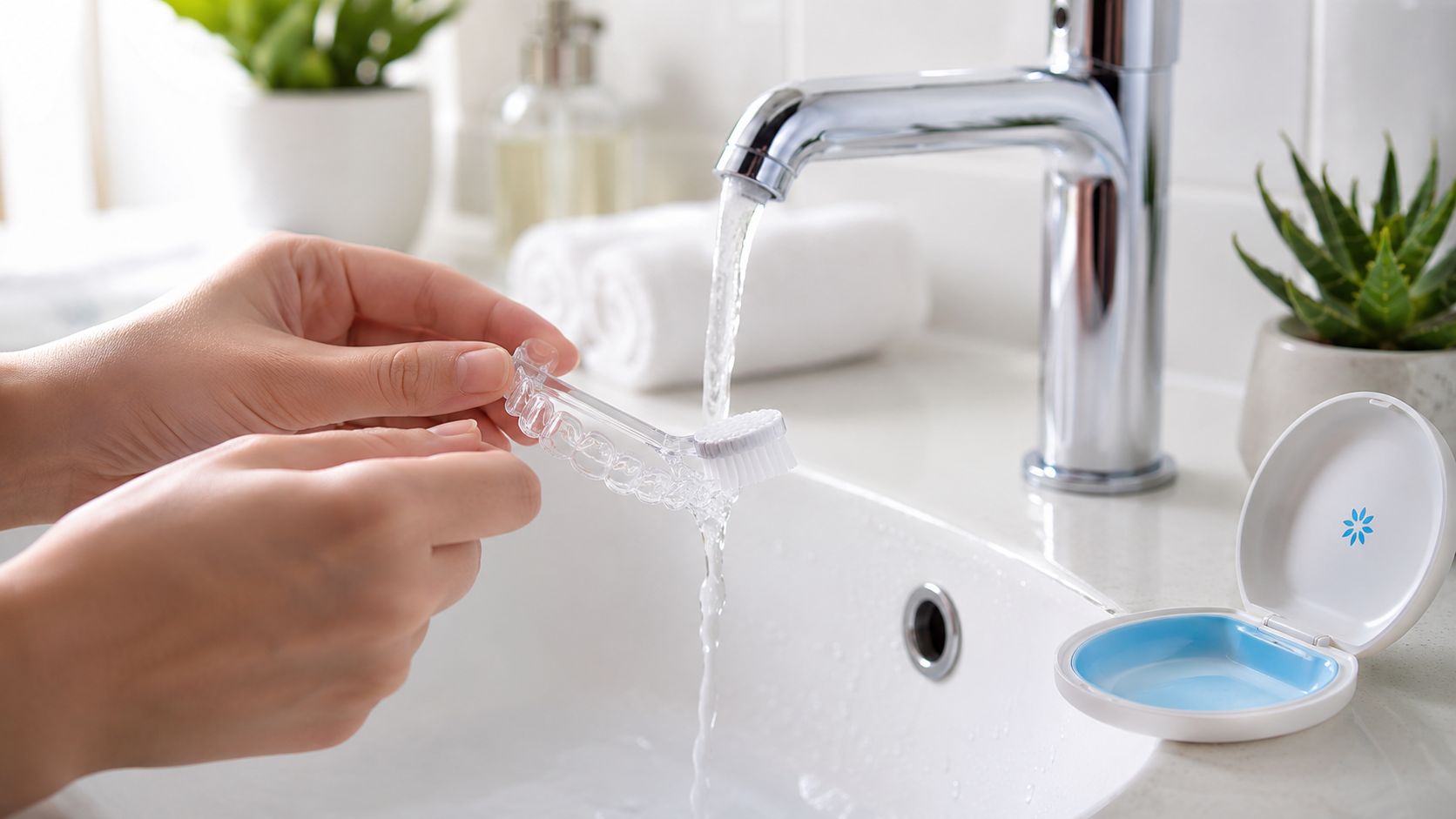
A useful way to remember the routine is simple, rinse fast, clean gently, rinse fully, store safely. It does not need to be dramatic to work. The habits that last are usually the ones that fit naturally into brushing and flossing at home.
For our patients moving between the office, lunch, and evening plans in Brickell or Midtown, it helps to keep a small aligner brush and travel case in the bag you already carry. That makes it easier to clean trays after coffee, after meals, or before heading back out. It also lowers the chance of putting the aligners back in while they still have visible residue on them.
The routine works because it stays gentle. A soft brush lifts the film from the surface without scratching it, and unscented soap helps clean without leaving extra residue. That balance matters more than trying to make the trays look polished with harsh products.
Deep Cleaning Methods for Stubborn Buildup
A tray that still looks cloudy after normal cleaning usually needs a soak, not more brushing. Lingering odor, dullness, or a light film often come from buildup that a gentle daily rinse will not fully remove. That matters because aggressive scrubbing can wear down the plastic surface and make the aligners harder to keep clean over time.
Safe soaking options
Dental guidance supports weekly deep-clean soaking for about 15 to 30 minutes using aligner-safe solutions Freeman Ortho. Common options include Invisalign Cleaning Crystals, diluted white vinegar, or diluted hydrogen peroxide, followed by a thorough rinse before reinsertion.
At our Miami practice, we find that a weekly 15-minute soak with Invisalign Cleaning Crystals is the most effective and safest option for most of our patients. It gives the trays a deeper clean without pushing the plastic too hard, and that helps protect both comfort and fit.
The water temperature still matters. Hot water can deform thermoplastic aligners, so the soak should stay cool to barely warm, never steaming. That protects the custom fit, which is the whole point of clear aligner treatment.
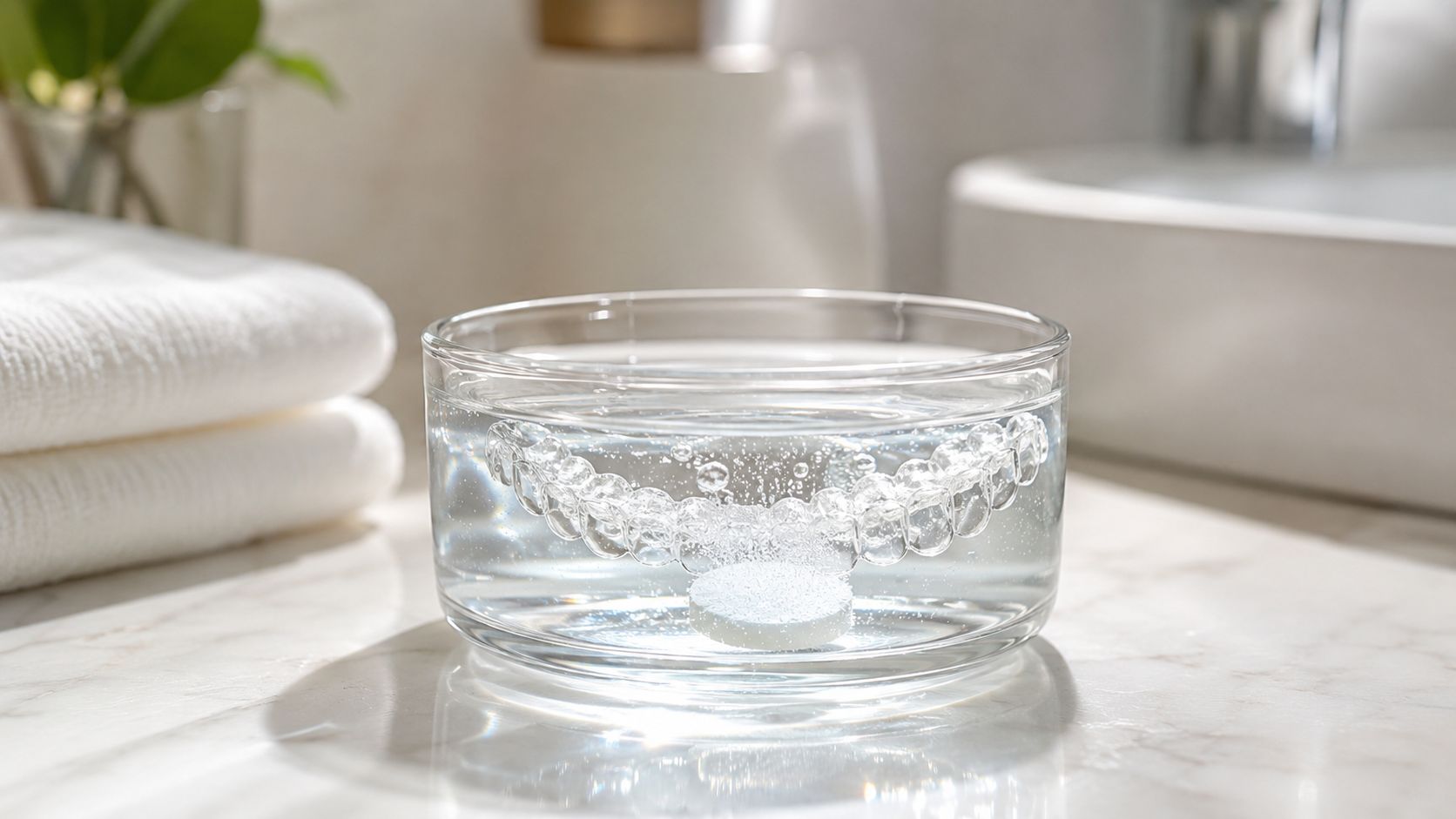
Soaking works best when brushing is no longer enough. Minor mineral deposits, faint odor, or trays that have started to look dull usually respond well to a periodic soak. Brushing keeps up with daily plaque, while soaking gives the aligners a reset.
What a deep clean should feel like
The tray should come out clean, not slick or tacky. If cleaner is left behind, it can irritate the soft tissue and make patients less comfortable wearing the aligners as directed. A careful rinse matters just as much as the soak itself.
Some patients try to fix buildup by scrubbing harder. That trade-off usually causes more problems than it solves. Gentle soaking does the main work, and brushing stays in the daily maintenance role.
The goal is to remove buildup without changing the plastic surface.
That distinction matters because aligners depend on their exact shape and surface quality. If the tray warps or develops microscopic roughness, it can stop feeling as precise as it did on day one.
Common Aligner Cleaning Mistakes to Avoid
A clean aligner routine can go wrong when a shortcut seems harmless. We regularly remind patients that the tray is thin, custom-made plastic, so the wrong habit can leave it scratched, warped, or harder to keep fresh. Good aligner care protects both comfort and the result you are paying for.
The habits that cause the most trouble
- Using toothpaste: Toothpaste is a common choice, but its abrasive texture can scratch the aligner surface. Those fine scratches can hold onto stain and buildup more easily YouTube.
- Using hot water: Heat can warp aligners and change the fit, which can affect comfort and make hygiene less reliable.
- Skipping the rinse after soap: If cleanser is left behind, it can linger on the tray and irritate the mouth, so the final rinse matters.
- Relying on harsh cleaners: Strong chemicals are not made for aligner plastic and can damage the tray.
- Brushing with the wrong tool: A separate soft toothbrush works better than a stiff brush or anything meant for heavy scrubbing.
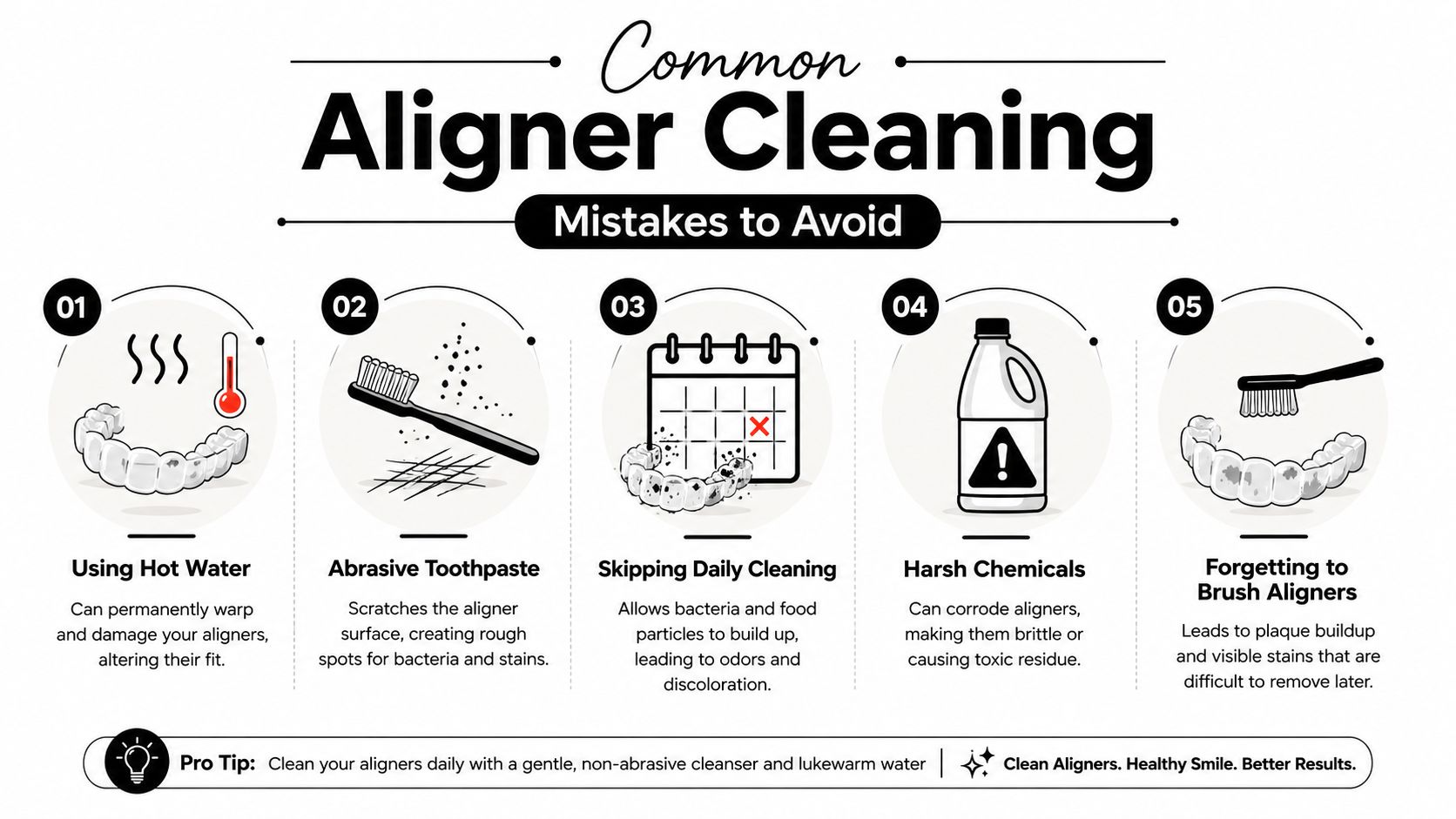
Toothpaste gets singled out for a simple reason. It is designed for enamel, not thin plastic. That abrasive action can leave tiny scratches behind, and those scratches give residue a place to settle.
Hot water creates a different problem. If the tray softens even a little, it can lose the exact shape that makes Invisalign work properly. Once that fit changes, the aligner may not seat the way it should.
Use products made for gentle cleaning, not for whitening, bleaching, or heavy polishing.
We consistently advise patients to choose the simplest option that protects the tray surface and keeps the fit intact. Invisalign works best when the aligner stays smooth, clear, and true to form, so every cleaning choice should support that result.
The Link Between Clean Aligners and Your Oral Health
Clean aligners do more than look better. They help reduce the chance that plaque and residue get trapped against the teeth for long stretches of the day. That matters because clear aligners sit directly over the teeth, so whatever remains on the tooth or tray surface has a chance to stay there longer.
Why hygiene and aesthetics move together
The main failure modes are abrasion and residue retention, and abrasive cleaners can create microscopic roughness that traps plaque and stains more easily Vizcaya Dental Arts. That doesn't just change how the trays look. It can also make them harder to keep fresh and comfortable.
When aligners stay dirty, the cosmetic downside becomes obvious quickly. Cloudy trays are more noticeable, and residue can interfere with the clean, discreet appearance patients expect from Invisalign. For someone investing in a straighter smile, that visual clarity is part of the treatment value.
The oral health side matters just as much. Patients should still brush and floss their teeth before putting the trays back in, because clean aligners can't compensate for plaque already on the teeth. For additional prevention guidance, patients can review Ultra Smile DentalSpa's cavity-prevention advice and bring those habits into the same routine.
Regular checkups also remain important during Invisalign. A professional cleaning and exam can catch plaque buildup, soft spots, or gum irritation before they interfere with treatment. That's especially useful for patients balancing cosmetic care, restorative dentistry, and busy schedules around Miami.
A clean aligner routine protects both the mouth and the investment. It helps keep the trays discreet, the teeth healthier, and the overall treatment on track.
Partner with Your Miami Dentist for a Perfect Smile
A strong home routine goes a long way, but some situations deserve a dentist's attention. A cracked aligner, a tray that suddenly feels off, or discomfort that doesn't settle down are all reasons to call the office instead of trying to push through. The same is true if an aligner has warped, won't seat correctly, or keeps coming out cloudy despite careful cleaning.
For patients in Downtown Miami, Midtown Miami, and Hallandale Beach, Ultra Smile DentalSpa pairs Invisalign care with a calm, spa-like setting and a cosmetic dentistry approach focused on comfort and results. Dr. Neda Bahmadi and the team help patients protect the appearance of their aligners while keeping treatment aligned with the larger smile goal, whether that includes Invisalign, teeth whitening, veneers, dental implants, or other restorative care.
The practice also understands that aligner questions don't usually happen in a vacuum. Patients often want to know how Invisalign fits with travel, work, oral health, or longer smile plans. That's why treatment guidance matters from the first tray to the final refinement.
For a broader look at treatment pacing and what comes next, patients can review the Invisalign treatment timeline. It's a helpful next step for anyone who wants to understand how daily cleaning supports the full course of care.
If you're looking for a dentist near me or emergency dentist in Miami who can help with Invisalign, smile makeovers, or related dental needs, reach out to Ultra Smile DentalSpa and schedule a consultation. A clean tray routine starts at home, but the best results come from pairing it with experienced local dental care.