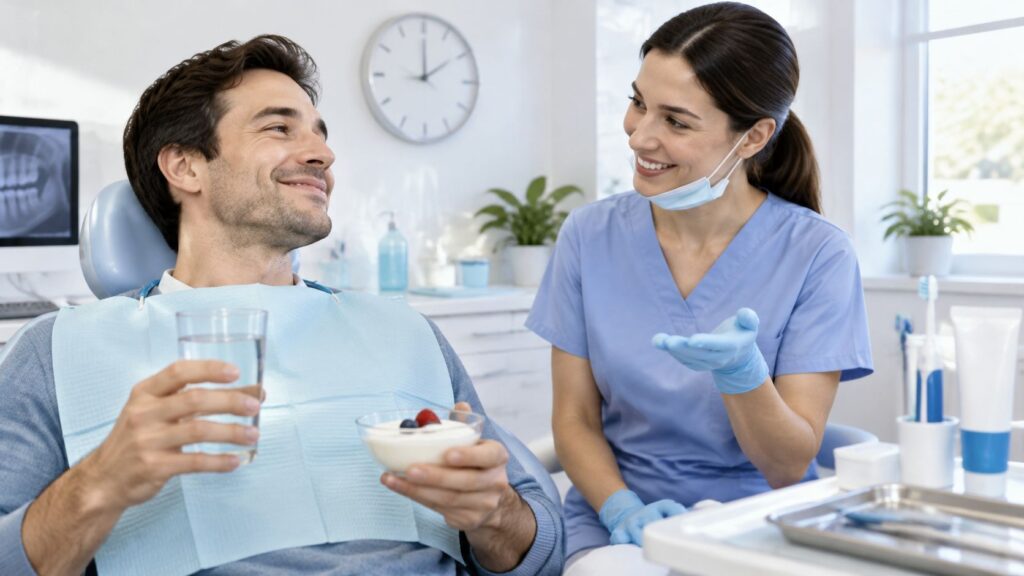
Wait at least 30 minutes after fluoride varnish before eating or drinking, and wait until numbness has fully faded after a numbing injection. A routine cleaning without fluoride has no set waiting time, so most patients can eat once they feel comfortable.
Why do so many guides give one waiting time for every appointment if the treatment in the chair is what changes the answer? A cleaning, a fluoride application and a numbing injection are separate steps, and each one sets a different rule for the next meal. That distinction matters for busy adults in Miami, FL who schedule lunch, coffee or work around a visit with a dentist near me search still open on a phone. Understanding eating after teeth cleaning starts with one simple check. What happened during the appointment?
Table of Contents
- When It Is Safe to Eat After a Teeth Cleaning
- Steps and Foods That Protect Fluoride Varnish
- Sensitivity, Numbness and Stains After Cleaning
- What to Expect at Your Visit in Miami
- Keep Results Between Visits and Book Your Cleaning
When It Is Safe to Eat After a Teeth Cleaning
A routine cleaning on its own does not require fasting. Scaling removes plaque and tartar, polishing smooths the surface, and neither step leaves a coating that food can ruin. Patients who had only those steps can usually eat once the mouth feels normal, starting gently if gums feel tender.
Fluoride changes the timing. The American Dental Association fluoride evidence review states that professional fluoride treatments generally take only a few minutes and may use a solution, gel, foam or varnish, and patients may be instructed not to rinse, eat or drink for at least 30 minutes. That pause keeps fluoride in contact with enamel, and the product manufacturer's recommended period can be longer.
Waiting Time Before Eating by Treatment Received
| Treatment received | Wait before eating | Food and drink limits | Brushing |
|---|---|---|---|
| Cleaning only, no fluoride | No set wait; eat once comfortable | No special limits | Brush as usual |
| Cleaning with fluoride varnish | At least 30 minutes | Soft, cool foods; avoid hard, crunchy, sticky or very hot items for at least four hours | Evening brushing only if instructed; normal brushing the next morning |
| Cleaning with numbing injection | Wait until numbness has fully worn off | Cool or lukewarm food and drinks until feeling returns | Brush as usual once numbness is gone |
| Varnish and numbing together | Wait for numbness to fade, then at least 30 minutes | Follow both sets of limits | Normal brushing the next morning |
Numbness sets a different kind of limit. Reduced feeling makes it easy to bite a cheek, lip or tongue without noticing, and hot food can burn tissue that cannot sense heat. Eating should wait until sensation has fully returned, even if that takes longer than the fluoride pause.
A Common Mistake on the Way Out
Say a patient leaves a midday appointment in Downtown Miami, buys a hot coffee and drinks it in the car. If varnish was painted on minutes earlier, that heat and liquid can disturb the coating before it has done its work. The same coffee after a cleaning without fluoride is mostly a question of comfort and staining, not lost treatment benefit.
Practical rule: The longest restriction wins. If fluoride and numbing were both used, both clocks have to finish before the first meal.
Three questions at checkout remove the guesswork. Was fluoride applied, was the mouth numbed, and how long should eating wait for the specific product used? Recommendations can differ by formulation, concentration and patient risk, so a cleaning appointment does not always mean fluoride was included. Asking takes seconds and prevents the most common aftercare error.
Steps and Foods That Protect Fluoride Varnish
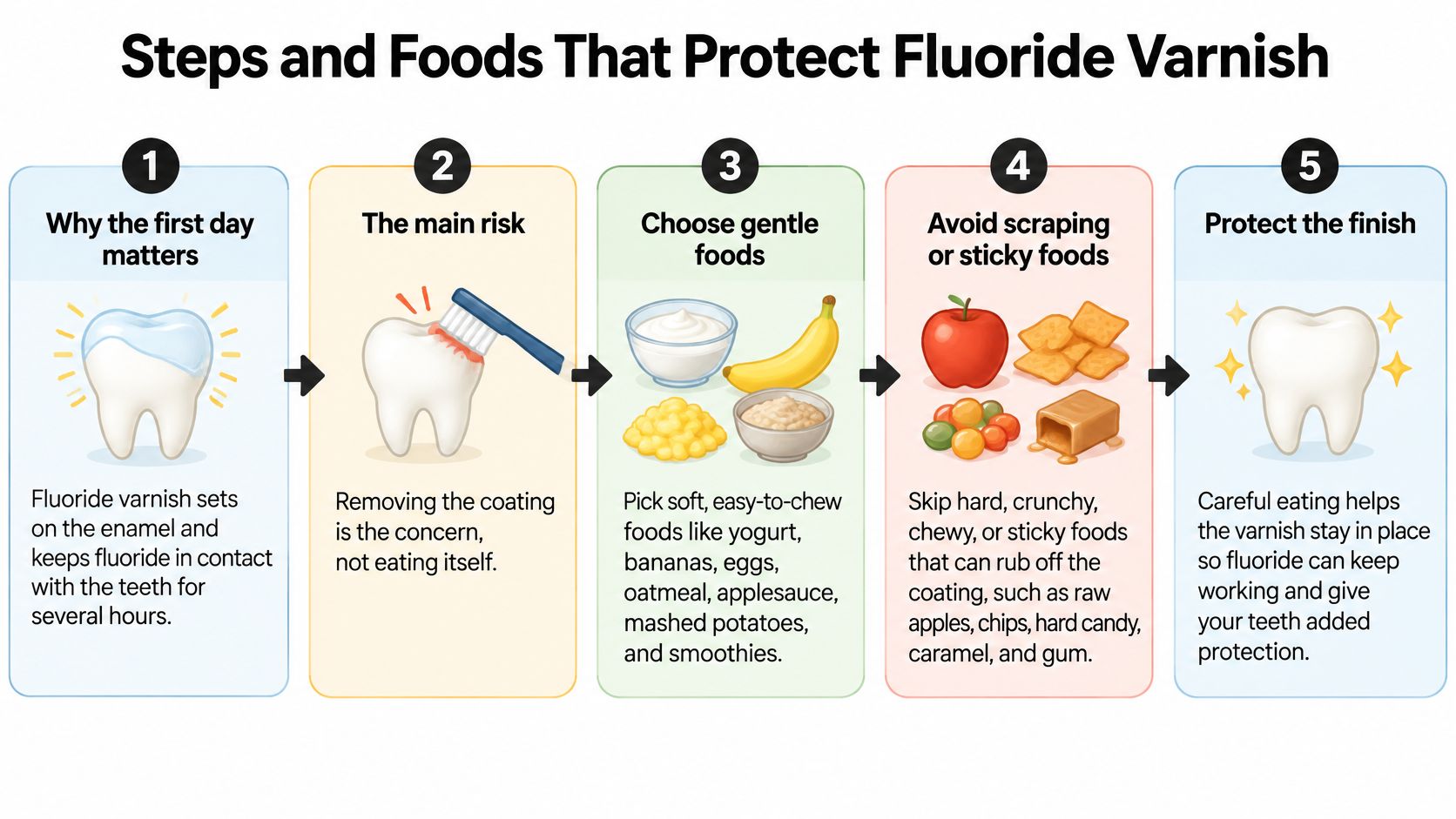
The first day matters because varnish works through prolonged local exposure, not permanent adhesion. The American Dental Association topical fluoride guidance describes high-concentration varnish, typically 2.26% fluoride varnish, as setting with saliva and keeping fluoride near the teeth for several hours. Ordinary food is not the main threat. Removing the coating too quickly is.
Heat softens the film, crunchy foods scrape it and sticky foods pull it away. That is why instructions focus less on a special diet and more on protecting contact time. A patient who understands that reason finds the food choices much easier to remember.
The infographic below shows the protective sequence in order, from waiting through to the first gentle meal.
Seven Steps for the First Day
- Wait the prescribed time: Wait 30 to 60 minutes before eating or drinking, or longer if the product sheet at the appointment says so.
- Skip rinsing: Don't rinse right after the visit, because rinsing can wash the coating away before it acts.
- Choose a soft first meal: Pick cool or lukewarm foods such as yogurt, scrambled eggs, pasta or oatmeal that need little chewing.
- Avoid heat at first: Skip very hot coffee, tea and soup until the next meal, since heat can soften the film.
- Avoid force and stickiness: Don't chew ice, hard snacks, crusty bread, gum, caramel or sticky dried fruit for the rest of the day.
- Delay brushing as directed: Brush at bedtime only if instructed, then brush normally the following morning.
- Don't add extra fluoride: Skip fluoride tablets, gels or rinses unless directed, since one clinical aftercare protocol advises avoiding other fluoride products for seven days after application.
Patients who worry about accidentally swallowing a trace of product can read more about swallowing fluoride after treatment before the appointment. That concern is common and usually settles once the small amount used for varnish is explained. The written sheet from the visit still sets the personal rule.
Foods to Choose and Foods to Skip
The NHS fluoride varnish patient leaflet recommends soft foods after application and avoiding hard or crunchy foods for four hours, while other guidance extends hot and sticky food limits through the rest of the day. Plain milk and tap water are identified as tooth-friendly choices, and sugary foods and drinks should remain limited to mealtimes. Variation between protocols is normal because products and local instructions differ.
- Good first choices: plain water, plain milk, yogurt, eggs, soft pasta, oatmeal and soup that is lukewarm rather than hot.
- Better avoided that day: chips, nuts, hard candy, chewing gum, toffee, caramel, ice and very hot drinks.
- Worth limiting anyway: highly acidic drinks and sugary snacks, especially between meals rather than with food.
Say an appointment ends at 2 p.m. and lunch was missed. A room temperature soup with water after the waiting period protects the coating and still feels like a real meal. A bag of chips and a steaming coffee in the car would work against the treatment at both ends, through heat and abrasion.
A slight yellow tint or waxy feeling on the teeth can be normal after varnish and usually fades with normal brushing.
That temporary film often worries adults who care about appearance, especially patients maintaining whitening or cosmetic work. It does not mean teeth are stained or damaged. It means the product is still in place, which is the point.
General guides cannot outrank the exact instruction given in the chair. Protocols differ on when eating can begin and when brushing should resume, and the manufacturer-recommended contact time is the benchmark the dental team follows. Anyone unsure which product was used should contact the office before eating rather than guessing.
Sensitivity, Numbness and Stains After Cleaning
Not every new sensation after a cleaning signals a problem. Mild cold sensitivity for a few days is common after scaling, especially where tartar had covered the surface near the gumline. A soft brush and desensitizing toothpaste usually help while the area settles.
Numbness deserves more caution than sensitivity. The NHS dental service guidance advises choosing cold drinks rather than hot drinks while numbness remains, because reduced sensation makes it easier to bite the cheek, lip or tongue or burn the mouth. Chewing should wait until feeling returns, even when hunger is pressing.
Patients who want background on why teeth become sensitive from Mouthology will find a plain explanation of exposed surfaces and irritated nerves there. That context helps separate short lived post cleaning sensitivity from pain that keeps returning. Duration is the clearest clue.
Post-Cleaning Symptoms, Likely Causes and What to Do
| Symptom | Likely cause | What to do |
|---|---|---|
| Cheek or tongue bitten while numb | Reduced feeling after a numbing injection | Chew on the other side and wait until sensation returns |
| Mouth burned by hot coffee or soup | Numbness hides heat | Switch to lukewarm or cold drinks until feeling returns |
| Cold sensitivity after scaling | Irritated tooth surfaces after scaling or polishing | Use a soft brush and desensitizing toothpaste; call if it lasts more than a week |
| Waxy feel or yellow tint on teeth | Varnish film | Normal; fades with brushing over the next day |
| Stains after whitening or on veneers | Coffee, tea or tobacco | Limit staining drinks and tobacco; ask about a touch-up visit |
| Bleeding that keeps returning | Gum irritation | Call the office for a check-up |
| Pain or swelling beyond a few days | Gum irritation, or a recent filling or crown | Call the office for a check-up |
Restorations add their own rules. Veneer patients are advised to avoid biting on hard objects or using their teeth as tools, and to avoid substances that stain veneers, such as coffee, tea, or tobacco. Whitening patients face a similar staining risk in the early period, when dark drinks can mark a freshly treated surface quickly.
Say a patient with a new veneer notices dullness after a week of daily coffee and wonders whether whitening will fix it. Whitening products act on natural enamel, not on veneer material in the same way. The right move is to ask at the next visit about polishing or a touch-up rather than applying a whitening product at home.
Call the office for pain or swelling beyond a few days, bleeding that keeps returning, or a bite that feels wrong after a new crown or filling.
Those signs point to something that needs examination, whether it is gum irritation that is not settling or a restoration sitting slightly high. A cosmetic dentist near me search can wait. Persistent symptoms after treatment should go back to the team that performed the work first.
What to Expect at Your Visit in Miami
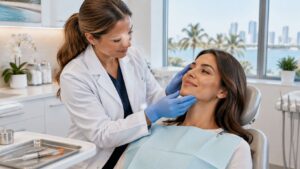
A visit at Ultra Smile DentalSpa in Miami, FL follows a clear order, from arrival to checkout. Check-in includes a review of health history, recent whitening, fillings, crowns or veneers, and any sensitivity noticed since the last appointment. That history shapes the cleaning and the aftercare advice that follows.
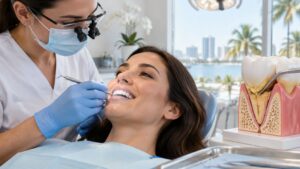
The hygienist then performs scaling and polishing, removing plaque and tartar and smoothing the tooth surfaces. Before anything begins, the team explains what is planned, including whether fluoride varnish or a numbing injection is likely and why. Patients searching for a dentist in Miami, FL often worry most about surprises, and a clear explanation at the start removes that concern.
Checkout Notes That Set the Eating Rule
Aftercare is covered at checkout, not left to memory. The team states which treatments were used, gives the exact waiting time before eating and explains the brushing plan for that evening and the next morning. That short conversation is where the general guidance in this article becomes a personal instruction.
Questions are welcome at every step, whether they concern post cleaning sensitivity, a whitening follow-up or care around a recent restoration. The practice serves patients across Downtown Miami, Midtown Miami and Hallandale Beach, including busy professionals who plan meals and meetings around appointments. A calm, local visit should end with no uncertainty about the next meal.
Keep Results Between Visits and Book Your Cleaning
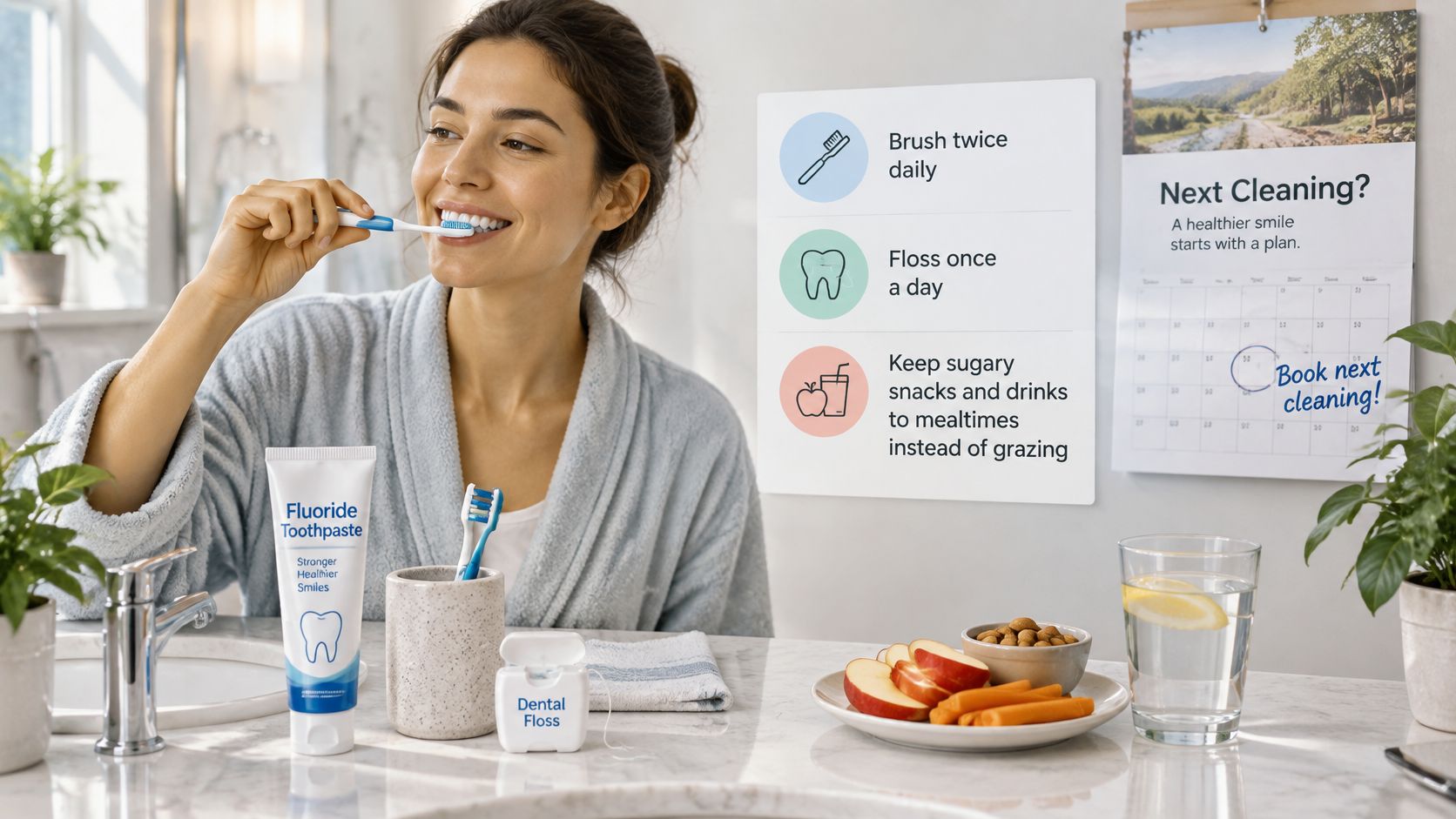
Daily habits decide how long a clean feeling lasts. The checklist below keeps plaque from hardening again between appointments.
- Brush twice daily: Use fluoride toothpaste and a soft brush, with a gentle hand if teeth feel sensitive.
- Floss once a day: Reach the gaps a brush misses, where plaque collects first.
- Keep sugar to mealtimes: Avoid grazing on sugary snacks and drinks through the afternoon.
- Drink water often: Plain water rinses food particles away and supports saliva flow.
The photo below shows the simple home routine that protects results between professional visits.
Regular cleanings help prevent tartar buildup, bone loss, bad breath and cavities, and the office asks patients when the next cleaning is due. Hygienists remove tartar, which is hardened plaque that brushing and flossing cannot clear. Cleaning is particularly beneficial for people prone to cavities and gum disease, and for people who have had previous dental work such as fillings or crowns.
Say a patient skips cleanings for eighteen months and returns with tartar along the gumline and a tender molar. That visit takes longer, sensitivity afterward is more likely and restorative work may enter the conversation. Routine visits keep each appointment shorter and simpler, which is also why emergency dentist visits become less likely.
The short video below walks through everyday care habits that support professional cleanings.
Patients unsure about timing can review how often dental cleaning is recommended in Miami and bring notes on the treatment received and the waiting time given. Ultra Smile offers complimentary teeth whitening once a year to all patients, which gives regular attendees a simple way to maintain brightness. One question at checkout prevents a mistake at the next meal, and booking the next cleaning before leaving keeps the routine intact.
Ultra Smile DentalSpa provides cleanings and exams, teeth whitening, cosmetic dentistry, restorative dentistry, dental implants, tooth extraction and emergency dental services for patients in Miami, FL. Anyone unsure about eating after a recent appointment, or due for a cleaning, dental x-rays or a new patient exam, can schedule a consultation and get a personal aftercare plan. Visit Ultra Smile DentalSpa to request an appointment with a trusted local team.