Which crown lasts longer, ceramic or zirconia? The question carries a flaw that changes the answer. Zirconia is a ceramic. It belongs to the same family as the glass ceramics it gets compared against, which means the choice in front of a patient was never ceramic versus zirconia at all. It's zirconia versus lithium disilicate and the other glass ceramics, and that contest is far closer than most search results admit.
The confusion surfaces in almost every crown consultation in Miami, FL. Someone arrives with a cracked molar, a printout, and a rough sense that one material looks better while the other holds up longer. Both halves of that are partly true, and neither decides the case alone.
What follows works through the decision the way a careful dental team does, starting with material families and five-year survival figures and ending with how each crown wears against the tooth opposite it and what happens on the day it needs repair. Anyone weighing options before booking a new patient exam, or looking for a cosmetic dentist near me who explains trade-offs plainly, will get more from the vocabulary below than from a slogan.
Table of Contents
- Ceramic and Zirconia Crowns Compared at a Glance
- Ceramic Types and How Strong Each Crown Is
- How Each Crown Looks Beside Your Natural Teeth
- Wear, Repairs and Maintenance Over the Years
- Which Crown Fits Your Tooth and Bite
- Book Your Crown Consultation in Miami
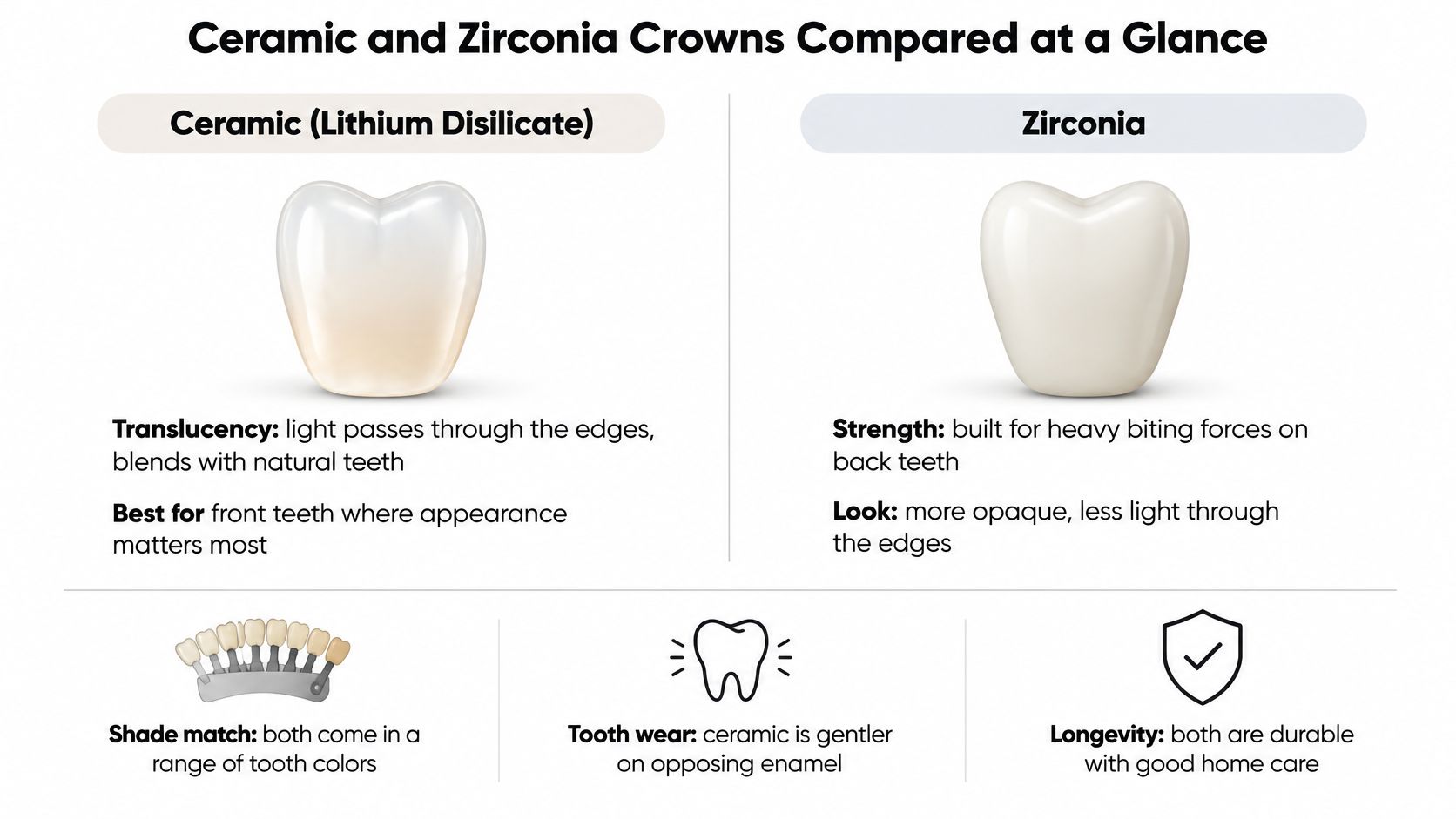
Ceramic and Zirconia Crowns Compared at a Glance
Crown conversations around Downtown Miami and Midtown tend to reach the same fork. A tooth has been filled twice, root-canal treated, or split on a piece of crust, and the dentist names two materials. One is a glass ceramic, usually lithium disilicate. The other is zirconia.
That choice changes three things a patient notices. How the crown looks beside natural teeth. How long it stays in service. How it treats the enamel on the opposing tooth. It also shapes what happens on the day the crown needs adjusting, and that part rarely gets discussed before treatment starts.
Two Words Worth Learning Before the Table
Monolithic means the crown is milled from a single solid block, so there's no separate layer to chip off. Veneered means a porcelain layer is built over a core, which can produce a more lifelike surface and introduces a second material that can fracture on its own.
Those two words explain a large share of what patients read online about crown failures. A monolithic zirconia crown and a layered zirconia crown share a name but not a risk profile.
| Criteria | Lithium Disilicate Ceramic | Zirconia Crown |
|---|---|---|
| Material type | Glass ceramic such as lithium disilicate | Zirconia, a strong crystalline ceramic |
| Strength | High, suits most single crowns | Very high, often chosen for heavy chewing |
| Appearance | Very lifelike, strong for visible front teeth | Improving with newer translucent types; layered versions can look natural |
| Bonding to tooth | Bonds well with adhesive cement | Usually cemented; one study reported more debonding |
| Wear on opposing teeth | Lower wear risk | Depends on surface polish; rough or glazed surfaces wear more |
| Fracture pattern | Bulk fracture reported in some studies | Fewer bulk fractures; veneering layer can chip |
| Best tooth position | Visible front teeth and conservative preparations | Back molars, limited space and grinding |
How to Read the Table
No single row decides the outcome. A patient who grinds at night and needs a lower molar crowned is reading the strength and fracture-pattern rows first. A patient replacing a chipped upper central incisor reads appearance and bonding first, because a front tooth under light load doesn't need the strongest material in the catalog.
The useful exercise is to pick the two or three rows that match your own mouth and bring that short list to the consultation. It turns a vague conversation into a specific one.
What Actually Drives the Price
Cost is the row a table can't fill, because the number depends on the case rather than the label. The drivers are concrete: the dental lab's fee for the specific material, whether the crown is milled in one visit or sent to a lab, whether the tooth needs a build-up before it can hold a crown, and what the insurance plan covers for that tooth number.
No accurate price exists until a dentist examines the tooth and writes a treatment plan with the material named on it. For a plain-language description of what a crown or bridge restores in the first place, this overview of dental crowns and bridges from Wellingborough Dental & Implant Clinic covers the groundwork before a consultation.
Ceramic Types and How Strong Each Crown Is
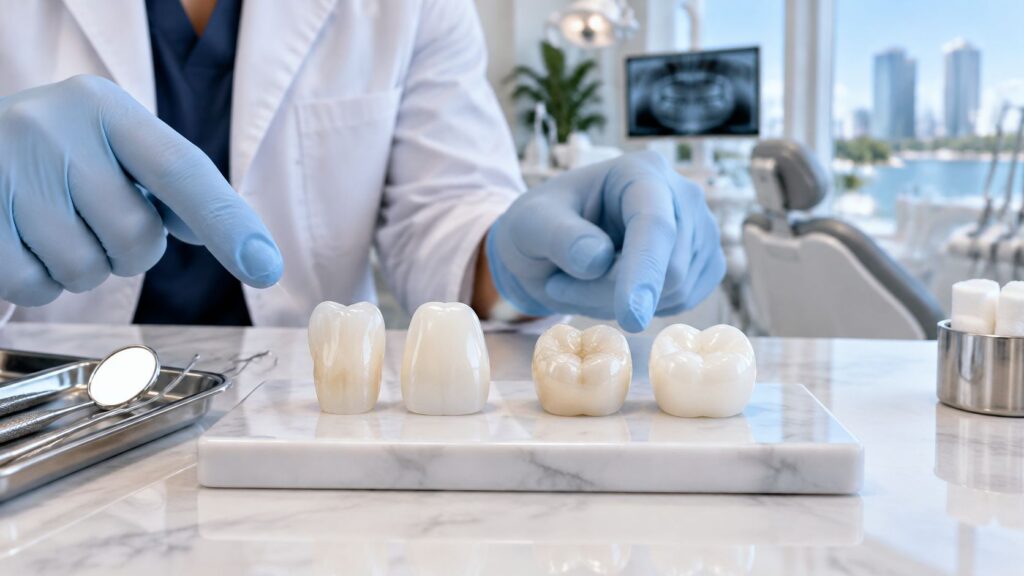
Zirconia is a ceramic. That single sentence clears up most of the fog around the ceramic crown vs zirconia crown comparison. Ceramic is a family that includes feldspathic porcelain, leucite-reinforced glass ceramic, lithium disilicate, and zirconium dioxide. Zirconia is the strong crystalline member of that family, not a rival to it.
What a patient chooses between is zirconia and the glass ceramics, most often lithium disilicate. They behave differently enough to deserve a real conversation rather than a default.
The plain definition: ceramic is the family. Zirconia is one member. Lithium disilicate is another.
What Five Years of Clinical Follow-Up Shows
Survival data gives the clearest view of how the categories perform. A systematic review and meta-analysis of all-ceramic crowns broke five-year survival down by material type: 98.5% for monolithic lithium-disilicate glass ceramic, 97.3% for veneered densely sintered zirconia, 96.8% for monolithic densely sintered zirconia, 95.7% for veneered leucite or lithium-disilicate glass ceramic, and 90.4% for feldspathic or silica-based ceramic.
Read those numbers in order and the marketing language falls apart. Monolithic lithium disilicate outlasted both zirconia categories in that review. The oldest cosmetic ceramic, feldspathic porcelain, sat at the bottom of the list. A crown's category name tells you less than its construction and the tooth it sits on.
How Zirconia Performs on Its Own Numbers
Zirconia's record stands up on its own. A systematic review of 16 clinical studies reported cumulative five-year survival of 95.9% for tooth-supported zirconia crowns and 97.1% for implant-supported zirconia crowns, which means roughly 4.1% and 2.9% respectively were lost or needed replacement within five years under the conditions studied. A later review of 35 studies put zirconia-based single crowns at 98.3% over an average follow-up of about five years.
Two variables explain most of the spread: whether the crown sits on a natural tooth or an implant, and which zirconia design was used.
Zirconia Is Not One Material
Conventional 3Y-TZP zirconia began life mainly as a strong core material, often layered with porcelain for looks. Newer formulations with different yttria concentrations and microstructures trade some of that raw strength for improved translucency. A dentist choosing "zirconia" is really choosing a grade, a shade and a design.
That's why a generic recommendation is a weak one. The grade that suits a lower molar under heavy load isn't automatically the grade that suits a visible premolar.
The Head-to-Head Comparison for Back Teeth
Where the two materials meet under load, the gap narrows. A five-year clinical comparison found 94.0% cumulative survival for zirconia crowns against 89.0% for lithium-disilicate crowns, with catastrophic fracture in 6.0% and 12.0% of cases respectively. Neither difference reached statistical significance, so the honest reading is that zirconia trended better under posterior load without a large enough sample to call it settled.
Why Preparation and Bite Change the Result
Clinical success depends on preparation design, occlusion, cementation, hygiene, tooth condition, and whether the crown is monolithic or layered. Two crowns made from the same block can end differently because one was seated on a tooth with more sound structure left.
How the tooth is shaped for the material matters as much as the material. The ceramic crown prep guidelines at 3D DDS walk through the reduction and margin principles that determine whether a glass ceramic crown has enough support to survive.
A molar crown for someone who clenches at night needs a different plan from a front tooth crown for someone with no grinding habit. Same dentist, same chair, different answer.
Four things are worth writing down before the appointment:
- The tooth number, so the recommendation can be checked against the actual position in the mouth.
- Chewing habits, including ice, hard candy, and unpopped popcorn kernels.
- Grinding or clenching, especially if a bed partner has mentioned noise at night.
- Space available, since a short or worn-down tooth limits how thick a crown can be.
How Each Crown Looks Beside Your Natural Teeth
Picture two crowns placed in the same week. The first goes on an upper central incisor the patient sees in every photograph. The second goes on a lower second molar nobody sees, under the heaviest chewing load in the mouth. Those two crowns call for different materials, and pretending otherwise is how patients end up disappointed with a result that was perfectly reasonable on paper.
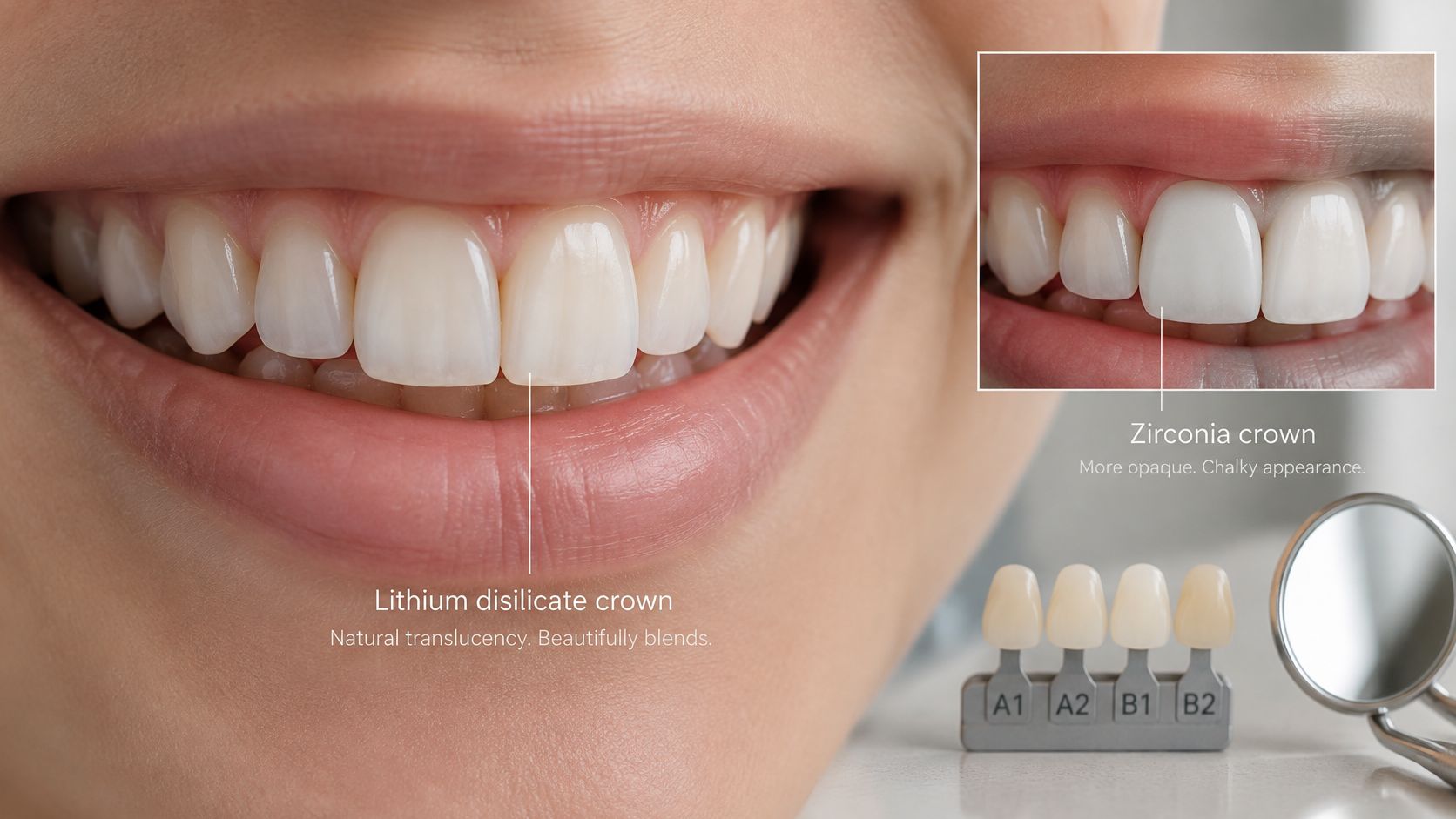
Natural enamel lets light pass through its edges, which is why a real tooth looks slightly luminous at the tip and never flat. A crown that behaves the same way blends into a smile. A crown that blocks light reads as chalky, especially in daylight and in flash photography.
Lithium disilicate is generally the stronger choice for visible front teeth because it can closely copy that light behaviour. Zirconia was historically more opaque, and newer translucent formulations have narrowed the gap considerably, while a layered zirconia crown with a porcelain veneer can match well when it's well made.
Shade matching carries as much weight as the material. The dentist compares the crown against neighbouring teeth using a shade guide and photographs, then factors in the gum line, tooth length, and the colour of teeth in the same arch. Smile design planning helps here, and Ultra Smile DentalSpa offers smile design, digital X-rays, and conservative noninvasive restorations using Curodont, which lets a patient see a plan for front teeth before anything is prepared.
Seeing the process beats reading about it. This walkthrough shows how a crown is shaped, matched and finished in the smile zone.
Before agreeing to a final material, ask for shade photographs taken in daylight and while smiling, then hold them beside the neighbouring teeth. A shade that looks right under surgery lighting can look wrong at a lunch table.
Wear, Repairs and Maintenance Over the Years
Zirconia is a ceramic, so the practical choice is often between zirconia and glass ceramic, such as lithium disilicate. Durability matters, but so do repairability, wear against the opposing tooth, and the care a crown needs over time. A crown may remain in place for years and still need an adjustment, recementation, or repair to a chipped layer.
Bonding is one difference to discuss. A three-year clinical comparison reported debonding in 6 of 50 zirconia restorations versus 0 of 50 lithium-disilicate restorations. The result highlights the role of cement choice and bonding technique, especially with zirconia. A separate study found two-year survival of 100% for multilayer zirconia against 82% for lithium-disilicate glass ceramic. Reported lithium-disilicate failures included 10 bulk fractures and three endodontic complications; zirconia failures included an endodontic complication and loss of retention. These figures describe different outcomes, not a universal winner.
Longer follow-up adds another perspective. A 15-year clinical report found overall survival of 95% for zirconia restorations, including 94.2% for single crowns and 95.7% for fixed dental prostheses. That is generally considered a good outcome in long-term clinical studies, though survival does not mean no maintenance. The most common technical issue was fracture of the veneering ceramic in 12% of restorations. Bleeding on probing occurred around 38.1% of restored teeth, a gum-health signal rather than a material failure.
A crown that survives may still need attention.
Wear against the opposing tooth is a separate consideration. A systematic review and network meta-analysis reported roughly 40.1 µm greater antagonist enamel wear for zirconia than natural-tooth controls, compared with about 5.0 µm for lithium disilicate. The zirconia estimate had substantial variability. Surface finish matters: polished zirconia can wear less than glazed or roughened surfaces, so polishing, bite adjustment, and how the teeth meet all deserve attention.
What to Do Between Visits
- Brush and floss around the crown daily. Follow a routine for the crown margins, where decay can begin, using this guide to caring for dental crowns.
- Keep routine check-ups. A crown does not prevent decay underneath it, and early changes may be quiet. Check-ups let the dental team examine the crown, its margins, and the surrounding gum while monitoring overall oral health.
- Report chips, sensitivity, or a loose feeling promptly. A problem noticed early may be easier to address than one left until the crown needs replacement.
- Ask whether the bite and polish were checked. This is especially useful if the crown feels high when you first bite down in the morning.
Which Crown Fits Your Tooth and Bite
“Ceramic and “zirconia are not opposing categories. Zirconia is a ceramic; the practical comparison here is zirconia versus glass ceramics such as lithium disilicate. Use the table as a starting point, not a verdict. The tooth's location, the bite, available space and smile goals all affect the choice.
| Tooth or Situation | Usually Better Suited | Why It Matters |
|---|---|---|
| Visible upper or lower front tooth | Lithium disilicate ceramic | Translucency and lifelike shade may better suit a visible tooth |
| Back molar with heavy chewing | Zirconia | Its fracture resistance can be useful under heavier load |
| Clenching or grinding at night | Zirconia, often monolithic | Strength matters, and a night guard may also be worth discussing |
| Limited space for the crown | Decide after measuring | The thickness needed for strength differs by material |
| Root-canal treated tooth or large filling | Either, based on remaining tooth structure | A crown can protect and strengthen a weakened tooth |
| Implant-supported crown | Decide with the implant team | Material, crown design and the implant connection all affect the decision |
Why the Implant Case Gets Its Own Conversation
Implant-supported crowns have a different foundation from crowns placed on natural teeth. A systematic review of implant-supported single crowns estimated five-year survival at 97.6% for zirconia crowns based on 912 crowns, compared with 98.3% for metal-ceramic crowns based on 4,363 crowns. Overall complication rates were close, 2.8% against 2.9%, while material fractures occurred more often with zirconia, 2.1% versus 0.2%, a statistically significant difference at p = 0.001.
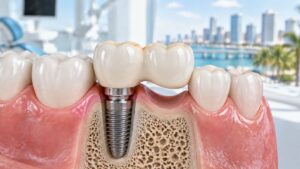
Those findings do not make zirconia unsuitable for implants or automatically the right choice. They show why the implant connection, crown design, bite and monolithic versus veneered construction belong in the discussion. A dental implant begins with a titanium post placed in the jawbone. After a healing phase of several months, a custom-made crown is attached to the post. The crown is the final part of a longer treatment sequence. The Dental Cafe implant treatment guide explains that sequence in more detail.
Decision rule: strength can guide the choice for a back tooth, while translucency may carry more weight for a visible front tooth.
Who Is a Candidate for a Crown
Crowns protect and strengthen teeth that cannot be restored with fillings or other restorations. They are often suitable for teeth that have had root canal treatment, have large fillings, or are severely worn or broken. Ideal candidates for crowns and bridges should have good oral health and sufficient bone structure to support the restorations.
The condition of the tooth still matters. A tooth split below the gum line may need extraction rather than a crown, while pain with facial swelling calls for prompt dental attention. An examination and dental X-rays help determine whether the tooth can be restored and which treatment fits. If you are unsure whether a damaged tooth needs a crown rather than a filling, review when a crown is needed instead of a filling.
When the Strength Difference Doesn't Decide It
Strength is only one part of the decision. A systematic review of zirconia and lithium disilicate crowns found pooled failure rates of 4.2% for zirconia and 6.2% for lithium disilicate, with no statistically significant difference in survival. Technical complications were 2.8% and 9.1%, respectively, though the certainty of that evidence was low and follow-up was often short.
For a back tooth under heavy load, or when space is limited, zirconia may fit the demands better. For a visible tooth where translucency and adhesive bonding matter, lithium disilicate may be a better match. Neither material wins every case. The dentist also considers the remaining tooth structure and the planned crown design, rather than choosing by a strength label alone. Repairability, wear on the opposing tooth and ongoing maintenance matter alongside how long a crown lasts.
Book Your Crown Consultation in Miami
How can you choose between glass ceramic and zirconia for your tooth? At Ultra Smile DentalSpa, patients from Downtown Miami, Midtown Miami, and Hallandale Beach can discuss the material trade-offs and get a recommendation based on their own tooth.
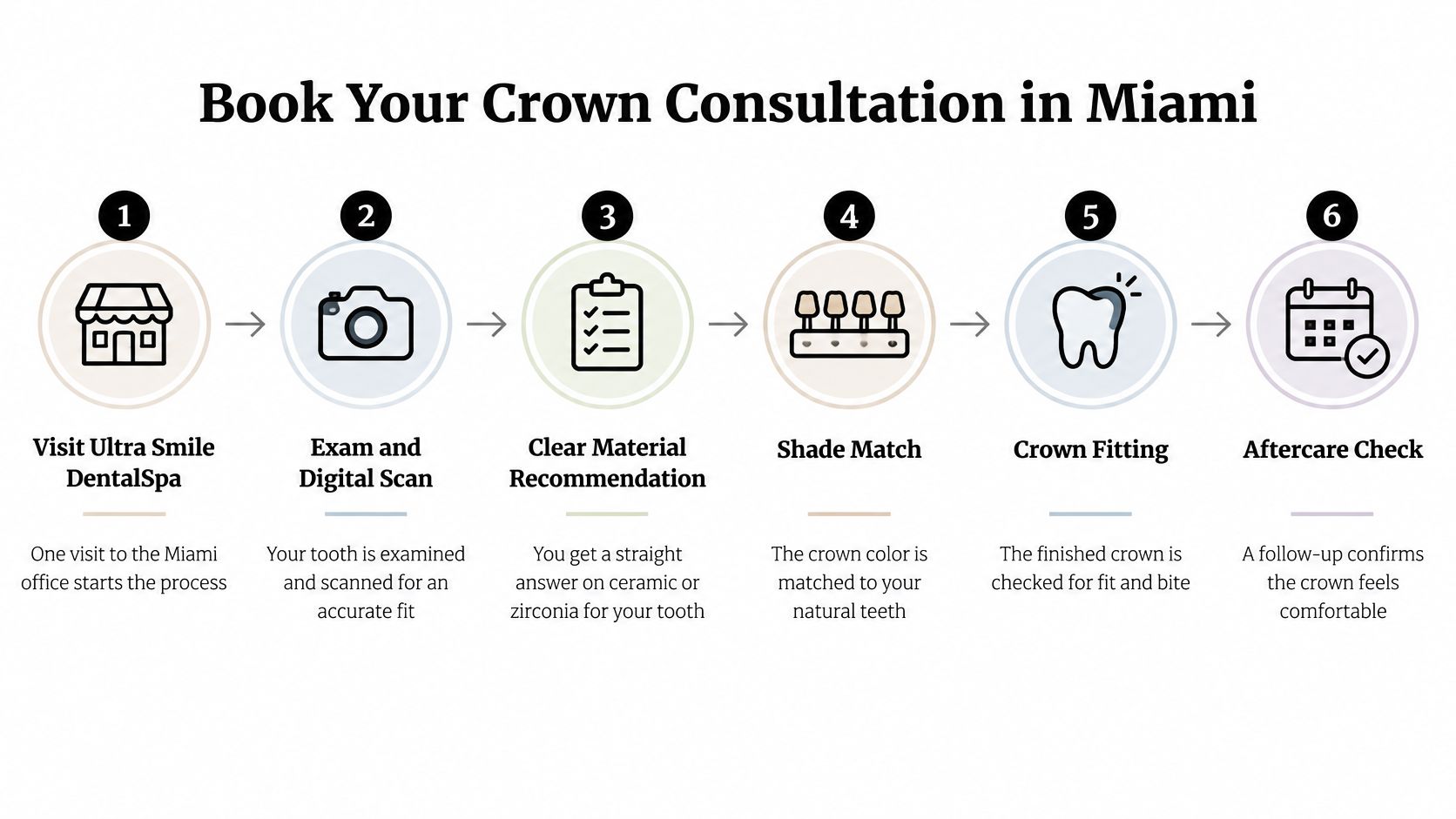
The appointment moves from assessment to a clear plan:
- Examination. The dentist checks the tooth and surrounding gums, then uses digital X-rays to assess what is happening beneath the surface.
- Bite check. The dentist examines how the upper and lower teeth meet and considers any clenching or grinding.
- Shade and smile photos. The tooth's colour is compared with neighbouring teeth to guide a natural-looking result.
- Material recommendation. The dentist explains which option suits this tooth and the trade-offs in appearance, durability, wear on opposing teeth, and repairability.
- Timeline. Crowns and bridges are created with CEREC technology in one visit, without temporary solutions or multiple appointments. Same-day crowns are available to all patients.
- Aftercare. You'll receive guidance on brushing and flossing around the crown margin, routine check-ups, and symptoms that warrant a prompt call.
The written treatment plan sets out the cost for your tooth, rather than relying on a general online range. You can request a free consultation through the form on the treatment pages to discuss material options before deciding on treatment.
Bring any previous dental records if available, and ask why the recommended material fits the tooth's position, bite, and remaining sound structure. It is also reasonable to ask what repair might involve if the crown is damaged. If you are considering whitening or other cosmetic work, raise that during the visit so the crown's shade can be considered alongside those plans.
A crown is a long-term restoration, so the decision involves more than how long the material may last. Ultra Smile DentalSpa creates crowns with CEREC technology in one visit. The dentist can explain how the tooth's location and bite affect the choice between zirconia and glass ceramic, including the balance of appearance, opposing-tooth wear, maintenance, and repair. Request a visit at Ultra Smile DentalSpa and bring the questions that matter most for your tooth.