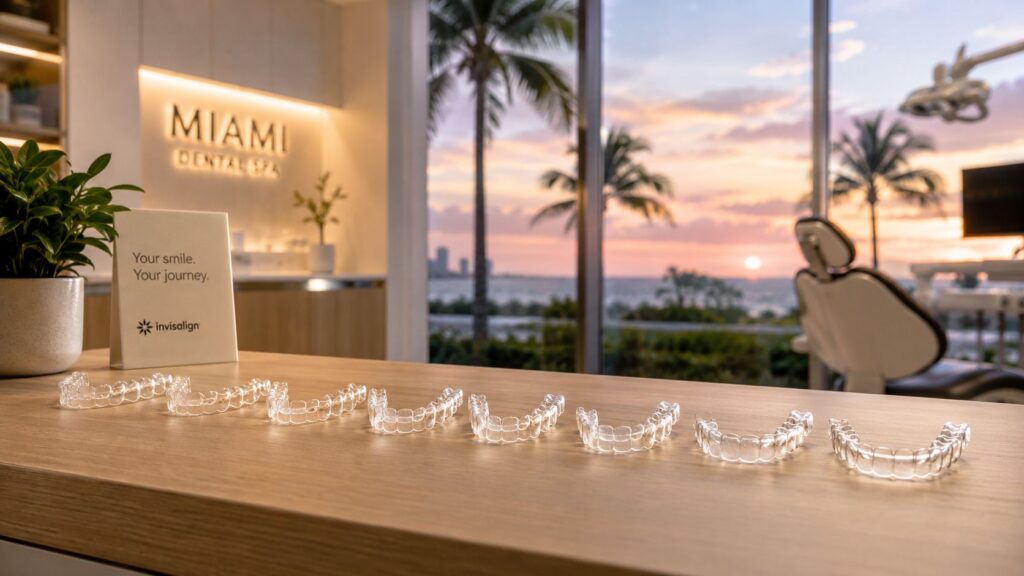
For most adults, Invisalign treatment usually takes 12 to 18 months, though mild cases can be as short as 6 months and more complex cases can stretch to 24 months. The only reliable way to know where a specific smile falls on that range is to have a personal consultation in Miami and review the bite, spacing, crowding, and wear expectations in detail.
A lot of adults who search for a cosmetic dentist near me or a dentist in Miami, FL are asking the same practical question before they commit. How long will clear aligners take, and when will the smile start to look different? That concern is completely reasonable, especially for busy professionals, parents, and anyone balancing work, family, and social life in Downtown Miami, Midtown Miami, or Hallandale Beach.
This guide walks through the full Invisalign treatment timeline in plain language. It also clears up where patients often get confused, such as why two people can both wear Invisalign but finish on very different schedules, why refinement aligners sometimes matter, and why retention is just as important as active treatment. For anyone also comparing broader dental care options, including cosmetic dentistry, teeth whitening, cleaning and exams, restorative dentistry, tooth extraction, dental implants near me, or even an emergency dentist, understanding the timing helps make the next step feel much more manageable.
Table of Contents
- Your Invisalign Timeline Starts with a Miami Consultation
- The Invisalign Journey Stage by Stage
- Key Milestones When to Expect Visible Results
- Factors That Shape Your Personal Invisalign Timeline
- The Final Steps Refinement and Retention
- Your Invisalign Experience at Ultra Smile DentalSpa Miami
- Financing Your Smile and Scheduling Your Consultation
Your Invisalign Timeline Starts with a Miami Consultation
Someone may already be checking the mirror, lifting the lip slightly, and wondering whether that front tooth crowding is minor or whether the bite problem will take much longer to correct. That first question is almost always about time, not technology.
For most adults, the typical Invisalign timeline falls between 12 and 18 months, while mild cases can sometimes be resolved in 6 to 12 months, according to 32 Pearls' Invisalign timing overview. That range sounds wide because it is. A small gap and a deep overbite don't move on the same schedule, and aligners only work well when they're worn 20 to 22 hours a day.
Why the consultation matters so much
A consultation isn't just about finding out whether someone is a candidate for clear aligners. It's where the definitive timeline starts taking shape.
During that visit, a dentist evaluates:
- Crowding or spacing that affects how far teeth need to move
- Bite relationships such as overbite, underbite, or crossbite
- Existing dental work like crowns, bridges, or restorative treatment
- Oral health basics including gum condition, cleaning needs, and whether updated dental x-rays or new patient exams are needed first
Patients who are also searching for a dentist near me often don't realize that healthy teeth and gums come first. If someone needs a filling, periodontal care, or another type of dental care before aligners begin, that can affect the start date even if it doesn't change the aligner mechanics themselves.
Practical rule: The most useful timeline isn't the average online estimate. It's the one based on that patient's bite, bone response, and daily routine.
A realistic estimate feels better than a rushed promise
A careful consultation helps set expectations early. That's especially important for adults choosing Invisalign because they usually want appearance, comfort, and predictability all at once.
For readers comparing options for invisible braces in Miami, the key takeaway is simple. An honest Invisalign treatment timeline should feel personalized, not generic. The estimate should explain what needs to move, what could slow progress, and what the patient can do to stay on track.
The Invisalign Journey Stage by Stage
Starting Invisalign often feels a bit like getting directions before a road trip. You want to know what happens first, what happens next, and how often you need to check the map. That clarity matters because the process is simple once you see the order.

At Ultra Smile DentalSpa, the journey usually starts with digital records and planning, then moves into active aligner wear, followed by brief progress visits and any small corrections needed near the end. The exact calendar varies from patient to patient, but the sequence stays familiar. That is often reassuring for adults who want treatment to fit into work, social events, travel, and everyday life in Miami.
The first visit and digital planning
The planning stage is where the treatment begins to feel real. We take photos, complete a digital scan, evaluate your bite, and talk through what you want to improve. Digital scanning is much more comfortable than old-style impressions, which fits the calmer, spa-like experience many patients are looking for.
The software works like a roadmap. It shows the order of tooth movements so your aligners are not just straightening visible teeth, but also guiding the bite into a healthier position. If you hear terms like ClinCheck or attachments, there is no need to be intimidated. ClinCheck is the visual plan. Attachments are small tooth-colored shapes that help certain teeth respond to the trays more precisely.
At this stage, a few practical decisions happen:
- Your bite is reviewed in detail. Straight teeth look great, but the way upper and lower teeth meet matters just as much.
- Your aligner sequence is mapped out. That gives you a clearer sense of how treatment is expected to progress.
- Any dental work that should happen first is coordinated. If a cleaning, small filling, or other prep care is needed, it can be scheduled efficiently.
For many patients in our Miami office, this is also the point where comfort and convenience stand out. Bilingual guidance, a polished office environment, and clear explanations can make the process feel much less clinical and much more manageable.
The active aligner phase
Once your aligners are delivered, progress comes from repetition. Each tray makes a small adjustment. Then the next tray builds on it, much like stepping stones across water. One step does not look dramatic by itself, but the sequence gets you across.
Most patients switch trays on a set schedule provided by their dentist. The aligners need to stay in for the vast majority of the day, coming out mainly for meals, brushing, and flossing. That removable design is one of Invisalign's biggest advantages, but it also means consistency matters. Teeth move in response to steady pressure, not just because the trays were made.
A normal daily routine usually looks like this:
- Wear the aligners most of the day and night.
- Remove them for eating and drinking anything other than water.
- Brush your teeth before putting them back in whenever possible.
- Clean the trays regularly so they stay fresh and clear.
The first few days with a new set can feel snug. That is expected. Patients often describe it as pressure rather than pain. Speech may sound slightly different for a short time too, especially at the beginning, but patients typically adjust quickly once the trays become part of the routine.
Progress checks and course corrections
Check-in visits are usually straightforward. The main question is whether the teeth are tracking the way they should. If the trays fit well and the teeth are responding on schedule, you keep moving through the series. If something is off, the plan can be adjusted before a small issue turns into a longer delay.
These appointments are often much shorter and less disruptive than traditional braces visits. For busy adults, that is a real advantage. At a premium practice like Ultra Smile DentalSpa, these visits are also designed to feel organized and low-stress, not rushed. You come in, we confirm progress, answer questions, and send you forward with a clear next step.
A progress visit may include:
- Picking up the next sets of aligners
- Checking or replacing attachments
- Reviewing wear habits if trays are not tracking well
- Planning refinement trays if finer adjustments are needed
Later in treatment, many patients want to see the mechanics in action. This video offers a useful overview of how that process works visually.
One helpful way to look at this stage is to compare it to tailoring a suit. The first fitting gets you close. The follow-up adjustments create the final polish. Invisalign works the same way. The main aligner series handles the big movements, and any later refinements help bring the result into sharper focus.
Key Milestones When to Expect Visible Results
Patients usually don't ask only how long Invisalign takes. They also want to know when it starts feeling worth it. That question is less about the finish line and more about the first moment they notice something changing in photos, on video calls, or while brushing at night.
According to Harris Dentistry's Invisalign timeline guide, most patients notice subtle tooth movement within 6 to 8 weeks, and visible gap closure often becomes apparent by the third month.
What the first weeks usually feel like
The beginning is often more noticeable physically than visually. Many patients feel light pressure when a new tray goes in. That's expected. The aligner should feel snug, especially for the first day or two of a new set.
Speech can also feel slightly different at first. Some people notice a faint lisp for a short time, especially with certain sounds. Most adapt quickly because the tongue learns where to move around the trays.
Common early experiences include:
- Mild pressure: Often strongest after changing to a new aligner
- A short adjustment period for speech: Usually temporary
- More awareness of snacking habits: Because trays have to come out for meals and drinks other than water
That adjustment phase can help with compliance. Patients begin to build a routine, and routine is what keeps treatment moving.
When the mirror starts showing progress
Visible change often comes in small moments rather than one dramatic reveal. A patient may first notice that a front tooth looks less twisted in a selfie, or that floss slides differently through a space that used to feel tight.
By the third month, gap closure is often easier to see, according to the Harris Dentistry reference above. That's one reason many adults become more motivated after the early phase. The smile starts giving something back.
A subtle shift is still progress. Early Invisalign changes often show up first in the front teeth because that's what people notice most in the mirror.
Patients who stay patient during this stage tend to do better emotionally with the full process. The active phase still has a long arc, but the early wins matter. They turn treatment from an abstract plan into something visible and real.
Factors That Shape Your Personal Invisalign Timeline
Two patients can start Invisalign on the same week and finish on different dates. That is normal. Your timeline depends on how much movement your teeth need, how consistently the trays are worn, and how your body responds along the way.
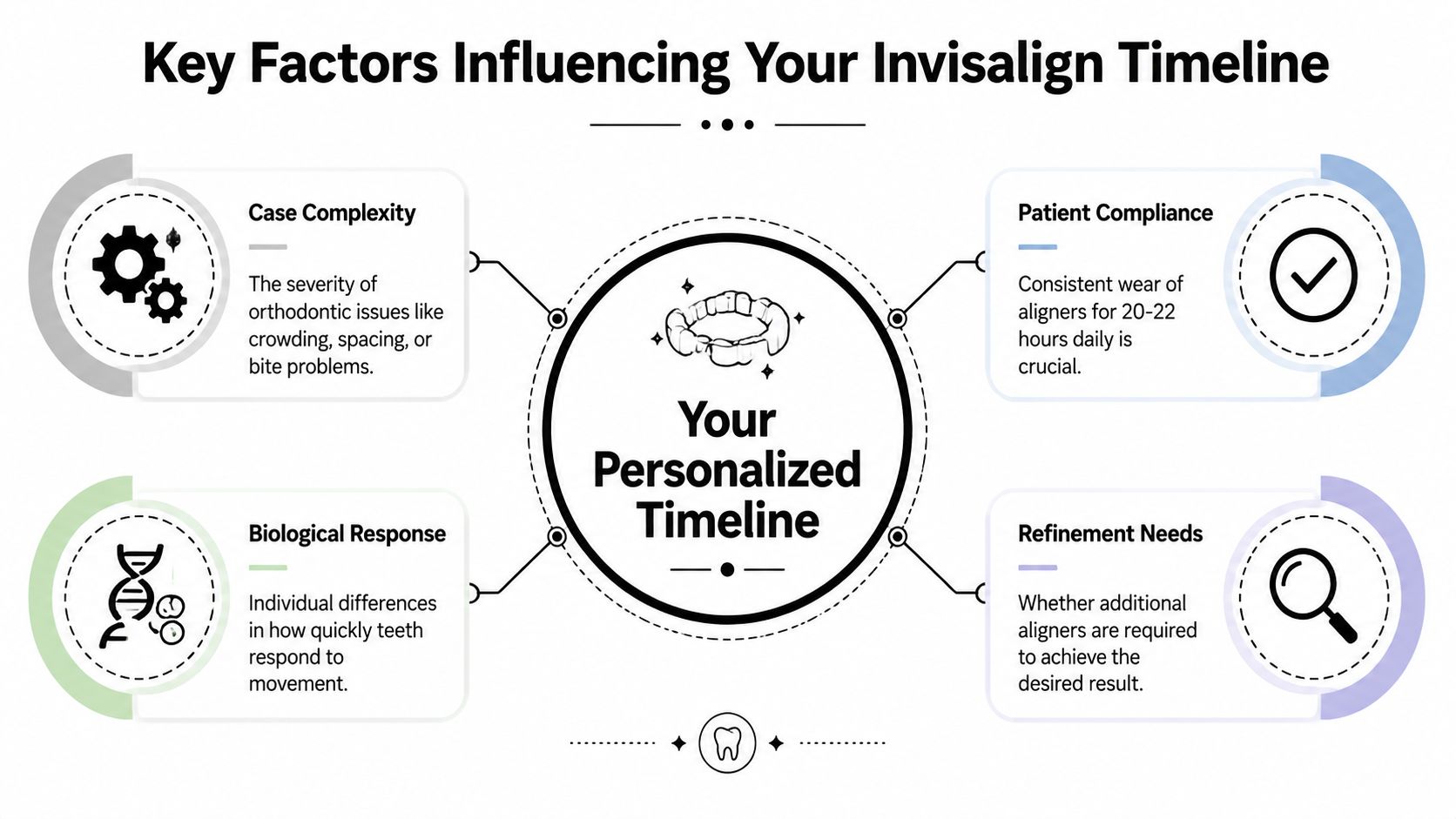
At Ultra Smile DentalSpa, we explain this early so there are no surprises later. Invisalign works like a roadmap, but every smile has its own traffic conditions. Some cases move straight ahead. Others need a few more checkpoints to reach a polished, stable result.
Case complexity sets the foundation
The first question is simple. What exactly are we correcting?
Closing a small gap or straightening mild crowding usually takes less time than correcting a deeper bite problem, rotating stubborn teeth, or creating space where there is significant overlap. Front teeth may look like the main issue in the mirror, but the bite underneath often determines how long treatment really takes.
This planning table gives a realistic starting point:
| Case Complexity | Common Issues | Average Treatment Time |
|---|---|---|
| Mild | Minor crowding, small gaps, slight relapse after previous orthodontics | 6 to 12 months |
| Moderate | Noticeable crowding, spacing, alignment correction, some bite adjustment | 12 to 18 months |
| Severe | Underbites, deep overbites, significant crowding, more complex tooth control | 18 to 24 months or longer |
These are planning ranges, not promises. During your consultation in our Miami office, we use your scan, photos, and bite analysis to show where your smile likely fits and what may speed things up or slow things down.
Daily wear habits can shorten or stretch the schedule
Invisalign only works when the trays stay in long enough each day to guide tooth movement. A helpful way to picture it is this. The aligners are like gentle hands applying steady pressure. If they keep letting go, the teeth do not get a clear signal to move to the next position.
That is why wear time affects the schedule so much.
- Consistent wear helps teeth track with the plan
- Long breaks during the day can delay movement
- Repeated missed hours can lead to extra trays, midcourse corrections, or a later finish date
Patients are often surprised by how quickly small habits add up. An extra coffee break here, a long dinner there, trays left out during social events on weekends. Over a full week, that can mean your teeth are not getting enough steady pressure to keep pace with the digital plan.
This is one area where a premium practice experience helps. Our team gives clear, practical coaching, and our bilingual staff makes instructions easy to follow in the language you are most comfortable with. Better understanding usually leads to better consistency.
Age and biology influence the pace
Adults of many ages do beautifully with Invisalign. The main point is not that older patients cannot get excellent results. They can. The point is that teeth do not move like machines on an identical timetable.
Bone density, gum health, root shape, and individual healing patterns all affect how quickly teeth respond. Some teeth move exactly as predicted. Others need more time or more refinement, especially when the movement is complex or the bite needs detailed correction.
A slower pace is not a problem. It is often the safer and smarter pace.
That is one reason we monitor progress closely instead of assuming the original plan will unfold perfectly on its own. In a cosmetic case, details matter. Tiny differences in how a tooth tracks can affect symmetry, edge position, and the final look of the smile.
Attachments, elastics, and refinements can add time for good reason
Some Invisalign cases need more than trays alone. Small tooth-colored attachments, elastics, or later refinement aligners may be recommended to improve control. Patients sometimes hear that and worry treatment is going off course. Usually, it means the doctor is being precise.
A good comparison is tailoring a custom suit. The main structure may fit early, but the last adjustments create the polished result.
If your case needs those added steps, your timeline may be a little longer. In return, you get a result that looks better, fits your bite better, and is more likely to stay stable. At Ultra Smile DentalSpa, we would rather set honest expectations from day one than rush a case and compromise the finish.
The Final Steps Refinement and Retention
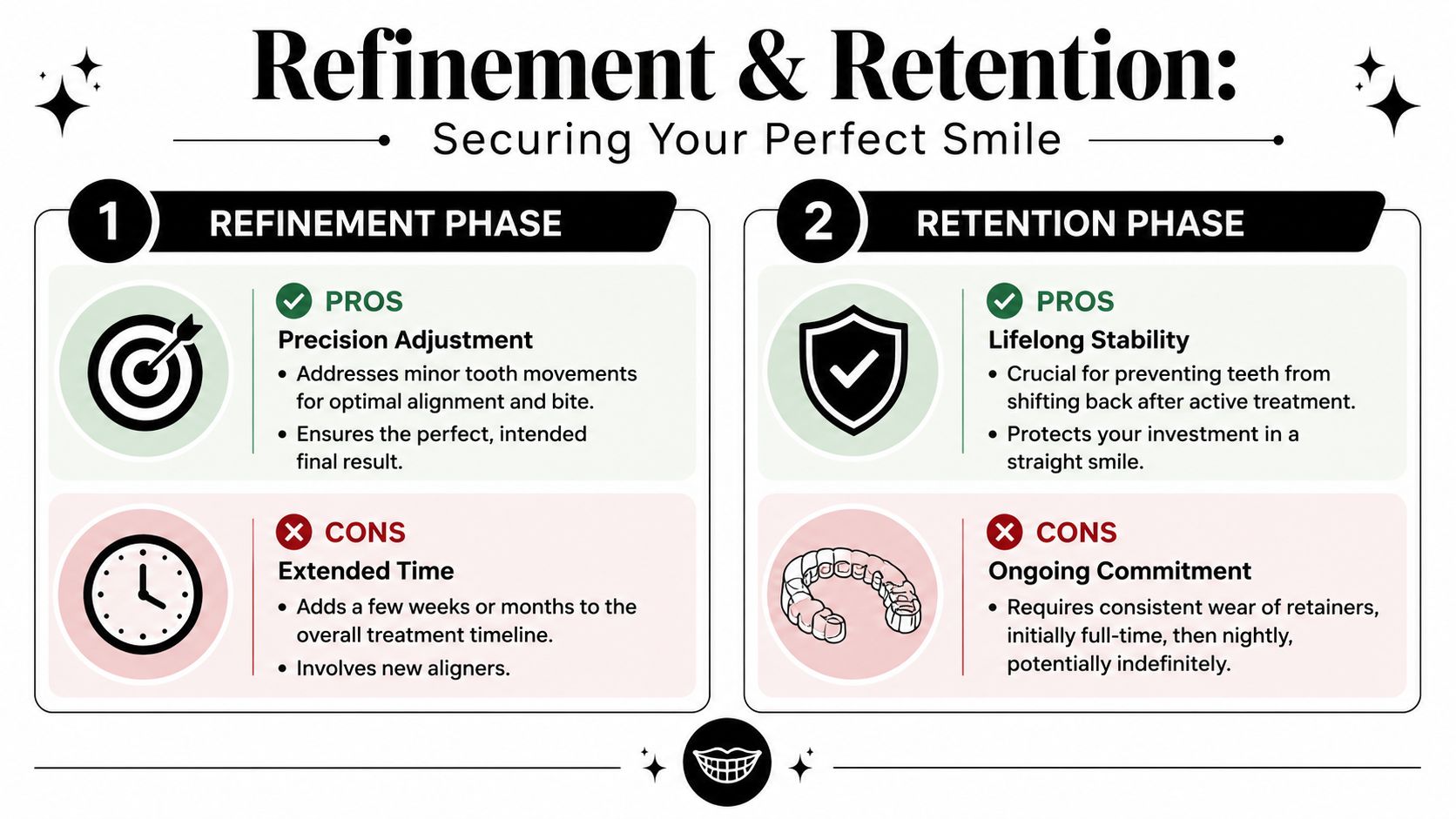
Reaching your last tray is a big milestone, but it is usually not the moment we say, "done." The finish matters. In many Invisalign cases, the final phase is where we sharpen small details and then protect the result so your smile stays where we worked to place it.
Why refinement isn't a setback
Refinement is a short finishing phase with additional aligners after your initial series. It is used when teeth are very close, but not quite in the exact position we want for appearance, bite balance, or both.
A good comparison is the last fitting for formalwear. The outfit already looks right to everyone else, but the final adjustments are what make it feel custom.
At Ultra Smile DentalSpa, we explain this step carefully so it never feels like a surprise. If refinement is needed, we take updated scans or records, review how your teeth responded, and order a new set of aligners for those smaller finishing movements. The goal is precision, not starting over.
Refinement may include:
- A new scan or updated records to capture your current tooth positions
- A second set of custom aligners for minor corrections and bite detailing
- Extra wear time focused on the last few adjustments that improve the final look and fit
For many adults, this phase is reassuring once they understand it. Teeth do not always move with perfect symmetry, even when patients are doing everything right. A tiny gap, a slight rotation, or a contact point that feels a little off can be enough reason to refine the plan before we call the case complete.
Retention protects everything you achieved
Once active movement ends, retention begins. This is our practice recommendation because teeth can drift after orthodontic treatment if nothing holds them in their new position while the surrounding tissues settle.
Retainers work like the protective case for a new pair of glasses. The glasses are the main investment, but the case is what helps keep them safe day after day.
Most patients are advised to wear retainers full time at first, then transition to nighttime wear based on how the case finished and how stable the teeth look at follow-up visits. We review that schedule clearly before treatment ends, so you know exactly what to expect instead of guessing once the aligners are finished.
The last aligner moves the teeth into place. Retainers help keep them there.
This stage matters just as much as the straightening phase, especially for patients who want a polished cosmetic result. At our Miami office, we treat retention as part of the smile design process, not an afterthought. That same attention to comfort and detail continues here too, with clear instructions, easy check-ins, and a calm, supportive experience that helps patients protect their results for the long term.
Your Invisalign Experience at Ultra Smile DentalSpa Miami
Choosing Invisalign isn't only about trays and timelines. It is also about where the treatment happens, how clearly the process is explained, and whether appointments feel calm or stressful.
A more comfortable way to visit the dentist
For many adults in Miami, cosmetic treatment becomes easier to start when the setting feels welcoming. A spa-like dental environment can lower anxiety, especially for patients who have delayed care because traditional dental visits felt clinical or rushed.
At Ultra Smile DentalSpa, the experience is designed around comfort and personalization. Patients are welcomed with refreshments, supported by bilingual staff, and cared for in an environment that includes custom aromatherapy, streaming entertainment during procedures, and a soothing hot towel finish. That kind of atmosphere matters for cosmetic patients, particularly those combining Invisalign with other smile goals such as teeth whitening, veneers, or broader restorative dentistry.
Why the experience matters during orthodontic care
Invisalign involves a relationship over time, not one single appointment. Patients may return for scans, progress checks, refinements, whitening discussions, and maintenance visits. When the office is organized and the communication is clear, treatment tends to feel more manageable.
That is especially valuable for patients who may also need:
- Routine dental care such as cleanings and exams during aligner treatment
- Cosmetic touch-ups after alignment is complete
- Restorative planning if older dental work affects smile design
- Urgent support from an emergency dentist if a separate dental issue appears during treatment
Dr. Neda Bahmadi's approach combines advanced technology with a highly patient-centered setting. Precision matters in clear aligner therapy, but so does trust. Adults seeking a dentist in Miami, FL often want both. They want a smile plan that is technically sound and a visit that doesn't feel intimidating.
A final detail that stands out is value. Complimentary yearly whitening for Invisalign patients adds a cosmetic benefit many adults appreciate once the alignment phase is complete.
Financing Your Smile and Scheduling Your Consultation
For many patients, cost is the last unanswered question after they understand the Invisalign treatment timeline. A good dental office should make that conversation straightforward, not uncomfortable.
Insurance benefits may help in some cases, and flexible financing can make treatment easier to fit into a monthly budget. Patients comparing Invisalign with other services, such as dental implants near me, tooth extraction, or broader cosmetic treatment, often benefit from seeing the full plan in writing before deciding.
For anyone researching teeth straightening costs in Miami, the next step is a consultation that includes records, bite evaluation, treatment options, and a personalized estimate. That visit helps answer the only timeline question that really matters. How long this specific smile will take.
Scheduling a consultation is also useful for patients who aren't sure whether they need Invisalign alone or a combination of services such as whitening, bonding, or general dental care first. The clearer the starting point, the easier the journey becomes.
Ultra Smile DentalSpa helps patients across Miami, Downtown Miami, Midtown Miami, and Hallandale Beach feel confident about starting clear aligner treatment in a calm, premium setting. To get a personalized Invisalign timeline, review treatment options, and take the next step toward a healthier, brighter smile, schedule a consultation with Ultra Smile DentalSpa.