A lot of people start looking up how to prevent cavities after something small begins to bother them. Maybe cold water suddenly feels sharp on one side. Maybe a child complains that a back tooth “feels weird. Maybe there isn't any pain at all, and the concern is more proactive: keeping a healthy smile healthy in a busy Miami routine filled with coffee runs, sports drinks, snacks, and late nights.
That's the right time to pay attention. Cavities rarely begin with drama. They usually begin subtly, through daily habits that seem harmless until they repeat often enough to wear teeth down. Prevention works best when it feels manageable, not overwhelming. The most effective plan is a partnership between what happens at home and what happens in the dental chair, especially for families and professionals in Downtown Miami, Midtown Miami, and Hallandale Beach who want care that's high quality, comfortable, and easy to keep up with.
Table of Contents
- Your Partner in Oral Health in Miami
- Your Daily Defense Against Tooth Decay
- The Anti-Cavity Diet and Lifestyle
- Professional Dental Care at Ultra Smile DentalSpa
- Advanced Prevention with Sealants and Fluoride Treatments
- Cavity Prevention for Every Stage of Life
- When to Contact Your Miami Dentist
Your Partner in Oral Health in Miami
For many new patients, cavity prevention starts with uncertainty. They've searched for a dentist near me or a dentist in Miami, FL because they want answers before a minor issue becomes a bigger one. Some are due for cleaning and exams. Others are comparing options because they want one office that can handle preventive care, cosmetic dentistry, restorative dentistry, and urgent problems without making the experience stressful.
That matters in real life. A parent in Midtown may need new patient exams for the whole family. A professional in Downtown may want a practice that can handle routine care now and offer teeth whitening or Invisalign later. Someone in Hallandale Beach may be looking for an emergency dentist or help with a possible tooth extraction, but also wants a long-term plan that reduces the chances of needing urgent treatment again.
What works in cavity prevention is consistency, clarity, and follow-through. What doesn't work is treating prevention like a one-time reset after a painful visit.
Practical rule: The best cavity plan is one a patient can actually maintain on a busy schedule.
The Miami lifestyle brings a few predictable challenges. Sweetened coffee on the go, energy drinks, grazing between meetings, and skipped dental visits all give decay more opportunities to develop. On top of that, many people delay care because they dislike the dental environment itself. If a practice feels cold or rushed, prevention tends to slip down the priority list.
That's why comfort matters more than people think. A calm, polished setting, a team that explains things clearly, and a visit that feels personalized can make preventive care easier to keep up with. For patients searching terms like cosmetic dentist near me, Dental implants near me, or just a reliable dentist in Miami, the strongest long-term result usually comes from choosing one office that can protect oral health early and treat more complex issues later if needed.
Why local continuity helps
Seeing the same dental team over time makes prevention more precise. Changes in bite, gum health, enamel wear, and home-care habits are easier to spot when a provider knows a patient's history.
That continuity also helps patients connect routine services to bigger goals, including:
- Health protection: Regular dental care helps catch small areas of decay before they turn into pain or larger restorative needs.
- Smile goals: Preventive visits support cosmetic work by keeping teeth and gums stable before whitening, veneers, or other aesthetic treatment.
- Future planning: If a patient ever needs crowns, implants, or emergency dental services, an established relationship speeds up decision-making.
Your Daily Defense Against Tooth Decay
Daily prevention is where most cavity control happens. It doesn't require a complicated shelf of products, but it does require using the right basics the right way.
Why twice a day matters
Plaque doesn't need weeks to become a problem. Plaque takes approximately 12 hours to form before it begins causing tooth decay, which is why brushing twice daily is the critical threshold for interrupting that process, according to this explanation of the decay cycle. That's the logic behind the morning-and-night routine. It isn't arbitrary.
If someone brushes well in the morning but regularly falls asleep without brushing, plaque gets a long uninterrupted window. If that pattern repeats, the risk rises. The same goes for rushing through a quick swipe with a toothbrush and assuming it counts.
What a strong home routine looks like
A reliable routine is simple enough to repeat and thorough enough to matter.
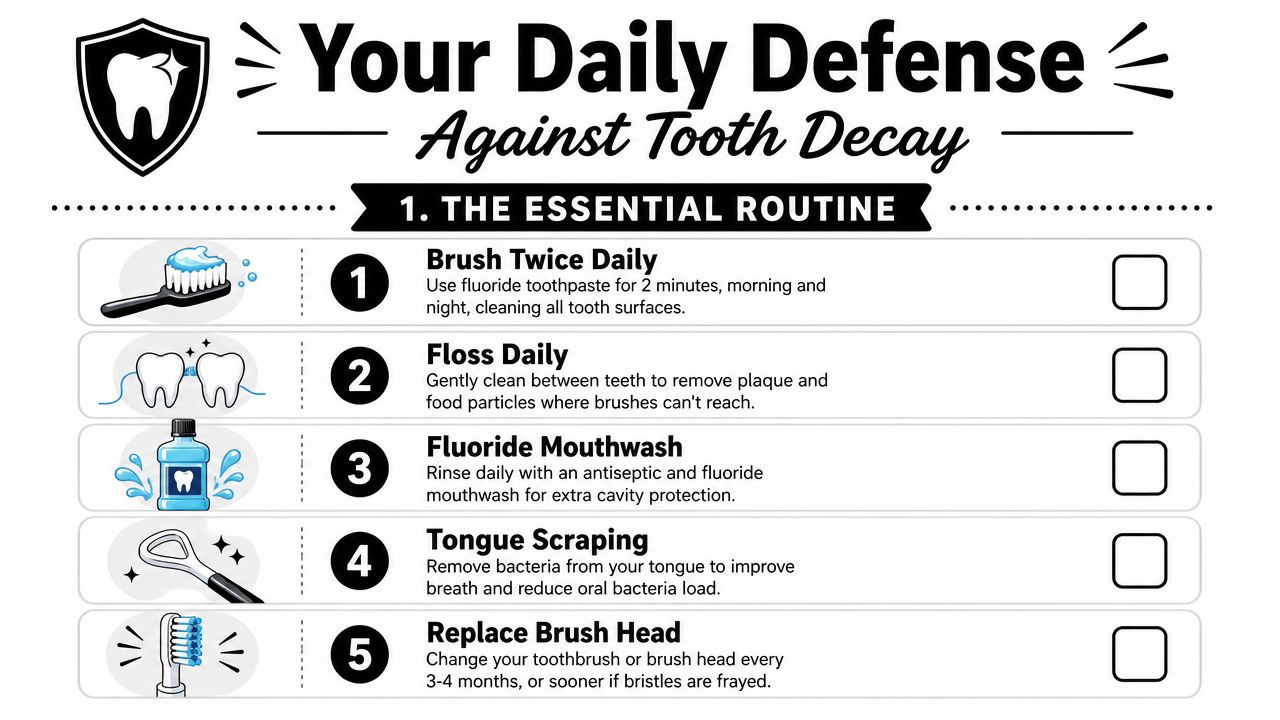
- Brush every morning and every night. Clean the front, back, and chewing surfaces. Don't ignore the gumline, where plaque tends to collect.
- Use fluoride toothpaste that does the job. For remineralization support, toothpaste should contain at least 1,100 ppm of fluoride, as described in this Frontiers for Young Minds overview of fluoride and enamel repair.
- Floss once a day. Toothbrush bristles don't clean tight contacts between teeth well enough. Those areas often hide early cavities.
- Consider a fluoride mouthwash. It can add another layer of support, especially for patients who are more cavity-prone.
- Clean the tongue. A tongue scraper or toothbrush can reduce the bacterial load and improve overall mouth freshness.
- Replace worn brush heads. Frayed bristles don't clean effectively and often miss the gumline.
A quick comparison helps patients spot the difference between effort and effectiveness:
| Habit | What works | What falls short |
|---|---|---|
| Brushing | Thorough cleaning twice daily | One careful brushing and one skipped night |
| Toothpaste | Fluoride toothpaste with adequate strength | Choosing paste based only on flavor or packaging |
| Between teeth | Daily flossing | Assuming brushing alone is enough |
| Tools | Fresh brush head and gentle technique | Pressing too hard with worn bristles |
Missing one night isn't the issue. Repeating that pattern is.
People looking for dental care, cleaning and exams, or new patient exams often expect prevention to be complicated. Usually, it isn't. The challenge is staying consistent with a few habits that interrupt decay every day.
The Anti-Cavity Diet and Lifestyle
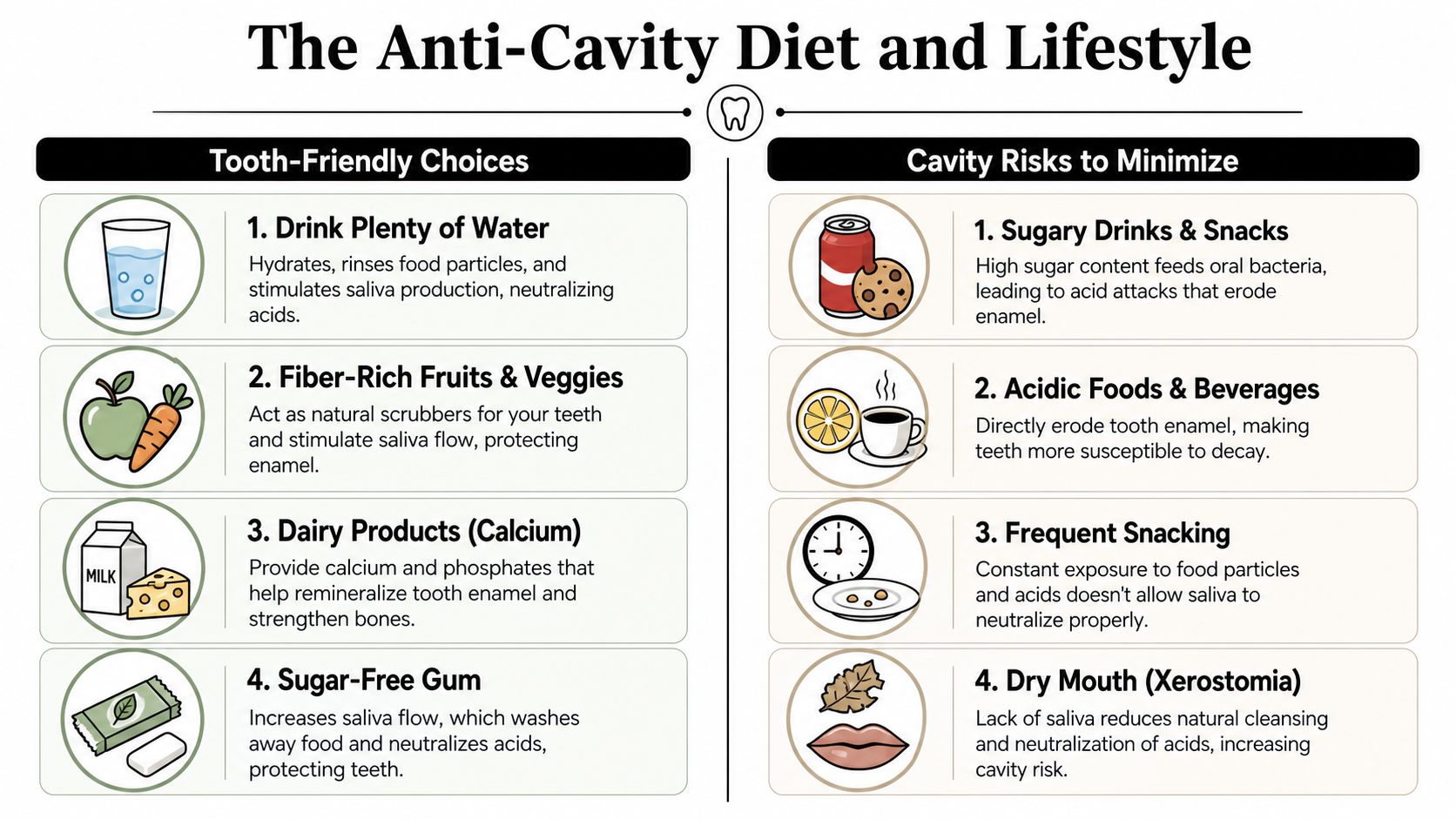
Many have heard “eat less sugar. That advice isn't wrong, but by itself it's incomplete. The bigger issue is often how often teeth are exposed to sugar and acid.
Why frequency matters more than most people think
The mouth needs recovery time. According to this explanation of sugar timing and cavity risk, bundling sweets with meals significantly reduces cavity risk compared to all-day sipping, even if total sugar intake is identical, and the mouth needs 20 to 30 minutes to recover from acid attacks. That changes how to prevent cavities in a practical way.
A dessert with dinner is usually less problematic than sipping a sugary iced coffee over hours. A sports drink finished quickly is different from taking small swallows all afternoon. The second pattern keeps the mouth under repeated acid stress.
That's why many healthy-looking routines still lead to decay. Someone may not eat much candy, but they nurse sweetened coffee, flavored water, or acidic drinks throughout the day. Another person may snack constantly on crackers, dried fruit, or granola bars and never give saliva time to rebalance the mouth.
Better swaps for a Miami routine
For many patients, the goal isn't perfection. It's changing the pattern.
- With coffee: Drink it in a shorter window instead of stretching it across the morning if it contains sugar.
- With snacks: Pair them with meals when possible rather than grazing all day.
- With hydration: Choose water often. It helps rinse the mouth and supports saliva.
- With exercise drinks: Save sports drinks for times they're needed, not as an everyday sip.
- With acidic foods: Be mindful of citrus-heavy drinks and other acidic habits that can contribute to wear. Patients concerned about that overlap between decay and wear can learn more about enamel erosion and how it affects teeth.
A simple decision guide can make daily choices easier:
| Situation | Better choice | Riskier pattern |
|---|---|---|
| Afternoon craving | Have sweets with lunch or dinner | Keep nibbling sweet snacks at the desk |
| Morning coffee | Finish it in one sitting | Sip sweetened coffee for hours |
| Thirst after workouts | Reach for water first | Use acidic drinks as all-day refreshment |
| On-the-go snacks | Pick lower-stickiness options and eat them once | Constant grazing in the car or office |
Saliva needs quiet time to help the mouth recover. Frequent sipping and snacking take that time away.
Diet advice works best when it feels realistic. Patients don't need to remove every enjoyable food. They need a pattern that gives teeth fewer acid attacks and more chances to recover.
Professional Dental Care at Ultra Smile DentalSpa
Even an excellent home routine has limits. A toothbrush can't diagnose a tiny cavity between teeth, and floss can't remove hardened buildup once it forms. That's where professional care changes the outcome.
What daily care can't do on its own
People often search for a dentist near me only after sensitivity or visible staining appears. That's understandable, but preventive dentistry works better before symptoms are obvious. Professional cleanings remove buildup that home care leaves behind. Exams help identify weak spots before they progress. Dental x-rays add another layer by revealing areas that can't be seen during a visual check.
This matters for more than cavities alone. Patients who may eventually need fillings, crowns, root canals, tooth extraction, or even dental implants near me benefit when a dentist tracks the health of the entire mouth over time. Prevention and restorative dentistry aren't separate worlds. They're connected.
A prevention-focused visit also gives patients personalized guidance, not generic reminders. If a person has crowded teeth, recurring food traps, dry mouth, old fillings, or cosmetic concerns, the routine may need adjustment. General advice helps. Specific advice changes behavior.
What patients can expect at a visit in Miami
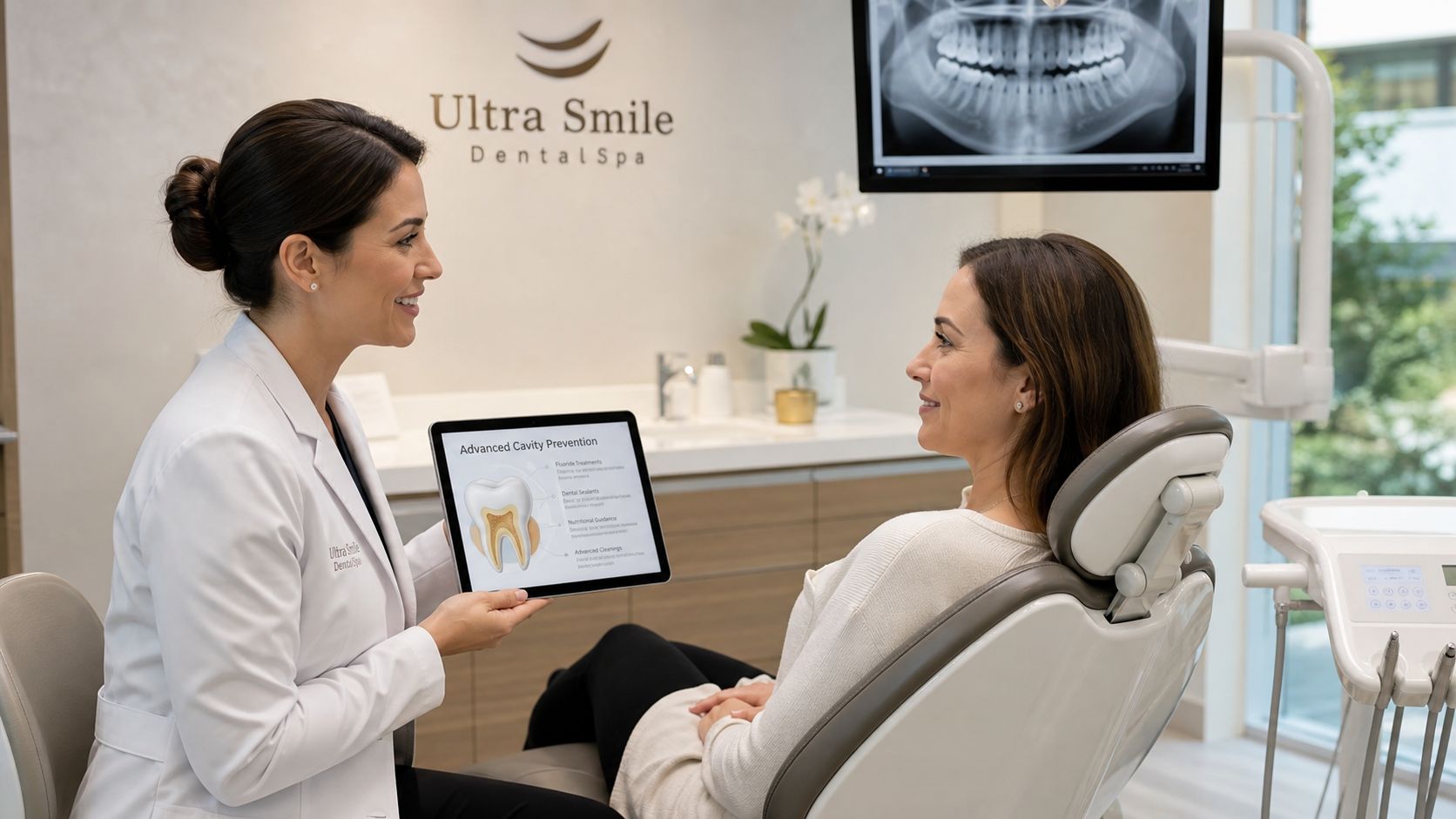
At a high-quality Miami practice, a new patient exam should feel organized, informative, and comfortable. The first visit commonly includes a review of concerns, a full exam, any needed x-rays, and a cleaning when appropriate. The goal is to understand both current problems and future risk.
For patients with dental anxiety, environment matters. Ultra Smile DentalSpa is known for making preventive care easier to keep up with by removing some of the tension people associate with the dentist. Patients are welcomed with refreshments, custom aromatherapy, streaming entertainment during procedures, and a soothing hot towel finish. Those details don't replace clinical quality. They support it by helping anxious patients return consistently.
A broad service menu also helps. If a routine exam uncovers a cracked tooth, old restoration failure, gum irritation, or bite-related wear, patients don't have to start over somewhere else. They can learn about general dentistry procedures available in one Miami dental practice and make decisions with continuity.
Here's why that continuity often improves follow-through:
- Clear planning: Patients understand what needs attention now and what can be monitored.
- Less avoidance: A calm, polished setting lowers the barrier for people who've delayed care.
- One-home convenience: Preventive, cosmetic, restorative, and emergency needs can be coordinated in one place.
For patients comparing a cosmetic dentist near me with a more general office, this combination matters. Cleanings and exams protect oral health. Cosmetic services such as teeth whitening or veneers benefit from that foundation. Restorative services like crowns, bridges, implants, and same-day treatment become easier to plan when the relationship is already established.
A closer look at the patient experience helps show what that feels like in practice:
Comfort doesn't make dentistry less clinical. It helps patients accept the clinical care they need.
For busy families and professionals in Downtown Miami, Midtown Miami, and Hallandale Beach, the strongest prevention plan is usually one that fits into real life. A practice can have excellent technology and still lose patients if visits feel rushed or intimidating. The opposite is also true. Hospitality alone isn't enough. The best result comes from combining modern care, strong diagnostics, and a setting patients won't avoid.
Advanced Prevention with Sealants and Fluoride Treatments
Some teeth need more than routine brushing and flossing. That's especially true for the deep grooves on back teeth, where food and bacteria can settle in places a toothbrush doesn't fully reach.
Why sealants deserve more attention
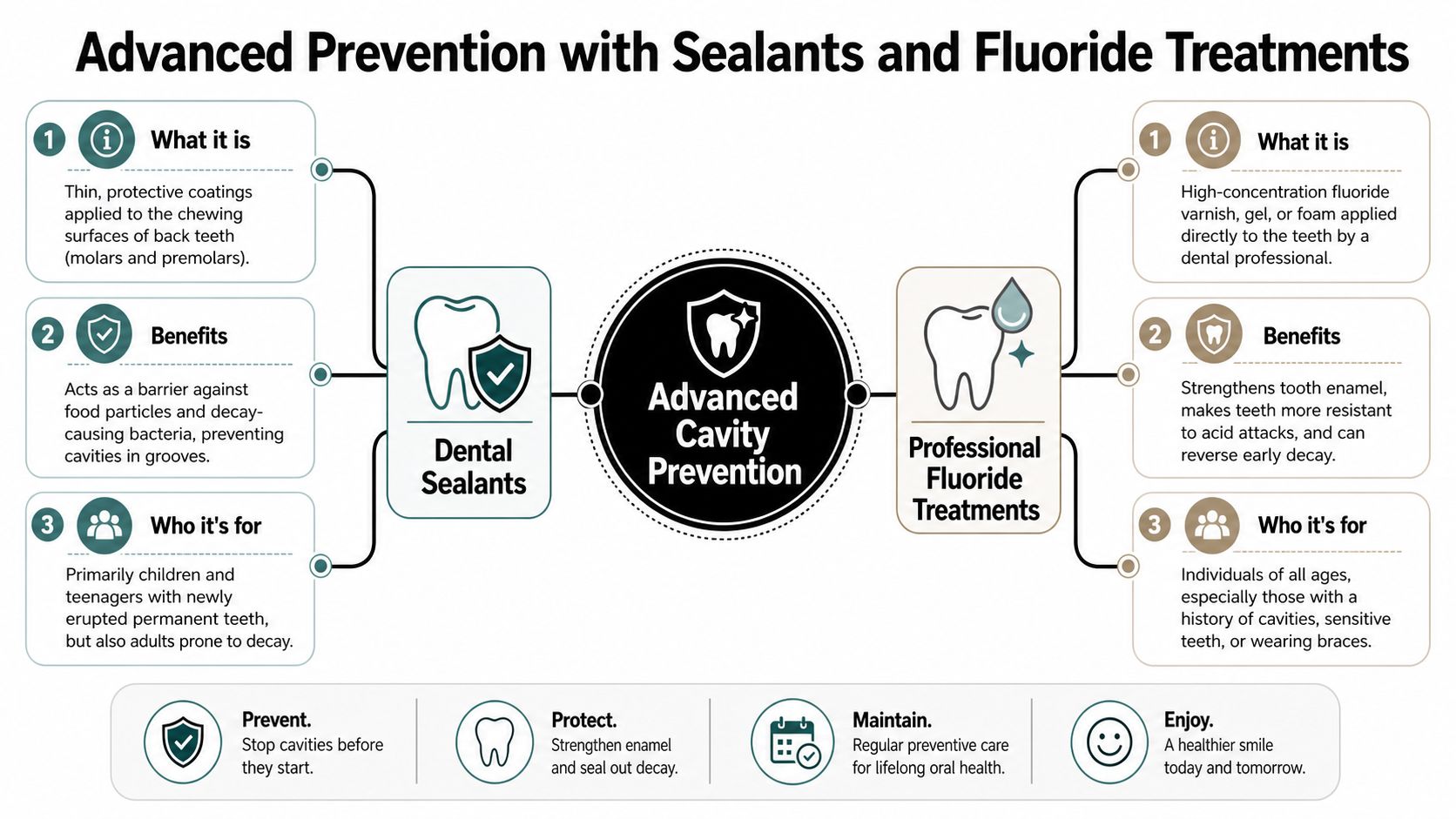
Dental sealants are thin protective coatings placed on the chewing surfaces of molars. Their purpose is straightforward. They create a physical barrier over the grooves where decay often starts.
The protection is meaningful. The CDC states that dental sealants applied to the chewing surfaces of back teeth prevent approximately 80% of cavities in those teeth, making them one of the most effective clinical interventions for cavity prevention, as explained on the CDC page about cavities and tooth decay prevention. That's one of the clearest examples in dentistry of a simple step producing strong preventive value.
Sealants are often associated with children, and for good reason. Newly erupted molars are vulnerable. But some cavity-prone adults can benefit too, especially when molars have deep grooves and a history of trapping plaque.
When professional fluoride makes sense
Professional fluoride treatments support enamel by strengthening the tooth surface and helping early weak areas recover. They're often useful for patients who develop cavities more easily, wear braces or aligners, experience sensitivity, or show early signs of enamel stress.
A simple comparison helps explain the difference between these two options:
| Treatment | Main role | Best known for |
|---|---|---|
| Sealants | Covering vulnerable grooves on back teeth | Physical protection where brushing may miss |
| Professional fluoride | Strengthening enamel surfaces | Added support for teeth under acid stress |
The best preventive treatment is the one that matches the tooth's actual weak point.
For families, these services are appealing because they're conservative. They don't involve drilling healthy tooth structure. They aim to reduce the chance that a filling will be needed later. For adults already investing in cosmetic dentistry, restorative dentistry, or long-term smile maintenance, that preventive advantage is worth discussing early rather than after decay appears.
Cavity Prevention for Every Stage of Life
The advice that works for a child with new molars isn't the same advice that works for an adult with dry mouth or a senior with gum recession. Prevention gets better when it matches the stage of life.
Children
Children need supervision longer than many parents expect. Brushing may look independent before it is thorough. Back teeth are easy to miss, and those are the teeth that often need the most attention.
A few high-value habits stand out:
- Hands-on help: Parents should check that the brush reaches all surfaces, especially the back molars.
- Early preventive conversations: Ask about whether sealants make sense once permanent molars are in.
- Keep it routine-based: Morning and bedtime brushing should happen at the same time every day, not only when the schedule is calm.
Teens
Teens often know the rules but drift on execution. Orthodontic treatment, sports schedules, social routines, and frequent snacking can all make consistency harder.
Two patterns deserve attention:
- Braces or aligners need more discipline: Food retention around attachments or wires can increase trouble spots if cleaning is rushed.
- Sports and energy drinks are common culprits: Even health-conscious teens may expose teeth to sugar and acid repeatedly through workout beverages.
Adults
Adults usually face a different set of trade-offs. Busy workdays, coffee habits, stress, cosmetic goals, and postponed dental visits all shape cavity risk.
For this group, prevention tends to improve when it feels efficient:
| Adult concern | Helpful focus |
|---|---|
| Long workdays | Keep a travel toothbrush or floss picks available |
| Cosmetic goals | Protect enamel before whitening or veneer planning |
| Dry mouth | Increase water intake and mention symptoms during exams |
| Old dental work | Monitor margins around fillings and crowns regularly |
Patients searching for a dentist in Miami, FL often want more than a cleaning. They want one place that can support both prevention and appearance, including teeth whitening, cosmetic dentistry, and restorative options if needed later.
Seniors
Seniors may deal with gum recession, medication-related dry mouth, and changing dexterity. Cavities near the gumline can become more of a concern, and home-care tools may need to change.
A few adjustments often help:
- Choose easier-to-handle tools: Electric toothbrushes or floss aids can improve consistency.
- Report dry mouth early: Saliva plays a protective role, so persistent dryness should always be discussed.
- Don't assume sensitivity is normal aging: It may reflect exposed root surfaces, wear, or early decay that should be evaluated.
Care that adapts by age is usually more successful than one-size-fits-all advice. Families benefit when one dental home can tailor prevention for children, teens, adults, and seniors without making the guidance feel generic.
When to Contact Your Miami Dentist
Prevention includes knowing when home care isn't enough. A small cavity can stay painless for a while, so waiting for severe discomfort isn't a good strategy.
Patients in Miami should contact a dentist if they notice:
- Temperature sensitivity: Especially if it keeps returning in the same tooth
- Pain when chewing: Pressure-related discomfort can signal decay, a crack, or another structural issue
- Visible dark spots or holes: Any obvious change in the tooth surface deserves evaluation
- Food trapping in one area: A repeated catch point may mean a cavity or failing dental work
- Swelling or sudden pain: That may require prompt attention from an emergency dentist
Someone searching for dentist near me, emergency dentist, or help with a possible tooth extraction is often already past the ideal prevention window. Still, catching the problem now is better than delaying longer. Early treatment is usually simpler, more comfortable, and easier to plan around work and family life.
Dr. Neda Bahmadi and the team understand that many patients arrive with a mix of concern and hesitation. The right next step is usually straightforward: get the tooth evaluated, understand what's happening, and make a plan before the problem grows.
If it's time to stop guessing and get clear answers, Ultra Smile DentalSpa offers patient-focused preventive care, new patient exams, dental cleanings, cosmetic dentistry, restorative treatment, and emergency dental services for Miami, Downtown Miami, Midtown Miami, and Hallandale Beach. Schedule a visit to protect your smile, address discomfort early, and make cavity prevention easier to maintain with a team that values both comfort and clinical quality.