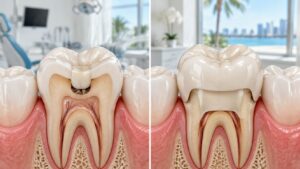
Porcelain veneers in Miami typically cost $925 to $2,500 per tooth, and composite veneers usually cost $400 to $1,500 per tooth in the local market, depending on the material, case complexity, and the dentist's approach to design and fabrication (Miami porcelain veneer pricing, South Florida veneer pricing). If the search for Veneers Near Me has started with equal parts excitement and nerves, that price range is often the first thing people want to understand before anything else.
A lot of people looking for a cosmetic dentist near me in Miami are dealing with the same quiet frustration. They smile less in photos, cover their mouth when they laugh, or keep noticing one chipped, stained, uneven, or worn front tooth that draws all their attention. Veneers can be an excellent solution for the right person, but they aren't a one-size-fits-all shortcut, and that's where clear guidance matters.
For many adults in Miami, FL, the concern isn't only how veneers look. It's whether the process will feel overwhelming, whether the teeth will be over-prepared, and whether the final result will look natural instead of obvious. A calm, comfort-focused setting can make that decision much easier, especially for patients who already avoid the dentist because of anxiety.
Table of Contents
- Your Search for Veneers in Miami Ends Here
- What Are Dental Veneers and Am I a Candidate
- Porcelain vs Composite Veneers A Detailed Comparison
- The Veneer Treatment Process at Ultra Smile DentalSpa
- Veneers Cost in Miami and Financing Options
- Why Choose Ultra Smile DentalSpa for Your Veneers in Miami
- FAQs About Dental Veneers and Patient Comfort
Your Search for Veneers in Miami Ends Here
Typing dentist near me or cosmetic dentist near me usually happens after months, sometimes years, of hesitation. Many patients in Downtown Miami, Midtown Miami, and Hallandale Beach have already tried whitening strips, changed lip angles in photos, or convinced themselves that the front teeth “aren't that bad. Then a work event, wedding, birthday, or simple close-up photo makes the issue feel harder to ignore.
Veneers work well when the concern is visible every day and simple whitening or reshaping won't solve it. They're designed to improve the look of front teeth that are chipped, stained, slightly uneven, spaced, or worn, while keeping the result suited to the face rather than making every smile look identical.
A local search usually starts with one concern
Some patients want one dark tooth to match the rest of the smile. Others want to close a small gap or soften minor irregularities that make their teeth look older than they feel. A smaller number arrive already thinking they need a full makeover, when a partial set may create the more natural result.
A good veneer plan starts with the smile line, facial proportions, bite, and enamel condition. It doesn't start with copying someone else's teeth.
That's why local follow-up care matters. Individuals seeking a dentist in Miami, FL for veneers are also searching for convenience. Veneers aren't just about placement day. They involve consultation, planning, try-in decisions, bonding, routine maintenance, and sometimes a night guard if clenching is part of the picture.
Cosmetic treatment should still feel comfortable
Anxiety changes how people make dental decisions. Some patients delay care because they worry about drills, injections, pressure, or being rushed through appointments. A practice that also provides cleanings and exams, dental x-rays, new patient exams, teeth whitening, restorative dentistry, tooth extraction, dental implants near me, and access to an emergency dentist can coordinate care more smoothly when a veneer candidate also needs foundational treatment first.
The right veneer provider in Miami should make three things clear from the beginning:
- What veneers can improve: chips, discoloration, spacing, and mild shape concerns.
- What they can't fix: every bite issue, every broken tooth, or every case with unhealthy gums.
- What the experience feels like: calm, organized, and respectful of dental anxiety.
What Are Dental Veneers and Am I a Candidate
Dental veneers are thin coverings placed over the front surface of teeth to improve color, shape, proportion, and symmetry. They're typically considered for the teeth that show when a person smiles, which is why treatment planning is as much about facial harmony as it is about the teeth themselves.
What veneers actually fix
Veneers are commonly used when someone has cosmetic concerns such as:
- Minor chips and worn edges: They can rebuild a clean, even outline.
- Deep discoloration: They can mask stains that don't respond well to whitening.
- Small spaces: They can close mild gaps without orthodontic treatment in select cases.
- Slight shape irregularities: They can make front teeth look more balanced and symmetrical.
- Mild alignment concerns: They can visually improve minor unevenness when the bite allows it.
A strong veneer candidate usually has healthy gums, good daily oral hygiene, and enough enamel for secure bonding. Veneers are cosmetic restorations, so the mouth needs to be stable before the cosmetic work begins.
When veneers make sense and when they don't
The most honest veneer consultation includes moments when the answer is “not yet or “not this treatment. Veneers are not indicated for large defects and can be damaged if a patient clenches or grinds their teeth without wearing a custom night guard, which is a critical safety point often missed in promotional content (clinical guidance on veneer limitations and bruxism).
That means some patients need gum treatment, restorative work, Invisalign, bonding, or crown treatment before veneers are considered. In other cases, cosmetic bonding is the more conservative choice.
Practical rule: Veneers should improve appearance without forcing a tooth into a role it can't support structurally.
A realistic self-check helps:
- Healthy gums matter: If the gums are inflamed or unstable, veneer margins won't behave predictably.
- Enamel matters: Veneers bond best when enough enamel remains.
- Bite habits matter: Clenching and grinding increase risk unless they're managed.
- Expectations matter: The goal should be natural enhancement, not a flat, overly white look that doesn't fit the face.
Patients searching veneers near me often expect a simple yes-or-no answer. In practice, the best answer comes from an exam that includes the bite, enamel, gum health, old fillings, smile line, and whether a few front teeth or a broader plan would create the most believable result.
Porcelain vs Composite Veneers A Detailed Comparison
A patient may sit in the consultation chair wanting a brighter, more even smile and still be unsure about one basic question: which material makes sense for their teeth, budget, and comfort level. That choice matters because porcelain and composite behave differently over time, look different in certain lighting, and involve different maintenance.
Porcelain veneers are custom-made in a lab and then bonded to the teeth. Composite veneers are shaped directly on the teeth, or created with composite resin in a more direct, chairside approach. Both can produce a beautiful result. The better option depends on how long the patient wants the result to last, how much refinement they expect in the finish, and whether they want the most conservative short-term option or a longer-term cosmetic plan.
How patients usually choose
Porcelain is often the better fit for patients who want the most lifelike surface, stronger stain resistance, and a restoration that tends to hold its appearance well for years. In the U.S. market, porcelain veneers account for 60% of market share and show a 94.4% survival rate at the 10-year mark when properly maintained (U.S. veneer market and porcelain survival data).
Composite is often chosen by patients who want a lower starting cost or a more conservative option in the right case. It generally requires less enamel removal, with preparation involving less than 0.3 millimeters of enamel wear in the Miami composite veneer context (composite veneer preparation detail).
In practice, the decision usually comes down to four questions:
- How long should the result last?
- How important is the most natural light reflection and surface texture?
- Does the budget call for a phased plan?
- Is the goal a modest cosmetic improvement or a more polished smile makeover?
Porcelain vs. Composite Veneers at a Glance
| Feature | Porcelain Veneers | Composite Veneers |
|---|---|---|
| Typical Miami cost per tooth | Higher upfront investment | Lower upfront investment |
| Appearance | More translucent, with a polished finish that usually looks closer to natural enamel | Attractive and effective, though often with less depth and surface nuance than porcelain |
| Longevity | Often chosen for longer-term durability | More likely to need maintenance, polishing, or earlier replacement |
| Stain resistance | Resists surface staining better | More likely to pick up discoloration over time |
| Preparation | Usually requires some enamel reshaping for proper fit | Often more conservative in tooth reduction |
| Best fit | Patients who want long-term stability and premium aesthetics | Patients who want lower initial cost, easier repairs, or a conservative first step |
Porcelain usually gives the most refined finish. Composite gives more flexibility.
I explain this to patients in simple terms. If someone drinks coffee daily, wants a very natural sheen, and does not want to revisit the cosmetics often, porcelain is usually the stronger choice. If someone wants to improve shape and color without making the same financial commitment at the start, composite can be a smart option.
There is also a comfort factor that nervous patients appreciate. Composite treatment can sometimes be completed more quickly and with less preparation, which feels easier for certain patients. Porcelain usually takes more planning and at least two stages, but many patients prefer that extra precision, especially in a calm, spa-like setting where each step is explained clearly and there are no surprises.
Neither material is automatically better. A younger patient with small chips, minor spacing, or a short-to-medium-term plan may do very well with composite. A patient who wants a more stable cosmetic finish and is ready to invest in a longer-lasting result often leans toward porcelain. The right recommendation should match the teeth, the bite, the cosmetic goal, and the patient's comfort level during treatment.
The Veneer Treatment Process at Ultra Smile DentalSpa
The veneer process feels much easier when it's predictable. Anxiety usually rises when patients don't know what happens next, how long appointments take, or whether the teeth will be aggressively reduced. A calm, step-by-step workflow changes that.
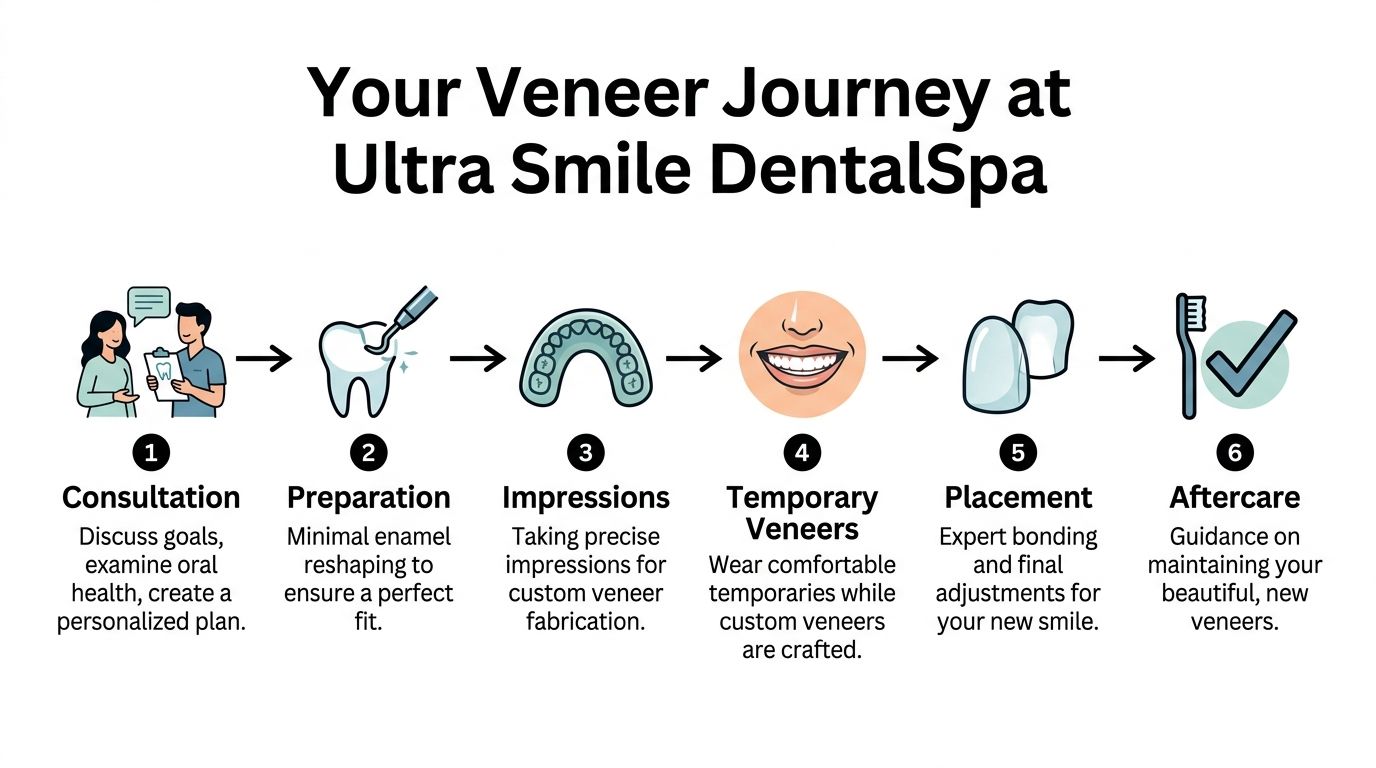
What happens at each visit
Treatment begins with a consultation. The dentist reviews smile goals, checks gum health, bite alignment, enamel condition, and any existing dental work that could affect the plan. If a patient also needs cleaning and exams, updated dental x-rays, or restorative care before cosmetic treatment, those needs are addressed first.
A typical veneer sequence includes:
Consultation and smile planning
The shape, shade, proportions, and number of veneers are discussed. This is also where a patient's concerns about sensitivity, temporaries, and natural appearance should be answered clearly.Conservative preparation
The front surface of the teeth is gently refined when needed so the veneers fit naturally rather than looking bulky.Impressions or digital records
Accurate records guide the custom fabrication of the final veneers.Temporary phase when appropriate
Temporary veneers can help protect prepared teeth and give the patient a preview of shape and length.Final bonding appointment
The veneers are tried in, adjusted, bonded, and polished with attention to bite balance and edge contour.Aftercare and maintenance
The patient receives guidance on hygiene, food habits, follow-up care, and whether a night guard is needed.
Why minimal preparation matters
The technical goal is not only to place a veneer. It's to preserve enamel whenever possible and create a bond that holds up over time. Optimal veneer longevity is achieved when the adhesive is bonded to a minimally prepared enamel layer of 0.3 to 0.5 mm, which increases bond strength by up to 40% compared to cases where more tooth structure is removed (bonding protocol and enamel preservation).
That detail matters because over-preparation can make a case weaker. Good veneer dentistry respects biology as much as appearance.
Patients with dental anxiety usually do better when the visit feels paced, explained, and quiet. Comfort isn't a luxury add-on. It changes how well people tolerate care.
In a spa-style dental setting, small details help. Refreshments on arrival, custom aromatherapy, streaming entertainment during treatment, and a hot towel finish can make the appointment feel far less clinical than patients expect. For nervous adults searching cosmetic dentist near me in Miami, that shift often matters as much as the veneer material itself.
Veneers Cost in Miami and Financing Options
A veneer consultation usually reaches the same practical question within the first few minutes. How much will this cost, and do I need to do all of it at once?
In Miami, veneer fees vary widely based on the material, the number of teeth involved, how much smile design work is needed, and whether old bonding, wear, or bite issues have to be corrected first. A patient improving four front teeth will be in a very different category from someone redesigning ten upper teeth for full smile balance.
Porcelain veneers usually cost more than composite because they require more planning, lab work, and customization. Composite can reduce the upfront fee, but it often needs more maintenance over time and may not hold polish and color as well. The right choice is not always the cheaper one or the more expensive one. It is the option that fits the patient's goals, bite, habits, and timeline.
For a clearer local breakdown, patients can review how much veneers cost in Miami before the consultation. That helps set expectations early and makes the treatment discussion more useful.
What affects the final fee
A veneer quote is built from several clinical decisions, not just a price per tooth:
- Number of teeth treated: Some smiles need six to eight visible upper teeth. Others need fewer.
- Material selected: Porcelain and composite involve different fees and different long-term trade-offs.
- Complexity of the case: Worn edges, uneven tooth position, existing crowns or bonding, and bite adjustments increase planning time.
- Level of customization: Temporary mockups, shade refinement, and high-end lab fabrication affect the final total.
- Pre-treatment needs: Whitening, gum contouring, cavity treatment, or replacement of failing restorations may need to happen first.
This is also where careful planning protects the budget. A full set is not automatically the right answer. In many cases, a selective veneer plan gives a more natural result and avoids treating teeth that do not need cosmetic work.
Financing and phased treatment
Insurance does not usually cover veneers in the way it covers medically necessary restorative treatment. If part of the plan overlaps with functional care, coverage may be possible for that portion, but patients should expect cosmetics to be an out-of-pocket investment.
The better approach is clear, written planning. Patients should know the total fee, what is included, what may change if underlying issues are found, and whether treatment can be phased over time.
At Ultra Smile DentalSpa, that financial conversation should feel as calm as the clinical visit. Nervous patients often do better when they are not being rushed into a decision, especially for elective cosmetic treatment. A quieter setting, straightforward numbers, and time to ask questions make the process easier to handle.
Common payment discussions include:
- Phasing treatment over multiple visits or stages
- Financing options for qualified patients
- Choosing a partial veneer case instead of a full smile redesign
- Separating cosmetic work from restorative needs so priorities stay clear
For many Miami patients, the most comfortable plan is the one that balances appearance, durability, and monthly affordability without pressure.
Why Choose Ultra Smile DentalSpa for Your Veneers in Miami
The difference between a veneer case that looks polished and one that looks obvious often comes down to details patients can't easily see on a website. Smile design judgment, enamel preservation, calm communication, and follow-up access all matter.

A calmer experience for anxious patients
For patients who feel tense in a dental chair, environment matters. Ultra Smile DentalSpa provides veneer treatment in a setting built around comfort, with refreshments, custom aromatherapy, streaming entertainment during procedures, and a soothing hot towel finish. That approach is especially relevant for adults who need cosmetic care but have been postponing it because past dental visits felt rushed or stressful.
Dr. Neda Bahmadi and the team also provide broader dental care, which helps when a veneer patient needs foundational treatment first. Someone searching dentist near me, emergency dentist, tooth extraction, or dental implants near me may not realize those needs can affect cosmetic timing. Coordinated care in one practice keeps treatment planning more consistent.
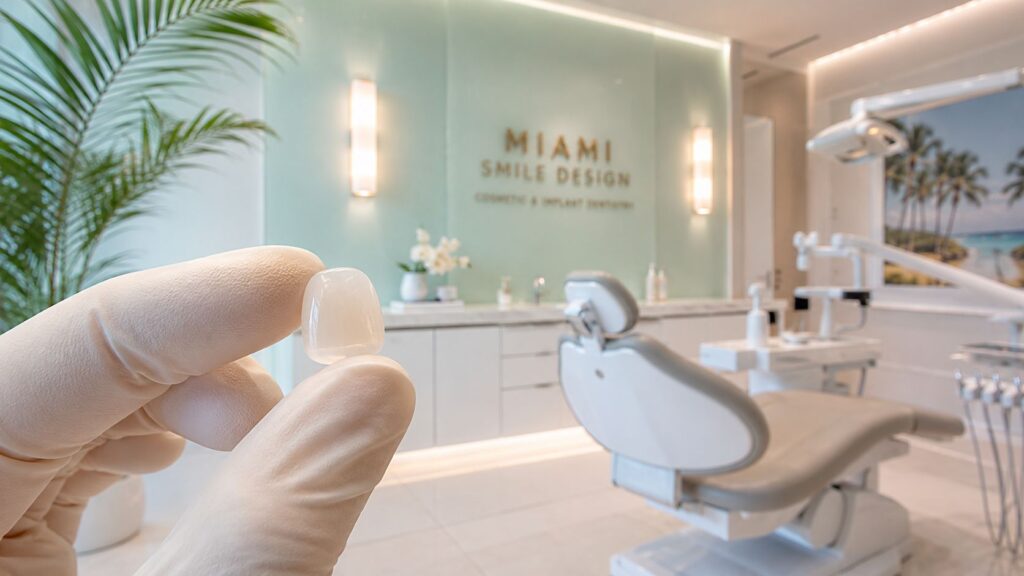
A closer look at the environment helps explain why nervous patients often prefer a less clinical setting:
Convenience matters when follow-up care matters
Location is part of care quality. A veneer patient may need consultation, preparation, bonding, adjustments, hygiene maintenance, or a night guard review. Access across Downtown Miami, Midtown Miami, and Hallandale Beach makes those visits easier to keep.
Other practical reasons this model works well include:
- Bilingual communication: Patients can ask detailed cosmetic questions comfortably.
- Modern planning tools: Digital records and precise fabrication support a more individualized result.
- Broad range of services: From teeth whitening and Invisalign to crowns, implants, and routine maintenance, the broader care plan stays aligned.
- Transparent treatment conversations: Patients can discuss alternatives instead of feeling pushed into one cosmetic path.
A veneer office should feel calm before the procedure starts, not only after it ends.
For discerning patients in Miami who want cosmetic refinement without the high-pressure feel that sometimes surrounds smile makeovers, that balance of precision and comfort is often what makes the decision finally feel manageable.
FAQs About Dental Veneers and Patient Comfort
Do veneers hurt
Most patients tolerate veneer treatment well when the case is properly planned and the appointments are paced carefully. Some teeth may feel temporarily sensitive during the process, especially after preparation, but the experience shouldn't feel chaotic or intimidating. Patients who want a closer look at comfort expectations can review whether porcelain veneers hurt.
How should veneers be cared for
Veneers still require daily brushing, flossing, and routine dental visits. They aren't a replacement for oral hygiene. Patients who clench or grind need to take a custom night guard seriously, because bite pressure can damage veneers and natural teeth alike.
How many veneers are usually needed
That depends on the smile line, tooth display, and cosmetic goal. Some patients need a limited number of front veneers for a natural result, while others want a broader smile redesign. A full set isn't automatically better. In many cases, restraint creates the more believable smile.
What if severe dental anxiety has delayed treatment
That's common. Patients with anxiety usually do best when the office slows the pace, explains each step clearly, and creates a sensory experience that feels calmer than a traditional dental appointment. A spa-like environment, comfort amenities, and clear communication can make cosmetic treatment feel much more approachable.
Are veneers always the right cosmetic option
No. Some patients are better suited for whitening, bonding, orthodontic treatment, crowns, or restorative care before cosmetics. The right answer depends on enamel, gums, bite, and the condition of the teeth, not just the appearance of the smile.
If veneers have been on the mind, the next step is a consultation that looks at smile goals, enamel health, bite habits, and comfort needs without pressure. Ultra Smile DentalSpa serves patients across Downtown Miami, Midtown Miami, and Hallandale Beach with cosmetic, restorative, and general dental care in a setting designed to feel calm, clear, and supportive from the first visit forward.