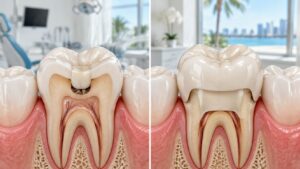
For most patients, porcelain veneers involve little to no pain during treatment because local anesthesia is used, and any soreness or sensitivity afterward is usually mild and temporary. That brief sensitivity often lasts 10 to 24 hours, and in some cases 1 to 2 days, before it fades.
That matters if a patient in Miami is sitting with the same question many cosmetic dentistry patients ask before booking a smile consultation. They want the result, but they don't want a painful experience getting there. The honest answer is reassuring. Veneers are typically comfortable, but comfort depends on careful planning, conservative tooth preparation, and precise final adjustment.
Patients searching for a dentist in Miami, FL, a cosmetic dentist near me, or even an emergency dentist after a bad dental experience usually aren't just asking about pain tolerance. They're asking whether the process will feel manageable, whether recovery will disrupt work or social plans, and whether they'll know the difference between normal sensitivity and a problem that needs attention.
For patients across Downtown Miami, Midtown Miami, and Hallandale Beach, that distinction is the part that often gets skipped. Mild sensitivity can be normal. Ongoing or sharp pain isn't something to ignore.
Table of Contents
- Your Guide to a Comfortable Veneer Experience in Miami
- What Really Happens During Your Veneer Appointments
- The Truth About Pain and Porcelain Veneers
- How We Ensure Your Comfort at Ultra Smile DentalSpa
- Recovery What to Expect After Your Veneers Are Placed
- When to Call Your Miami Dentist About Veneer Pain
- Schedule Your Pain-Free Veneer Consultation in Miami
Your Guide to a Comfortable Veneer Experience in Miami
The fear usually isn't the veneer itself. It's the unknown. Patients often worry about drilling, nerve pain, or being stuck with a long recovery after cosmetic dentistry.
Porcelain veneers don't usually work that way. Modern veneer treatment is designed to be conservative, and some veneer options may involve very little to no enamel removal. Dental sources also commonly note that porcelain veneers can last 10 to 20+ years with proper care, and one source cites a U.S. average cost of $925 to $2,500 per tooth. Those details show veneers are planned as a long-term cosmetic restoration, not a rushed fix, and they're typically completed with a comfort-focused approach under anesthesia during treatment, as described by this overview of veneer expectations and longevity.
What anxious patients usually want to know
Many don't ask, "Will I feel anything at all?" They ask more practical questions:
- Will the teeth be numb during treatment? Yes, local anesthesia is typically used during preparation.
- Will it hurt that night? Some mild soreness or temperature sensitivity can happen.
- Will normal life stop? Most patients return to regular activities quickly.
- Will a bad fit feel obvious? Often, yes. Pain when biting or one tooth feeling "high" deserves attention.
Practical rule: A veneer appointment should feel controlled and predictable, not overwhelming.
For patients looking for a cosmetic dentist near me or a dentist near me in Miami, comfort isn't just about pain medicine. It's about communication, planning, and making sure each tooth is prepared only as much as needed.
Why the right local dentist matters
A veneer case done thoughtfully feels very different from one done aggressively. Careful smile design, precise bite evaluation, and gentle technique reduce the chance of post-treatment problems.
That matters whether someone is coming in for veneers, teeth whitening, cleaning and exams, new patient exams, dental x-rays, or broader restorative dentistry like crowns, root canals, or dental implants near me searches. Cosmetic work should never feel disconnected from overall dental health. Veneers look their best and feel their best when the bite, gums, and underlying teeth are stable.
What Really Happens During Your Veneer Appointments
The veneer process usually feels much easier once the steps are clear. Most patients are more comfortable when they know what happens, what they may feel, and what should not happen.
The preparation visit
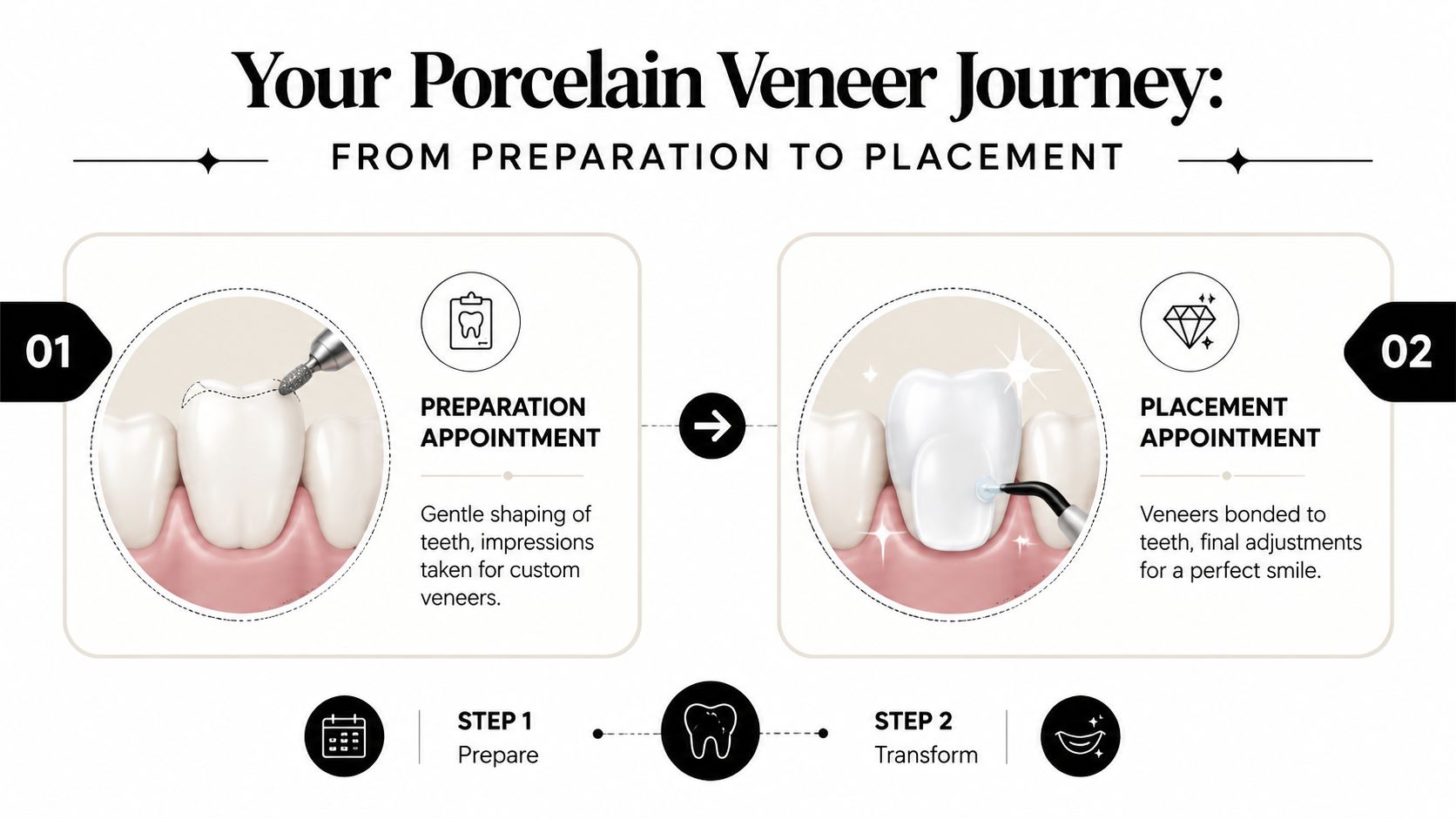
The first major visit starts with planning. The dentist evaluates smile shape, tooth position, gum display, and the way the upper and lower teeth meet. This is also when patients can ask practical questions about shade, shape, maintenance, and whether veneers are the right solution compared with other cosmetic dentistry options.
Once the plan is confirmed, local anesthetic is used before any preparation begins. That keeps the treatment comfortable while the teeth are shaped. Patients may notice pressure, vibration, or water spray, but sharp pain during this part isn't the expectation.
A small amount of enamel is sometimes removed so the porcelain shell can fit naturally. If temporary veneers are used, they protect the teeth and let the patient function normally between visits.
The placement visit
At the second main visit, the final porcelain veneers are checked carefully before bonding. The dentist reviews fit, contour, edge length, shade, and bite contact, as a veneer that looks beautiful but sits too high in the bite can create real discomfort later.
The bonding appointment is usually more about precision than discomfort. Patients may feel rinsing, gentle pressure, and time spent holding still while each veneer is seated and secured.
A calm veneer appointment usually feels like a series of small steps, not one big ordeal.
What causes temporary sensitivity
The most useful clinical detail is this. Most porcelain-veneer discomfort is driven by dentin exposure and pulpal inflammation, not the veneer itself. When enamel is reduced, the tooth loses some of its natural thermal barrier, so hot and cold sensitivity can happen for a short time even when treatment is done correctly. In pain biology, these sensations are linked to nociceptive A-δ and C fibers and inflammatory neuropeptides such as substance P, as explained in this review of dental pain mechanisms.
That sounds technical, but the practical meaning is simple. The tooth may react briefly while it adjusts. The veneer isn't "hurting" the tooth on its own. The sensitivity usually comes from the temporary effect of preparation on living tooth structure.
The Truth About Pain and Porcelain Veneers
Patients asking do porcelain veneers hurt usually want a direct answer, not marketing language. The accurate answer is that veneers are generally minimally painful rather than painful, and local anesthesia is commonly used during preparation. Afterward, soreness or sensitivity is usually short-lived, often lasting 10 to 24 hours or sometimes 1 to 2 days, according to this patient-facing explanation of what veneer treatment feels like.
What patients usually feel
During treatment, most patients feel movement, pressure, and the normal sensations of dental work without pain. After treatment, what they notice is usually one of three things:
- Mild tenderness: The teeth and gums can feel slightly worked on.
- Temperature sensitivity: Cold drinks or very hot foods may feel more noticeable for a short time.
- Bite awareness: New veneers can feel unfamiliar at first, even when they fit correctly.
That last point causes a lot of confusion. New veneers can feel different without being wrong. The mouth notices even small changes quickly.
Why sensitivity can happen
A helpful way to think about it is this. Teeth are used to their old surface, edges, and contact points. Veneers change those details in a controlled way. For a brief adjustment period, the teeth and surrounding tissues may react.
What doesn't work is pretending every sensation is normal. Significant pain is not the standard veneer experience. If a patient develops worsening discomfort, a sharp jolt when biting, or pain centered around one tooth, that deserves review rather than reassurance.
| Sensation | Usually expected | What it often means |
|---|---|---|
| Pressure during prep | Yes | Local anesthesia is working and the tooth is being shaped |
| Brief cold sensitivity after placement | Yes | Short adjustment after enamel preparation |
| Sharp pain that keeps increasing | No | Needs clinical evaluation |
| Pain only when teeth come together | No | Bite may need adjustment |
Mild sensitivity is common. Persistent pain is a clue, not a cosmetic side effect to push through.
How We Ensure Your Comfort at Ultra Smile DentalSpa
A calm dental setting changes the entire veneer experience for anxious patients. Environment doesn't replace clinical skill, but it does affect how the body responds to treatment. Slower breathing, less muscle tension, and clear communication can make a cosmetic appointment feel far more manageable.

Comfort starts before treatment begins
At Ultra Smile DentalSpa, comfort is built into both the setting and the clinical process. Patients in Miami are welcomed with refreshments, custom aromatherapy, streaming entertainment during procedures, and a soothing hot towel finish. For someone who has delayed cosmetic dentistry because of fear, those details matter because they lower tension before the appointment even starts.
The other part is pacing. A rushed cosmetic appointment tends to feel harder than it needs to. Patients do better when the team explains each step, checks numbness before preparation, and pauses when needed.
Some patients also benefit from extra help relaxing. For those cases, it's useful to review available options for sedation dentistry in Miami before moving ahead with treatment.
Clinical details that make veneers feel easier
The biggest comfort factor isn't a spa amenity. It's precision.
When veneers are planned carefully, the dentist can preserve more natural tooth structure, shape conservatively, and adjust the final bite accurately. That reduces the chance of pressure points, gum irritation, and the "one tooth feels off" problem that patients sometimes describe after cosmetic work elsewhere.
Helpful features in a comfort-focused veneer visit often include:
- Thoughtful diagnostics: Digital records, photos, and bite evaluation help identify issues before treatment starts.
- Conservative preparation: Less unnecessary enamel reduction usually means an easier recovery.
- Material selection: Premium materials support fit, durability, and appearance.
- Final bite refinement: Small adjustments after bonding can make the difference between smooth function and repeated irritation.
A short office walkthrough can help anxious patients know what to expect before booking:
Some veneer discomfort comes from the procedure. A surprising amount comes from anxiety, jaw tension, and uncertainty. The right office addresses all three.
This matters beyond veneers. Patients who come in for tooth extraction, root canal care, dental implants near me concerns, or emergency visits often carry the same fear pattern into cosmetic dentistry. A practice that treats comfort as part of treatment, not an afterthought, tends to create better experiences across the board.
Recovery What to Expect After Your Veneers Are Placed
The first thing most patients notice after veneers are placed is that the teeth feel new, not damaged. That newness can include brief sensitivity, especially with very cold or very hot foods. What matters is the direction of the recovery. It should settle, not escalate.
The first couple of days
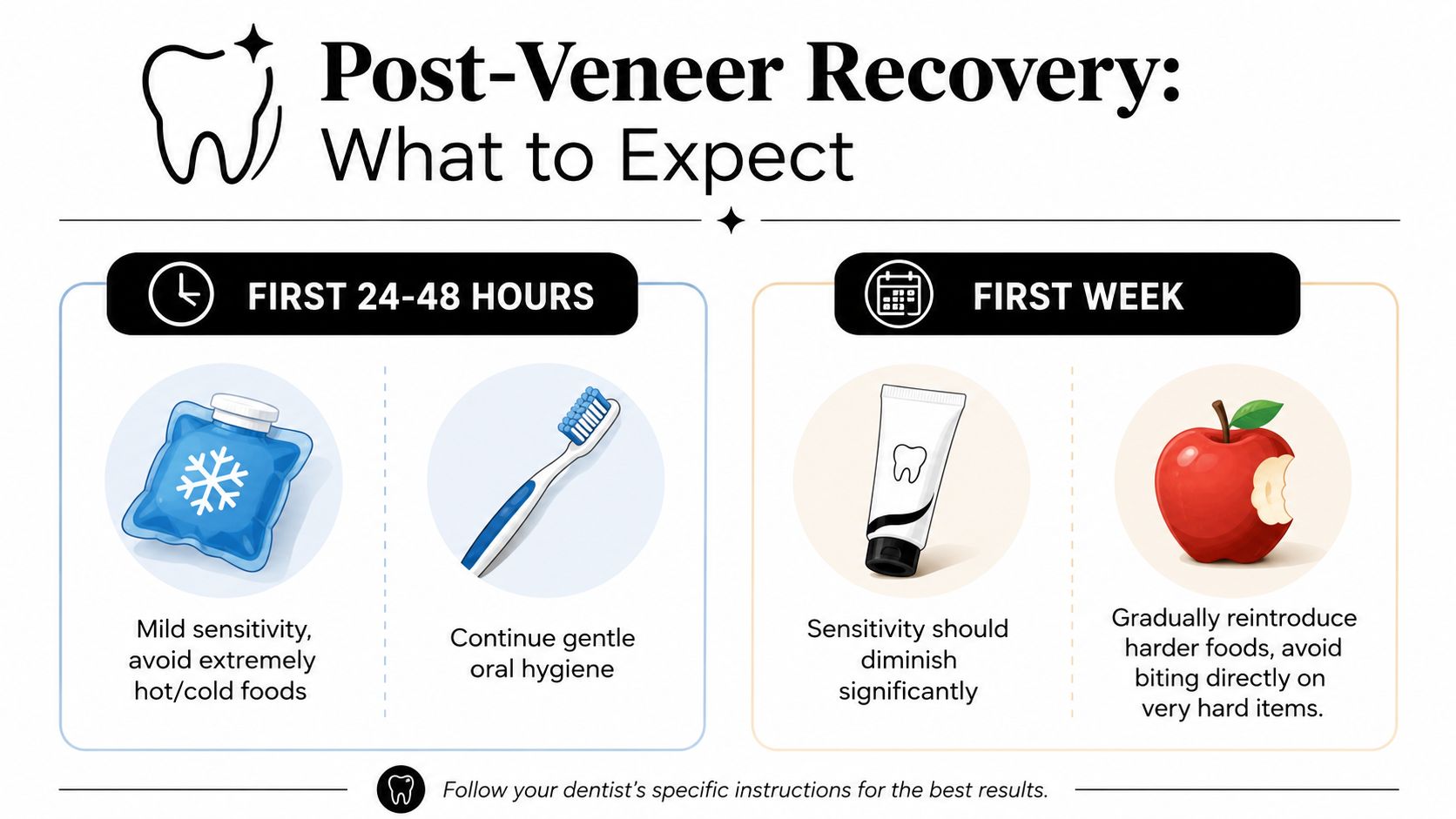
During the early adjustment period, the goal is simple. Keep the teeth comfortable and avoid testing them.
A practical approach includes:
- Choose milder temperatures: Skip extremely hot or very cold foods if the teeth feel reactive.
- Brush gently: Normal oral hygiene still matters, but a softer touch helps if the gums feel tender.
- Chew mindfully: Don't clamp down on hard foods right away just to see how everything feels.
- Pay attention to patterns: General mild sensitivity is different from one tooth that hurts every time it bites.
Patients sometimes worry that any discomfort means veneers were a mistake. That's not usually the case. Cleveland Clinic notes that veneers are cosmetic and don't strengthen teeth, which is why persistent pain after placement shouldn't be treated as a normal cosmetic side effect. That distinction, along with guidance that mild soreness in the first days can be normal while worsening or localized pain should prompt review, appears in Cleveland Clinic's veneer overview.
The first week
By the end of the first week, most patients expect the smile to feel more natural in daily life. Speaking, smiling, and normal eating usually become easier as the mouth adapts.
This is also a good time to notice what isn't happening. Recovery shouldn't drift toward stronger pain, gum swelling, or avoidance of chewing on one side.
A simple check can help:
| Recovery sign | Usually reassuring | Worth a call |
|---|---|---|
| Sensitivity is fading | Yes | No |
| Bite feels more natural each day | Yes | No |
| One spot hurts more with time | No | Yes |
| Pain starts to localize to one tooth | No | Yes |
When to Call Your Miami Dentist About Veneer Pain
The common assumption is that if teeth were just worked on, pain must be normal. That's not a safe rule with veneers. Ongoing pain after placement is often a sign that something needs adjustment.
Signs that aren't part of normal recovery
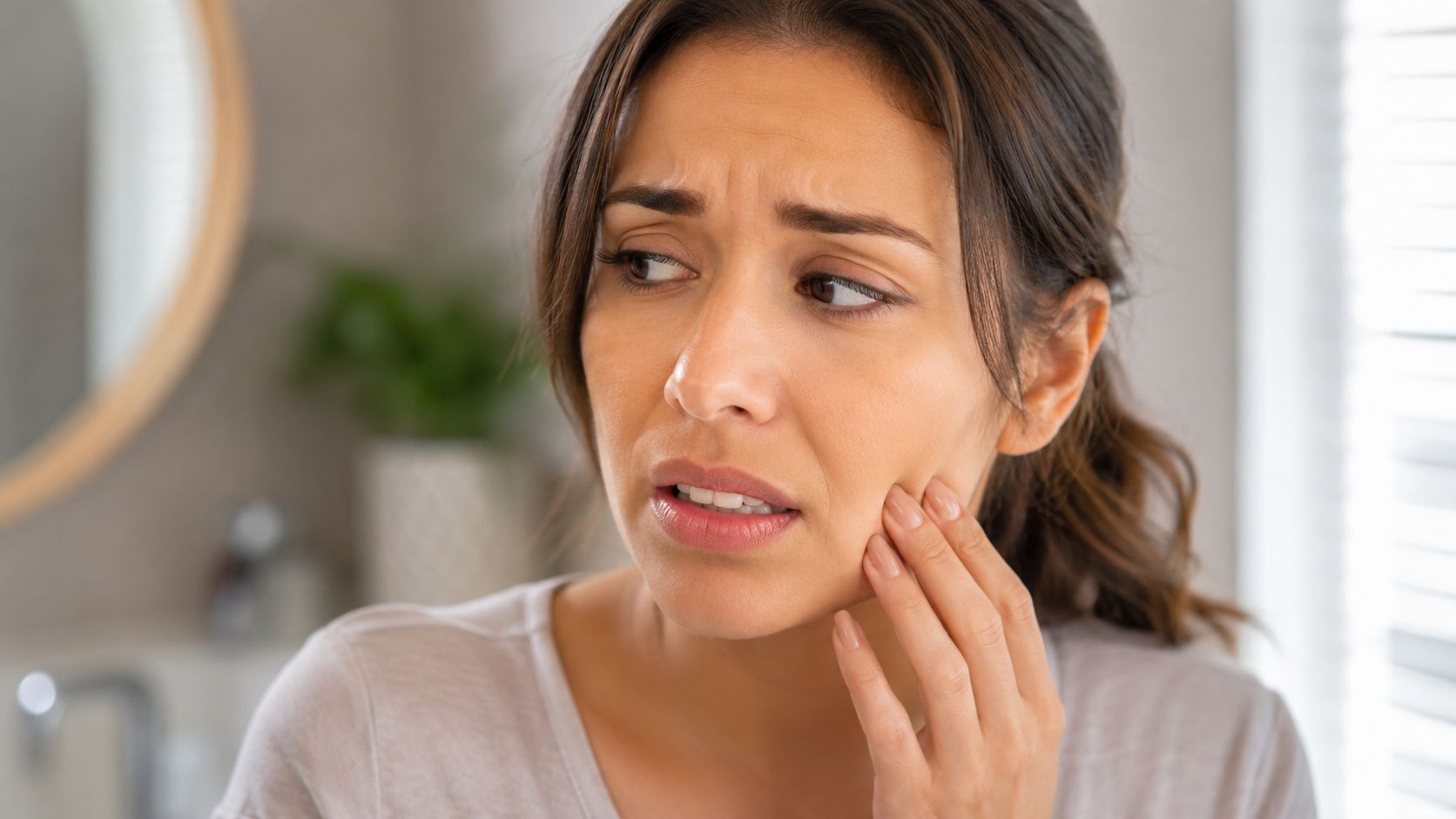
A properly placed veneer shouldn't cause continuing pain. Persistent or localized pain after veneer placement is a technical red flag rather than a normal recovery symptom. Pain under or around a veneer can point to bite misalignment, pulpal irritation or nerve inflammation, decay at the margin, gum infection, or a loose or cracked veneer. Clinicians typically confirm the cause with an exam and X-rays, as described in this clinical note on pain under veneers.
Call a dentist in Miami, FL promptly if any of these show up:
- Pain on biting: Especially if one tooth feels high or hits first.
- Localized throbbing: A single tooth shouldn't become the center of worsening pain.
- Swollen or irritated gums around one veneer: That may signal contour or gum issues.
- A veneer that feels loose or sharp: Movement or edge changes need inspection.
For patients searching online for an emergency dentist, this is one of those moments when it makes sense to stop waiting and have the area checked. Some problems are minor and corrected with a bite adjustment. The key is not assuming the pain will pass.
If pain is getting more specific instead of more settled, the tooth needs attention.
Schedule Your Pain-Free Veneer Consultation in Miami
Porcelain veneers are meant to improve a smile without turning treatment into an ordeal. For most patients, the process is comfortable during the appointment and followed by only brief, mild sensitivity. The more important question isn't just "Do porcelain veneers hurt?" It's whether the treatment is being planned and adjusted with enough care to keep recovery on track.
Patients in Miami who want a straighter, brighter, more balanced smile often compare veneers with whitening, bonding, Invisalign, crowns, and other cosmetic or restorative options. Veneers can be a strong solution when shape, color, spacing, and symmetry all need improvement at the same time. Cost planning is part of that decision too, and patients can review what veneers may cost in Miami before scheduling a consultation.
For anyone who has been putting off cosmetic dentistry because of fear, the right next step is a personalized exam. A careful consultation can determine whether veneers are appropriate, how conservative the preparation can be, and what kind of recovery to expect based on the teeth, bite, and goals.
If you're looking for thoughtful cosmetic dentistry, gentle care, and a clear veneer plan in Miami, Ultra Smile DentalSpa offers consultations for patients from Downtown Miami, Midtown Miami, and Hallandale Beach who want answers before committing to treatment.