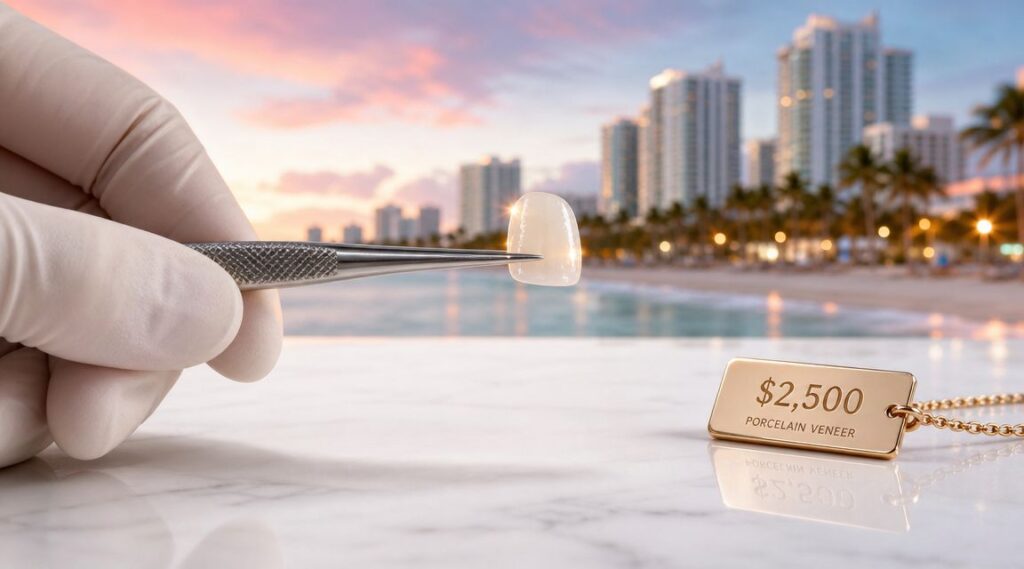
Veneers usually cost $500 to $2,500 per tooth, with a widely cited national average of $1,765 for a single veneer and about $15,486 for six to eight veneers based on CareCredit's veneer cost guide. In Miami, the cost for a single porcelain veneer typically ranges from $1,100 to $2,500, and the final price depends on the material, the number of teeth treated, the clinical workflow, and the level of cosmetic planning involved.
Many people searching how much do veneers cost are already close to making a decision. They're comparing smile photos, wondering whether to fix one tooth or redesign the full front smile, and trying to figure out if the investment makes sense for their budget and lifestyle. In a city like Miami, where appearance matters and patients expect polished cosmetic results, veneer pricing often reflects far more than the porcelain shell itself.
That's especially true when treatment is performed in a setting that prioritizes both aesthetics and comfort. Patients looking for a cosmetic dentist near me or a dentist in Miami, FL usually aren't only shopping for the lowest number. They're also weighing craftsmanship, natural-looking results, convenience, and whether the experience feels calm and personalized instead of rushed.
Table of Contents
- Your Guide to Veneer Costs in Miami
- Veneer Cost in Miami A 2026 Price Breakdown
- Key Factors That Influence Your Final Veneer Price
- Porcelain vs Composite Which Is Right for Your Budget
- Are Veneers Covered by Dental Insurance
- The Veneer Process at Our Miami Dental Spa What to Expect
- Protecting Your Investment The Longevity of Veneers
- Frequently Asked Questions About Veneer Costs
Your Guide to Veneer Costs in Miami
You sit down for a cosmetic consultation expecting a simple number, then realize the question is bigger than price per tooth. In Miami, veneer costs reflect the design work behind your smile, the materials selected, the skill of the dentist and ceramist, and the level of comfort built into the experience.
Veneers are usually quoted per tooth, but the total investment depends on the scope of the case. A small update may involve one or two teeth. A more balanced smile often includes several upper front teeth so the color, shape, and proportions match naturally. That difference is why two veneer plans can have very different totals, even when both are clinically appropriate.
Earlier pricing benchmarks already outlined the national averages by veneer type. In Miami, those numbers are helpful as a starting reference, but they do not tell the whole story. Local fees often reflect a high-touch cosmetic setting, longer planning appointments, custom smile design, provisional restorations when needed, and close attention to details that affect how veneers look in bright sunlight, on camera, and in everyday conversation.
A simple comparison
| Veneer type | Typical pricing direction in Miami |
|---|---|
| Chairside composite | Lower upfront cost |
| Lab-made composite | Mid-range option |
| Porcelain | Higher upfront cost, premium cosmetic choice |
| Porcelain laminate | Often priced near or above standard porcelain |
Patients also weigh veneers against other cosmetic options such as teeth whitening, Invisalign, or bonding. That decision should be based on the problem being solved. Veneers can correct shape, spacing, worn edges, and discoloration that whitening will not fix, but they are not automatically the right choice for every smile.
Practical rule: Focus on value, not just the quote. The right treatment is the one that addresses the cosmetic concern predictably and still looks good years from now.
For patients in Downtown Miami, Midtown Miami, or Hallandale Beach, pricing should be viewed in context. A well-planned veneer case may include digital design, preparation appointments, temporaries, final placement, bite refinement, and follow-up care. In a spa-like cosmetic practice, patients are also paying for time, precision, comfort, and consistency. That can raise the upfront fee, but it often improves the final result and reduces the risk of paying twice to correct rushed work later.
Veneer Cost in Miami A 2026 Price Breakdown
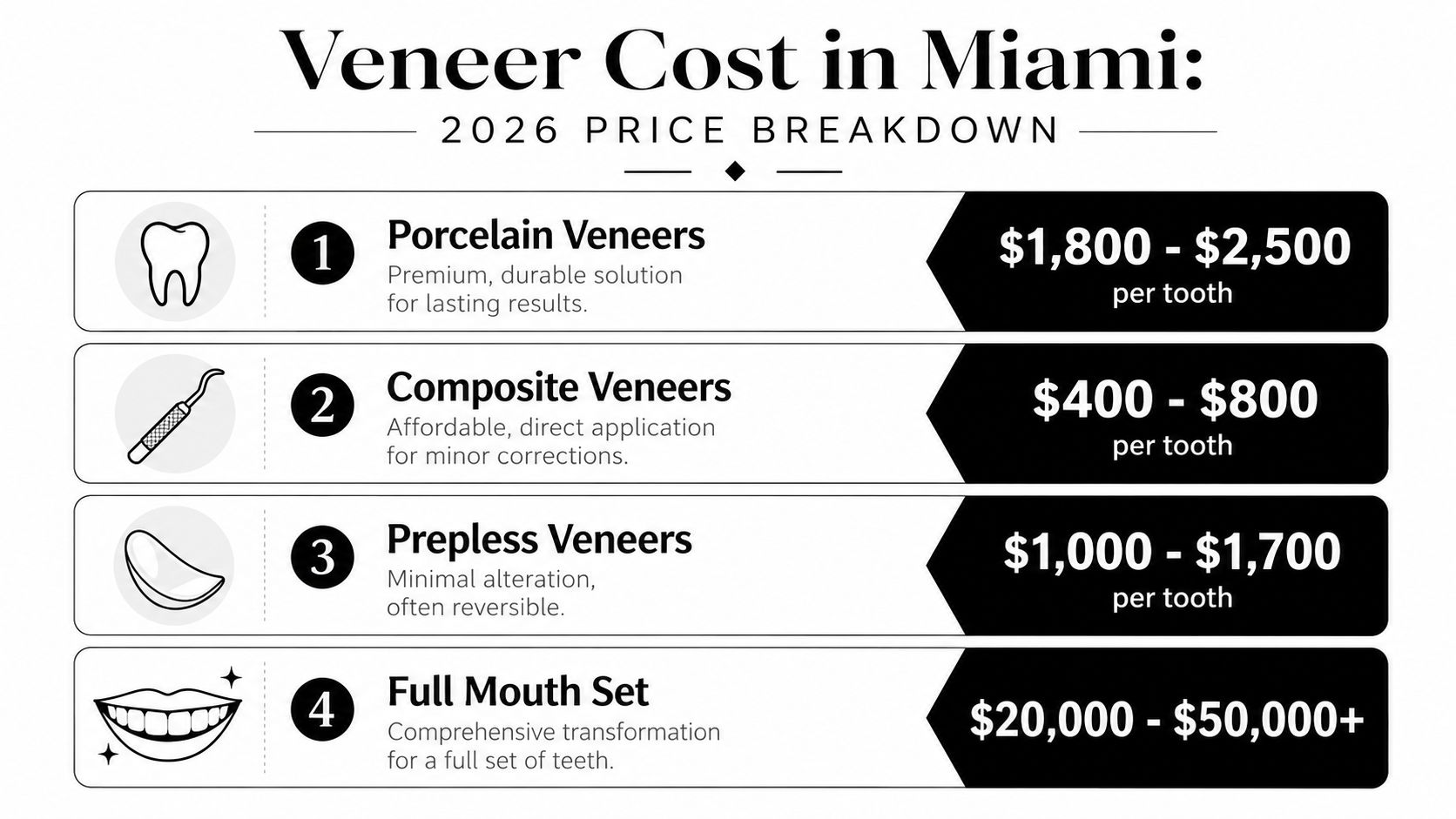
A patient in Miami may see one office quote a few hundred dollars per tooth and another quote several times more, then wonder whether the higher fee is markup. In practice, those numbers often reflect very different materials, workflows, and cosmetic standards. In this market, price usually tracks how much time, customization, and laboratory work go into the case.
A practical look at per tooth pricing
For planning purposes, Miami patients usually see veneer fees presented on a per-tooth basis. Composite options tend to start lower. Porcelain usually sits higher because it involves custom fabrication, more detailed shade and shape planning, and a finish that tends to hold its appearance longer.
| Veneer Type | Average Cost Per Tooth |
|---|---|
| Chairside composite | Usually at the lower end of Miami veneer pricing |
| Lab-made composite | Mid-range |
| Porcelain | Commonly around $1,100 to $2,500 in Miami |
| Porcelain laminate | Often near the upper end of porcelain pricing |
Those ranges matter because a two-tooth correction and an eight-to-ten-tooth smile design are priced very differently, even when the per-tooth fee looks reasonable on paper. Patients also need to look at what the quote includes. In a high-end Miami practice, the fee may cover design records, mockups, temporaries, bite refinement, try-in adjustments, and follow-up visits rather than the veneer alone.
Why Miami quotes can land on the higher end
Miami is a cosmetic dentistry market with high visual expectations. Patients often want veneers that read naturally in person, on camera, and under strong daylight, not teeth that look flat, opaque, or overdone. That level of result takes more planning and often a better ceramist.
The setting also affects value. A spa-like office does not change the chemistry of porcelain, but it does change the treatment experience. Longer appointments, sedation options when appropriate, digital imaging, detailed smile design, and careful delivery protocols all add cost. For many patients, that added expense buys comfort, predictability, and fewer compromises.
Case complexity is another major variable. A single veneer to repair a chipped front tooth is one type of project. Reworking tooth shape, width, symmetry, and smile balance across several front teeth is another. The second case usually requires more design time, more adjustments, and closer coordination between dentist and lab.
A lower quote may still be legitimate, but it often reflects a simpler case, a different material, or a shorter, less customized process.
Patients also weigh veneers alongside restorative dentistry, routine cleanings and exams, or larger treatments such as implants. Veneers fall into a cosmetic category, so the fee reflects appearance-driven planning as much as tooth function. In Miami, that distinction matters. The investment is not only in covering a tooth. It is in getting a result that fits the face, feels comfortable, and still looks right years later.
Key Factors That Influence Your Final Veneer Price
Two patients can ask the same question, how much do veneers cost, and receive very different answers. That's normal. Veneers aren't a one-price procedure because the final fee is tied to the specific treatment design.
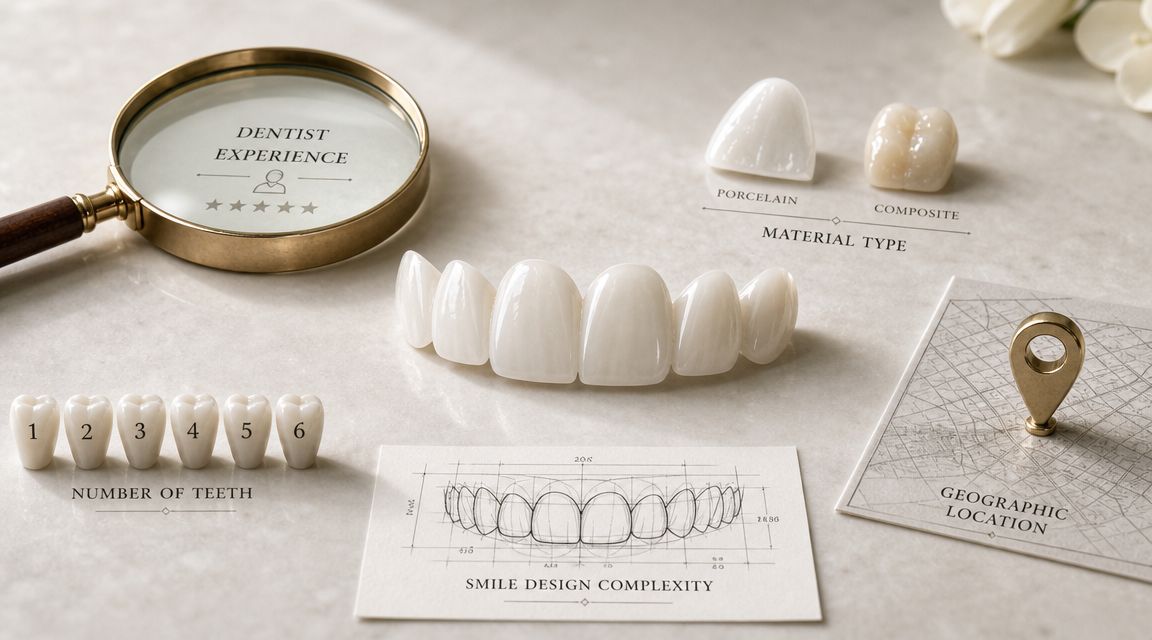
What changes the quote
The biggest cost driver is often the workflow itself. Aflac's veneer cost overview notes that chairside composite options often range from $500 to $1,400, while porcelain typically costs $900 to $2,500 per tooth because it involves custom laboratory processing and different material expectations.
Several practical factors shape the final number:
- Material choice: Composite is usually less expensive at the start. Porcelain usually costs more because of lab fabrication and a more involved process.
- Number of teeth treated: Veneers are billed per tooth in most cases, so even a modest smile makeover can add up quickly.
- Case design: Some smiles need only one or two veneers. Others need several front teeth for a balanced result.
- Pre-treatment work: Some patients need whitening, gum contouring, bite adjustments, or replacement of older dental work before veneers are placed.
- Provider artistry: Cosmetic smile design isn't interchangeable. The fee often reflects the level of planning and finishing required to make veneers look believable.
Porcelain and composite side by side
A side-by-side comparison usually helps more than general advice.
| Consideration | Porcelain veneers | Composite veneers |
|---|---|---|
| Upfront cost | Higher | Lower |
| Fabrication | Usually custom lab-made | Often placed directly in office |
| Stain resistance | Stronger | More limited |
| Surface realism | Often more enamel-like | Can look good, but more technique-sensitive over time |
| Repairs | Usually replacement-based | Often easier to repair |
What doesn't work well is choosing a veneer type on price alone. Patients who want long-term shade stability and a refined cosmetic finish often prefer porcelain. Patients who want a lower entry cost or a conservative correction for a small chip or contour issue may lean toward composite.
Clinical reality: The cheapest veneer isn't automatically the least expensive decision over time if it stains, chips, or needs replacement earlier than expected.
The consultation is important. A patient may come in asking for veneers, but after a full exam and smile review, another path such as whitening, orthodontic alignment, or limited bonding may fit the budget and the smile goals better.
Porcelain vs Composite Which Is Right for Your Budget
A patient in Miami often starts with one simple question: “What will look good and still make financial sense a few years from now? That is the right question. Porcelain and composite veneers can both improve a smile, but they fit different budgets, timelines, and expectations.
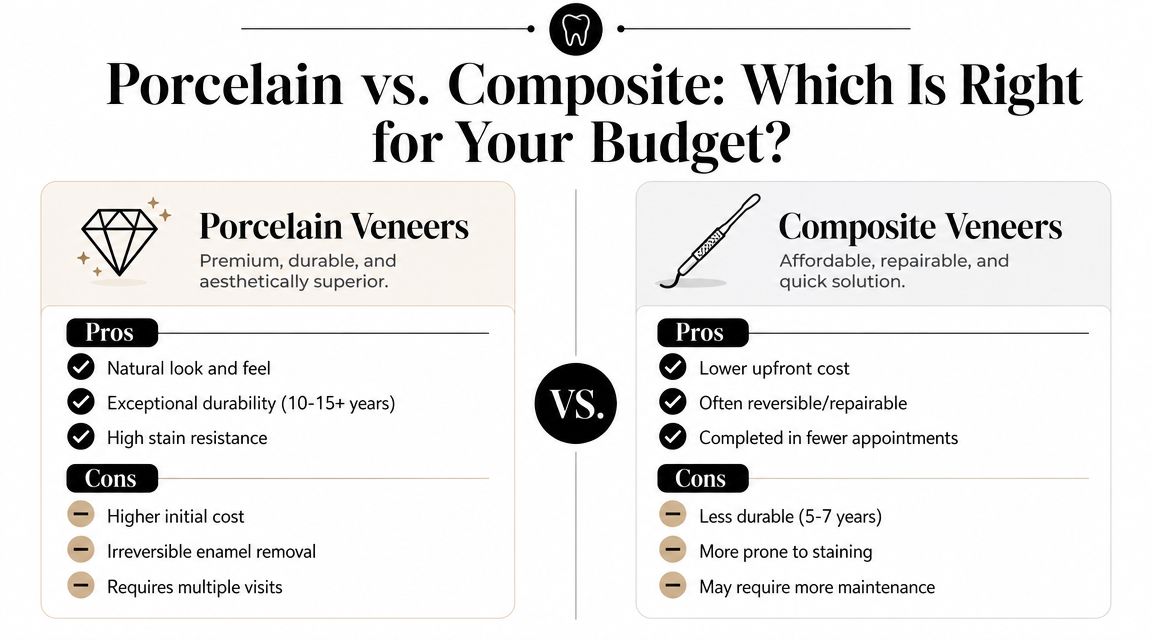
Porcelain usually carries the higher fee because it involves more planning, lab fabrication, and finishing. Composite usually costs less at the start because it can often be shaped directly on the teeth in the office. The lower entry price is appealing, especially for patients correcting a small cosmetic issue or testing a smile change before committing to a larger investment.
The Miami market changes the conversation a bit. Patients here are often comparing more than a number on a treatment plan. They are also weighing appearance in bright natural light, stain resistance in a social and professional setting, and the experience of receiving treatment in a practice that prioritizes comfort, design, and detail. In that setting, porcelain often delivers the kind of polish and longevity that makes the higher fee feel justified.
Composite makes sense in specific situations:
- Lower upfront cost: It is usually easier to fit into a tighter short-term budget.
- Faster treatment: Many cases can be completed in less time.
- Smaller cosmetic corrections: It can work well for minor chips, uneven edges, or slight shape refinements.
- Simpler repairs: If a small area chips, it can often be repaired without remaking the entire veneer.
Porcelain is often the better fit for patients who want a longer-lasting result and a more refined finish:
- Better stain resistance: That matters for coffee, tea, red wine, and the normal wear of daily life.
- More natural light reflection: The result often looks closer to enamel, especially on front teeth.
- Greater long-term value: The initial fee is higher, but the result often holds its appearance better over time.
- Stronger fit for full smile design: If several front teeth are being treated, porcelain usually gives better consistency from tooth to tooth.
A short educational overview can help patients visualize those trade-offs before a consultation.
Payment planning matters
Budget should include more than the day-one fee. A lower-cost composite case can still be the right decision, but patients should go in understanding that it may need more maintenance, polishing, or replacement sooner than porcelain. That difference matters if the veneers are on the teeth people see first when you smile.
In my office, I encourage patients to match the material to the goal. Someone fixing one chipped lateral incisor may do very well with composite. Someone investing in a visible smile makeover for work, photos, or social confidence usually prefers porcelain because the finish, color stability, and overall durability tend to support that investment better.
The best budget choice is the one that fits both your finances and your expectations. In a high-end Miami dental spa setting, many patients decide that paying more for porcelain is less about luxury and more about getting a result that looks believable, feels comfortable, and holds up well enough to be worth it.
Are Veneers Covered by Dental Insurance
Insurance is one of the first questions patients ask, and the answer is usually straightforward. Veneers are generally considered cosmetic, so most dental plans don't cover them.
What insurance usually does
Andepol's consumer veneer cost guide notes that insurance usually doesn't cover veneers because they're considered cosmetic, though partial coverage may be possible when a veneer is used to restore a tooth after trauma. The same guide places a full mouth set of porcelain veneers at about $20,000 to $40,000, which is why financing becomes an important part of the conversation for many patients.
That distinction matters. If a patient broke a tooth in an accident or has severe enamel damage, part of the treatment might be viewed differently than a purely elective smile enhancement. Coverage, when it exists, depends on the policy and the reason for treatment.
How patients often approach the cost
A typical patient journey looks something like this. The patient comes in expecting insurance to reduce most of the fee, then learns that cosmetic treatment usually remains out of pocket. The next step is reviewing a written plan carefully, identifying which parts are cosmetic, whether any related restorative work may qualify differently, and whether the office offers financing or phased treatment.
For some patients, splitting treatment into stages makes the decision easier. Others prefer to complete the smile design at once so the teeth match in shade and contour from day one.
When a patient is comparing veneers with other dental priorities such as an emergency dentist visit, tooth extraction, or overdue new patient exams, the practical move is to separate wants from needs first. Health issues should be stabilized before cosmetic work begins.
The Veneer Process at Our Miami Dental Spa What to Expect
The veneer process feels less overwhelming when patients know what happens at each step. A well-run case usually starts with conversation, not drilling. The cosmetic goals, bite, existing dental work, and smile line all need to be reviewed before a meaningful quote can be given.
From consultation to placement
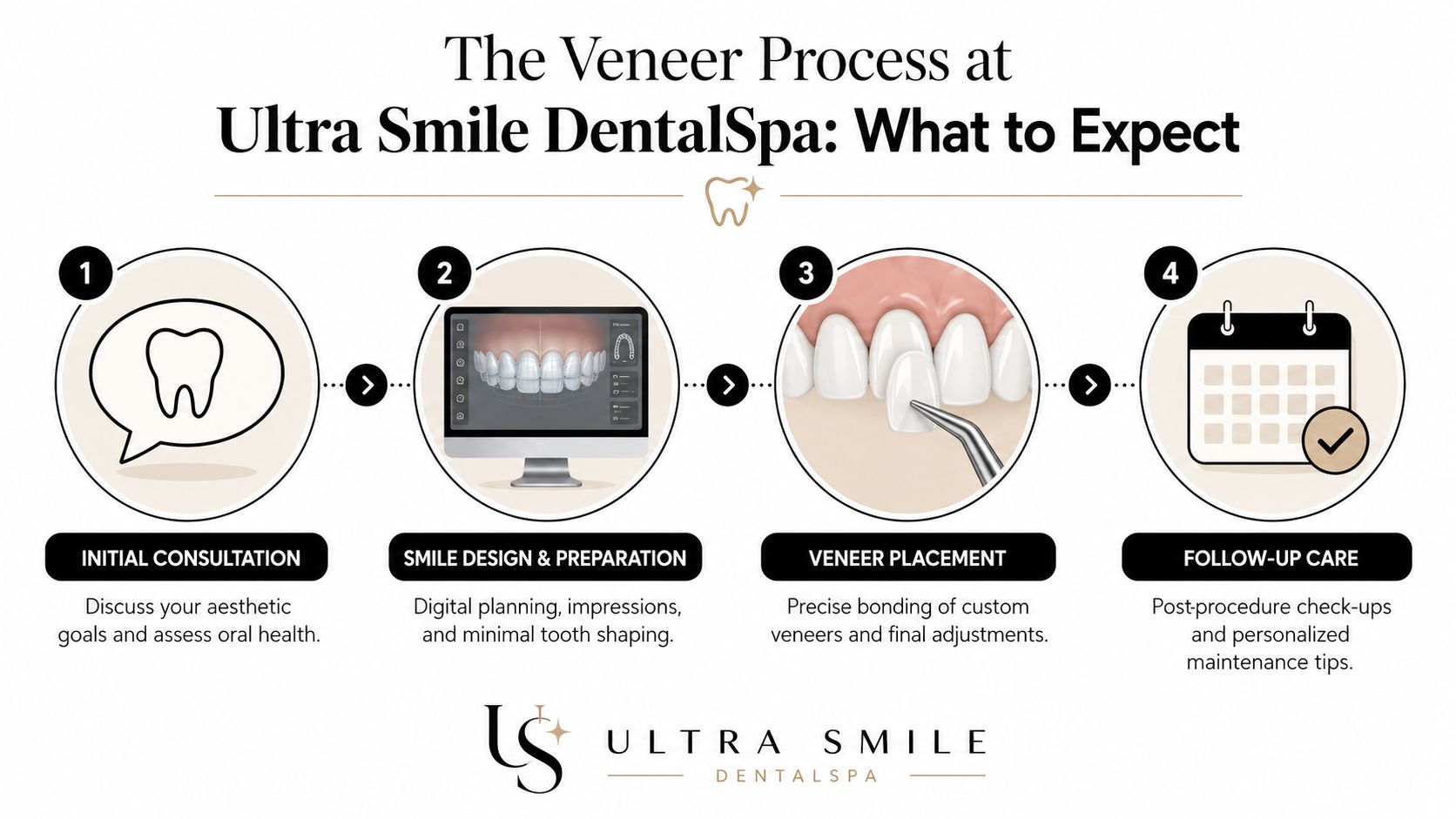
The sequence typically includes:
Consultation and exam
The dentist reviews smile concerns, oral health, and whether veneers are the right treatment. Sometimes another option is more appropriate.Design and preparation
Photos, impressions, and planning help determine shape, length, and shade. If porcelain is selected, the teeth may need minimal preparation before the case goes to the lab.Placement and refinement
Once the veneers are ready, each one is tried in, adjusted if needed, and bonded carefully for fit and appearance.Follow-up care
A final check helps confirm comfort, bite balance, and home care instructions.
Patients who want a closer look at treatment considerations can review this Miami veneer planning resource.
Why experience affects value
The process matters because veneer treatment isn't just about changing tooth color. It involves facial harmony, speech, bite, and how the restorations look in different lighting. In a spa-like practice setting, that experience also includes comfort details that can make cosmetic care feel much more manageable for anxious patients, such as a calmer atmosphere, entertainment during visits, and a more personalized pace.
This is one place where Ultra Smile DentalSpa is relevant as a local option. The practice provides veneers as part of a broader cosmetic and restorative service mix in Miami, alongside exams, whitening, same-day crowns, Invisalign, implants, and routine dental care. For patients who are deciding between a basic cosmetic quote and a more guided smile design process, that wider clinical scope can matter.
Veneers are a long-term purchase. The planning, the materials, and the bonding appointment usually matter more than finding the lowest advertised fee.
Protecting Your Investment The Longevity of Veneers
Once veneers are placed, the next financial question is simple. How long will they hold up, and what helps them last?
How to help veneers last
Daily care makes a real difference. Veneers still rely on healthy gums, clean margins, and a stable bite. Patients should brush gently, floss consistently, stay current with professional cleanings, and avoid using teeth to open packages or bite hard non-food objects.
For anyone who clenches or grinds, a night guard may also be part of protecting the result. Regular maintenance visits with a dentist in Miami, FL help catch edge wear, bite issues, or bonding problems before they become bigger repairs.
Patients who want more detail on lifespan and maintenance can read this overview of how long veneers last.
When veneers may not be the right answer
A price discussion should also include the possibility that veneers aren't the smartest treatment. Rank My Dentist's consumer guide makes an important point: the more useful question is often which smile treatment gives the best result for a patient's budget and timeline, not what the cheapest veneer price is.
That's especially true in cases involving:
- Color only: Whitening may be enough.
- Spacing or alignment issues: Orthodontics may create a better foundation.
- Small isolated defects: Bonding may solve the problem with less intervention.
A low-cost veneer that solves the wrong problem isn't a bargain. The stronger investment is treatment that matches the actual need.
Frequently Asked Questions About Veneer Costs
Can someone get just one or two veneers
Yes, if the cosmetic issue is limited to one or two teeth. The main concern is matching the neighboring teeth in color, translucency, and shape. In very visible areas, some patients choose more than one veneer so the final result looks balanced.
Do veneers damage natural teeth
Veneers don't automatically ruin natural teeth, but some types do require enamel modification. The amount depends on the material and the case. That's why diagnosis matters. A patient who only needs whitening or bonding shouldn't be pushed into veneers just because they asked about cosmetic dentistry.
How many teeth do most people veneer
Many smile makeovers focus on the front visible teeth rather than every tooth in the mouth. The exact number depends on smile width, tooth display, and whether the patient wants a subtle refresh or a broader redesign.
Are veneers better than whitening
They aren't better in every case. Whitening is often the simpler choice when the problem is mostly discoloration. Veneers become more useful when the patient also wants to change tooth shape, close minor spaces, improve symmetry, or mask wear and chips.
How does someone know if they're a good candidate
A good candidate usually has healthy gums, manageable bite forces, and cosmetic concerns that veneers can realistically fix. Patients with active decay, gum disease, or major grinding may need other care first. A full exam with photos and treatment planning is the only reliable way to know.
Is it worth getting a consultation even if the budget is uncertain
Yes. A proper consultation can prevent the wrong decision. It helps patients compare veneers with other options, understand what's driving the fee, and decide whether to treat one tooth, several teeth, or phase care over time.
Patients comparing veneer options in Miami can schedule a consultation with Ultra Smile DentalSpa to receive a personalized exam, discuss cosmetic goals, review treatment alternatives, and get a written plan that fits both their smile and their budget.