If the teeth have started to feel more sensitive, the gumline looks uneven, or the smile seems to be getting longer, that change can catch anyone off guard. A person searching for a dentist near me or a dentist in Miami, FL usually wants two things right away, a clear explanation and a calm plan that doesn't feel overwhelming. At Ultra Smile DentalSpa in Miami, patients from Downtown Miami, Midtown, and Hallandale Beach get that kind of steady, reassuring care while exploring whether a gum grafting procedure is the right next step.
Gum recession can make a healthy mouth feel fragile fast. Cold drinks sting, brushing becomes uncomfortable, and exposed roots can change the look of the smile in a way that feels hard to ignore. For patients also considering cosmetic dentistry, restorative dentistry, dental implants near me, or even related care like tooth extraction or an emergency dentist visit, gum health often becomes the foundation everything else depends on.
Table of Contents
- Your Trusted Dentist for Gum Grafting in Miami FL
- What Is Gum Grafting and Why Is It Needed
- Understanding the Different Types of Gum Grafts
- The Gum Grafting Procedure A Step-by-Step Overview
- Gum Graft Recovery Timeline and Aftercare
- Your Gum Grafting Experience at Ultra Smile DentalSpa
- Frequently Asked Questions About Gum Grafts
Your Trusted Dentist for Gum Grafting in Miami FL
A patient may first notice that a front tooth feels extra sharp when sipping something cold, or that the gums seem to sit a little higher on one side than the other. That kind of change is easy to second-guess at first, especially when the rest of the mouth still feels fine. A calm exam with a cosmetic dentist in Miami can sort out whether the issue is simple irritation or true recession that needs a gum grafting procedure.
When gum recession starts to change daily comfort
Recession isn't just about appearance. When the gumline moves back, the root surface becomes more exposed, and that can make routine things like brushing, eating, and even smiling feel less comfortable. It can also make people feel self-conscious because the teeth can appear longer or less balanced.
That's why many patients who search for a dentist near me end up needing more than a cleaning and exam. They need someone who can look at the tissue, explain what's changing, and recommend a plan that protects the tooth as well as the smile. In Miami, that often means a conversation about whether soft tissue grafting can rebuild a more stable gumline.
A good gum evaluation should feel clear, not rushed. Patients do better when they understand what the tissue is doing, why it matters, and what the next step protects.
Ultra Smile DentalSpa serves patients who want clinical precision without a harsh office feel. The practice combines periodontal care with a spa-like environment, which matters for patients who already feel anxious about oral surgery. For someone comparing options for dental care, cleaning and exams, or even future cosmetic dentistry needs, that combination can make a real difference in how comfortable the entire process feels.
The setting also helps patients who've been putting off care because they fear discomfort. A gentle explanation, a straightforward treatment plan, and a relaxed atmosphere can change the experience from stressful to manageable. That matters when the goal is not just to fix a gumline, but to help the person feel confident returning for regular maintenance.
Why Miami patients often ask about the procedure early
People usually don't ask about grafting until they've already noticed a visible change. By then, the concern is both practical and emotional. They want to know if the gums can be restored, if the roots can be protected, and whether the results will look natural.
A trusted Miami office should answer those questions plainly and without pressure. That's the standard patients should expect before any oral surgery discussion, whether they came in for recession, an implant consultation, or routine preventive care.
What Is Gum Grafting and Why Is It Needed
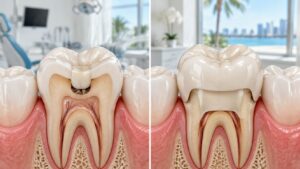
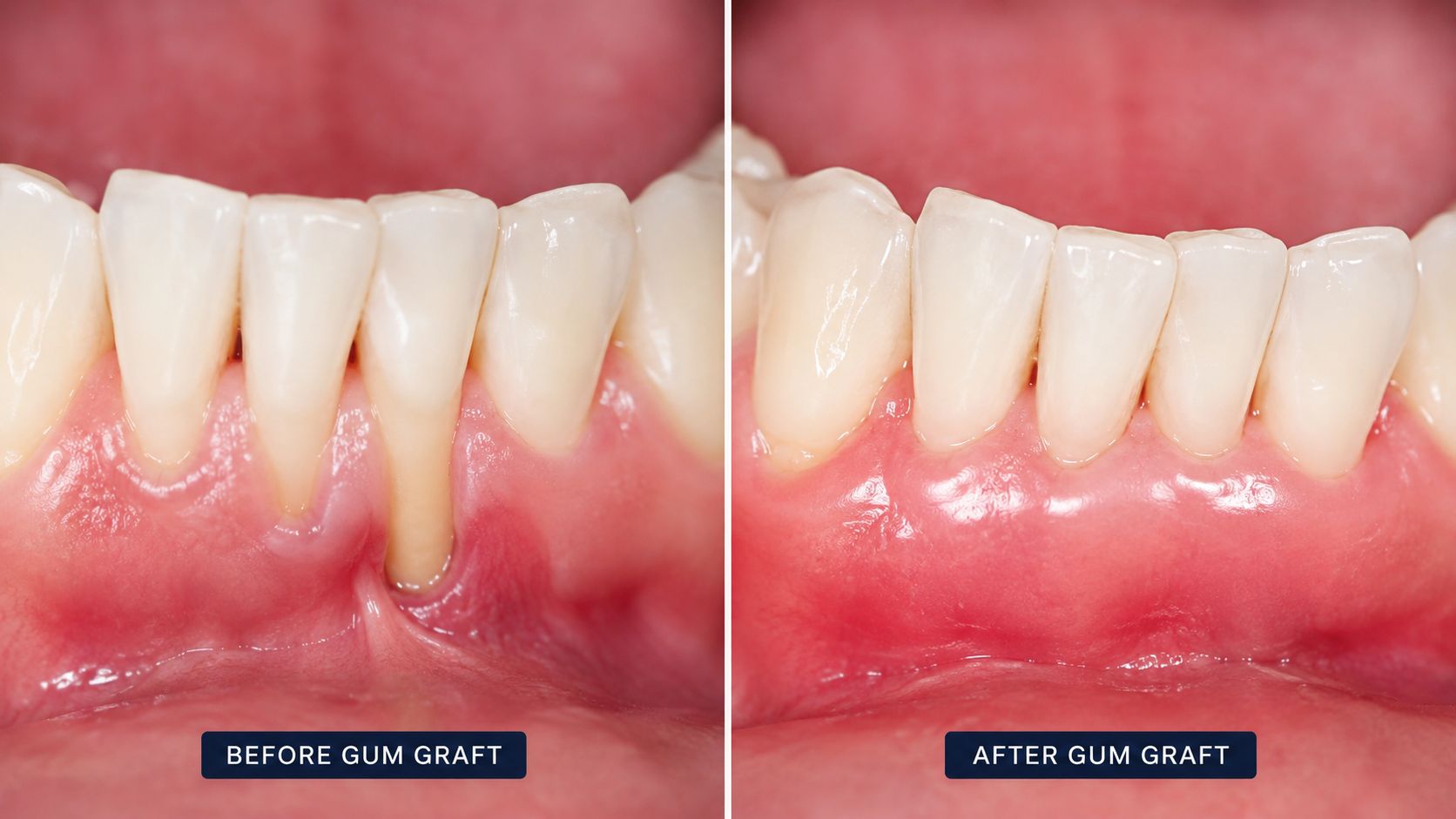
Gum grafting rebuilds the tissue that's pulled back from the tooth. The idea is simple, restore a protective barrier where the gum has thinned or receded, then stabilize that area so the root isn't left exposed. In plain language, it's like reinforcing the soft tissue “seal around the tooth before the problem gets bigger.
A clinical study of 103 consecutive surgeries in 82 patients found that free gingival grafts produced a gain of at least 3 mm in 100% of cases, with an overall average root coverage of 2.47 mm. The same report found that a combined technique produced at least 2 mm of coverage in 93% of treated sites, which shows how predictable this treatment can be in specialist hands. PubMed-indexed report
The problem gum grafting solves
When gums recede, the tooth root may be left less protected than the crown. That can make the tooth feel sensitive and more vulnerable to wear, while also changing the balance of the smile. Gum grafting is used to cover exposed root surfaces and thicken tissue where the gumline needs support.
The treatment isn't only about appearance. It helps protect the root, supports the surrounding tissue, and lowers the chance that the recession keeps progressing. For patients who worry about long-term mouth health, that makes it a restorative procedure, not just a cosmetic one.
The procedure also fits naturally into broader dental planning. A healthier gumline can support other treatment goals, including restorative dentistry and future dental implants. In that sense, the graft becomes part of building a stronger mouth, not a standalone fix.
Practical rule: if the tooth root is already visible, the question is usually not whether the area looks different, it's whether the tissue still has enough support to stay stable.
For patients dealing with recession from brushing habits, tissue thinness, or prior periodontal changes, grafting creates a new margin that's easier to maintain. It gives the tooth a more covered, protected base and often helps the smile look more even again.
Why the procedure is considered established care
The treatment has a long clinical history and predictable outcomes. That matters for patients who are nervous about choosing oral surgery, because the procedure is routine in periodontal care rather than experimental. When specialists recommend it, they're usually trying to preserve tissue and prevent avoidable future problems.
For patients comparing this with other treatments, such as monitoring or cosmetic masking, gum grafting offers something more durable. It addresses the tissue directly, where the change started. Ultra Smile's laser gum recession resource can be useful for patients comparing soft tissue options around the same problem.
Understanding the Different Types of Gum Grafts
Every gum graft is chosen for a specific mouth and a specific pattern of recession. One patient may need added thickness, another may need root coverage, and another may already have enough nearby tissue for a local repositioning approach. For that reason, the gum grafting procedure is better understood as a group of treatments rather than a single operation.
A British Dental Journal review describes free gingival grafts as tissue taken from a distant area in the mouth and placed over a localized recession defect, and notes that these grafts can be used alone or with a coronally positioned flap for prevention and treatment of recession. British Dental Journal review
Gum grafting techniques at a glance
| Graft Type | Tissue Source | Best For |
|---|---|---|
| Connective-Tissue Graft | Tissue taken from under a flap on the roof of the mouth | Common recession cases where root coverage and natural blending matter |
| Free Gingival Graft | Tissue taken directly from the palate | Areas needing more tissue thickness or wider coverage |
| Pedicle Graft | Tissue moved from gum next to the exposed tooth | Cases with healthy nearby gum tissue available |
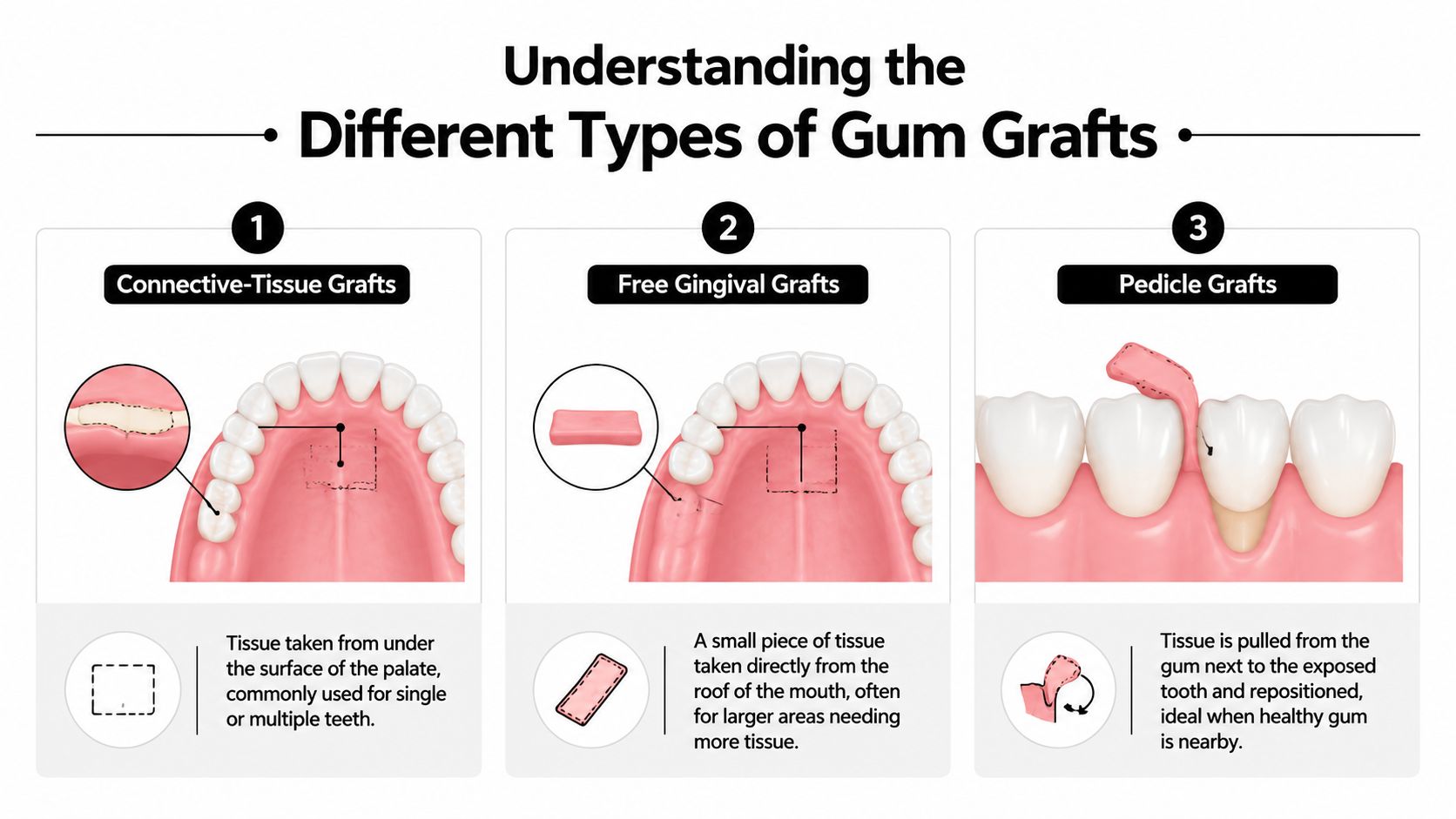
Connective-tissue grafts are often chosen because the tissue comes from beneath a flap on the palate, then is placed over the exposed root. That approach can work well when the goal is both coverage and a natural look. Free gingival grafts use tissue directly from the palate, which can be helpful when the main concern is thin tissue rather than only one exposed root.
Pedicle grafts work differently. Instead of taking tissue from a separate donor site, the gum next to the tooth is repositioned over the recession area. That option only works when enough healthy tissue is present nearby, so it is not suitable for every patient.
The right method depends on the shape of the recession, the thickness of the surrounding gums, and the long-term goal for that tooth. A patient worried about one front tooth may receive a different plan from someone who needs reinforcement across several areas. That kind of customization helps the treatment fit the mouth instead of forcing the mouth to fit the treatment.
How specialists choose the method
A periodontist looks at tissue quality, root exposure, and the overall pattern of recession. The decision is not based on appearance alone. It is based on which surgical design gives the tissue the best chance to integrate and stay stable.
That conversation should feel specific. The same procedure name can mean different things depending on the case, and the best choice is the one matched to the person's anatomy and comfort needs.
The Gum Grafting Procedure A Step-by-Step Overview
The day of treatment is usually much simpler than patients imagine. Most anxiety comes from not knowing what happens first, what the mouth will feel like, and how long each part takes. Once the process is broken into steps, it tends to feel much more manageable.
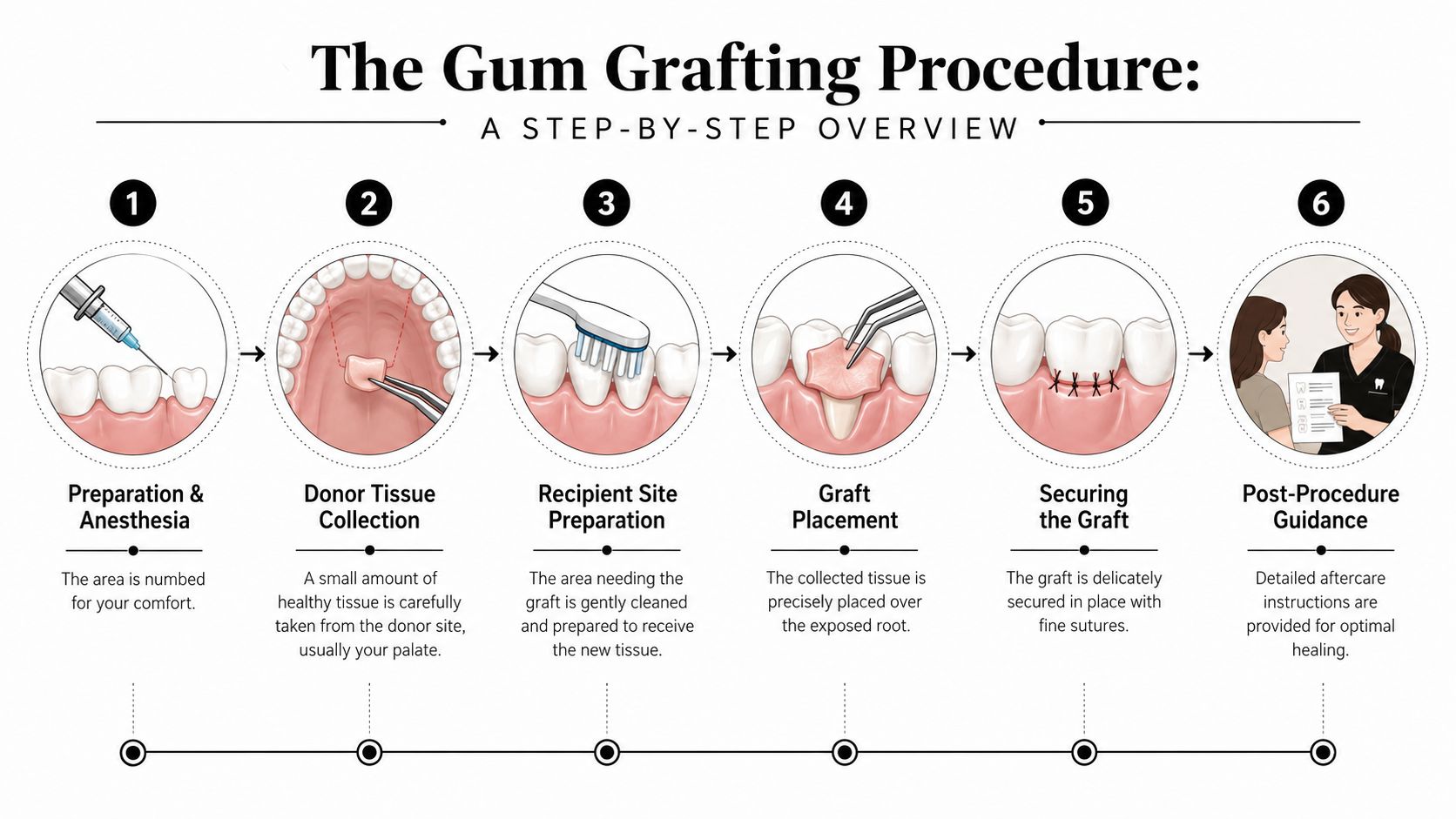
The Cleveland Clinic describes the procedure as one performed under local anesthesia, with a staged microsurgical workflow where the recipient site is prepared, the root is cleaned, the graft is harvested or prepared, and the graft is stabilized with sutures so healing and tissue integration can begin. Cleveland Clinic guide
What happens first
The visit usually begins with a final review of the treatment area and comfort options. Local anesthesia numbs the surgical site, and some periodontists also offer nitrous oxide, oral sedation, or IV sedation for added relaxation. That matters for anxious patients because comfort is part of the plan, not an afterthought.
Next, the recipient site is shaped carefully. StatPearls describes this as creating a split-thickness envelope flap along the mucogingival junction, which shows the tissue is prepared with precision rather than being placed directly over the area. StatPearls description
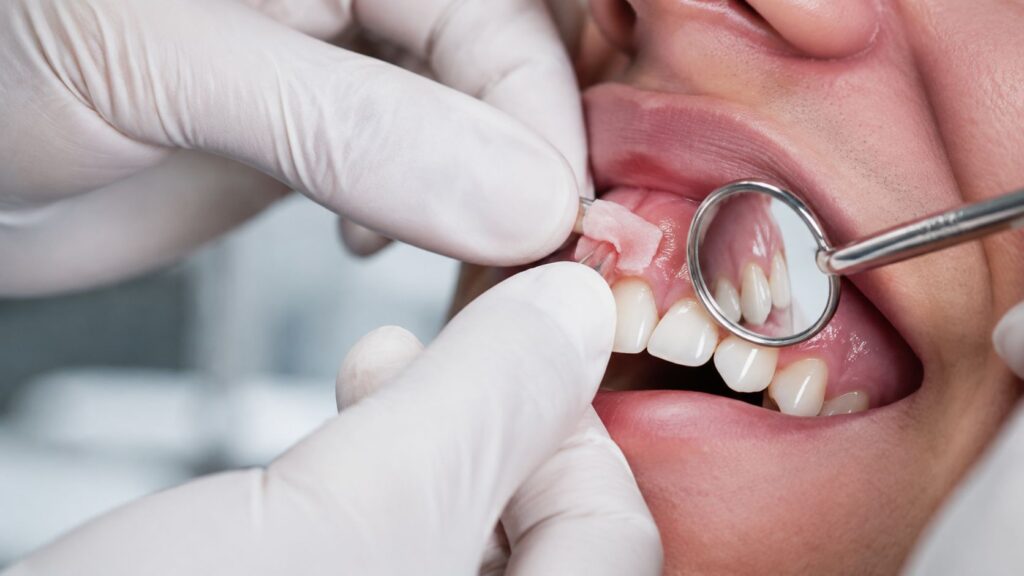
The root surface is cleaned and debrided so the graft has a better bed to attach to. Then the donor tissue is harvested from the palate or obtained from the chosen graft source. The tissue is placed, aligned, and stabilized with sutures or periodontal dressing so the area can heal with less movement.
The early healing phase depends on stillness. A graft that's held securely has a better chance to revascularize and attach properly.
Why patients often feel less nervous after seeing the sequence
Most patients expect a much more dramatic experience than what occurs. In reality, the procedure is organized and deliberate, with each step designed to protect tissue and minimize unnecessary movement. That predictability helps calm the fear that “something is going to go wrong solely because surgery is involved.
Comfort also comes from knowing what will not happen. The mouth is numbed, the tissue is handled gently, and the aftercare instructions are clear before the patient leaves. For many people, that structure is what makes the procedure feel far less intimidating.
Gum Graft Recovery Timeline and Aftercare
Recovery is usually smoother when patients know what to expect and follow the home-care plan closely. After surgery, the mouth needs time to settle, and the graft needs protection while the tissue begins to integrate. The early phase is mostly about keeping the surgical area still, clean, and undisturbed.
The first two days
The first 24 to 48 hours are mainly for rest, soft foods, and avoiding irritation. Swelling and tenderness are common, so the goal is to keep the area calm while the initial healing process begins. A cold compress and the prescribed comfort plan can help, along with avoiding anything that tugs on the graft.
Soft foods are the safest choice, and patients should avoid chewing on the surgical side. Hot, crunchy, sticky, or spicy foods can irritate the area, so simple foods are usually easier to tolerate. Brushing near the graft is typically paused until the dentist says it is safe to resume.
The first week
During the first week, the tissue is still delicate, so brushing and rinsing need to stay gentle. The patient may be told to use a specific rinse and to avoid touching the graft area. That helps protect the sutures and lowers the chance of disturbing the healing margin.
For patients who want a simple guide to swelling control, our advice on how to reduce swelling after oral surgery fits well with what is usually recommended after gum grafting. It is most helpful when comfort, cleanliness, and gentle habits all need to work together.
The following weeks
As healing continues, the mouth usually feels more normal, but the tissue is still maturing. This is the time to return gradually to regular hygiene while staying gentle around the grafted zone. The dentist may check the area to make sure the tissue is settling in as expected.
Long-term outcomes can be excellent. A Long-term success summary reports strong mean root coverage for connective tissue grafts, and another follow-up summary found that free gingival graft sites maintained recession reduction for years after treatment. Long-term success summary
Good aftercare is not complicated. It mostly means protecting the graft long enough for the tissue to become part of the mouth again.
The safest rule is to follow the exact home-care plan given after surgery, even if the area starts to feel better sooner than expected. Early comfort does not always mean the tissue is ready for pressure.
Your Gum Grafting Experience at Ultra Smile DentalSpa
Patients looking for a dentist in Miami, FL often want two things at once, a careful clinical result and an atmosphere that doesn't make the appointment feel tense. Ultra Smile DentalSpa blends those priorities with a spa-like setting, so the experience feels organized, calm, and personal from the first visit. That matters for patients who already feel nervous about surgical care.
The practice is led by Dr. Neda Bahmadi, DMD, and the team serves Downtown Miami, Midtown Miami, and Hallandale Beach with a bilingual approach that helps patients feel understood. Comfort touches, such as refreshments, aromatherapy, streaming entertainment during treatment, and a soothing hot towel finish, can make a real difference when someone is already worried about a gum procedure.
Why the setting matters for anxious patients
A calm room doesn't replace good clinical technique, but it does help patients stay relaxed while the treatment is underway. For someone who has postponed care because of fear, the experience can change the way they think about dentistry altogether. That's especially true when the visit includes clear explanations, a gentle pace, and staff members who answer questions without pressure.
The practice also uses modern technology and premium materials, which support precise planning and careful placement. That precision matters in soft tissue work because the graft needs stability and a well-prepared recipient site to heal predictably.
Ultra Smile DentalSpa also provides broader services such as cleanings and exams, teeth whitening, Invisalign, crowns and bridges, root canals, night guards, wisdom teeth extraction, dental implants, and bone grafts. That range helps patients who need gum care coordinate it with other treatment in one familiar office instead of juggling multiple practices.
For patients who want a cosmetic dentist near me but also need periodontal reconstruction, that combination can be especially useful. A smile plan often works better when the gums, teeth, and future restorative goals are considered together.
Frequently Asked Questions About Gum Grafts
How much does a gum graft cost in Miami
The cost depends on how many teeth need treatment, which graft type is selected, and whether the problem is limited to one area or involves several sites. Insurance coverage can also vary. A consultation is the best time to review those details clearly before any decision is made, so you understand the plan before treatment starts.
Is the procedure painful
The procedure is done with local anesthesia, so the surgical area is numb during treatment. Patients may still notice pressure, but they should not feel pain while the graft is being placed. Some discomfort or swelling after the appointment is normal, especially during the first few days, and the recovery plan is meant to keep that manageable. Soft foods, careful cleaning, and avoiding the surgical site too early all help the area settle properly.
How long do results last
Results can last many years when the tissue is cared for properly and the mouth stays healthy. As noted earlier, the literature summary reports 70% to 80% connective tissue graft success at 5 years, and 83% of free gingival graft sites maintaining recession reduction for up to 35 years. Long-term success summary
Why are different graft types used
Different grafts solve different problems. Free grafts can be taken from a distant site like the palate and used alone or with other techniques for the prevention and treatment of gingival recession, which shows how flexible the procedure can be. British Dental Journal review
The right choice depends on the tissue that needs support, the amount of recession present, and the shape the gums need to achieve. A connective tissue graft, a free gingival graft, and other approaches each serve a different purpose, much like choosing the right tool for a precise repair. Matching the method to the patient's needs keeps treatment individualized and clinically sound.
If receding gums, root sensitivity, or an uneven gumline have started to change how the smile looks and feels, Ultra Smile DentalSpa can help with a thoughtful evaluation and a comfort-focused plan. Schedule a visit with Ultra Smile DentalSpa to discuss whether a gum grafting procedure is the right way to protect the teeth and restore a healthier gumline in Miami.