Back home after oral surgery, most patients notice the same thing first. The numbness starts to fade, the cheek feels fuller, and a simple question takes over. Is this normal, and what helps?
For adults searching for a dentist in Miami, FL, an emergency dentist, or guidance after a tooth extraction, the most useful advice is simple, time-sensitive, and practical. Swelling after oral surgery is expected, whether the procedure involved wisdom teeth, an infected tooth, or dental implants near me. What matters is responding the right way during the first few days so healing stays on track.
Patients looking up how to reduce swelling after oral surgery often get a long list of tips with very little context. Recovery usually goes more smoothly when the steps are clear, the reasons make sense, and the warning signs are easy to spot. That's true whether someone is healing from a routine extraction, restorative dentistry, or a more complex surgical visit.
Table of Contents
- Your Guide to Oral Surgery Recovery in Miami
- Immediate Post-Op Care The First 48 Hours
- Managing Discomfort with Medication and Diet
- The Swelling Timeline What to Expect Day by Day
- When to Call Your Miami Dentist Red Flags
- What to Expect at Your Follow-Up Appointment
Your Guide to Oral Surgery Recovery in Miami
Healing after oral surgery isn't only about getting through the first night. It's about reducing inflammation, protecting the surgical site, and making smart choices that support comfort hour by hour. In Miami, where many patients return quickly to work, family responsibilities, and daily routines, that usually means having a plan instead of guessing.
Swelling happens because the body sends fluid and inflammatory cells into the area that was treated. That response is normal, but it can become more uncomfortable when patients use heat too early, lie flat, push themselves physically, or eat foods that irritate the site. The body is trying to repair tissue. Post-op care helps keep that response controlled.
Why swelling feels worse than expected
Facial swelling can feel dramatic even when healing is progressing normally. The mouth has a rich blood supply, and tissues around the cheeks and jaw react quickly after a surgical procedure. That's why procedures like tooth extraction, implant placement, or bone grafting can leave patients feeling stiff, puffy, and sore.
For people searching online for a dentist near me after surgery, the main goal is usually fast relief. The better goal is steady recovery. Fast improvement often comes from a few basics done consistently, not from trying every home remedy at once.
Swelling control is mostly about timing. The right step at the right hour helps. The wrong step at the wrong time can make recovery drag on.
What actually works and what doesn't
Cold therapy works early. Rest helps. Head elevation matters. Medication only helps when it's taken exactly as prescribed or directed by the treating dentist. Soft food protects the area while the tissue starts to seal and rebuild.
What doesn't help is common too. Hot compresses on day one, smoking, heavy exercise, crunchy foods, and repeated checking of the area usually make recovery harder. Patients healing after oral surgery, dental implants near me searches, or even cosmetic and restorative procedures should treat the first few days like protected recovery time, not a test of toughness.
Immediate Post-Op Care The First 48 Hours
You get home, the numbness starts to wear off, and the cheek on the surgical side begins to feel tight. That is the window where good home care makes the biggest difference. During the first 48 hours, swelling usually builds fastest, so patients do best with a simple routine they can repeat without overthinking it.
Clinical guidance from DFW Oral Surgeons on managing swelling after oral surgery supports two early habits that help most. Use an ice pack on the outside of the face in a 15-minutes-on, 15-minutes-off cycle, and keep the head raised above heart level with 2 to 3 pillows. In our Miami practice, this steady approach usually works better than trying multiple home remedies at once. Comfort improves when recovery feels calm and organized.
A visual routine makes this easier to follow at home.
A consistent cold therapy routine
Cold therapy helps early, but only if it is used the right way. The goal is to cool the tissue without irritating the skin or falling asleep with ice pressed against the face.
Practical rule: Use cold for 15 minutes on and 15 minutes off during the first 24 to 48 hours. Don't leave ice on continuously.
Wrap the ice pack or cold compress in a thin cloth and place it on the outside of the cheek near the surgical area. Use a timer if needed. Patients often tell me the routine feels tedious by the second day, but consistency matters more than making the pack extra cold.
If you had a recent extraction and want a step-by-step refresher, review these tooth extraction aftercare steps.
A short video can also help patients visualize pacing and comfort measures at home.
Why head position matters
Swelling tends to feel worse when you lie flat for long stretches. A raised head position helps limit fluid buildup around the cheeks and jaw, which often means less pressure and less morning puffiness.
A simple setup works well:
- Use extra pillows: Sleep with 2–3 pillows so the upper body stays propped up.
- Rest in a reclined position: A couch, recliner, or adjustable bed can be easier than a flat mattress.
- Avoid bending low: Repeated bending and lifting can make the face feel more full and throbbing.
The first night is usually the hardest. Patients are more comfortable when they protect their rest, keep their position slightly upright, and treat recovery like a planned part of care. At Ultra Smile DentalSpa, that matters to us. The procedure is only one part of treatment. A smooth, low-stress recovery at home is part of the experience too.
Managing Discomfort with Medication and Diet
Swelling and pain are related, but they aren't the same thing. Patients often focus on pain first because it gets attention faster, yet the right medication plan also supports inflammation control. That's one reason post-op instructions should be followed exactly, especially after extractions, implants, or other restorative dentistry procedures.
Research on oral surgery care shows that pharmacological intervention is critical. For example, administration of dexamethasone before oral surgery can significantly reduce postoperative swelling and pain perception. When combined with proper home care like icing, these interventions yield positive results in over 90% of patients, according to clinical findings published on PubMed Central.
Medication supports healing from the inside
Patients shouldn't improvise with medication after surgery. Prescribed anti-inflammatory medicine, pain medication, or both are usually selected based on the procedure, medical history, and expected recovery pattern. The safest approach is to take them exactly as instructed.
A few practical points help:
- Stay on schedule early: Waiting until pain is intense can make the first day harder.
- Use only what was recommended: Mixing medications casually can create avoidable problems.
- Ask before adding anything new: That includes supplements or products marketed for recovery.
If medication was prescribed to control inflammation, skipping doses can leave patients chasing pain instead of preventing it.
Food and drinks that are easier on the surgical site
The best post-op diet is soft, cool to lukewarm, and easy to chew away from the treated area. Food should nourish healing without scraping tissue or disturbing the clot.
Good options often include:
- Smooth foods: Yogurt, applesauce, pudding, cottage cheese
- Soft comfort foods: Mashed potatoes, oatmeal once tolerated, scrambled eggs
- Blended choices: Smooth soups after they've cooled, protein smoothies eaten with a spoon if needed
- Gentle proteins: Soft fish or shredded chicken later in recovery if chewing is comfortable
What patients should avoid is just as important. Very hot foods can irritate tissue. Crunchy chips, nuts, seeds, and crusty bread can disturb the site. Straws are a poor idea after many oral surgeries because suction can interfere with healing.
Hydration also matters. Sipping fluids throughout the day is usually more comfortable than trying to drink a lot all at once. Water is useful, but after surgery the practical goal is stable hydration that doesn't leave the body run down, lightheaded, or dry.
For patients comparing providers for cosmetic dentist near me, dentist near me, or emergency dentist needs, careful post-op support makes a real difference. Good surgery is only part of the result. Good recovery habits protect that result.
The Swelling Timeline What to Expect Day by Day
Most patients feel better when they know what “normal looks like. Swelling rarely disappears overnight. It tends to follow a pattern, and that pattern is often more predictable than people expect.
A normal pattern over the first week
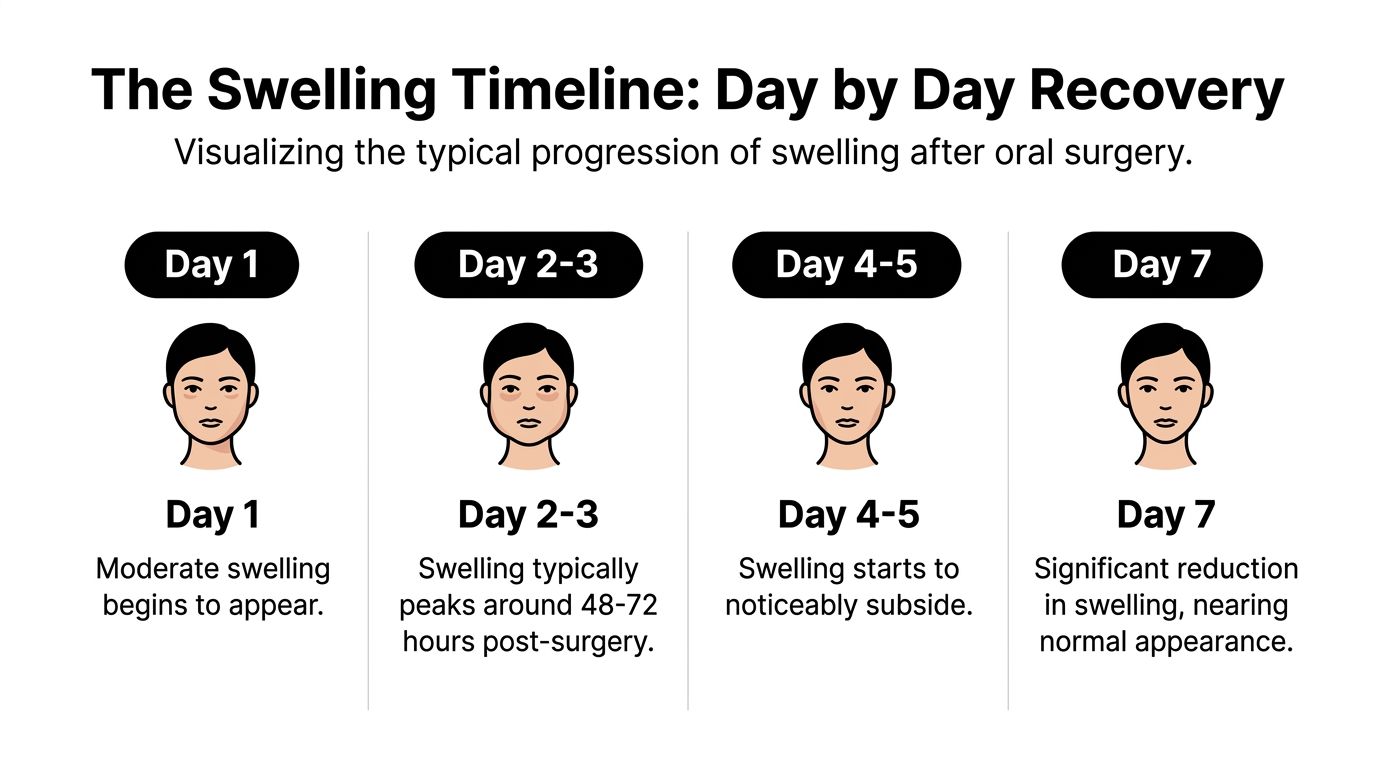
Day one is usually the start of visible puffiness. The face may feel tight before it looks obviously swollen. By day two, many patients notice the cheek or jawline looks fuller.
Swelling commonly reaches its high point around 48 to 72 hours post-surgery, based on oral surgery recovery guidance from Raio Dental. That's why day two and day three can feel discouraging even when healing is progressing normally.
After that peak, the direction should gradually change. The area often still feels firm or stiff, but the face should start looking less swollen across the next several days.
A simple timeline looks like this:
| Recovery period | What patients often notice |
|---|---|
| Day 1 | Mild to moderate swelling begins |
| Days 2 to 3 | Swelling usually looks worst |
| Days 4 to 5 | Puffiness starts easing |
| By day 7 | The face often looks much closer to normal |
Why procedure type changes the pace
A simple extraction usually settles faster than a wisdom tooth surgery, implant placement, or a case involving grafting. More surgical manipulation means more tissue response, so patients shouldn't compare one recovery to another too closely.
Hydration quality may also affect how patients feel while swelling is resolving. Recent data suggests that the type of hydration matters. Electrolyte-balanced fluids like broths may reduce inflammatory markers faster than plain water alone, as proper sodium levels are essential for fluid balance and can prevent dehydration that might otherwise prolong swelling by 1-2 days, according to post-op recovery guidance from Cleveland Clinic.
Patients recovering from implant treatment can also review this dental implant healing timeline for a broader look at the stages after surgery.
When to Call Your Miami Dentist Red Flags
It is 9 p.m., your cheek looks fuller than it did that morning, and you are not sure whether to wait it out or call. That uncertainty is common after oral surgery. What matters is the pattern. Routine swelling should begin settling after the early peak, and the overall trend should be improvement, not acceleration.
Patients do not need to sort this out alone. In our Miami practice, I would rather hear from someone early and reassure them than have them stay home with symptoms that need attention. That is part of good post-op care. It should feel calm, responsive, and supportive, not stressful.
Symptoms that deserve a call
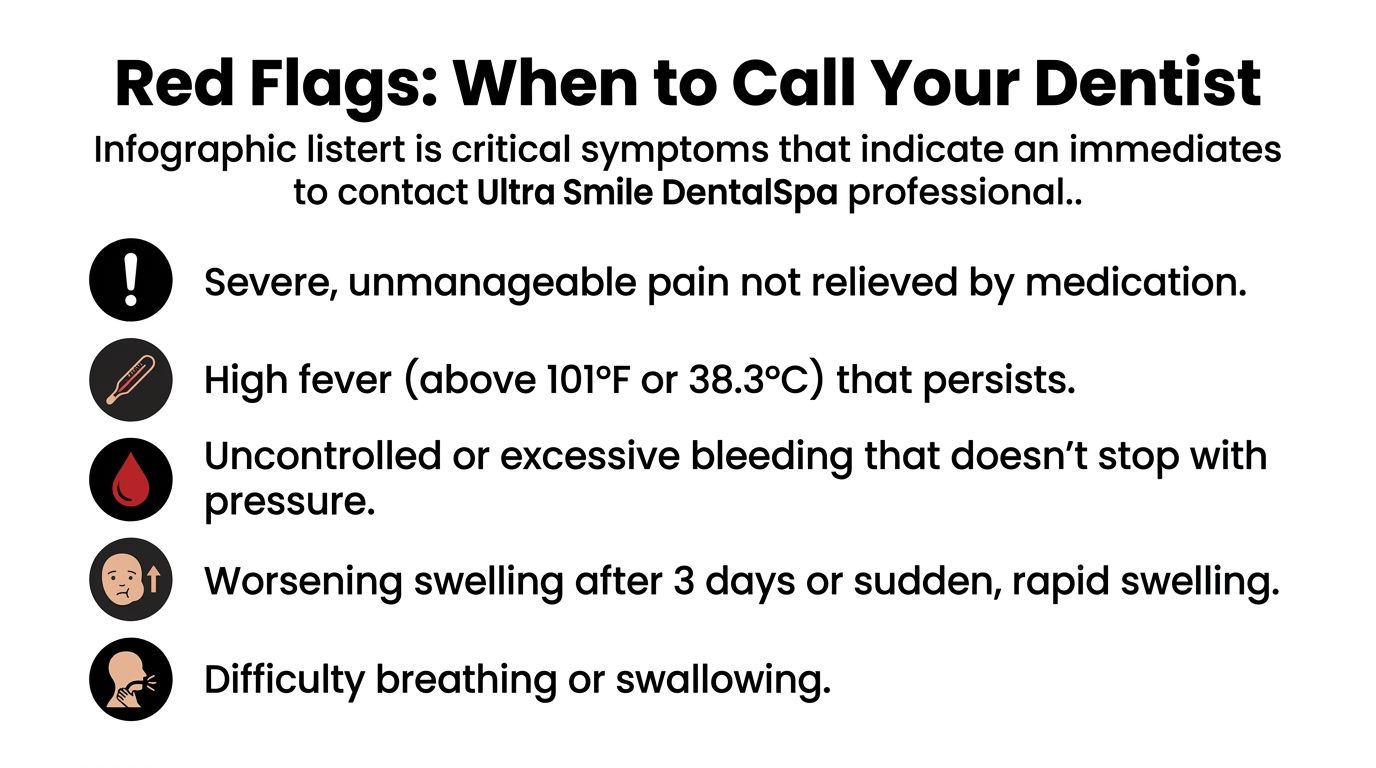
Contact the dental office if you notice any of the following:
- Swelling keeps getting worse instead of leveling off: A gradual rise early on can be normal. A face that becomes noticeably larger after the expected peak deserves a call.
- Pain becomes intense or stops responding to medication: Soreness is expected. Pain that feels sharper, stronger, or suddenly harder to control can signal a problem.
- Bleeding does not slow down: Light oozing can happen at first. Steady bleeding that continues despite following instructions should be checked.
- Fever, chills, or feeling generally unwell: Those symptoms can point to infection rather than routine inflammation.
- Trouble breathing or swallowing: This needs urgent evaluation right away.
The safest choice is usually to call sooner.
Why acting early helps
Small problems are usually easier to handle when we hear about them early. Sometimes the right answer is simple reassurance. Sometimes we want to see the area the same day, adjust instructions, or change medication. The trade-off is straightforward. One quick call may save a patient a painful night, an unnecessary trip to urgent care, or a delay in healing.
That close follow-up reflects how we approach recovery at Ultra Smile DentalSpa. Surgical care does not end when the procedure is over. Comfort, access, and clear guidance matter too, especially when a patient feels anxious and just wants to know that healing is on track.
What to Expect at Your Follow-Up Appointment
A follow-up visit gives the dental team a chance to confirm that healing is moving in the right direction. Patients often expect a dramatic appointment, but most visits are calm and straightforward. The focus is usually on checking tissue response, reviewing symptoms, and making sure swelling, tenderness, and function are improving at the pace expected for that procedure.
What the dental team checks
At a post-op appointment, the dentist may look at the incision or extraction site, check for signs of infection, review any lingering swelling, and decide whether sutures need attention. If the surgery involved implant dentistry, the exam may also focus on how the surrounding gum tissue is responding and whether the area is staying clean during healing.
Patients should bring questions, especially if eating, sleeping, or returning to work has been difficult. This is also a good time to discuss normal tightness in the jaw, bruising, or uncertainty about brushing near the site. Small details often make home care easier.
How follow-up supports long-term results
Good follow-up care protects more than comfort. It helps preserve the outcome of treatment, whether that treatment was a basic tooth extraction, a graft, or one of the many procedures patients search for under dental implants near me. It also creates a smoother path back to routine care such as cleaning and exams, dental x-rays, new patient exams, cosmetic dentistry, or restorative dentistry once healing is complete.
For many adults in Downtown Miami, Midtown Miami, and Hallandale Beach, the best dental experience isn't only about clinical skill. It's also about recovering in a setting that feels calm, attentive, and organized. That comfort-focused approach matters before surgery, on the day of treatment, and during the healing checks that follow.
If swelling, pain, or uncertainty is getting in the way of recovery, patients can contact Ultra Smile DentalSpa to schedule an appointment or consultation. Dr. Neda Bahmadi and the team provide thoughtful post-operative support for patients in Miami, FL, including Downtown Miami, Midtown Miami, and Hallandale Beach, with care that combines modern dentistry and a more relaxing, spa-like experience.