Most dental implants need 3 to 6 months for full healing and bone fusion, but the early recovery is much faster. The gums usually settle within 1 to 2 weeks, and many patients return to normal daily activities the next day or within a few days.
That's often the part people in Miami want to know before anything else. They're staring at the calendar, wondering when they'll feel normal, when they can work, and whether the healing process will be harder than expected. For most patients, the experience is less dramatic than the word “implant makes it sound. The body does a lot of its work largely unnoticed after the first few days.
A missing tooth can affect more than appearance. It can change how someone chews, how the bite feels, and how confident they are during conversations, photos, and meals out in Downtown Miami or Midtown. The good news is that a clear dental implant healing timeline makes the process feel manageable. When patients know what happens in the first 48 hours, the first week, and the months that follow, they tend to feel calmer and more in control.
For patients seeking a dentist near me, dental implants near me, or a dentist in Miami, FL, the goal isn't just placing an implant. It's getting through recovery comfortably, protecting the result, and ending up with a strong, natural-looking smile.
Table of Contents
- Your Dental Implant Journey with a Dentist in Miami FL
- The Day-by-Day Dental Implant Healing Timeline
- What to Expect During Your Dental Implant Recovery
- How Bone Grafts and Your Health Affect Healing
- Signs of a Problem and When to Call Your Miami Dentist
- Your Comfort-First Implant Experience at Ultra Smile DentalSpa
- Frequently Asked Questions About Implant Recovery
Your Dental Implant Journey with a Dentist in Miami FL
A patient sits down in our Miami office after months of favoring one side to chew. Sometimes it is a missing tooth after a tooth extraction. Sometimes it is a failing bridge, a cracked tooth, or a space that has started to affect speech, meals, and confidence. By the time implant treatment comes up, the goal is usually simple. Eat comfortably, smile without thinking about it, and stop working around the problem.
It helps to understand the timeline before treatment begins. A dental implant is placed in the jawbone to replace the tooth root, but the restoration is not only about placing a fixture. The bone has to heal around it and hold it firmly. That slow bond is what gives an implant the stability patients count on years later.
Why healing takes patience
The part that requires patience is osseointegration, which is the bond between the implant surface and your natural bone. This stage takes months, not days. In practice, the lower jaw often heals faster than the upper jaw because the bone is usually denser there. Patients often feel much better long before the implant is ready for full chewing pressure.
That difference matters.
A site can look calm and feel normal while deeper healing is still underway. I tell patients this often because it prevents one of the most common setbacks. Using the area too aggressively too soon. Comfort returns first. Strength comes later.
Practical rule: If the implant area feels fine, that is encouraging. It does not automatically mean the implant is ready for heavy biting.
How dental care supports a smoother result
Good healing starts with planning. Imaging, bite analysis, gum health, and restorative design all affect how predictable recovery will be. Some patients also need dental x-rays, new patient exams, periodontal treatment, or bone grafting if the area has thinned after tooth loss.
The human side matters too. Clinical steps are only part of a good implant experience. Patients recover more calmly when they know what normal soreness looks like, what foods are safest, and who to contact if something feels off. In a comfort-focused setting like Ultra Smile DentalSpa, that support is built into the process, so recovery feels guided rather than uncertain.
Choosing the right dental team in Miami is not only about having the implant placed. It is about careful follow-up, clear instructions, and access to help if swelling, diet questions, or an unexpected concern come up after hours. That structure protects comfort and gives the implant the best chance to heal well.
The Day-by-Day Dental Implant Healing Timeline
The first night after implant surgery often feels quieter than patients expect. You are home, the numbness is wearing off, and the questions become practical. How much swelling is normal, when can you eat, and when will the area stop feeling so “present in your mouth. A clear timeline helps, and comfort matters just as much as the biology.
What happens in the first few days
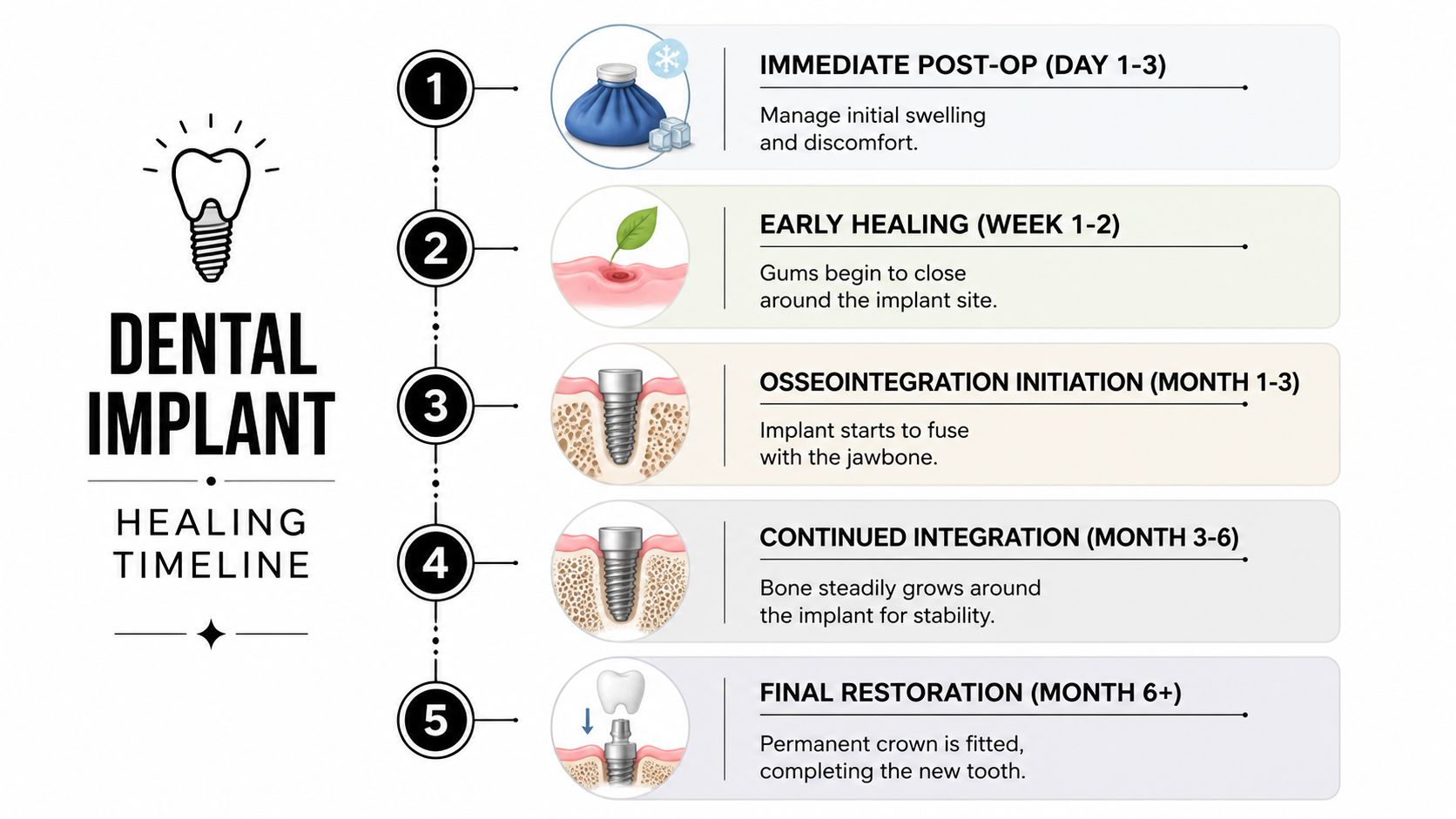
Day 1 is usually about protecting the surgical site. Light bleeding, tenderness, and swelling are common. The goal is to keep the area undisturbed, stay hydrated, and rest more than usual.
Patients rarely describe this stage as intense pain. They describe it as a period that requires care and restraint. That distinction helps. If you expect soreness and plan for it, recovery feels more manageable.
At Ultra Smile DentalSpa, we coach patients to make the first 48 hours feel calm, not clinical. Set up a recovery space at home before your appointment. Keep your prescribed or recommended medications, water, gauze, soft foods, and an ice pack within reach. A cool room, low lighting, and a familiar blanket often do more for comfort than people realize. If relaxing scents help you settle, use them away from the surgical area so the experience stays soothing rather than overstimulating.
By day 2, the area often feels less uncertain, even if it is still sore. By day 3, swelling is commonly near its peak and then begins to ease. Many patients return to desk-based work within a few days, as noted in this dental implant recovery timeline, but the trade-off is simple. Going back to work is not the same as being ready to chew normally or resume every routine.
- Day 1: Rest, hydration, very soft foods, and careful bleeding control
- Day 2: Tenderness and swelling are still expected, but symptoms often feel more steady
- Day 3: Swelling may be most noticeable, then should begin settling if healing is on track
Early healing is the part you can see and feel. The deeper stability that supports the implant comes later.
What changes during weeks one and two
This phase often brings a noticeable drop in daily discomfort. The gums begin to close and organize around the implant site, and normal conversation, smiling, and light routines usually feel easier. Northwest Oral Surgeons' recovery guidance notes that soft-tissue healing is commonly well underway within about two weeks.
Patients can get into trouble here because the mouth looks better before the implant is ready for force. That is why I tell patients to treat comfort as good news, not as permission to test the area.
A gentle routine helps more than a perfect one. Keep brushing the rest of the mouth well, clean the surgical area exactly as directed, and choose foods that do not require pressure on the implant side. In a comfort-first practice, we also talk about stress during this stretch. Poor sleep, rushing meals, and clenching can all make a site feel more irritated, even when healing is progressing normally.
| Time period | What patients often notice | What helps most |
|---|---|---|
| First week | Soreness starts to fade, swelling decreases, eating still takes planning | Protect the site and keep meals soft |
| Second week | Gums look calmer, daily activities feel easier | Stay consistent with gentle hygiene and avoid heavy chewing |
What the jawbone is doing from month one onward
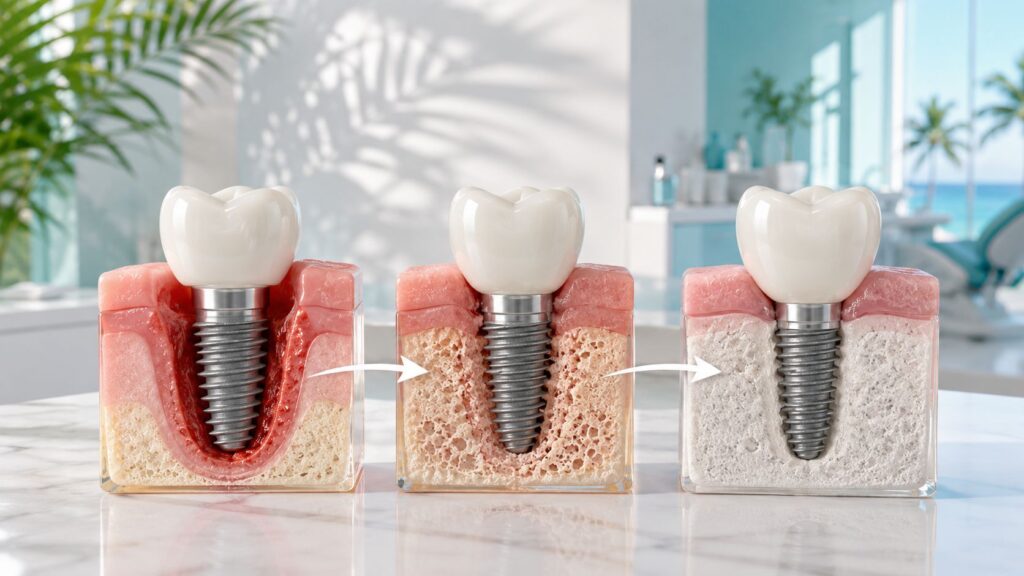
After the gums settle, the important work continues below the surface. The jawbone is bonding to the implant in a process called osseointegration. That bond is what allows the implant to support a crown with long-term stability.
Healing during this period is quieter, which can make patients forget it is still happening. According to Modern Haus Dental's implant healing overview, full implant healing commonly takes several months, and treatment can take longer when bone grafting is part of the plan. That longer timeline is not a setback by itself. It is often the safer choice when the bone needs more support.
Once integration is confirmed and the abutment is placed, there is usually an additional soft-tissue healing period before the final crown goes on. That last step often feels easier than the first week after surgery because the site is already far more settled. Patience is the trade-off. A slower, protected healing phase gives the implant a stronger foundation and lowers the risk of problems later.
What to Expect During Your Dental Implant Recovery
Recovery tends to feel less like one long event and more like a series of small adjustments. The first adjustment is food. The second is routine. The third is resisting the urge to test the area too soon.

Eating, working, and protecting the implant
A common recovery day in Miami might look like this. Breakfast is something soft and easy to chew. Work is fine if the job isn't physically intense. Dinner requires a little planning, because crunchy or hard foods can still be a poor choice even when the mouth feels mostly normal.
Soft-tissue healing usually completes within 1 to 2 weeks, and many patients feel “normal by week 3 to 4, but complete osseointegration still takes 3 to 6 months. Premature loading before 3 months can create micro-movements that disrupt the bone-implant interface. That's why a patient may feel well long before the implant is ready for heavy chewing pressure.
The practical trade-off is straightforward. Returning to life is usually quick. Returning to full force on that tooth is not.
- Food choice matters: Soups, yogurt, eggs, smoothies, mashed vegetables, and other soft foods are easier early on.
- Work often resumes quickly: Desk-based work is usually easier to return to than physically demanding activity.
- Chewing should stay strategic: Use the other side when advised, even if the implant area feels calm.
Patients often do well when they ask one question before every meal: “Will this food make me chew hard without realizing it?
A short visual walkthrough can make this easier to picture:
Daily habits that help healing feel easier
Comfort-first recovery isn't complicated. It's usually about consistency. Gentle brushing, careful rinsing only when instructed, good hydration, and enough rest all matter more than patients expect.
At-home care works better when it feels calm instead of stressful. A warm, soft meal prepared ahead of time. A cold pack ready for the first evening. A lighter schedule for a couple of days. Those small choices reduce friction and help patients avoid the mistakes that come from rushing.
For patients also exploring restorative dentistry, cleaning and exams, or even future teeth whitening and cosmetic dentistry, this recovery period is often the point where long-term oral health habits get reset in a positive way.
How Bone Grafts and Your Health Affect Healing
Healing time changes from person to person because implants heal inside a living system, not on a fixed calendar. The amount of available bone matters. Your general health matters too. Both shape how quickly the implant can form a stable bond with the jaw.
When a bone graft changes the timeline
A bone graft is recommended when the jaw needs more width, height, or density before an implant can be placed with confidence. We see this often after a tooth has been missing for some time, or when the area healed with less bone than expected after an extraction.
Grafting adds a separate healing phase. The body has to accept and build around the graft before the implant can be asked to do its job. In practical terms, that usually means more patience at the front end in exchange for better support later. Patients who want a clearer picture of that process can review our guide to bone grafts in Miami.
That extra waiting period can feel disappointing, especially if you were hoping to finish treatment quickly. Still, stronger bone usually gives the implant a better foundation, and that trade-off is often well worth it.
Health factors that can slow osseointegration
Smoking and poorly controlled diabetes are two of the most common reasons healing slows down. I discuss both early because they affect blood flow, inflammation, and the body's ability to repair bone around the implant.
Smoking reduces circulation in the gums and bone. That means less oxygen and fewer nutrients reach the healing site. Diabetes can create a similar problem when blood sugar is not well controlled, because the immune response and tissue repair process become less predictable.
Here is the practical view:
| Factor | Likely effect on healing |
|---|---|
| Smoking | Slower healing and a higher chance of implant complications |
| Uncontrolled diabetes | Longer, less predictable integration time |
| Bone grafting | Adds another healing phase before full implant stability |
At Ultra Smile DentalSpa, we plan around these realities instead of forcing every patient into the same timeline. That may mean giving a graft more time, coordinating care with your physician, or setting up a recovery plan that feels calmer and easier to follow at home.
Nutrition and follow-up care also make a real difference. Patients tend to heal more predictably when meals are soft and protein-rich, oral hygiene stays gentle but consistent, and check-ins happen on schedule. Comfort matters here too. A recovery plan that feels manageable is easier to stick with, and that consistency supports better healing.
Signs of a Problem and When to Call Your Miami Dentist
You get home after implant surgery, settle in with something soft to eat, and notice the area feels tender and swollen. That can be completely normal. The harder moment is knowing when a symptom has crossed the line from expected healing into something that needs attention.
In our experience, implant failures are rare, but patients should know what to watch for. A healthy recovery usually shows steady improvement. Discomfort eases. Swelling peaks early, then comes down. Chewing gets easier, not harder.
What's normal and what isn't
Some post-op symptoms are part of the process. Light bleeding during the first day, soreness, mild swelling, and temporary tenderness with chewing are all common. Patients often feel better once they know that some discomfort does not mean something is going wrong. If you want a clearer sense of what implant discomfort usually feels like, our guide on whether dental implants hurt and what recovery feels like can help set expectations.
The pattern matters more than the symptom by itself. Call your Miami dentist if you notice:
- Pain that gets stronger instead of easing: Healing should gradually settle down.
- Fever, chills, or feeling unwell: Those symptoms can point to infection.
- A loose or shifting implant: An implant should feel stable, even early in healing.
- Swelling that stays pronounced or gets worse after the first few days: That is different from normal early post-op puffiness.
- Pus, bad taste, or drainage from the site: These are warning signs, not routine healing.
Patients should not feel pressure to diagnose the problem at home. If something feels off, call.
Why quick communication matters
Early problems are usually easier to manage. Sometimes the answer is simple reassurance. Sometimes we want to see the area, adjust home-care instructions, or bring you in quickly to protect the implant and the surrounding tissue.
That is one reason our team emphasizes a comfort-first recovery, not just the surgical appointment itself. A calm, responsive office makes it easier to reach out early instead of waiting through a stressful night or weekend and hoping the symptom settles on its own.
Regular follow-up visits serve the same purpose. They let your dentist confirm that healing is progressing the way it should and catch small concerns before they become larger ones.
Your Comfort-First Implant Experience at Ultra Smile DentalSpa
You get home after implant surgery with numbness wearing off, instructions in hand, and one big question in your mind. How hard is recovery going to feel? The answer depends on the procedure, your health, and how well you follow aftercare. It also depends on how supported you feel from the start.
A calmer setting changes the recovery experience

Patients throughout Miami often tell us they want two things. They want implant treatment done carefully, and they want the visit to feel manageable. That second concern is not minor. A patient who arrives tense often leaves more exhausted, less confident about aftercare, and more likely to feel overwhelmed by normal early symptoms.
At Ultra Smile DentalSpa, comfort is built into the experience in practical ways. Refreshments, custom aromatherapy, streaming entertainment during treatment, and a warm towel at the end help patients settle their nerves and leave feeling cared for, not rushed. That matters because recovery starts before you ever get home. A calmer appointment often makes it easier to rest, follow instructions, and keep the first day from feeling harder than it needs to.
I also find that clear expectations reduce anxiety better than vague reassurance. Patients who want a realistic sense of what dental implant discomfort usually feels like often feel more prepared for the first few days, which makes the whole process easier to handle.
That same comfort-first approach should carry through healing. Good implant care is not only about placing the implant well. It is also about making each step, from the first night to follow-up visits, feel organized, calm, and supported.
Frequently Asked Questions About Implant Recovery
Can a crown go on right away
Sometimes a temporary solution is used to manage appearance, but the final crown usually waits until the implant is stable enough to support it safely. The exact timing depends on bone quality, implant stability, and whether any added procedures were needed.
What if there's a visible gap while healing
That depends on the tooth location and treatment plan. For front teeth, appearance matters more day to day, so a temporary tooth or other cosmetic option may be used while healing continues. For back teeth, some patients prefer to leave the area undisturbed until the implant is ready for restoration.
Does getting a dental implant hurt
Most patients describe the process as easier than they expected. The first stage tends to involve soreness and swelling more than severe pain. The bigger challenge is usually patience during healing, not the procedure itself.
Can patients exercise right away
Light activity is usually easier to resume before strenuous activity. Patients should follow individualized instructions, especially in the first days when swelling and bleeding control still matter.
How does dental care help beyond replacing one tooth
Implant treatment supports chewing, helps maintain bite balance, and gives patients a fixed replacement that can feel much more natural than leaving a gap. It also fits into a broader plan for long-term mouth health that may include cleaning and exams, dental x-rays, cosmetic improvements, or other restorative care.
If a missing tooth is affecting comfort, confidence, or daily eating, Ultra Smile DentalSpa offers consultations for patients in Miami, FL who want clear answers and a steady treatment plan. Scheduling a visit is the easiest way to learn what the healing timeline would likely look like, whether grafting is needed, and how to move forward with implant care in a calm, supportive setting.