A lot of people in Miami wonder about the same question before they ever book a consultation. They're not just wondering whether implants work. They're wondering whether the process will hurt, whether recovery will be rough, and whether the result is worth going through surgery at all.
That concern is reasonable. A missing tooth changes how a person chews, smiles, speaks, and shows up socially. The good news is that dental implant treatment is much more predictable than most patients expect. The part people fear most, the surgery itself, is usually not the painful part. The bigger issue is understanding the pain timeline clearly, especially the difference between normal soreness and pain that needs attention.
Table of Contents
- Dental Implants in Miami A Solution for Missing Teeth
- What to Expect During Your Dental Implant Procedure
- Your Comfort Is Our Priority Anesthesia and Sedation Options
- The Truth About Your Dental Implant Recovery Timeline
- Effective Pain Management After Your Implant Surgery
- When to Expect More Discomfort and What Is Not Normal
- Experience a New Kind of Dental Care in Miami
Dental Implants in Miami A Solution for Missing Teeth
A missing tooth rarely stays a small problem. People start chewing on one side, smiling with their lips closed, and avoiding photos without even noticing how quickly the habit forms. In a city like Miami, where people are social, visible, and busy, that loss often affects confidence as much as comfort.
Dental implants give patients a way to replace a missing tooth with something that feels stable and functions like part of the mouth again. They're not an experimental option or a niche treatment. Recent industry statistics estimate that roughly 3 million Americans currently have a dental implant, showing how routine this treatment has become in everyday care, according to implant statistics compiled here.
That matters because common procedures usually become more refined over time. Teams improve planning, anesthesia, aftercare, and follow-up. Patients today benefit from that maturity.
Why patients often hesitate
The hesitation usually isn't about the final result. It's about the road to get there. Many patients who search for dental implants near me, dentist near me, or dentist in Miami, FL are really trying to answer two emotional questions:
- Will the procedure hurt
- Will recovery interfere with work, eating, or sleeping
Those are the right questions to ask before committing to treatment.
Dental implant treatment is easier for most patients than the fear they carry into the consultation.
For adults comparing options, implants often come up beside bridges or dentures. Each solution has trade-offs in feel, maintenance, and long-term function. Patients weighing those choices can review this comparison of dental implants vs traditional dentures to understand where implants fit within restorative dentistry.
Why the pain question deserves a direct answer
A vague reassurance doesn't help a nervous patient. Saying “you'll be fine leaves too much unsaid. The more useful answer is that implant discomfort usually follows a pattern. The procedure itself is managed with numbing. The recovery phase is where soreness shows up. And the intensity depends a lot on whether the case is simple or more involved.
That's why patients looking for a cosmetic dentist near me, help after a tooth extraction, or an emergency dentist after losing a tooth often need a clear explanation of what implant treatment feels like, not just what it accomplishes.
What to Expect During Your Dental Implant Procedure
The procedure is usually calmer than patients imagine. During the actual implant placement, pain is typically minimal to absent because the surgical site is fully numbed with local anesthesia, and patients usually notice pressure or vibration rather than sharp pain, as described in this explanation of what implant placement feels like during surgery.
That distinction matters. Pressure can feel strange. Vibration can sound intense. Neither automatically means pain.
What the appointment usually feels like
After the area is numb, the dentist prepares the site and places the implant in the jaw. Because the bone and gum tissue are anesthetized, the most common experience is mechanical sensation, not pain. Patients often notice movement, pushing, or tapping. That's very different from feeling something sharp.
If anxiety is high, the unfamiliar sounds of a dental procedure can be more stressful than the physical sensation itself. That's why clear communication during treatment helps so much. When patients know what's normal, the appointment feels more manageable.
What patients should expect physically
A straightforward description is often the most reassuring:
- Numbing comes first. The goal is complete local anesthesia before implant placement begins.
- Pressure is normal. The body can register movement even when the area is numb.
- Sharp pain is not the goal. If a patient feels actual pain, the team needs to know immediately so anesthesia can be adjusted.
- The mouth may feel tired afterward. That's different from surgical pain and often comes from holding open during treatment.
Practical rule: If a patient can describe the feeling as pressure, vibration, or fullness, that's usually consistent with proper numbing. If the feeling is sharp or electric, the dentist needs to stop and reassess.
People searching for dental care, restorative dentistry, or new patient exams often assume implant surgery feels like a prolonged extraction. In reality, many patients are surprised that the procedure itself is the least uncomfortable phase. The uncertainty before the appointment is often worse than the appointment.
Your Comfort Is Our Priority Anesthesia and Sedation Options
A nervous patient often asks me the same question before implant surgery. “Will I be awake for this? What they usually mean is, “Will I be comfortable enough to get through it without panicking?
That is a fair concern. Comfort during implant treatment is not one-size-fits-all, and the right plan can make the procedure feel much more manageable. Good anesthesia blocks pain. Good sedation support lowers tension, reduces anticipatory fear, and helps patients avoid turning a calm visit into an exhausting one.
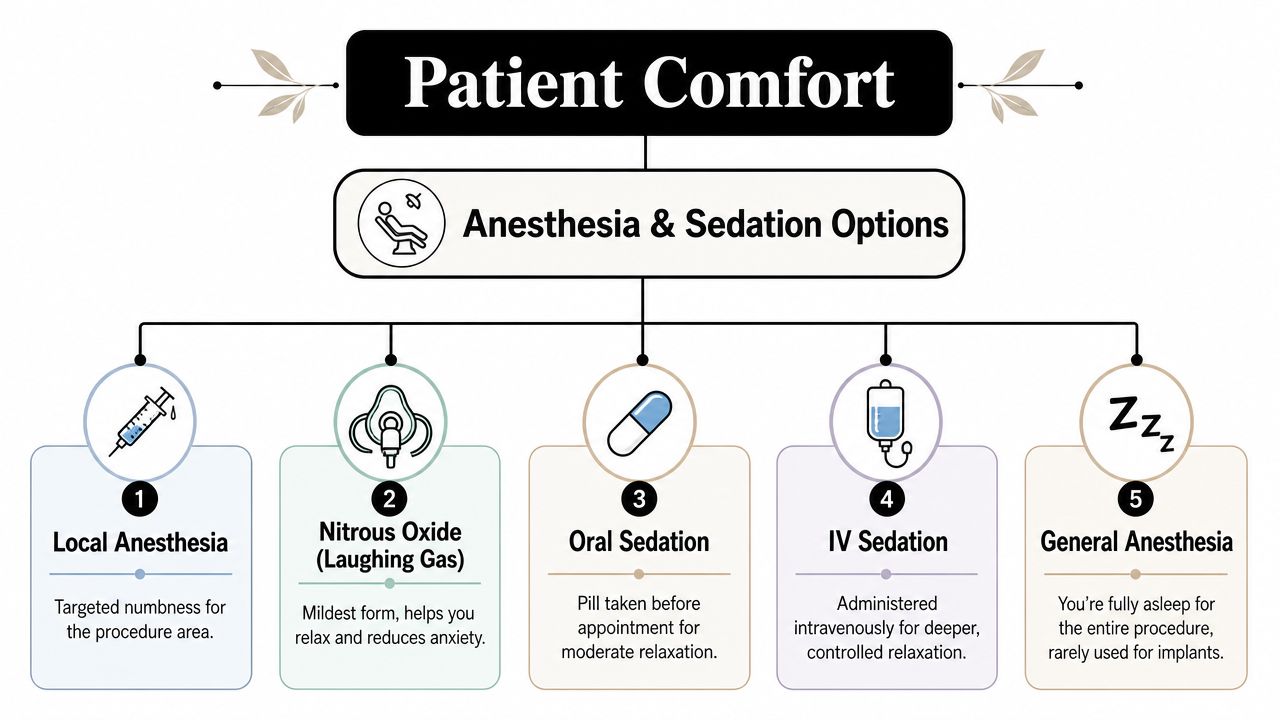
The main comfort options
Practices differ, but patients usually hear about five levels of support:
- Local anesthesia numbs the treatment area and remains the foundation of implant placement.
- Nitrous oxide helps patients relax while staying awake and able to respond.
- Oral sedation can be useful for stronger anxiety or for patients who want a deeper sense of calm.
- IV sedation offers a more controlled level of relaxation in practices equipped to provide it.
- General anesthesia is reserved for selected cases, not routine single-implant treatment.
The best choice depends on the surgical plan, medical history, anxiety level, and practical details such as whether someone can drive the patient home afterward.
Sedation also changes the experience of time. Patients who are very tense often remember every sound and every minute. Patients with the right level of support usually describe the visit as shorter and easier than they expected.
Matching the plan to the patient
A healthy adult getting one implant in a straightforward area may do very well with local anesthesia alone and clear communication throughout the appointment. A patient with a strong gag reflex, a history of dental trauma, or multiple implants to place may benefit from adding sedation.
That trade-off matters. More sedation can improve comfort, but it also means more planning, more recovery considerations the same day, and stricter medical screening. The goal is not to use the strongest option available. The goal is to choose enough support to keep the visit calm and predictable.
| Comfort need | Often helpful approach |
|---|---|
| Mild nervousness | Local anesthesia with clear step-by-step guidance |
| Moderate dental anxiety | Local anesthesia plus a relaxation option if appropriate |
| Strong fear or longer visit | A more structured sedation discussion before treatment |
Patients who need bone grafting with implant treatment often ask whether that automatically means much more pain or heavier sedation. The answer depends on the size of the graft, the location, and how much treatment is being done in one visit. A helpful starting point is understanding how dental implants and bone grafts heal together, because the recovery plan often matters just as much as the sedation plan.
Some people show anxiety by asking a lot of questions. Others go quiet, grip the chair, or postpone care until a damaged tooth forces the issue. That pattern is common, and it is one reason careful pre-op planning matters so much.
For patients in Downtown Miami, Midtown Miami, and Hallandale Beach who want a calmer environment, Ultra Smile DentalSpa offers implant care in a setting designed around comfort, communication, and reduced stress.
Patients also ask whether sedation options are only used for cosmetic cases or major oral surgery. They are not. The same thoughtful planning used for veneers, teeth whitening, or wisdom teeth extraction can make implant treatment feel more approachable and easier to complete with confidence.
The Truth About Your Dental Implant Recovery Timeline
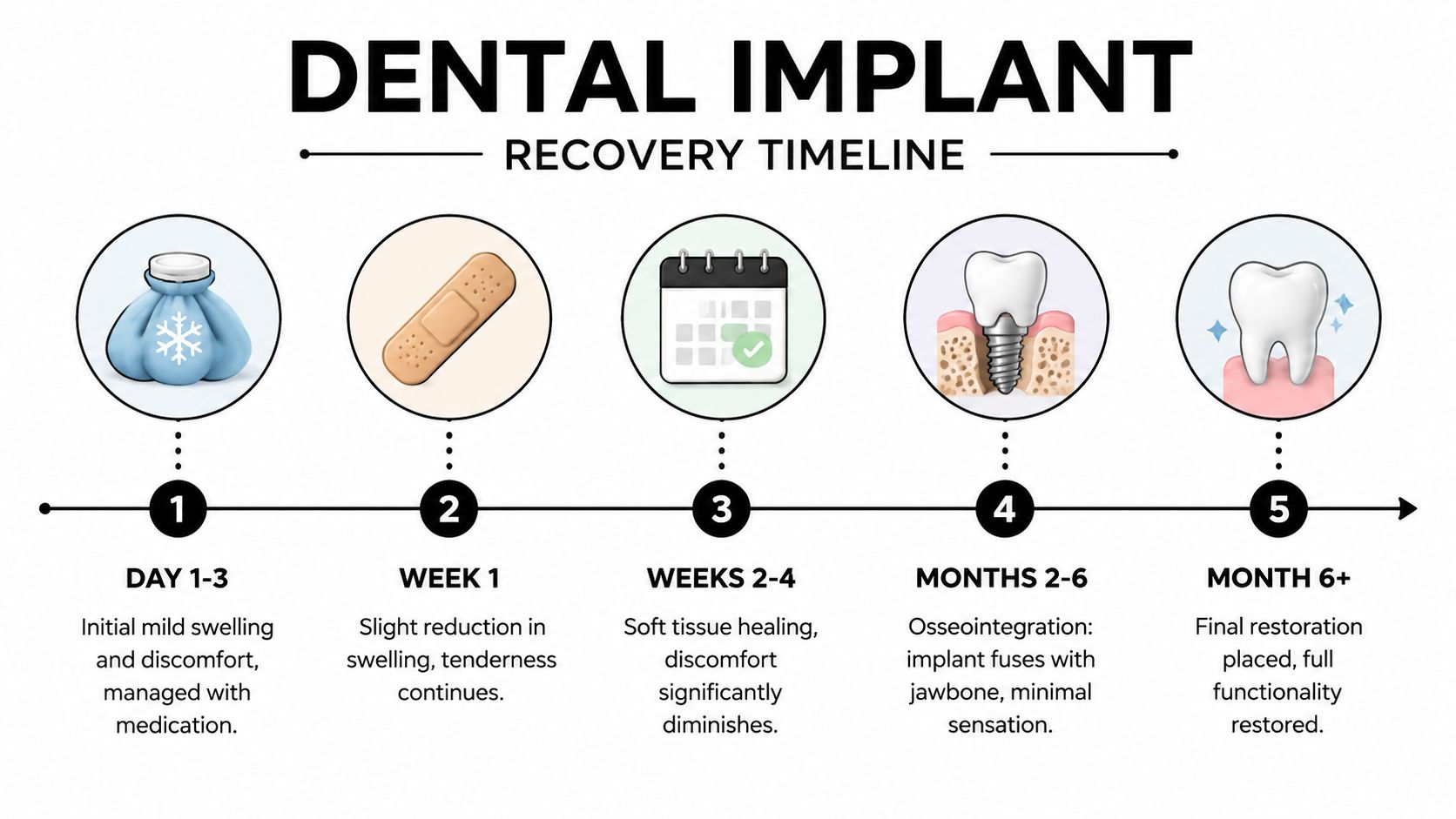
The answer to “Does it hurt to get dental implants? usually lives in recovery, not in the procedure itself. A peer-reviewed analysis found that most patients experienced mild pain, with the most obvious pain reaction at 24 hours after surgery, and it also found that analgesics help reduce this short-term discomfort, as reported in this postoperative implant pain analysis.
That gives patients something useful. A pattern. Not mystery pain, not endless pain, and not the idea that severe suffering is expected.
The first day matters most
The first several hours after surgery are often easier than patients expect because lingering numbness is still present. Once that wears off, soreness starts to declare itself. The important point is that the strongest discomfort tends to show up early rather than building week after week.
That early pattern helps patients plan. The first day is the time to rest, stay ahead of medication instructions, and avoid testing the area with chewing or repeated rinsing.
The first 24 hours often feel more noticeable than the procedure itself.
The first week should move in the right direction
Common recovery patterns include mild to moderate soreness, swelling, or bruising for about 3 to 7 days, with the worst symptoms often in the first 48 hours and substantial improvement by day 3 to 5, based on this overview of typical implant pain and recovery patterns.
That means normal recovery isn't perfectly comfortable, but it should be trending better. Patients may still prefer softer foods. Smiling wide may feel tight. Chewing directly on the side of surgery may not feel appealing. Those are common short-term limitations.
A simple timeline helps:
First 48 hours
Swelling and tenderness are usually at their most noticeable.Day 3 through day 5
Many patients feel a clear drop in discomfort and less facial tightness.By the end of the first week
The area often feels calmer, even if it's still tender when touched.
Patients who need added procedures sometimes have a different recovery path. Those considering grafting can learn more about dental implants and bone graft healing, since more extensive treatment can change what the first week feels like.
Healing continues after soreness is gone
Short-term soreness and long-term healing are not the same thing. A site can stop hurting long before the implant process is fully complete. Mayo Clinic notes that implant surgery is often done in stages and healing can take months because bone growth and tissue healing happen between those stages, as described in this overview of dental implant surgery and staged healing.
So if the site feels fine after the first week, that's good. It doesn't mean the process is finished. It means the body has moved past the early inflammatory phase.
Effective Pain Management After Your Implant Surgery
Good recovery care is practical. It isn't complicated, but it does depend on following directions closely. Most implant discomfort comes from inflammation and tissue healing, so the best aftercare supports both.
What helps at home
Patients usually do best when they keep the first few days simple and predictable:
- Use prescribed or recommended pain relief as directed. The timing matters. Waiting until soreness becomes intense often makes the first day feel harder than it needs to.
- Apply ice on the outside of the face early. Cold helps limit swelling, and less swelling usually means less pressure and tenderness.
- Choose soft foods. Yogurt, eggs, smoothies, soup that isn't too hot, and other gentle foods reduce irritation at the surgical site.
- Keep the mouth clean carefully. Clean doesn't mean aggressive. Patients should follow the office instructions for brushing and rinsing so they protect healing tissue instead of disturbing it.
- Rest. The body heals better when it isn't being pushed by strenuous activity right away.
A lot of patients underestimate how much easier recovery feels when they set up food, medication, and downtime before the appointment. Preparation lowers stress after surgery.
What tends to make recovery harder
Several habits make soreness linger or feel sharper:
- Chewing on the surgical side too soon
- Skipping medication and trying to catch up later
- Smoking or irritating the area
- Touching the site repeatedly with the tongue or fingers
- Returning to intense exercise before the body settles down
Recovery usually goes best when patients protect the area even after it starts feeling better.
Patients who already use a dentist for cleaning and exams, dental x-rays, and preventive care often recover more smoothly because they're used to following oral health instructions consistently. Implant success and comfort both improve when aftercare is taken seriously.
When to Expect More Discomfort and What Is Not Normal
The most misleading answer to the pain question is a blanket “no. Some implant cases are simple. Some aren't. The amount of postoperative soreness depends in part on how much tissue needs to be treated.
Some implant cases are naturally more involved
Cases involving bone grafting, multiple implants, or complicated extractions usually create more postoperative discomfort than a straightforward single-implant placement because they involve more tissue manipulation. That distinction is important for anyone trying to compare their situation to a friend's simple case or a short online video.
A patient replacing one tooth after an old extraction may have a fairly easy first week. A patient who needs a failing tooth removed, bone support rebuilt, and an implant placed as part of a bigger restorative plan should expect a more noticeable recovery.
That doesn't mean something is wrong. It means the body has more healing to do.
Warning signs that need a call
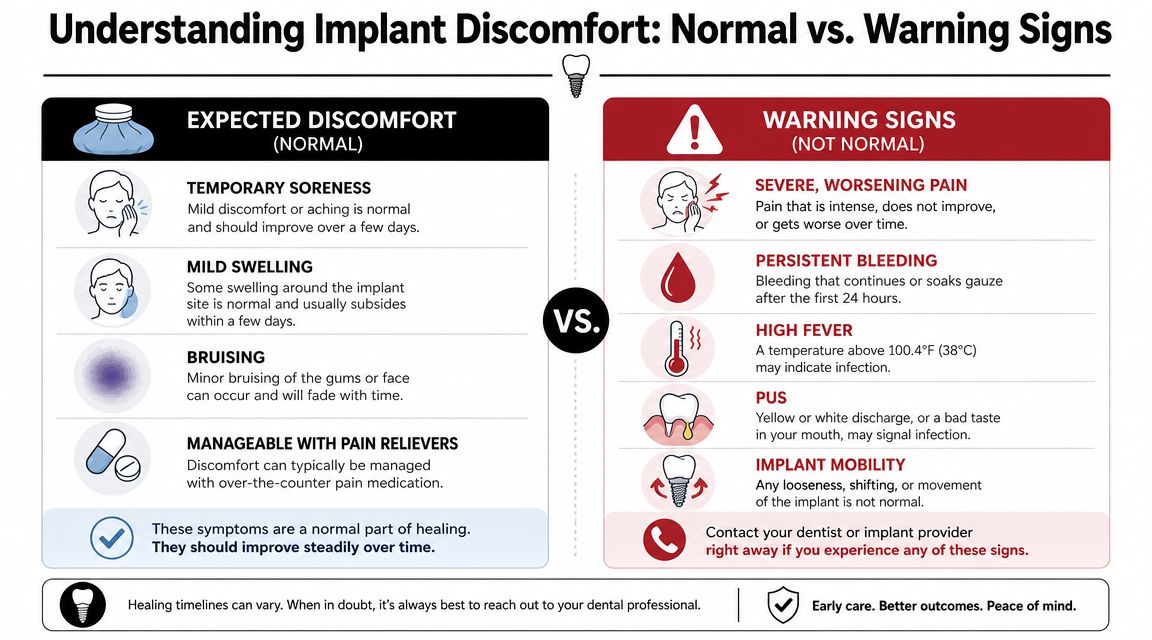
Normal implant soreness should improve, even if it doesn't disappear instantly. Pain that moves in the opposite direction deserves attention. Guidance on implant recovery also notes that severe or worsening pain isn't expected and may point to problems such as infection, nerve irritation, or implant instability, as explained in this review of normal implant soreness versus abnormal pain.
Patients should contact their dental office promptly if they notice:
- Pain that gets stronger instead of easing
- Fever
- Pus or an unpleasant discharge
- Heavy bleeding that doesn't settle
- Persistent numbness
- A loose-feeling implant or unusual mobility
If the area is improving day by day, that usually supports normal healing. If it's escalating, that's not a wait-and-see situation.
Having an established dentist in Miami, FL matters. Patients need a clear plan for who to call, how they'll be evaluated, and when an urgent visit is appropriate. Good implant care includes the procedure, the recovery support, and the willingness to act quickly if something doesn't look right.
Experience a New Kind of Dental Care in Miami
A nervous patient sits down for an implant consultation expecting the worst. Will it hurt during the procedure, will the first two days be rough, and how will they know whether what they feel is normal. Those are the right questions to ask.

Good implant care starts with clear expectations. Patients should know what they are likely to feel during treatment, what soreness is common in the first 48 hours, and what should begin settling during the first week. They should also know when pain falls outside that pattern and needs attention. That level of guidance helps anxious patients feel more in control and makes recovery less stressful.
In Miami, many adults want more than a procedure. They want one office that can evaluate the missing tooth, review bone support, explain sedation choices, complete the restorative plan, and stay available if healing does not follow the expected course. Dr. Neda Bahmadi and the team provide that kind of continuity for patients in Downtown Miami, Midtown Miami, and Hallandale Beach.
A practice built around patient comfort also needs to be honest. Some implant cases heal with only mild soreness. Others involve extraction, grafting, or more extensive reconstruction, which can make the first few days more noticeable. The goal is not to promise a pain-free experience. The goal is to make the process controlled, well explained, and predictable.
For many adults, replacing a missing tooth is about more than appearance. It affects chewing, speech, bite balance, and confidence in daily life. Implant treatment can restore those functions well, especially when the plan includes careful follow-up and clear instructions about what recovery should look like from day one.
If a missing tooth is affecting comfort, confidence, or daily function, scheduling a consultation with Ultra Smile DentalSpa is a practical next step. Patients in Miami, Downtown Miami, Midtown Miami, and Hallandale Beach can get a clear evaluation, honest guidance about whether implants fit their case, and a treatment plan focused on comfort, healing, and long-term stability.