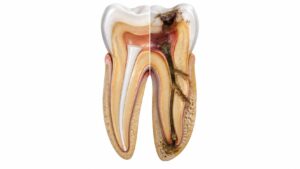
A small chip, stain, or edge gap in a composite filling is often repairable, while decay under the filling, a large fracture, or a loose restoration usually means replacement. Across 2,816 back-tooth composite restorations, the pooled annual failure rate was 1.8% at five years and 2.4% at ten years, so many of these fillings stay serviceable for years when the tooth underneath is still sound.
You run your tongue over a back tooth after lunch and feel a sharp edge. The filling looks stained, or a corner is gone, and the worry is that the whole tooth is failing. People searching for a dentist in Miami, FL, or a dentist near me often reach that moment between meals, not in a dental chair. A chipped filling is common. The right next step depends on how much healthy tooth is still there, not on how alarming the chip looks in a mirror.
Table of Contents
- Can a Composite Filling Be Repaired or Does It Need Replacing?
- What to Do With a Damaged Filling Before Your Visit
- How Long Composite Fillings Last and How to Protect Them
- How a Composite Filling Repair Is Done Step by Step
- When Replacement Is the Better Choice and What It Involves
- Composite Filling Repair Cost in Miami and Insurance Coverage
- Book Your Composite Filling Check in Miami
Can a Composite Filling Be Repaired or Does It Need Replacing?
You notice a dark line around a composite filling and worry that decay has started. Sometimes the edge is only stained. Other times, decay has formed beneath it. The appearance alone cannot settle the question: the dentist needs to check what is happening underneath and how much sound tooth remains.
Composite filling repair preserves the bonded part that is still working and replaces only a limited damaged area. That can keep more healthy tooth intact. Replacement is usually the better choice when decay has weakened the tooth, the filling is loose, or a large fracture leaves too little sound material to support a repair.
The decision depends on the type and position of the defect. A small chip with sound tooth beneath it may be repaired. A small gap is different: a narrow, sealed-looking margin without decay may be repairable, but an open or defective margin favors replacement because the seal is compromised. The survey of how repair is taught discusses repair as an approach for preserving tooth structure. A clinical decision-making review also examines how clinicians choose between repair and replacement for defects such as fractures, decay, and margin problems.
| Damage you notice | Usually repairable? | Why it matters | Usual next step |
|---|---|---|---|
| Small chip on the edge | Often, if the tooth underneath is sound | The damage may be limited to one area | Repair with new composite |
| Surface stain or dullness | Often | The change may be cosmetic, without decay | Examine, then polish or resurface if appropriate |
| Small, sealed-looking gap with no decay | Sometimes | The margin must still be sound enough to seal | Examine and decide whether repair can restore the seal |
| Open or defective edge | Usually not | The filling may no longer seal the tooth | Assess for replacement |
| Piece missing from one area | Often, if the surrounding filling is secure | Sound material around the break may support a repair | Repair the missing area if the tooth is sound |
| Dark area or decay around the filling | Usually not | Decay can extend beneath the restoration | Remove decay, then replace as needed |
| Large or multi-surface fracture | Usually not | Too little sound material may remain to hold a repair | Consider replacement and check the bite |
| Loose, leaking, or lifting filling | Usually not | A small patch cannot restore a dependable seal | Assess for replacement |
| Pain on biting or sensitivity to temperature | Depends on the exam | The tooth or its nerve may be affected | Examine and consider dental x-rays |
Four questions at the exam
At an urgent visit or during cleaning and exams, the dentist checks four things before recommending repair or replacement:
- Is there decay under or around the filling? A stain can look concerning without being decay. A dark edge can also conceal active decay, so appearance alone is not enough.
- Is the tooth cracked? A repair may not hold if a crack extends into a cusp.
- Is the damaged area small, accessible, and possible to keep dry? Composite needs a clean, dry surface for bonding.
- Would repair change how the teeth meet? The bite and the contact between neighboring teeth need to remain comfortable.
The aim is to keep as much healthy tooth as possible without leaving a weak or unsealed filling in place. A repair is not automatically the cheaper or longer-lasting choice; it has to fit the condition of the tooth. An exam, sometimes with dental x-rays, helps determine whether the problem is surface-level or extends beneath the filling.
What to Do With a Damaged Filling Before Your Visit
A chipped filling is a common visit, and a few careful steps keep the tooth calmer until you're seen. If you need an emergency dentist in Miami, FL, say that when you call and ask for the earliest opening.

- Find the broken piece and keep it. Place it in a clean container. The dentist may use it to see how the filling fractured.
- Rinse gently with warm water. A warm salt-water rinse clears food from the gap so the edge is less irritated.
- Chew on the opposite side. Skip sticky, hard, or crunchy foods such as caramel, nuts, and chips so the damaged area isn't loaded again.
- Cover a sharp edge. Sugar-free gum or dental wax protects the tongue and cheek until the visit.
- Use an over-the-counter pain reliever as the label directs. That eases discomfort without masking a problem you should still report.
- Skip very hot or very cold drinks if the tooth zings. Temperature swings bother an exposed edge.
What not to do
- No super glue. Household adhesive isn't sterile and can block a proper bond later.
- No nail files or emery boards. Smoothing the edge yourself can crack more composite or cut the cheek.
- No drugstore temporary filler left for weeks. A short cover is not a seal, and decay can continue underneath.
Call the same day for throbbing pain, swelling in the gum or face, a bad taste from the tooth, or a bite that suddenly feels off. Those signs can mean more than a chip, and emergency dental services are the right request, not a wait-and-see weekend.
A sharp edge is uncomfortable, and it is usually a straightforward visit once the tooth is examined.
How Long Composite Fillings Last and How to Protect Them
A small chip and a dark edge can look similar in the mirror, but they may call for different care. The key question is how much healthy tooth remains and whether decay or a crack lies beneath the filling. A stain may be superficial, while a dark margin can hide decay, so appearance alone cannot determine whether repair will hold.
Long-term studies help describe how composite restorations perform, but they cannot predict the life of one filling. Size, location, bite forces, and new decay all affect its outlook.
| Finding | What it means for you |
|---|---|
| Pooled annual failure rate at 5 years: 1.8% | Many back-tooth fillings remain serviceable for years |
| Pooled annual failure rate at 10 years: 2.4% | Failure risk increases over a longer period |
| Front-tooth composite survival over 2 to 10 years: 88% | Front-tooth restorations often hold up well |
The back-tooth rates come from 12 longitudinal studies of 2,816 restorations, including 2,585 Class II and 231 Class I restorations. The studies recorded 569 failures, with caries and fracture among the leading causes, in this meta-analysis of posterior composites. Restorations covering more tooth surfaces tend to have a poorer outlook, so preserving sound tooth structure matters when deciding whether to repair or replace. A 2024 review of 6 studies, 141 patients, and 1,068 restorations reported 88% survival for front-tooth composites over 2 to 10 years (anterior composite survival review). Evidence does not establish one option as right for every defective filling. The choice depends on the tooth and the extent of damage (repair versus replacement evidence).
Habits that help protect a filling
- Limit sugary drinks and between-meal snacks. Frequent sugar exposure encourages decay around filling margins.
- Drink water after acidic foods. It helps rinse away acids that can affect tooth surfaces.
- Wear a night guard if you grind or clench. Repeated force can contribute to chips and fractures.
- Avoid chewing ice, pens, or hard candy. Hard objects put concentrated pressure on composite.
- Brush with fluoride toothpaste and floss daily. Cleaning around the margins helps reduce plaque and new decay.
- Keep regular dental visits. An examination can catch a small problem before more tooth structure is affected. Follow these tips for caring for composite fillings.
Composite is a well-established restorative dentistry material, but no filling is permanent. Its condition, the amount of healthy tooth underneath, and your risk of further decay guide whether monitoring, repair, or replacement makes sense. A survey listing on a research portal does not provide enough detail to support a precise practitioner statistic, so the practical decision should rest on an examination of the tooth and the available clinical evidence.
How a Composite Filling Repair Is Done Step by Step
An in-office repair leaves the sound composite in place and rebuilds only the damaged part, usually in one visit.
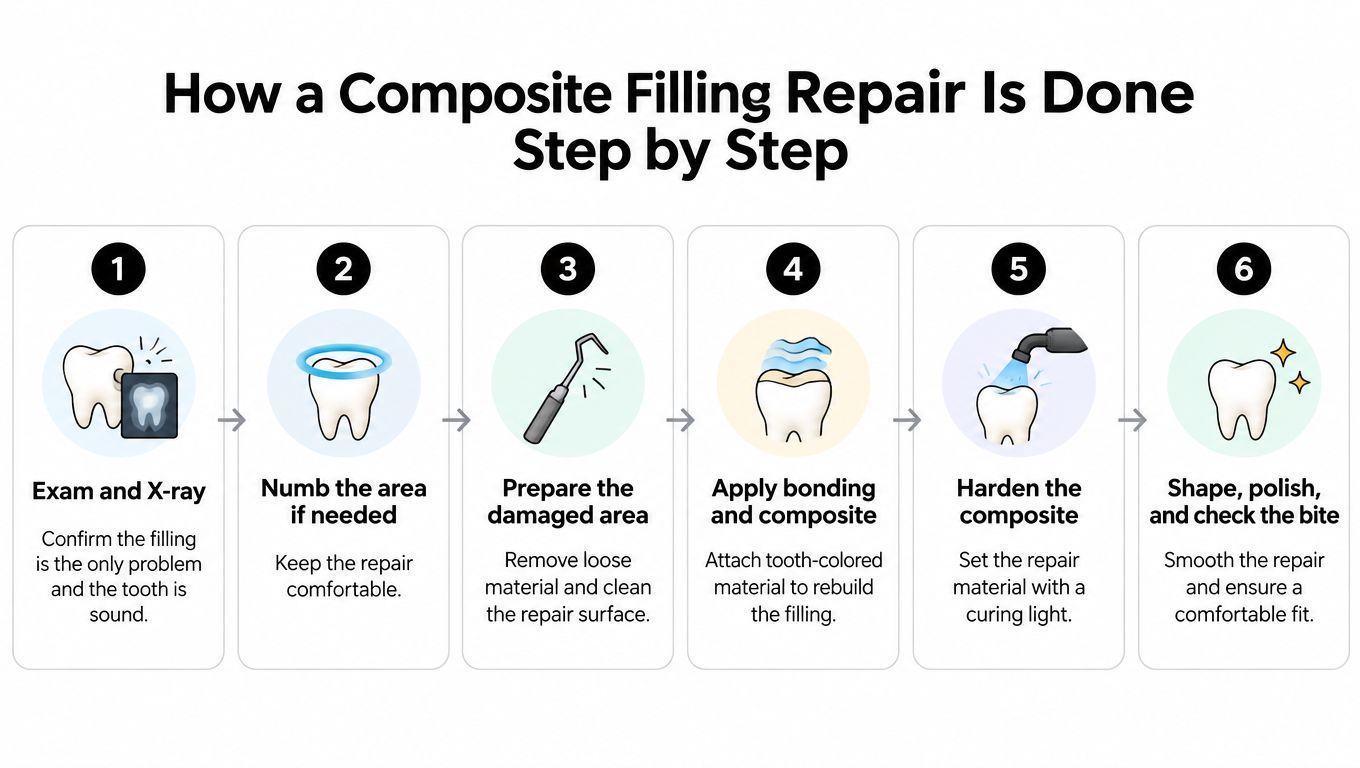
- Exam and X-ray. Confirm the filling is the only problem and the tooth is sound.
- Numb the area if the repair goes deeper. Comfort matters once the work reaches sensitive layers.
- Isolate the tooth. A rubber dam or cotton rolls keep saliva off the bond, because moisture weakens it.
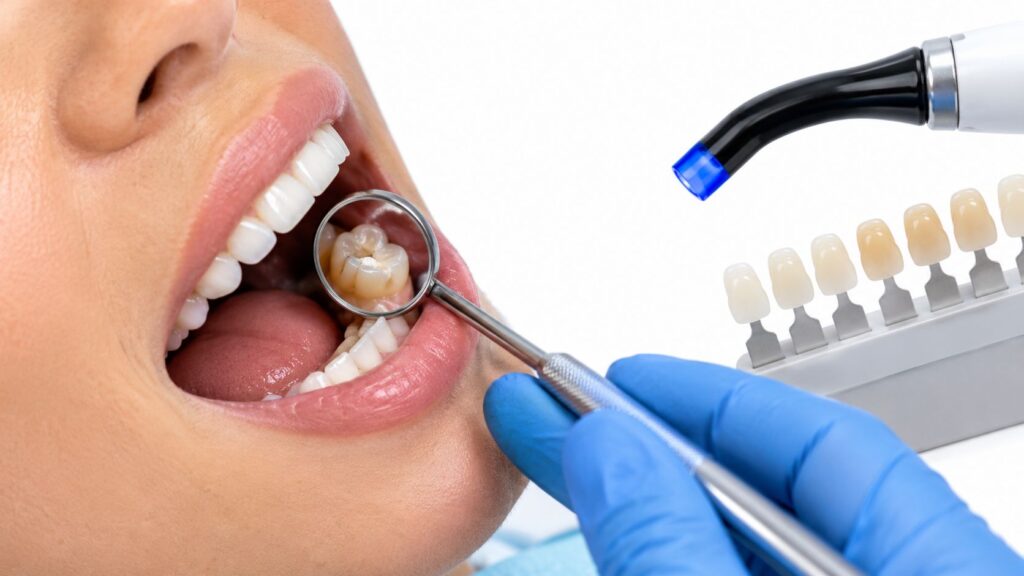
- Match the shade. The tooth is compared with a shade guide in natural light so the repair doesn't flash.
- Remove loose or stained material and roughen the old surface. New composite needs grip on the existing resin.
- Apply adhesive and cure it. A blue light sets that bonding layer.
- Build the repair in thin layers. Each layer is cured before the next goes on.
- Shape, polish, and check the bite. Thin marking paper shows whether the repair feels high.
Surface preparation and moisture control matter as much as the material. A 2025 laboratory study found that immediate repair produced significantly higher shear bond strength than delayed repair for both bulk-fill and nanohybrid composites, and the surface-treatment protocol changed the result (laboratory repair bond study). Lab tests don't reproduce chewing, temperature change, or your bite, so they don't prove every same-day repair lasts longer in a real mouth.
This short video shows how a repair is built up and finished.
Mild sensitivity for a few days is common. Lasting pain, a high bite, or a rough edge means calling the office. A successful repair feels smooth, matches the tooth, and is comfortable when you close.
When Replacement Is the Better Choice and What It Involves
Repair is the conservative first thought. It stops being the better choice when the seal is gone, decay is underneath, or too little filling remains to hold a patch. The review noted earlier found no eligible randomized trials that directly compare repair with replacement of defective resin fillings in adults, so neither option is universally superior. The dentist has to judge decay, margins, fracture size, remaining tooth, and whether the tooth can still be restored.
What a replacement visit involves
- Numb the tooth. The old filling and any decay come out under local anesthetic.
- Remove the whole old filling and look for decay. The goal is a clean view, not a bigger hole for its own sake.
- Clear decay until only sound tooth remains. Soft tooth structure won't hold a new bond.
- Place a protective liner if the area is deep. That buffers a spot close to the nerve.
- Isolate, bond, and place new composite in layers. The same moisture control used in a repair still applies.
- Shape and polish. The bite is checked so the new filling isn't high.
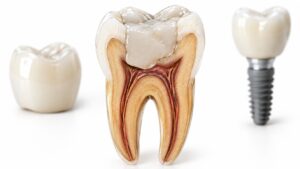
Replacement removes more healthy tooth than repair, which is why it's chosen only when the damage requires it. A large multi-surface filling already has a tougher outlook, and the trade-offs of rebuilding a big restoration are covered in this note on a large dental filling. If the tooth is cracked or too weak for composite alone, the next step may be a crown, sometimes after a root canal. Both are part of ordinary restorative care. If the tooth can't be saved, tooth extraction and, later, dental implants are a separate plan, not a bigger filling.
A replacement generally takes a little longer than a repair. Chair time depends on how much old material and decay have to come out. Short fiber-reinforced composites are sometimes discussed for heavily stressed teeth, but that clinical evidence is still low-certainty and isn't a routine upgrade.
Composite Filling Repair Cost in Miami and Insurance Coverage
A small chip in a front tooth may need only a localized composite repair. A filling that has fractured across several surfaces can take more time and material to rebuild, while a weakened tooth may need a crown instead. These are different cost tiers, not one standard price. The exam determines which applies, because the same visible chip can cover sound tooth or hide decay beneath a dark edge.
| Treatment | Relative cost tier before insurance | What affects the fee |
|---|---|---|
| Localized chip repair on one surface | Lowest | Access to the chip, shade matching, and time needed to shape and polish |
| Replacement of a small, one-surface filling | Higher than a localized repair | Removing old material and cleaning any decay |
| Replacement of a two- or three-surface filling | Higher than a small replacement | How many surfaces need rebuilding and the restoration's depth |
| Filling with a protective liner near the nerve | Higher than a comparable filling without a liner | Deeper cleaning and the added protective layer |
| Crown when a filling cannot support the tooth | Highest tier in this comparison | Crown material, lab work, and whether root canal treatment is needed |
The tiers help with budgeting, but they are not dollar quotes. A crown is a different procedure from a filling, and a dark margin does not by itself show whether replacement is needed. The dentist checks what is underneath before recommending how much tooth structure to remove.
What affects the estimate
The largest differences usually come from the size and depth of the repair. A one-surface chip involves less rebuilding than a filling spanning several surfaces. If decay extends deeper, cleaning takes longer and a liner may be appropriate. If the remaining tooth cannot reliably hold composite, the estimate moves to the crown tier. The aim is to treat the actual damage while preserving sound tooth wherever possible.
Insurance checklist
- Check your annual maximum and how much remains.
- Confirm the filling coverage percentage and whether it applies after your deductible.
- Ask about frequency limits. Your plan may restrict how soon a filling can be replaced.
- Ask whether repair and replacement have the same coverage. Benefits may differ by procedure.
- Request a pre-treatment estimate based on the proposed treatment, then confirm the details with your insurer.
Coverage varies by plan, so confirm your own benefits, deductible, frequency limits, and expected out-of-pocket share before treatment. A pre-treatment estimate can help, but the insurer determines payment under your policy. Cosmetic dentistry shade matching is part of a careful repair; it is separate from teeth whitening.
Book Your Composite Filling Check in Miami
A chipped edge may need only a small repair, but the right choice depends on what lies beneath it. At Ultra Smile DentalSpa, led by Dr. Neda Bahmadi, DMD, patients from Downtown Miami, Midtown Miami, and Hallandale Beach can have the filling examined. X-rays are taken if needed, and you receive a written estimate before treatment begins.
Bring a short note about when the problem started and what it feels like, any past X-rays you have, and your insurance card. A stain may look worrying without requiring replacement, while a dark edge can conceal decay. The exam helps determine whether repair can preserve more healthy tooth or replacement is the better option.
To arrange your check, book through Ultra Smile DentalSpa. Have the chipped or rough filling assessed before it breaks further.