Dental anxiety affects about 15.3% of adults worldwide, while 12.4% have high anxiety and 3.3% have severe anxiety or dental phobia. It's a lasting emotional and physical response to expected or actual dental care, ranging from unease about a specific trigger to severe fear that can lead someone to avoid needed treatment.
A person near Downtown Miami might search for a dentist near me after a tooth starts hurting, a tooth breaks, or a long-delayed cleaning and exam becomes overdue. Then the thought of the waiting room, dental X-rays, or not knowing what will happen can feel like too much, and the appointment gets canceled. That response isn't a personal failure, and it may involve worries about cost, privacy, judgment, or losing control, not only pain or needles.
Ultra Smile DentalSpa, led by Dr. Neda Bahmadi, DMD, provides a wide range of dental care in Miami with attention to patient comfort. Whether someone is looking for an emergency dentist, a tooth extraction, dental implants near me, or a cosmetic dentist near me, discussing anxiety early can help the team plan a more manageable visit. No practice can promise that every fear will disappear in a single appointment, but a clear plan can make the next step easier to face.
For readers also trying to understand why worry builds before an appointment, understanding anxiety before stressful events offers background on anticipatory anxiety. Dental fear can be named, discussed, and addressed without shame.
Table of Contents
- What Dental Anxiety Feels Like in Miami
- How Dental Anxiety Differs From a Phobia
- Triggers and What Your Body Does
- When Worry Turns Into a Health Risk
- Comparing Behavioral Care and Sedation
- A Calmer Visit at Ultra Smile DentalSpa
- Why Treating Fear Helps Your Whole Mouth
What Dental Anxiety Feels Like in Miami
Dental anxiety can begin well before a patient reaches the office. A person may feel tense while searching for a dentist in Miami, then become more uneasy while imagining the sounds of instruments or wondering whether a dentist will judge the condition of their teeth. Some people still make the appointment but struggle to sit in the waiting room. Others cancel, even when pain or a broken tooth has made care feel urgent.
Anxiety also varies from visit to visit. A patient who manages a routine exam may feel frightened about a filling, tooth extraction, root canal, or implant consultation. A specific trigger can make an otherwise familiar office feel threatening, especially when the patient doesn't know what will happen next.
More than a fear of pain
Pain is one possible concern, but it isn't the whole picture. A patient may worry about receiving an unexpected bill, having limited time to ask questions, feeling embarrassed about delayed care, or losing control once treatment begins. Language needs, privacy concerns, and discomfort about who will provide care can also affect whether a visit feels safe.
These concerns deserve practical answers rather than dismissal. A patient can ask for a written treatment plan and fees, request an explanation before each step, and agree on a signal to pause. Someone considering dental X-rays or a cleaning and exam can also ask whether the first visit can focus on conversation and assessment rather than starting treatment immediately.
A useful starting point: Naming the specific concern gives the dental team something concrete to plan around.
For adults near Downtown Miami, Midtown Miami, or Hallandale Beach, Ultra Smile DentalSpa is a local option for discussing anxiety alongside dental needs. The first goal may be a new-patient exam or an assessment of an urgent concern. A later conversation can address restorative dentistry, dental implants, or cosmetic care, based on what the patient needs and feels ready to discuss.
How Dental Anxiety Differs From a Phobia
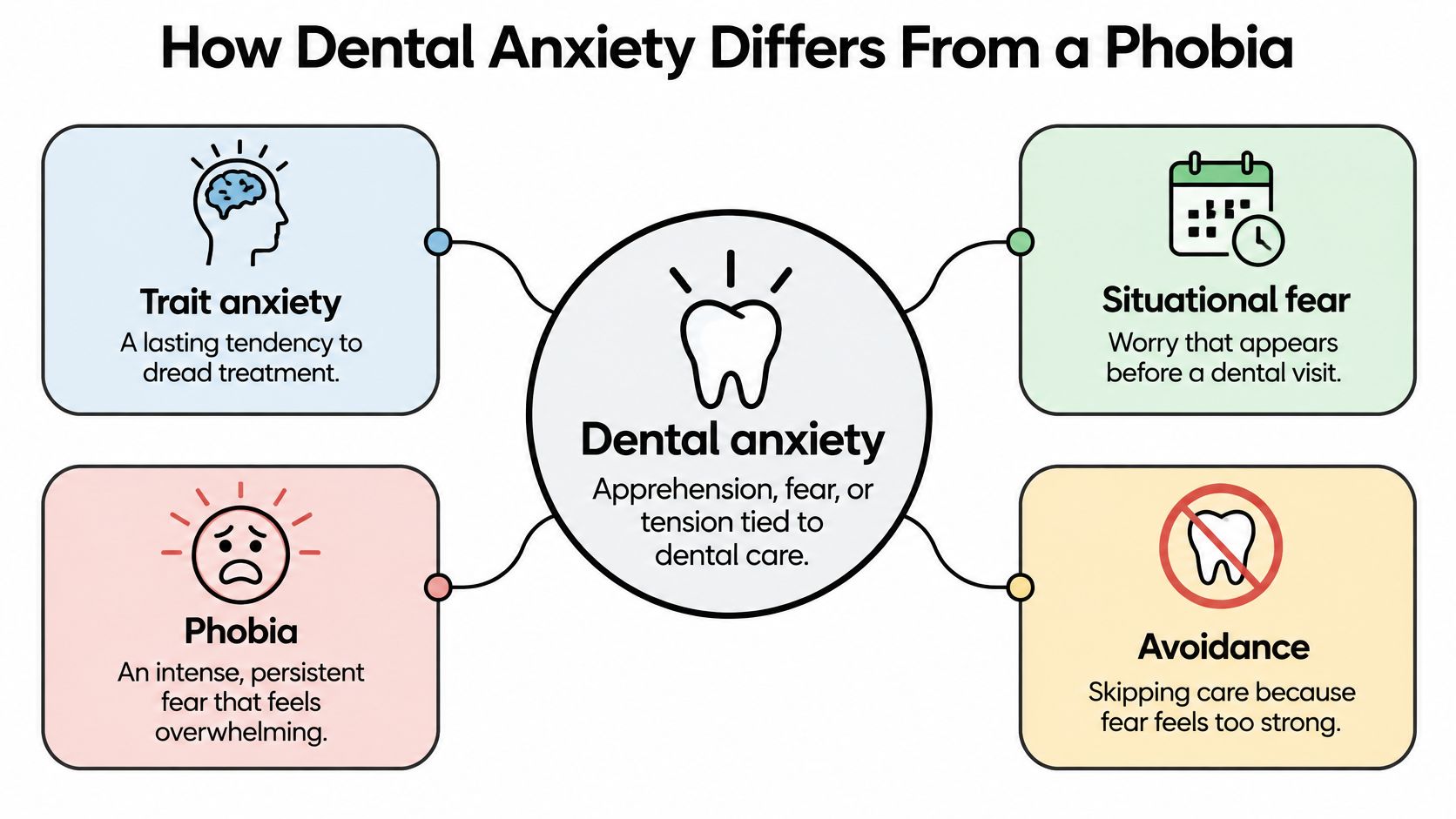
Dental anxiety means apprehension, fear, or tension connected to dental care. It can show up as uneasiness before an exam, a racing heart when an injection is mentioned, or a strong urge to leave when a procedure begins. The experience may be temporary or part of a broader pattern.
Three different experiences
Trait anxiety is a lasting tendency to dread dental treatment. State anxiety is a temporary reaction to a particular trigger, such as a needle, drilling, anticipated pain, or feeling unable to stop a procedure. A simple way to picture the difference is an alarm that's already set compared with an alarm that sounds when a specific procedure begins.
A phobia is more intense and persistent. The fear can feel overwhelming enough that a person avoids routine care, even when they understand that treatment may be needed. Avoidance is important to recognize because it can affect attendance and allow dental problems to go unchecked.
Clinicians can use tools rather than relying only on small talk. The Modified Dental Anxiety Scale (MDAS) is a brief adult screening questionnaire, and the Dental Fear Survey helps assess avoidance, physical reactions, and fear of particular dental situations. A systematic review and meta-analysis of 31 studies involving 72,577 adults estimated global dental fear and anxiety at 15.3%, high anxiety at 12.4%, and severe anxiety or phobia at 3.3%; women and younger adults generally reported higher levels (systematic review and meta-analysis).
Why the distinction matters
A patient who feels nervous about a new-patient exam may mainly need a slower pace and clear explanations. Someone with persistent avoidance may need longer appointments or structured support. Naming the experience helps the patient and dentist decide what to discuss, rather than assuming every anxious person needs the same approach.
Triggers and What Your Body Does
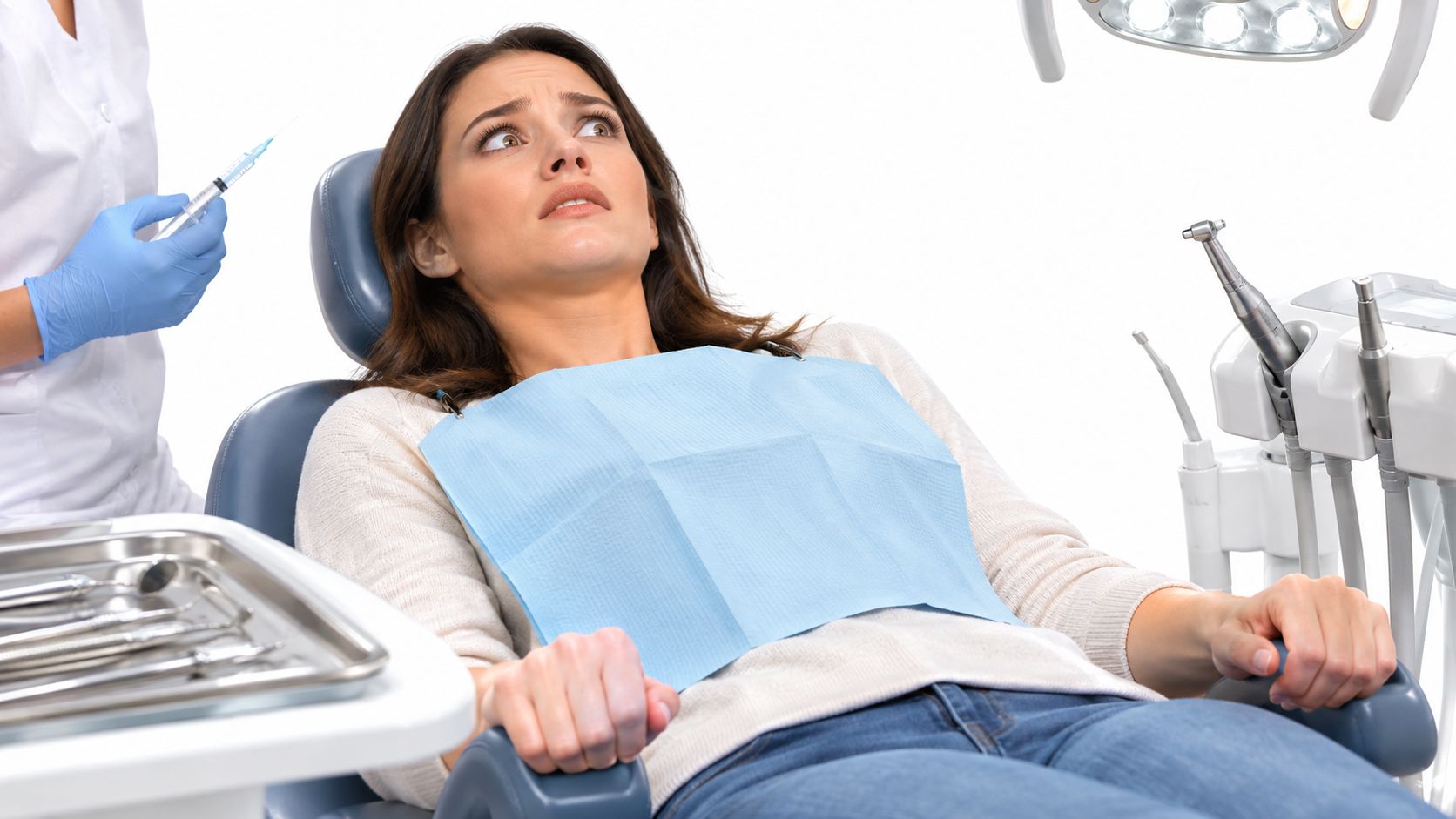
A person can know that a dental procedure is planned to be safe and still feel alarmed in the chair. Anticipated pain, needles, the sight or sound of instruments, fear of bodily harm, and an unfamiliar room can all trigger a strong response. Even routine dental X-rays may feel difficult if someone dislikes objects near the face or doesn't know what to expect.
The care environment can add another layer. Unclear fees, limited appointment availability, unfamiliar terminology, language needs, and discomfort about who will provide care can increase tension. These aren't irrational concerns. A patient who understands the treatment and cost, knows who will perform each step, and can communicate comfortably may feel more prepared to decide whether to proceed.
Why the body reacts
Sensory information from a dental setting can reach brain areas involved in processing fear. The body may then shift into a fight-or-flight response, with a faster heartbeat, sweating, tense muscles, or sharp alertness. Those reactions can make ordinary sensations feel more intense and can explain why “just relax often doesn't help.
A patient experiencing situational anxiety may find it useful to learn how anxiety can arise around a particular event. DeTalks' guide to situational anxiety provides additional context, while a dentist can help connect those feelings to specific parts of a visit.
For a cleaning and exam, teeth whitening, a filling, or an emergency exam, the patient can ask the team to preview the next step and pause when needed. Agreeing on a stop signal before treatment starts gives the patient a clear way to communicate without having to explain while instruments are in the mouth.
The following video offers another way to think about anxiety and dental care.
When Worry Turns Into a Health Risk
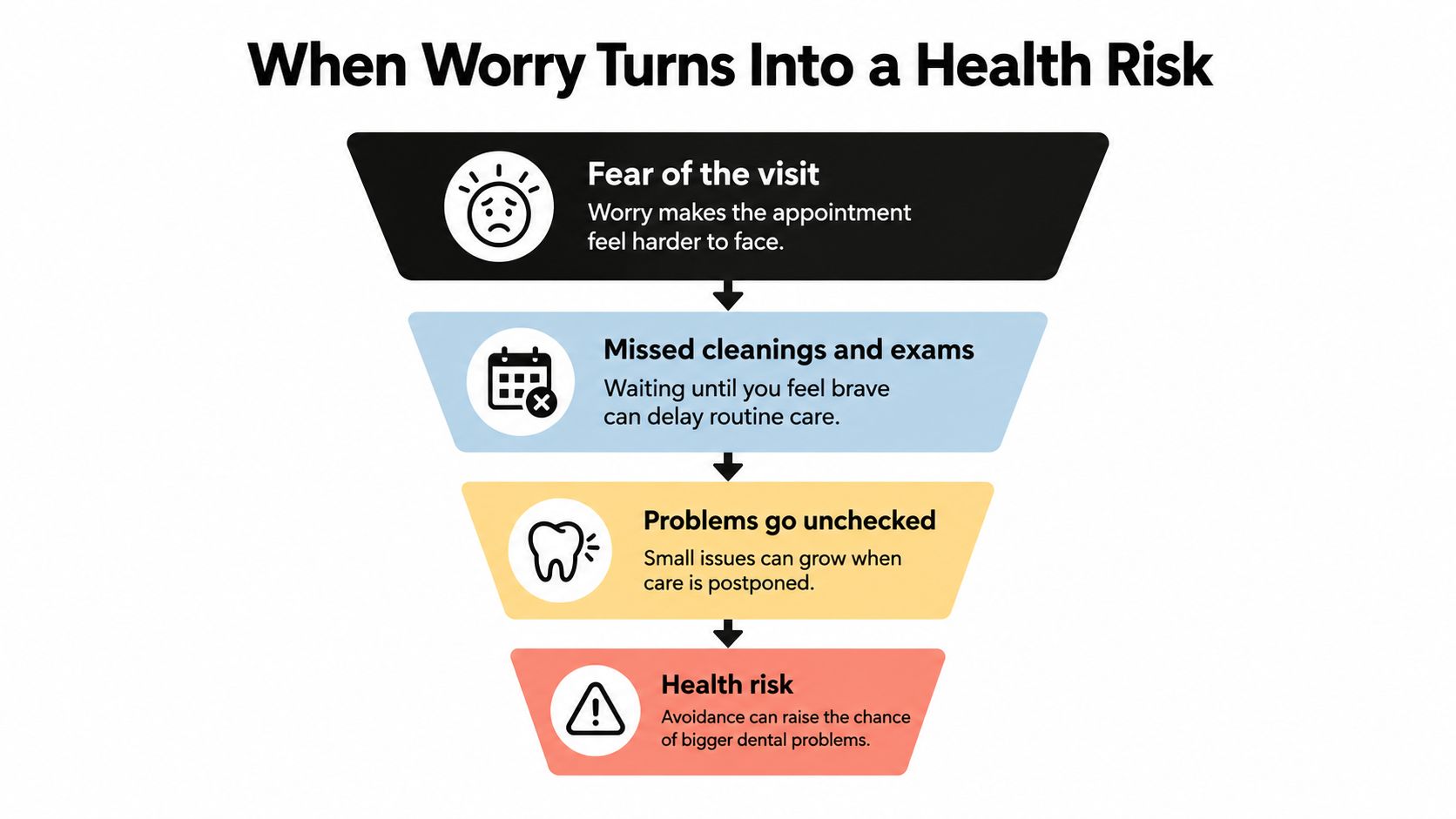
Waiting until a person feels completely brave can seem like the safest choice, but postponing dental care doesn't resolve the underlying problem. A missed exam may allow decay, gum disease, infection, or tooth damage to progress. Later care might involve a tooth extraction, root canal, or implant planning, which can feel harder to approach when fear has already made appointments difficult.
A dental-practice study using the MDAS found that 19% of participants met its threshold for moderate-to-high anxiety, and 6.82% met its threshold for high anxiety. Among 308 participants, 26 people, or 8.4%, reported missing an appointment because of anxiety (dental-practice study). Those findings describe that study's participants, not every dental patient, but they show how anxiety can affect attendance.
Find the kind of support that fits
Occasional nerves may call for a conversation, a stop signal, and a clear explanation of each step. Repeatedly postponing cleanings and exams is a sign to discuss a more deliberate plan. Panic symptoms or complete avoidance may call for longer appointments, gradual exposure, structured behavioral support, or coordination with a mental-health professional.
This matters especially when severe anxiety occurs alongside serious mental illness. A calm room may help, but it may not be enough by itself. Trauma-informed communication and coordination with other care providers can help the dental team address the person's needs without pressure or blame.
The point isn't to label someone as difficult. It's to identify whether fear is starting to interfere with care, then match support to what's happening. An emergency dentist visit may need an immediate assessment, while a patient who has delayed preventive care may benefit from starting with a conversation and exam.
Comparing Behavioral Care and Sedation
Behavioral support and sedation are different tools, and they can be discussed together. A written treatment plan, transparent fees, extra time for a first visit, and agreement about who performs each step can make care more predictable. If permitted by the practice, a support person may also help the patient feel more comfortable.
Behavioral or cognitive-behavioral approaches may be appropriate when anxiety affects attendance or makes treatment difficult. One systematic review found these approaches reduced Dental Anxiety Scale scores by a mean difference of 2.7 points, but rated the evidence quality as low (systematic review of psychological treatments). That result supports considering behavioral care, but it doesn't guarantee a particular outcome for an individual patient.
Sedation may be worth discussing when fear makes needed treatment hard to complete. It doesn't replace informed consent, clear explanations, or planning for future visits. A patient considering sedation for a root canal can review what it involves and ask questions before deciding (information about sleep and root canal treatment).
Matching anxiety level to support
| Anxiety level | What the patient often needs | Support to discuss |
|---|---|---|
| Ordinary nerves | Reassurance about what will happen | Clear explanations, a stop signal, and a steady pace |
| Persistent anxiety | Predictability and more time to build trust | A longer first visit, written plan, and gradual exposure |
| Severe avoidance | A coordinated approach to help make care accessible | Structured behavioral support, a sedation discussion, and mental-health coordination when appropriate |
At Ultra Smile DentalSpa, a patient and dentist can discuss support in relation to the planned care, whether that's a cleaning, composite filling, crown, root canal, wisdom teeth extraction, implants, or cosmetic dentistry. The useful question isn't whether one method works for everyone. It's which combination of communication, pacing, and clinical support fits this patient and this procedure.
A Calmer Visit at Ultra Smile DentalSpa
A new patient's visit can begin with a conversation before instruments enter the room. The patient can describe what feels difficult, ask questions, and agree on a stop signal. The dentist can review dental X-rays with the patient and explain what they show before discussing treatment choices.
The plan can separate an urgent concern from decisions that can wait. A broken tooth or pain may need assessment first; veneers, teeth whitening, Invisalign, same-day crowns, dental implants, and bone grafts can be discussed as part of a separate restorative or cosmetic plan when appropriate. Patients who want to prepare ahead of surgery can review guidance on preparing for dental surgery.
Comfort with clear choices
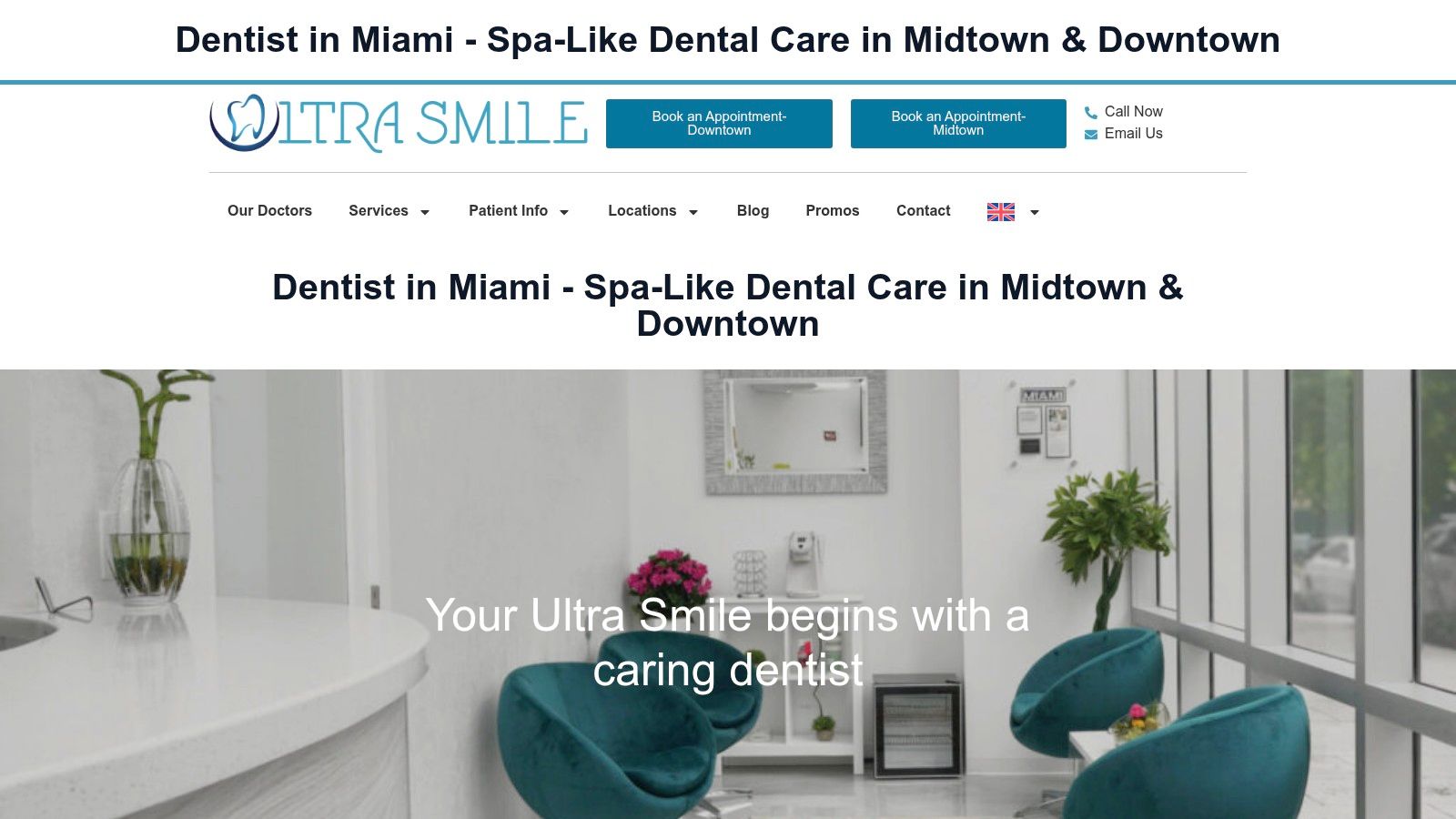
Refreshments, custom aromatherapy, streaming entertainment during procedures, and a hot towel at the end can make the setting feel more comfortable. These features don't replace clinical communication. Patients can still ask for a pause, request an explanation, or talk through each step before treatment begins.
Bilingual staff can help patients communicate in English or discuss language preferences. A transparent treatment plan can show proposed care and fees, while accepted insurance and options for patients without coverage can help make the financial conversation clearer. Complimentary yearly whitening is also a practice benefit for eligible patients.
Dr. Neda Bahmadi's ongoing education and memberships in the ADA, FDA, SFDA, AACD, and AAFE provide professional context. For a patient near Downtown Miami, Midtown Miami, or Hallandale Beach, the practical first step is to describe the concern and decide with the dentist whether the visit should focus on an exam, an urgent problem, or a more detailed treatment discussion.
Why Treating Fear Helps Your Whole Mouth
Managing dental anxiety can support more than comfort during an appointment. Routine exams and cleanings give the dental team a chance to identify concerns before they become a more urgent problem. When a patient avoids care, an issue that might have been addressed during a planned visit can become a reason to seek an emergency dentist.
Healthy teeth and gums also support daily activities such as chewing and speaking. For someone considering restorative dentistry, an implant, or cosmetic care, a manageable plan can help make those choices feel clearer and less rushed. The purpose isn't to push a patient into treatment. It's to keep communication open so the patient can understand the options and make an informed decision.
A calm setting, transparent planning, and the right level of behavioral support or sedation can make dental care more accessible. These are practical ways to help patients participate in care, not rewards reserved for people who already feel comfortable. A patient can bring questions about control, cost, privacy, or treatment steps to a consultation and decide what would make the first visit workable.
For adults in Miami and nearby Hallandale Beach, scheduling an exam or consultation can be a first step toward addressing an overdue concern without needing to have every decision settled in advance. Share what feels difficult, ask how the visit can be paced, and begin with a plan matched to the level of anxiety.
Ultra Smile DentalSpa offers new-patient exams, restorative and cosmetic dental care, and conversations about comfort options for patients who feel anxious. Schedule an appointment or request a consultation with Ultra Smile DentalSpa in Miami to discuss what would help make a visit more manageable.