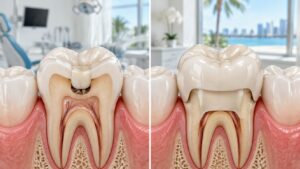
The hygienist calls another name. A patient sits with hands tightened around a bag, wondering whether to leave before anyone notices. The worry might be about a needle, an unexpected bill, or a painful appointment that still feels close.
For adults searching for a dentist near me in Miami, FL, finding care often starts with finding a team that takes that fear seriously. A comfort-focused local practice can help make the visit more predictable, but learning how to calm dental anxiety begins with identifying what feels threatening, not just trying harder to relax.
Table of Contents
- Match Your Fear to the Right First Step
- How to Prepare Your Body and Mind Before Your Visit
- Control, Comfort and Sedation Options
- Easing Back In When You Have Avoided Care
- Book a Calm First Visit in Miami
Match Your Fear to the Right First Step
Dental anxiety isn't unusual. A systematic review available through PubMed Central examined 31 studies involving more than 72,000 adults and estimated that approximately 15.3% of adults worldwide experience dental fear or anxiety, with severe anxiety affecting 3.3%.
Fear can cause sweating, nausea, tense muscles, and a racing heart before treatment begins. Those reactions don't mean a patient is being difficult. The body may be responding to an anticipated threat, even when the person understands that dental care is necessary.
Dental Fear Triggers and the First Step for Each
A useful starting point is the moment distress increases: entering the waiting room, seeing a needle, reclining, or hearing the drill. Each points toward a different accommodation.
| Main Trigger | First Step to Request | What to Say at Check-In |
|---|---|---|
| Pain or needles | Topical numbing, a step-by-step numbing plan, and a signal to stop | Tell me each step before you do it |
| Loss of control or feeling trapped | A raised-hand stop signal and a consent check before each stage | I need to be able to pause whenever I raise my hand |
| Childhood or past bad experience | A slow first visit with a no-treatment consultation | I had a hard experience as a child and need a slower start |
| Fear of bad news or cost | A written treatment plan and cost estimate before any work | Walk me through my options and what each one costs |
| Gag reflex or sound sensitivity | Headphones, music, or a quieter setup | I gag easily, so can we adjust the setup |
| Long avoidance of dental care | A conversation-only visit before any exam or X-rays | I have avoided the dentist for years and I am nervous |
Patients don't need to disclose personal history to request trauma-informed care. They can describe the accommodation needed, such as remaining more upright or receiving permission before instruments enter the mouth.
A Frontiers in Oral Health study identified childhood dental trauma as the origin associated with the highest anxiety levels among the groups described. A slower introduction may be especially appropriate for these patients.
For help recognizing physical reactions and what sets them off, Total Mental Wellness offers a resource on understanding anxiety symptoms and triggers. Before contacting a Miami office, writing down the main trigger turns a general concern into something the team can address.
How to Prepare Your Body and Mind Before Your Visit
Anxiety often starts before the dental chair is in view. Rushing, skipping meals, and mentally rehearsing a frightening procedure can make an already alert body feel more unsettled.
Preparation doesn't guarantee a worry-free appointment. It gives the patient a familiar routine and gives the dental team useful information before treatment decisions begin.
Seven Practical Preparation Steps
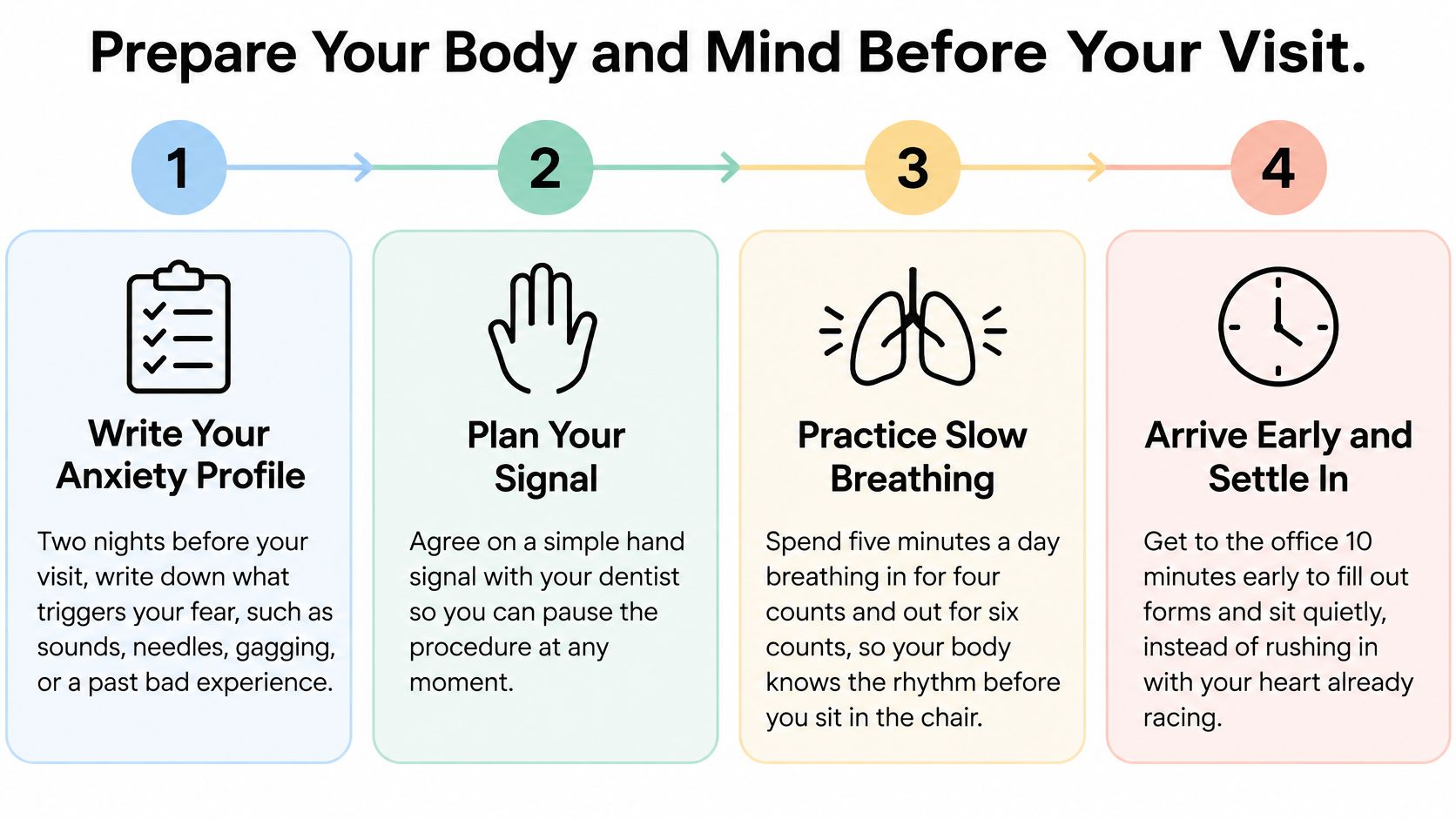
Write an anxiety profile. Two nights before the visit, the patient can record the trigger, feared outcome, preferred explanation level, and desired stop signal. A note such as fear of sharp pain during numbing is more actionable than a general statement about nervousness.
Rehearse comfortable breathing. A practical exercise is five minutes of gentle breathing each day, inhaling for four counts and exhaling for six without forcing the breath. A slower rhythm and longer exhale can help settle physical arousal; dizziness means returning to normal breathing.
Choose a manageable appointment time. An early weekday morning appointment may reduce anticipatory waiting and conflicts with work. The office can advise which times usually allow a less rushed arrival rather than promising that mornings are always quiet.
Plan food and caffeine carefully. A light meal may suit a routine examination, while extra coffee or energy drinks can worsen jitteriness. Sedation instructions take priority, because some appointments require fasting or other preparation.
Pack familiar comfort items. Headphones and a personally chosen playlist can make unfamiliar sounds less prominent. A support person may help with arrival or discussion, provided the office confirms where that person can accompany the patient.
Leave room for check-in. Arriving ten minutes early allows time to settle rather than moving straight from traffic into the chair. Completing the new-patient forms beforehand can also reduce paperwork pressure.
Use a grounding exercise. In the waiting room, the patient can silently name five visible objects and four sounds. This redirects attention toward the immediate surroundings rather than imagined treatment outcomes.
The preparation reminders below can serve as a simple visual checklist.
What a Successful Start Looks Like
Success doesn't require an absence of nerves. It may mean being settled enough to hear the first explanation, ask a question, and make a decision without feeling rushed.
Practical rule: Preparation should make participation easier, not become a test that an anxious patient can fail.
Patients should also share medication lists, allergies, relevant medical conditions, and previous reactions to anesthesia. That information helps the clinician distinguish an anxiety-management preference from a medical precaution.
Control, Comfort and Sedation Options
For some patients, the hardest part isn't the drill. It's the possibility that treatment will continue when they need a pause.
A 2022 systematic review and meta-analysis published in Odontology included 20 randomized controlled trials and found significantly greater anxiety reductions with the interventions studied than with control care, including a significant benefit among adults. The approaches weren't interchangeable: medication, distraction, and psychological treatment address different needs.
Control Comes Before Distraction
Before treatment begins, the patient and dentist should agree on a raised-hand signal. The discussion should include how the clinician will stop safely and remove instruments, rather than leaving the patient uncertain about what happens after signaling.
Short breaks between stages can make treatment feel more manageable. Some patients benefit from hearing each step before it happens; others prefer only essential updates because detailed descriptions increase distress.
Consent remains important throughout the appointment. Headphones, a screen, or sedation shouldn't replace an understandable explanation and an opportunity to ask questions.
Comfort and Sedation Options for Anxious Patients
Comfort measures change the experience of the room. Sedation uses medication to alter relaxation or awareness, while local anesthesia numbs the treatment area. These serve different purposes, and sedation doesn't automatically replace numbing.
| Option | Best For | What to Know |
|---|---|---|
| Aromatherapy | Mild nerves and first visits | A calming scent that supports, but doesn't replace, a clear plan; patients with scent sensitivity can decline |
| Streaming entertainment | Mild anxiety during cleanings and fillings | Pair it with a stop signal so treatment can pause when needed |
| Hot towel finish | Relaxation after treatment | A comfort measure used alongside other steps, not pain control |
| Nitrous oxide | Mild to moderate anxiety in shorter procedures | Wears off within minutes; many patients can drive afterward only after the clinician confirms recovery |
| Oral sedation | Moderate anxiety and longer visits | Taken as prescribed before the appointment, causes drowsiness, and requires a driver |
| IV sedation | Severe anxiety and extensive procedures | Provides deeper relaxation with monitoring and requires an escort home |
| Cognitive behavioral therapy | Persistent or severe fear and long avoidance | Usually involves several sessions and isn't a same-day fix |
Audio-visual distraction and sedation medication can reduce distress, but neither necessarily resolves the fear behind repeated avoidance. Cognitive behavioral therapy, or CBT, helps patients examine frightening predictions and gradually approach situations they have been avoiding.
The sedation decision also depends on medical history, medications, breathing concerns, and the planned procedure. Patients shouldn't take leftover anti-anxiety medication, combine sedatives with alcohol, or change prescribed doses without instructions from the treating clinician.
For patients worried about a particular treatment, the practice's explanation of sedation and whether patients sleep during a root canal provides a starting point for a procedure-specific conversation. Availability and suitability still need confirmation with the Miami team.
Questions That Make Treatment More Predictable
The Patients Guide offers patient guidance for discussing treatment options, which can help patients prepare for shared decisions rather than feeling expected to agree immediately.
Useful questions include:
- Procedure details: What will happen, step by step?
- Numbing: How will the area be numbed, and how will the dentist confirm that it's ready?
- Pauses: Which stop signal will be used, and how will the team respond?
- Starting slowly: Is a consultation without treatment possible?
- Costs and alternatives: What are the available options, and can the estimate be provided in writing?
- Sedation planning: Which options are offered, and what fasting, transportation, and recovery arrangements are required?
The Miami practice pairs clinical care with welcome refreshments, custom aromatherapy, entertainment during procedures, and a soothing hot towel finish. These amenities may make the setting more comfortable, but patients should still ask which sedation options are available and appropriate.
A reassuring dental appointment includes room for questions, disagreement, and a pause.
A dentist should welcome these discussions. If concerns are repeatedly dismissed or consent feels rushed, the patient has reason to reconsider proceeding.
Easing Back In When You Have Avoided Care
After years away, even a routine examination can feel like too much. Embarrassment about teeth, fear of the diagnosis, and uncertainty about expenses can make arranging an appointment harder than tolerating the treatment itself.
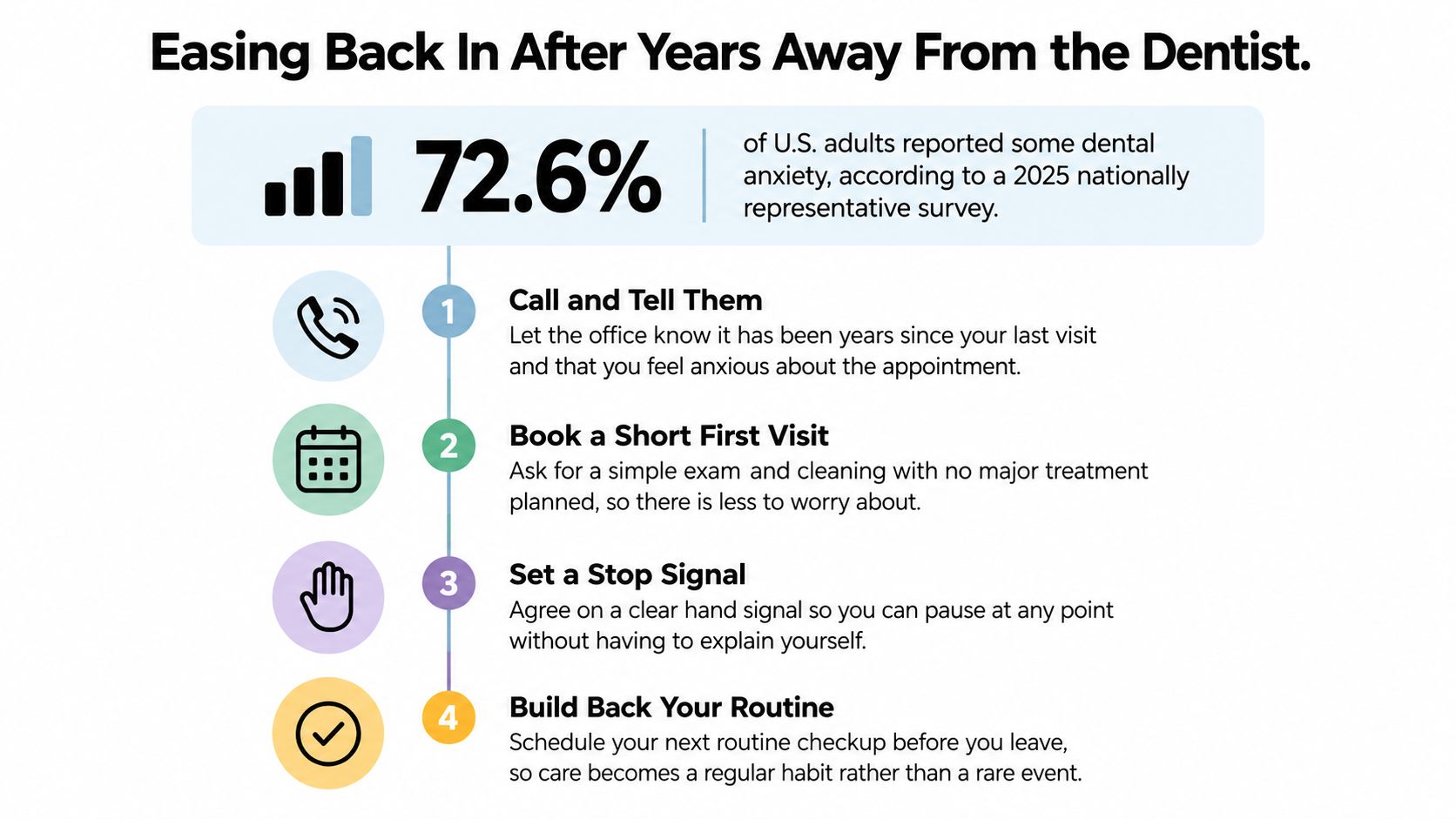
A 2025 nationally representative U.S. survey reported by NYU found that 72.6% of adults reported some dental fear, including 26.8% with severe fear, while 71.2% of those with moderate or severe fear expressed interest in a brief at-home treatment for dental fear.
This visual outlines a gradual return, although a conversation-only appointment may be more manageable than an exam and cleaning together.
A Staged Path Back to Dental Care
- Make contact without committing to treatment. The patient can explain the gap in care and ask whether a no-treatment consultation is available.
- Attend a conversation-focused visit. The team can discuss concerns, explain the proposed assessment in plain language, and identify any communication accommodations.
- Return for assessment. A basic examination and clinically appropriate dental X-rays can proceed with the agreed pause arrangement.
- Plan the cleaning. The dentist or hygienist should explain whether a routine cleaning or treatment for gum disease is needed before scheduling.
- Separate treatment into manageable visits. A filling may be completed at one appointment, with other work scheduled according to urgency, recovery, and tolerance.
Fidgeting, squeezing a stress ball, or listening to music can help a patient remain present. These habits become unhelpful when they substitute for assessment, repeatedly delay follow-up, or make necessary communication impossible.
The video below offers another format for considering dental anxiety and returning to care.
Why Gradual Care Still Needs Clinical Priorities
Treating decay, gum inflammation, and infection can relieve pain and protect teeth. A staged plan should therefore reflect both emotional readiness and the dentist's assessment of what can't safely wait.
Facial swelling, fever with dental pain, or rapidly worsening symptoms need prompt assessment. Difficulty breathing or swallowing requires emergency medical care rather than waiting for a routine consultation.
Book a Calm First Visit in Miami
A search for dentist near me in Miami, FL often starts with a practical question: can the first appointment feel predictable? Patients don't need to promise that they'll tolerate every procedure before contacting an office.
Before calling, useful items include the anxiety profile, insurance details, a medication list, and the most important treatment questions. The conversation can focus on whether a consultation without treatment is available, how anxiety is reviewed, and whether recommendations and costs are explained in writing.
What to Expect From the Local Team
Ultra Smile DentalSpa is a dentist in Miami, FL, led by Dr. Neda Bahmadi, DMD, serving patients from Downtown Miami, Midtown Miami, and Hallandale Beach. The practice provides bilingual staff, transparent treatment planning, accepted insurance, and options for patients without coverage; individual benefits and payment arrangements should be confirmed before treatment.
A new-patient exam with dental X-rays, when clinically indicated, is a natural starting point. The assessment helps distinguish immediate needs from care that can be planned gradually.
| Patient Concern | A Useful Appointment Focus |
|---|---|
| Sudden tooth pain and a search for an emergency dentist | Assessment of the cause and an explanation of immediate treatment needs |
| A damaged tooth that may need tooth extraction | Discussion of whether the tooth can be restored, the removal plan, and recovery |
| Missing teeth and a search for dental implants near me | Evaluation of gum and bone health, replacement choices, and treatment stages |
| A search for a cosmetic dentist near me | A consultation about goals, oral health, and options such as teeth whitening or veneers |
A Predictable Plan Instead of Pressure
Cleanings, restorative dentistry, and cosmetic dentistry don't all need to happen during the first appointment. The clinician can explain which concerns affect comfort or health now and which decisions can wait until the patient feels ready.
Patients considering dental implants or extensive restorative work should understand the full sequence before consenting. Cosmetic decisions deserve the same unhurried discussion, particularly when treatment changes natural tooth structure.
A reasonable request: A slower start can be part of responsible dental care, not an obstacle to it.
The first meaningful step may be arranging a conversation with clear boundaries.
Ultra Smile DentalSpa offers general, restorative, and cosmetic dental care with personalized planning and spa-like comfort measures. Patients seeking a gentler return to care can request a consultation through Ultra Smile DentalSpa and describe the accommodations that would make the first visit more manageable. Asking for a slower start is a reasonable way to begin.