Looking for a dentist in Miami, FL often starts the same way. There's a tooth that's been bothering you, a smile concern you've put off, or a cleaning and exam that's overdue, and then the next worry appears almost immediately: the paperwork.
That anxiety is understandable. New patient forms can feel like one more obstacle between you and care. In reality, the forms are what make a first visit smoother, faster, and more personal, especially at a modern practice serving Downtown Miami, Midtown Miami, and Hallandale Beach. When the intake process is done well, it helps the team prepare for your needs before you walk through the door, whether you're visiting for preventive dental care, teeth whitening, cosmetic dentistry, restorative dentistry, a tooth extraction, or an emergency dentist appointment.
Table of Contents
- First Visit Jitters How Pre-Visit Forms Create a Smooth Start
- Accessing and Completing Your Forms Online
- Your Pre-Appointment Checklist What to Have Ready
- Understanding the Questions on Your Dental Forms
- Tips for a Comfortable and Easy Intake Process
- From Submitted Form to a Relaxing First Visit in Miami
- Frequently Asked Questions About Dental Patient Forms
First Visit Jitters How Pre-Visit Forms Create a Smooth Start
When someone searches for a dentist near me, they're usually not hoping for a clipboard-heavy first appointment. They want relief, clarity, and a visit that feels organized from the start. That's why new patient forms dental workflows matter so much. They aren't busywork. They're the first step in building a visit around the patient instead of making the patient adapt to office chaos.
A healthy dental practice often aims to welcome about 20 to 30 new patients per month, and optimized digital forms help manage that flow efficiently while reducing check-in delays and administrative errors, according to guidance on new-patient benchmarks for dental practices. For patients, that means less time repeating basic details at the front desk and more time focused on the actual reason for the visit.

A thoughtful form process also changes the emotional tone of the appointment. If a patient is coming in for a new patient exam, dental x-rays, cosmetic dentist consultation, or urgent pain assessment, the last thing that helps is rushing through health history in the waiting room. A calmer process supports a calmer visit.
Practical rule: Good forms should answer two questions before the appointment starts. Who is this patient, and what does this patient need today?
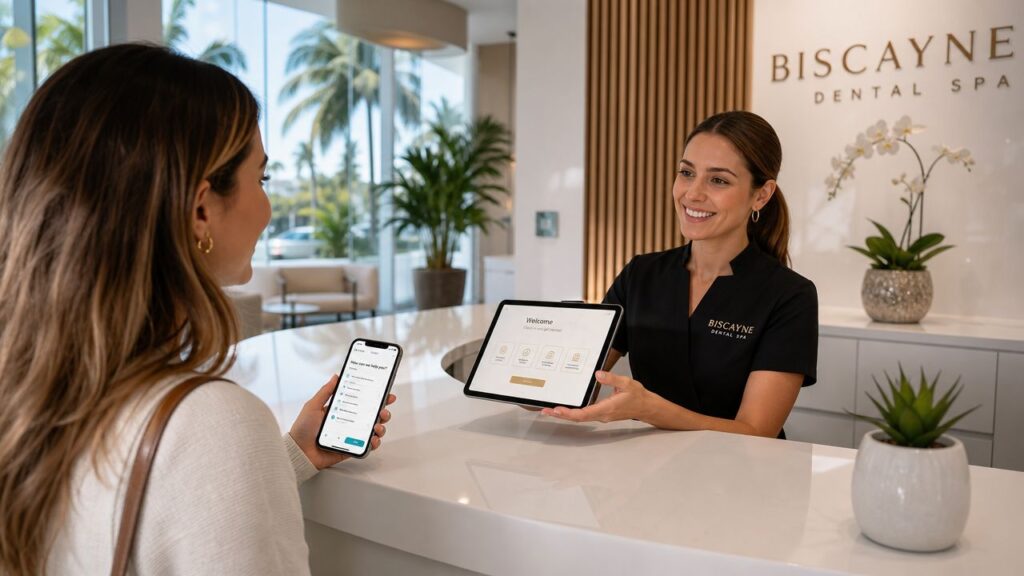
For a spa-like dental setting in Miami, the forms also help the team prepare for comfort preferences ahead of time. That can make the first interaction feel more welcoming and less transactional. Patients who want a clearer picture of the arrival flow can review what to expect at the visit.
Accessing and Completing Your Forms Online
The easiest intake process is the one that fits real life. Most patients are filling out forms between work meetings, after dinner, or from the passenger seat while organizing the week. If the form only works as a printable PDF, that convenience disappears quickly.
Why digital access matters
Many patients struggle when dental forms are offered as PDFs that need to be printed or don't work well on a phone. The ADA confirms that new patients still need to complete standard forms, but the user experience often gets overlooked, creating pre-visit friction that a digital-first intake process can remove, as described in this discussion of patient form friction and digital intake.
That's why mobile-friendly access matters. A secure link by email or text is much easier to use than a file that needs to be downloaded, printed, signed, and brought back. Patients looking for a dentist in Miami, FL expect the same convenience they get from banking, travel, and other healthcare services. Dental intake shouldn't feel older than the rest of life.
A simple way to complete everything
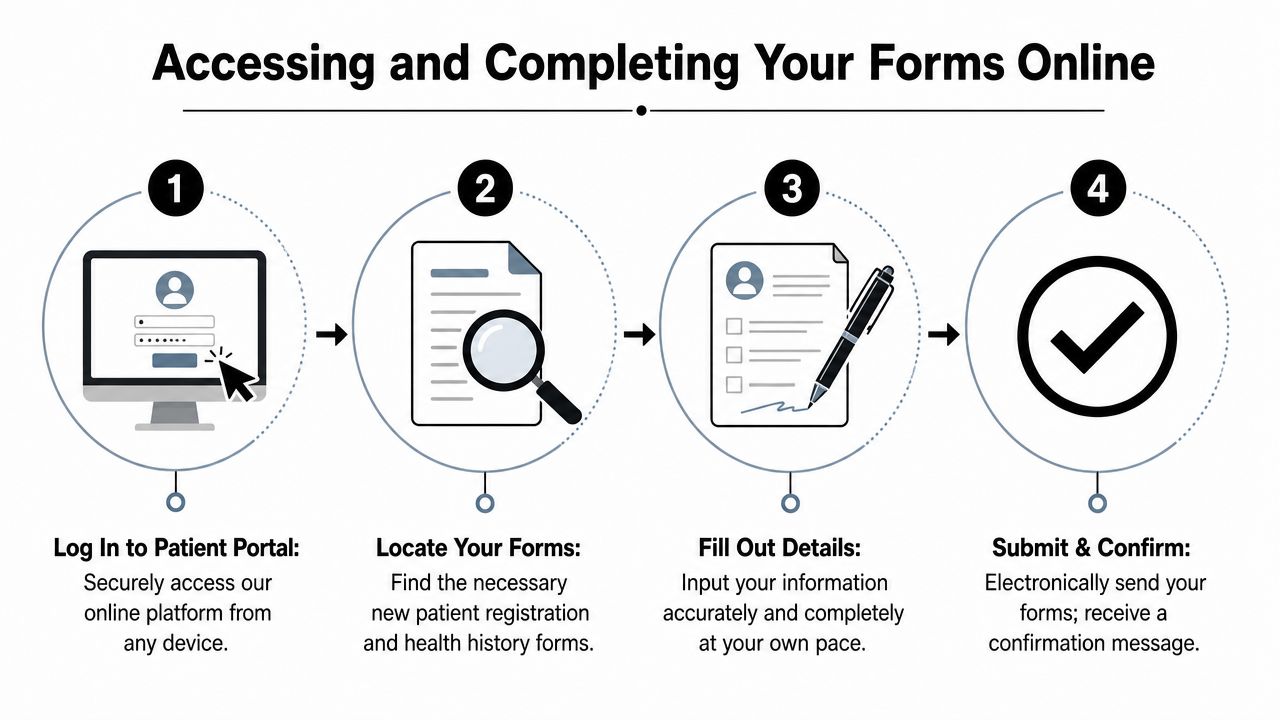
Most online dental intake follows a straightforward pattern:
- Open the secure link from a phone, tablet, or computer.
- Review the requested forms, which may include registration, health history, insurance details, and consent documents.
- Enter information at your own pace, including the reason for the visit.
- Submit electronically so the office can review everything before arrival.
That last part matters more than many patients realize. When the team sees your goals in advance, the visit can be better prepared. Someone interested in teeth whitening, veneers, invisible braces, or other cosmetic dentistry can note those priorities ahead of time. Someone with tooth pain, swelling, or concern about needing a tooth extraction can flag that early too.
A short visual overview can help if this is the first time using online intake:
A good digital process should also let patients pause and come back later. That's especially helpful when someone needs to look up medication names, insurance details, or previous treatment dates before finishing.
Your Pre-Appointment Checklist What to Have Ready
Starting forms without the right details nearby is what makes them feel longer than they are. A little preparation usually turns the process from frustrating to simple.
Gather these before you begin
The ADA notes that core intake information for new patients should include a health history, payment and insurance details, and HIPAA consent forms. Collecting that information upfront through a guided digital process helps the office capture what's needed for safety and compliance, according to the ADA's patient registration and forms guidance.
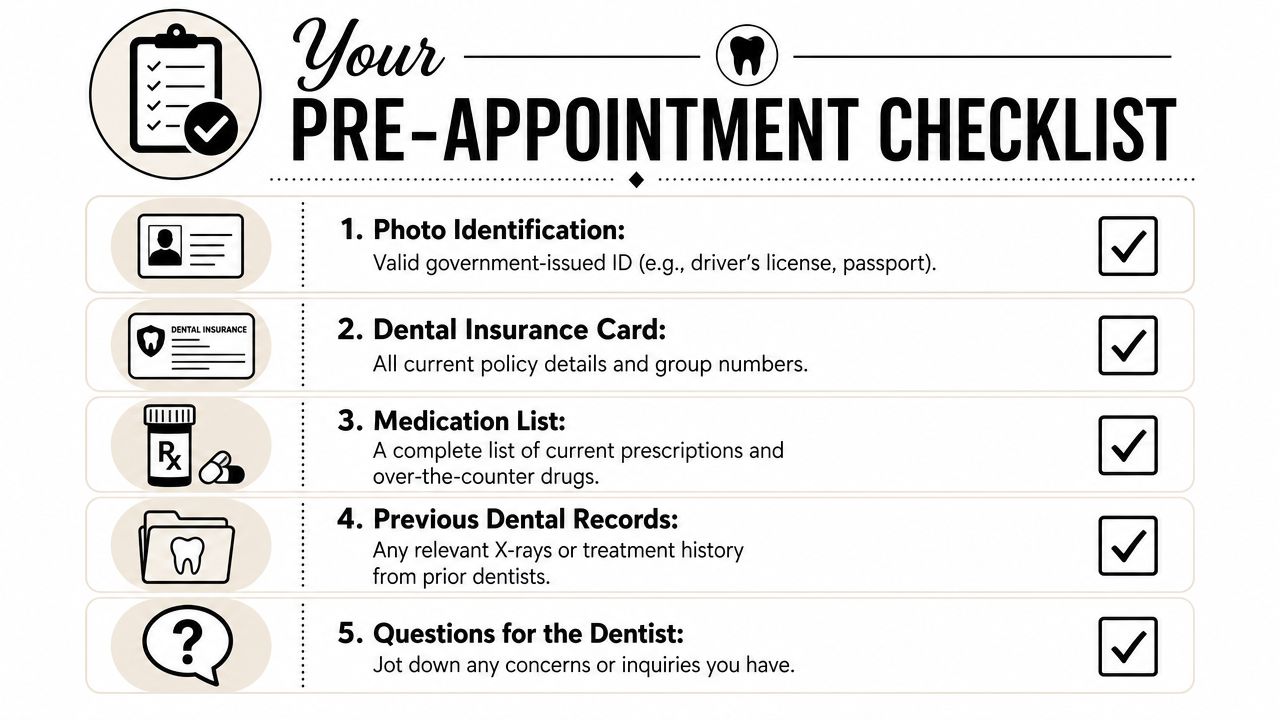
Before opening your forms, it helps to gather:
- Photo ID: A current government-issued identification helps verify the patient record.
- Dental insurance card: Have the member and group details ready if coverage applies.
- Medication list: Include prescription medicines, over-the-counter products, and supplements you take regularly.
- Allergy information: Especially anything related to medications, anesthetics, or materials.
- Questions and goals: Write down concerns like tooth sensitivity, interest in dental implants near me, smile improvements, or emergency symptoms.
Why preparation changes the experience
This isn't just front-desk administration. Medical history affects treatment decisions. Insurance details affect estimates and coordination. Consent forms protect both clarity and privacy. Even something as simple as a complete medication list can shape how a dentist approaches numbing, treatment planning, or aftercare.
Bring the information that helps the office treat you safely, not just the information that helps the office identify you.
Patients who want to review coverage details before the visit can use Ultra Smile DentalSpa insurance information. That often answers common questions before form completion starts.
Understanding the Questions on Your Dental Forms
Some patients feel comfortable sharing health details right away. Others wonder why a dental office needs so much information. The answer is simple. The mouth isn't separate from the rest of the body, and a safe dental appointment depends on context.
The information that protects your care
Most dental forms are built around a few core categories:
| Form area | Why it matters |
|---|---|
| Personal information | Helps confirm identity, contact details, and communication preferences |
| Medical history | Alerts the team to conditions, medications, allergies, and prior surgeries that may affect treatment |
| Dental history | Shows past dental work, current symptoms, and concerns about comfort or function |
| Insurance and financial details | Helps coordinate benefits and explain policies before care begins |
| Consent and privacy forms | Documents permission, acknowledgments, and HIPAA-related communication preferences |
For patients seeking restorative care, cosmetic consultations, dental implants, or urgent treatment, the medical history section is especially important. A medication, allergy, chronic condition, or past procedure can change what's appropriate and what needs extra caution. The same is true for sedation preferences, comfort concerns, and treatment goals.
Why some questions feel more personal now
Modern dental forms aren't limited to name, phone number, and insurance. In a 2024 U.S. dental-school clinic study, 92% of patients said they were interested in completing pre-visit questionnaires and forms online, and clinics commonly collected details such as preferred name at 92% and need for language interpretation at 89%, reflecting a broader move toward safer and more personalized care in healthcare workflows, as reported in this study on intake forms and online pre-visit preferences.
That shift matters in a city like Miami. A better intake form helps the office greet patients correctly, communicate more clearly, and remove avoidable barriers before treatment begins.
A well-designed dental form doesn't just gather facts. It helps shape a visit that feels respectful, efficient, and easier to navigate.
Tips for a Comfortable and Easy Intake Process
The most useful forms do more than collect data. They give patients a quiet way to tell the team what would make the visit easier.
If dental visits make you nervous
A patient with dental anxiety may not want to explain everything out loud in a busy reception area. The form gives that patient a head start. A short note such as “nervous about injections, “had a difficult past dental visit, or “would like extra explanation before treatment can change how the appointment is paced.
That kind of information helps the team prepare a gentler approach. In a spa-like setting, comfort details can shape the room setup and communication style before the patient sits down. Patients coming for cleanings and exams, cosmetic dentistry, restorative dentistry, or an emergency dentist visit often feel more at ease when the office already knows how to support them.

If language or communication is a concern
Another common example is language preference. Some patients read English comfortably but prefer discussing treatment in Spanish. Others want a family member present to help review details. Putting that information in the form lets the office plan accordingly and reduce confusion.
Helpful ways to make intake easier include:
- Choose a quiet time: Fill out forms when you can focus for a few uninterrupted minutes.
- Answer directly: Short, accurate answers are better than guessing or skipping.
- Mention anxiety early: If the dental office knows, it can adjust the pace and communication.
- Add treatment goals: Say whether you're visiting for pain relief, a routine exam, whitening, veneers, implants, or another concern.
- Ask for help if needed: Bilingual support and patient guidance can make the process much easier.
Some patients also use the forms to mention practical comfort needs, such as wanting extra explanation before x-rays or feeling concerned about past numbness experiences. Those notes may seem small, but they often make the visit feel much more manageable.
From Submitted Form to a Relaxing First Visit in Miami
A calm first visit usually starts before you walk through the door. Once your forms are submitted, the team can prepare for you as a person, not just reserve a time slot.
What happens after you click submit
After the forms come in, the front desk and clinical team review them, confirm the reason for your visit, and flag anything that may affect timing, comfort, or treatment planning. If you note a broken tooth, swelling, interest in cosmetic work, questions about implants, or a need for a full new-patient exam, that gives the office a clearer starting point before you arrive.
That preparation matters because a first appointment often includes several steps. New-patient visits usually take longer than routine recall visits, as noted in this overview of new-patient timing and intake workflow. When paperwork is already complete, less of that time is spent on forms at the front desk, and more of it can go toward x-rays, the exam, conversation, and any immediate concerns you want addressed.
What arrival feels like when forms are done early
The change is noticeable at check-in. Instead of filling out forms in the reception area, you can settle in, ask questions, and get started with less waiting and less repetition.
At a spa-style practice in Miami, that shift helps the visit feel more comfortable from the beginning. The team already has your health history, your main concern, and any notes about anxiety, scheduling needs, or treatment goals. That means the conversation in the room can be more personal and more useful.
It also helps the clinical side run better. The dentist can spend more time explaining findings, discussing options, and adjusting the visit to your comfort level instead of collecting basic details you already entered online.
Ultra Smile DentalSpa is one example of a practice that uses advance digital paperwork as part of its patient process.
Completed forms help the visit feel warmer and more organized. They reduce repeated admin tasks so the team can focus on your comfort, your questions, and the care you came in for.
Frequently Asked Questions About Dental Patient Forms
What if the forms aren't finished before the appointment?
Call the office as soon as possible. Staff can explain the next step, resend the secure link, or tell you what to bring so check-in stays as smooth as possible. If time is tight, it helps to complete as much as you can accurately rather than rushing through every field.
Can someone help fill out the forms?
Yes, in many situations a spouse, adult child, caregiver, or other trusted family member can help, especially if the patient has trouble with technology, language, or medical details. The important part is that the information submitted is accurate and reflects the patient's current health and concerns.
Why do dental forms ask about medications and allergies?
Because dental treatment decisions depend on them. Even a routine visit can involve local anesthetic, imaging, treatment planning, or recommendations that should fit the patient's broader health picture. Complete answers help the office prepare more safely.
What if insurance information isn't available yet?
Share what's available and let the office know the details are still being gathered. It's better to be clear about what's missing than to guess. Incorrect insurance data can slow down verification and create avoidable confusion later.
Is personal information kept private?
Dental offices are expected to handle patient information through secure systems and privacy procedures. That's one reason consent and HIPAA-related paperwork are part of intake. If there are concerns about communication preferences or privacy, those should be raised before the visit so the team can address them clearly.
What if the main reason for the visit is urgent pain?
Say that directly on the form. A short description of pain, swelling, sensitivity, or a broken tooth helps the office understand that the appointment may need urgent attention. It also helps the clinical team prepare for an emergency dentist visit rather than a routine cleaning and exam.
If a smoother first appointment matters, scheduling ahead and completing forms early is one of the simplest ways to make that happen. Patients looking for a calm, organized dental experience in Miami can contact Ultra Smile DentalSpa to request an appointment, ask questions about new patient paperwork, and get started with care that feels more comfortable from the very beginning.