You've probably had the same thought more than once. Teeth straightening would help, but adult life in Miami doesn't pause for orthodontics. Work meetings, dinners out, photos, presentations, and the simple question of whether treatment will feel manageable all start to matter just as much as the final smile.
For many adults, the comparison isn't only clinical. It's practical. Will Invisalign or braces fit daily life better? That question often comes up alongside others about comfort, appearance, cost, and whether treatment will work with crowns, implants, or past dental care.
Adults looking for a dentist in Miami, FL often want more than a basic answer. They want a clear recommendation grounded in real trade-offs. They also want care that feels calm and respectful, especially if dental anxiety has kept treatment on hold. This guide looks at Invisalign vs. braces for adults through that lens, with a focus on what tends to matter most to busy patients in Downtown Miami, Midtown Miami, and nearby areas.
Table of Contents
- Your Guide to Adult Orthodontics in Miami
- Understanding How Invisalign and Braces Work for Adults
- A Detailed Comparison for the Miami Professional
- Clinical Suitability Which Is Right for Your Dental Needs
- Exploring Other Discreet Options Ceramic and Lingual Braces
- The Ultra Smile DentalSpa Difference Your Miami Treatment
- How to Make the Right Choice for Your Smile
- Common Questions About Adult Braces and Invisalign
Your Guide to Adult Orthodontics in Miami
Adults usually don't seek orthodontic treatment because they suddenly became interested in brackets or aligners. They do it because they're tired of hiding one side of their smile in photos, noticing crowding getting worse, or feeling self-conscious in close conversation. In Miami, that concern often has a lifestyle layer. People want treatment that works without making work, social plans, or daily routines harder than they already are.
That's why the Invisalign vs. braces decision is rarely about one single feature. Some adults care most about discretion. Others want the strongest possible mechanics for bite correction. Many want both, and they're trying to figure out where compromise makes sense.
A useful way to think about it is this:
- If appearance matters most, Invisalign often gets attention first because it's clear and removable.
- If control matters most, braces still have an important role in adult treatment.
- If comfort and anxiety matter most, the treatment experience itself becomes part of the decision.
Practical rule: The right option isn't the one that sounds more modern. It's the one that matches the biology of the case and the reality of the patient's day.
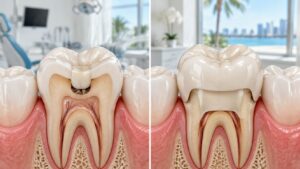
Adults also bring different dental histories than teenagers. They may already have crowns, bridges, implants, old fillings, gum recession, or past cosmetic dentistry. Those details can influence how teeth are moved and what kind of system is safest and most predictable.
For patients searching dentist near me, cosmetic dentist near me, or even related services such as teeth whitening, cleaning and exams, dental x-rays, new patient exams, restorative dentistry, tooth extraction, dental implants near me, or an emergency dentist, orthodontic planning often becomes part of a larger smile and oral health conversation. Straight teeth can improve cleaning access and appearance, but they should also fit the rest of the mouth.
Understanding How Invisalign and Braces Work for Adults
Adults often hear that Invisalign is “clear trays and braces are “brackets and wires, but that short version misses what really matters. Both systems move teeth by applying controlled pressure over time. The difference is how they deliver that force and how much direct control the dentist has over each movement.
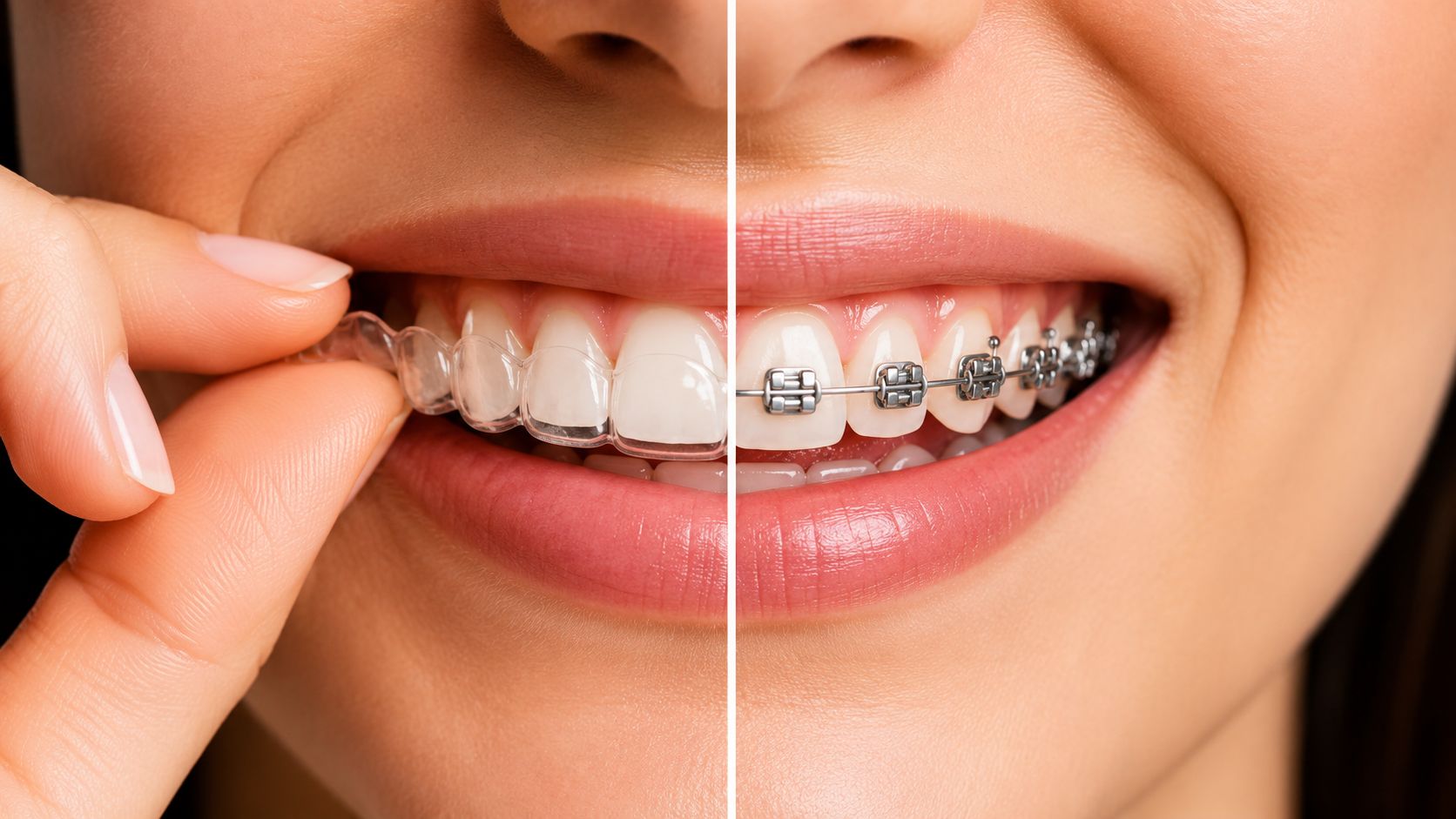
How Invisalign Moves Teeth
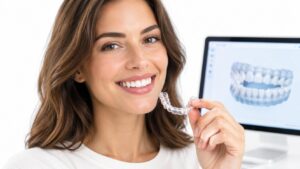
Invisalign uses a sequence of custom clear aligners. Each aligner is shaped to guide teeth a little closer to their planned position. In many adult cases, small tooth-colored attachments are bonded to certain teeth so the aligners can grip and direct movement more effectively.
That matters because adult teeth aren't just “shifted. They have to be guided with precision, especially when there are crowns or previous cosmetic restorations in the mouth. Before starting, the dentist has to evaluate what can move, what shouldn't be stressed, and how each restoration may affect the plan. A dental implant, for example, doesn't move like a natural tooth, so treatment has to be built around it.
Patients who want a clearer view of sequencing and timing often benefit from a step-by-step look at the Invisalign treatment timeline at Ultra Smile Miami.
How Braces Move Teeth
Braces use fixed brackets attached to teeth and a wire that creates steady pressure. Because the system stays in place all the time, it can be especially useful when a case needs more force, more control, or tooth movements that are difficult to achieve with removable trays.
Braces can also be practical for adults who know they won't want the daily responsibility of inserting and removing aligners. With fixed treatment, there's less room for inconsistency.
A short visual overview helps show how these systems differ in real life.
Why Adult Cases Need Closer Planning
Adult orthodontics often overlaps with broader dental care. A patient may need gum treatment first. Another may need a worn crown replaced after teeth are aligned. Someone else may be considering veneers, implants, or cosmetic dentistry after straightening is complete.
That's why treatment shouldn't be chosen from appearance alone. The better question is whether the system can move the right teeth safely, around the dental work already in place, while still fitting the patient's routine.
A Detailed Comparison for the Miami Professional
An adult patient in Miami often asks this question after the same kind of day. Morning meetings, coffee with clients, photos at an event, then dinner in Brickell or Coral Gables. Orthodontic treatment has to work in all of those settings, not just in the dental chair.
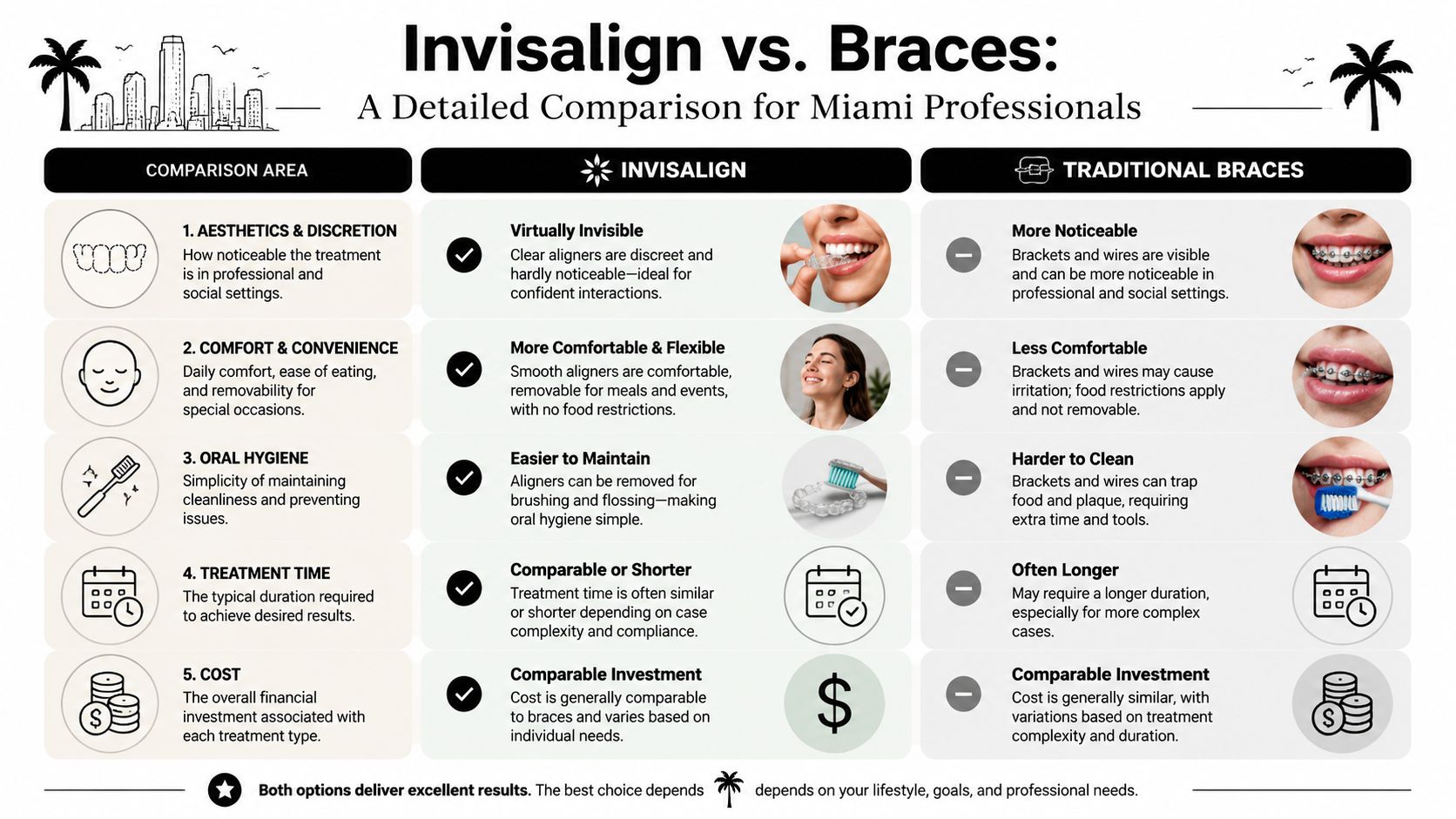
Quick Comparison Table
| Factor | Invisalign | Braces |
|---|---|---|
| Visibility | Clear and more discreet | More noticeable |
| Comfort | Smooth plastic trays with no brackets or wires | More friction against cheeks and lips |
| Eating | Removed for meals | Food restrictions are usually needed |
| Cleaning | Easier brushing and flossing when trays are out | Cleaning around brackets takes more effort |
| Best fit | Adults who want discretion and can wear trays consistently | Adults who need stronger control or prefer fixed treatment |
| Daily responsibility | High. Trays must be worn and managed correctly | Lower. The appliance stays in place |
Appearance in Daily Life
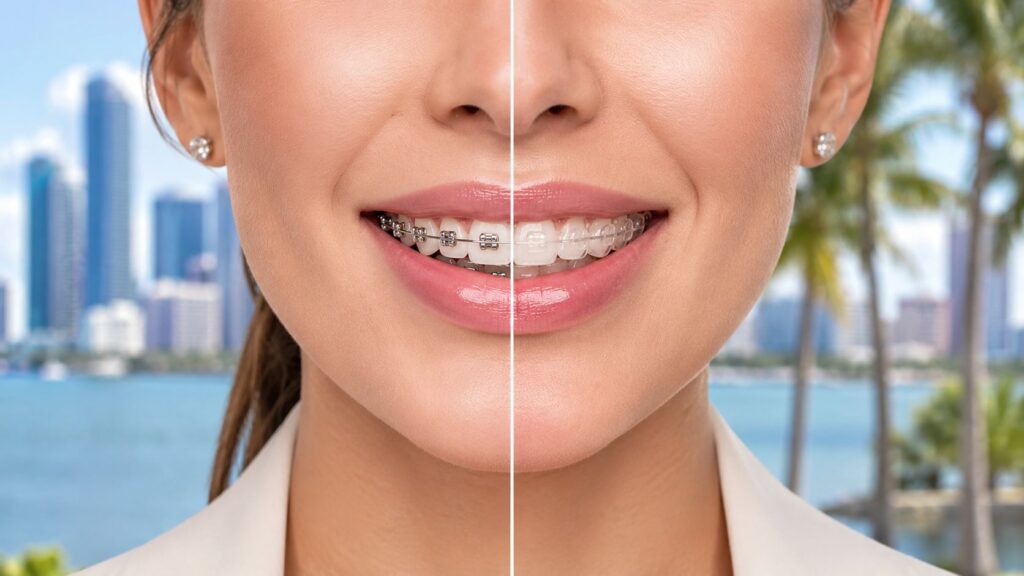
For many working adults, visibility shapes the decision early. Invisalign is usually easier to carry into presentations, networking events, video calls, and social plans without drawing much attention. That matters to attorneys, real estate professionals, hospitality staff, physicians, executives, and adults who do not want orthodontic treatment to become a conversation piece.
Braces are more noticeable every day. Some adults do not mind that at all. Others know that visible hardware would make them more self-conscious, which can affect whether they start treatment in the first place.
For patients with dental anxiety, that emotional piece matters. A treatment option that feels discreet and manageable often feels less intimidating from day one, especially in a calm setting like Ultra Smile DentalSpa.
Comfort and Daily Disruption
Comfort is rarely just about pain. It is also about whether treatment keeps interrupting your day.
Clear aligners usually feel smoother because there are no brackets rubbing against the lips and cheeks. A clinical review on adult treatment outcomes found that aligner patients generally reported lower pain levels and better comfort than braces patients in the early phases of treatment, as discussed in this clinical study on adult clear aligners and braces.
That does not mean Invisalign is effortless. Each new set of trays can create pressure for a day or two. Braces can be the harder adjustment for many adults because wires and brackets may irritate soft tissue, especially after tightening appointments or if a bracket breaks.
Time and Efficiency
Adults usually want a realistic answer here. Treatment time depends less on marketing claims and more on case complexity, bite correction, and consistency.
Invisalign can be efficient in the right adult case, especially if trays are worn as prescribed. Braces can be slower in some situations, but they are often the more dependable tool when tooth movement is difficult and control matters more than convenience. In practice, the faster option is the one that fits the case and the patient's habits well enough to avoid delays.
Maintenance and Lifestyle Fit
In this context, lifestyle stops being a small detail and becomes part of the treatment plan.
- Meals and social events: Invisalign lets adults remove trays before eating, which makes restaurant meals, business lunches, and special events easier. Braces require more caution with crunchy, sticky, or hard foods.
- Oral hygiene: Aligners come out for brushing and flossing, so hygiene is usually simpler. Braces are fully manageable, but they require more time and better technique around brackets and wires.
- Travel and routine: Invisalign works best for adults who can keep up with wear time, tray changes, and storage. Braces reduce the risk of forgetfulness because they stay on continuously.
I often tell busy patients to be honest with themselves here. Someone with a disciplined schedule may do very well with Invisalign. Someone who travels often, skips routines, or does not want one more daily task may have a better experience with braces.
Cost and Planning
Fees depend on difficulty, treatment length, and whether the case needs additional planning or refinement. The best comparison is a personalized one, not a national average pulled from a generic chart. Adults reviewing options can start with our teeth straightening cost guide in Miami.
Insurance can help in either category, but coverage varies widely. Before choosing based on price alone, it helps to compare the total value of each option. That includes appearance at work, comfort, maintenance, appointment needs, and the likelihood that you will follow the plan consistently.
Clinical Suitability Which Is Right for Your Dental Needs
A Miami adult may want the least visible option possible, but the better choice depends on what the teeth and bite require. In consultation, I look at crowding, bite fit, root position, gum support, existing dental work, and how realistic the treatment will feel in daily life. That last part matters more than many adults expect, especially if dental anxiety has delayed care before now.
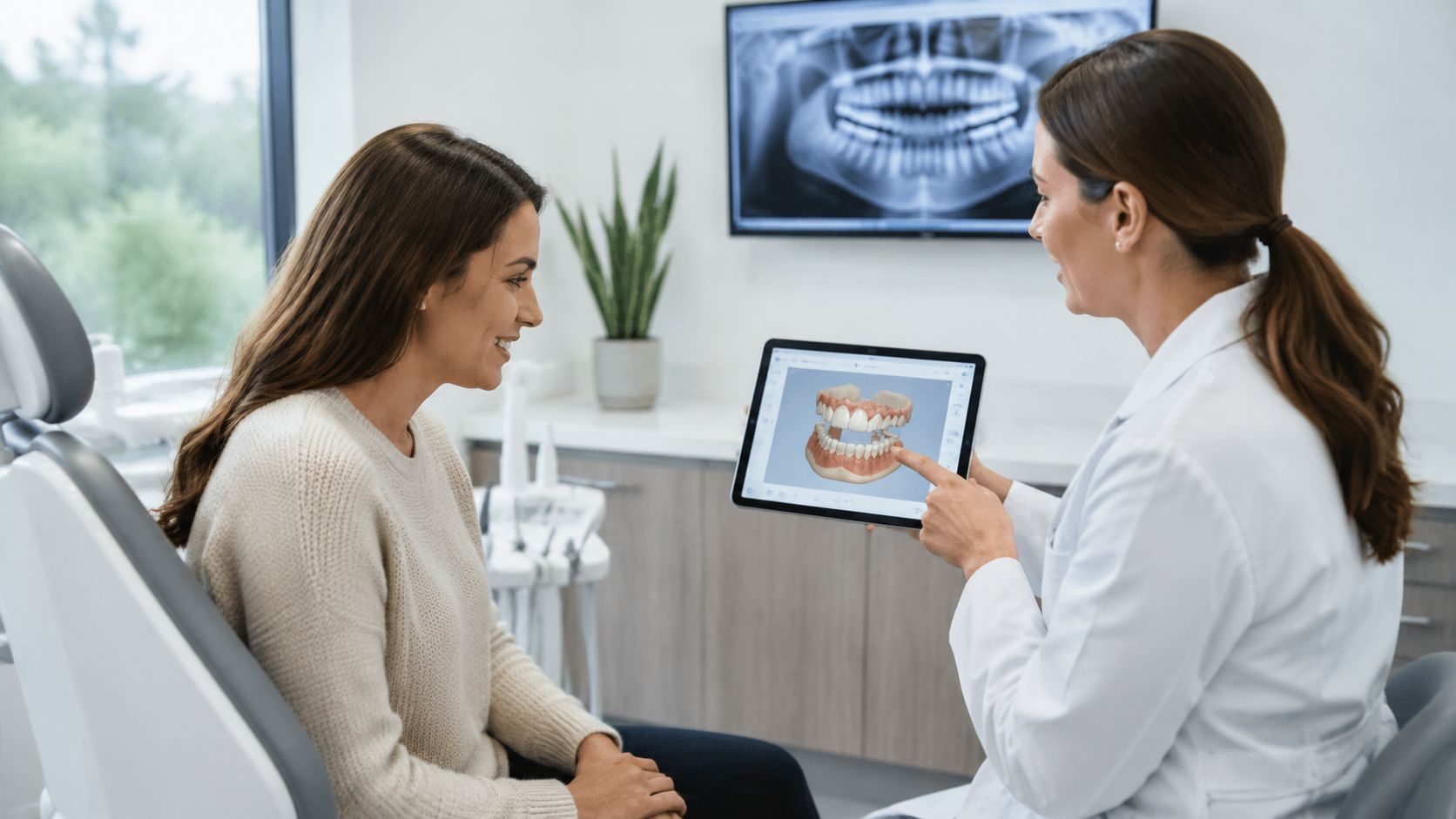
When Invisalign Makes Sense
Invisalign is often a good fit for mild to moderate crowding, spacing, and many alignment problems that do not require heavy bite correction. For adults who speak with clients all day, attend events, or feel self-conscious about orthodontic treatment, that discretion can make it easier to start and stay committed.
It can also help patients with dental anxiety. Clear aligners usually feel less intrusive than brackets and wires, and the planning process is easier for many adults to accept when they can see a digital preview and move through treatment in a calm, comfortable setting like Ultra Smile DentalSpa.
Existing dental work does not automatically rule Invisalign out. Adults with crowns, veneers, or bridges may still be candidates. The plan has to account for how those restorations affect attachment, force, and movement. Implants are different because they do not move, so any orthodontic plan has to be built around them.
When Braces Offer Better Control
Braces are often the more reliable choice for complex tooth movement. That includes significant bite correction, severe rotations, difficult vertical changes, and cases where root control matters as much as the visible alignment.
For some adults, fixed treatment is also the safer choice because it removes the day-to-day burden of remembering wear time. If a case is already mechanically challenging, inconsistent tray use makes treatment harder and less predictable. Braces avoid that variable.
I often explain it this way to patients. If your case needs very precise control, the more discreet option is not always the better clinical option. The goal is a stable bite and a healthy result, not just a treatment that looks subtle in photos.
Complex adult orthodontic cases usually depend on control, consistency, and careful sequencing of tooth movement.
Why Long Term Stability Matters
Adults often ask which option is more likely to hold up well over time. The honest answer is that long-term stability depends less on a simple Invisalign-versus-braces ranking and more on case selection, bite correction, gum health, and retainer use after treatment.
A patient with a straightforward alignment problem who wears retainers as directed can do very well with Invisalign. A patient with a deeper bite problem, missing teeth, or periodontal concerns may benefit from braces because the movements are harder to control and the finishing details matter more.
The practical takeaway is simple:
- Choose Invisalign when the tooth movement is appropriate for aligners and you are likely to follow the plan closely.
- Choose braces when the bite is more involved or the case needs stronger control throughout treatment.
- Treat gum disease first if the supporting tissue is inflamed or unstable.
- Plan around future restorative care if you may need crowns, bridges, or implants later.
That last point is easy to overlook. Adults who are thinking about replacing missing teeth, including people searching for dental implants near me, usually benefit from orthodontic planning that considers the final restoration from the start.
Exploring Other Discreet Options Ceramic and Lingual Braces
Not every adult wants to choose between clear aligners and standard metal brackets alone. Ceramic and lingual braces also come up in consultation, and they can be useful in selected cases.
Ceramic braces work like traditional braces but use tooth-colored or clear-looking brackets. They appeal to adults who want the control of fixed treatment with less visual contrast than metal. They can be a reasonable middle ground when a case needs braces but the patient is concerned about appearance.
There are trade-offs. Ceramic brackets can be more delicate, and they often require a little more care in day-to-day use. They may also cost slightly more than metal braces because of their cosmetic design.
Where Lingual Braces Fit
Lingual braces are attached to the back side of the teeth, which hides them from view in most conversations. On paper, that sounds ideal for adults who want invisible treatment without removable trays.
In practice, they're not always the easiest fit. They can affect speech early on, feel bulky to the tongue, and be harder to clean. For adults already managing a demanding schedule, that extra complexity can be enough to make them less appealing than they first appear.
Hidden treatment isn't always the most comfortable treatment.
For most adults in Miami, the main decision still comes down to Invisalign versus braces because those two options cover the broadest range of needs with the clearest balance of predictability, appearance, and daily practicality.
The Ultra Smile DentalSpa Difference Your Miami Treatment
A lot of adults can handle the idea of straighter teeth. What stops them is the thought of repeated dental visits that feel tense, rushed, or overly clinical.
What a Comfortable Visit Looks Like
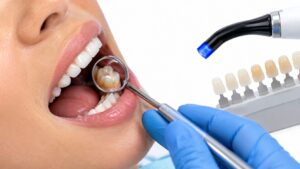
At Ultra Smile DentalSpa, the treatment setting is part of the orthodontic plan, especially for adults with packed schedules or dental anxiety. Consultations are designed to look at the full picture in one place: tooth alignment, bite function, existing crowns or veneers, and the cosmetic goals that matter in daily life.
That matters in Miami. Many adult patients want an option that works in client meetings, social settings, and everyday routines without adding more stress than necessary.
I also see many adults who are not choosing between Invisalign and braces in isolation. They are asking practical questions. Will the teeth be easier to keep clean during treatment? How will older dental work hold up? Does grinding, whitening plans, or a worn tooth change the recommendation? A calmer, more personalized visit makes those conversations easier and usually leads to better follow-through.
Why Control Matters for Anxious Adults
For anxious patients, control changes the experience. Removable aligners often feel more manageable because patients can take them out for meals, brushing, and short important moments, which can reduce the sense of being locked into treatment every hour of the day.
That does not mean Invisalign is automatically the better emotional fit for every adult. Some patients feel less stressed with braces because they do not have to remember trays or worry about whether they are wearing them enough. The right answer depends on what kind of responsibility feels easier for that person to carry.
A spa-like environment supports either option. Clear communication, thoughtful pacing, and a setting that feels comfortable rather than cold can make a long treatment plan feel realistic for adults who have delayed care for years.
For many patients in Downtown Miami, Midtown Miami, and Hallandale Beach, that consistency matters as much as the appliance itself. Orthodontic treatment often sits inside a broader dental plan, and it helps to have one office that can monitor oral health, cosmetic goals, and future restorative needs without making every visit feel like a separate project.
How to Make the Right Choice for Your Smile
There isn't one winner in the Invisalign vs. braces debate for adults. There's only the better fit for the case, the patient's habits, and the patient's comfort level.
A useful starting point is to ask a few direct questions:
- How important is discretion at work and socially? If that answer is very important, Invisalign may move higher on the list.
- Will removable treatment be worn consistently? If the answer is uncertain, braces may be the safer path.
- Is the case simple, moderate, or complex? More involved bite issues often shift the recommendation toward braces.
- Does dental anxiety affect follow-through? If so, a removable and lower-profile option may feel more manageable.
- Are there crowns, bridges, implants, or gum concerns? Those details can change what's realistic.
A Simple Decision Filter
Some adults benefit from a plain rule set:
- Choose Invisalign when appearance, convenience, and lower daily irritation are top priorities, and the case is clinically suitable.
- Choose braces when the case needs stronger control or when the patient doesn't want treatment success to depend on remembering trays.
- Pause the decision until a full exam if there are unresolved restorative or periodontal issues.
The most reliable answer comes from an in-person evaluation, not a generic checklist online. A proper consultation should review alignment, bite, oral health, existing dental work, and whether treatment should coordinate with cosmetic or restorative goals.
Common Questions About Adult Braces and Invisalign
Can adults get Invisalign if they already have crowns or veneers
Often, yes.
What matters is the type of dental work, where it sits in the mouth, and how much tooth movement is planned. Crowns and veneers can sometimes work well with Invisalign. Bridges and implants need closer review because they do not move like natural teeth. Adults with older cosmetic work also need to know whether that dentistry will still fit and look right after alignment changes.
This is one of the reasons I always recommend a full exam before choosing trays or braces. For many busy adults in Miami, the goal is not just straighter teeth. It is a result that also protects past dental investment and avoids surprises.
What happens if an aligner gets lost
Call the office as soon as you notice it.
In some cases, the right move is to go back to the previous tray for a short time. In others, it makes sense to move ahead to the next aligner or order a replacement. The answer depends on how many days the current tray has been worn and how tightly the next one fits.
Quick action usually prevents a small problem from turning into lost treatment time. That matters to adults with packed schedules, frequent travel, or dental anxiety, because uncertainty tends to make treatment feel harder than it needs to be.
Is teeth straightening more painful for adults
Adult orthodontic treatment is usually more pressure than pain. Patients often describe the first few days after an adjustment or new aligner as soreness, tightness, or tenderness when chewing.
Braces can create more irritation on the cheeks and lips, especially early on. Invisalign often feels gentler day to day, which is one reason anxious adult patients often prefer it if their case is a good match. A calmer treatment experience matters. At Ultra Smile DentalSpa, that comfort-focused approach is part of the conversation from the start.
How long do retainers matter after treatment
Retainers matter indefinitely if you want to keep your teeth where they ended up.
Teeth continue to shift over time, even after excellent orthodontic treatment. Some adults need nightly retention long term. Others may eventually wear retainers less often, but stopping completely often leads to relapse. The exact plan depends on the bite, the amount of correction, and whether there are habits like clenching or tongue pressure that can move teeth again.
Is Invisalign more expensive than braces
Sometimes yes, sometimes no.
The fee depends less on the brand name and more on case difficulty, treatment length, refinement needs, and whether other dental issues need attention first. In many adult cases, the cost difference is smaller than patients expect. Insurance may help with either option when orthodontic benefits are available.
For Miami professionals, I usually suggest looking beyond the starting fee alone. Time out of the office, appearance during treatment, comfort, and the ability to remove aligners for meetings or social events can all affect which option feels more practical in real life.
If you have been putting this off because the choice feels too technical or too stressful, a consultation can make it much simpler. At Ultra Smile DentalSpa, we review your bite, existing dental work, comfort concerns, and day-to-day routine so the recommendation fits your life, not just your X-rays.