Most advice on how to whiten teeth naturally promises too much. The honest version is simpler: natural methods can help with surface stains from coffee, tea, red wine, and other daily habits, but they do not erase every kind of discoloration. The American Dental Association explains that whitening products work through hydrogen peroxide or carbamide peroxide, while natural alternatives have a much weaker evidence base, so the goal at home is usually stain control and gentle polishing, not dramatic bleaching (ADA whitening guidance).
That distinction matters in Miami, where patients often want a brighter smile before photos, interviews, weddings, or because they're tired of looking dull in the mirror. A patient looking for a dentist in Miami, FL or a cosmetic dentist near me usually wants two things at the same time, safer options and a result that shows. Ultra Smile DentalSpa takes that seriously, because the right plan depends on whether the color change is on the enamel surface or deeper inside the tooth.
Table of Contents
- Why Most Natural Whitening Advice Misses the Mark
- Evidence-Backed Natural Whitening Methods You Can Try at Home
- Popular Natural Remedies That Lack Scientific Support
- Natural Whitening Versus Professional Teeth Whitening in Miami
- Your Weekly Natural Whitening Routine and Realistic Timeline
- When to Visit a Cosmetic Dentist in Miami for Brighter Results
Why Most Natural Whitening Advice Misses the Mark
The biggest mistake people make with natural teeth whitening is treating every yellow or dull tooth the same. That's not how discoloration works. Some stains sit on the surface from food and drink, while others live deeper in the tooth structure, which is why a routine that helps one person may barely move the needle for another.
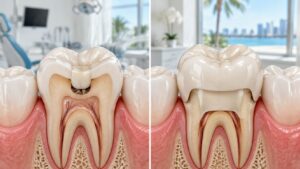
Surface stains and intrinsic discoloration are not the same problem
Surface stains, also called extrinsic stains, are the ones most likely to respond to brushing, flossing, and other gentle at-home habits. Intrinsic discoloration comes from inside the tooth, and it can be tied to aging, medications, fluorosis, trauma, or genetics. A practical explanation of that difference is laid out in this enamel-focused guide, and it's the reason natural whitening often feels underwhelming when someone's teeth are stained more.
Practical rule: if the discoloration looks more gray, brown, or deeply yellow and doesn't budge with good hygiene, natural methods are usually limited.
That doesn't make home care useless. It means the goal should be realistic. The ADA notes that natural-remedy alternatives don't have the same evidence base as peroxide-based whitening, so the smartest home strategies focus on stain prevention and light abrasion rather than trying to force a deep color change (ADA whitening guidance).
Why some people try everything and still see little change
Patients often do the right things and still feel disappointed. They brush more often, cut back on coffee, and try household remedies, yet the teeth stay uneven or dim. That usually means the problem is not simple surface staining, or the enamel has already thinned enough that the underlying tooth color shows through.
For Miami patients comparing options, that distinction helps avoid wasted time. It also prevents overuse of harsh home hacks that can irritate gums or wear enamel down. Natural methods have a place, but only when the stain pattern matches what those methods can realistically influence.
Evidence-Backed Natural Whitening Methods You Can Try at Home
The most dependable at-home approach is still plain, and that works in its favor. Consistent brushing, flossing, and stain control do more for most smiles than trendy hacks ever will. The ADA's whitening guidance focuses on prevention and cautious use of low-risk methods, not aggressive DIY bleaching (ADA whitening guidance).
Baking soda is the main household ingredient with real value
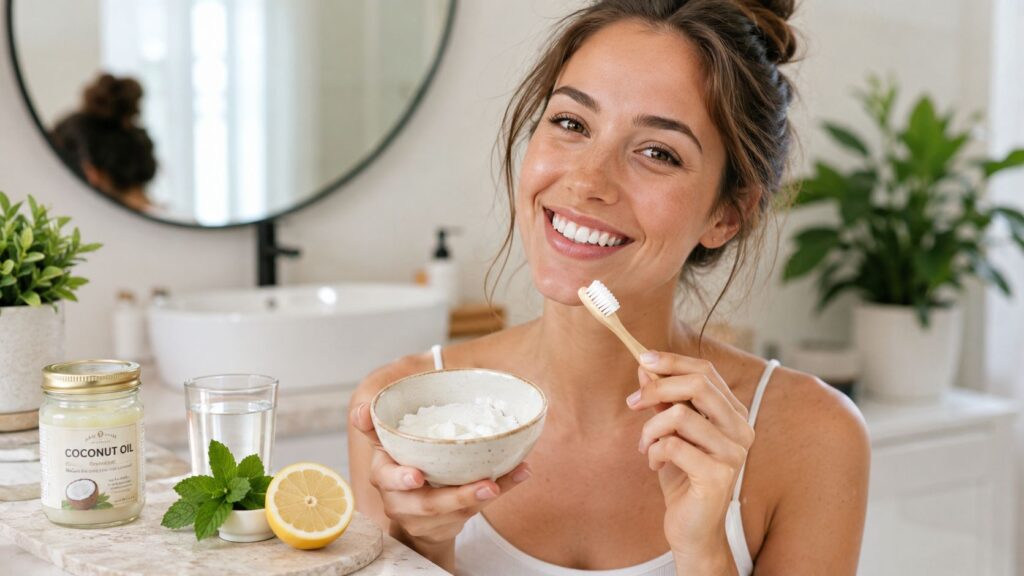
Baking soda can help because it is mildly abrasive. Consumer dental guidance commonly uses a simple paste made from roughly equal parts baking soda and water, brushed gently for about 2 minutes, only a few times per week because overuse raises abrasion risk (Healthline on natural whitening). A common recipe cited in consumer medical sources is 1 teaspoon of baking soda mixed with 2 teaspoons of water, then applied with a soft-bristled brush.
That level of care can polish surface stains. It will not change deeper tooth color, and it should never feel like scrubbing.
Hydrogen peroxide can be useful if it stays low and limited
DIY peroxide methods need the same restraint. The verified guidance supports 1.5% to 3% hydrogen peroxide, used gently and briefly, with some sources describing 1 to 2 minutes of contact time. Higher concentrations or frequent use raise the risk of tooth sensitivity and gum irritation (ADA whitening guidance).
If a rinse or paste stings, that is a warning sign. Stop, rinse well, and let a dentist in Miami, FL evaluate whether home whitening is still a good fit for your enamel and gums.
Daily habits do a lot of the heavy lifting
The most useful habits are simple:
- Brush and floss regularly: this reduces plaque and helps keep stains from settling in.
- Rinse with water after meals: this can help wash away pigments before they bond to enamel.
- Limit coffee, tea, red wine, and soda: these are common staining triggers.
- Use a soft brush: gentler contact is easier on enamel and gums.
Natural whitening works best as maintenance, especially for patients already getting regular cleaning and exams. It can help with fresh surface staining and stain control, but it will not fix deeper discoloration that belongs in a cosmetic dentistry conversation.
Popular Natural Remedies That Lack Scientific Support
Social media has kept a lot of weak whitening ideas alive. A shortcut sounds appealing, especially when it uses ingredients already sitting in the kitchen. The problem is that popularity doesn't make a remedy safe or effective.
The ADA does not support several common trends
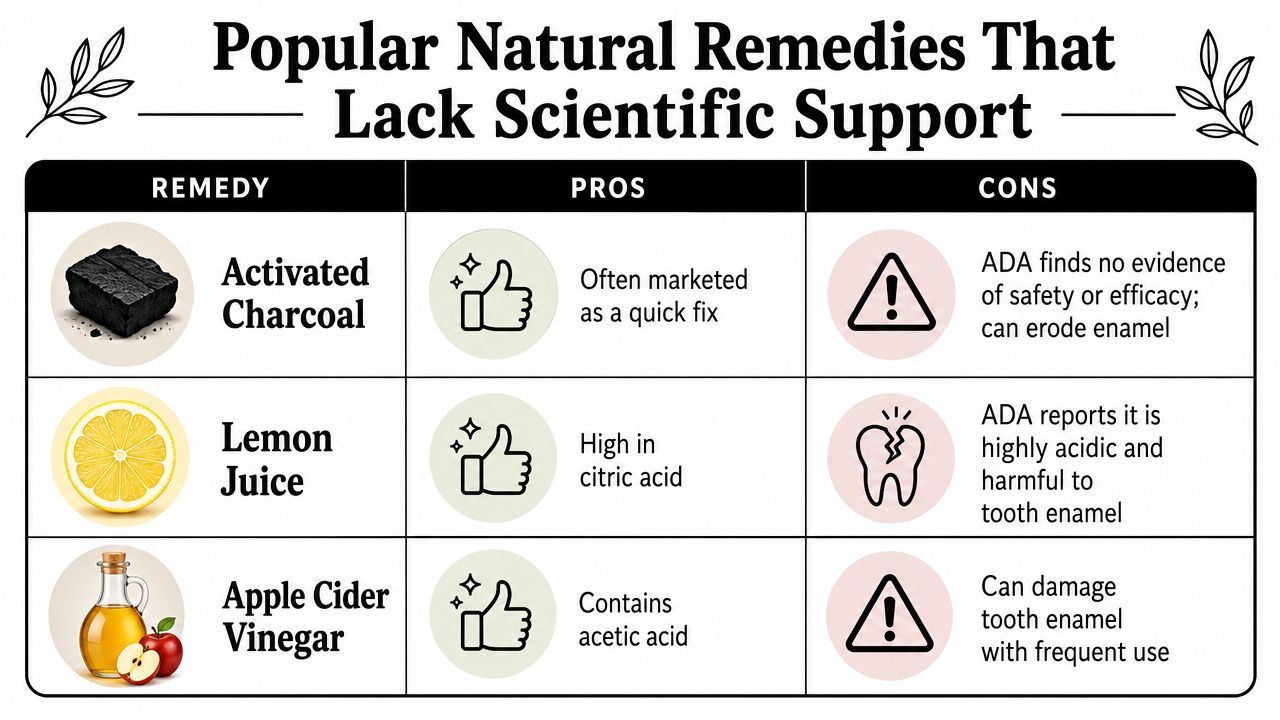
The ADA states there is no reliable scientific evidence that oil pulling or turmeric whitens teeth, and it also says charcoal has no evidence showing it is safe or effective for whitening (ADA natural whitening guidance). That matters because charcoal is often marketed like a one-step fix, even though the safety concern is not just a lack of benefit, it's the possibility of enamel wear.
Acid-based folk remedies have their own problem. Lemon juice and vinegar keep showing up in DIY tips because they feel “natural, but they're acidic enough to threaten enamel. Once enamel is weakened, the teeth can look more yellow, not less, because the underlying dentin shows through more clearly.
Bottom line: if a method relies on scrubbing harder, soaking longer, or using something acidic, it's moving in the wrong direction.
Why these methods keep spreading anyway
People tend to trust visible, immediate change, even when it's temporary. A gritty paste can make teeth feel cleaner for a moment. A rinsed mouth can feel fresh. That sensation gets mistaken for whitening, and the claim spreads faster than the evidence.
There's also a comfort factor. A home remedy feels less clinical than in-office care, which is why many patients try everything from charcoal to coconut oil before booking a visit with a cosmetic dentist near me. The problem is that if the discoloration is deep, those routines only delay the right solution.
Natural Whitening Versus Professional Teeth Whitening in Miami
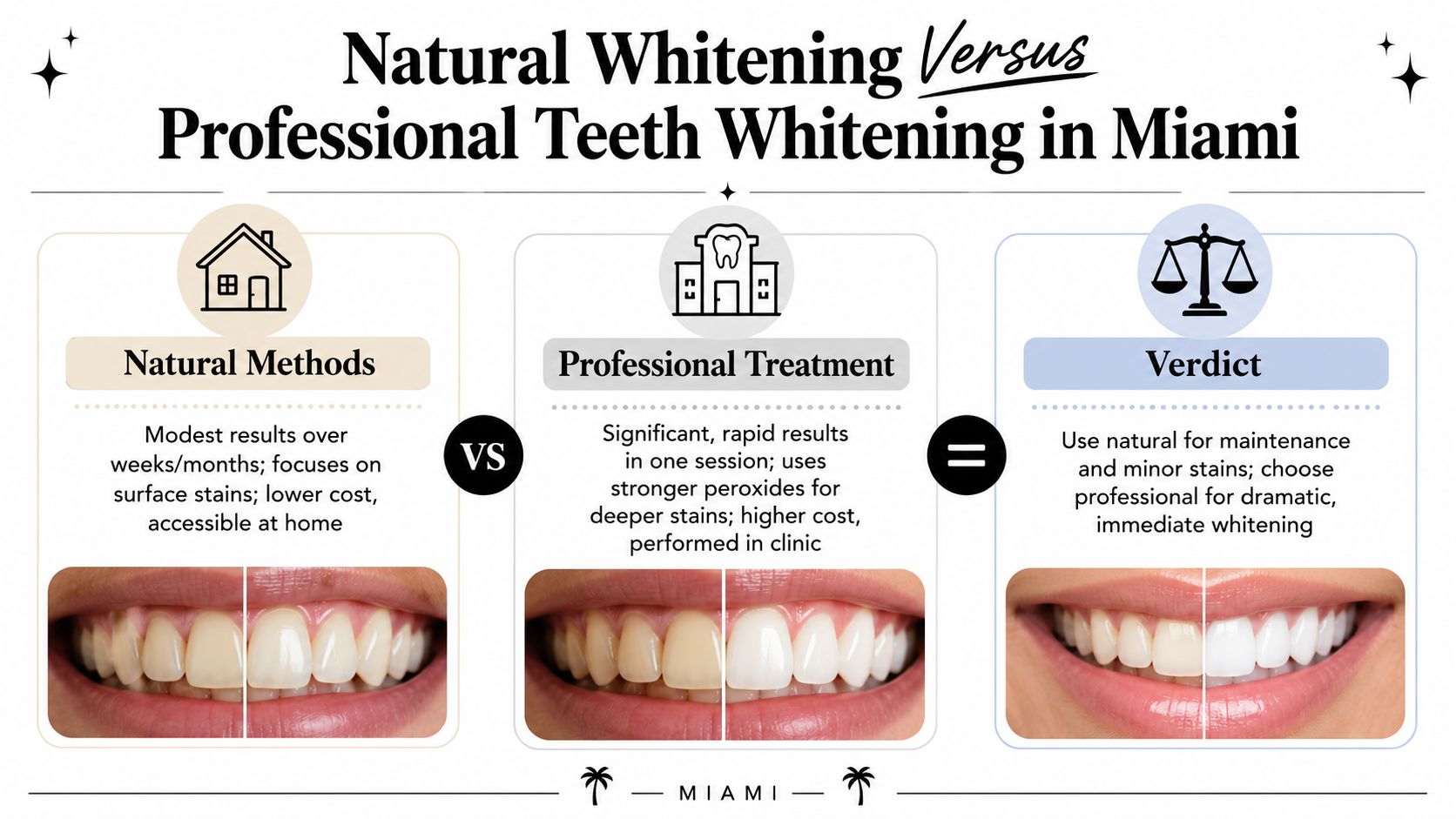
Natural whitening and professional whitening do not compete on the same level. Home care can reduce light staining and keep new discoloration from building up. Professional whitening can change the color more meaningfully because it uses peroxide-based agents that the ADA says break stains into smaller pieces and can work on both extrinsic and intrinsic staining (ADA whitening guidance).
What each option is good for
Natural methods make sense when the issue is mild, recent, or mostly on the surface. They're useful for maintenance, especially for patients who drink stain-causing beverages or want to protect results after a professional cleaning.
Professional whitening is a different category. It's the right conversation when someone wants a more noticeable change, has deeper discoloration, or needs predictable cosmetic results for an upcoming event. Ultra Smile DentalSpa offers a spa-like whitening experience with custom aromatherapy and streaming entertainment, and for established patients, the practice includes a complimentary yearly whitening benefit. That combination makes in-office care easier to fit into real life for patients in Downtown Miami, Midtown Miami, and Hallandale Beach.
Why the dentist's evaluation matters
A dental exam does more than confirm color. It helps rule out sensitivity, enamel concerns, and discoloration that won't respond to home care. That's especially important for patients also considering restorative dentistry, dental implants near me, tooth extraction, or other services, because oral health has to come before cosmetics.
Professional whitening isn't just about stronger ingredients. It's about protecting the gums, matching the method to the stain type, and giving patients a result they can see in the mirror.
Your Weekly Natural Whitening Routine and Realistic Timeline
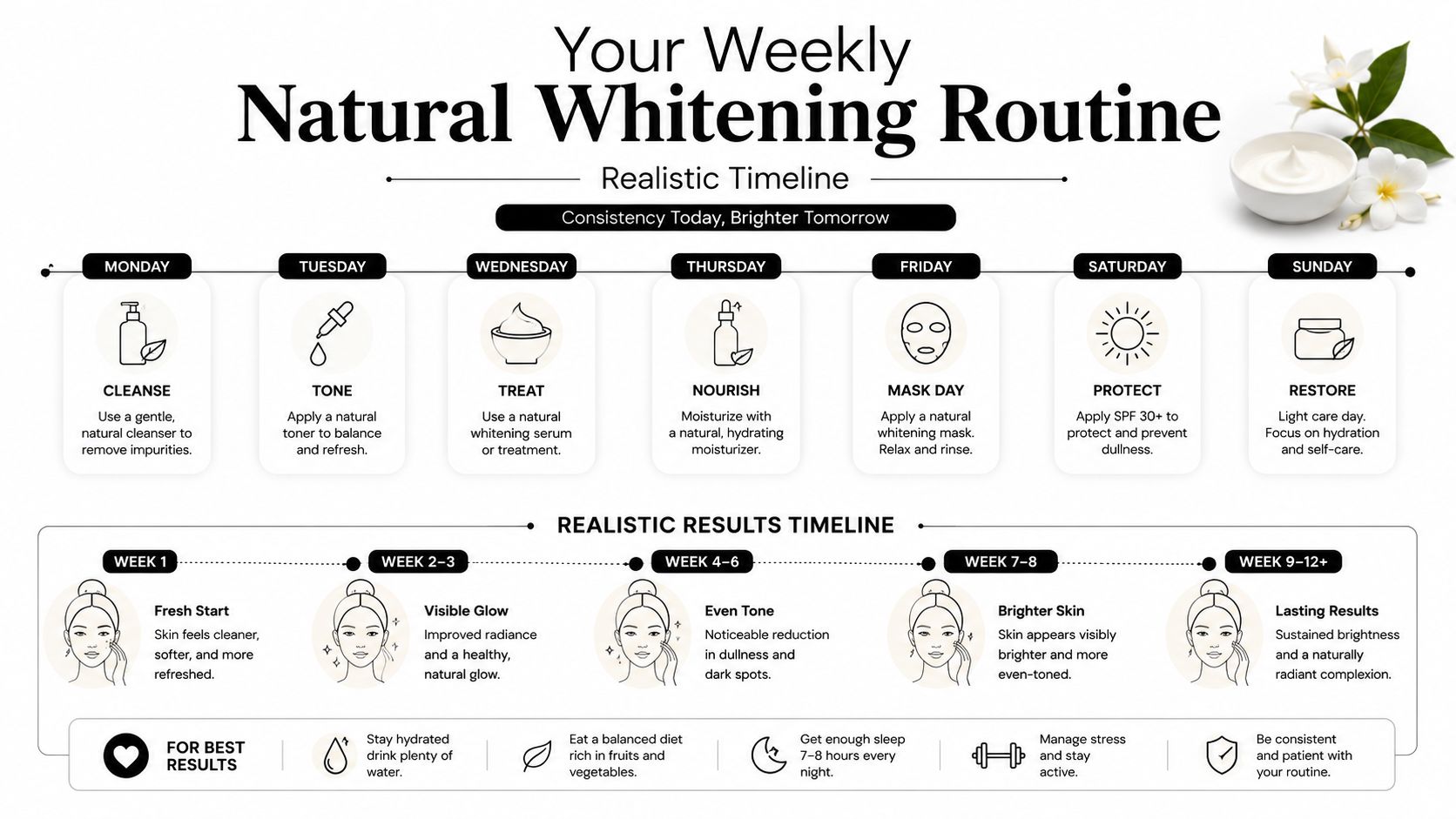
A good natural whitening routine should be simple enough to keep and conservative enough to avoid damage. The routine below fits the evidence and keeps the emphasis where it belongs, on stain prevention and gentle polishing rather than overdoing anything abrasive.
A practical weekly rhythm
Start with the basics every day. Brush thoroughly, floss once a day, and rinse with water after meals when staining drinks or foods are part of the day. On selected days, a gentle baking soda paste can be used for about 2 minutes, but not daily, because the goal is controlled abrasion, not constant scrubbing (Healthline on natural whitening).
A simple weekly pattern looks like this:
- One to a few baking soda sessions: keep them spread out, not back-to-back.
- Low-strength peroxide use only if tolerated: stay within the low-concentration guidance and stop if sensitivity shows up.
- Daily rinse habits: use water after meals, especially after coffee or tea.
What progress should look like
Results should be modest and gradual. If natural methods are working, the teeth usually look a little cleaner and less dulled by surface staining, not dramatically transformed overnight. More important than chasing a specific timeline is tracking whether the smile looks healthier and whether sensitivity stays low.
If the gums feel irritated, or the teeth start to zing with cold drinks, the routine is too aggressive.
Regular professional cleanings and exams still matter here. A dental team can remove tartar and surface buildup that brushing can't handle, which makes any home routine more effective. That's one reason many patients in Miami pair home maintenance with scheduled dental visits instead of relying on DIY whitening alone.
When to Visit a Cosmetic Dentist in Miami for Brighter Results
Natural methods are reasonable when the staining is mild. They're not enough when the discoloration is deeper, the timing is urgent, or the teeth are getting more sensitive instead of brighter. At that point, a cosmetic dentist in Miami becomes the practical next step.
Situations that point toward professional whitening
Professional care makes sense when the smile shows:
- Intrinsic discoloration: stains that seem to come from inside the tooth.
- Sensitivity with DIY whitening: a sign that home methods may be too harsh.
- A deadline for better results: weddings, interviews, photos, or special events.
- A need for broader treatment planning: whitening alongside other care such as cleanings and exams, dental implants, restorative dentistry, or emergency dentist visits if there's pain or damage involved.
A whitening consultation at Ultra Smile DentalSpa typically starts with a thorough exam and a personalized discussion of options, including whether laser teeth whitening or another in-office approach fits the case best. More details about that option are available in the practice's laser whitening overview.
What Miami patients should expect
Patients in Miami, Downtown Miami, Midtown Miami, and Hallandale Beach can expect a transparent conversation about what's realistic, what's safe, and what fits the budget. Ultra Smile DentalSpa also supports patients with bilingual staff, accepted insurance plans, and options for those without coverage, which helps keep cosmetic care approachable rather than intimidating.
If at-home whitening hasn't delivered the change a patient wants, that's not a failure. It's a sign that the stain type likely needs clinical attention.
Ultra Smile DentalSpa helps Miami patients choose the right path for brighter teeth, whether that means safer at-home whitening guidance, professional whitening, or a broader cosmetic plan. If the goal is a cleaner, more confident smile with less guesswork, visit Ultra Smile DentalSpa to schedule a consultation and talk through the options in person.