You've just left the dental chair after a molar extraction, and the numbness is beginning to fade. The questions arrive quickly: What can be eaten? Is rinsing safe? How can the extraction site be protected while sleeping, working, and living in Miami's heat?
Dry socket, also called alveolar osteitis, is painful but often preventable when the protective blood clot remains undisturbed. This guide from Ultra Smile DentalSpa explains how to prevent dry socket through a practical recovery timeline, from the first gauze pad to the signs that require a call to a Miami dentist.
Table of Contents
- Recovering Comfortably After Your Tooth Extraction in Miami
- Understanding Dry Socket and Why the Blood Clot Matters
- Immediate Post-Extraction Care for the First 24 Hours
- Diet and Activity Choices That Protect Your Healing Socket
- Smoking Oral Hygiene and Chlorhexidine Prevention Protocols
- Recognizing Dry Socket Symptoms and When to Call Your Dentist
Recovering Comfortably After Your Tooth Extraction in Miami
A patient leaving a dental office after a tooth extraction may feel fine at first because local anesthesia is still working. As sensation returns, mild soreness and swelling can be expected. The important task is protecting the clot that forms inside the empty socket, because that clot supports the earliest stage of healing.
Ultra Smile DentalSpa provides tooth extraction care in Miami with individualized post-operative guidance. Patients in Downtown Miami, Midtown Miami, and Hallandale Beach can ask the team about pain control, eating, cleaning, smoking, exercise, and the right time to schedule a follow-up. Clear instructions matter, especially after a surgical extraction or wisdom tooth removal.

Miami's warm climate also makes hydration important. Patients should drink from an open cup rather than through a straw, avoid overheating during outdoor activity, and choose cool or room-temperature foods during the early recovery period. Heat, exertion, and habits that create suction can make bleeding or clot disruption more likely.
Practical rule: The first days after extraction should be treated as clot-protection time. Rest, gentle care, and following the dentist's specific instructions give the socket the best opportunity to heal.
The risk isn't identical for every extraction. A systematic review reported an overall dry-socket frequency of 3.2%, with 1.7% after nonsurgical extractions and 15% after surgical extractions. Difficult wisdom tooth surgery deserves especially careful aftercare, including strict avoidance of smoking and suction. (Systematic review of alveolar osteitis prevention)
Understanding Dry Socket and Why the Blood Clot Matters
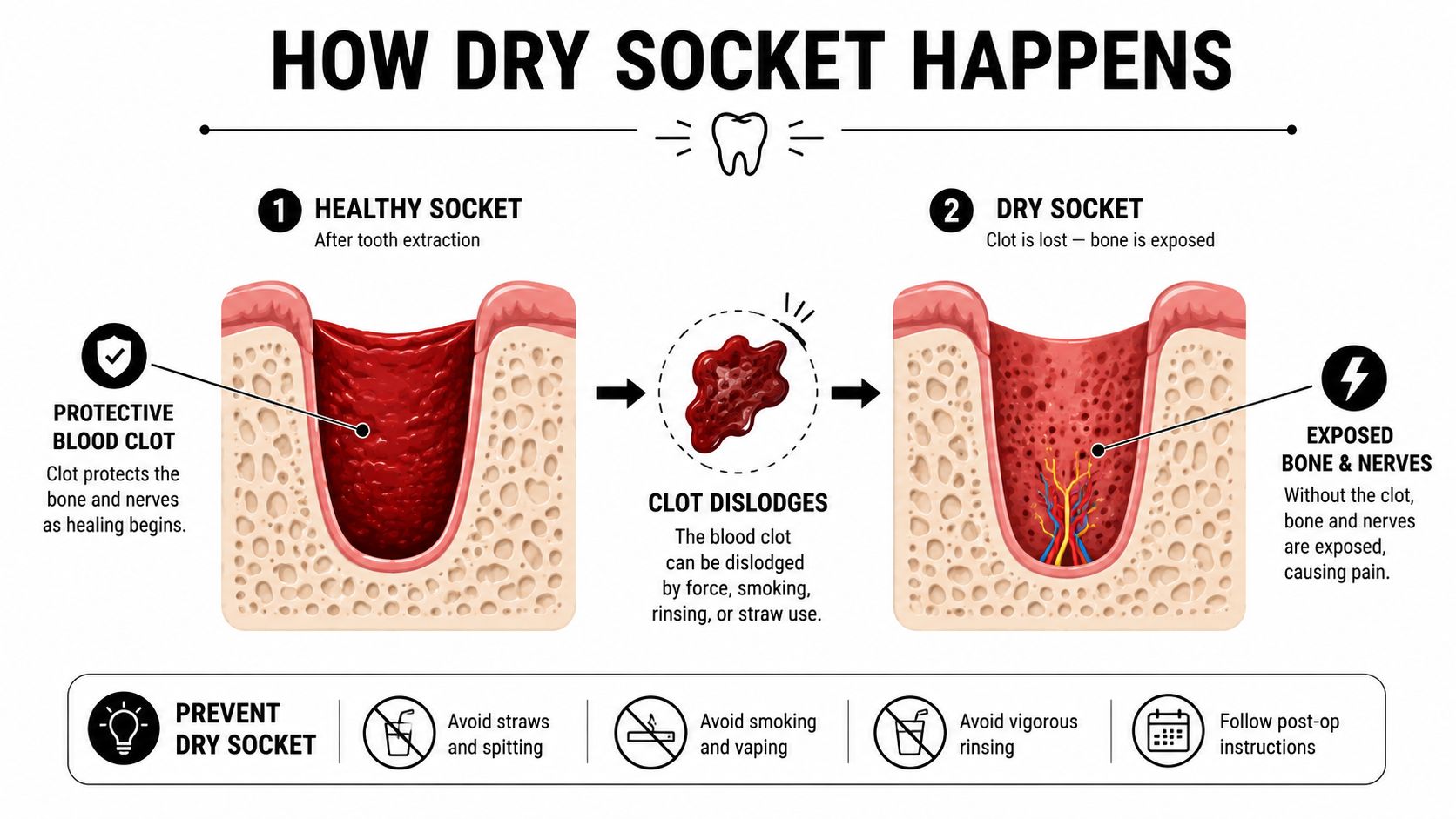
After a tooth is removed, the body forms a blood clot in the socket. The clot works like a natural biological bandage, covering sensitive bone and nerve tissue while helping the gum and underlying structures begin repair.
Dry socket develops when that clot dissolves or becomes dislodged too early. The exposed area can become intensely painful because the protective covering is gone. Food, fluids, air, and normal mouth movement can then irritate the socket.
Dry socket is much more common after difficult wisdom tooth surgery than after a simple extraction. The same systematic review found a substantially higher incidence among smokers than nonsmokers, 12% compared with 4%, which is why avoiding tobacco is one of the most important patient-controlled prevention steps. (Evidence on smoking and dry socket risk)
The discomfort pattern also matters. Normal post-extraction soreness should gradually become easier to manage. Dry socket pain often appears after an initial period of improvement and may feel deep, throbbing, or difficult to control.
Why the clot deserves protection
A patient who understands the clot's role is less likely to rinse forcefully, use a straw, smoke, or probe the socket with a finger or tongue. These actions can disturb the healing site even when the mouth feels relatively comfortable.
Dry socket doesn't mean the extraction was unsuccessful, and it isn't a reason to panic. It does mean the site should be assessed by a dentist, particularly when pain worsens instead of easing.
Immediate Post-Extraction Care for the First 24 Hours
The first day should be quiet and deliberate. Each step has a purpose, and most of the guidance centers on one goal, keeping the clot stable.
The first few hours
-
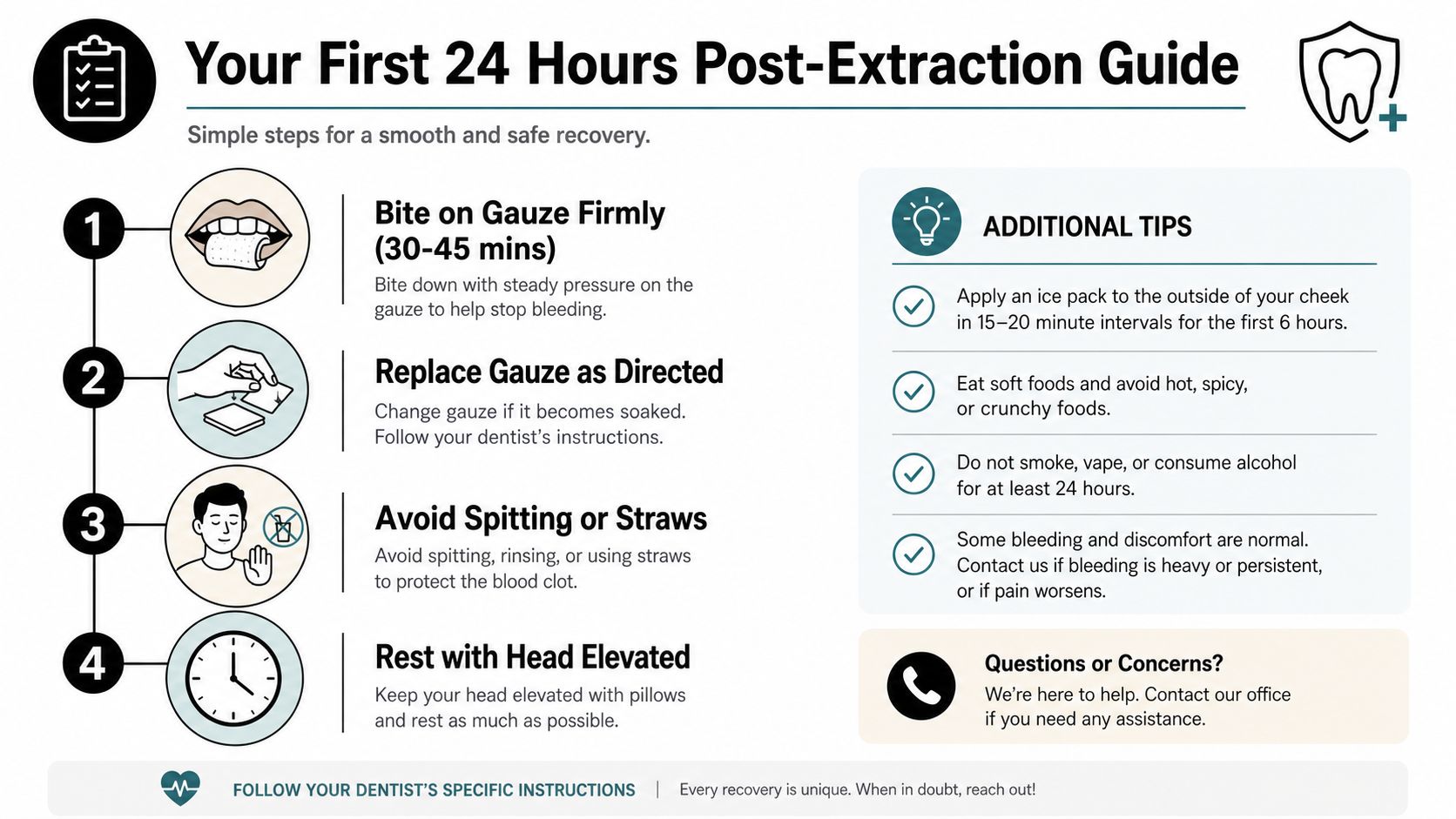
Hold gauze firmly in place. Bite on the gauze provided by the dental team for approximately 30 to 45 minutes, or replace it only as directed. Consistent pressure helps control bleeding and supports clot formation.
-
Use an ice pack externally. Apply a wrapped ice pack for 20 minutes on and 20 minutes off during the early period to help limit swelling. The pack should rest against the cheek, not directly on the skin.
-
Take pain medication as directed. If the dentist has recommended prescription or over-the-counter medication, taking it before numbness completely disappears can make the transition more comfortable. Patients should follow the label and the dentist's instructions, particularly when other medical conditions or medicines are involved.
-
Keep the mouth still. Limit lengthy conversations, exaggerated facial movements, and repeated checking of the socket. Movement can irritate the area and may restart bleeding.
What should be avoided
Don't rinse, spit forcefully, or use a straw during the first day unless the dental team gives different instructions. Cleveland Clinic advises avoiding straws because suction can dislodge the clot, and it also recommends avoiding warm or fizzy drinks during recovery. (Cleveland Clinic guidance on dry socket prevention)
Sleeping with the head raised can reduce pressure and help manage swelling. A quiet evening, limited activity, and a slightly raised sleeping position are more helpful than repeatedly inspecting the extraction site.
Detailed guidance is also available through Ultra Smile DentalSpa's post-extraction care information. If bleeding, pain, or medication questions don't match the written instructions, contacting the practice is safer than improvising.
Diet and Activity Choices That Protect Your Healing Socket
Food should be easy to swallow and unlikely to leave particles around the socket. Harvard Health recommends avoiding crunchy, sticky, or small-piece foods for several weeks after extraction, with soft choices such as applesauce, yogurt, smoothies without seeds, and thin or pureed soups. (Harvard Health advice on preventing dry socket)
A practical eating progression
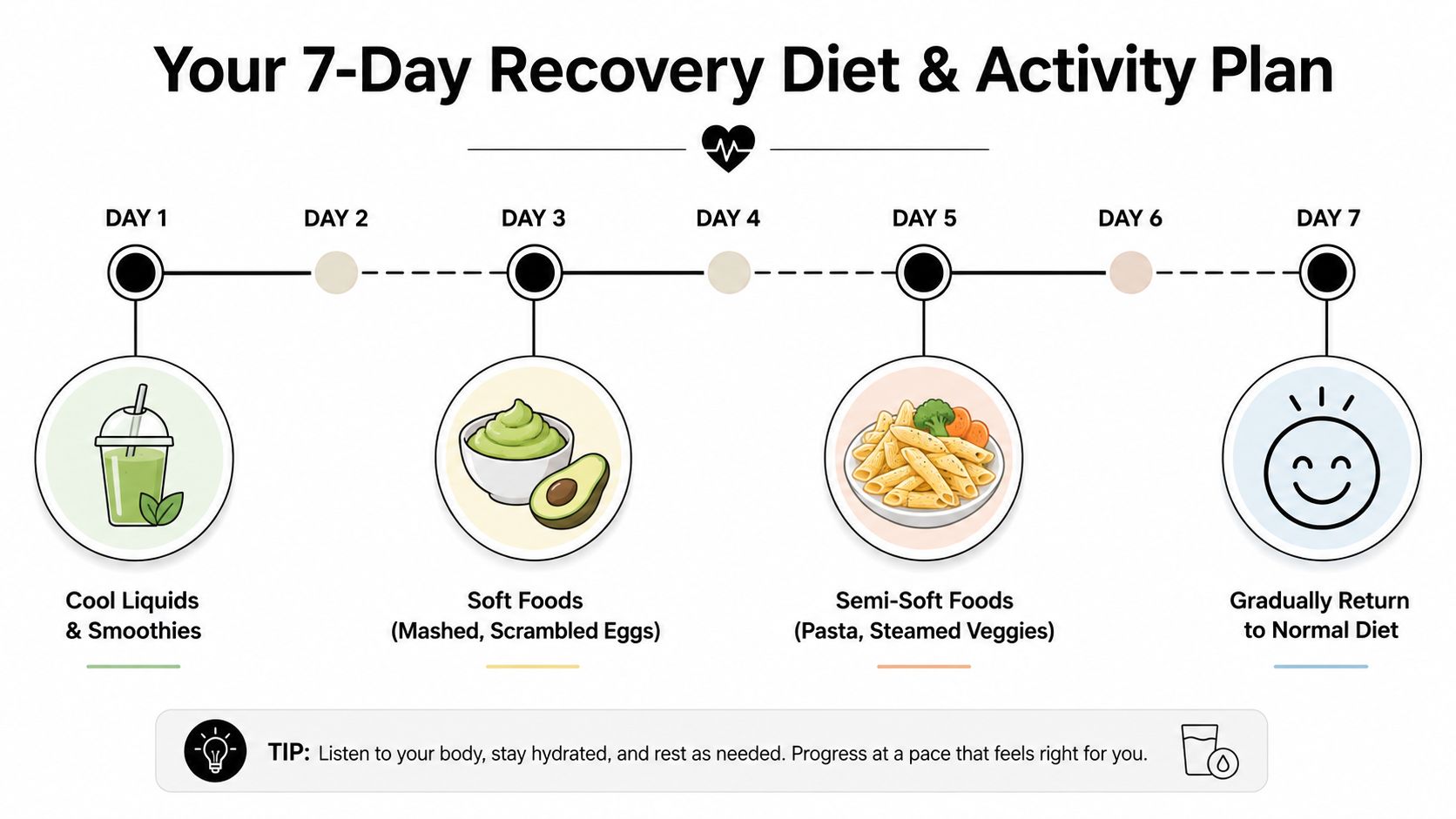
On the first day, cool liquids and smooth foods can be easier to tolerate. Smoothies are acceptable when they're taken from an open cup, never through a straw. Patients should avoid very hot foods and drinks because heat can aggravate the area and may increase bleeding.
By around the third day, many patients can try soft foods such as scrambled eggs, mashed potatoes, yogurt, applesauce, or blended soup, provided chewing is comfortable. Foods should be placed on the opposite side of the mouth when possible.
As tenderness decreases, semi-soft choices can be introduced gradually. Crunchy chips, popcorn, nuts, seeds, sticky foods, and spicy foods can irritate the site or leave fragments behind, so they're poor choices while the socket remains sensitive.
Suction doesn't come only from a straw. Forceful spitting, slurping, smoking, and some sports-bottle valves can also create pressure that pulls against the clot.
Hydration deserves special attention in Miami. Water from an open cup is a practical choice during hot weather, and outdoor activity should be limited while the body is recovering. Patients shouldn't use heat as a reason to resume strenuous exercise early.
Rest before returning to exertion
Heavy lifting, bending over, and vigorous exercise can increase pressure and encourage renewed bleeding. The dental team's instructions should guide the return to work, exercise, and other activities, especially after surgical wisdom tooth removal.
Sleeping with the head raised during the first two nights can help with swelling. Resting also reduces the chance of accidental contact with the socket when fatigue leads to careless rinsing, chewing, or brushing.
Smoking Oral Hygiene and Chlorhexidine Prevention Protocols
Smoking belongs at the top of the dry-socket prevention hierarchy. Tobacco exposure is associated with a substantially higher incidence, and inhalation creates suction that can disturb the clot. Avoid smoking and all tobacco after extraction. The post-operative guidance for this topic advises at least 72 hours without smoking, while a longer break gives the socket more time to heal. Patients worried about cravings can ask whether a nicotine patch is appropriate.
Chlorhexidine may provide added protection when used in a defined protocol. A systematic review found that 0.12% or 0.2% chlorhexidine rinses used before and after extraction prevented about 42% of dry-socket cases, while chlorhexidine gel prevented about 58%. Those results apply to the studied schedules, not to every over-the-counter mouthwash. (Systematic review of chlorhexidine prevention)
Repeated use matters
A single rinse before surgery is not a complete prevention plan. A meta-analysis found lower dry-socket incidence when chlorhexidine began on the day of surgery and continued for several days. Single-rinse strategies were not effective. The evidence describes a benchmark regimen of 0.12% chlorhexidine before extraction and for 7 days afterward, or 0.2% chlorhexidine gel every 12 hours for 7 days after extraction. (Evidence on repeated chlorhexidine protocols)
A dentist should confirm whether chlorhexidine suits you and provide the correct product and schedule. Ultra Smile DentalSpa can discuss prescription chlorhexidine as part of an individualized extraction-care plan.
Keep brushing the other teeth, but protect the socket. Avoid brushing directly over it during the first day, then clean nearby teeth gently according to the dentist's instructions. After the initial period, warm salt-water rinsing may be recommended. Keep it gentle, without vigorous swishing or forceful spitting.
Alcohol-based mouthwash may irritate healing tissue. If you are comparing products, review whether alcohol-free mouthwash is better and ask which option fits your extraction site.
Routine preventive antibiotics are not automatically the strongest choice. A scoping review concluded that prophylactic antibiotics lack specific support for preventing dry socket. The better-supported priorities are smoking avoidance, an appropriate chlorhexidine protocol, and careful local care. (Review of prophylactic antibiotics and dry socket prevention)
Recognizing Dry Socket Symptoms and When to Call Your Dentist
Normal soreness should trend toward improvement. A patient should contact Ultra Smile DentalSpa promptly when pain becomes intense, throbbing, or suddenly worse after the early recovery period, particularly when it radiates toward the ear or temple.
Other warning signs include:
- Unpleasant taste or odor: A foul taste or persistent bad breath can accompany an irritated, exposed socket.
- An empty-looking site: The extraction area may appear as though the clot has disappeared, with bone possibly visible.
- Poor pain control: Pain that over-the-counter medication can't manage deserves professional assessment.
A dental professional can examine the site, clean it when appropriate, and place a medicated dressing to provide relief. Patients seeking a dentist near me, an emergency dentist, or a trusted dentist in Miami, FL shouldn't wait through escalating post-extraction pain. Early contact gives the practice an opportunity to distinguish normal healing from dry socket and address the problem directly.
Ultra Smile DentalSpa provides tooth extraction, wisdom teeth care, follow-up evaluations, and broader restorative services, including dental implants when appropriate after healing. Patients in Miami can visit Ultra Smile DentalSpa to schedule a consultation, request post-extraction guidance, or arrange care with a team focused on comfort and personalized treatment.