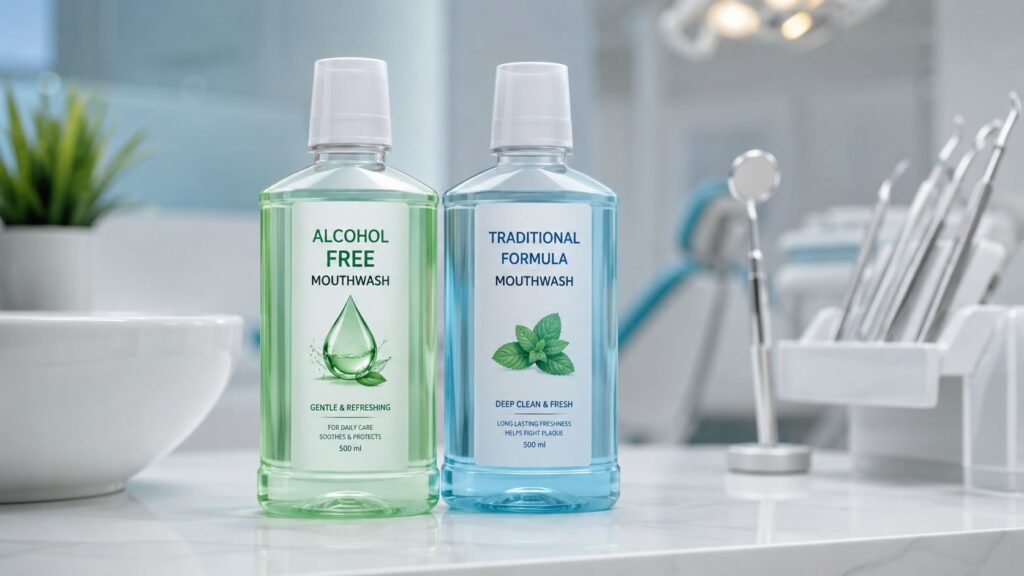
Alcohol-free mouthwash is generally the better everyday choice for most patients, and 0.075% cetylpyridinium chloride (CPC) plus 0.05% sodium fluoride has been shown to reduce plaque and gingivitis over time. Alcohol-based rinses can still make sense in specific situations, but the main question is usually the active ingredient, not the alcohol label.
A patient in Miami often notices this in the drugstore aisle after a cleaning, or right after asking about a rinse for dry mouth, sensitivity, or whitening touch-up care. The bottle looks simple, but the choice isn't. A mouthwash can feel stronger without working better, and it can be gentler without being weaker.
Table of Contents
- A Quick Answer for Miami Patients
- How Alcohol and Alcohol-Free Mouthwashes Actually Work
- What the Clinical Evidence Actually Shows
- Who Should Reach for Alcohol-Free First
- When Alcohol-Based Mouthwash Still Makes Sense
- How to Choose the Right Mouthwash for You
- Talk to a Miami Dentist About the Right Rinse for You
A Quick Answer for Miami Patients
A patient standing in the pharmacy aisle on Biscayne Boulevard, or asking after a cleaning in Downtown Miami, usually wants one simple answer. Alcohol-free mouthwash is often the better daily pick because it tends to be gentler, and the evidence shows the active antiseptic ingredients do the primary work. That's why many patients can stop worrying about the alcohol label and start looking at what's in the bottle.
Alcohol-Free vs Alcohol-Based Mouthwash at a Glance
| Feature | Alcohol-Free | Alcohol-Based |
|---|---|---|
| Main everyday advantage | Usually better tolerated for daily use | Often feels “stronger because of the burn |
| Active ingredient matters | Yes, especially CPC, fluoride, chlorhexidine, or essential oils | Yes, the alcohol itself is usually a carrier, not the main germ fighter |
| Dry mouth or sensitivity | Usually the safer fit | Can sting or feel drying |
| Plaque and gingivitis control | Can be clinically competitive | Can be effective, depending on the formula |
| Best use case | Daily use for many patients | Short-term or specific formula-driven situations |
The practical takeaway is simple. If a patient has dry mouth, sensitive tissues, recent cosmetic work, or just wants a rinse they can use comfortably every day, alcohol-free is usually the smarter first try. If a dentist recommends a specific rinse for a short-term reason, the ingredient list matters more than the presence of alcohol.
Practical rule: choose the rinse that matches the problem, not the marketing on the front of the bottle.
A lot of patients assume the burn means the product is doing more. That isn't how mouthwash works. The best choice is the one that fits the mouth it's being used in, and for many Miami patients, that means going alcohol-free.
How Alcohol and Alcohol-Free Mouthwashes Actually Work
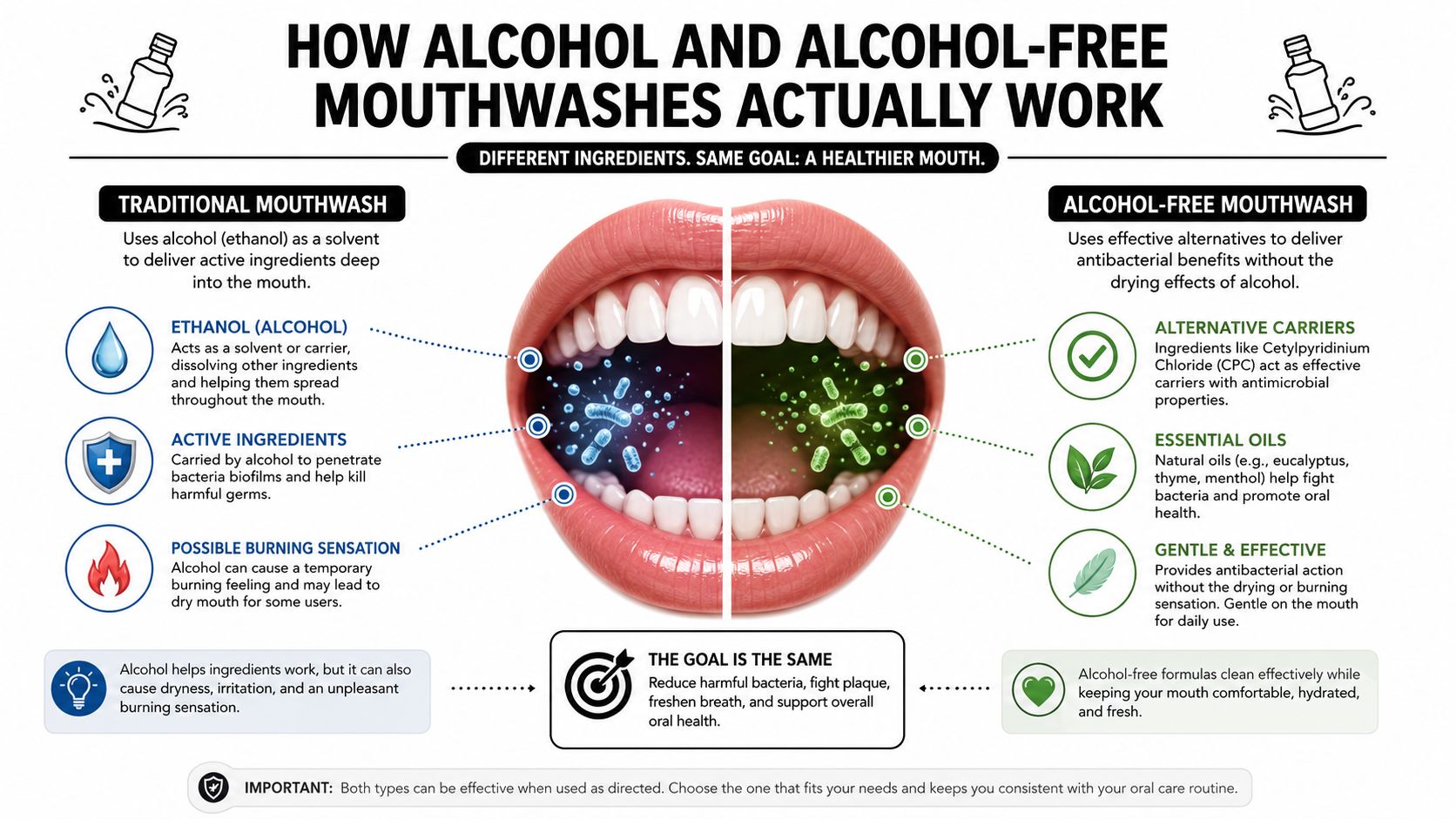
Traditional mouthwash often uses ethanol as a solvent and carrier. In plain language, that means it helps dissolve ingredients and move them around the mouth. It can also create the familiar burning sensation, which many patients mistake for stronger antiseptic action.
Alcohol-free versions use different carriers and active ingredients to do the same job without that sting. CPC, chlorhexidine, essential oils, and fluoride can all play a role depending on the formula. The label matters because the active ingredient is what targets bacteria, plaque, and gingival inflammation.
The question is not whether the bottle contains alcohol. The question is what active ingredient is doing the work, and whether that ingredient fits the mouth in front of you. A rinse for a dry, irritated mouth should be judged differently from one used for short-term post-procedure care or a dentist-directed treatment plan.
What to look at on the label
Patients often scan the front of the bottle and stop there. That misses the important part. The active ingredient panel gives the complete picture.
- CPC: often used for everyday antibacterial support.
- Fluoride: useful when cavity prevention is part of the goal.
- Chlorhexidine: usually a short-term, dentist-directed rinse.
- Essential oils: can help, but the formula details matter.
The alcohol-free label matters most when the mouth is already irritated. That is especially true for patients with sensitivity, dryness, or a recent procedure. In a Miami office, that comes up often after whitening, gum care, or restorative treatment.
A patient does not need a chemistry degree to make the right choice. The practical question is simple, what problem is the rinse supposed to solve, and which ingredient is solving it?
What the Clinical Evidence Actually Shows
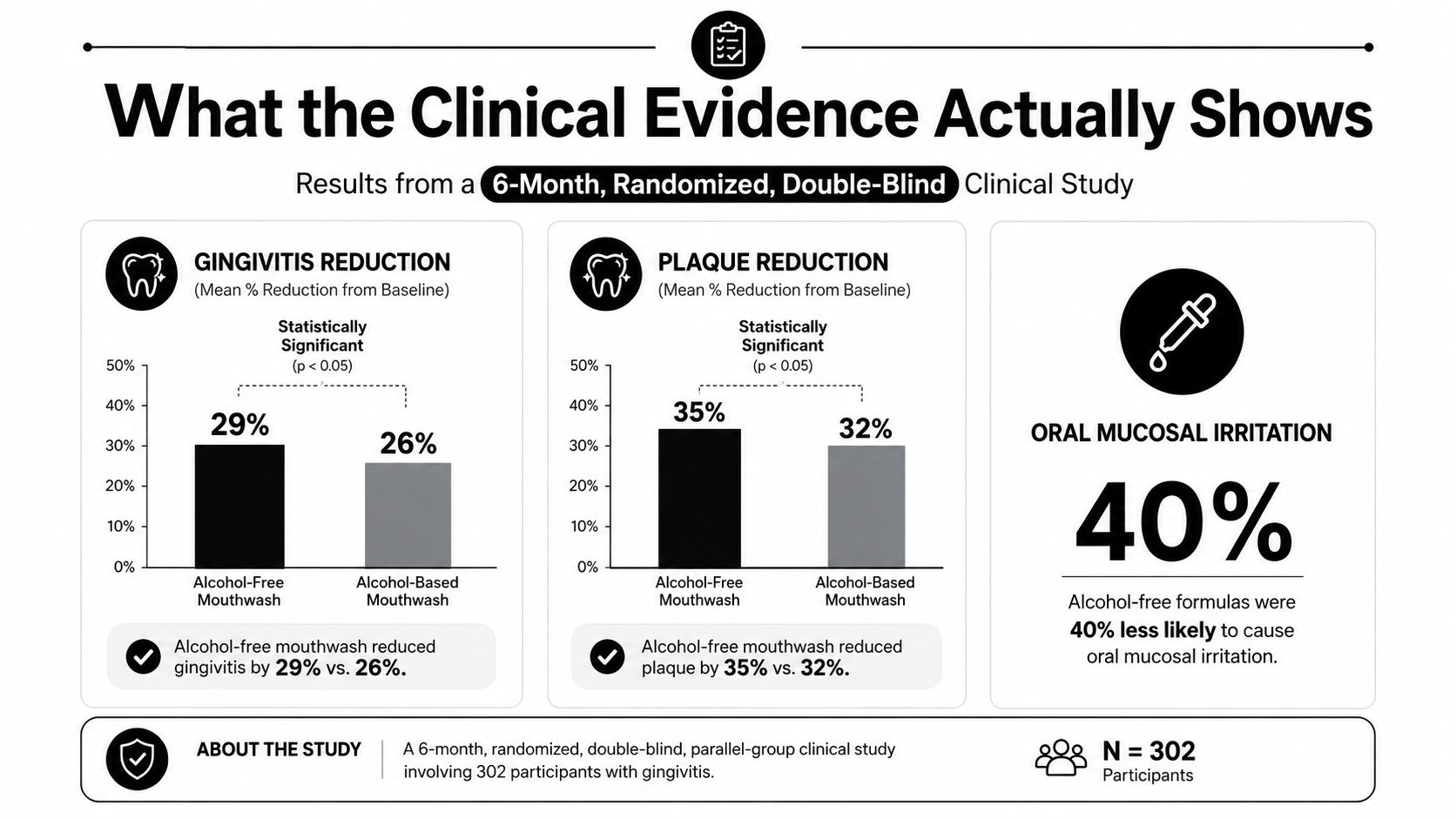
A six-month double-blind study in adults in San Jose, Costa Rica found that an alcohol-free rinse with 0.075% CPC plus 0.05% sodium fluoride reduced plaque and gingivitis at both 3 and 6 months, and it did better than a sodium fluoride control rinse. That matters because it shows an alcohol-free formula can do real work on its own, not just feel gentler in the mouth PubMed.
For patients, that is the part that counts. If the active ingredient is strong enough, the absence of alcohol does not make the rinse less useful.
When alcohol-free matches alcohol-based performance
The broader research points in the same direction. In one clinical study measuring supragingival bacteria, an alcohol-free CPC rinse reduced plaque bacteria by 34.5% after a single use and 70.9% after 14 days, while the alcohol-based version showed similar reductions of 35.3% and 73.8% with no statistically significant difference between them at either time point PubMed.
Earlier controlled trials also found alcohol-free chlorhexidine rinses performed as well as alcohol-containing versions for plaque and gingival inflammation, with no differences in plaque, gingivitis, or papilla bleeding indexes PubMed. A 2009 review in the British Dental Journal concluded that the alcohol component adds little or no advantage in efficacy over alcohol-free competitors PubMed.
The takeaway is straightforward. The active antiseptic matters more than the alcohol carrier in many formulas.
Where the nuance matters
The evidence is not uniform across every rinse type. A 3-day plaque regrowth study found an essential-oil alcohol-free rinse was a weaker plaque inhibitor than the traditional alcohol-containing version, and a systematic review reported weaker plaque effects for alcohol-free essential-oil rinses in some non-brushing settings PMC.
That does not make alcohol-free a poor choice. It means the formula matters. A CPC rinse, a chlorhexidine rinse, and an essential-oil rinse are different products, even if the front label makes them look similar.
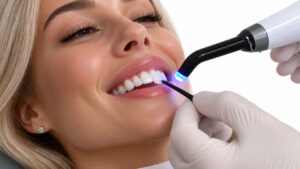
For patients healing after soft tissue treatment, the formula choice matters even more. If a rinse is being used alongside care such as laser therapy for gingivitis, a calmer mouth often makes it easier to stay consistent with the plan.
The practical way to read the research is to separate the label from the ingredient. Alcohol-free rinses can be clinically competitive, and in some formulas they perform just as well. In other formulas, the alcohol-based version still has an edge for plaque control.
Who Should Reach for Alcohol-Free First
Patients who feel dryness or sting
Alcohol-containing rinses commonly use ethanol and can leave the mouth feeling dry or burned, while alcohol-free mouthwash is described as targeting harmful bacteria without the same drying effect Valley Creek Dental Care. That makes alcohol-free a better starting point for patients with xerostomia, low saliva flow, or oral tissue sensitivity.
That includes people with diabetes, those recovering from radiation therapy, patients with Sjögren's syndrome, and anyone with a history of alcohol abuse. Those patients often need a rinse they'll keep using, not one they dread because it burns.
Patients after cosmetic or restorative care
Patients who want to protect veneers, whitening results, crowns, or bonding often do better with a rinse that doesn't add extra irritation. A whitening patient with sensitive gums usually doesn't need a stinging formula to keep the mouth clean. A patient healing around implants or after restorative work usually benefits more from comfort and consistency than from a harsh sensation.
The same logic applies to children and teens. Many younger patients tolerate an alcohol-free rinse better, and parents usually prefer a formula that feels easier to use every day. For long-term routines, comfort matters because compliance matters.
Sensitive mouths need a gentler default
The evidence around alcohol-free use in clinical and research settings supports it as a valid alternative, and ethanol-free and ethanol-containing mouthwashes have shown similar overall performance in oral microbiome sampling PMC. That does not make every alcohol-free bottle equal, but it does support the idea that alcohol-free is not a watered-down compromise.
For Miami patients, that often shows up after gum treatment or whitening visits. A rinse that doesn't sting is easier to keep using, and consistency is what helps the mouth stay calmer.
Learn more about supportive gum care in Miami
When Alcohol-Based Mouthwash Still Makes Sense
Alcohol-free is not automatically the best answer for every mouth and every goal. Some patients still do well with alcohol-based rinse, especially when a dentist recommends a specific short-term antiseptic plan after certain procedures or when a particular formula was tested as part of the original clinical product.
The formula matters more than the bottle label
A patient who needs a strong antiseptic rinse for a limited period may be given a product where alcohol is part of the tested formulation. That's different from buying a random bottle just because it feels intense. The same is true with some essential-oil rinses, where the alcohol-based version is part of the commonly recognized formulation.
There's also a practical point. Some patients prefer the flavor intensity and feel it helps them rinse longer. That doesn't make it medically superior, but it can improve adherence for certain users.
Safety concerns need context
Patients often ask about oral cancer risk. Major reviews and professional guidance have not shown a causal link at typical use levels, but the burning sensation and dryness are still real, and some studies have found greater cell damage with alcohol-containing rinses in cytological testing PubMed. In a 60-day evaluation, both alcohol-based and alcohol-free rinses were effective and safe at prescribed doses, yet the alcohol-containing rinse caused more cell damage in testing PubMed.
That creates a trade-off. Alcohol-based rinse can still be reasonable when a dentist wants that exact formula, but it is not the default best choice for every mouth.
A rinse should match the goal, the healing stage, and the patient's tolerance, not just the strongest sensation in the bottle.
How to Choose the Right Mouthwash for You
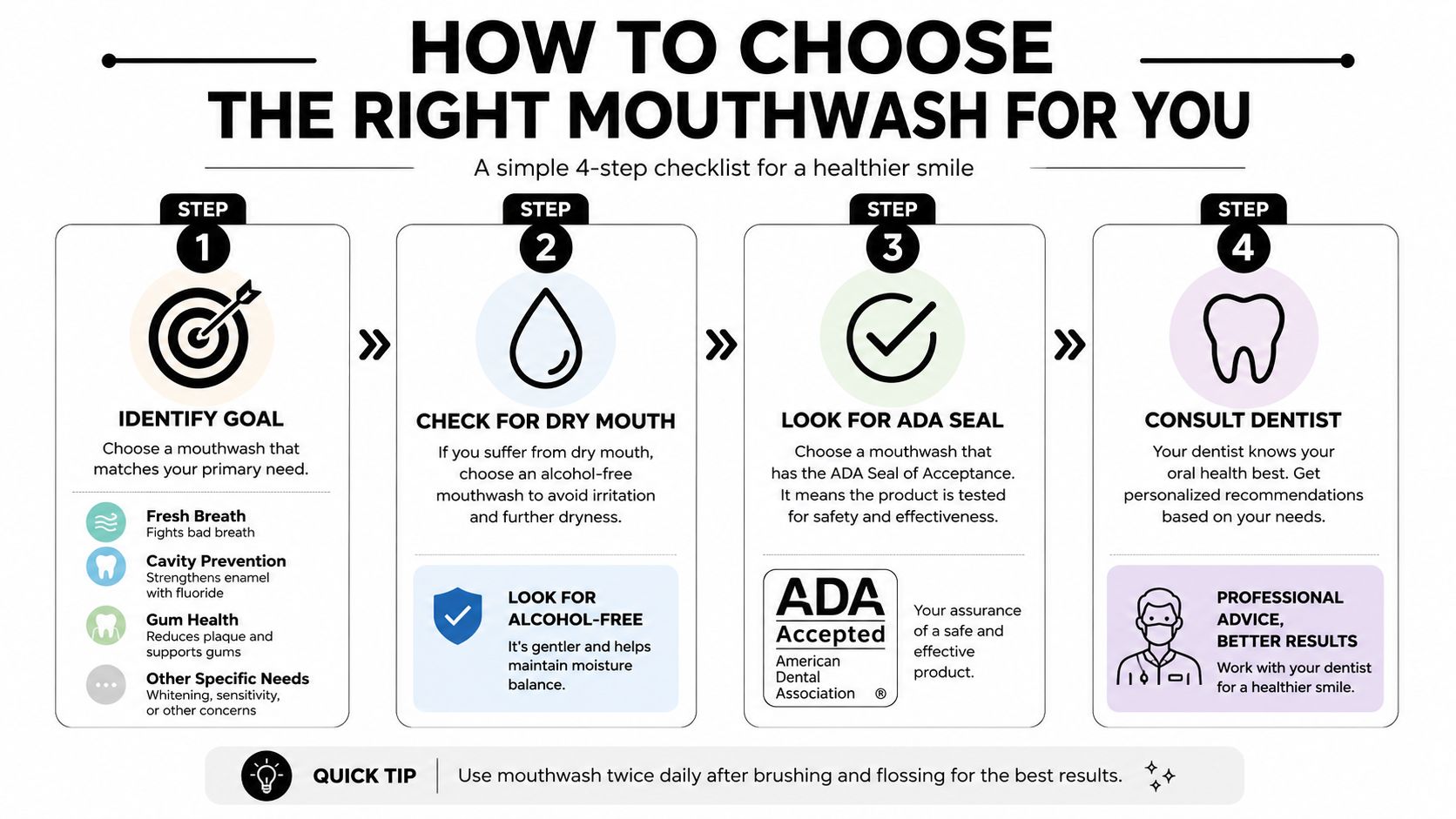
Start with the goal, then read the active ingredient
A patient should not start by asking, “Is alcohol-free mouthwash better? The better question is, “What am I trying to treat? Fresh breath, cavity prevention, plaque control, post-procedure care, and dry mouth relief are different jobs, and they don't all call for the same rinse.
A quick label check helps:
Screenshot checklist
- Pick the goal, fresh breath, cavity prevention, or gum support.
- Check whether dry mouth or sensitivity is part of the picture.
- Read the active ingredients, not just the front label.
- Ask a dentist before using chlorhexidine or a rinse after recent dental work.
Match the formula to the mouth
CPC fits many daily antibacterial routines. Fluoride fits cavity prevention. Chlorhexidine is usually a short-term prescription-style choice, not an everyday cosmetic rinse. An alcohol-free base is often the better setup when the mouth is sensitive or dry.
Patients with restorations, gum concerns, or recent treatment should be cautious about choosing only on price or flavor. A rinse that works well in one mouth can be the wrong fit in another. That is especially true after whitening or when a patient is trying to protect recent dental work.
For more guidance on cavity prevention and long-term oral health, see how to prevent cavities in Miami.
Ask before using it long term
If a patient has dry mouth, recent surgery, or ongoing oral irritation, a dentist should help choose the rinse. The right product can support daily hygiene, but the wrong one can make the mouth feel worse. That's why ingredient review beats brand loyalty every time.
Talk to a Miami Dentist About the Right Rinse for You
The clearest answer is this, active ingredients matter more than the alcohol label, and for most Miami patients with veneers, implants, dry mouth, or sensitivity, alcohol-free is the smarter everyday default. Alcohol-based rinse still has a place, but it should be chosen for a reason, not because the bottle burns.
A patient in Downtown Miami, Midtown Miami, or Hallandale Beach can get a more precise recommendation during a cleaning, new patient exam, or follow-up visit. The right rinse should fit the mouth that's using it, especially if there has been whitening, restorative work, or a history of irritation.
The best mouthwash is the one that treats the right problem and doesn't make the mouth harder to live with.
If you're trying to decide between alcohol-free and alcohol-based mouthwash, Ultra Smile DentalSpa can help you choose the right option for your gums, teeth, and sensitivity level. Schedule a visit for a cleaning, exam, or personalized consultation at Ultra Smile DentalSpa, and get a recommendation that fits your mouth instead of a one-size-fits-all label.