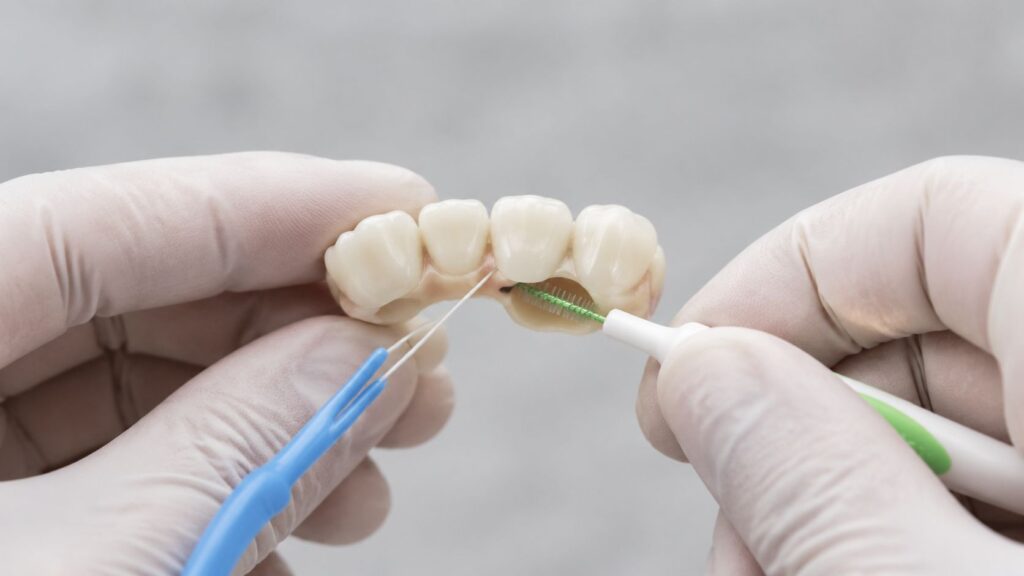
A new dental bridge can feel so natural that it's easy to assume regular brushing is all it needs. Then food collects beneath the false tooth, floss won't pass through, or the gum around a crown starts bleeding. Patients searching for a dentist near me or a dentist in Miami, FL often want a simple answer: what belongs under the bridge, how often it should be cleaned, and when a cleaning problem needs professional care.
A fixed bridge replaces missing teeth with one or more false teeth, called pontics, attached to crowns or supported by implants. The routine is manageable once the right tools and motion become familiar. The following guide explains how to clean a dental bridge, how traditional and implant-supported bridges differ, and when Ultra Smile DentalSpa in Miami can help.
Table of Contents
- Why Dental Bridges Need a Special Cleaning Routine
- The Daily Cleaning Sequence That Actually Works
- Choosing the Right Tools for the Spaces Under Your Bridge
- How Often to Clean and When to See Your Dentist
- Warning Signs That Cleaning Is Not Enough
- Cleaning an Implant-Supported Bridge the Right Way
- Keeping Your Bridge Healthy in Miami
Why Dental Bridges Need a Special Cleaning Routine
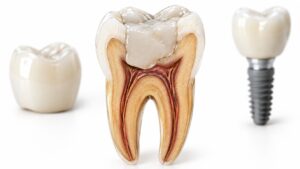
After a bridge is placed, many patients brush the visible teeth and assume the job is complete. A fixed bridge has a different shape from natural teeth, though. One or more false teeth are joined to crowns that anchor onto neighboring teeth, known as abutments, or onto dental implants.
A toothbrush reaches the chewing surface and the outer walls of the crowns. It usually can't reach the underside of the pontic or the narrow seam where each crown meets the gum. Those areas can hold food and bacterial film, which may irritate the tissue, contribute to decay beneath a crown, or affect the bridge's support.
Practical rule: A bridge needs daily prosthetic maintenance, not just ordinary brushing.
The need for targeted cleaning is supported by long-term clinical evidence. In a 15-year clinical and radiographic follow-up study, plaque levels on crowned teeth didn't differ from control teeth over time, but gingival inflammation scores of 2 and 3 appeared more often on crowned teeth during the observation period. The findings, reported in the PubMed record for the long-term bridge follow-up study, show why a bridge can look reasonably clean while the supporting gum still needs attention.
A separate classic study found that daily dental floss produced a significantly lower number of microorganisms per mm² beneath bridge pontics than other hygiene measures. Another clinical report found only 7 pontics free of plaque on the gingival surface, as summarized in the PubMed record on pontic hygiene. Standard brushing alone generally can't clean this hidden geometry.
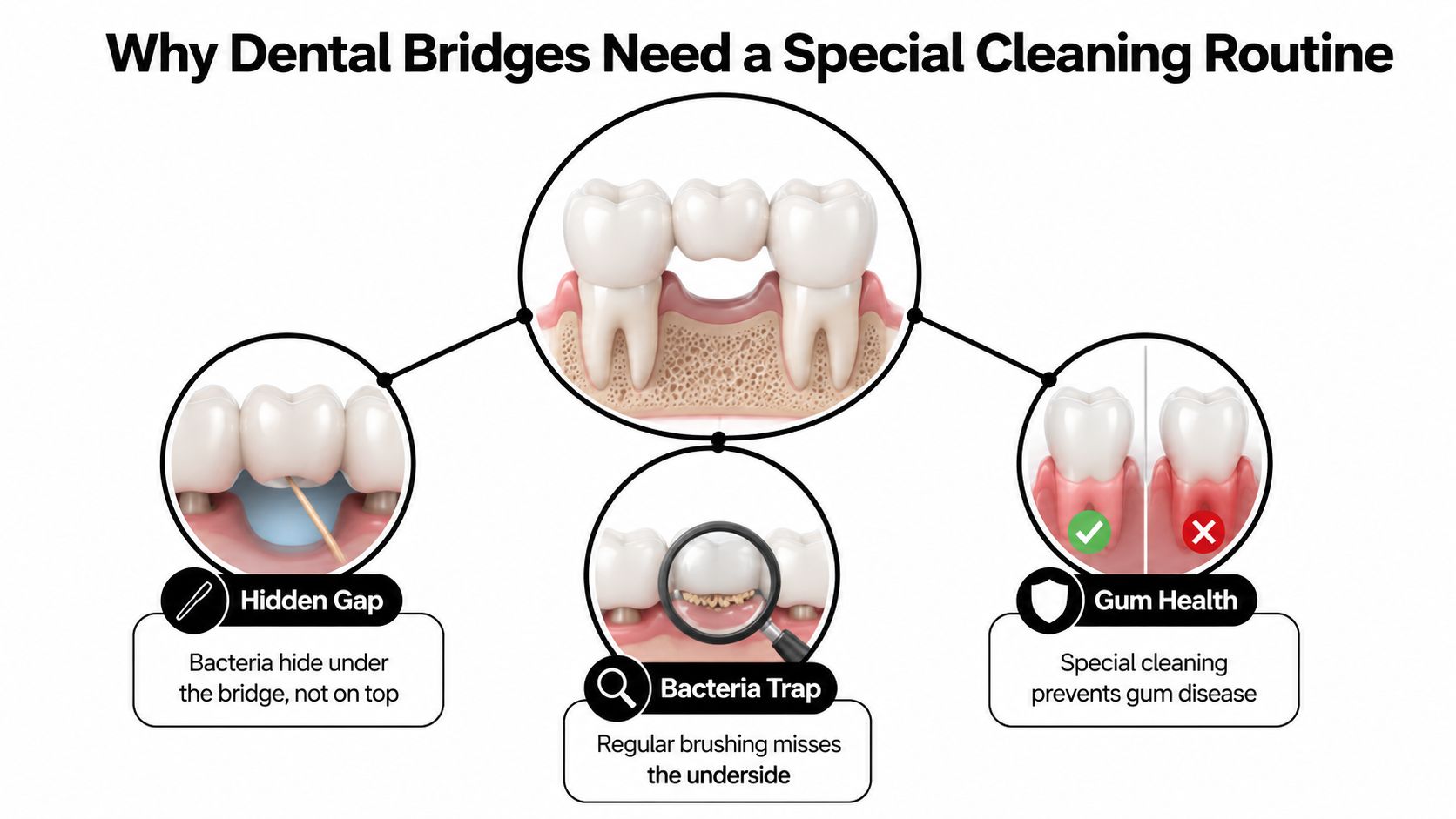
The essential tools are a floss threader or super floss, an appropriately sized interdental brush, and, for some patients, a water flosser. Each tool reaches a different surface. The objective isn't to scrub harder. It's to reach beneath the pontic and along the crown margins gently every day.
The Daily Cleaning Sequence That Actually Works
A fixed bridge should be cleaned twice daily, along with the rest of the mouth. A practical sequence starts with loosening debris, then cleaning the crown margins, then reaching beneath the pontic. The complete routine can fit into a few minutes when the tools are kept together.
Start at the gum line
Rinse with warm water or an alcohol-free mouthwash to loosen food particles. Then use a soft-bristled manual or electric toothbrush, angled toward the gum line where the bridge meets the tissue. Short, gentle strokes should sweep across each crown margin without pressing the bristles into the gums.
The oral hygiene guidance for fixed bridges recommends brushing twice daily and paying attention to the margins. A soft brush protects the tissue while still removing plaque from the accessible surfaces.
Pass beneath the pontic
Once the outside and gum line are clean, guide a floss threader under the false tooth. A super floss product can do the same job with its stiff end. Pull the floss through gently, then move it back and forth beneath the pontic to wipe the underside. The motion should be controlled and light, similar to polishing a narrow surface, rather than snapping the floss against the gum.
Next, curve the floss around each abutment tooth and clean the sides as with natural teeth. This step matters because the supporting teeth may be covered by crowns, but the gum margins around them still collect plaque.
Finish the hard-to-reach areas
Use an interdental brush under the pontic if the space is large enough. The brush should pass with light resistance only. If it must be forced, it's too large, and a smaller size is needed. A water flosser can then flush loose residue from beneath the bridge and around the margins. Finish by cleaning the tongue and rinsing.
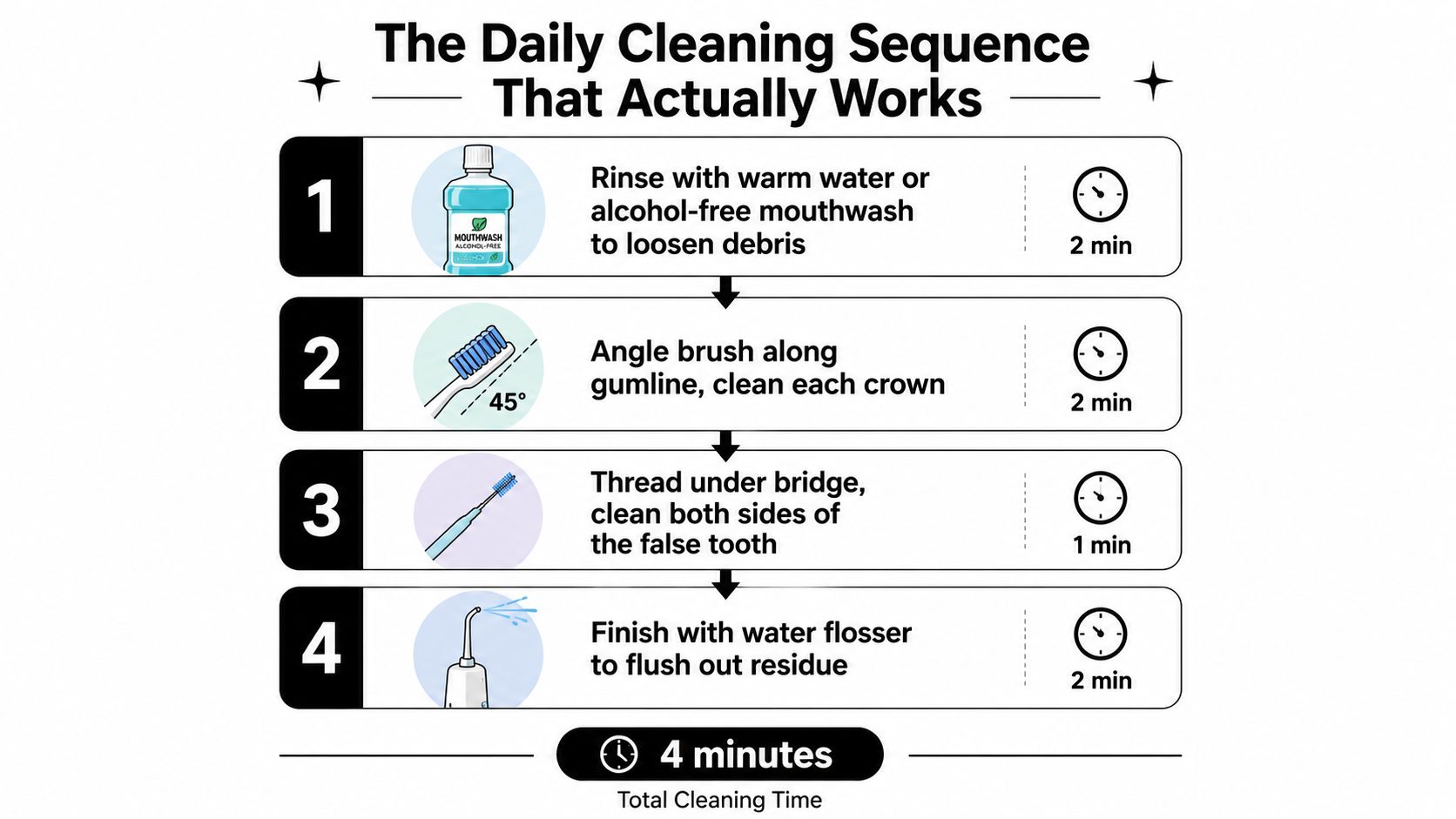
The American Dental Association's guidance on floss includes floss threaders among products used for interdental cleaning. The right sequence makes the underside accessible without pulling on the bridge.
Choosing the Right Tools for the Spaces Under Your Bridge
No single tool suits every bridge. The best choice depends on the width beneath the pontic, the shape of the margins, and the patient's hand control.
| Tool | What It Reaches | Best For | Limitation |
|---|---|---|---|
| Floss threader | Guides regular floss beneath a fixed pontic | Tight areas and patients who can control a thin strand | Threading can be awkward |
| Super floss | Uses a stiff end and a spongy section to clean beneath the bridge | Wider spaces and patients who want one continuous product | The spongy section can fray or catch |
| Interdental brush | Sweeps beneath the pontic and between teeth | Patients who prefer a quick mechanical cleaning method | The brush must fit without forcing |
| Water flosser | Directs a stream of water beneath the bridge and around crowns | Patients who find threading difficult or have sensitive tissue | It should support, not replace, mechanical cleaning |
A floss threader works well when the bridge underside is narrow. The loop carries ordinary floss beneath the restoration, where regular floss can't pass on its own. Super floss offers a similar route but combines a stiff end, a spongy middle, and standard floss on one strand.
An interdental brush can be easier for patients with limited dexterity. The NHS advises selecting a brush appropriate for the gap, trying a smaller size if it feels tight, and never forcing it into place, as explained in NHS guidance on interdental brushes. Evidence also indicates that interdental brushes can reach plaque up to 2 to 2.5 mm below the gingival margin, according to the PubMed record on interdental brush access.
A water flosser, defined by Mayo Clinic as a device that directs a stream of water at the teeth, can feel easier for patients who struggle with floss. The Mayo Clinic explanation of water flossers and dental floss supports using it as a recognized oral-cleaning option. The water stream can flush debris, but it doesn't replace the wiping action needed to remove film from some surfaces.
How Often to Clean and When to See Your Dentist
The daily schedule is straightforward. Brush the bridge and natural teeth twice daily, and clean beneath the pontic at least once each day with a floss threader, super floss, or a correctly fitted interdental brush. A water flosser may be added when it improves comfort or helps flush areas that are difficult to access.
Once a week, inspect the bridge in a mirror. Look for food that remains trapped, redness around the crowns, or an unusual smell. Disposable interdental tools should be replaced according to their condition and the product's directions. An antibacterial, non-abrasive mouth rinse should be used only when a dentist recommends it, since rinsing doesn't replace brushing or cleaning beneath the pontic.
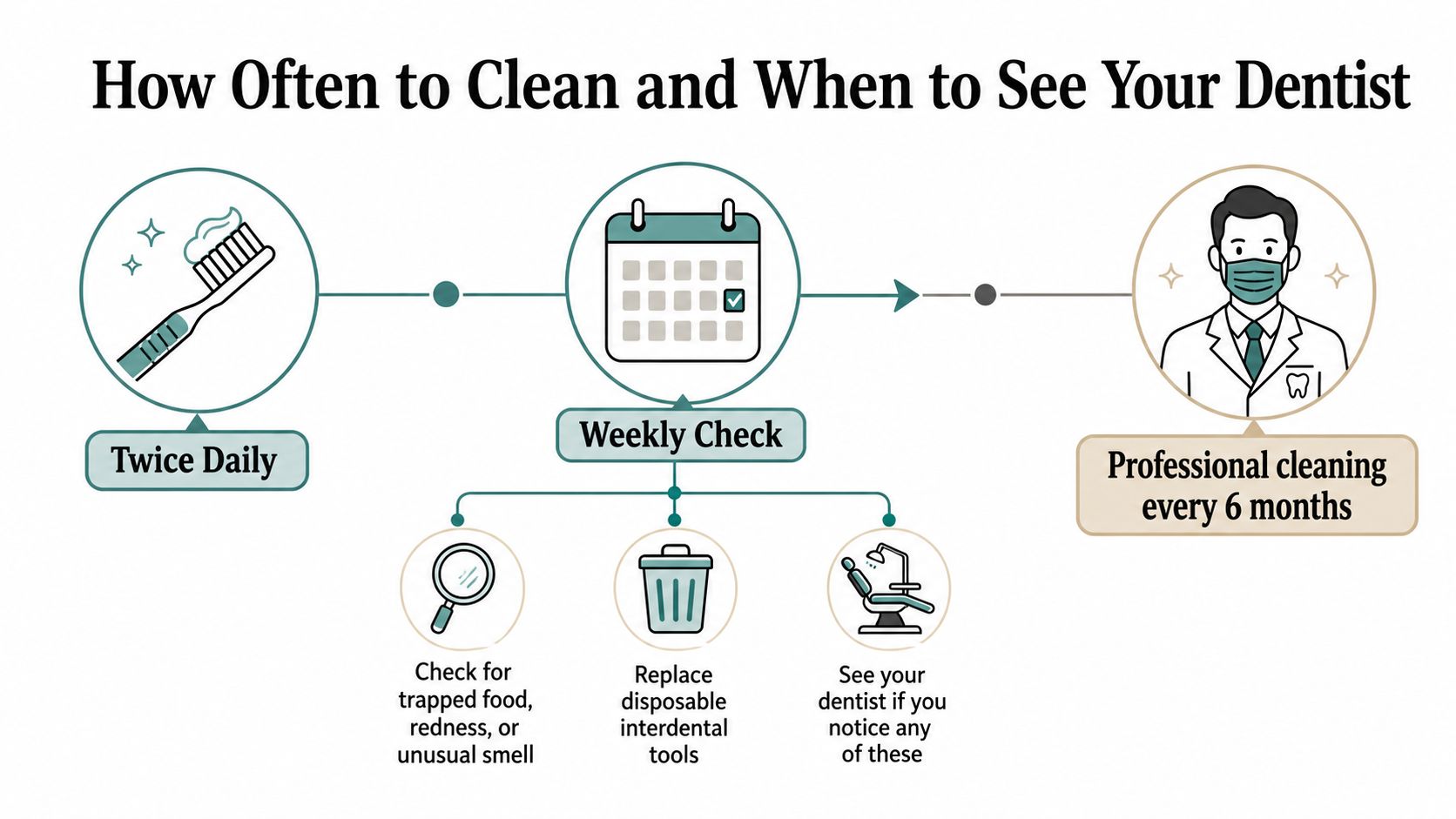
Professional care remains necessary even when home cleaning feels consistent. Many patients benefit from dental examinations and cleanings every six months, when a dentist can remove hardened deposits, evaluate the bridge's fit, examine the supporting teeth or implants, and identify changes in the gums. Patients with periodontal disease, diabetes, dry mouth, or recurring bridge problems may be advised to attend every three to four months.
Ultra Smile DentalSpa provides dental cleaning that includes plaque and tartar removal, an irrigation solution treatment, and fluoride treatment. Patients can also ask for dental exams, dental x-rays, or a new patient exam when a bridge has never been evaluated at the practice.
A toothbrush and floss can control daily buildup, but they can't remove every hardened deposit around a crown margin or beneath a pontic.
A loose bridge, rough edge, or persistent pain warrants an earlier call. Bleeding, swelling, pus, or an odor that doesn't improve after several days should also be assessed rather than managed by brushing more aggressively.
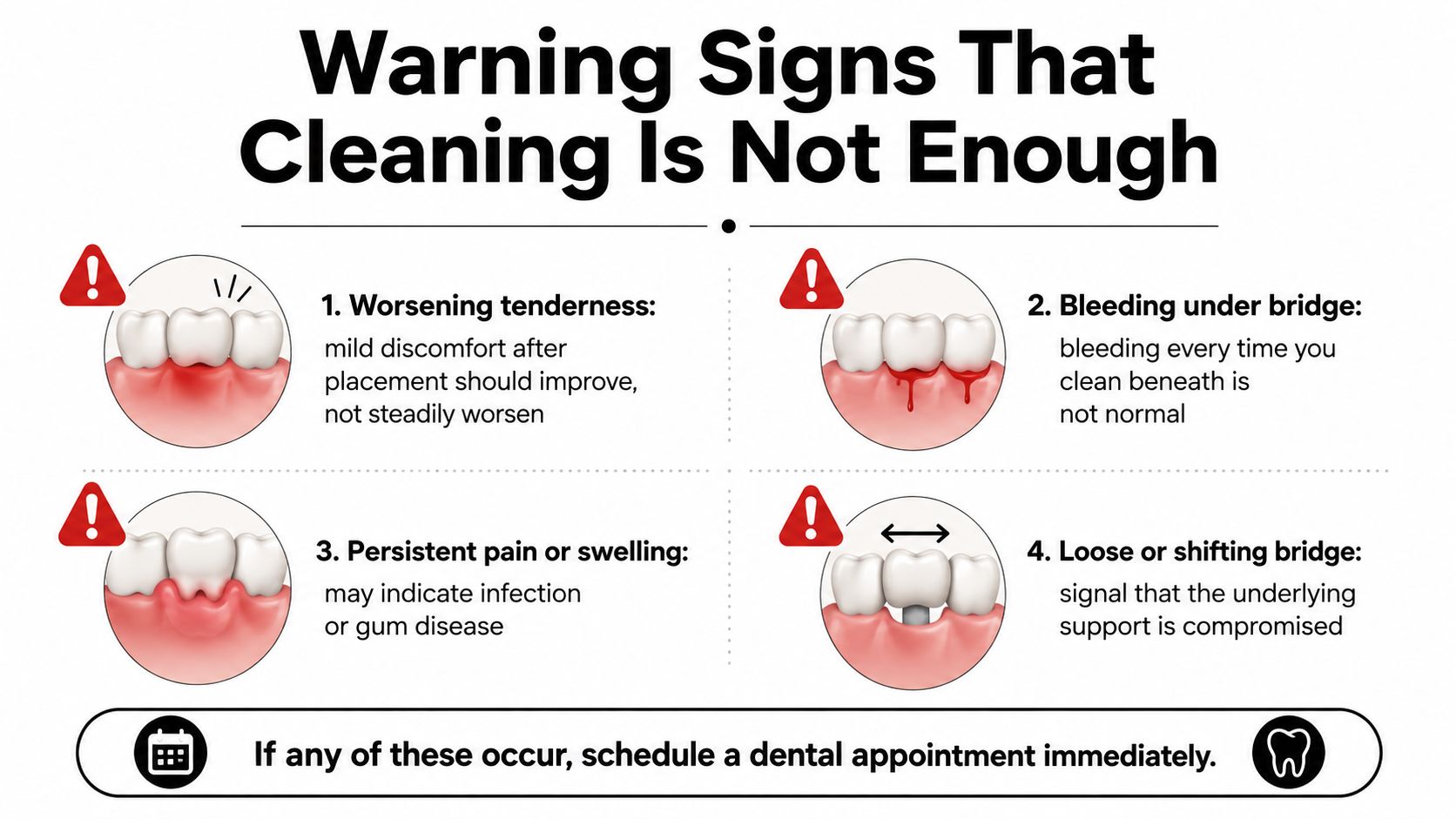
Warning Signs That Cleaning Is Not Enough
Some tenderness after a new bridge can occur, but it should gradually improve. Bleeding every time the area is cleaned, especially when it continues beyond a week, is a reason to contact a dentist rather than a sign that the gums need harder scrubbing.
Persistent bad breath or a bad taste can accompany gum inflammation, decay near a crown margin, or another problem around a supporting tooth. Red or swollen gums, pus, increasing pain, sensitivity, or tissue pulling away from an abutment also deserve prompt evaluation.
Changes in the bridge matter
A bridge that rocks, lifts, or feels different when biting may have a support or fit problem. Food repeatedly collecting beneath the pontic, or an interdental brush that suddenly no longer fits as it did, can signal a change in the restoration or surrounding tissue.
- Worsening tenderness: Mild discomfort after placement should improve, not steadily intensify.
- Persistent odor or swelling: Don't keep scrubbing aggressively, because irritated tissue can become more inflamed.
- Loose movement: Never try to recement a bridge at home.
- Drainage or severe symptoms: Arrange dental care promptly, especially if an infection may be present.
A gentle warm salt-water rinse can provide temporary comfort while an appointment is arranged. Aspirin shouldn't be placed directly on the gum. Patients who notice a warning sign can review dental bridge repair services and contact the dental office for an assessment.
Early evaluation helps protect the abutment teeth, gums, and any underlying implants. A cleaning failure isn't always a hygiene failure. It may be a tissue, decay, fit, or support problem.
Cleaning an Implant-Supported Bridge the Right Way
An implant-supported bridge uses implants rather than neighboring natural teeth as its primary support. The cleaning routine remains steady, but the tissue around each implant needs a gentle approach. Brushing too forcefully or forcing a brush beneath the restoration can irritate the area.
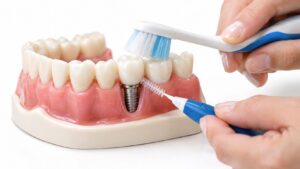
Use a soft-bristled manual or electric toothbrush twice daily. Angle the bristles toward the gum line and bridge margins, then clean beneath the pontic with super floss, a floss threader, or a properly sized interdental brush. The tool should feel snug, never painful, and should never be pushed through resistance.
A water flosser is often comfortable around an implant-supported bridge because the pulsating stream can reach beneath the pontic and around implant posts without requiring repeated threading. Start at a low setting, lean over the sink, and trace the gum line and underside of the bridge. Water flossers can improve access, but mechanical cleaning remains important for surfaces that need wiping.
Protect the restoration and surrounding tissue
A non-abrasive, implant-safe toothpaste can help avoid scratching exposed prosthetic surfaces. Tobacco can stain the pontic and irritate the gum margin, while hard foods can place damaging force on the bridge. Metal tools shouldn't be used beneath the restoration because they may scratch the prosthetic surface or injure the tissue.
Bleeding that persists, tenderness, swelling, pus, recession, a loose bridge, or an implant that feels mobile requires professional assessment. These signs may reflect peri-implant mucositis or peri-implantitis, and either condition can progress without obvious pain. A dentist can evaluate implant stability and remove deposits without damaging the restoration or nearby tissue.
Patients preparing for or recovering from implant treatment can review the dental implant healing timeline with the dental team. Professional examinations and cleanings every six months, or more often when recommended, support long-term monitoring.
Keeping Your Bridge Healthy in Miami
Bridge maintenance continues throughout the year. Miami's active schedule, frequent restaurant meals, and warm, humid conditions can make it useful to keep a small oral-care kit in a bag or car. A soft brush, non-abrasive toothpaste, floss threader, and the recommended interdental tool allow patients to manage debris after meals instead of waiting until bedtime.
Smoking can stain the pontic and irritate the gum margin. Patients should also use the exact brush and interdental size recommended by the hygienist, because a tool that is too large can injure tissue while one that is too small may not clean the surface effectively. A water flosser can add convenience for patients who find threading difficult.
Ultra Smile DentalSpa serves patients in Downtown Miami, Midtown Miami, and Hallandale Beach with general, restorative, cosmetic, and implant dentistry. Relevant services include dental cleanings and exams, crowns and bridges, same-day crowns created with CEREC technology, dental implants, bone grafts, root canals, teeth whitening, cosmetic dentistry, and wisdom teeth extraction. Patients with urgent symptoms can also ask about emergency dental services, while those considering replacement options can discuss dental implants or restorative dentistry.
At a professional bridge check, patients can ask the team to assess the crown margins, pontic hygiene, and soft tissue around the abutments. The practice's calming setting, bilingual staff, transparent treatment planning, and comfort-focused amenities can help patients who feel anxious about dental care. A new patient exam may include an evaluation of the bridge, cleaning needs, gum health, and whether dental x-rays are appropriate.
Patients in Miami who need help with bridge cleaning, bridge repairs, crowns, implants, or routine cleaning and exams can schedule care with Ultra Smile DentalSpa. The team can evaluate the bridge, demonstrate the right flossing or interdental technique, and create a maintenance plan that supports comfortable daily care.