For most uncomplicated dental implant cases, noticeable pain peaks in the first 24 to 72 hours and largely fades within 3 to 7 days, with mild tenderness sometimes lingering up to 10 days. That usually means the hardest part is short, predictable, and very different from the fear many patients feel while waiting for numbness to wear off.
A lot of people searching for a dentist in Miami, FL or dental implants near me are doing it from a couch, a parking lot, or the edge of the bed late at night, wondering whether what they're feeling is normal. The biggest source of anxiety usually isn't the implant itself. It's the uncertainty. If the pain is expected, most patients can handle it. If the pain feels random, every twinge feels alarming.
That's why a clear timeline matters. A routine dental implant recovery usually follows a pattern. Soreness builds after the anesthetic fades, reaches its strongest point early, then steadily settles down. Trouble tends to look different. It gets worse instead of better, or it improves and then comes back.
Patients looking for a dentist near me, an emergency dentist, or help after tooth extraction and implant treatment often need more than a general answer. They need to know what the first day feels like, what day three should look like, and when a quiet ache stops being routine healing and starts becoming something worth checking.
Table of Contents
- A Reassuring Start for Anxious Miami Patients
- What Happens During a Dental Implant Procedure
- A Day by Day Pain Timeline After Surgery
- Factors That Can Lengthen or Shorten Your Pain
- Normal Healing vs Pain You Should Not Ignore
- Practical Tips for Managing Implant Pain at Home
- Red Flags, Follow Up Visits, and Your Next Step
A Reassuring Start for Anxious Miami Patients
Sitting in the car after implant surgery can feel harder than the surgery itself. The mouth is numb, the instructions are in a folder, and the mind starts racing ahead to the evening. Most anxious patients aren't asking whether any soreness will happen. They're asking how bad it will get, how long it will last, and whether they'll know if something is off.
For a routine implant, the answer is usually reassuring. Pain after dental implant surgery is commonly strongest during the first day and then drops quickly. A 2021 peer-reviewed review of postoperative pain after dental implantation found that pain was highest at 24 hours and then declined quickly, with pain “basically disappeared by 72 hours in most patients. That same review found pain in most patients was mild, which helps separate normal healing from pain that keeps building instead of settling down (peer-reviewed postoperative implant pain review).
Why the first few days feel bigger than they are
The early recovery window feels intense because it's compressed. The body responds quickly to a small surgical injury in the gum and bone, then just as quickly starts calming that response down. That's why the phrase how long does dental implant pain last has a better answer than many patients expect. In uncomplicated cases, it isn't an open-ended ordeal. It's a short healing arc.
Practical rule: Pain that follows the expected curve usually fades day by day. Pain that changes direction and starts increasing deserves attention.
A lot of stress also comes from not knowing how to prepare. Helpful planning before surgery often includes reviewing anesthesia, discussing sedation preferences, filling medications in advance, and setting up soft foods, ice packs, and pillows before the patient gets home. Patients who want a simple pre-op checklist can review how to prepare for oral surgery.
Why follow-up matters
Good implant care doesn't end when the implant is placed. Follow-up helps confirm that the pain pattern matches the healing pattern. A call or visit after the first day can catch pain that's accelerating too soon. A second check later in the first week helps confirm that soreness is fading instead of lingering.
That's especially important for anyone also considering broader care such as restorative dentistry, cleaning and exams, new patient exams, or even a cosmetic dentist near me after implant treatment is complete. Comfort, function, and long-term healing are all connected.
What Happens During a Dental Implant Procedure
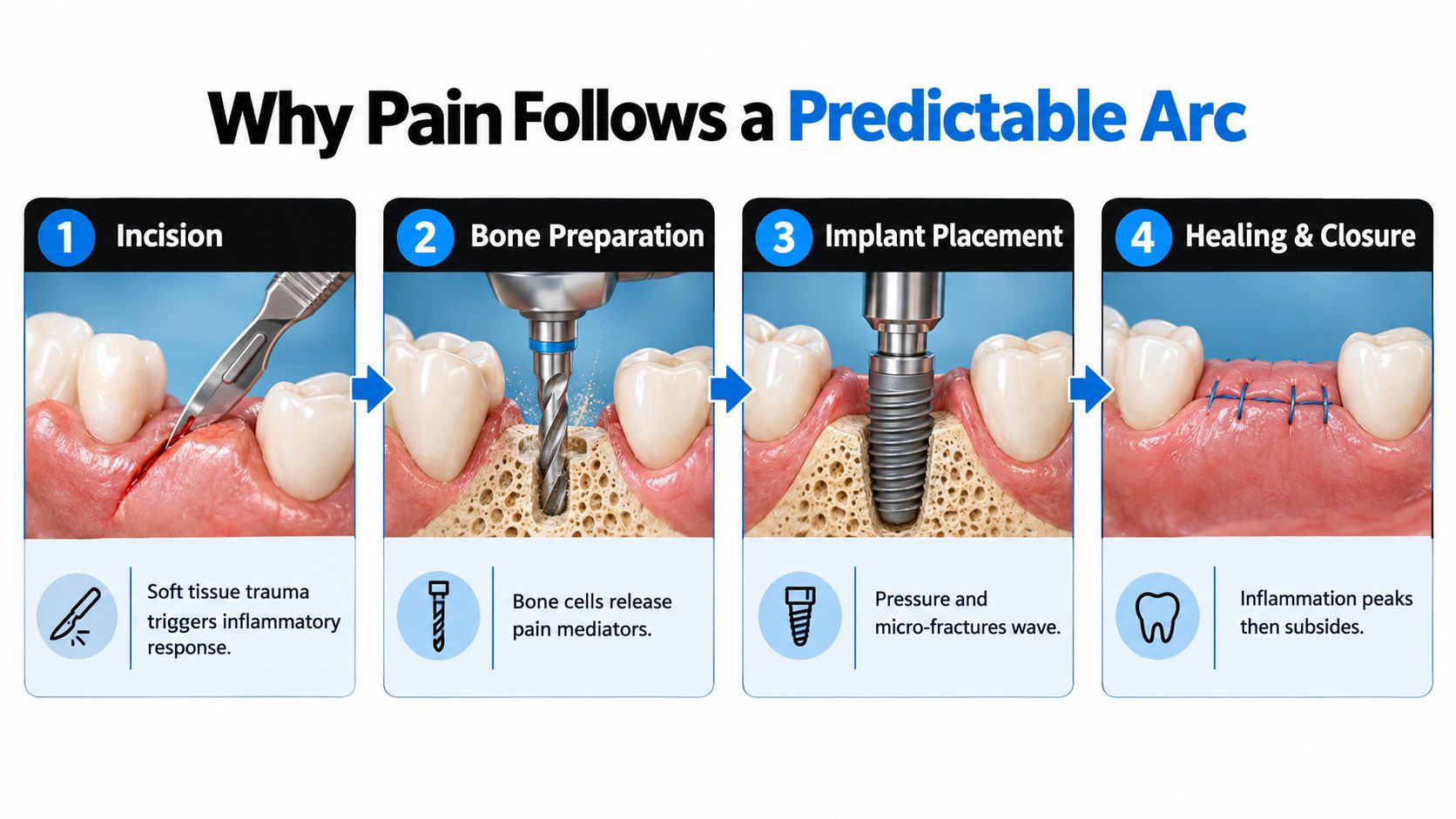
Postoperative soreness makes more sense once the procedure is broken down into parts. Implant pain doesn't appear randomly. Each step creates a specific type of tissue irritation, and together those steps produce the familiar pattern of pressure, throbbing, swelling, and tightness.
Step one and step two
The procedure usually begins with a small incision in the gum. That soft tissue opening is necessary so the dentist can access the bone, but it also creates the surface soreness patients often notice first. This part tends to feel tender or stinging once the numbness fades.
Next comes preparation of the implant site in the jawbone. A series of precise instruments shapes the opening where the implant will sit. Patients don't feel this during treatment because of anesthesia, but afterward this is often what creates the deeper ache. Bone doesn't have the same surface sensitivity as gum tissue, so the sensation is more commonly described as pressure or throbbing than a cut-like pain.
Step three and step four
The titanium implant is then placed into that prepared site. The implant itself has no nerve sensation, but the surrounding bone and soft tissue react to the mechanical pressure of placement. That reaction is part of why discomfort often feels “deep during the first couple of days.
Finally, the area is closed with sutures. Sutures can create a pulling or tight sensation near the gumline, especially when talking, smiling, or stretching the cheek. This doesn't usually mean anything is wrong. It's the tissue edges being held together so they can heal.
The body's response is predictable. First comes inflammation, then tissue repair, then progressive quieting of the area.
When recovery really starts
Many patients think recovery starts when they leave the chair. In practice, the true pain clock usually starts when the anesthetic wears off. That often happens a few hours later, which is why some patients feel surprisingly comfortable at first and then more sore by evening.
This is also why early pain control matters. Taking recommended medication on schedule before soreness ramps up tends to work better than waiting until the area is already throbbing. Patients often underestimate this part because they leave the office feeling numb and stable. The more accurate expectation is that the first real recovery sensations often begin after that numbness fades.
A Day by Day Pain Timeline After Surgery
Knowing the pattern day by day makes recovery feel much less mysterious. For most patients, discomfort follows a short curve rather than a chaotic one.
A practical clinical summary notes that dental implant pain usually lasts about 3 to 5 days, pain medicine is often needed for only 1 to 2 days, and some discomfort can extend to 7 to 10 days before patients feel largely back to normal. That same summary advises contacting a dentist if pain persists beyond 5 days or discomfort lasts more than 10 days (clinical summary of implant pain duration).
Early patient-reported outcomes show the same general pattern. In one cross-sectional study, 41.3% of patients reported discomfort lasting under 1 day, 67.8% under 3 days, 85.8% under 7 days, and all patients under 14 days (patient-reported implant discomfort duration study).
A visual pain curve can help anchor those numbers.
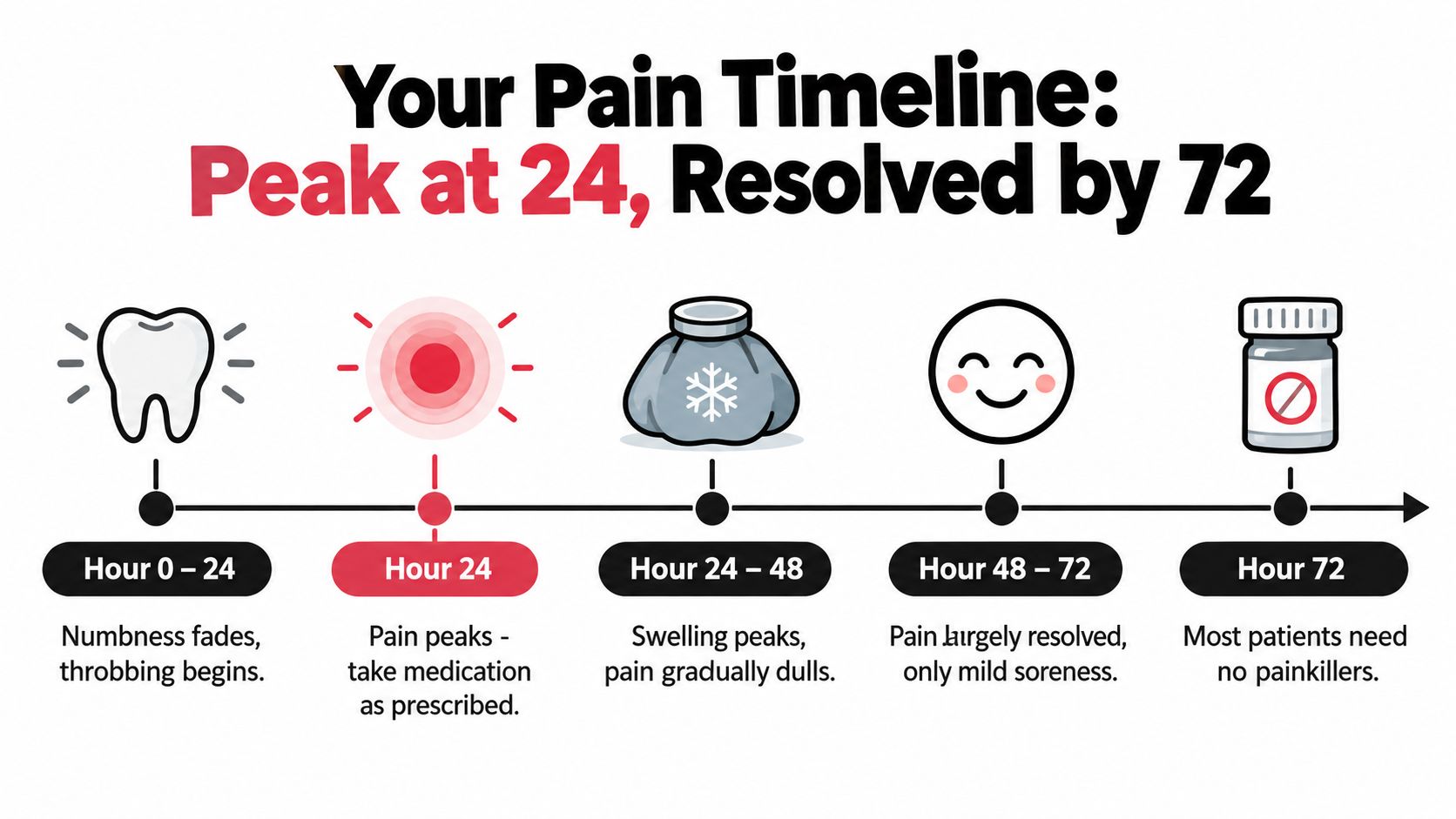
Hours 0 through 24
At first, the mouth may still feel numb and deceptively comfortable. As that fades, soreness builds. The cheek may feel full, the jaw may feel tired, and the gum can become tender. This is the phase when cold therapy, rest, and staying ahead of medication matter most.
Soft foods are usually easiest here. Yogurt, smoothies eaten without a straw, applesauce, and mashed avocado are common choices because they don't force the area to work.
Hours 24 through 72
This is the peak pain window in most uncomplicated cases. A 2021 analysis found pain highest at 24 hours, then dropping quickly, with pain largely gone by 72 hours in most patients, as noted earlier in the article. Swelling often feels most noticeable during this same general window, and pressure when bending over or lying flat can make the area seem more sensitive.
Patients often do best sleeping with the head raised and avoiding chewing anywhere near the surgical side. Gentle routines help. Strenuous activity usually doesn't.
A short video can make that timeline easier to picture in real life.
Days 4 through 14 and beyond
By the second half of the first week, sharper soreness usually changes into dull tenderness. Many patients can function normally, but the area still reminds them it's healing if they yawn widely, chew nearby, or brush too firmly.
Around the second week, lingering sensitivity is often tied more to the gum tissue and sutures than to active surgical pain. Deeper healing continues after that. Patients who want a fuller recovery roadmap can review the dental implant healing timeline.
Pain that steadily shrinks is typical. Pain that disappears and then returns is a different question.
Beyond the first month, spontaneous pain generally isn't expected in a routine case. If a site starts hurting again after it had already settled down, that shifts concern away from normal soreness and toward a healing problem, bite pressure, or inflammation around the implant.
Factors That Can Lengthen or Shorten Your Pain
Not every implant recovery feels the same. Two people can have healthy outcomes and still have very different first weeks. The biggest reason is that pain comes from both the procedure itself and the body's healing response.
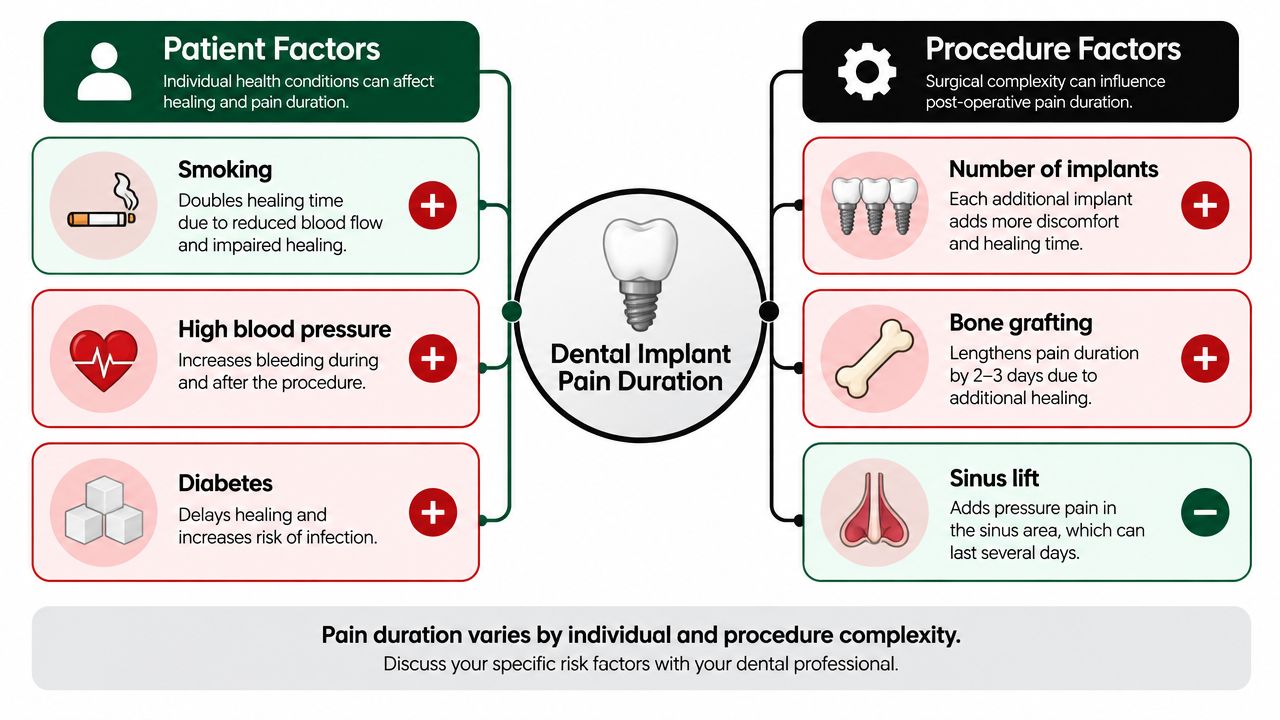
Procedure-related factors
A single implant in an area with healthy bone often feels simpler to recover from than a more involved case. If an implant is placed right after a tooth extraction, the tissues may already be inflamed before the implant even goes in. If bone grafting or sinus work is added, there's more healing for the body to do.
Procedure-related factors that commonly shape discomfort include:
- Number of implants placed: More sites can mean more soreness because more tissue has been manipulated.
- Immediate placement after extraction: An extraction-and-implant visit can feel more involved than implant placement alone.
- Bone grafting or sinus procedures: Additional surgical steps often extend tenderness.
- Incision size and location: Some areas of the mouth are easier to keep still than others.
A patient comparing dental implants near me options should understand that the phrase “implant surgery covers a wide range of clinical situations. A front-tooth implant without grafting is not the same recovery as a larger restorative case.
Patient-related factors
Healing speed also depends on the person, not just the procedure. Smoking, uncontrolled inflammation, certain medications, and general health can all influence how the mouth responds. Anxiety matters too. A very tense patient may notice every small sensation more intensely and may clench or tighten the jaw afterward, which can amplify soreness.
A few patient-side influences include:
- Smoking and nicotine exposure: These can interfere with normal healing.
- Diabetes control and immune health: Slower healing often means tenderness sticks around longer.
- Medications that affect bone or bleeding: These may change recovery expectations.
- Pain sensitivity and stress level: Some patients feel pressure and soreness more sharply than others.
- How closely instructions are followed: Ice, food choices, rest, and hygiene all affect comfort.
One practical benefit of detailed post-op planning is that it reduces guesswork. Ultra Smile DentalSpa provides implant care as one option among broader restorative dentistry services, including guidance on comfort steps, home care, and when a patient should contact the office if healing doesn't seem to match expectations.
Normal Healing vs Pain You Should Not Ignore
The hardest part for most patients isn't feeling soreness. It's deciding whether the soreness still counts as normal. A basic comparison helps.
Public guidance often answers the general question of pain duration but stops short of explaining what it means when pain improves, then returns. That gap matters because late-returning pain can point to infection, bite pressure, peri-implant inflammation, or failure to heal properly rather than ordinary post-surgical soreness (discussion of returning implant pain and warning signs).
Normal Healing vs Warning Signs After Dental Implant Surgery
| Symptom | Normal Healing | Call Us Right Away |
|---|---|---|
| General pain pattern | Soreness is strongest early and then eases day by day | Pain intensifies after day three instead of improving |
| Night pain | Mild tenderness that doesn't disrupt rest for long | Throbbing that starts waking the patient at night after the first week |
| Swelling | Mild to moderate swelling that settles gradually | Swelling spreads toward the eye, jawline, or neck |
| Taste or drainage | No drainage, or only normal healing taste from the mouth | Pus, foul taste, or an odor coming from the site |
| Implant feel | Area may feel tender, but the implant should not feel mobile | Implant feels loose or unstable |
| Numbness | Temporary numb feeling that fades after anesthesia and early healing | Numbness that doesn't resolve or seems to worsen |
| Pain after initial improvement | Mild awareness can linger briefly | Pain goes away, then returns noticeably later |
Late-returning pain is the red flag many patients miss.
A normal healing site gets quieter. A concerning site changes direction. That difference is more important than whether the area feels “perfect right away. Patients searching for an emergency dentist after implant placement often wait too long because they assume all pain is expected. It isn't.
Practical Tips for Managing Implant Pain at Home
Recovery usually goes more smoothly when the first two days are structured. Most routine cases respond well to over-the-counter pain medicine, cold compresses, soft food, rest, and gentle cleaning once the dentist says rinsing can begin. A practical overview of implant recovery notes that pain typically peaks during the first 48 to 72 hours, then drops day by day, with discomfort fading in 3 to 7 days and commonly responding to over-the-counter medication (implant healing pain timeline overview).
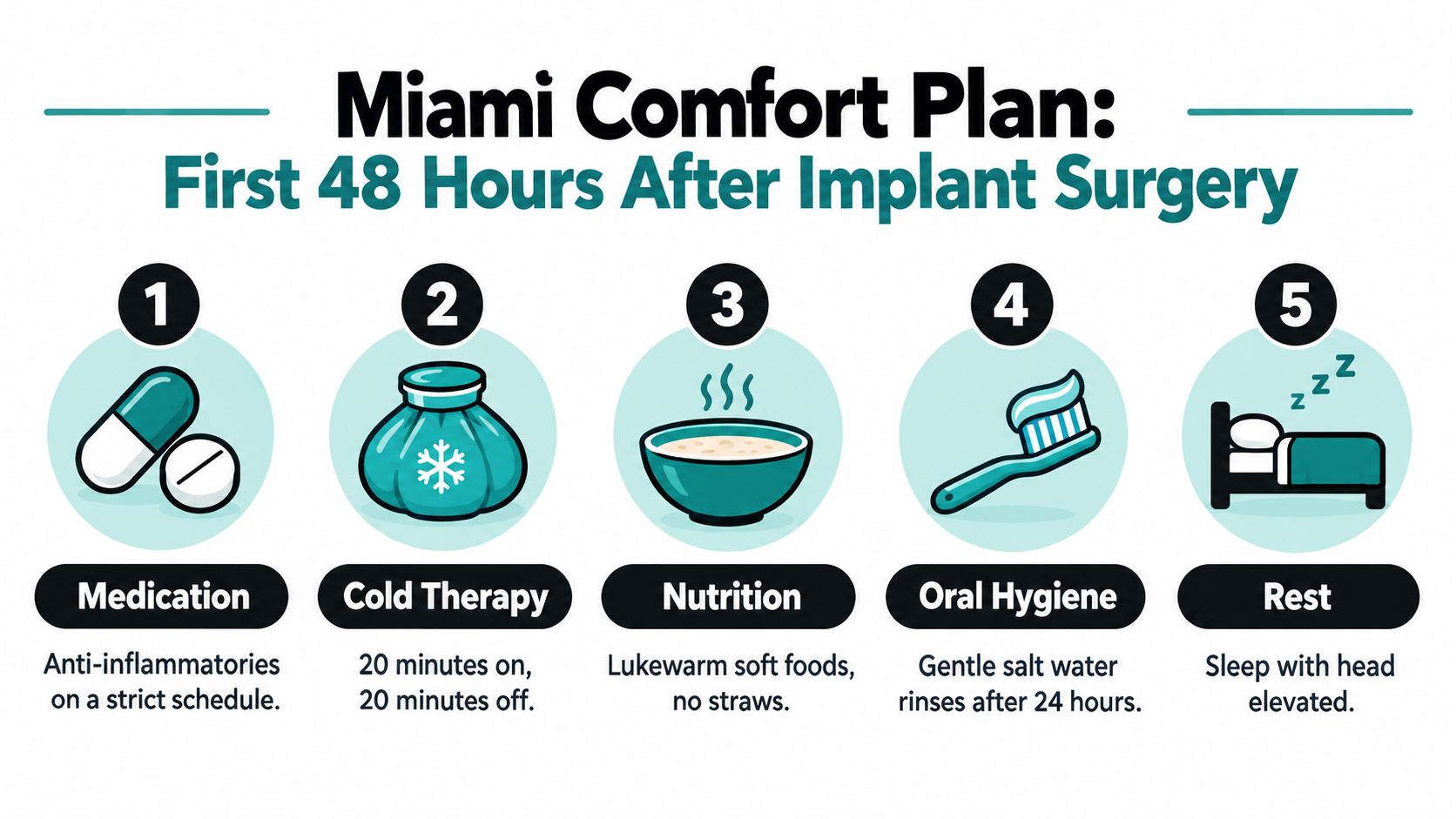
The first 48 hours
The first goal is controlling inflammation before it snowballs. Patients often do better when they take medication on schedule rather than waiting until the jaw is already aching.
- Medication timing: Use prescribed or recommended over-the-counter pain relief exactly as directed.
- Cold compresses: Apply an ice pack outside the cheek for 20 minutes on and 20 minutes off.
- Head elevation: Sleep slightly upright to reduce pressure and swelling.
- Soft, cool foods: Yogurt, smoothies without straws, mashed avocado, pudding, and applesauce are usually comfortable.
Miami weather adds one practical detail. Heat and humidity can make an already swollen face feel more uncomfortable, especially after walking outside or running errands. Staying indoors during the hottest part of the day can make recovery feel easier.
From day three onward
By this point, many patients need comfort more than actual pain control. The focus shifts from cooling the area to keeping it calm and clean.
- Warm compresses if advised: These may help residual stiffness once the early swelling phase settles.
- Gentle saltwater rinses: Light rinsing after meals can help keep debris away from the surgical site.
- Careful brushing: A soft post-op brush helps clean nearby teeth without scraping the area.
- Avoiding setbacks: Straws, smoking, hard foods, and spicy foods can irritate healing tissue.
Small routine choices often matter more than dramatic remedies.
Patients who also need dental x-rays, cleaning and exams, or future cosmetic dentistry work benefit from protecting the implant during this phase so the rest of treatment can move forward on schedule.
Red Flags, Follow Up Visits, and Your Next Step
Some symptoms should prompt a same-day call. Pain that gets stronger after day four, swelling that continues to worsen instead of leveling off, pus, a foul taste, fever, exposed implant threads, persistent numbness, or an implant that suddenly feels loose all deserve prompt evaluation.
What follow-up visits are for
A follow-up visit isn't just a formality. It gives the dental team a chance to confirm that the tissue is closing properly, the bite isn't putting excess pressure on the area, and the implant is healing in a stable way.
Common reasons for follow-up care include:
- Checking sutures: The dentist looks at soft tissue healing and removes sutures if needed.
- Reviewing the bite: A high bite can make a healing implant area feel sore longer than it should.
- Monitoring integration: Imaging and clinical checks help confirm the implant is settling as expected.
- Keeping the mouth clean: Professional cleaning guidance helps protect surrounding gums during recovery.
Normal Healing vs Warning Signs After Dental Implant Surgery
| Symptom | Normal Healing | Call Your Dentist Immediately |
|---|---|---|
| Pain trend | Less pain with each passing day | Throbbing pain that becomes stronger after early improvement |
| Swelling pattern | Swelling slows down and gradually decreases | Swelling keeps expanding or feels newly tense |
| Discharge | No pus or bad-tasting fluid | Pus, drainage, or a foul taste |
| Sensation | Temporary post-op tenderness | Ongoing numbness or tingling that doesn't fade |
| Implant stability | Firm, stable feeling | Any looseness or movement |
For patients in Downtown Miami, Midtown Miami, or Hallandale Beach, easier access to follow-up care can make a real difference when something doesn't feel right. That's especially true for anyone balancing implant recovery with other treatment such as teeth whitening, same-day crowns, or broader restorative work.
If the question is still lingering, how long does dental implant pain last, the most honest answer is this. Normal pain is short-lived and keeps moving in the right direction. Problem pain lasts longer, gets stronger, or returns after it had already improved.
Ultra Smile DentalSpa provides dental implant care, post-operative follow-up, and broader restorative treatment for patients who want clear answers and timely evaluation when healing doesn't feel straightforward. Patients looking for reassurance after implant surgery or a personalized consultation in Miami can schedule with Ultra Smile DentalSpa to have the area checked and get a recovery plan that matches the actual symptoms.