A Miami patient may be lying awake before wisdom teeth removal, wondering whether a morning cafecito counts as fasting, whether a blood thinner should be stopped, or how the trip home will work after sedation. Those questions are common, and they deserve precise answers rather than a generic checklist copied from the internet.
Knowing how to prepare for oral surgery makes the experience safer and more manageable. The right preparation depends on the planned procedure, medical history, and sedation method, whether the patient is seeking a dentist in Miami, FL, a tooth extraction, dental implants near me, or urgent guidance from an emergency dentist.
Table of Contents
- Why Oral Surgery Preparation Matters More Than You Think
- Planning Ahead in the Weeks Before Surgery
- Fasting Rules Based on Your Sedation Type
- Setting Up Your Home and Day-Of Timeline
- Managing Dental Anxiety Before Your Procedure
- What to Expect at Ultra Smile DentalSpa in Miami
Why Oral Surgery Preparation Matters More Than You Think
Modern oral surgery is built around controlled anesthesia and careful planning. In 1844, Connecticut dentist Horace Wells used nitrous oxide for a tooth extraction, and on December 30, 1846, William Morton demonstrated ether for a dental extraction in Massachusetts. These milestones helped establish painless surgical dentistry, as described in the history of anesthesia in dentistry.
Before anesthesia became practical, procedures had to be completed quickly because patients couldn't be kept comfortable for long. Today, the anesthesia plan determines much more than comfort. It affects whether fasting is required, whether routine medications need special review, and whether an adult must drive the patient home and remain available afterward.
A patient receiving only local anesthesia may be able to eat normally and leave independently. Nitrous oxide may involve lighter food restrictions, while oral sedation and IV sedation require more careful coordination. General anesthesia carries the strictest airway-safety planning. Treating every method alike can lead to confusion, a delayed appointment, or an unsafe preparation choice.
Practical rule: The surgeon's exact sedation instructions take priority over advice from a general online search.
At Ultra Smile DentalSpa, a Miami patient can discuss wisdom teeth extraction, implants, bone grafting, and related restorative care during treatment planning. The team can also help patients understand which questions to ask about sedation, medications, transportation, and recovery. That same preparation matters for people searching for a cosmetic dentist near me, because a practice that coordinates complete care should still identify when a procedure requires oral-surgery planning or referral.
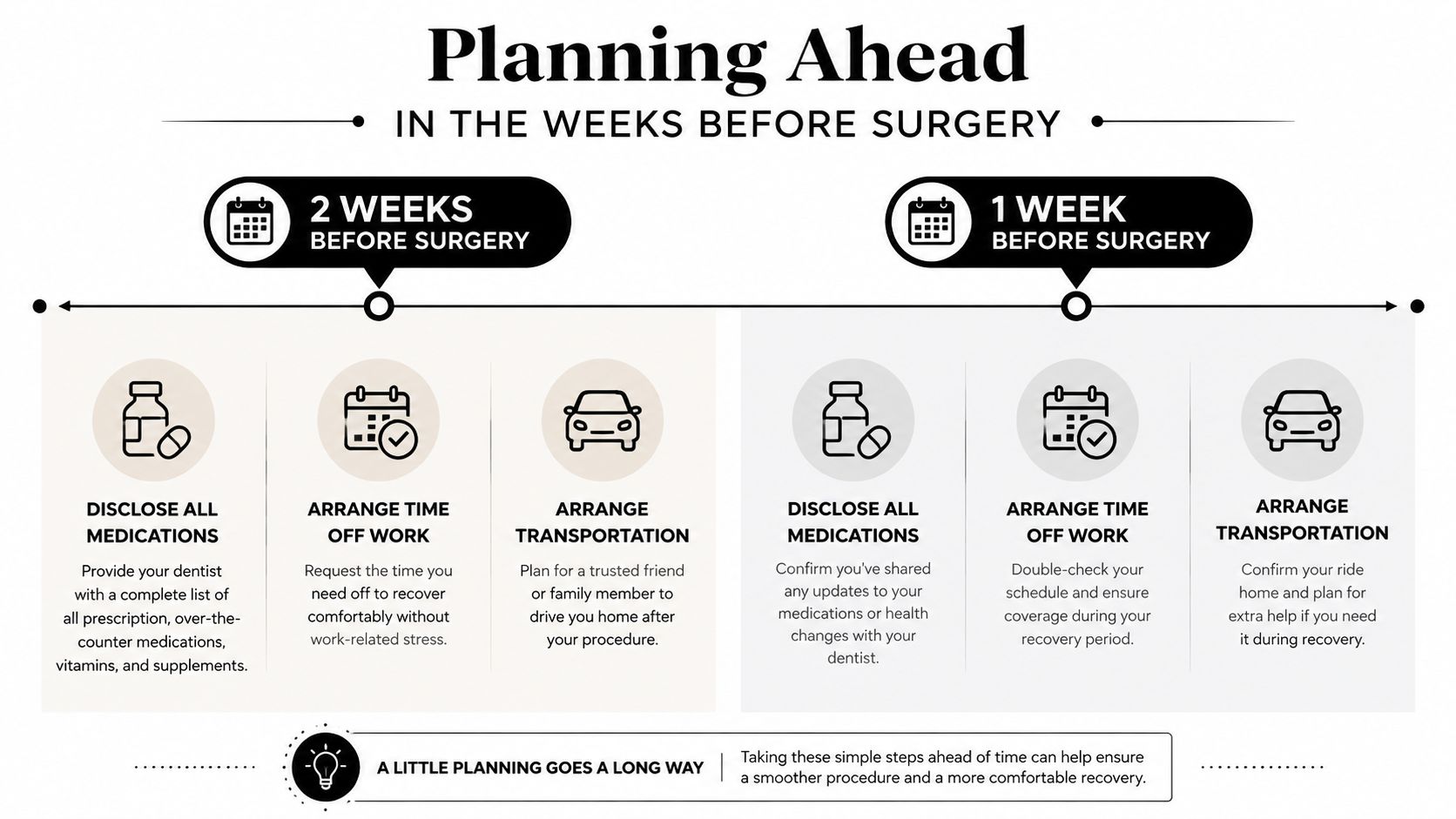
Planning Ahead in the Weeks Before Surgery
The period before surgery gives patients time to identify conflicts instead of solving them at check-in. A consultation should include every prescription, over-the-counter medication, vitamin, and supplement, including aspirin, ibuprofen, blood thinners, fish oil, and vitamin E. Patients shouldn't stop or restart a prescribed drug independently. Some anticoagulants, including Coumadin, Warfarin, and Plavix, require discussion with the prescribing physician before any change, as outlined in these oral-surgery medication instructions.
Nicotine can restrict blood flow and make healing more difficult, particularly after an extraction, implant placement, or bone graft. Patients who smoke or vape should disclose that habit early and follow the practice's specific cessation direction. Alcohol also deserves attention because it can interact with sedatives and prescribed pain medication. Published oral-surgery instructions vary, with some advising avoidance from at least 12 hours to 48 hours before surgery, depending on the practice and anesthetic plan, as shown in pre-operative oral-surgery guidance.
Use the planning window to resolve uncertainty
Patients should update the dental team about a recent illness, new diagnosis, pregnancy status, or change in heart condition. They should also ask who will administer and monitor anesthesia, whether the facility is accredited, and which medications may be taken on the morning of surgery. The American Board of Oral and Maxillofacial Surgery consultation questions highlights the value of reviewing medical history and medication instructions directly with the surgical team.
Practical planning also includes:
- Prescriptions: Arrange approved medications in advance so no one has to make a pharmacy trip while recovering.
- Work and family: Schedule appropriate time away from work and arrange childcare or help at home.
- Coverage: Ask about insurance pre-authorization, accepted insurance, and available payment arrangements before treatment day.
- Questions: Write down concerns about numbness, swelling, sedation, pain control, and the return-home process.
Fasting Rules Based on Your Sedation Type
Fasting isn't a universal dental rule. It protects the airway when sedation reduces protective reflexes, so the cutoff must match the anesthetic plan. For IV sedation or general anesthesia, common guidance calls for no solid food for 6 to 8 hours, with clear liquids permitted until about 2 hours before arrival in many protocols. Heavier or fatty meals may require a longer buffer, often around 8 hours, because the stomach empties more slowly, according to wisdom teeth fasting guidance.
The table below is a planning overview, not a replacement for the surgeon's written instructions.
| Sedation Type | Solid Food Cutoff | Clear Liquids Cutoff | Key Reasoning |
|---|---|---|---|
| IV sedation | Commonly 6 to 8 hours before surgery | Often up to 2 hours before arrival | An emptier stomach lowers aspiration risk |
| General anesthesia | Commonly 6 to 8 hours before surgery | Often up to 2 hours before arrival | Airway protection requires strict intake timing |
| Oral sedation | Follow the practice's exact plan | Follow the practice's exact plan | Food instructions depend on the drug and sedation depth |
| Nitrous oxide | A light meal may be allowed under the practice's protocol | Confirm the cutoff with the dental team | A lighter stomach may reduce nausea |
| Local anesthesia only | Normal eating is often allowed | No special clear-liquid window is usually needed | Local numbing doesn't create the same airway-suppression concern |
Patients receiving oral sedation, such as Valium or Halcion, shouldn't assume that a light meal is automatically permitted. Some practices may allow a light meal 2 to 3 hours beforehand, while heavy or fatty food may need to be avoided 6 hours before. Nitrous oxide often uses a shorter restriction, but the team should confirm the exact cutoff.
A Miami cafecito with milk is not a clear liquid and breaks a strict fast. Black coffee may fit within a clear-liquid window in some protocols, but patients should confirm whether it is allowed and avoid adding milk or cream. Sedation options for wisdom teeth extraction can help patients prepare questions, but the individualized cutoff comes from the treating clinician.
For local anesthesia alone, eating normally beforehand can help prevent lightheadedness and maintain comfort. If the anesthesia plan changes, the food and medication plan may change with it.
Setting Up Your Home and Day-Of Timeline
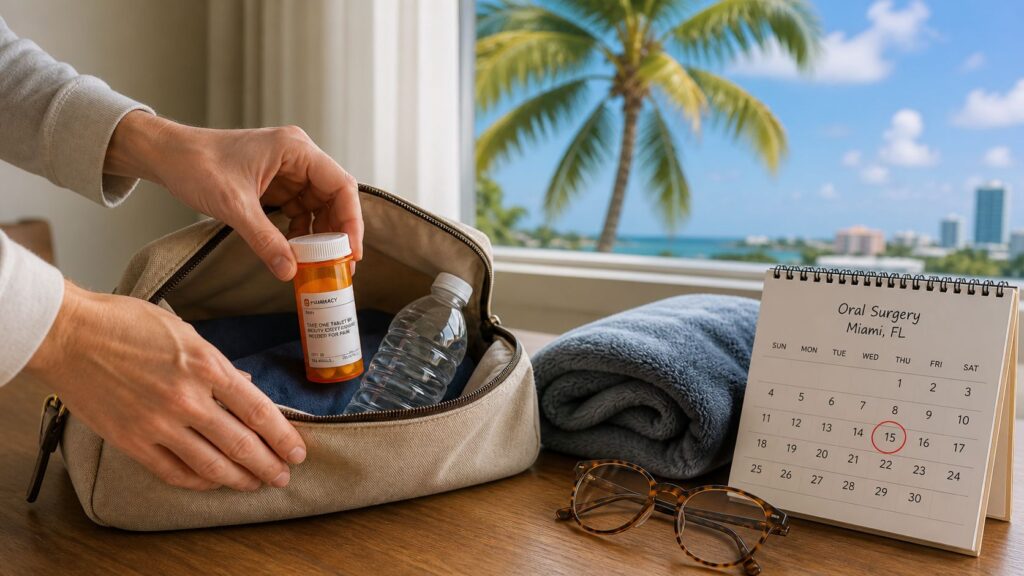
A smooth recovery begins before leaving home. The evening before surgery, patients should place ice packs in the freezer, arrange extra pillows for elevation, and prepare a recovery area close to the bathroom. Soft foods such as yogurt, smoothies, and mashed bananas can be ready before the procedure, along with prescribed medications that the dental team has approved.
Patients should also plan for the realities of Miami travel. A licensed adult driver is safer than relying on a rideshare alone after sedation, and the driver should understand that the patient may need supervision after arriving home. I-95 and the Palmetto can add uncertainty to arrival times, so parking and the route to the clinic should be confirmed in advance.
An uncomplicated day-of sequence
The morning routine should follow the written anesthesia plan, not a remembered rule from a previous appointment. Approved routine medications may sometimes be taken with a small sip of water, while other medications require different directions. The hospital anesthesia fasting recommendations describe clear liquids up to 2 hours before arrival and no solid food after midnight for scheduled cases, but the dental facility's instructions remain controlling.
A useful packing list includes:
- Identification: Bring an ID, insurance card, and referral forms if applicable.
- Comfort items: Pack lip balm and a phone charger.
- Clothing: Wear loose, short-sleeved clothing that permits IV access.
- Personal items: Remove jewelry, contact lenses, and dentures or bridgework as directed, and bring suitable storage if those items need to be removed.
- Logistics: Confirm the driver's phone number, parking plan, and a reliable arrival buffer.
Secure pet care and childcare before surgery, and silence work notifications during the recovery window. Patients shouldn't drive themselves after sedation, make important decisions while affected by medication, or leave the clinic without following the discharge plan.
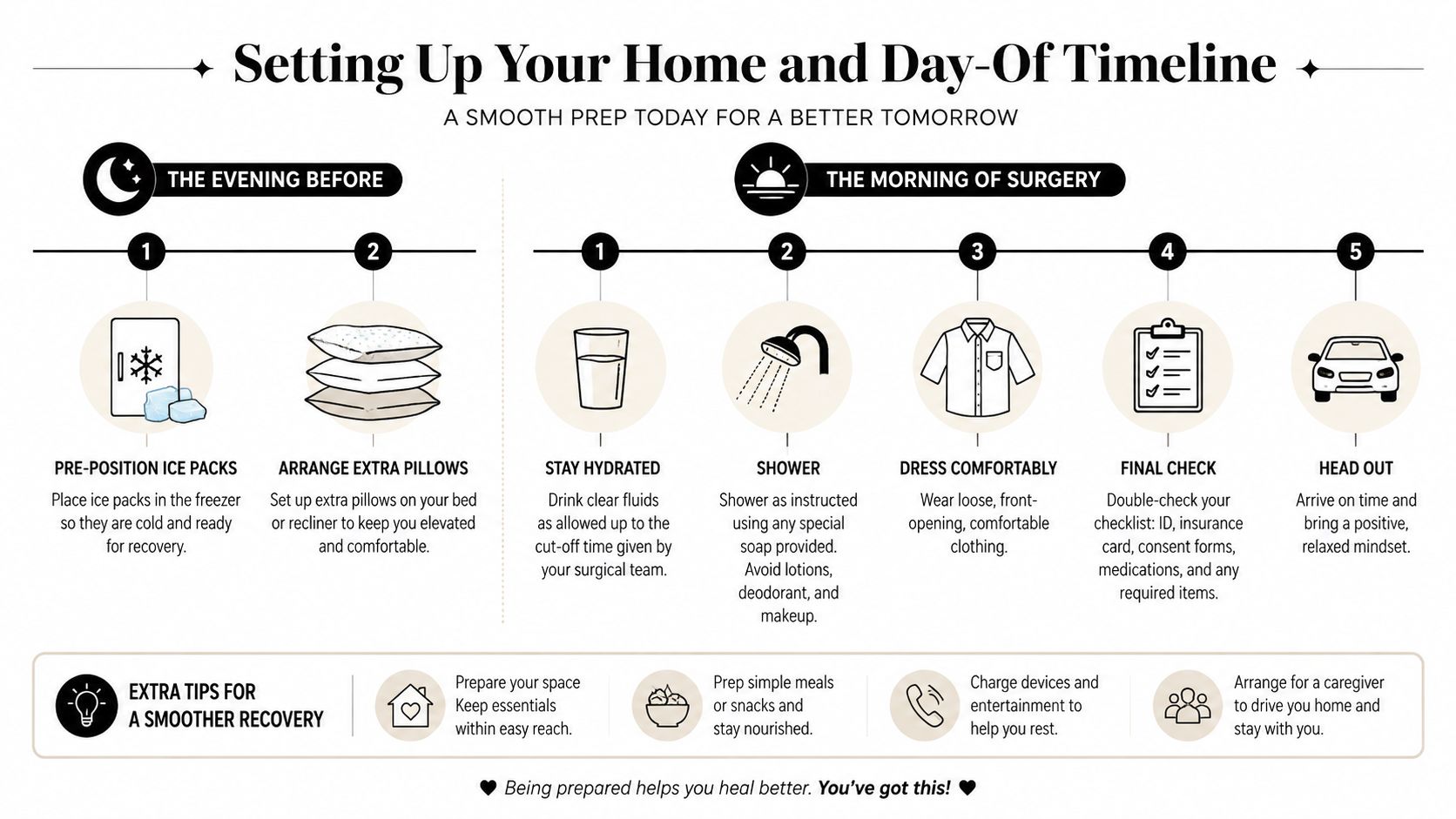
The oral-surgery swelling guide can help patients organize recovery supplies, but ice packs, soft foods, and medications should be prepared before leaving for the appointment.
Managing Dental Anxiety Before Your Procedure
Dental anxiety is valid, and it can affect how a patient experiences every stage of care. Discussing fear during the consultation helps the team match the comfort plan to the procedure rather than choosing sedation by habit.
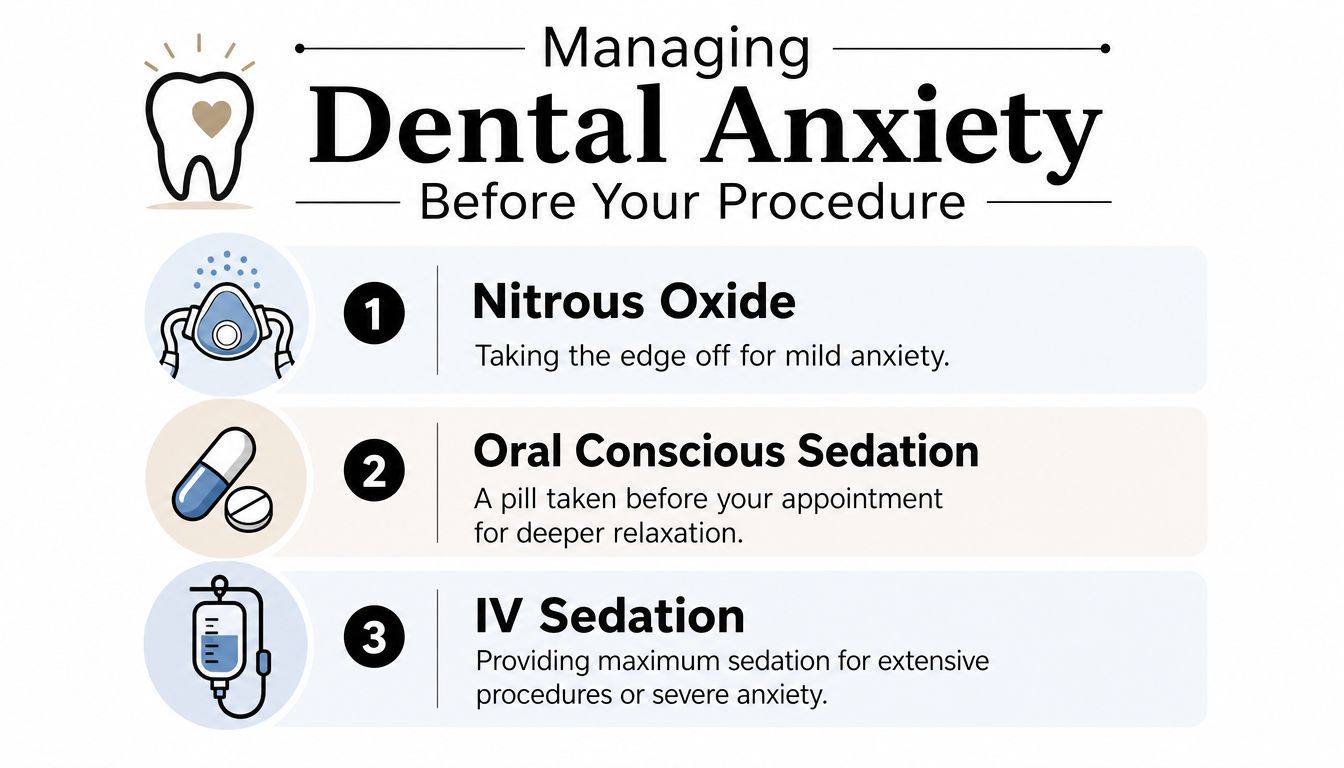
Nitrous oxide may take the edge off mild anxiety while the patient remains responsive. Oral conscious sedation can provide deeper relaxation after a prescribed pill is taken before the appointment. IV sedation offers a stronger level of sedation for extensive procedures or patients with severe anxiety. Each option affects fasting, medication timing, monitoring, and transportation differently.
Nonmedication strategies can support the sedation plan:
- Box breathing: Inhale, hold, exhale, and hold again while counting 4-4-4-4.
- Guided meditation: Use a familiar meditation app before leaving home or while waiting.
- Calming audio: Prepare a playlist and noise-canceling headphones if the practice permits them.
- Visualization: Rehearse arriving, meeting the team, resting through treatment, and returning home.
- Trusted support: Ask a companion to stay with the patient through check-in and provide reassurance afterward.
A pre-operative phone call can resolve questions that otherwise grow louder the night before. Patients should ask whether a companion may wait nearby, who will monitor sedation, and what signal can be used to request a pause.
At Ultra Smile DentalSpa, a spa-style setting may include aromatherapy, warm blankets, soothing lighting, streaming entertainment, and a hot towel finish. Comfort features don't replace clinical monitoring, but they can reduce sensory triggers and make communication easier. A patient can always raise a hand or use the agreed signal to indicate discomfort or ask the team to pause.
What to Expect at Ultra Smile DentalSpa in Miami
Patients arriving for oral surgery at Ultra Smile DentalSpa can expect check-in followed by a review of consent forms, medical history, medications, and vital signs. Bilingual front-desk support helps serve Miami's diverse community, while the clinical team confirms the planned procedure, sedation approach, fasting status, and transportation arrangements.
Private treatment suites, soothing lighting, and comfort-focused amenities create a calmer setting for patients receiving wisdom teeth extraction or other dental treatment. Companions may receive complimentary beverages, and post-operative comfort kits can include gauze, ice packs, and written recovery instructions.
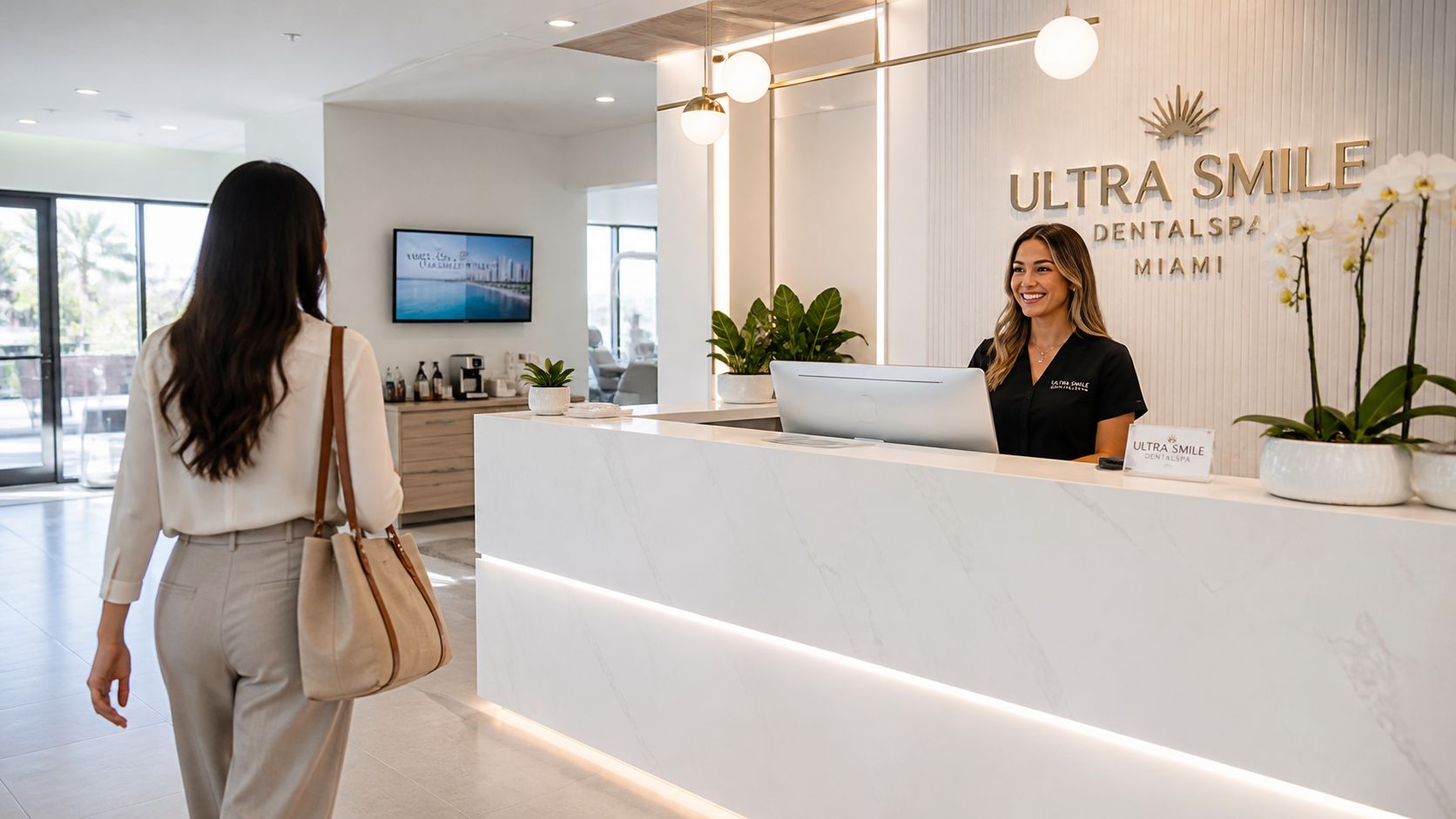
Before discharge, the team confirms that the patient is stable, reviews aftercare with the driver, and provides a direct after-hours contact number. The practice also coordinates insurance and offers flexible financing options on-site. Patients seeking a dentist near me, dental implants, cosmetic dentistry, cleaning and exams, dental X-rays, or emergency dental services can discuss whether care belongs in the practice or requires referral to an oral surgeon.
Ultra Smile DentalSpa provides personalized planning for wisdom teeth extraction, dental implants, bone grafts, restorative dentistry, and sedation-focused oral-surgery care in Miami. Schedule a consultation through Ultra Smile DentalSpa to review the procedure, fasting plan, medications, transportation, and comfort needs before surgery day.