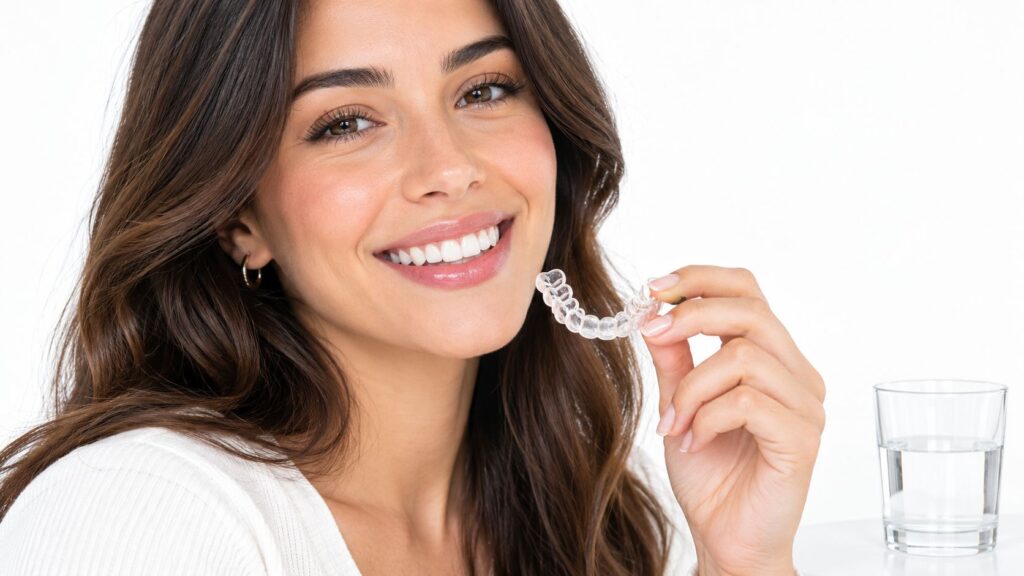
No, remove Invisalign before eating or drinking anything but plain water, and aim for 20 to 22 hours of daily wear to keep treatment on track. That leaves only about 2 to 4 hours for meals, other drinks, and oral hygiene. This practical wear-time guidance helps explain why a quick snack or prolonged coffee break can matter.
A Downtown Miami professional may remove aligners before a rushed lunch, place them in a case, and then realize a meeting starts before brushing is possible. A parent in Midtown Miami may sip a sweetened drink between errands, while someone meeting friends in Hallandale Beach may wonder whether leaving trays in for a few bites is really a problem. These situations are common, but the solution is straightforward.
Table of Contents
- Can You Eat With Invisalign In Direct Answer for Miami Patients
- How Invisalign Works and Why You Remove Trays to Eat
- What Happens If You Eat or Drink With Aligners In
- What You Can Drink and Eat While Wearing Invisalign
- How to Remove Clean and Reinsert Aligners Without Losing Time
- How to Stay on Track With Wear Time During Busy Days and Travel
- What to Expect at Ultra Smile DentalSpa and When to Get Personalized Advice
Can You Eat With Invisalign In Direct Answer for Miami Patients
A Downtown Miami coffee run can turn into a long workday, while dinner in Brickell may include several courses and a drink. In both situations, Invisalign aligners should come out before every meal, snack, and beverage except plain water. Coffee, tea, juice, soda, alcohol, smoothies, sports drinks, and similar drinks can expose teeth and trays to color, sugar, acid, or heat. Plain, cool or room-temperature water is generally the only drink considered safe while the trays remain in, according to guidance on drinking with Invisalign.
Removing the trays is not a restriction on normal eating. It is the feature that lets patients enjoy meals without the brackets and wires used with traditional braces. The practical sequence is simple: take the trays out, place them in a case, eat or drink, clean your mouth and aligners, and reinsert them promptly.
Why the rule matters during a busy day
One extended lunch, repeated coffee breaks, or snacks between appointments can use much of the time available for wearing a tray. Clinical instructions commonly target about 22 hours per day, leaving roughly 2 hours for meals, other drinks, and cleaning, as reported in peer-reviewed aligner compliance research.
The concern is not one accidental sip. Repeated exposure can leave food or drink against the teeth beneath the plastic, stain or heat the tray, and create more chances to misplace it or delay putting it back. Planning meals and carrying a case makes the routine easier, especially during Miami commutes, office meetings, and social dining.
Practical rule: If a drink has color, sugar, acid, flavor, carbonation, or heat, remove the trays first.
Ultra Smile DentalSpa provides clear-aligner care for patients seeking a dentist in Miami, FL. A consultation can clarify whether Invisalign fits alongside cleanings, exams, fillings, crowns, or other dental care.
How Invisalign Works and Why You Remove Trays to Eat
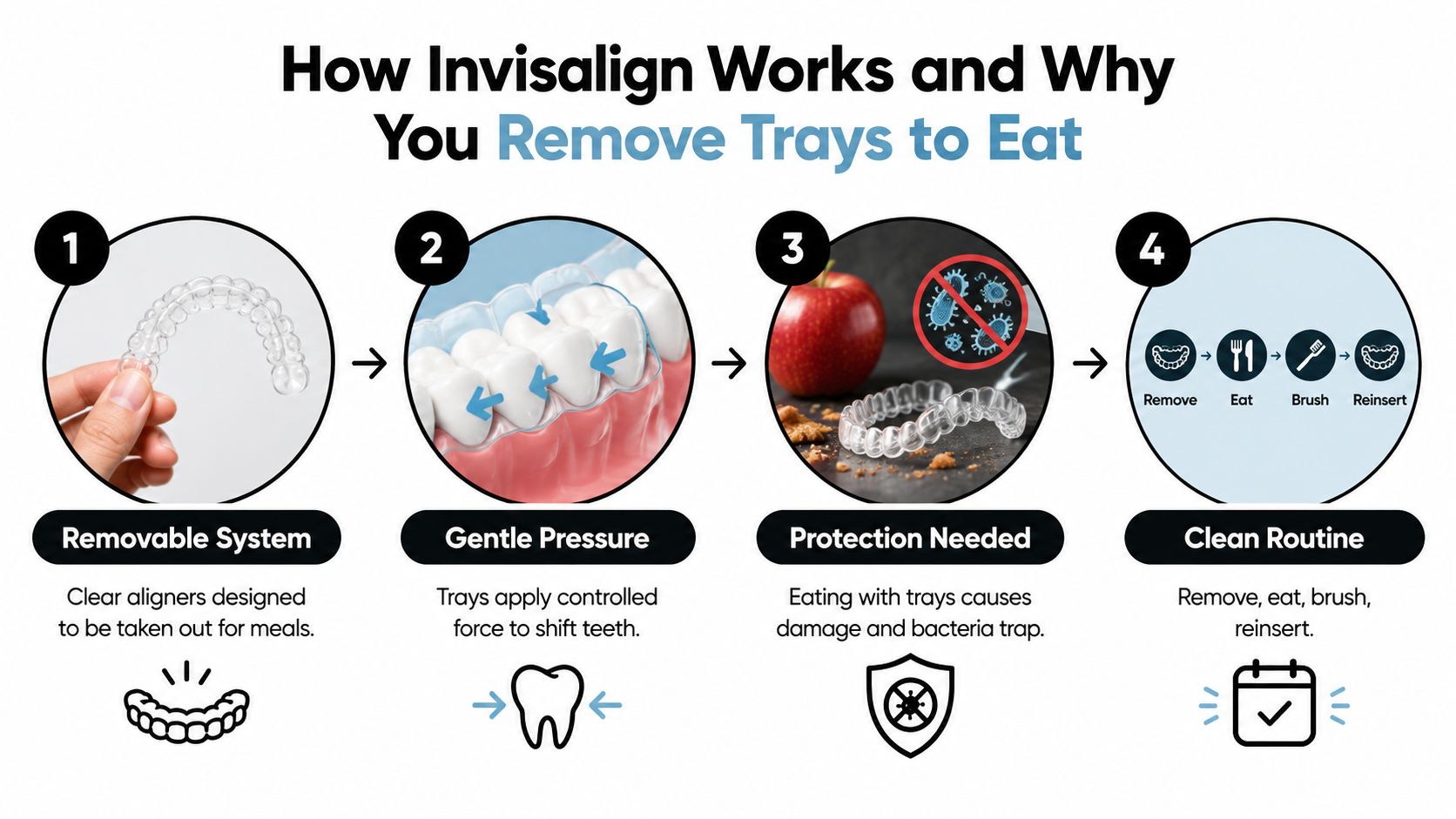
A Miami workday can turn one tray into a passive container for coffee, lunch, and snack residue. An Invisalign tray works like a thin, custom-made glove for the teeth. Its close fit applies controlled pressure to selected areas, guiding gradual movement according to the treatment plan. That same fit can hold food, sugar, acids, or colored drinks against enamel if you consume them while wearing it.
Modern clear-aligner therapy is a removable orthodontic system. Clinical guidance supports taking aligners out for meals and hot drinks, then wearing them during the remaining parts of the day, as described in the clinical literature on removable aligner therapy.
Why wear time affects treatment
Each tray is designed to guide teeth for a planned interval. Aligners are commonly replaced on a 7-day cycle in some treatment protocols. Missing regular wear can leave the next tray feeling tight or prevent teeth from tracking as planned. The schedule is therefore more than a calendar reminder. It connects the tray's shape, the pressure on each tooth, and the progress your dentist expects.
Coffee culture makes the rule easy to underestimate. A morning latte, a second cup during meetings, and a slow afternoon iced coffee can create several periods without the aligners. Busy Miami commutes and social dinners create the same issue. Short breaks are manageable, but repeated delays reduce the time the trays can do their work.
The main idea is simple: remove the aligners before food or anything beyond plain water, and let your dentist tailor the plan if you have attachments, crowns, sensitive teeth, or other dental needs. Patients comparing systems can review clear aligners versus Invisalign with a dental professional.
Ultra Smile DentalSpa offers clear-aligner care for patients seeking a dentist in Miami, FL. A consultation can connect Invisalign planning with exams, cleanings, fillings, crowns, and other dental care.
What Happens If You Eat or Drink With Aligners In
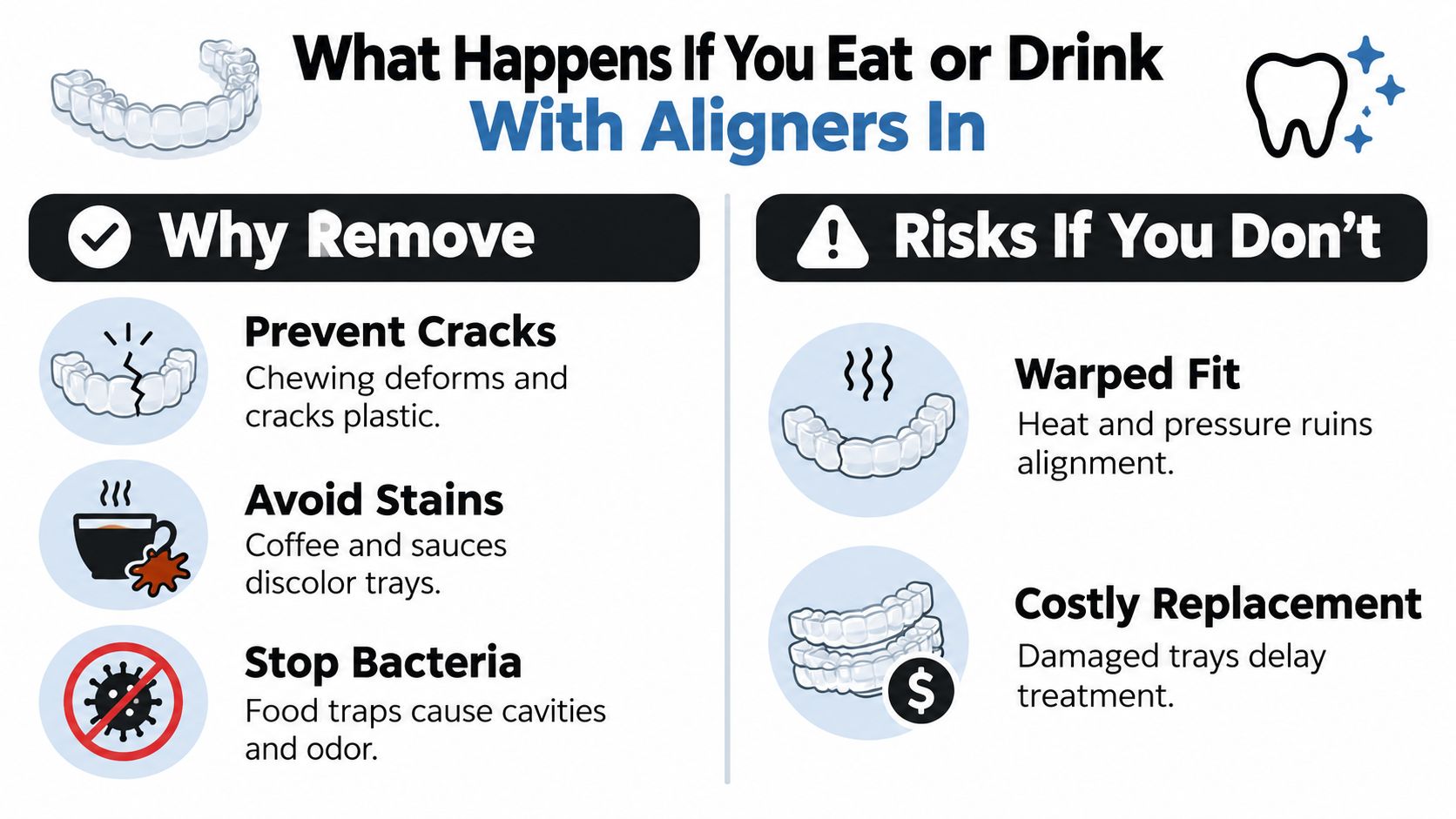
Eating with trays in creates a physical problem first. Chewing places force on thermoplastic material that was designed to guide teeth, not function as a shield for food. A crusty sandwich, hard snack, or sticky bite can bend or crack the tray, while repeated pressure may change its shape.
Heat creates a different risk. A hot Miami coffee or tea can affect the plastic, especially when a patient sips slowly and keeps the warm beverage against the aligner for an extended period. If the tray warps, it may feel uncomfortable or fail to seat completely.
Clinical and manufacturer guidance on removing aligners before eating explains that chewing can deform the tray and force food or liquid between the aligner and enamel. That exposure can increase staining and plaque retention, and an altered fit can reduce tracking accuracy after reinsertion.
The main risks
- Cracks and deformation: Chewing can stress the tray and make it less reliable.
- Warping: Hot drinks may change the shape, so the aligner no longer fits as intended.
- Staining: Coffee, tea, cola, sauces, and red wine can discolor clear plastic. Material-testing research found clinically meaningful discoloration in Invisalign after exposure to staining drinks, including coffee, tea, cola, and red wine, as shown in comparative aligner material testing.
- Trapped food: Crumbs, sugar, and acidic residue can stay against enamel beneath the tray.
- Reduced tracking: A tray that doesn't seat precisely may not guide teeth as planned.
The last risk often gets overlooked because a brief exposure may not cause an obvious problem. The concern is the repeated pattern, a few bites at lunch, a sugary sip during a meeting, and another drink later. Those episodes increase cleaning demands, create more chances for damage or contamination, and consume part of the limited daily wear window.
Watch the following visual explanation for a concise overview of common aligner risks:
A damaged, stained, or poorly fitting tray should not be ignored. Patients should contact their orthodontic or dental team for personalized instructions rather than forcing a distorted aligner into place.
What You Can Drink and Eat While Wearing Invisalign
A Miami workday can include cafecito before a commute, a flavored drink at the office, and dinner with friends. The practical rule keeps those choices simple: plain water stays in, everything else comes out. Choose water without flavoring, sweeteners, juice, lemon, or other additions. A clear beverage can still contain sugar or acid that remains close to the teeth beneath the tray.
Coffee and tea should be enjoyed after removing the aligners. Their pigments may stain the plastic, while heat may affect its shape. Sports drinks, soda, juice, alcohol, smoothies, and flavored water also belong in the remove category. A beverage guide for Invisalign patients explains the concerns associated with staining, heat, sugar, and acid.
Drinks and Snacks With Invisalign In At a Glance
| Item | Keep Trays In or Remove | Why It Matters |
|---|---|---|
| Plain cool or room-temperature water | Keep in | It adds no color, sugar, or acid around the teeth. |
| Coffee or tea | Remove | Heat and pigments may affect the plastic. |
| Soda, juice, or sports drinks | Remove | Sugar and acid can remain against enamel. |
| Alcohol | Remove | Many alcoholic drinks contain color, acid, or sugar. |
| Smoothies | Remove | Blended ingredients can leave residue beneath the tray. |
| Flavored or lemon water | Remove | Flavorings and acids make it different from plain water. |
| Sparkling water | Remove | Carbonation makes the water acidic, which can sit against enamel under the tray. |
| Meals and snacks | Remove | Chewing can deform the aligner, and food may become trapped. |
With the trays removed, most patients can eat their usual foods. Invisalign does not create the same bracket-related food restrictions as fixed braces. Patients with attachments, crowns, bonding, implants, sore teeth, or other dental concerns may still need personalized advice from a dentist in Miami, FL.
Busy adults should also watch the pattern of frequent grazing. A quick snack between meetings means another removal and another period without the trays. Grouping food and drinks into planned breaks can protect wear time while leaving room for coffee culture, office meals, and social dining. After eating, rinse before putting the aligners back in, especially if brushing must wait.
How to Remove Clean and Reinsert Aligners Without Losing Time
A reliable routine prevents most avoidable Invisalign problems. Clean hands, a case, water, and a small toothbrush can turn an inconvenient restaurant meal or office break into a predictable process.
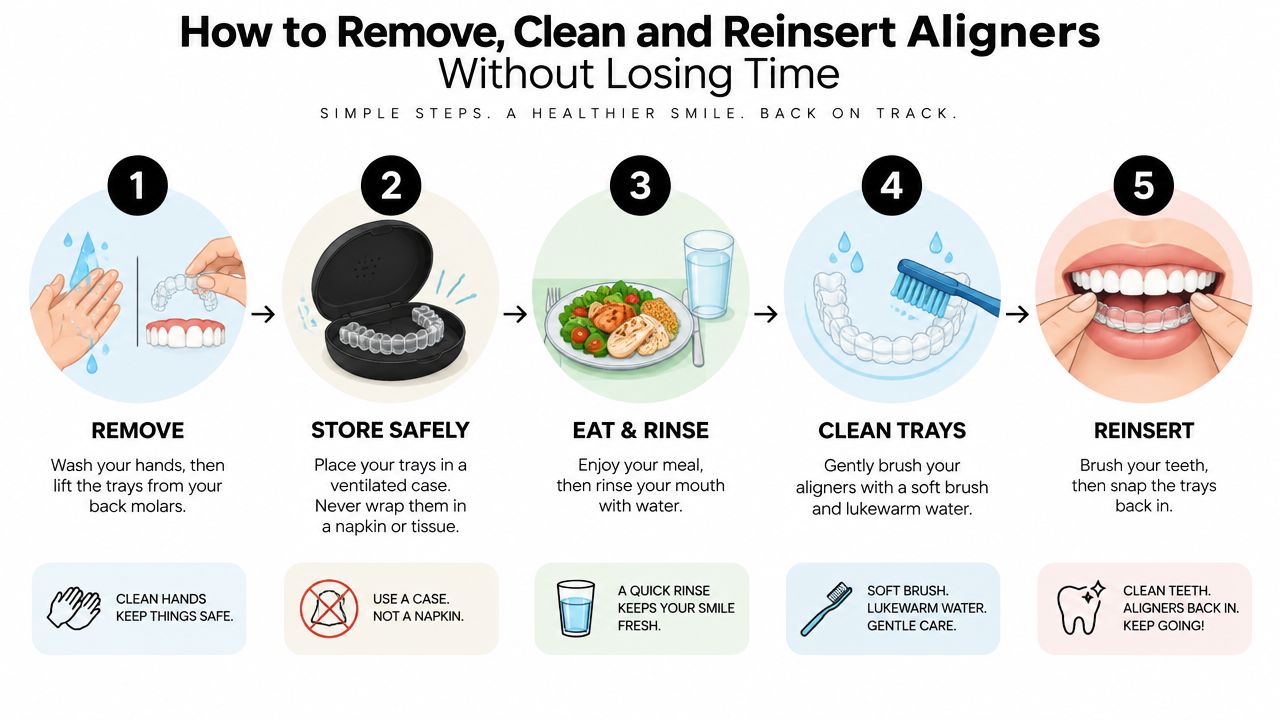
A practical remove-to-reinsert routine
1. Remove carefully. Wash the hands when possible. Starting near the back molars, gently lift the tray and work forward rather than pulling aggressively from one point.
2. Store the aligner immediately. Place it in a ventilated case. Don't wrap it in a napkin, because it can be thrown away with the meal or become contaminated on a table. Patient guidance on eating with Invisalign also recommends case storage and cleaning before reinsertion.
3. Eat and rinse. Enjoy the meal with the trays out. Afterward, rinse the mouth with water to loosen residue, especially when brushing will be delayed.
4. Clean the trays. Rinse them with water and gently brush them using a soft brush and lukewarm water. Hot water can affect the shape, and abrasive products may make the clear surface look cloudy.
5. Brush, floss, and reinsert. The preferred routine is to brush and floss before putting the trays back in. If that isn't possible at work or while traveling, rinse both the mouth and aligners with water, then brush and floss as soon as practical.
A small travel kit can include a toothbrush, toothpaste, floss, case, and bottled plain water. Keeping the kit in a work bag or carry-on reduces the temptation to leave trays out after lunch or put them back over food debris.
Back-to-back meetings call for planning rather than perfection. A patient may remove the trays before lunch, eat within the scheduled break, rinse, and reinsert before the next meeting. The same approach works at a restaurant, airport, gym, or family event.
For more detailed home-care guidance, patients can review how to clean Invisalign aligners. Persistent odor, cloudiness, sharp edges, or fit changes deserve professional advice.
How to Stay on Track With Wear Time During Busy Days and Travel
Only 36% of patients meet the 22-hour recommendation, and roughly one-quarter show poor compliance. That finding makes wear time easier to understand as a daily budget. Meals, Miami coffee runs, snacks, and brushing all draw from the same limited window, so frequent short breaks can consume more time than expected.
Make the routine fit real Miami schedules
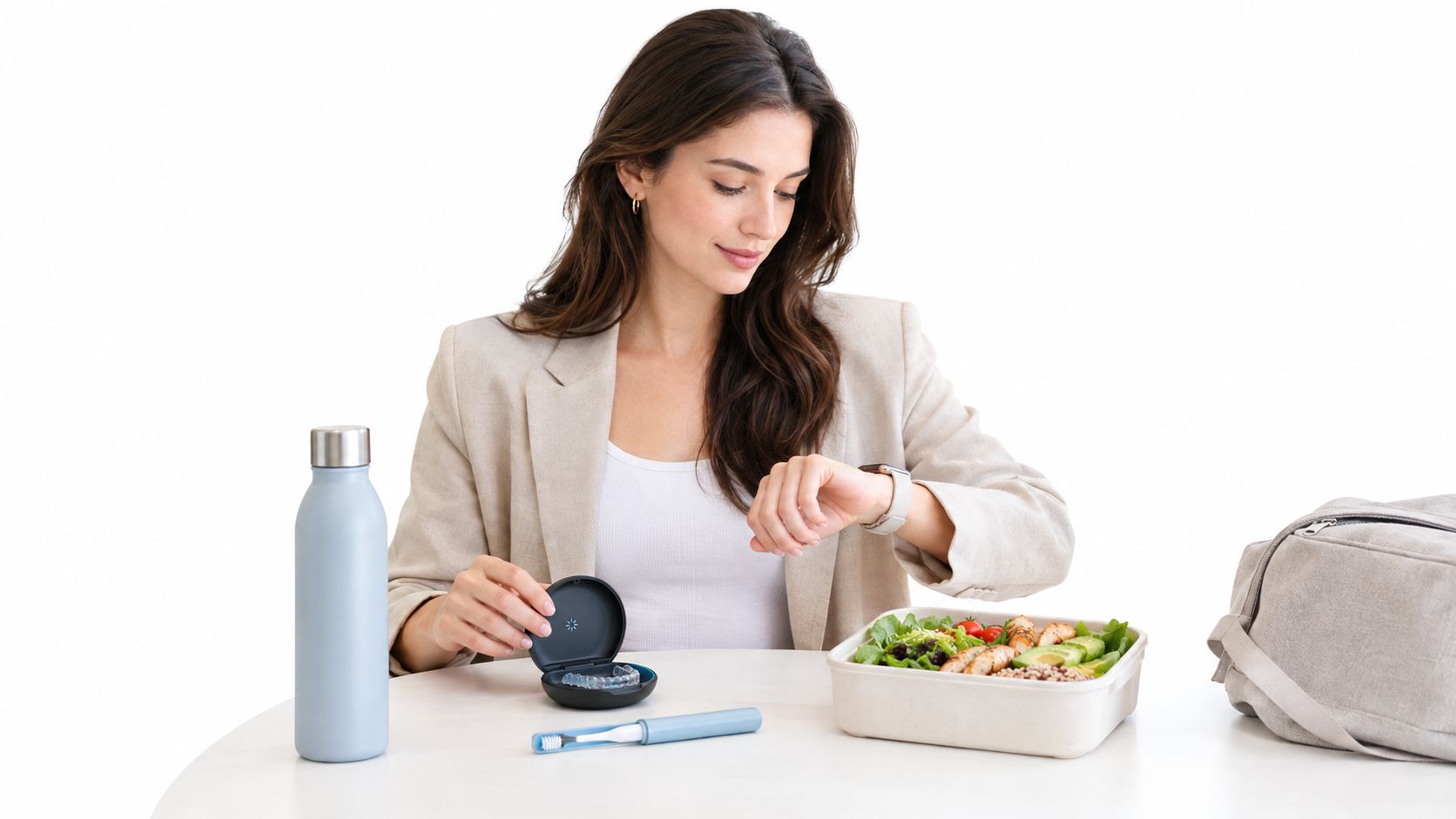
A Downtown Miami professional who sips coffee throughout the morning may save time by finishing the drink during one planned break. Someone commuting between Midtown Miami and Hallandale Beach may keep the case and hygiene supplies in a work bag instead of searching for an office bathroom.
A few practical habits help:
- Consolidate snacks: Combine small bites into one defined eating period rather than removing the trays repeatedly.
- Plan beverages: Have coffee, tea, or sports drinks with a meal or scheduled break.
- Use reminders: A phone alert can signal when the trays should return after lunch.
- Carry supplies: Keep a case, toothbrush, floss, and water available at work and during travel.
- Protect the case: Store it in a bag or desk drawer, never under a napkin or inside a hot vehicle.
Many treatment plans use a weekly tray cycle, so consistency matters throughout a course that may include dozens of trays and continue for many months. One imperfect day does not require panic. Repeated low wear time, however, should be discussed with the treating team because it may affect progress and tray fit.
Social dining needs the same simple plan. Remove the trays before eating, keep the case nearby, and set a reminder if conversation or a long restaurant visit makes reinsertion easy to forget. At an airport, gym, family event, or back-to-back workday, planning the break protects treatment time without requiring a perfect schedule.
Regular cleanings and exams also help protect the mouth during aligner treatment. A dentist can check plaque-prone areas, attachments, gum health, fillings, crowns, and whitening goals while monitoring overall smile health. Patients searching for a cosmetic dentist near me can also ask how Invisalign fits with teeth whitening, veneers, or restorative dentistry.
What to Expect at Ultra Smile DentalSpa and When to Get Personalized Advice
Patients visiting Ultra Smile DentalSpa in Miami, FL can expect a new patient exam, dental x-rays when clinically appropriate, and a discussion of smile goals, bite, oral health, and daily habits. Invisalign guidance should account for work schedules, coffee routines, travel, snacks, restorations, and the patient's ability to maintain cleaning and wear time.
The practice also provides cleanings and exams, fillings, crowns and bridges, same-day crowns, veneers, teeth whitening, root canals, night guards, wisdom teeth extraction, dental implants, and bone grafts. That range matters when an aligner question intersects with another concern, such as tooth pain, a damaged restoration, a missing tooth, or a cosmetic smile plan.
Patients can request personalized advice if a tray no longer fits, an edge feels sharp, an attachment has come loose, or wear time is repeatedly difficult to maintain. Severe dental pain, swelling, trauma, or a sudden dental problem may require an emergency dentist assessment. Questions about tooth extraction, wisdom teeth, or dental implants near me can also be addressed during an evaluation.
A calm setting, bilingual staff, modern technology, transparent treatment planning, and comfort-focused amenities support patients who feel anxious about dental visits. Professional oversight helps protect healthy teeth while treatment works toward a straighter, brighter smile.
Ultra Smile DentalSpa offers Invisalign and dental care for adults in Miami, including cleanings, cosmetic dentistry, restorative treatment, tooth extraction, and dental implants. Patients can visit Ultra Smile DentalSpa to schedule a consultation for aligner guidance, a new patient exam, or urgent dental concerns.