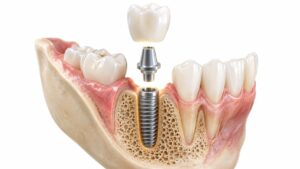
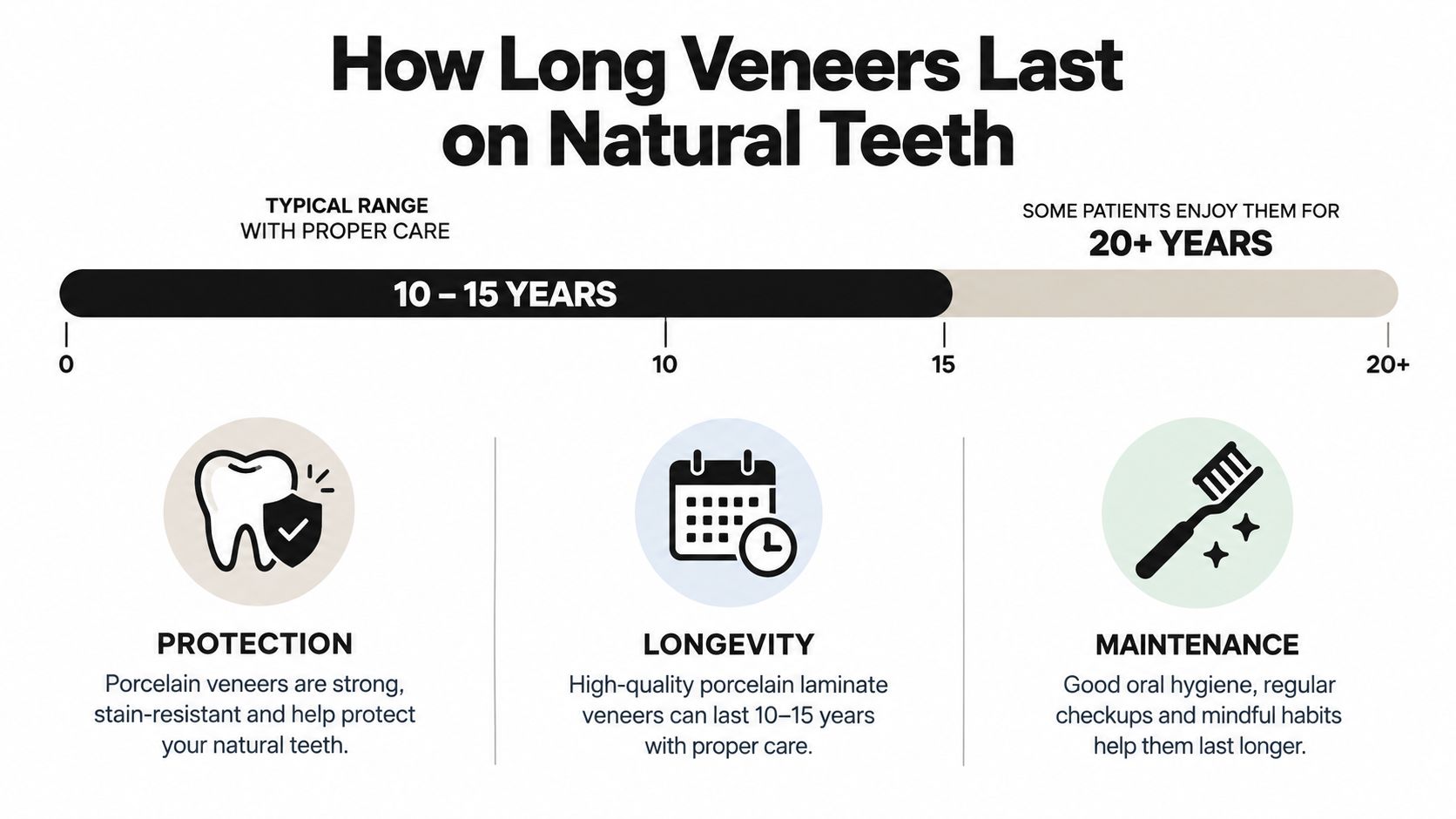
Veneers don't automatically damage natural teeth, but conventional porcelain veneers usually require removing a thin, irreversible layer of enamel, making them a permanent commitment rather than a temporary covering. Conservatively planned veneers can remain functional for 10 to 20 years, although that doesn't guarantee that every veneer or underlying tooth will remain complication-free.
For someone searching for a dentist in Miami, FL, the hesitation often starts after seeing a smile makeover online. The result looks appealing, but the photographs don't show how much tooth structure was changed or what maintenance will follow. A reassuring cosmetic consultation should make those details clear before treatment begins.
Table of Contents
- A Miami Patient's Question About Veneers and Natural Teeth
- What 'Damage' Actually Means for a Veneered Tooth
- Veneer Types and How Much Enamel They Touch
- How Long Veneers Last on Natural Teeth
- Real Risks to Your Teeth and How to Lower Them
- Veneers, Bonding, and Whitening Compared
- What to Expect at a Veneer Consultation in Miami, FL
A Miami Patient's Question About Veneers and Natural Teeth
Consider an adult sitting in a Miami dental chair, looking at a proposed smile design and asking the question aloud: Do veneers damage your natural teeth? The concern isn't just whether the appointment will hurt. It's whether healthy teeth will still be healthy beneath the porcelain.
That's a reasonable starting point for adults in Downtown Miami, Midtown Miami, and Hallandale Beach considering cosmetic dentistry. A patient may want brighter teeth or more even edges without realizing that the cosmetic result and the biological commitment are separate decisions. Both deserve attention.
The question behind the smile makeover
A useful consultation goes beyond selecting a shade. The dentist needs to understand what bothers the patient, what condition the teeth are in, and whether the desired change justifies altering them.
For a patient researching the topic beforehand, the resource on veneers risks explained by a dentist offers another discussion to bring into the consultation. Reading material can help patients prepare questions, but it can't establish individual candidacy.
A convincing smile preview isn't a substitute for an explanation of what happens to the natural tooth.
The most useful patient-side questions are practical:
- Tooth structure: How much healthy enamel would remain after preparation?
- Biting forces: Does the proposed design account for clenching, grinding, and the way the teeth meet?
- Future care: What happens if a veneer needs repair or replacement?
Someone searching for a cosmetic dentist near me deserves more than reassurance alone. A clear explanation should make it possible to compare treatment with waiting, choosing a more conservative service, or deciding against cosmetic work altogether.
What 'Damage' Actually Means for a Veneered Tooth
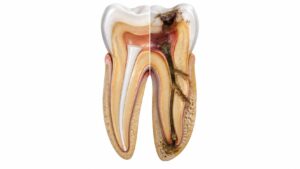
Irreversible alteration and biological harm aren't the same thing. Conventional veneer preparation deliberately changes the tooth's outer surface so the restoration has room to fit and bond. Cleveland Clinic explains that removed enamel doesn't grow back, which is why conventional veneers are generally considered irreversible, while the reversibility of minimal-preparation or no-preparation options depends on the individual situation (Cleveland Clinic's explanation of dental veneers).
An artificial nail offers a useful, limited analogy. Trimming the surface before adding a covering helps explain why preparation creates room for something placed over the original structure. The important difference is that a fingernail grows back, while prepared tooth enamel does not.
Permanent change versus a tooth problem
A tooth can be permanently altered without developing decay, persistent sensitivity, or a problem requiring root-canal treatment. Conversely, an attractive veneer doesn't establish that the underlying tooth is free of disease.
The absence of pain also doesn't answer the whole question. A comfortable tooth may still have undergone an irreversible change, and comfort alone doesn't show how much enamel remains. A clinical discussion of enamel preservation and veneer candidacy emphasizes the distinction between conservative preparation and excessive reduction.
| Question | What it helps establish |
|---|---|
| Was healthy enamel removed? | Whether the tooth has been permanently altered |
| Is there sensitivity, decay, or another complication? | Whether a biological problem needs assessment |
| Is the veneer secure and functioning? | Whether the restoration is performing its role |
| Can the tooth return to its original condition? | Whether the treatment is genuinely reversible |
The right conclusion isn't that all preparation is harmful or that every cosmetic change is harmless. The amount and location of the alteration matter. Consent should cover both the immediate procedure and the possibility that the prepared tooth will need restorative care in the future.
Veneer Types and How Much Enamel They Touch
The label on a veneer package doesn't determine how conservatively a tooth can be treated. Tooth position, alignment, available space, material choice, and the planned shape all influence preparation. A design that works with very little adjustment on one tooth may require a different approach on its neighbor.
Conventional porcelain veneers generally involve more deliberate reduction. Minimal-preparation designs aim to limit that reduction, while no-preparation designs seek to add the veneer with little or no cutting. None of those descriptions supplies a universal enamel measurement.
Comparing Veneer Preparation Types
| Preparation Type | Typical Enamel Removed | Reversible | Best For | Main Trade-Off |
|---|---|---|---|---|
| Conventional porcelain | A thin layer, with the amount tailored to the tooth and design | Usually not | Cases requiring space for the planned restoration | Greater commitment of natural tooth structure |
| Minimal-preparation | Less reduction where anatomy allows | Case-dependent, not assumed | Teeth that can accommodate an additive or limited-reduction design | Less preparation may limit achievable changes |
| No-preparation | Little or none, although some adjustment may still be necessary | Sometimes, depending on the actual treatment | Carefully selected teeth with suitable space and contours | Added bulk can compromise the result if selection is poor |
Preserving enamel supports predictable bonding. A clinical review explains that excessive preparation and dentin exposure exceeding 50% can contribute to debonding, whereas intact enamel offers more predictable adhesion (clinical review of veneer preparation and complications). Dentin is the tooth structure beneath enamel; bonding predominantly to that surface presents a different clinical situation from bonding to intact enamel.
Practical rule: “No-prep should describe an appropriate treatment design, not a promise that every patient can avoid preparation.
Patients comparing terminology may also encounter the Littleover Dental Practice veneers page. Such service descriptions can provide context, but a marketing category shouldn't replace a tooth-by-tooth explanation.
Why less preparation still needs planning
Adding material without adequate space can create excessive contour. The dentist must consider whether the final shape will permit comfortable biting, healthy gum relationships, and effective cleaning, rather than treating the smallest amount of cutting as the only measure of safety.
At a cosmetic consultation in Miami, FL, the useful question is therefore not which type is available. It's which preparation, if any, fits the existing tooth without creating avoidable compromises. Patients should leave knowing what the label means for their own teeth.
How Long Veneers Last on Natural Teeth
A long-lasting veneer isn't necessarily a lifetime restoration. The practical expectation is ongoing observation, maintenance, and the possibility of replacement, rather than a finished treatment that never needs attention again.
The following visual provides a general maintenance-oriented overview, not a promised replacement date.
What survival studies actually measure
A systematic review reported estimated cumulative survival of 94.4% at five years, 94.1% at eight years, 93.5% at ten years, 85.74% at fifteen years, and 82.93% at twenty years (systematic review of porcelain laminate veneer survival). Those estimates describe outcomes across studied restorations, not a countdown for an individual patient.
The decline over longer follow-up matters when considering cosmetic treatment on otherwise healthy teeth. A veneer might eventually chip, fracture, loosen, discolor at its edge, or require replacement because of a problem near the margin. Replacement can involve additional preparation, so the original decision should account for more than the first set of veneers.
Restoration survival means the veneer remains in service. It doesn't mean that the tooth has required no attention.
A related video offers another format for considering the longevity discussion.
Planning for ownership rather than a deadline
Patients benefit from discussing what follow-up will involve before accepting treatment. A written plan should distinguish routine monitoring from potential repair or replacement, while avoiding promises about exactly when either will be needed.
The important financial question isn't limited to the initial fee. It also includes whether the patient is comfortable taking responsibility for a restoration that may need future care. A durable cosmetic result can be worthwhile, but durability and permanence aren't interchangeable.
For Miami patients balancing treatment with work and family commitments, that distinction supports a more realistic decision. The goal is a maintainable smile, not an assurance that future dental visits will become unnecessary.
Real Risks to Your Teeth and How to Lower Them
Veneer complications fall into different categories, and each calls for a different response. Sensitivity involves the tooth's response to treatment; fracture and debonding involve the restoration or its attachment. Marginal discoloration, leakage, and secondary decay concern the area where the veneer meets the tooth.
Serious biological complications are possible, but they aren't the same as inevitable tooth damage. A systematic review of 6,500 veneers reported 95.5% cumulative survival at ten years; when secondary caries and root-canal treatment were analyzed separately as failure causes, the corresponding survival estimates were 99.3% and 99.0%, respectively (systematic review of long-term veneer failures). Those figures aren't a guarantee for an individual tooth, and fracture and debonding were more common failure mechanisms than direct biological harm.
Match the risk to a prevention plan
- Sensitivity and retention problems: Conservative preparation should be considered before treatment, with the enamel findings discussed earlier guiding the design.
- Fracture or chipping: The dentist should assess the bite and possible grinding. A professionally fitted night guard may be indicated, and veneered teeth shouldn't be used to bite hard objects.
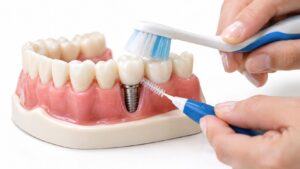
- Marginal decay and leakage: Daily interdental cleaning and periodic examinations help manage the vulnerable area around restoration edges.
- Gum-related difficulties: Untreated gum disease and contours that interfere with cleaning need attention rather than being hidden beneath cosmetic work.
Prevention begins before placement. Existing decay, active gum disease, inadequate enamel, or heavy biting forces may change the treatment sequence or make veneers unsuitable. Treating those concerns first is part of responsible cosmetic dentistry, not an obstacle to it.
Recognizing when follow-up matters
A loose veneer, a changed bite, or continuing discomfort deserves clinical assessment. Searching for an emergency dentist may be appropriate when a veneer problem occurs alongside urgent dental symptoms; cosmetic appearance alone shouldn't determine how the concern is handled.
For everyday maintenance, the practice's guide to how to care for veneers gives patients a practical resource to discuss with the dental team. Instructions should be personalized to the restoration and the patient's cleaning needs.
The benefit of preventive dental care is better risk management, not immunity from complications. Cleaning and exams create opportunities to assess margins, gums, and function before a concern becomes harder to manage.
Veneers, Bonding, and Whitening Compared
A patient who wants a brighter smile doesn't necessarily need a restoration that changes tooth structure. The starting point should be the desired change: color, shape, a localized chip, spacing, or a combination of concerns.
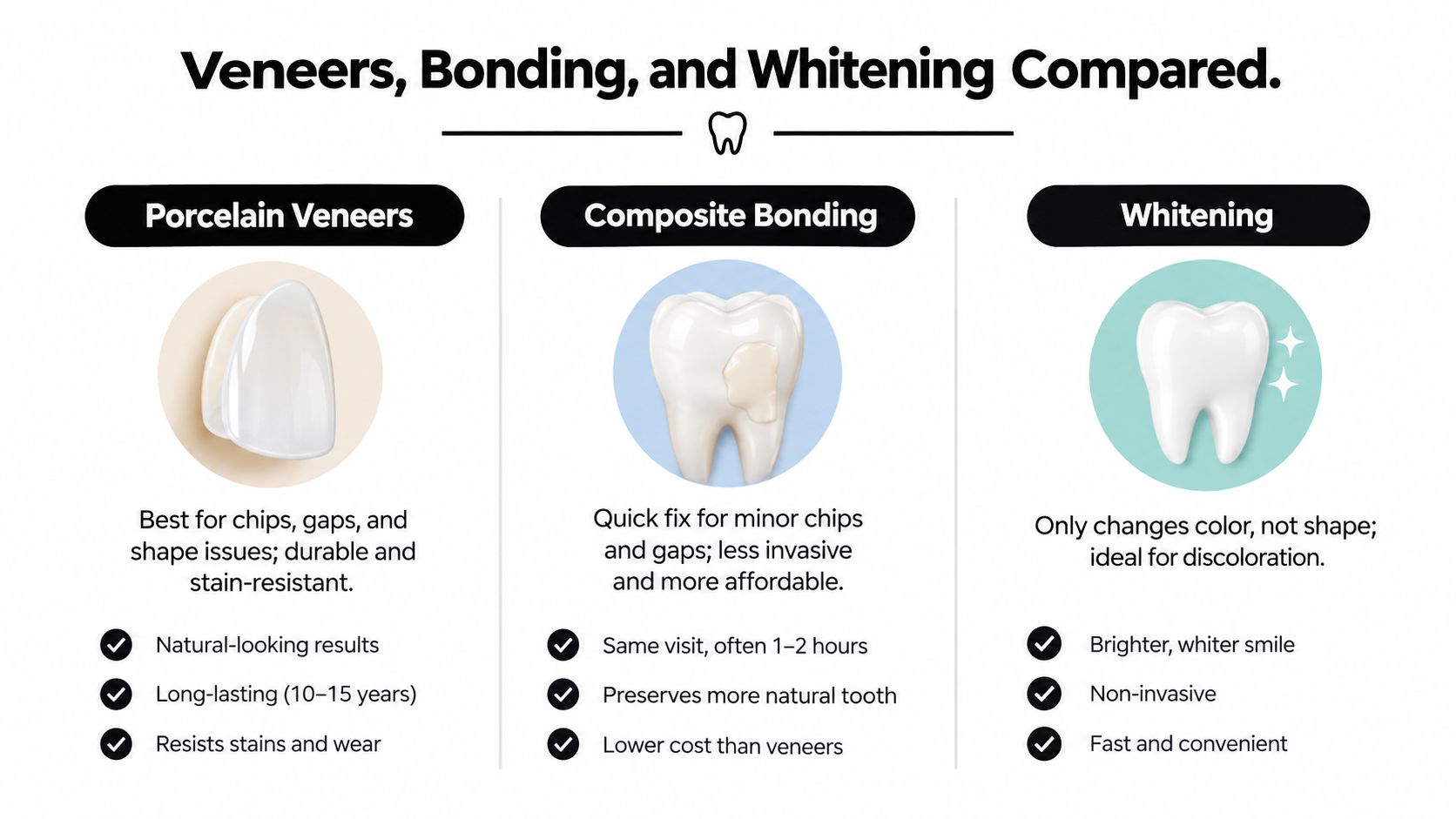
The following comparison can help organize a consultation, but it isn't a diagnosis or a substitute for examining the teeth.
Match the service to the actual goal
Professional teeth whitening belongs in the conversation when the main concern is color rather than tooth shape. The useful consultation question is whether whitening alone could meet the patient's expectations, without committing to a veneer design.
Composite bonding deserves discussion when the concern is localized, such as a small edge defect or gap. Patients can review dental bonding for front teeth before asking how an additive repair would compare with porcelain for their particular teeth.
Porcelain veneers warrant closer consideration when the desired result involves several appearance changes together. Even then, neither bonding nor whitening should be described as universally appropriate, completely reversible, or free of limitations. The actual procedure matters more than a simplified comparison.
| Patient concern | Useful starting question |
|---|---|
| Discoloration with otherwise acceptable shape | Could whitening achieve the desired change? |
| A small chip or localized gap | Could bonding address the concern conservatively? |
| Worn edges or combined shape and color concerns | What caused the problem, and would veneers address it appropriately? |
| A heavily restored tooth | Is a different restorative dentistry approach needed? |
Avoid treating a different problem with veneers
Patients arriving from searches for dental implants near me or tooth extraction may need a different discussion from someone seeking a smile enhancement. The immediate priority is identifying the condition and the appropriate care pathway, not fitting every concern into a cosmetic treatment.
A conservative recommendation may mean choosing bonding, considering whitening, treating an underlying issue, or leaving a healthy tooth unchanged. The least extensive suitable option deserves a fair comparison, even when the patient originally requested veneers.
What to Expect at a Veneer Consultation in Miami, FL
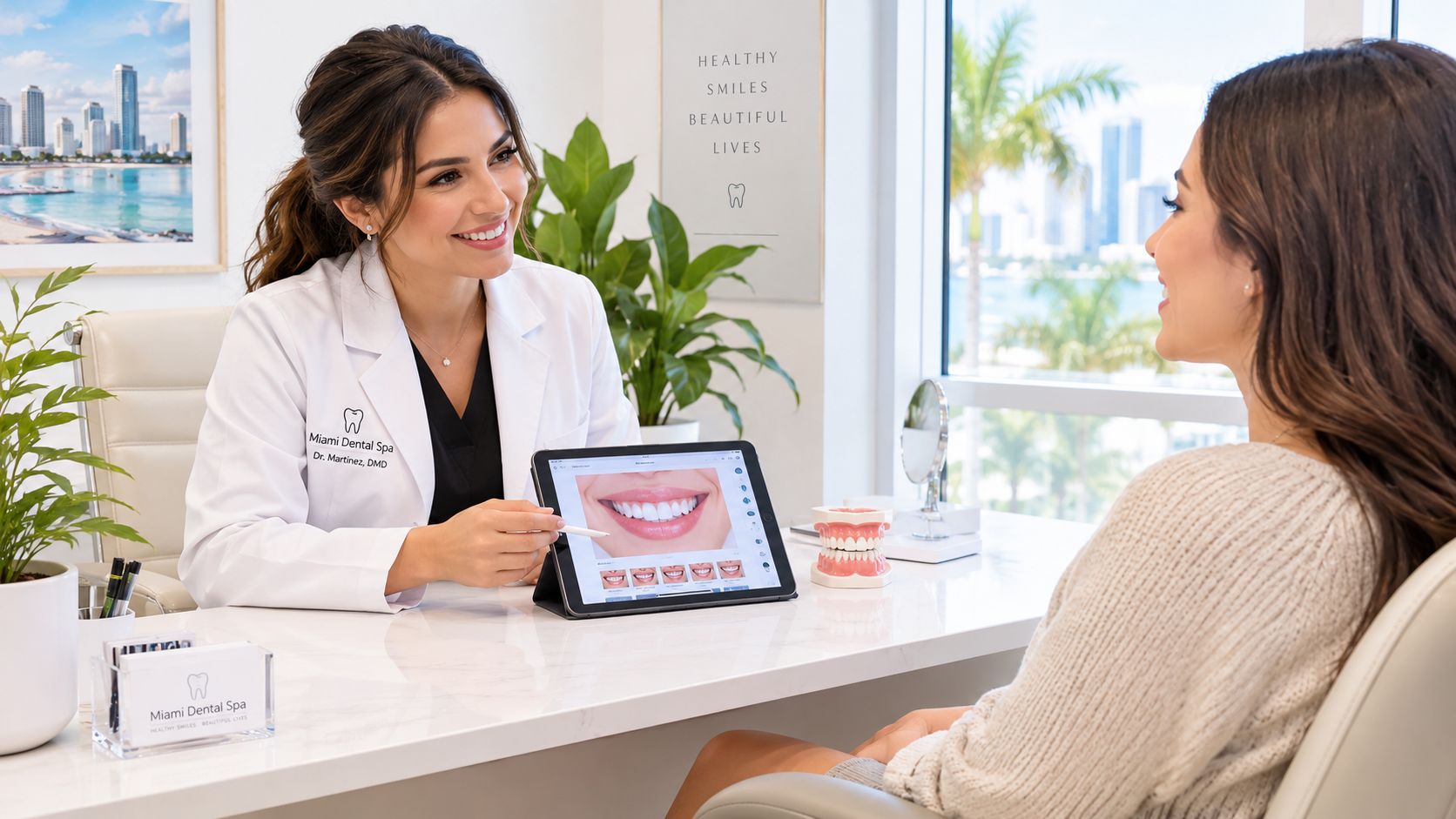
A cosmetic consultation should make the decision clearer without rushing the patient into preparation. The initial conversation can cover the desired appearance, concerns about discomfort, budget, and willingness to maintain restorations over time. Patients can bring photographs of their own smile and explain what feels distracting, rather than arriving with a treatment already selected.
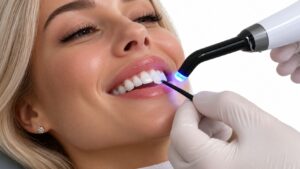
The consultation image illustrates the kind of face-to-face discussion that can help patients understand a proposed change.
Assessment before commitment
New patient exams should establish the condition of the teeth and gums before a cosmetic recommendation. Dental x-rays, including digital imaging when appropriate, may form part of that assessment; they aren't a reason to skip the clinical examination.
The bite and available enamel also need assessment. Patients should ask how the dentist reached the recommendation, what limitations were identified, and whether any general dental care should happen first. An explanation of uncertainty is more useful than an unsupported assurance that a particular design is ideal.
- Clinical findings: Which teeth are suitable, and which findings could change the plan?
- Treatment choices: What alternatives were considered, including no cosmetic treatment?
- Written details: What are the proposed sequence, timelines, costs, and maintenance responsibilities?
- Consent boundaries: When would irreversible preparation begin, and what approval is required beforehand?
A comfortable visit without pressure
The Miami practice is led by Dr. Neda Bahmadi, DMD, and offers general, cosmetic, and restorative care in a setting designed around patient comfort. Its bilingual team and transparent treatment planning can help patients discuss concerns and understand recommendations.
Patients with dental anxiety can ask about the practice's comfort amenities, including aromatherapy and streaming entertainment. Those features may make the appointment feel more manageable, but they don't replace a clear clinical explanation.
A consultation should remain an assessment unless treatment has been separately explained and approved. No enamel should be removed merely to help a patient decide whether veneers are appropriate. Patients can also confirm whether the cosmetic consultation is complimentary and whether examinations or imaging carry separate charges before booking.
For adults in Downtown Miami, Midtown Miami, and Hallandale Beach, the most valuable outcome is a plan that accounts for natural teeth as carefully as appearance. A patient should leave understanding the recommendation, its limits, and the next step, including the option to pause.
Ultra Smile DentalSpa offers cosmetic dental consultations and personalized treatment planning that consider oral health, enamel condition, and bite before veneer treatment. Patients considering a smile change can visit Ultra Smile DentalSpa to request an appointment in Miami, FL, and ask the bilingual team about veneers, conservative alternatives, and the care needed to protect natural teeth.