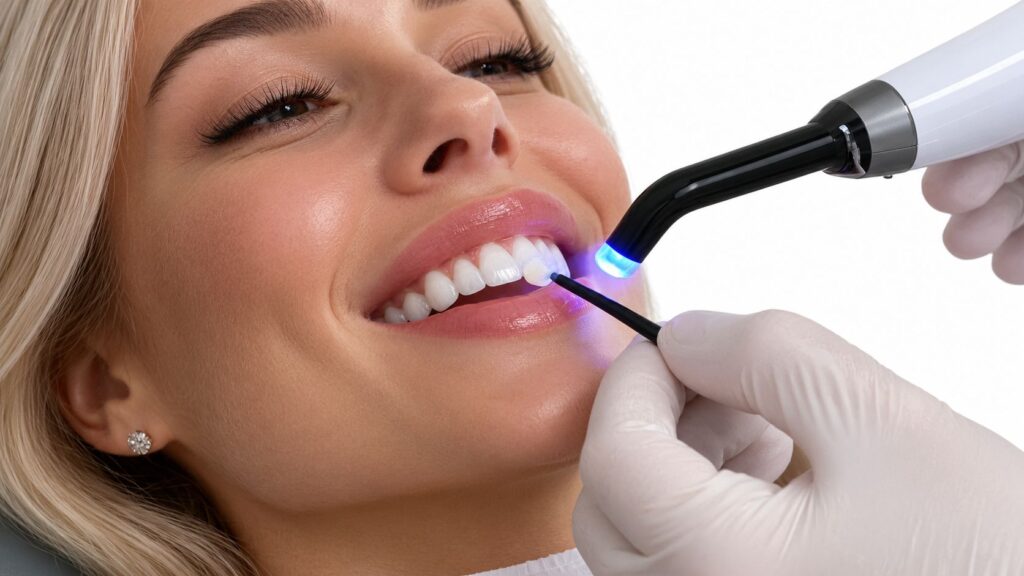
A chipped front tooth can become the first thing someone notices in a mirror. A rough edge catches the tongue, an old repair looks darker in photographs, or a small gap interrupts an otherwise comfortable smile. For adults searching for a dentist in Miami, FL, front-tooth bonding can be a practical starting point, provided the dentist checks the tooth's health and bite before making cosmetic changes.
Table of Contents
- Why Front Teeth Bonding Is the First Call Many Miami Patients Make
- What Dental Bonding on Front Teeth Actually Does
- What Happens Step by Step During Your Bonding Visit
- How Long Front Teeth Bonding Lasts and What Affects It
- Bonding vs Veneers vs Crowns for Front Teeth
- What Front Teeth Bonding Costs in Miami
- Aftercare That Keeps Bonded Front Teeth Looking New
- Your Next Step With a Miami Cosmetic Dentist
Why Front Teeth Bonding Is the First Call Many Miami Patients Make
The concern often starts small. A patient notices an uneven incisor before a work meeting or begins covering a smile in photographs because an old chip has become more visible. The question isn't necessarily how to transform every tooth. It's how to correct the distracting detail without committing to more treatment than necessary.
Front-tooth bonding fits that conversation because it can address a localized problem while preserving healthy tooth structure. However, a photograph alone can't establish whether the problem is cosmetic. A dentist needs to distinguish a simple edge defect from wear, decay, or damage that requires a different restorative plan.
A comfortable setting for a careful decision
Ultra Smile DentalSpa provides cosmetic and restorative dental care for patients near Downtown Miami, Midtown Miami, and Hallandale Beach. Its refreshments, custom aromatherapy, and streaming entertainment create a comfort-focused setting for patients who feel hesitant about dental appointments. Those amenities support the experience, but the clinical decision still depends on the tooth, gums, and bite.
Someone searching for a cosmetic dentist near me may want a quick improvement, yet the most useful consultation considers more than speed. The dentist should discuss the desired shape, the amount of healthy enamel available, and the maintenance the patient is comfortable accepting.
Practical rule: The smallest cosmetic change deserves the same attention to tooth health and bite as a larger restoration.
Looking beyond search visibility
Patients increasingly encounter dental information through search engines and AI-generated answers. AISEOGrow's resource about helping dental practices appear in AI search results offers context on that discovery process, but visibility shouldn't replace an individualized examination.
A useful local appointment ends with a clear explanation of suitability, alternatives, fees, and expected upkeep. That gives patients a way to decide whether bonding addresses the actual concern rather than choosing the first cosmetic service they find online.
What Dental Bonding on Front Teeth Actually Does
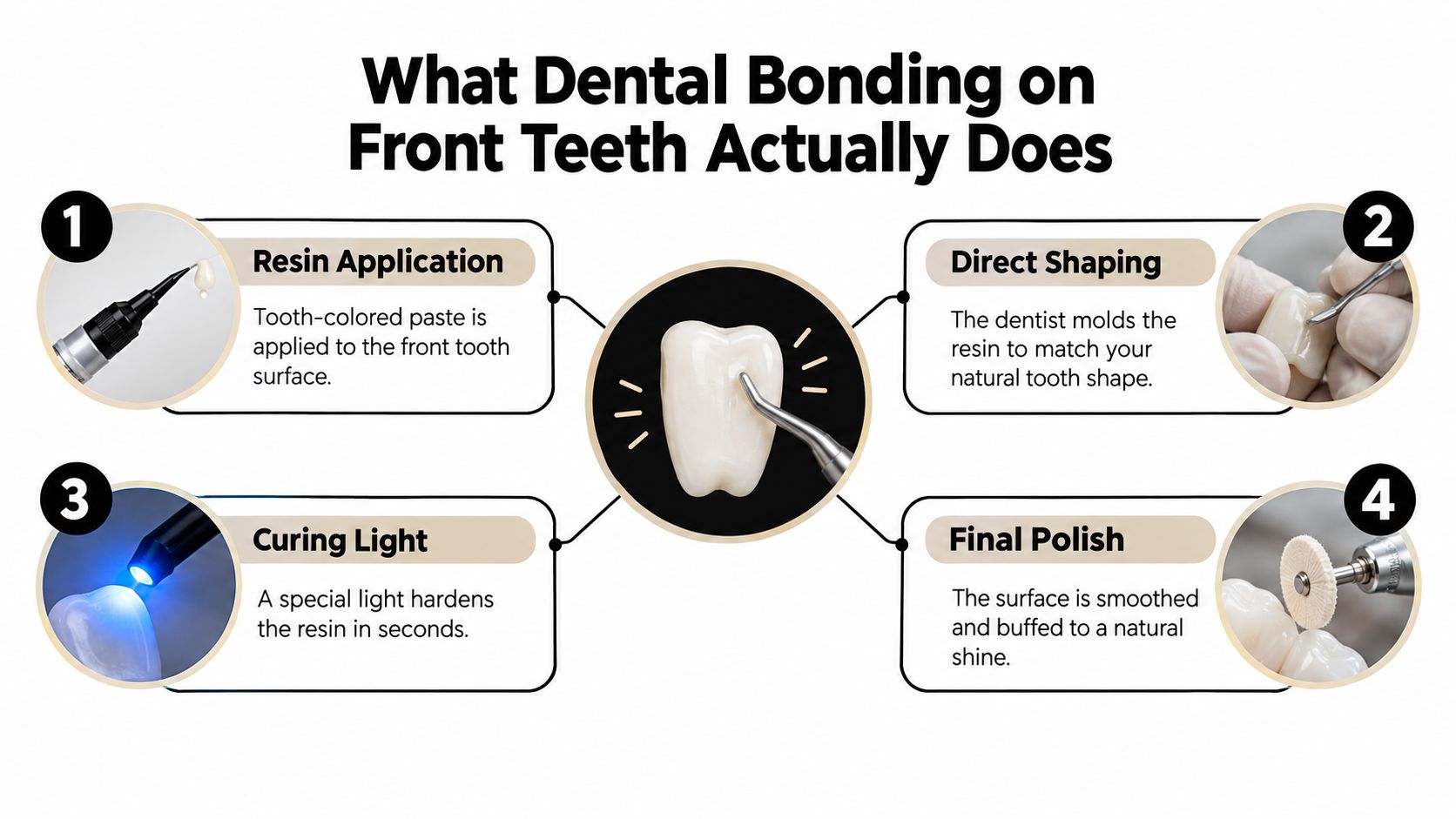
Composite bonding resembles precise sculpting. The dentist adds tooth-colored resin directly to the tooth, builds the missing contour, and finishes the surface so it blends with the surrounding smile. The material is shaped in the mouth rather than fabricated as a separate porcelain restoration.
The process illustration shows how the added material becomes part of the tooth's visible contour.
Problems that suit a conservative approach
Bonding is worth evaluating when the correction is localized and the underlying tooth remains sound.
- Small chips and uneven edges: Added resin can restore a missing corner or improve the outline of a worn edge.
- Minor gaps: Carefully planned additions can reduce a space without making the neighboring teeth look disproportionately wide.
- Shape differences: Selected contour changes may improve uneven tooth length or refine a smile after orthodontic treatment.
- Localized color concerns: Resin may camouflage a limited area, although broader shade changes need a separate discussion.
For spacing concerns, the practice's guide to options for fixing gaps between teeth provides a useful starting point. Closing a gap should preserve believable tooth proportions, not just eliminate every visible space.
Enamel and bite determine candidacy
Healthy gums, usable enamel, and realistic appearance goals matter more than enthusiasm for a fast result. A review of adhesive durability describes enamel bonding as more reliable and durable than bonding primarily to dentin, supporting conservative preparation and careful moisture control.
Large fractures, significant decay, or severe grinding-related wear warrant broader assessment. Bonding shouldn't be presented as a permanent shade change or a way to bypass treatment of an unhealthy tooth.
A complete cosmetic dentistry plan may also consider teeth whitening, veneers, invisible braces, or same-day crowns. The right choice depends on whether the problem involves color, alignment, missing contour, or structural weakness.
What Happens Step by Step During Your Bonding Visit
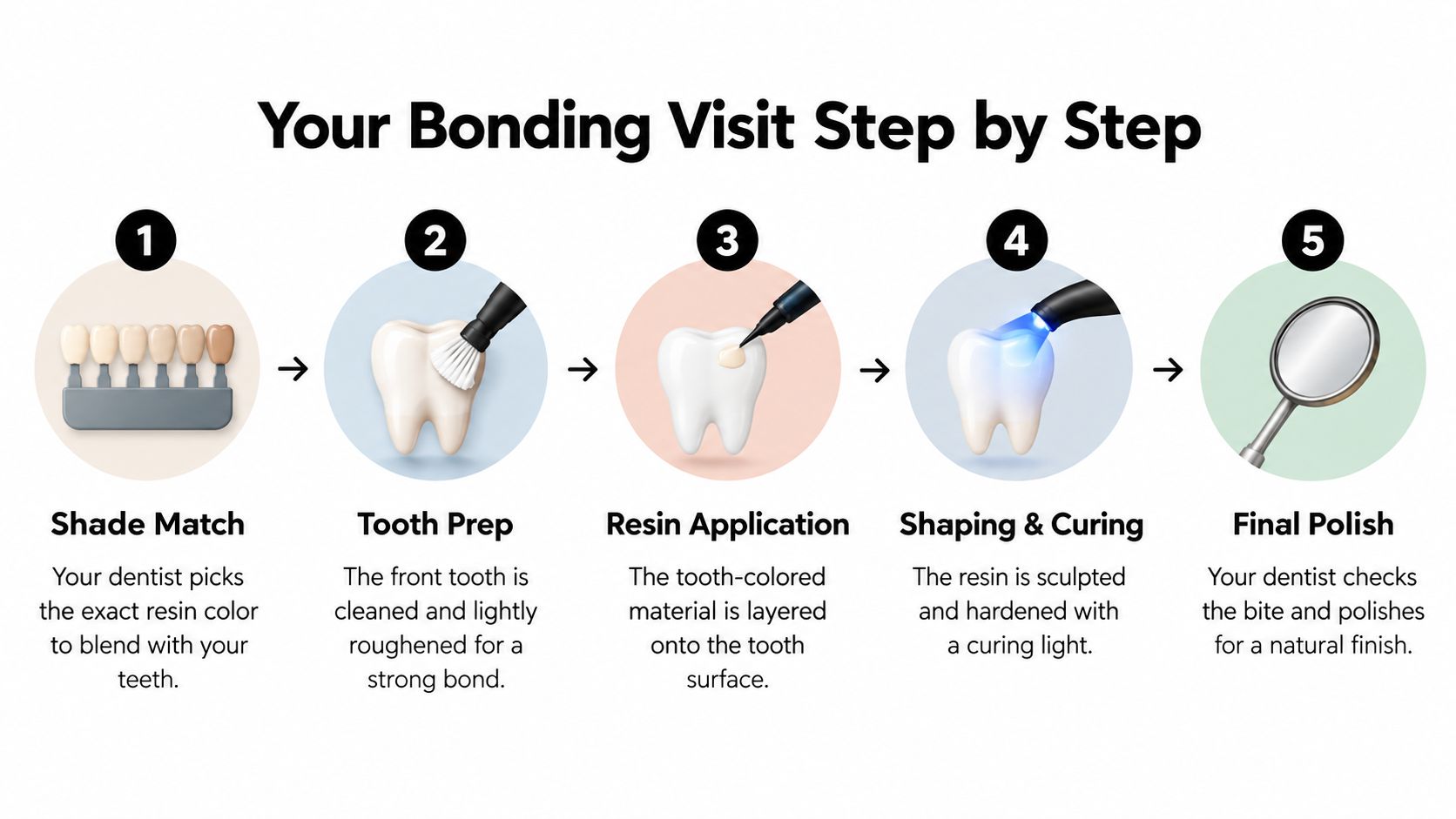
A bonding appointment begins with assessment, not resin placement. The dentist examines the tooth and surrounding gums, reviews the patient's goals, and checks how the front teeth meet during biting and jaw movement. New patient exams and dental x-rays, when clinically indicated, help establish whether cosmetic treatment can proceed safely.
The visit diagram outlines the chairside sequence.
From shade selection to controlled placement
Shade matching comes before the final restoration takes shape. The dentist evaluates color under suitable lighting and considers the neighboring teeth's translucency, rather than choosing a flat white that stands out.
The tooth surface is then prepared and conditioned. Isolation helps keep saliva away from the working area, while conservative preparation protects usable tooth structure. Composite is applied in controlled layers so the dentist can refine both color and contour.
The chairside work has several distinct priorities:
- Natural proportions: The restored edge should fit the tooth's width and the surrounding smile.
- Comfortable contacts: Areas between teeth need attention so the result doesn't create an awkward contour.
- An appropriate bite: The addition must function with the opposing teeth, not just look attractive from the front.
Finishing is part of the treatment
After light curing, the dentist refines the shape and polishes the surface. A final bite check helps identify contacts that place unnecessary pressure on the restoration.
According to Cleveland Clinic's dental bonding overview, treatment commonly takes 30–60 minutes per tooth, is generally completed in one office visit, and usually requires no downtime. Patients can typically return to work or normal activities afterward.
Streaming entertainment can make the appointment feel less demanding, and the practice's hot towel finish provides a comfortable conclusion. Patients with dental anxiety should discuss comfort preferences before treatment so the team can plan the visit around both clinical needs and personal concerns.
How Long Front Teeth Bonding Lasts and What Affects It
Bonding longevity isn't a single expiration date. A restoration may remain attached while needing polishing, a small repair, or correction of an unattractive margin. That distinction matters when comparing reassuring survival statistics with the appearance a patient expects.
The lifespan graphic below is a simplified illustration. Its fixed timelines and habit-specific predictions shouldn't be treated as individualized clinical estimates; the study findings provide a more reliable basis for planning.
What the survival evidence means
A systematic review of anterior composite restorations for localized tooth wear reported survival of 95.6% at two years and 88.6% at five years, while a broader review summarized in the same publication reported approximately 88% survival over two to ten years. These results came from different clinical circumstances, so they don't form a single prediction for an individual tooth.
The review also describes substantial differences in restoration size, wear severity, study methods, and definitions of failure. A small repair may count as failure in one dataset while the restoration remains classified as surviving in another.
A restoration that still functions may no longer have the smoothness, color, or edge shape the patient originally wanted.
Why maintenance needs vary
Fracture, partial debonding, marginal discoloration, and declining esthetic quality are important long-term problems. A systematic review of anterior restoration failures identifies fracture as the most frequent failure mechanism and supports attention to restoration extent, adhesive technique, and functional loading.
That makes ice chewing, nail biting, and grinding relevant to treatment planning. Repeatedly loading a thin extension at the biting edge is different from maintaining a small addition on a less stressed surface.
The accompanying video offers an additional visual resource for patients considering bonding.
A reasonable expectation is ongoing service with possible maintenance, not permanent perfection. At longer follow-up, the dentist should assess function and appearance separately, then decide whether polishing, localized repair, or replacement is justified.
Bonding vs Veneers vs Crowns for Front Teeth
The useful question isn't which material wins. It's which treatment solves the patient's problem with an acceptable biological and maintenance cost.
A small chip on an otherwise healthy tooth presents a different decision from widespread color dissatisfaction or a weakened, heavily restored incisor. Choosing treatment by appearance alone can overlook the reason the tooth needs care.
A practical side-by-side comparison
| Factor | Composite Bonding | Porcelain Veneers | Crowns |
|---|---|---|---|
| Main role | Localized contour correction | Broader cosmetic surface changes | Restoration of a structurally compromised tooth |
| Tooth preparation | Often conservative | Preparation depends on the planned result | More extensive coverage-based preparation |
| Reversibility | Don't assume complete reversibility | An irreversible commitment when enamel is removed | An irreversible restorative commitment |
| Longevity | Case-dependent, with maintenance expected | Discuss material, bite, and preparation individually | Depends on remaining tooth health and restoration design |
| Repair decisions | Localized repair may be possible | Damage may require a different repair or replacement approach | Treatment depends on the crown and underlying tooth |
| Cost discussion | Obtain a tooth-specific estimate | Compare the complete cosmetic plan | Include any underlying restorative treatment |
When bonding is the right first move
Bonding deserves consideration when the defect is limited, enough sound enamel remains, and the planned addition won't receive excessive bite pressure. Its repairability can be valuable for patients who prefer an incremental approach.
A review of long-term direct anterior composite restorations supports the importance of restoration type and clinical circumstances rather than treating all front-tooth repairs as equivalent.
When another treatment deserves priority
A veneer discussion becomes more relevant when the patient wants coordinated changes across visible tooth surfaces. A crown assessment belongs in the conversation when substantial structural damage, existing restorations, or prior root canal treatment affects the tooth's prognosis.
Neither option removes the need to manage grinding. A night guard or orthodontic evaluation may be the more important first step when the bite threatens any proposed restoration.
For someone searching dental implants near me, the distinction is different: bonding modifies an existing tooth rather than replacing a missing one. Likewise, tooth extraction shouldn't be approached as a cosmetic shortcut. The dentist should first determine whether the natural tooth can be predictably retained.
What Front Teeth Bonding Costs in Miami
A meaningful bonding estimate requires an examination. There's no verified Miami fee range available here, and quoting an unsupported price would create the wrong expectation before the dentist has assessed the work.
Patients should request a written estimate identifying the teeth involved, the planned corrections, and any treatment needed beforehand. A limited contour change and a complex reconstruction shouldn't be treated as interchangeable procedures.
What should be included in the estimate
The financial discussion should reflect the actual treatment plan, not just the name of the service.
- Scope of correction: The amount of missing structure and the areas being restored affect the work required.
- Appearance goals: A demanding shade match or coordinated changes across neighboring teeth require careful planning.
- Underlying dental needs: Decay treatment, an examination, imaging, or bite management may need separate consideration.
- Maintenance arrangements: Patients should ask how future polishing, repairs, and replacement would be assessed and charged.
Insurance coverage requires individual verification. Patients shouldn't assume that a cosmetic improvement and treatment of a damaged tooth receive the same benefits. The practice accepts insurance and provides options for patients without coverage, but current eligibility, terms, and out-of-pocket costs should be confirmed directly.
Budget perspective: The useful comparison is the complete treatment and maintenance plan, not an isolated advertised fee.
Comparing long-term value
Bonding can be an appealing entry point for a limited cosmetic concern, but it shouldn't be chosen solely because its initial estimate appears lower than another option. Repeatedly repairing an overloaded edge may be less practical than addressing the bite first.
Conversely, choosing a veneer for a small defect may involve a commitment that the patient doesn't need. Transparent treatment planning should explain the reasons for each recommendation and allow patients to compare alternatives without pressure.
Before accepting treatment, patients should understand what is included, what remains uncertain, and how the practice handles future changes in the restoration's appearance or function.
Aftercare That Keeps Bonded Front Teeth Looking New
Good aftercare separates stain control from fracture prevention. Coffee-related surface discoloration and a chip caused by repeated biting pressure aren't the same problem, so they shouldn't receive the same solution.
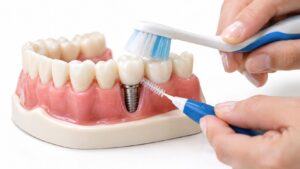
The dental care image below reflects the everyday routines that accompany professional maintenance.

Protecting color and surface smoothness
Patients should follow the dentist's material-specific instructions after placement. Light curing hardens the resin during treatment; a universal waiting period for the material to finish setting shouldn't replace individualized advice.
A scoping review of anterior composite layering and longevity identifies pigmented beverage exposure, polishing quality, material characteristics, hygiene, and grinding among factors affecting appearance and service life.
Practical maintenance includes:
- Reduce prolonged stain exposure: Frequent sipping of strongly pigmented drinks deserves discussion if discoloration becomes a recurring concern.
- Clean bonded margins gently: Brushing and flossing remain important. Floss that repeatedly catches or shreds at an edge warrants an examination rather than forceful handling.
- Arrange polishing when indicated: The dentist should set the interval according to surface condition and the patient's cleaning and exam schedule.
Match the solution to the problem
Surface staining may respond to professional polishing. Internal color mismatch, damaged margins, or adhesion problems may need localized repair or replacement instead. The practice's guidance on how to whiten bonded teeth can help patients prepare for a conversation about refreshing an existing result.
For patients who grind or clench, a custom night guard may be more useful than requesting a different composite. Its role should be assessed alongside the bite, wear pattern, and restoration design.
A new rough edge, visible chip, sudden sensitivity, or color change at the margin calls for review. Significant pain or fresh trauma should prompt an emergency dentist assessment rather than a routine cosmetic appointment.
Your Next Step With a Miami Cosmetic Dentist
The strongest bonding plan balances the desired appearance with what the tooth can support. Patients don't need to choose between accepting an annoying defect and committing immediately to extensive cosmetic treatment. An examination can identify whether a limited correction is appropriate or whether another issue needs attention first.
The final consultation should resolve practical uncertainties before treatment is scheduled. It should also distinguish an achievable natural-looking improvement from an expectation of a permanently flawless result.
Questions worth bringing to the consultation
- Whitening sequence: Patients considering a brighter overall shade should discuss whitening before the dentist selects the final resin color.
- Appointment planning: The team can explain whether the proposed work fits a routine bonding visit or needs additional appointments.
- Natural appearance: Patients should describe the preferred shape and brightness, including whether the goal is subtle blending rather than a noticeably altered smile.
- Future care: The written plan should explain how the dentist will monitor the restoration and assess changes.
A local appointment with clear expectations
Patients from Downtown Miami, Midtown Miami, and Hallandale Beach can ask about bilingual assistance, comfort preferences, insurance verification, and available payment options when arranging care. Those details help make the visit manageable without distracting from the clinical recommendation.
For readers interested in the administrative side of patient access, the resource explaining how rednea helps dental clinics provides context on clinic-support services. For the patient, the priority remains straightforward: a clear appointment process, an understandable treatment plan, and a dentist who explains the trade-offs.
Ultra Smile DentalSpa offers front-tooth bonding alongside veneers, whitening, crowns, and bite-protection options in a spa-like Miami setting. Patients ready to address a chip, gap, or uneven edge can visit Ultra Smile DentalSpa to request a cosmetic consultation and a personalized treatment estimate.