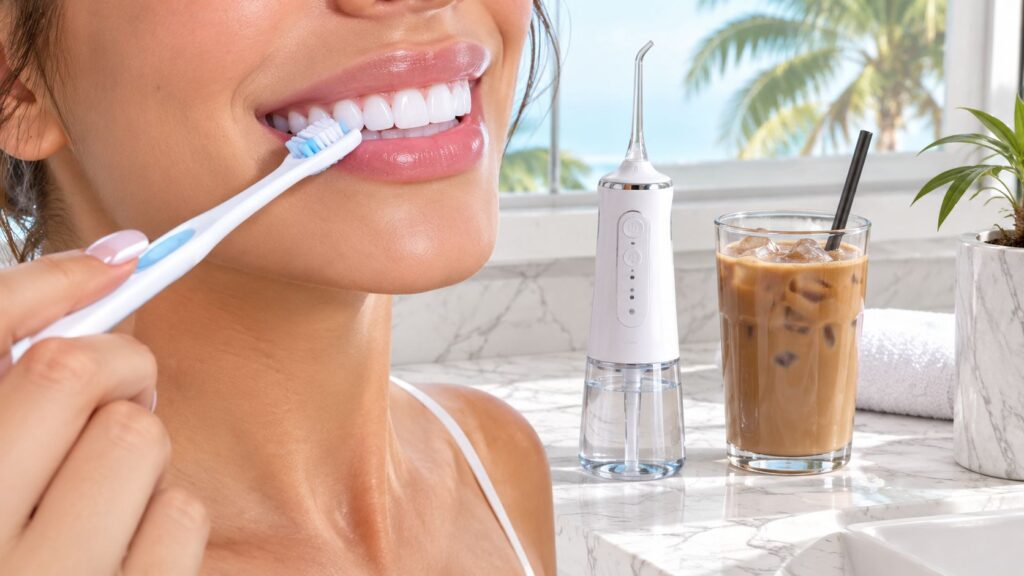
Three weeks after veneer placement, a Miami patient may be enjoying the new smile everywhere, from iced coffee before work to dinner near the water, wondering whether those daily choices are protecting the porcelain. The teeth look polished, the gums feel mostly settled, and the bonding appointment already feels like a finished chapter.
It isn't. The bonding appointment is the beginning of veneer maintenance, not the end. Patients searching for a dentist in Miami, FL, a cosmetic dentist near me, or a practice that can monitor existing cosmetic dentistry need a plan that protects both the visible porcelain and the natural tooth at its edge. Proper care supports the bond, the gums, and the tooth structure beneath the restoration.
Table of Contents
- A New Veneer Smile in Miami and Why the First Months Matter Most
- Building a Daily Cleaning Routine That Protects Veneer Margins
- Foods Drinks and Habits That Quietly Damage Veneers
- Managing Sensitivity After Veneers and Knowing What Is Normal
- Professional Veneer Checkups and Cleanings in Miami
- Night Guards Bruxism and the Mechanical Risks Most Guides Skip
- Protecting Your Veneer Investment and Booking Your Next Visit
A New Veneer Smile in Miami and Why the First Months Matter Most
A patient three weeks after veneer placement may already be back to iced cortaditos, citrus at lunch, and beachside dinners with crusty bread, hard snacks, and dark drinks. The smile looks finished, but daily habits can expose a problem the mirror does not show: plaque trapped in the narrow contacts where porcelain meets enamel.
The first months set the pattern for long-term care. The gums adapt to the new contours, the bite settles into use, and the patient discovers which contacts resist flossing. Tight contacts deserve attention early. Adjusting the cleaning technique before plaque and bleeding become routine is easier than treating inflammation after it has been ignored.
Practical rule: A beautiful smile needs a maintenance routine designed around its margins, not just a routine designed around the crowns of the teeth.
Miami routines create their own challenges. Cold drinks bring repeated temperature changes, while citrus and other acidic foods expose surrounding enamel to acids. Social dining also makes hard foods and staining beverages difficult to avoid entirely. Salt air does not directly destroy porcelain, but outdoor meals, dehydration, and casual snacking can make consistent plaque control easier to overlook.
The other frequently missed risk is mechanical. A patient may clean carefully during the day while grinding or clenching at night, placing repeated force on the veneer edges and bonding interface. Early follow-up gives the dentist an opportunity to review bite contacts and discuss protection if nighttime grinding is present.
Clinical evidence supports a favorable long-term outlook when patients maintain veneers properly. One study reported a 10-year estimated cumulative survival rate of 95.5%, with separate estimates of 96.3% for fracture-related outcomes and 99.2% for debonding, in the PubMed clinical study on porcelain veneer survival. Those figures describe a study population, not a promise for every individual case.
Patients who establish gentle brushing, careful interdental cleaning, sensible eating habits, and professional monitoring early give the margins and the bite a better chance to remain stable. The first months are also the right time to report bleeding, a flossing contact that will not pass, sensitivity that persists, or signs of clenching.
Patients preparing for treatment can review information about porcelain veneers in Miami and bring questions about material, bite, cleaning access, night protection, and follow-up expectations to a consultation.
Building a Daily Cleaning Routine That Protects Veneer Margins
A clean-looking smile can still hide plaque in tight contacts and along the gumline. Veneer care therefore depends on margin-level plaque control, not just polishing the visible porcelain. Plaque at the cervical margin can inflame the gums, contribute to recurrent decay, and weaken the tooth-restoration relationship over time. Long-term outcomes also depend on material, bonding, case selection, bite forces, and the patient's daily routine. The review of porcelain veneer longevity discusses these factors without making hygiene a guarantee of success.
Morning care should be gentle and deliberate
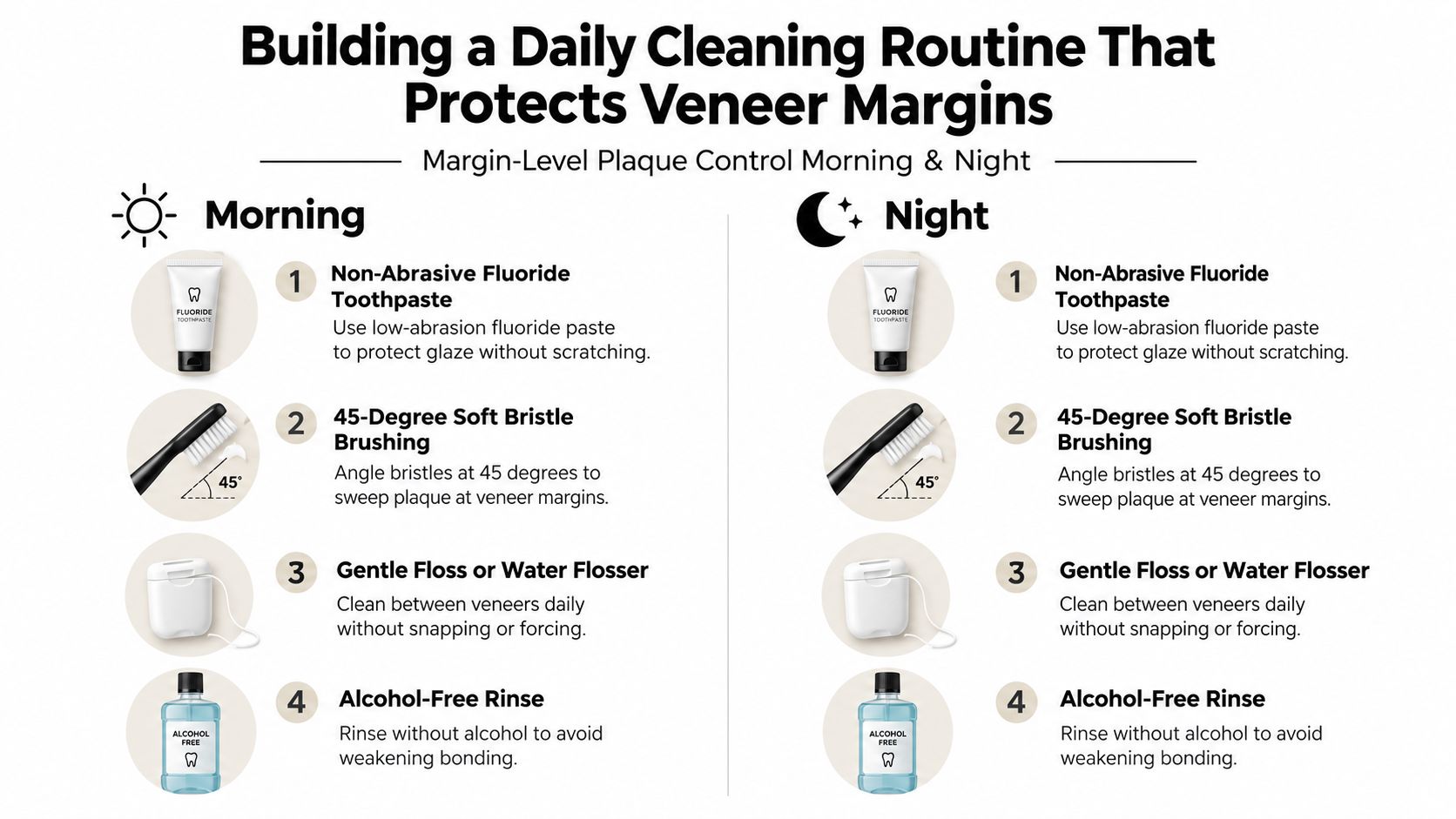
Use a soft-bristled toothbrush or an electric brush on a low-pressure setting. Choose a non-abrasive fluoride toothpaste and angle the bristles about 45 degrees toward the gumline. Sweep along the veneer margin rather than scrubbing horizontally across the porcelain. Excessive pressure can irritate the gums and make recession more likely without removing plaque from tight areas.
Clean the palatal or lingual surfaces as carefully as the front. Biofilm can collect behind the front six teeth, where the tongue, lip, and neighboring teeth limit visibility. A quick pass over the smile line leaves those surfaces and the gumline partly untouched.
Night cleaning must reach every contact
Floss once daily through every contact, including contacts that feel clean. Guide the floss gently against each tooth in a curved shape, then release it from the side instead of snapping it upward against a veneer edge. Interdental brushes may suit areas with enough clearance, particularly where recession or open embrasures make food trapping more likely.
A water flosser can help flush debris from tight cosmetic contacts, but it should supplement, not automatically replace, mechanical floss or an interdental brush. Water pressure may remove loose particles while leaving adherent plaque behind. A non-alcohol fluoride rinse can support protection at the cervical margin, but no rinse substitutes for brushing and interdental cleaning.
Bleeding calls for assessment, not harder brushing. It may reflect gingival inflammation, a difficult margin, recession, trapped cement, or a contour that needs adjustment. Consistent home care, dental examinations, and professional cleanings help control the two preventable problems most likely to undermine a veneer case early, marginal decay and gum inflammation.
A short video can clarify technique
Patients who are unsure how to angle the brush or guide floss around a bonded edge can watch this practical demonstration:
Foods Drinks and Habits That Quietly Damage Veneers
Veneers don't require a joyless diet. They require patients to stop delivering concentrated force or staining agents directly to vulnerable areas. Hard foods, aggressive habits, and repeated exposure at the bonding margins create more trouble than an occasional coffee enjoyed with sensible precautions.
Miami patients commonly encounter these situations:
- Iced cortaditos and cold brew: Cold beverages can trigger sensitivity while the teeth settle. A straw can reduce contact with the front surfaces, and sipping rather than holding ice against the teeth limits unnecessary exposure.
- Turmeric drinks and red wine: Pigments may affect composite bonding and the natural tooth at the margin even when porcelain resists surface staining. Rinsing with water afterward helps remove residue, and a straw can reduce contact with some beverages.
- Citrus: Acidic foods and drinks can soften surrounding enamel temporarily. Water after citrus helps dilute the acids, but brushing should be gentle rather than immediate and forceful.
- Cuban bread crusts: Cut firm crusts into manageable pieces and chew with the back teeth. Biting directly into a rigid edge concentrates force at the incisal porcelain.
- Ice and hard snacks: Swap ice chewing for a chilled drink through a silicone straw. Hard foods such as ice, hard candy, popcorn kernels, nuts, and shells are repeatedly identified as veneer risks because direct force can fracture or dislodge restorations, as outlined in this guide to foods to avoid with veneers.
Pistachio shells deserve a specific warning. Opening them with the front teeth creates a sharp, unpredictable load. The same applies to tearing packaging, biting nails, chewing pen caps, or opening jewelry clasps at outdoor markets. Teeth aren't tools, and porcelain edges aren't designed for those tasks.
Staining habits need margin awareness
Whitening toothpaste, charcoal powders, and abrasive polishing products can scratch or dull veneer surfaces. Whitening products also won't change the shade of porcelain, so they may create a mismatch with natural teeth rather than solve a veneer color concern. Patients who notice darkening near a margin should schedule an examination instead of repeatedly whitening at home.
Smoking and vaping can discolor the composite luting cement and increase gum-health concerns. Porcelain may remain relatively resistant to deep staining while the margins and nearby natural enamel become darker. Replacing tobacco breaks with water, sugar-free gum, or a brief walk won't solve nicotine dependence, but it removes direct smoke exposure from the smile and supports a healthier routine.
Managing Sensitivity After Veneers and Knowing What Is Normal
Mild sensitivity after veneers can feel alarming, especially when a patient has invested in a cosmetic result. Short thermal twinges or mild tenderness may occur while the tooth, bonding interface, and periodontal tissues settle. The pattern matters more than the mere presence of sensation.
The early adjustment pattern
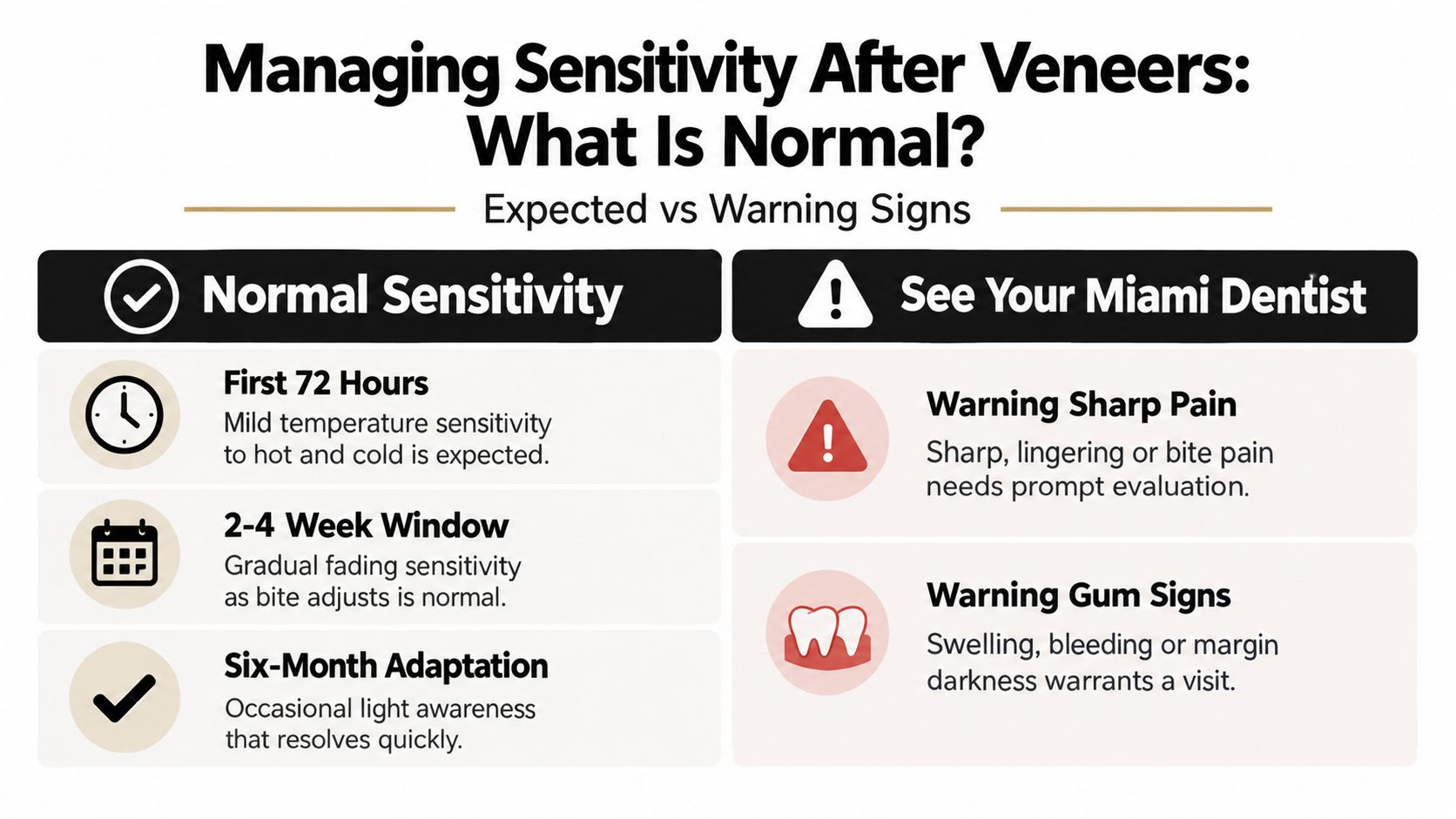
During the first 72 hours, mild hot or cold sensitivity is commonly manageable. A patient may also notice gum tenderness near a prepared tooth. Softer foods, moderate temperatures, gentle brushing, and a desensitizing toothpaste containing potassium nitrate can make the transition easier.
Over the two-to-four-week adjustment window, symptoms should gradually fade rather than intensify. A tooth may feel noticeable when the patient bites, but that awareness should improve as the bite and surrounding tissues adapt. Avoiding extreme temperatures during this period reduces triggers while the dentist evaluates any persistent concern.
By the six-month threshold, recurring or worsening symptoms deserve professional review. Occasional brief awareness isn't the same as pain that lingers, wakes a patient, or develops with every bite.
Symptoms that should prompt a Miami dental visit
The following descriptions help a patient explain the problem clearly:
| Symptom | What it may indicate |
|---|---|
| Lingering hot or cold pain beyond the adjustment period | Pulp irritation, exposed margin, or another tooth problem |
| Sharp pain when biting that releases slowly | A high bite contact or a deeper tooth issue |
| Swelling or persistent bleeding at a margin | Gingival inflammation, trapped cement, recession, or decay |
| A veneer suddenly feels higher than its neighbors | Occlusal interference or movement of the restoration |
| A loose edge, new crack, or sudden change in appearance | Debonding, fracture, or damage requiring examination |
A same-week appointment is appropriate for sharp bite pain, swelling, a loose veneer, or thermal pain that lingers. An emergency dentist may be needed when swelling spreads, pain becomes severe, or a restoration fractures and leaves the tooth vulnerable. Patients shouldn't wait for a routine cleaning when a veneer feels mobile or the bite changes abruptly.
Professional Veneer Checkups and Cleanings in Miami
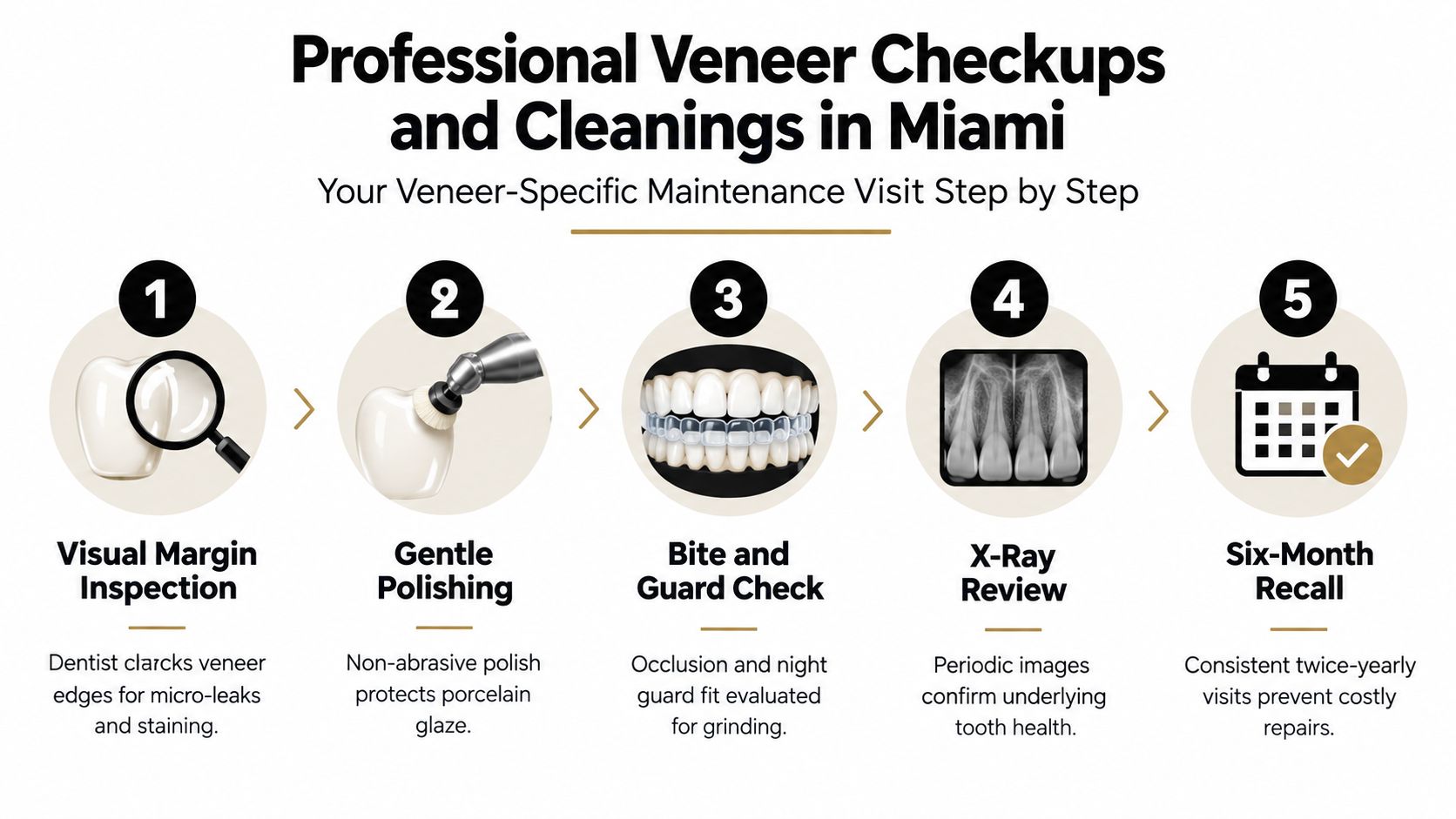
A veneer maintenance visit should involve more than a quick polish. The dentist and hygienist need to examine the interface between porcelain, enamel, and gum tissue, because small changes at the edge can remain invisible to the patient.
What a veneer-focused visit includes
A careful appointment may involve:
- Visual inspection under magnification. The dentist checks margins for staining, roughness, open edges, cracks, and changes in contour.
- Gum and margin assessment. Gentle probing helps identify bleeding, pocketing, recession, or plaque that the home routine isn't removing.
- Controlled polishing. Veneer-safe or fine polishing materials help remove surface deposits without unnecessarily abrading the porcelain glaze or composite.
- Bite evaluation. The clinician looks for early wear, concentrated contacts, edge chipping, or patterns that suggest clenching and grinding.
- Dental x-rays when indicated. Periodic images help evaluate the underlying tooth and areas that can't be assessed from the visible surface.
Ultrasonic scalers may need to be modified or kept away from the porcelain surface, depending on the instrument and restoration. Standard abrasive prophy paste may also be inappropriate for a cosmetic case, so the team may select a finer aluminum oxide polish or a product intended for veneer surfaces. Patients can ask which instruments and polishing materials will be used around their restorations.
How often should patients return?
Many patients do well with a six-month recall for an exam and cleaning. Those with bruxism, gum recession, a history of veneer complications, or multiple anterior veneers may benefit from closer monitoring, sometimes every four months based on the dentist's assessment.
Patients should bring photographs of any new dark line, chip, or gum change noticed at home. A current medication list also helps, especially when a new medication contributes to dry mouth or changes gum health. Regular cleaning and exams, dental x-rays when clinically appropriate, and bite checks give a Miami dental practice a chance to address small issues before they become a repair, replacement, tooth extraction, or broader restorative dentistry problem.
Night Guards Bruxism and the Mechanical Risks Most Guides Skip
A veneer can look intact while repeated night-time force weakens its bond. Clenching and grinding are mechanical risks that patients may notice only after a porcelain edge chips, a veneer loosens, or the jaw feels tight each morning. Brushing and flossing protect the margins, but they cannot control this loading.
Natural teeth flex under pressure. Porcelain is rigid, so stress is transferred differently through the bond and the surrounding tooth structure. Repeated small forces can create micro-fractures or fatigue at the margin, especially when several front teeth are restored together. Tight contacts still need careful plaque control, while the bite needs separate attention.
Clinical evidence identifies ceramic fracture as a significant failure pattern. One long-term study found ceramic fracture was the main reason for 44.83% of failures, with failure risk increasing significantly in patients with bruxism and nonvital teeth. It also found worse marginal discoloration among smokers, as reported in this long-term study of porcelain laminate veneer outcomes. A separate retrospective study reported a 98% survival rate at seven years and a Kaplan-Meier success probability of 0.882 at 14 years. A review of porcelain laminate veneer complications discusses those findings and also identifies fracture and debonding as recurring complications.
Who should consider a custom guard?
A custom night guard deserves serious consideration for patients with:
- Morning jaw tightness, facial fatigue, or headaches
- A partner who hears grinding sounds
- Flattened or polished wear facets on natural teeth
- Repeated chips or bite-related veneer discomfort
- Veneers placed across several anterior teeth
- A history of clenching during stress or concentration
An over-the-counter boil-and-bite guard may fit poorly, feel bulky, or create uneven contacts. Some soft guards also encourage chewing, which can increase muscle activity instead of reducing it. A lab-fabricated hard acrylic guard, adjusted to the patient's bite, distributes contact more predictably and gives the dentist a material to inspect for wear.
The guidance on dental veneer night guards supports protective appliances for patients who grind. A guard is doing its job when it remains stable, does not cause morning soreness, and shows controlled appliance wear rather than new veneer damage. It needs adjustment if it rocks, causes jaw pain, changes the bite, or develops heavy wear in one concentrated area.
Patients can also review whether night guards are safe before discussing material, design, and fit with a cosmetic dentist.
Protecting Your Veneer Investment and Booking Your Next Visit
A veneer can look unchanged while problems develop at the margins or beneath an overloaded bite. Long-term durability depends on repeatable habits: careful plaque control in tight contacts, a night guard when grinding is present, and scheduled professional reviews. These steps protect the veneers, gums, and natural teeth supporting them.
Long-term studies give patients a realistic frame of reference. One retrospective study reported a 98% survival rate, with Kaplan-Meier success probabilities of 0.976 at seven years and 0.882 at 14 years, as described in the clinical veneer survival data. Those results describe a studied group, not a promise for every patient. The 15-to-20-year range often described for well-maintained veneers should also be treated as an expectation influenced by bonding, bite forces, hygiene, diet, and follow-up, rather than a fixed expiration date. General advice about eating with veneers is discussed in this discussion of eating normally with veneers, but it should not be used as clinical proof of veneer lifespan.
What happens at a Miami veneer follow-up
Bring prior dental records, photographs of any visible change, and details about sensitivity, clenching, or food trapping. At the visit, the cosmetic dentist examines veneer margins, gum tissue, veneer surfaces, and the bite. Tooth vitality is checked when indicated. An occlusal assessment can reveal a high contact or uneven force pattern before it contributes to chipping, fracture, or debonding.
Ultra Smile DentalSpa provides cosmetic and general dental care in Miami, including veneer consultations, professional cleanings, night guards, teeth whitening, restorative dentistry, dental implants, and related treatment such as tooth extraction when another dental condition requires it. Patients searching for a dentist near me, Dental implants near me, or an emergency dentist can request an examination and treatment plan before choosing a service.
The first few months often receive the most attention. Later, patients may brush in the morning but skip tight contacts, stop wearing the guard, or postpone cleaning because the smile still appears normal. Plaque at a veneer margin, gum recession, bite stress, or a developing dark edge may progress without obvious symptoms.
Use a simple rule: clean the margins gently every day, protect the bite at night when indicated, and let a Miami dentist inspect the work on schedule. This supports appearance, comfort, gum health, and the natural teeth that make the veneer case possible.
Ultra Smile DentalSpa offers veneer consultations, maintenance exams, professional cleanings, bite evaluations, and custom night guards for patients protecting an existing smile in Miami. Schedule a visit with Ultra Smile DentalSpa to review sensitivity, staining, difficult veneer margins, grinding concerns, or the next step in cosmetic dental care.