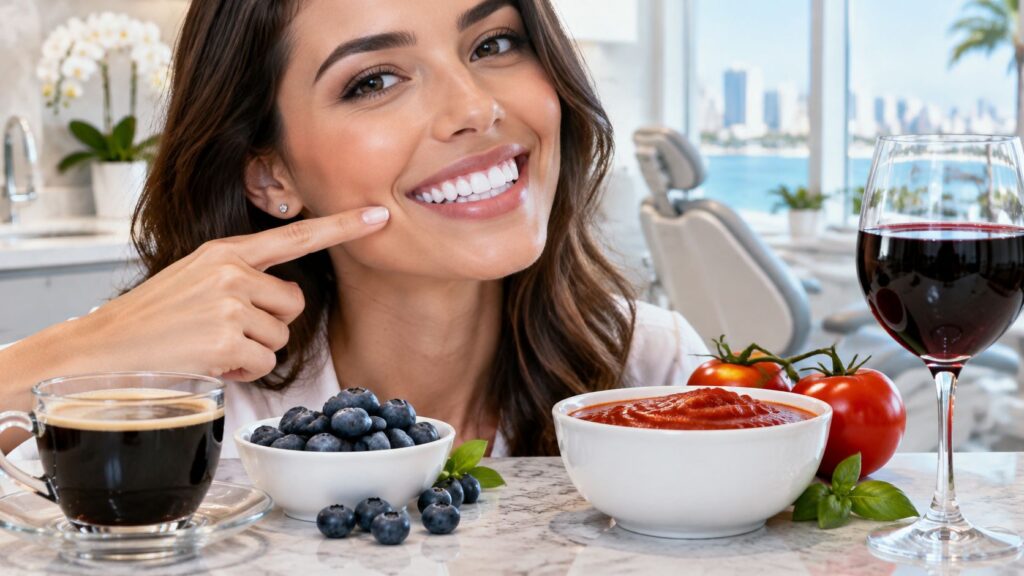
You leave a whitening appointment in Miami with teeth that look clean and noticeably brighter, then the normal routine starts again. There's coffee in the car, iced tea at lunch, maybe pasta with red sauce that night. None of those choices means whitening was wasted, but the first 48 hours deserve extra care because freshly whitened enamel can pick up pigment more easily while saliva rebuilds its normal protective balance.
That timing matters because extrinsic staining comes from colored compounds that sit on or cling to the tooth surface. The American Dental Association whitening guidance identifies coffee, tea, red wine, cola, and dark fruits as important contributors to surface discoloration. Acids add a second problem by softening enamel for a short time, which can make pigment retention easier and increase sensitivity after treatment.
A Practical Rule for the Foods That Stain Teeth After Whitening
Patients in Downtown Miami, Midtown Miami, and Hallandale Beach don't need a perfect diet or a permanent ban on favorite meals. The useful approach is simpler. Pause the darkest, most acidic items for 48 hours, pick a light colored swap, rinse with water, and wait before brushing after acidic foods. Patients looking for a dentist near me or a dentist in Miami, FL for teeth whitening should get that same realistic plan during new patient exams and cosmetic dentistry visits, not a scolding list.
Table of Contents
- A Practical Rule for the Foods That Stain Teeth After Whitening
- 1. Coffee
- 2. Red Wine
- 3. Black Tea
- 4. Cola and Dark Sodas
- 5. Berries and Dark Fruit Juices
- 6. Tomato-Based Sauces
- 7. Soy Sauce and Balsamic Vinegar
- 8. Turmeric and Curry
- How Common Whitening-Stain Foods Compare
- Protecting Your Brighter Smile Starts With a Smart Plan
1. Coffee
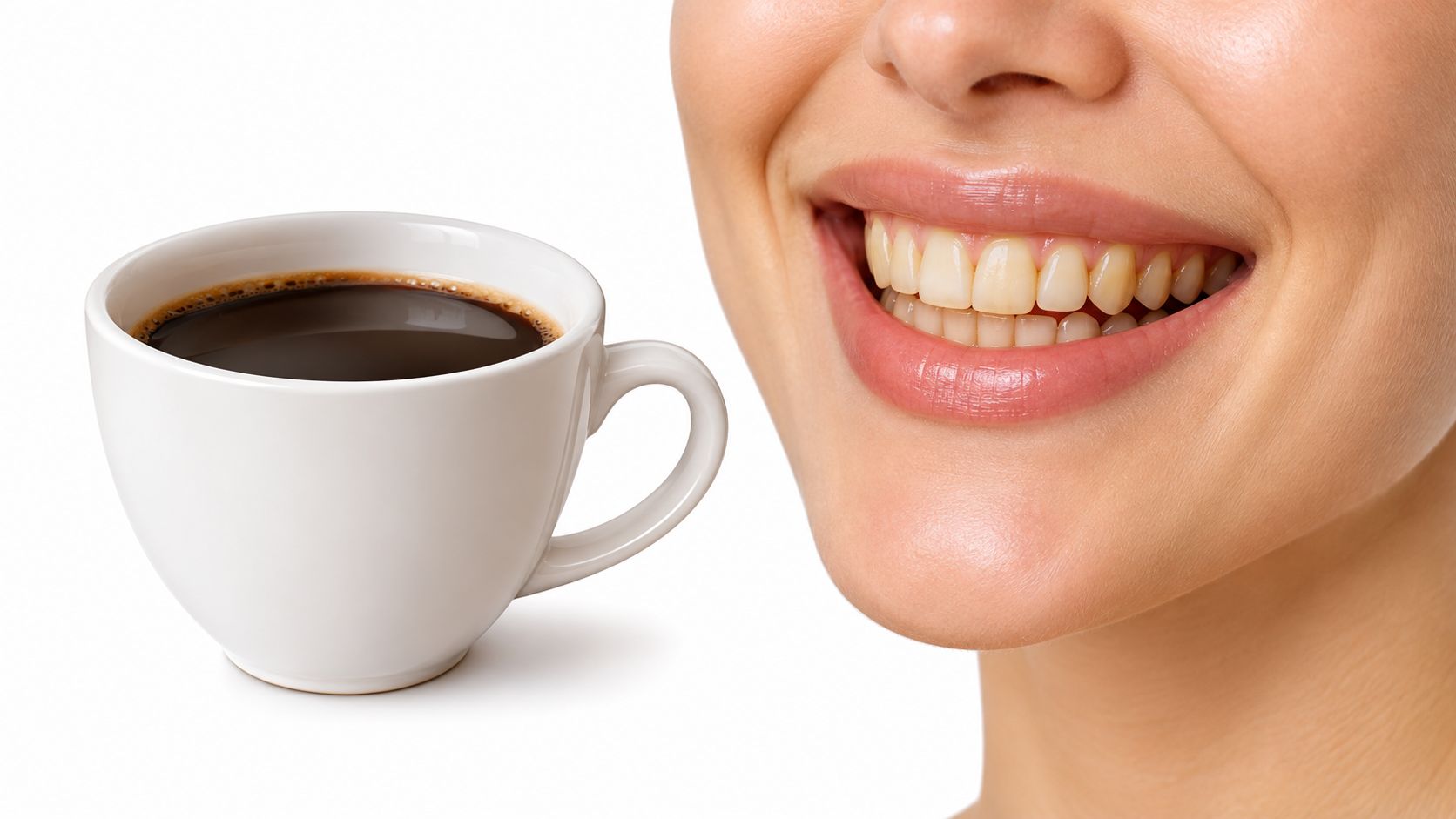
Coffee can be part of your routine again, but the first 48 hours after whitening call for a short pause. Its dark pigments, known as chromogens, can cling to enamel. Slowly sipping a hot coffee through a commute or morning at a desk extends contact with the teeth. The American Dental Association MouthHealthy whitening page lists coffee, tea, and red wine among common causes of staining.
Temperature and time both matter. A 2024 American Journal of Dentistry dental materials study found perceptible tooth color differences after 3 hours of coffee immersion, with hot coffee showing greater staining potential than iced coffee. That finding does not predict the exact effect on an individual smile. It does help explain why a large hot coffee sipped for hours creates more exposure than a small iced coffee finished with breakfast.
Swap and Rinse Plan for Coffee
- Pause for 48 hours: Choose water, milk, or a very light herbal drink while freshly whitened teeth are more prone to picking up pigment.
- If you choose iced coffee: Use a straw to limit contact with the front teeth. A straw reduces exposure, but does not prevent staining.
- Rinse, then wait: Swish with plain water right after drinking coffee. Since coffee is acidic, wait about one hour before brushing.
- Lighten the cup: A lighter roast or a splash of milk can reduce pigment contact, but coffee can still stain.
For a Friday whitening appointment before a Monday presentation, water and a banana smoothie are simple weekend swaps. If you return to iced coffee on Monday, use a straw and rinse with water afterward. People asking how long professional whitening results can last should also consider how often they drink staining beverages. Frequency matters more than one careful cup, and regular cleaning and exams can help address surface stain as it builds.
2. Red Wine
A glass of red wine with dinner in Midtown Miami brings three problems at once. It has deep purple red pigment, natural acidity, and tannins that help color grip the tooth surface. Anyone curious about what wine tannins taste like already knows that dry, mouth coating feeling, and that same grip is why red wine can leave visible color so quickly.
Laboratory evidence puts red wine near the top of the risk list. In a study of 10% carbamide peroxide whitening, the post whitening beverage comparison in PMC found red wine, tea, and cola produced significantly greater post whitening color change than artificial saliva. Restorations deserve attention too. Crowns, veneers, and fillings don't bleach like natural enamel, so a new mismatch can show even when natural teeth respond well.

Swap and Rinse Plan for Red Wine
Hold off for at least 48 hours after whitening. At a restaurant during that window, choose white wine, a light rosé, or sparkling water with lime in a wine glass so the meal still feels normal. White wine is still acidic, so it's a short term swap, not an enamel safe health drink.
Drink water between sips once red wine returns. It dilutes pigment and acid, and it keeps a long dinner from becoming hours of uninterrupted contact.
A typical case is an anniversary dinner two nights after whitening. Sparkling water handles the toast, grilled fish replaces a red sauce entrée, and red wine waits until the next weekend. That short delay protects the result without cancelling the celebration. Patients reviewing teeth whitening aftercare guidance can also ask about a touch up schedule during cosmetic dentistry follow ups in Miami, FL, especially if red wine is a regular part of dining out.
3. Black Tea
Black tea surprises people who gave up coffee thinking they'd solved the problem. It's rich in tannins, brews dark, and often gets refilled all afternoon, which means repeated coating of every front tooth. Iced tea at a Hallandale Beach lunch can create the same issue when a large glass lasts through the whole meal and the drive home.
Enamel exposure comparisons rank it high. Separate enamel research summarized in a 2024 systematic review of diet during bleaching identified black tea and red wine as the highest staining beverages, with significant staining also from coffee and tea with milk. Adding milk lightens the color in the cup, but it doesn't remove tannins or turn black tea into a safe first day drink.
Swap and Rinse Plan for Black Tea
- Brew it shorter: After the first 48 hours, a brief steep makes a paler cup with less pigment.
- Pick a lighter swap: Chamomile is a calmer choice for the first days, and plain water with cucumber works for iced tea drinkers.
- Use a straw for iced tea: Keep the liquid off the front surfaces as much as possible.
- Rinse right after: Finish with water, then wait before brushing if lemon was added.
Consider a Midtown Miami office worker who keeps a mug on the desk from 9 a.m. to 3 p.m. The fix isn't willpower. The mug becomes water for two days, then tea moves to one defined cup with lunch. That change cuts contact time, which is the part patients control most. A dentist in Miami, FL can check for tea stain between teeth during cleaning and exams and dental x-rays, where buildup often hides near the gumline and behind lower front teeth.
4. Cola and Dark Sodas
Dark cola is a double exposure. Caramel coloring supplies the pigment, while phosphoric and citric acids soften the surface it lands on. Diet cola doesn't solve either part, because sugar free versions still carry dark color and acid. Sports drinks and clear sodas can also be acidic, so clear doesn't automatically mean gentle on enamel.
The brushing mistake matters here. Cleveland Clinic guidance on tooth discoloration advises waiting about one hour before brushing after acidic foods such as citrus, soda, or candy, allowing saliva time to clear and neutralize acid. Brushing hard right after a cola can press acid against the surface and aggravate freshly whitened, sensitive teeth instead of helping.
Swap and Rinse Plan for Cola
For the first 48 hours, choose still water first. Lightly flavored still water gives soda drinkers flavor without dark pigment, and it avoids the frequent acid hits that come from sipping a can over an hour. Sparkling water is a better color swap than cola, though sensitive teeth may still prefer plain water in the first days.
Practical rule: If cola returns, keep it with a meal, use a straw, finish it rather than nursing it, and end with plain water.
Say a family orders pizza near Hallandale Beach the night after whitening. Water replaces cola, a white pizza replaces red sauce, and nobody has to skip the meal. After day three, an occasional cola with food and a rinse is a manageable trade off. Persistent sensitivity, sharp pain, or a cracked filling is different, and that's when an emergency dentist or prompt dental care matters more than shade maintenance.
5. Berries and Dark Fruit Juices
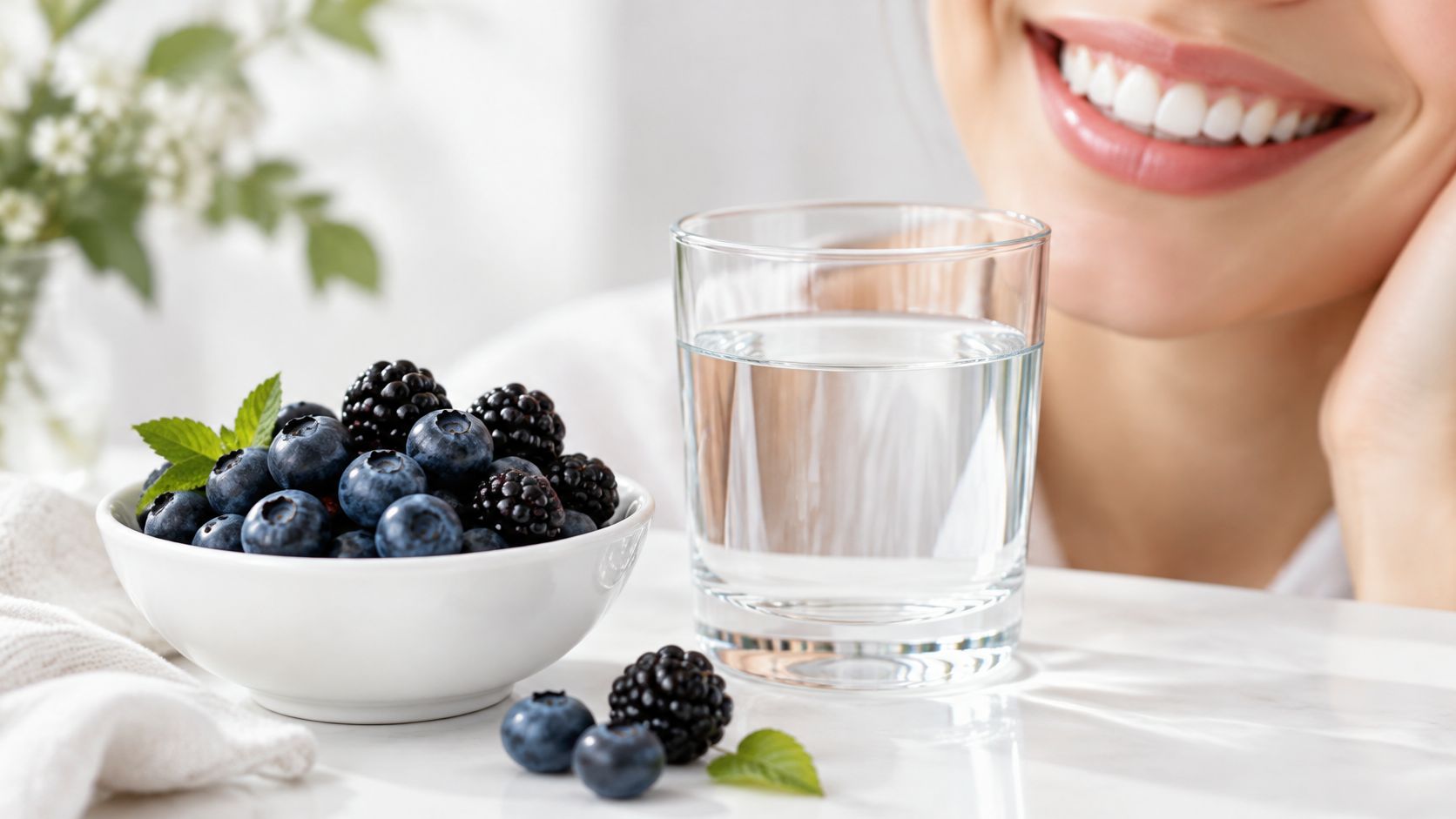
Blueberries, blackberries, cherries, pomegranate, and grape juice are nutritious, and they're also packed with anthocyanins, the natural pigments that make them deep blue, purple, and red. A handful of berries leaves color on fingers and lips for a reason. In a smoothie, that pigment gets blended into a thick liquid that coats teeth evenly, which is exactly what freshly whitened enamel doesn't need.
Timing is the compromise, not permanent avoidance. The ADA professional whitening ebook guidance recommends avoiding tobacco and stain causing foods and drinks for several days after whitening, while following individualized dentist instructions. Berries fit that short pause because the goal is protecting the first days, not removing healthy fruit from a Miami diet for months.
Swap and Rinse Plan for Berries
- Pause dark smoothies: Skip blueberry, blackberry, cherry, and pomegranate blends for the first few days.
- Choose pale fruit: Banana, pear, peeled apple, and white peach keep breakfast familiar without deep pigment.
- Rinse after whole berries: Water clears juice from grooves and between teeth once berries return.
- Soften the blend later: Milk or yogurt in a smoothie can reduce pigment intensity, and a straw helps too.
A Downtown Miami patient who starts every day with a berry smoothie can switch to banana, pear, yogurt, and oats for two mornings. That's an easy trade that protects whitening without skipping breakfast. If dark stain keeps returning between cleanings, a cosmetic dentist near me can check whether rough fillings, tartar, or worn enamel are trapping pigment during routine dental care.
6. Tomato-Based Sauces
Marinara doesn't look like coffee, so patients often miss it. Tomatoes bring red orange pigment and acid, and cooked sauces add oil that helps the mixture cling to teeth through a whole plate of pasta. Tomato soup, salsa, ketchup, pizza sauce, and hot sauce create smaller versions of the same contact, especially when they are eaten slowly.
Stain and acid sensitivity should be separated. Evidence summarized in research on acidic drinks and tooth surface change distinguishes pigment driven discoloration from acid related mineral loss that changes the surface and can interfere with whitening. Tomato sauce can do a bit of both, which is why it deserves a short pause even though tomatoes are a healthy, everyday food.

Swap and Rinse Plan for Tomato Sauces
Choose alfredo, a light cream sauce, olive oil with garlic, or a pale pesto during the first 48 hours. Keep a glass of water with the meal and swish between bites if sauce is served at a family dinner that can't be changed. Wait about 30 minutes after an acidic meal before gentle brushing, and use a soft brush rather than scrubbing sensitive teeth.
For a Sunday family pasta night in Miami, the swap is simple. One pot gets alfredo for the patient who whitened on Friday, everyone else keeps marinara, and water stays on the table. After the first days, tomato sauce returns in normal portions with a rinse. During restorative dentistry visits, including crowns, dental implants, or tooth extraction follow ups, the dental team can polish surface stain and check margins where sauce pigment tends to collect.
7. Soy Sauce and Balsamic Vinegar
Condiments cause quiet staining because they arrive in small amounts with concentrated color. Soy sauce is nearly black and salty enough to linger in saliva, while balsamic vinegar adds dark pigment plus acidity to salads, glazes, and roasted vegetables. Sushi in Downtown Miami or a Mediterranean salad in Midtown can expose front teeth even when the main dish is pale rice, fish, or chicken.
Perfection isn't required here. An ADA News summary of restricted versus unrestricted diet during bleaching described seven clinical trials and found comparable color changes, reporting that pigmented foods and beverages did not significantly alter bleaching effectiveness. That supports moderation and exposure control for small condiment amounts, while a two day pause still makes sense for patients who want to protect a fresh result.
Swap and Rinse Plan for Dark Condiments
- Ask for sauce on the side: A light dip uses far less soy sauce than rolls soaked in a dish.
- Try light soy sauce sparingly: Use drops after the first days, not a pour over rice.
- Swap the dressing: Olive oil with a small squeeze of lemon keeps salad bright while patients find your ideal balsamic dressing pairing for later in the week.
- Rinse after the meal: Water is enough, and it helps with salt and acid too.
Say sushi is planned the day after whitening. Sashimi, plain rice, cucumber, and miso soup keep the reservation, while soy sauce waits. That is the pattern patients searching for a dentist near me can follow. Dental implants near me, veneers, and crowns also need this condiment awareness because restoration edges can pick up surface stain even though the materials don't whiten.
8. Turmeric and Curry
Turmeric stains cutting boards, wooden spoons, and white countertops, so enamel shouldn't be a surprise. Its active pigment, curcumin, gives curry, mustard, golden milk, and many wellness shots their intense yellow color. In concentrated drinks, that pigment coats teeth directly, and readers following Cartograph Coffee's turmeric brewing tips are combining two staining habits in one mug.
Restore materials can show the contrast even more. A 2025 in vitro study in the Saudi Dental Journal found red wine produced a color change of ΔE00 = 38.9 ± 1.56 in composite restorative material, compared with 22.3 ± 1.51 for coffee. Those numbers involve restorative material, not a promise about natural teeth, but they remind patients with bonding or fillings to treat strong pigments seriously after whitening.
A short video explainer can help patients picture how staining foods behave before they plan the first weekend menu.
Swap and Rinse Plan for Turmeric
Avoid turmeric heavy curry, golden milk, mustard heavy sauces, and turmeric shots for the first few days. Choose grilled chicken, fish, rice, steamed vegetables, or a mild coconut milk dish with light seasoning instead. Once curry returns, drink water during the meal, rinse afterward, and wait before brushing if the dish includes tomato, vinegar, or citrus.
A Miami patient who loves a Friday curry can whiten on Monday and keep Friday plans with a water rinse and normal portion. Scheduling is often the easiest solution. If yellow discoloration lingers, professional cleaning can remove surface pigment, and a cosmetic dentist near me can tell whether the color is external stain or deeper discoloration that needs a different plan.
How Common Whitening-Stain Foods Compare
During the first 48 hours after whitening, this table can help you choose a lower-pigment option while still enjoying meals. For acidic foods and drinks, rinse with water afterward and wait before brushing.
| Item | Main Staining Agent | Acidity Level | Stain Risk After Whitening | Easy Swap |
|---|---|---|---|---|
| Coffee | Dark chromogens | Acidic | High | Lighter roast or coffee with milk |
| Red Wine | Tannins and dark pigments | Acidic | Very high | White wine or light rosé |
| Black Tea | Tannins and dark pigments | Mildly acidic | High | Light-colored herbal tea |
| Cola and Dark Sodas | Caramel coloring | Acidic | High | Clear sparkling water |
| Berries and Dark Fruit Juices | Anthocyanin pigments | Naturally acidic | High | Lighter fruits such as pears or bananas |
| Tomato-Based Sauces | Tomato pigments | Acidic | Moderate to high | White or cream-based sauces |
| Soy Sauce and Balsamic Vinegar | Dark pigments | Vinegar is acidic | Moderate to high | Olive oil dressing or light soy sauce |
| Turmeric and Curry | Curcumin pigment | Low, higher when made with tomato or vinegar | High | Mild dishes with light spices |
The swaps preserve variety without relying on pigmented foods. Choose lighter tea instead of black tea, clear sparkling water instead of cola, and a cream-based sauce instead of tomato sauce. For curry, select a mild, lightly spiced dish; if it contains tomato or vinegar, rinse with water afterward and wait before brushing.
Protecting Your Brighter Smile Starts With a Smart Plan
Leaving the chair with a brighter smile does not mean one coffee or berry smoothie will erase the result. Staining is cumulative and exposure dependent: repeated sipping and long contact with dark pigments matter more over time than a single careful meal. For the first 48 hours, choose lighter swaps, rinse with water after meals, and wait before brushing after acidic foods or drinks.
A strict white diet is not necessary for every person. Your sensitivity, enamel condition, and existing dental work all affect the advice that makes sense. Crowns, veneers, bonding, and fillings do not whiten like natural enamel, so discuss your shade goals and dental history with a dentist before setting expectations.
What Patients Can Expect at a Miami Whitening Visit
A whitening consultation should cover the shade you want, any history of sensitivity, and whether cavities, gum irritation, cracked teeth, or failing restorations could make treatment uncomfortable. Ask what to pause after whitening, when your usual drinks can return, and what sensitivity to expect. Those answers help you plan meals and aftercare around your own routine.
Ultra Smile DentalSpa serves patients in Downtown Miami, Midtown Miami, and Hallandale Beach, and offers teeth whitening, cleanings, veneers, implants, and other dental services. Complimentary teeth whitening once a year to all patients can provide a regular maintenance option for people who enjoy coffee or tea. A planned touch-up is more practical than waiting until discoloration becomes bothersome.
Some discoloration may not respond predictably to whitening, including color that cannot be corrected with bleaching or mismatched restorations. Ultra Smile DentalSpa can discuss whether porcelain veneers are appropriate for discoloration that whitening cannot correct. Veneer patients are advised to avoid substances that stain veneers, such as coffee, tea, or tobacco. Regular cleanings also help prevent tartar buildup, bone loss, bad breath, and cavities.
For the first two days, choose pale, lower-acid meals instead of coffee, red wine, black tea, cola, dark berries, tomato sauce, soy sauce, balsamic vinegar, or turmeric. Rinse with water after eating or drinking, and wait before brushing after acidic items. When you bring dark drinks back, a straw can reduce contact with teeth. Keep brushing gentle, especially if your teeth feel sensitive.
Ready to plan whitening around your regular meals and coffee routine? Ultra Smile DentalSpa offers teeth whitening, cleanings, veneers, implants, and other dental care in Downtown Miami, Midtown Miami, and Hallandale Beach. Request a consultation to discuss shade goals, sensitivity, and aftercare that fits your day.