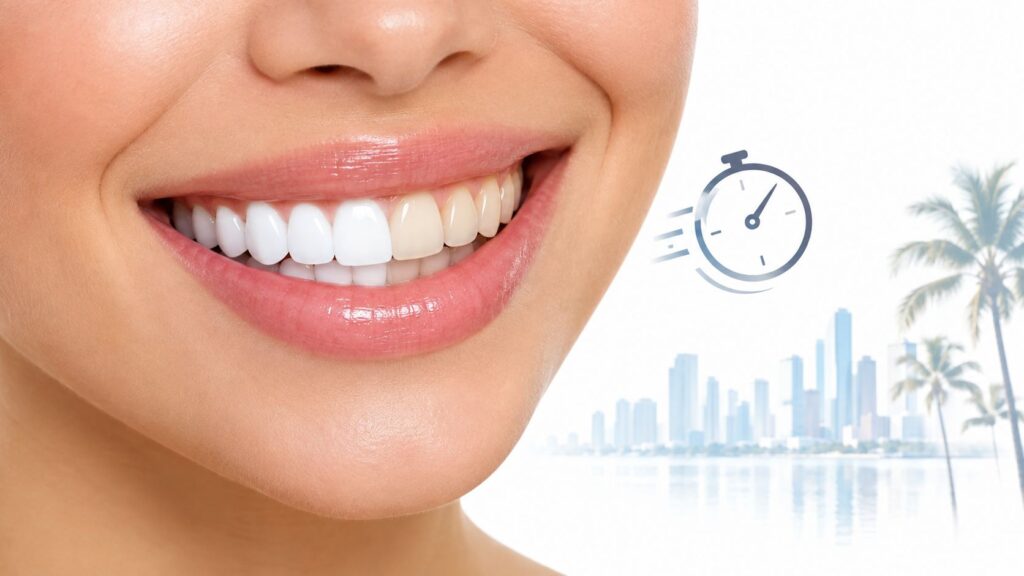
Professional in-office whitening commonly lasts 1 to 3 years, while dentist-guided take-home systems typically keep teeth visibly brighter for about 1 year. How long the result remains noticeable depends on staining habits, enamel, restorations, oral hygiene, and the maintenance plan used afterward.
A Miami patient may leave a whitening appointment with a noticeably brighter smile, then wonder whether coffee, iced tea, red wine, or a busy South Florida schedule will undo the result. That concern is reasonable. Teeth whitening isn't a permanent color change, but it also doesn't usually disappear overnight. The shade gradually moves back toward its starting point as new stains accumulate.
A consultation with a cosmetic dentist near me should cover more than the treatment itself. It should include an examination for decay, gum problems, worn enamel, exposed roots, and restorations that won't respond to peroxide. The same visit can also identify whether cleaning and exams, dental x-rays, restorative dentistry, or another service should come before cosmetic treatment.
Table of Contents
- What Realistic Whitening Results Actually Mean
- In-Office Whitening vs Dentist Take-Home Trays
- Everyday Habits That Speed Up Re-Staining
- Why Some Patients Stay Brighter Longer Than Others
- A Simple Maintenance Plan to Make Results Last
- Whitening Myths That Can Shorten Your Results
- Touch-Ups, Re-Treatment, and Booking in Miami
What Realistic Whitening Results Actually Mean
Most patients asking how long does professional whitening last are really asking a value question: will the smile stay bright long enough to justify the appointment? The practical answer is that professional in-office whitening commonly lasts 1 to 3 years, while dentist-guided take-home systems typically last about 1 year, according to clinical and patient-health guidance from Healthline's overview of whitening longevity. The NHS explains that whitening isn't permanent and may last around 3 years when patients follow their dentist's advice.
“Lasting doesn't mean the teeth remain at their brightest shade for the entire period. It means the whitening effect remains noticeable while the teeth slowly experience shade regression. Regression is gradual movement toward the original color, whereas relapse describes a more obvious return of discoloration after new stain accumulates or an underlying cause continues.
How shade changes are judged
Dentists often use a Shades-of-Vita reference to compare the starting and finishing color. A professional treatment may produce a visible improvement of roughly 3 to 8 shades, but that range is not guaranteed for every patient and requires a clinical reference rather than a promise. The outcome depends on the starting shade, the type of discoloration, enamel thickness, and the natural translucency of the teeth.
Thicker, less translucent enamel may create a different visual result from thin enamel over naturally darker dentin. A patient with surface coffee staining may respond differently from someone with discoloration related to aging, trauma, medication, or fluorosis. Restorations also require separate planning because peroxide changes natural tooth structure, not the color of porcelain or composite materials. Patients considering whitening around crowns, veneers, or fillings can review this guide to whitening dental crowns, veneers, and fillings.
Realistic longevity ranges
| Method | Typical lasting brightness | Average shade improvement |
|---|---|---|
| Professional in-office whitening | 1 to 3 years | About 3 to 8 shades, depending on the patient and starting color |
| Dentist-guided take-home trays | About 1 year | Varies with the gel, wear schedule, and discoloration |
| Maintenance touch-up | Extends an existing result | Intended to refresh brightness rather than create a new baseline |
A clinical review found that teeth can begin re-staining within about 1 month when patients regularly consume staining agents such as coffee, red wine, or tobacco. When those exposures are minimized, results may persist for up to 1 year, and a combined protocol involving two in-office sessions separated by 1 week, followed by monthly at-home touch-ups for 3 months, showed better color persistence over 6 months than in-office whitening alone. Those findings are discussed in this clinical review of whitening durability and maintenance.
In-Office Whitening vs Dentist Take-Home Trays
In-office whitening and dentist-supervised trays solve different patient problems. In-office treatment prioritizes speed and a controlled clinical setting. Take-home whitening prioritizes gradual progression, patient control, and a convenient way to maintain a shade after the original treatment.
Common in-office systems include Zoom, KöR, and Opalescence Boost. The dentist protects the gums, applies peroxide in controlled cycles, monitors sensitivity, and compares the shade before and after treatment. The appointment can produce a same-day change, which suits a patient preparing for a wedding, photo session, presentation, or Miami social event.
Take-home trays use custom-fit appliances and professional gel. The slower pace can suit patients who experience sensitivity, prefer gradual whitening, or want a reusable maintenance system. The dentist can adjust the wear schedule and gel strength instead of asking the patient to follow a one-size-fits-all product label.
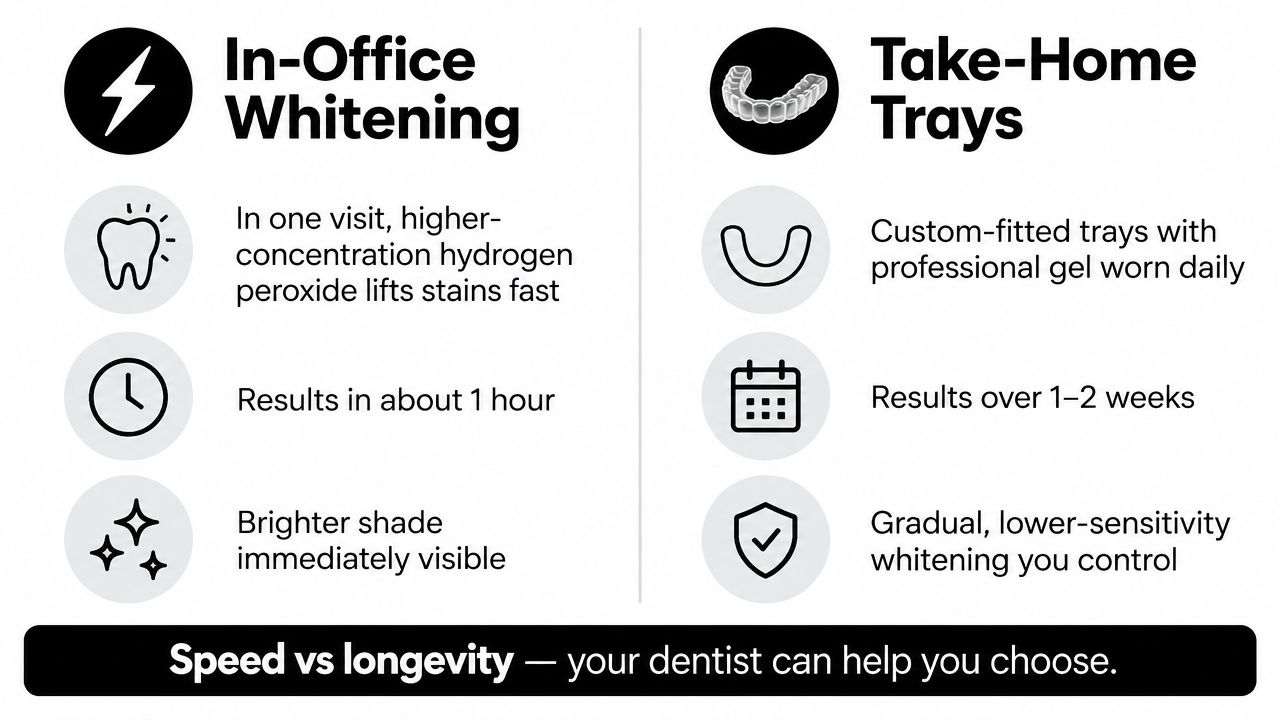
The trade-off is control versus speed
Higher peroxide isn't automatically better. Recent evidence indicates that moderate in-office concentrations around 25 to 35% can achieve outcomes comparable to higher concentrations while reducing sensitivity. The same review found that routine LED, halogen, or laser activation usually doesn't meaningfully improve bleaching efficacy. A 2025 systematic review also reported that carbamide peroxide performed better than hydrogen peroxide on some whitening-performance measures, but the evidence quality was moderate and sensitivity outcomes varied. See the systematic review of peroxide protocols and whitening performance for the clinical context.
That means the strongest-looking product isn't necessarily the best choice. A carefully selected concentration, proper isolation, accurate tray fit, and follow-up plan may matter more than adding a light or choosing the highest available peroxide.
Which option fits which patient
- In-office treatment: Appropriate when speed, supervision, and immediate visible change matter most.
- Dentist-guided trays: Useful for gradual whitening, sensitivity-prone patients, and ongoing maintenance.
- A combined plan: Helpful when a patient wants an initial in-office change followed by controlled home refreshers.
The dentist should first rule out cavities, active gum disease, exposed roots, and cracked teeth. A patient searching for a cosmetic dentist near me may also need cleaning and exams before whitening, because calculus and surface stain can hide the true baseline shade.
Everyday Habits That Speed Up Re-Staining
A typical Miami day can put several staining exposures between breakfast and dinner. A morning Cuban espresso, an iced tea during the afternoon, and a glass of red wine with dinner may each add pigment contact to the teeth. Coffee, tea, red wine, tobacco, richly colored foods, and acidic drinks can all make it harder to preserve a bright result.
Tannin-rich beverages and chromogenic foods leave pigments in contact with the enamel surface. Acid adds another concern because it can soften the tooth surface, making discoloration more likely to appear uneven or persistent. White wine and clear citrus drinks may look harmless, but their acidity still matters even when the drink has little visible pigment.
The first days deserve extra care
After whitening, patients may experience temporary sensitivity, and dentists often recommend extra caution with strongly colored foods and drinks while the teeth settle. A straw can reduce contact with cold beverages, while a water rinse after coffee, tea, or wine can shorten the time pigments remain in the mouth. Rinsing isn't a substitute for brushing and flossing, but it's a practical choice during a workday.
Smoking deserves a direct conversation. Nicotine and tar can create rapid yellowing and undermine a whitening investment. Patients who smoke should discuss realistic expectations with the dentist before treatment rather than assuming a stronger gel will overcome continued exposure.
Other contributors can include lipstick, chlorhexidine or cetylpyridinium chloride mouthwash, and iron supplements. The answer isn't necessarily to ban every favorite drink. Timing, rinsing, using a straw when appropriate, and delaying a latte until after a meal can reduce repeated exposure.
These changes also support broader dental care. A patient seeking an emergency dentist for pain, tooth extraction, or dental implants near me should address urgent or restorative needs before treating whitening as the priority.
After a whitening visit, a short clinical explanation can help patients distinguish normal sensitivity from a problem that needs attention.
Why Some Patients Stay Brighter Longer Than Others
Two patients can receive comparable whitening treatment and see different results over the following year. The difference usually isn't a question of motivation. Teeth respond according to their structure, their starting discoloration, their saliva environment, and the habits that follow treatment.
The factors a dentist evaluates
Enamel thickness and translucency affect how the final shade appears. Thin or highly translucent enamel may allow darker dentin to show through, which can make a patient perceive more yellowing even after successful bleaching.
Age-related changes also influence the baseline. As enamel changes over time, the underlying dentin may become more visually prominent. That doesn't mean whitening cannot help, but it can affect the amount of contrast a patient sees and the maintenance required.
Saliva flow and oral pH influence how the mouth handles food acids and residue. Gum recession can expose root surfaces, which don't whiten in the same way as enamel and may create a mismatch after treatment.
Crowns, veneers, and composite fillings remain at their original shade. If natural teeth are whitened around them, the result can look uneven. A dentist may recommend whitening natural teeth first and then evaluating whether visible restorations should be replaced to match.
Comparing two realistic starting points
Consider a heavy-coffee smoker with thin, translucent enamel and exposed root areas. That patient may notice faster shade regression, sensitivity, or uneven color after repeated whitening. The appropriate response may involve treating gum recession, adjusting the protocol, and moderating stain exposure instead of merely increasing peroxide strength.
A non-smoker with thicker, more opaque enamel and fewer pigmented drinks may hold the visible improvement longer. Genetics also influence enamel transparency, so two people with similar routines can still experience different visual outcomes.
Recent evidence supports a measured approach. Moderate in-office peroxide concentrations around 25 to 35% may provide results comparable to higher concentrations with less sensitivity, and light activation generally doesn't add meaningful bleaching efficacy. The dentist's diagnosis therefore matters more than the assumption that a stronger session will automatically create longer-lasting results.
Practical rule: Longevity starts with identifying the stain, the tooth structure, and the restorations before choosing the whitening product.
A Miami cosmetic dentist can use that assessment to decide whether in-office treatment, custom trays, a staged approach, or restorative dentistry makes sense. This is also why a new patient exam and appropriate dental x-rays may be recommended before cosmetic care.
A Simple Maintenance Plan to Make Results Last
A maintenance plan should fit a working Miami lifestyle. It shouldn't require giving up every coffee, dinner, or social gathering. The most reliable approach combines routine dental hygiene, sensible exposure control, appropriate home products, and planned touch-ups.
Four habits that protect the shade
Keep hygiene visits on the calendar. Regular cleanings remove surface buildup before it makes the smile look dull. A hygienist can assess stain accumulation, gum health, enamel wear, and whether polishing is appropriate after whitening. Many patients schedule hygiene visits every 6 months, a timing also reflected in the Ultra Smile DentalSpa whitening aftercare guidance.
Reduce contact time with staining drinks. Drinking coffee or red wine through a straw when practical, rinsing with water afterward, and avoiding prolonged sipping can limit how long pigments and acids remain against the teeth. A water rinse is particularly useful when brushing isn't convenient.
Use a whitening-safe toothpaste. A low-abrasion whitening toothpaste can help remove surface stain, but it won't replace professional bleaching. Patients with sensitivity or enamel wear may need a dentist-prescribed remineralizing gel instead of a more abrasive product.
Use custom trays for controlled refreshers. A short touch-up course can refresh a shade that has begun to drift. The dentist should determine the gel, wear time, and frequency, especially if the patient has recession, sensitivity, fillings, or crowns.
When a touch-up is enough
A touch-up usually makes sense when the teeth remain generally even but have lost some brightness from daily exposure. During the visit, the dentist may compare the current shade with the recorded baseline, remove surface stain, assess sensitivity, and recommend gel or a brief tray schedule.
A full retreatment may be more appropriate when the shade has moved substantially toward the baseline, the patient has a new event deadline, or the original discoloration was difficult to treat. If one tooth has changed color, or a crown or filling now stands out, whitening may no longer be the correct solution.
Ultra Smile DentalSpa includes a complimentary yearly whitening touch-up policy, which can place a maintenance check into the annual dental calendar for eligible patients. The practice also provides general and cosmetic dentistry, so a whitening review can be coordinated with cleaning and exams or restorative planning when needed.
Whitening Myths That Can Shorten Your Results
Whitening shortcuts can leave patients with uneven color, sensitivity, or repeated retreatment. The main concern is control. A dentist selects the gel, limits contact with the gums, sets exposure time, protects soft tissue, and checks whether bleaching is appropriate. Home shortcuts often leave those variables uncertain.
Myth one involves over-the-counter gels
Drugstore gels and strips may brighten teeth, but they do not match the fit or supervision of dentist-guided trays. Poorly fitting trays can cover some surfaces while missing others, while peroxide contacting the gums may cause irritation. Lower-strength products can also produce a weaker or less even change when discoloration lies deeper within the tooth.
A professional system still requires an examination. Cavities, cracks, exposed roots, gum disease, fillings, crowns, and other restorations can change the recommendation or require treatment before bleaching.
Myth two treats charcoal as harmless
Charcoal powders may feel as if they are scrubbing away stain, but abrasive products can wear the enamel surface and increase sensitivity. A rougher surface may also hold onto external discoloration more readily. A gentle, low-abrasion product selected for the patient's enamel is a safer maintenance choice.
Myth three assumes every LED device improves whitening
Adding an LED device does not guarantee a better result. The more practical concern with home kits is misuse. Patients may pair peroxide with poor gum protection, wear the product longer than directed, repeat applications too frequently, or use a gel that does not suit their teeth.
Those choices can trigger sensitivity and gum irritation without solving the cause of discoloration. A device also cannot identify decay, exposed roots, cracks, or restorations that will not change color. Patients considering home whitening should follow the instructions for the specific product and ask a dentist to assess persistent sensitivity or uneven results.
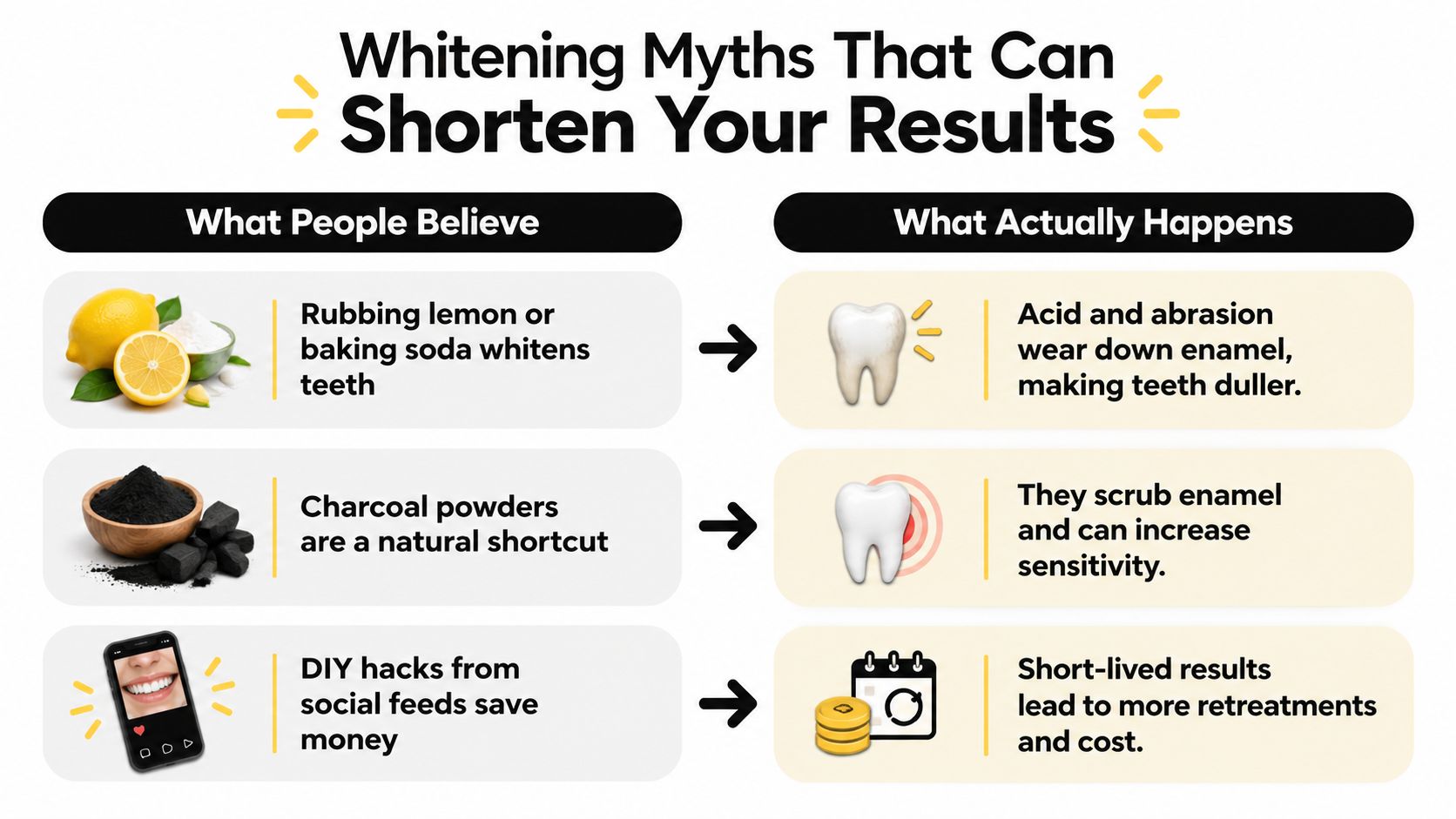
Custom trays, controlled in-office protocols, and supervised maintenance allow the dentist to match treatment to enamel condition, stain type, sensitivity, and existing dental work. At Ultra Smile DentalSpa, eligible patients can also use the complimentary yearly whitening touch-up policy as part of a Miami maintenance plan.
Touch-Ups, Re-Treatment, and Booking in Miami
The decision to touch up or repeat whitening should follow the condition of the smile, not a rigid calendar. A patient whose teeth remain evenly bright but have collected surface stain may need cleaning and a limited refresh. A patient whose shade has moved significantly toward the original baseline may need a new professional protocol.
What happens during a touch-up
A touch-up visit is usually more targeted than the original treatment. The dentist may:
- Review the current shade: The clinician compares the teeth with the earlier shade record and checks whether the change is generalized or limited to certain teeth.
- Polish surface stain: Professional cleaning and polishing can remove external buildup that makes teeth look darker.
- Reapply whitening gel: If the teeth and gums remain healthy, the dentist may use a controlled gel application suited to the current sensitivity level.
- Check restorations: Crowns, veneers, fillings, and bonding may explain why one area no longer matches the natural teeth.
A full in-office retreatment involves a broader assessment and a complete protocol rather than a brief refresh. It may be the wrong choice if the discoloration comes from a darkened tooth, an untreated cavity, exposed roots, or mismatched dental work. In those cases, restorative dentistry, root canal evaluation, tooth extraction, or another treatment may need to come first.
Making the appointment useful
Patients should bring a list of whitening products, note any sensitivity, and mention coffee, tea, tobacco, red wine, supplements, or medications that may affect staining. Photos of the smile before treatment can help, although the dentist's clinical shade comparison remains more useful than a phone camera.
A Miami patient can align whitening maintenance with routine hygiene visits, professional commitments, vacations, weddings, or other social events. Ultra Smile DentalSpa serves patients through its Miami locations and offers a calming dental setting, cosmetic and restorative care, teeth whitening, veneers, crowns, implants, invisible braces, and related treatment planning. Its complimentary yearly whitening touch-up policy can help eligible patients address early shade changes before a full retreatment becomes necessary.
Patients who are searching for a dentist in Miami, FL, a cosmetic dentist near me, or an emergency dentist should book the right type of visit rather than selecting whitening without an examination. Healthy enamel and gums create the foundation for a safer, more predictable cosmetic result.
Schedule a whitening consultation with Ultra Smile DentalSpa to review the current shade, sensitivity, restorations, and the right in-office or take-home plan. The Miami team can also coordinate whitening with cleanings and exams, cosmetic dentistry, restorative care, or an eligible complimentary yearly touch-up.