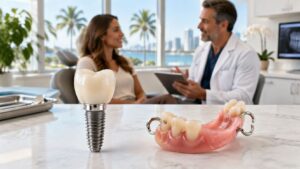
You're at lunch in Miami and chewing everything on one side, cutting food smaller than you'd like and hoping no one notices the gap when you smile. A missing front tooth changes how you speak and pose for photos. A missing back tooth changes what you order.
Leaving a gap isn't neutral. Neighboring teeth can drift, the bite can shift, and bone that once held the root loses the pressure that helped keep it dense. Those changes can make later treatment more complex, even when the missing tooth isn't visible.
A 2025 patient survey found only 38% of respondents had good awareness of replacement options, while 29% had poor understanding, with cost and fear of pain as leading barriers. That's why this guide is organized by fit, not hype. Each option below states who it suits, whether surgery is involved, and what daily care looks like.
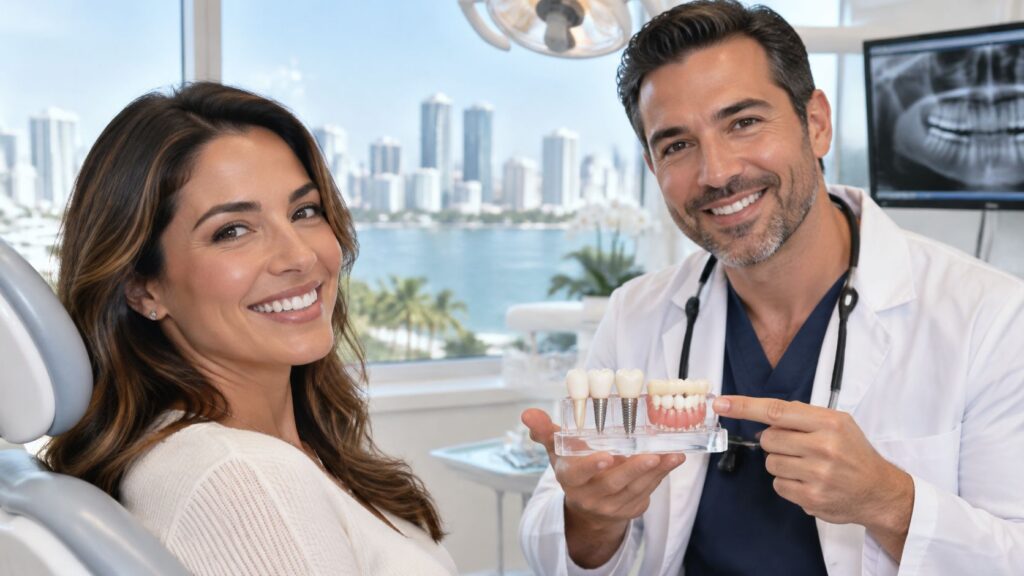
Patients searching for a dentist near me or dental implants near me in Downtown Miami, Midtown Miami, and Hallandale Beach can use Ultra Smile DentalSpa as a local starting point for a new patient exam, dental x-rays, and honest comparison of the best options for missing teeth.
Table of Contents
- 1. Dental Implants Near Me in Miami, FL Single Tooth Implant with Crown
- 2. Implant-Supported Bridge for Multiple Missing Teeth
- 3. Full-Arch Implant Restoration (All-on-4) in Miami, FL
- 4. Traditional Dental Bridge in Downtown Miami and Midtown Miami
- 5. Resin-Bonded Bridge (Maryland Bridge) for Front Teeth
- 6. Partial Removable Denture for Several Missing Teeth
- 7. Complete Denture for Full Tooth Replacement
- 8. Implant-Supported Overdenture for Secure Removable Teeth
- Missing Tooth Replacement Options Compared
- How to Choose Your Option and Next Steps in Miami, FL
1. Dental Implants Near Me in Miami, FL Single Tooth Implant with Crown
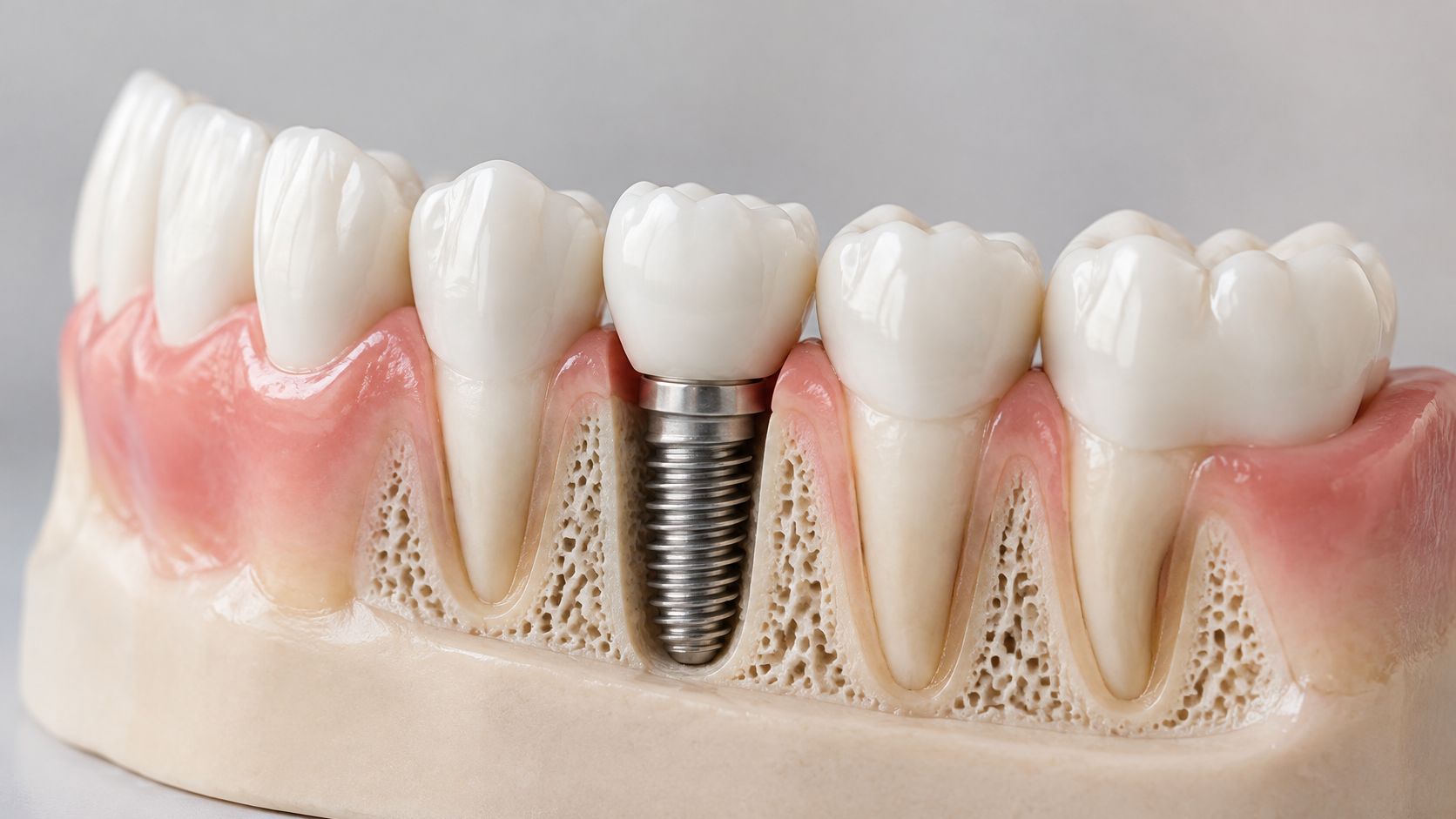
A single implant is the clearest one-tooth answer for many adults. A small titanium post is placed in the jawbone, heals for several months as bone fuses around it, and then supports an abutment and a custom crown matched in shape and color to nearby teeth.
The Guy's and St Thomas' NHS guide to dental implants explains that an implant replaces the tooth root rather than covering the visible gap, and it can support a single crown, a bridge, or a denture. Because support comes from the implant, healthy neighboring teeth don't need to be reshaped to hold the replacement.
The durability data explains the appeal. A systematic review of implant-supported single crowns reported implant survival of 97.2% after 5 years and 95.2% after 10 years, while survival of the complete single-crown restoration was 96.3% and 89.4% at those milestones. The implant can remain even if the visible crown later needs repair.
Who It Fits Best
Say a patient loses a lower molar after a tooth extraction and wants to chew comfortably again without crowning two healthy teeth. A single implant fits that scenario well. The same approach can replace a front tooth lost to injury, provided bone, gum health, and bite forces are suitable.
- Confirm bone first: Ask for a 3D scan or x-ray evaluation to check width, height, and nearby nerves or sinus space.
- Protect the gums: Brush, floss around the crown margin, and keep routine cleaning and exams so inflammation is caught early.
- Compare before deciding: Patients weighing an implant against a bridge can review dental implants compared with bridges before the consultation.
Clinical preference leans this way when both choices are feasible. A 2024 survey in the Asian Journal of Pharmaceutical Research and Health Care found 98% of responding dentists recommended an implant as the first choice for a single missing tooth where either an implant or fixed bridge was feasible.
The trade-off is time and surgery. Healing takes months, not weeks, and bone grafting may be needed if the ridge has shrunk. For a suitable candidate who wants a fixed, independent tooth, that timeline is usually the price of long-term stability.
2. Implant-Supported Bridge for Multiple Missing Teeth
Three missing back teeth don't always need three implants. An implant-supported bridge can place implants at strategic points and connect several crowns into one fixed unit, restoring chewing without using natural teeth as anchors.
Say a patient is missing three teeth in a row on the lower right. Two implants supporting a three-unit bridge can fill the span, spread chewing load, and keep the restoration fixed in place. A patient with a failed traditional bridge may also move to this design when the old supporting teeth can't carry another bridge.
Planning matters more than the headline number. A systematic review of adjacent implant restorations reported 96.9% implant survival for a single-implant cantilever two-unit crown and 97.6% for two separate adjacent implants, with mean follow-ups of about 3.4 and 3.0 years. Both approaches performed well in selected cases, but anatomy decides which one is sensible.
What Changes the Design
A CBCT assessment should check ridge width, vertical bone height, distance from the sinus or mandibular nerve, implant angle, and whether the finished bridge can be cleaned at home. Cantilever designs add stress, so heavy grinding, strong opposing teeth, or high-load back teeth may push the plan toward two implants instead.
Practical rule: A bridge that can't be cleaned under and around every day isn't a good bridge design, no matter how strong it looks on the model.
Daily care is specific. A water flosser and interdental brushes help clear plaque under the bridge and around each implant, and professional peri-implant monitoring checks for bleeding, pocketing, or loose components. A night guard may be advised when grinding adds extra load.
This option fits patients missing several teeth in one section who want fixed teeth and can accept surgery. It usually costs more than a removable partial and less than placing an implant under every single missing tooth, while avoiding preparation of healthy neighbors.
3. Full-Arch Implant Restoration (All-on-4) in Miami, FL
Full-arch treatment answers a different problem. When most or all teeth in an upper or lower arch are missing or failing, a fixed bridge can be supported by a small number of implants, often four per arch with the All-on-4 concept.
Angled back implants help maximize contact with available bone. In appropriate cases, a temporary fixed set of teeth can be attached soon after surgery, followed by a definitive bridge after healing. The teeth stay in place for eating, speaking, and sleeping, unlike a removable denture.
The video below gives a visual sense of how full-arch implant treatment is sequenced before a consultation fills in the individual details.
Say a patient with a loose upper denture is tired of adhesive and sore spots. After gum health, bone, medical history, and medications are reviewed, a fixed full-arch bridge may offer steadier chewing and a smaller footprint in the mouth. A patient with advanced gum disease may need periodontal treatment and extractions staged before implants are placed.
Long-term expectations should stay realistic. A 2012 systematic review and meta-analysis in PubMed examined 32 studies and estimated survival for implants supporting fixed dental prostheses at 95.6% after 5 years and 93.1% after 10 years, yet only 66.4% of patients were free of any complications after 5 years. Survival is strong, but repairs and maintenance visits are part of ownership.
Before Committing to a Full Arch
- Get the phases in writing: Extractions, grafting, temporary teeth, healing checks, and the final bridge should each have a place in the plan and estimate.
- Disclose medical details: Diabetes control, smoking, medications, and healing history affect risk and scheduling.
- Plan the first weeks: Soft foods, rest after surgery, and careful cleaning around the temporary bridge protect early healing.
This is the highest-commitment route on the list in surgery, cost, and maintenance. For the right full-arch patient, it's also the closest removable-free alternative to having a stable set of teeth again.
4. Traditional Dental Bridge in Downtown Miami and Midtown Miami
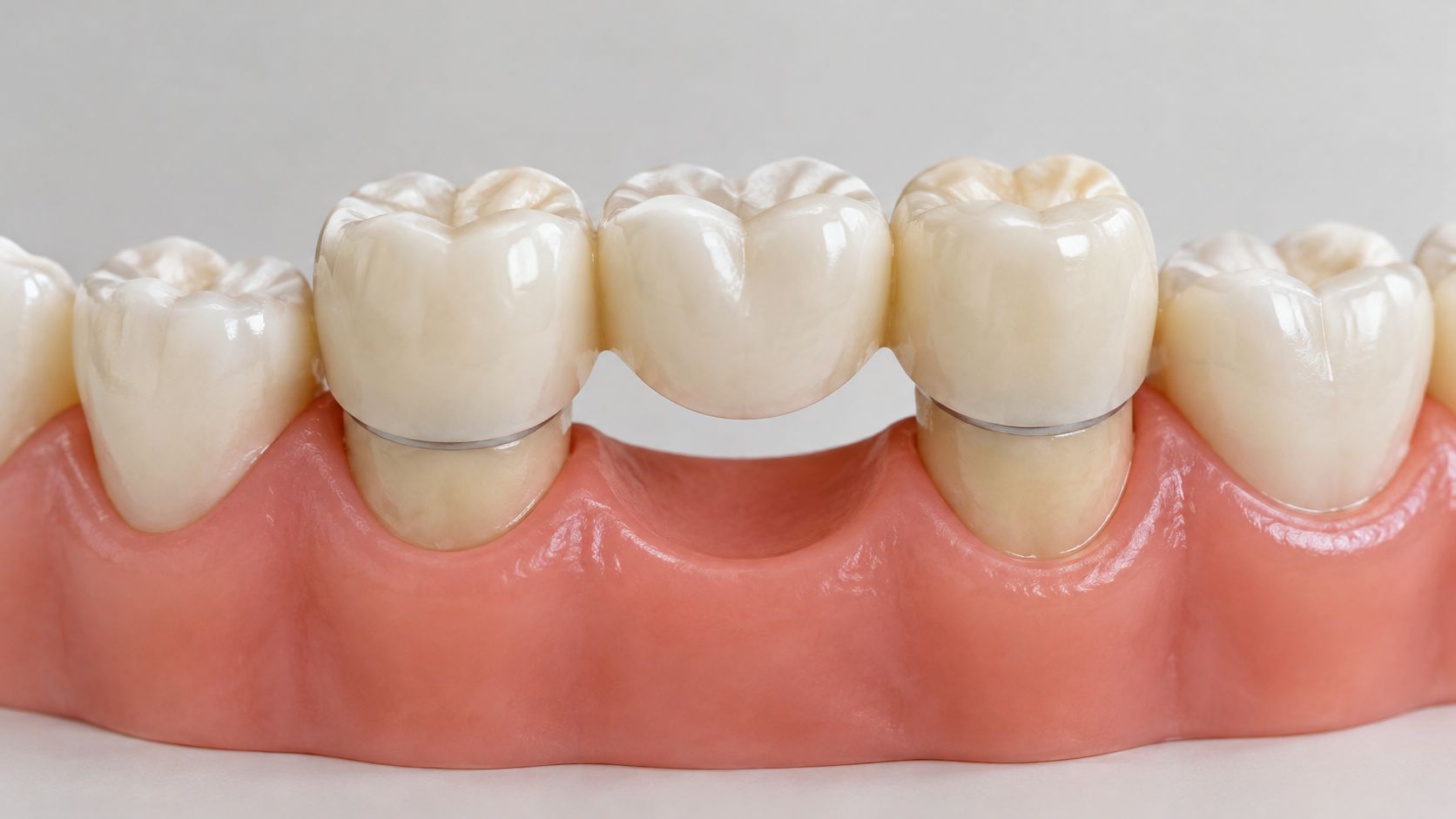
A traditional bridge replaces one or more missing teeth with a fixed restoration supported by the teeth beside the gap. Crowns cover those supporting teeth, with a replacement tooth, called a pontic, joined between them. There is no implant surgery, but the neighboring teeth must be prepared.
Consider a missing premolar with large fillings in both adjacent teeth. If those teeth already need crowns, a bridge may restore the gap without preparing otherwise healthy teeth. Suitability depends on the gap's length, the strength of the supporting teeth, the bite, and the condition of their nerves.
When a Bridge Makes Sense and When It Doesn't
A bridge may suit someone seeking a fixed, non-surgical option, or someone whose adjacent teeth already need crowns. It may be a poor fit if the supporting teeth are healthy, the gap is long, or an anchor has a weak root or inadequate gum support. If an anchor later fails, the entire bridge may be affected.
- Compare it with an implant first: Ask whether replacing the missing tooth without crowning its neighbors is suitable before choosing a bridge.
- Clean beneath the pontic daily: A floss threader or water flosser can reach the space a regular toothbrush misses.
- Check the supporting teeth: Dental checkups and X-rays help monitor the crown edges and the gums around the anchors.
A bridge is a fixed option for a patient whose supporting teeth can handle the load. The trade-off is that one missing tooth may require treatment of the teeth on both sides.
5. Resin-Bonded Bridge (Maryland Bridge) for Front Teeth
The Maryland bridge is the conservative front-tooth option. Instead of full crowns on the neighbors, a replacement tooth is bonded to the backs of adjacent teeth with a thin metal or ceramic framework, often with little or no reshaping.
That preservation is the point. Say a young adult is missing a lateral incisor, the neighboring teeth are healthy, and the family wants to avoid both surgery and aggressive crown preparation for now. A ceramic resin-bonded bridge can match the smile while keeping future implant options open.
It can also work as a deliberate interim step. A patient who wants time to decide about an implant, finish orthodontic alignment, or let a site heal after extraction may wear a Maryland bridge as a fixed placeholder rather than a removable flipper.
The Limits Are Mechanical
Bond strength is the weak link. Front teeth with moderate bite forces do well, but a deep bite, heavy grinding, short supporting teeth, or a habit of biting ice and hard foods raises the risk of debonding. A debond isn't a disaster, but repeated debonding usually means the design doesn't suit that bite.
A Maryland bridge preserves enamel beautifully, but only when the bite respects the bond. Force, not appearance, decides whether this option lasts.
Patients who grind at night should ask about a night guard before treatment starts. The dentist should also check how the lower teeth contact the bonded wings, because even small interferences can stress the cement line every time the jaw closes.
Cost and invasiveness sit below a conventional bridge and an implant, while strength sits below both. For one front tooth, healthy neighbors, and a favorable bite, that's often an acceptable and honest exchange.
6. Partial Removable Denture for Several Missing Teeth
A partial denture is the practical non-surgical answer when teeth are missing in several places. Replacement teeth sit in a gum-colored base on a metal or flexible framework, held by clasps around remaining teeth or by precision attachments, and the appliance comes out for cleaning and at night.
Say a patient is missing back teeth on both sides and wants better chewing without multiple surgeries. A metal-framework partial can restore contact on both sides, help remaining teeth stay in position, and be adjusted or remade as the mouth changes. A flexible nylon partial may feel lighter and less noticeable for smaller gaps.
There's an adaptation period. Speech, taste, and chewing feel different at first, clasps may show near a visible gap, and food can collect under the base after meals. Most patients adjust, but no one should expect a removable appliance to feel identical to fixed teeth.
Daily Handling That Prevents Problems
- Clean it outside the mouth: Use a soft brush with mild soap rather than regular toothpaste, which can scratch the surface.
- Store it wet: Keep the denture in water or denture solution when it isn't being worn so the material holds its shape.
- Don't tolerate sore spots: Looseness and rubbing need an adjustment visit, not extra adhesive and patience.
Remaining natural teeth need extra attention because clasps and framework create plaque-retentive areas. Fluoride toothpaste, careful brushing around clasped teeth, and routine dental care visits reduce decay risk where the partial grips.
Budget is the strongest advantage here, along with reversibility. A partial can be a long-term solution, a transitional step before implants, or the sensible choice when medical factors rule out surgery.
7. Complete Denture for Full Tooth Replacement
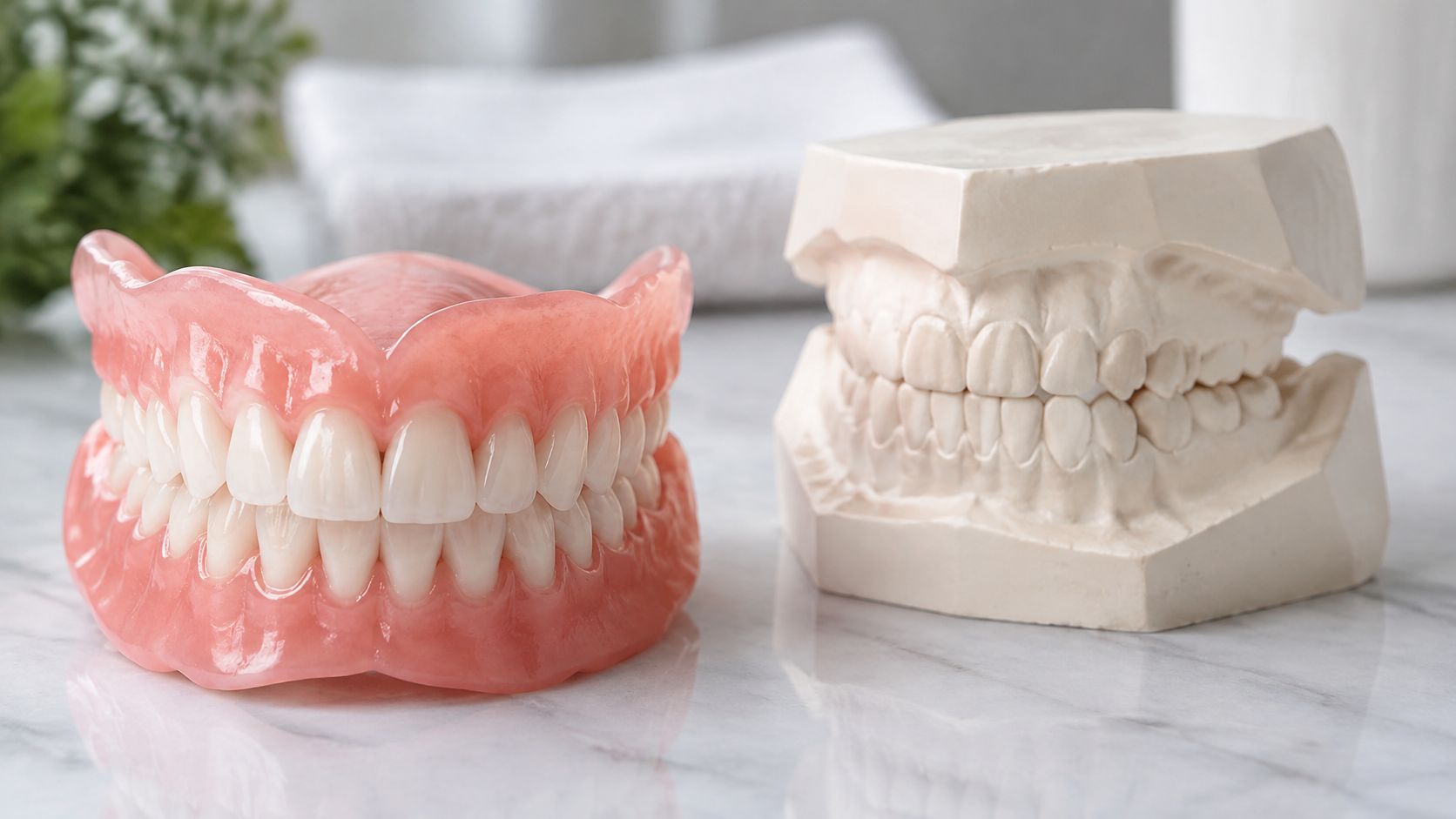
When all teeth in an arch are gone and surgery isn't feasible or wanted, a complete denture remains a legitimate full replacement. A custom gum-colored base carries a full set of teeth shaped to the patient's bite, face, and smile, and the denture is removed nightly for cleaning.
Say a patient has lost all upper teeth and needs a straightforward, non-surgical path back to eating in public and smiling in photos. A well-made complete denture can do that without grafting or healing months. When remaining teeth must come out first, an immediate denture can be placed at the extraction visit so the patient never goes without teeth while healing.
Fit is a moving target. Without tooth roots, the jawbone gradually changes shape, so even a good denture loosens over time and needs adjustments, relining, or eventual replacement. Lower dentures are usually the harder ones to stabilize because the tongue and floor of the mouth work against retention.
Setting Honest Expectations
The first weeks involve learning, not just wearing. Starting with soft foods cut into small pieces, chewing slowly on both sides, and reading aloud at home all speed up adaptation. Sore spots early on are common and are a reason to call for an adjustment, not a sign that dentures have failed.
Patients comparing fixed and removable full-arch paths can read dental implants compared with dentures to frame questions about stability, maintenance, and cost. Readers researching removable options in another state sometimes find dentures in San Jose CA through separate local listings, though fitting and follow-up should always happen with a nearby provider.
Cost, speed, and no surgery put complete dentures on this list. Movement while eating, reduced chewing force compared with fixed teeth, and ongoing relines are the honest limitations that come with them.
8. Implant-Supported Overdenture for Secure Removable Teeth
An overdenture splits the difference between a denture and a fixed bridge. The denture still comes out for cleaning, but it snaps onto two or more implants, so it stays put while eating and speaking instead of relying on suction and adhesive.
Say a patient has worn a loose lower denture for years and avoids firm foods at restaurants. Two implants with snap attachments can transform that daily experience without the cost or complexity of a fixed full-arch bridge. An upper overdenture can also improve comfort and may allow a less bulky design in suitable cases.
Bone still determines what's possible. The Guy's and St Thomas' NHS guide to bone grafting for implants explains that grafting increases the amount of bone available to support an implant and that the graft is often allowed to heal for approximately 3 to 6 months before implant surgery. Patients should ask early whether grafting is likely, because it changes both timeline and budget.
Maintenance Patients Can Actually See
Attachments wear. The small inserts that create the snap gradually loosen and need periodic replacement, and the denture base still needs fit checks as the gums change. None of that is complicated, but skipping maintenance turns a secure overdenture back into a wobbly denture.
- Brush the attachments daily: Soft brushes around each implant and inside the denture housings prevent buildup and odor.
- Keep maintenance visits: Attachment wear, implant health, and denture fit are checked together.
- Ask about attachment type: Bite force, jaw shape, hand dexterity, and budget all influence the right system.
The comparison below shows why implant retention changes stability and bone support compared with a conventional denture resting on the gums alone.
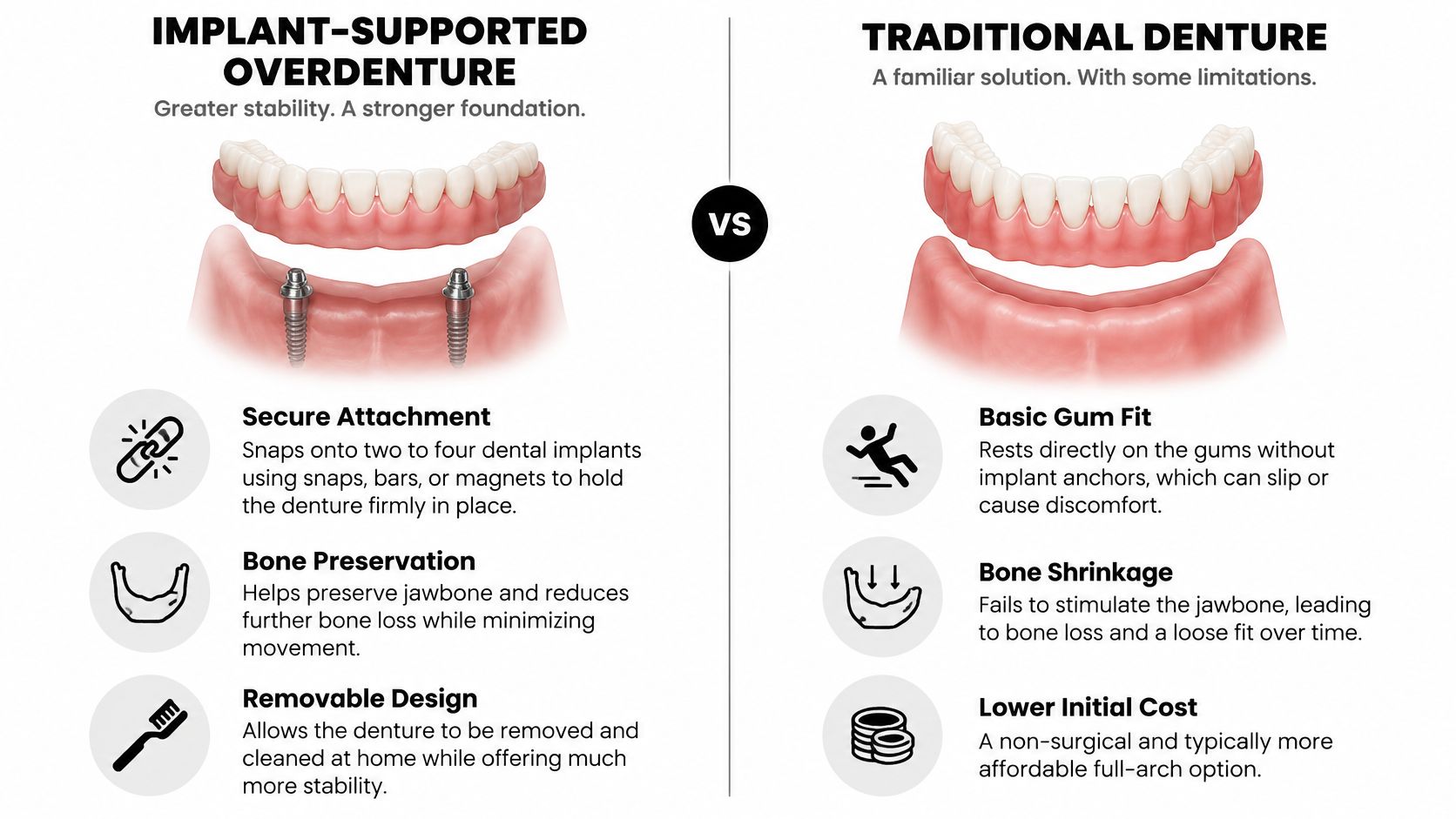
This option fits patients missing most or all teeth who want real stability, easier cleaning access than a fixed bridge, and a mid-range investment between a plain denture and All-on-4.
Missing Tooth Replacement Options Compared
The right choice depends on how many teeth are missing, whether you want a fixed or removable replacement, and whether surgery is acceptable. This table compares the usual fit and treatment sequence for each option. Timelines vary with the treatment plan and healing.
| Option | Fixed or Removable | Surgery Needed | Best For | Typical Timeline |
|---|---|---|---|---|
| Single Tooth Implant with Crown | Fixed | Yes | Replacing one missing tooth while preserving neighboring teeth | Several months for healing and bone integration |
| Implant-Supported Bridge | Fixed | Yes | Replacing multiple missing teeth in a row | Implant healing period, followed by bridge placement |
| Full-Arch Implant Restoration (All-on-4) | Fixed | Yes | Replacing most or all teeth in one arch | Longer treatment overall; a temporary set may be placed the same day as surgery in suitable cases |
| Traditional Dental Bridge | Fixed | No | Replacing missing teeth when adjacent teeth can support crowns | Usually a few visits |
| Resin-Bonded Bridge (Maryland Bridge) | Fixed | No | Replacing a front tooth while preserving adjacent teeth | Typically faster than many implant options |
| Partial Removable Denture | Removable | No | Replacing several missing teeth without surgery | Usually several visits for measurements, a try-in, and fitting adjustments |
| Complete Denture | Removable | No | Replacing all teeth in one or both arches | Can be made relatively quickly; adjustment may take several weeks |
| Implant-Supported Overdenture | Removable | Yes | Replacing most or all teeth with more stability than a traditional denture | Requires implant healing before or around denture attachment |
How to Choose Your Option and Next Steps in Miami, FL
Start with how many teeth are missing and where they are. For one tooth, compare a single implant with a traditional or Maryland bridge. For several teeth in a row, consider an implant-supported bridge or partial denture. For a full arch, the main choices are fixed teeth with an All-on-4 restoration, a removable implant-supported overdenture, or a complete denture without surgery. Your health, treatment timeline, and budget help narrow the options.
Age alone does not rule out implants. The International Team for Implantology consensus database reports that age 75 or older alone is not a contraindication. Candidacy also depends on factors such as oral hygiene, disease control, ability to heal, and willingness to attend follow-up visits.
Long-term maintenance matters alongside whether an implant remains in place. A systematic review of implant survival and prosthesis outcomes reported mean implant survival of 95.3% after an average 4.6-year follow-up among patients with congenitally missing teeth, with 97.8% prosthesis survival. Smoking, periodontal history, plaque control, and regular maintenance can affect outcomes.
What to Bring to the Consultation
- Medical and medication list: Include diabetes, blood thinners, bone medications, and smoking history, since these can affect surgical planning.
- Timeline limits: Share upcoming travel, work demands, and insurance timing. These details can help determine whether a staged implant plan or a bridge better fits your schedule.
- Questions about treatment: Ask whether bone grafting may be needed, what temporary teeth are available, how many visits to expect, what happens if a restoration fails, and how costs and billing are documented. For billing questions, Happy Billing's dental billing insights offer further context.
At Ultra Smile DentalSpa, patients can discuss implants and bone grafts, crowns and bridges, partials and dentures, and cosmetic dentistry. The practice describes a comfort-focused visit with refreshments, custom aromatherapy, streaming entertainment during treatment, bilingual staff, and transparent treatment planning. A free consultation can be requested through the form on the treatment pages to discuss candidacy, imaging, and a treatment sequence before deciding.
A gap does not always need immediate replacement, but leaving it untreated may allow nearby teeth to shift and the bite to change. A consultation can clarify whether monitoring is reasonable or whether an implant, bridge, denture, or staged approach better suits your needs.
If you are looking for a cosmetic dentist near me or a dentist near me in Downtown Miami, Midtown Miami, or Hallandale Beach, bring your questions to a new-patient exam. Ask for a recommendation that accounts for your oral health, budget, timeline, and preference for fixed or removable teeth.
Ultra Smile DentalSpa offers implants, bridges, dentures, crowns, teeth whitening, and restorative dentistry in a calm, spa-like setting for patients across Miami. Patients can request a free consultation, discuss imaging and costs with bilingual staff, and consider a plan suited to their needs and budget. Schedule a visit through Ultra Smile DentalSpa to discuss replacement options.