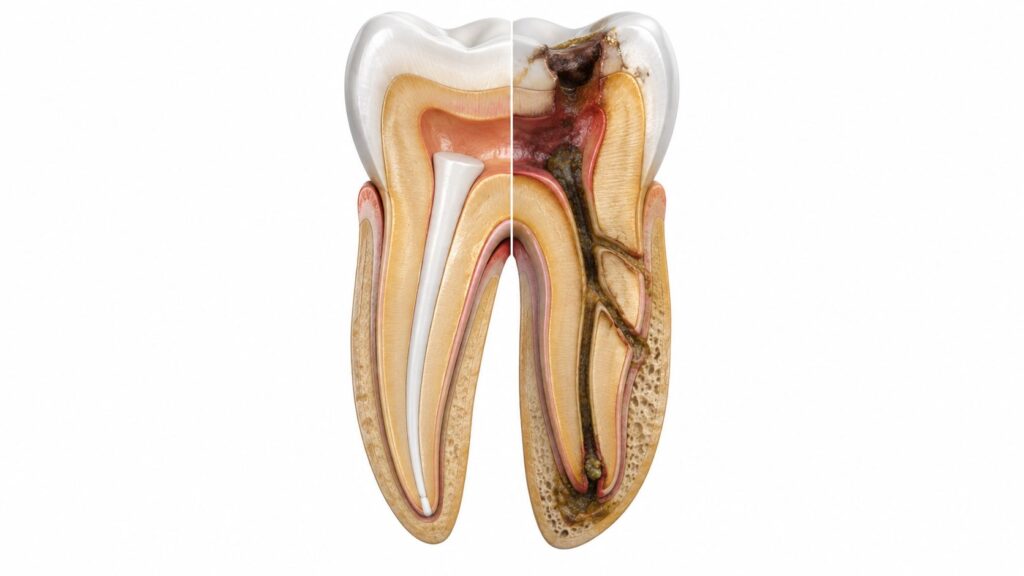
A root canal felt successful, the tooth stopped hurting, and life returned to normal. Then, months or years later, it becomes tender when biting, the gum nearby swells, or a familiar discomfort returns. For Miami patients searching for a dentist near me or an emergency dentist, the sudden change can raise an unsettling question: why do root canals fail if the tooth looked fine?
A clean-looking dental X-ray doesn't always show every branch or hidden space inside a tooth. Persistent infection, complex anatomy, a leaking restoration, or a fracture can all play a role, and a recurring problem doesn't automatically mean the tooth must be removed. At Ultra Smile DentalSpa in Miami, Dr. Neda Bahmadi evaluates previously treated teeth alongside restorative and surgical options, helping patients understand what may be happening and what can be done next.
Table of Contents
- When a Healed Tooth Starts to Hurt Again
- How a Root Canal Can Fail Even When It Looks Fine
- The Most Common Reasons Root Canals Fail
- Warning Signs and How Specialists Diagnose the Real Problem
- Retreatment, Apicoectomy, or Extraction
- Prevention and Aftercare That Actually Protect the Tooth
- What to Expect at Ultra Smile DentalSpa in Miami
When a Healed Tooth Starts to Hurt Again
A patient may remember the original root canal as a turning point: the deep ache eased, chewing felt comfortable again, and the tooth seemed settled. When tenderness returns long afterward, it's natural to worry that treatment failed or that extraction is inevitable. But a change in symptoms is a reason to investigate, not a diagnosis by itself.
A tooth that hurts on biting may have lingering inflammation around its root, a crack, a problem with its crown or filling, or pain from nearby gum tissue. Some persistent infections cause few obvious symptoms and are first noticed during an exam or on dental X-rays. The source matters because similar sensations can call for very different care.
A returning symptom deserves a careful check, not an automatic decision to pull the tooth.
In Miami, an evaluation may begin with the history of the tooth, including when the root canal was done, what restoration followed, and when the discomfort started. The dentist can examine the tooth and surrounding gums, check the bite, and review imaging. If a two-dimensional X-ray doesn't explain the symptoms, additional imaging may be appropriate.
The conversation should cover what the findings mean and whether the tooth appears restorable. Depending on the cause, options may include monitoring, nonsurgical retreatment, surgery at the root tip, or extraction if the tooth can't be predictably repaired. A root canal can fail without a visibly poor filling or an obvious mistake, and treatment choices shouldn't be made from pain alone.
The sections below look at the biological and structural causes, warning signs, diagnostic process, and treatment paths. For patients looking for a dentist in Miami, FL, a calm explanation of the diagnosis is part of good care. The goal is to identify the problem and choose an option that addresses it while protecting the patient's health and comfort.
How a Root Canal Can Fail Even When It Looks Fine
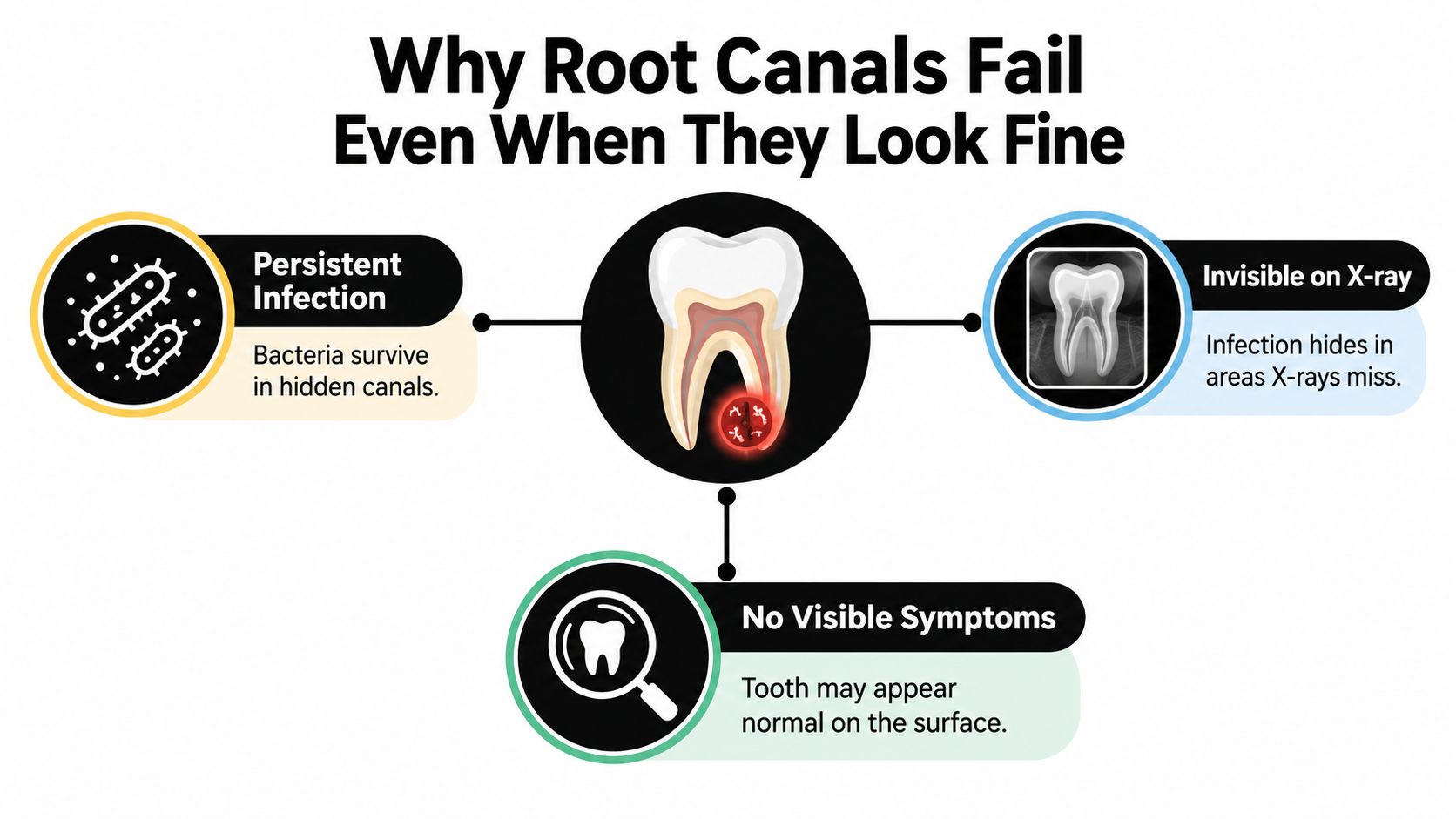
The central biological reason a root canal can fail is persistent infection. Root canals are not simple, straight tubes: narrow branches and irregular spaces can hold bacteria beyond the reach of instruments. A useful comparison is trying to clean a branching tree root with a single hose. Water can reach the main passage, but small offshoots may remain sheltered.
After preparation, approximately 43–49% of canal walls may remain untouched by instruments, especially in fins, isthmuses, lateral canals, and apical ramifications, where residual biofilm may persist (research on canal-wall coverage and persistent infection). Irrigation and other disinfection steps help reach areas that instruments can't, but no single view of a filled canal proves that every hidden niche is free of bacteria.
Why a normal-looking X-ray can be incomplete
A conventional dental X-ray is a two-dimensional image of a three-dimensional tooth. It can show the overall filling and bone around the root, but overlapping structures or tiny branches may hide details. A radiographically dense filling may therefore look reassuring while untreated anatomy or residual infection remains elsewhere in the canal system.
Curved roots and accessory canals complicate cleaning and disinfection. The key distinction is between a canal that appears short on an X-ray and a canal that was missed or couldn't be adequately cleaned because of its shape. Those aren't the same problem, and they don't necessarily call for the same treatment.
How leakage can restart infection
Bacteria can also re-enter from the top of the tooth. If a temporary filling breaks down, a crown or filling has a gap, or decay develops along its edge, oral fluids and bacteria can move toward the sealed canal space. This is called coronal leakage. It can undo the protection created by cleaning and filling the canals.
That's why the final restoration isn't just cosmetic finishing. A well-sealed, durable crown or filling helps protect the tooth from recontamination and fracture. The canal filling, the restoration above it, and the health of the remaining tooth structure all contribute to the outcome.
The Most Common Reasons Root Canals Fail
The question “why do root canals fail? doesn't have one answer. A tooth may have hidden anatomy, a compromised seal, a crack, or infection that persists beyond the canal. Finding the likely cause is more useful than judging the treatment by how dense the filling looks on an X-ray.
Missed canals are one measurable contributor. A systematic review of early failures reported missed canals at an average rate of 12.6% and instrument-related causes at 6.3%, with inadequate filling and poor coronal status also recurring (systematic review of early root-canal failures). In a separate 2025 study, severe canal curvature appeared in 46.4% of failed cases versus 14.3% of successful cases, while accessory canals appeared in 42.9% of failures versus 25% of successes (study of anatomy in failed root canals). These findings point to anatomy as a real diagnostic challenge, not proof of carelessness in an individual case.
| Common cause of root canal failure | Typical clue | Likely fix |
|---|---|---|
| Missed or complex anatomy | Infection persists despite a dense-looking filling | Retreatment may help if the canal can be located and accessed |
| Incomplete cleaning or filling | Ongoing disease around the root or a technical limitation in the canal | Retreatment may address correctable problems |
| Coronal leakage or new decay | A damaged or loose restoration, decay, or a lost filling | Repair the restoration and assess whether the canal needs retreatment |
| Vertical root fracture | A crack or persistent problem associated with a structurally compromised tooth | The tooth may not be restorable; extraction may be considered |
| Extraradicular infection | Disease persists outside the canal despite treatment | Surgery or another approach may be considered after diagnosis |
A root fracture matters because bacteria can travel along the crack, and retreatment may not close that pathway. By contrast, a lost or damaged restoration may allow a new seal to be placed, though the dentist must check whether infection has returned. If a temporary or permanent filling has fallen out, patients can review what to do while arranging an assessment in guidance on a root canal filling that fell out.
Less commonly, infection may persist outside the canal, where irrigants can't reach it. The practical lesson is to investigate the tooth's anatomy, restoration, and structural condition together. Failure is often a biological or anatomical mismatch, not a simple verdict on the quality of the original care.
Warning Signs and How Specialists Diagnose the Real Problem
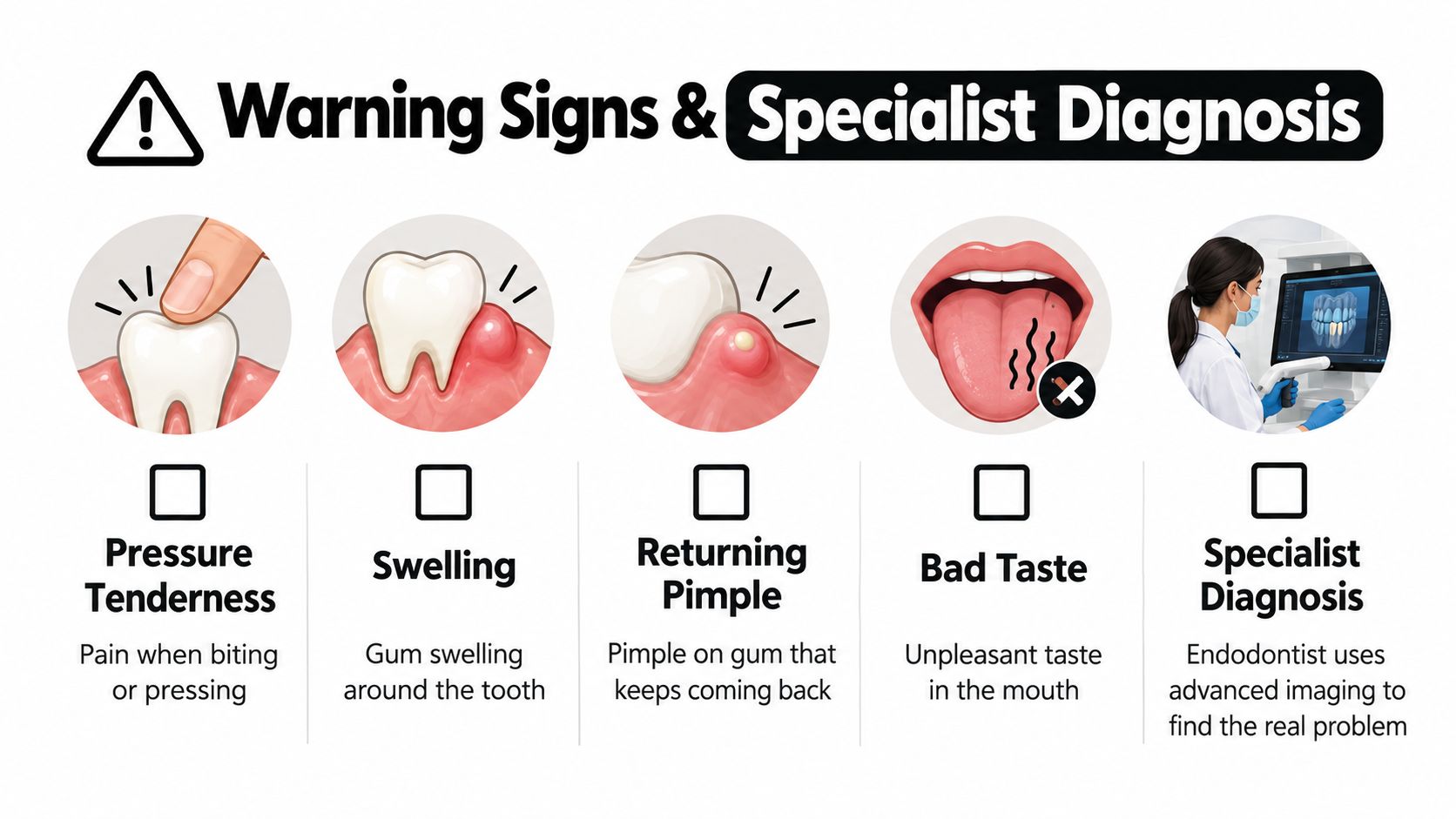
A previously treated tooth needs assessment when symptoms persist, return, or change. Tenderness when biting, swelling near the tooth, a gum pimple that comes back, or an unpleasant taste can point to a problem that merits examination. Brief tenderness during healing can have a different explanation, so the timing and pattern of symptoms matter.
What the diagnostic visit may include
At Ultra Smile DentalSpa, an evaluation can include a clinical exam, assessment of the gums and supporting tissues, and periapical X-rays focused on the tooth's roots. The dentist may check how the tooth responds to pressure and examine the restoration for gaps, decay, or damage. If the anatomy or a suspected fracture remains unclear, three-dimensional CBCT imaging may be appropriate to help assess the root and surrounding area.
Imaging is one part of the diagnosis, not a guarantee of a particular outcome. The dentist also needs to consider whether symptoms could come from a crack, periodontal disease, a neighboring tooth, or pain that isn't caused by the root canal. Treating the wrong source won't resolve the problem.
A systematic review identified missed canals, instrument-related causes, inadequate filling, and poor coronal status among recurring contributors to early failures, as noted above. For a patient seeking another perspective on infection and retreatment, Paul L. Gregory, DDS infection guidance offers additional context on how persistent infection may be evaluated.
The decision should follow the findings. A symptom alone doesn't establish that retreatment is necessary, and a dark area on an X-ray doesn't by itself determine whether the tooth should be saved or removed. A careful diagnosis gives patients a clearer basis for discussing the next step.
Retreatment, Apicoectomy, or Extraction
A failed root canal doesn't automatically mean tooth extraction. The right option depends on the source of the problem, whether the canal system can be reached, and whether enough sound tooth structure remains to restore it.

Nonsurgical retreatment
Retreatment may be appropriate when the tooth is restorable and the cause can be addressed through the canal, such as a missed area, persistent infection, or a compromised original seal. The dentist reopens the tooth, removes existing filling material, looks for untreated anatomy, disinfects the canals, and places a new seal before completing the restoration.
The outlook can be encouraging when the case is suitable. American Association of Endodontists educational material reports complete healing rates of approximately 74% to 98% for properly performed nonsurgical retreatment. In a separate insurance-database study of 4,744 retreated teeth, 89% survived at least five years (retreatment outcomes and tooth survival data). These figures aren't a personal prediction: the tooth's cause of failure, structure, and restorability still matter.
Apical surgery
An apicoectomy, or surgery at the root tip, may be considered when infection persists around the tip despite a sound canal filling, or when the suspected source can't be managed effectively from inside the tooth. It isn't an automatic next step for every lingering symptom. The clinician must first assess the root, surrounding tissues, and whether surgery is likely to address the specific cause.
Extraction and replacement
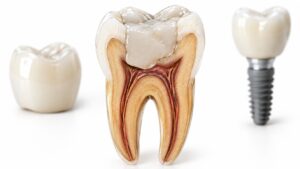
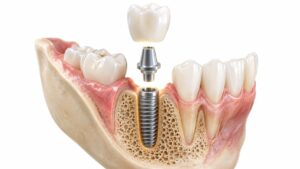
When a vertical fracture, inaccessible anatomy, or insufficient remaining structure makes a tooth unrestorable, extraction may be the more appropriate option. Afterward, a dental implant or bridge may be considered based on the patient's oral health and treatment needs. Ultra Smile DentalSpa offers restorative services that include crowns, same-day crowns, implants, bone grafts, and extractions, allowing the replacement plan to be discussed alongside the diagnosis.
Patients comparing dental implants near me with retreatment should ask what problem each option solves, what the tooth can realistically support, and what restoration will be needed afterward. A cosmetic dentist near me search may also help someone explore appearance-related care, but cosmetic finishing comes after the infection and structural issues have been addressed.
This overview can help patients prepare for a consultation:
Prevention and Aftercare That Actually Protect the Tooth
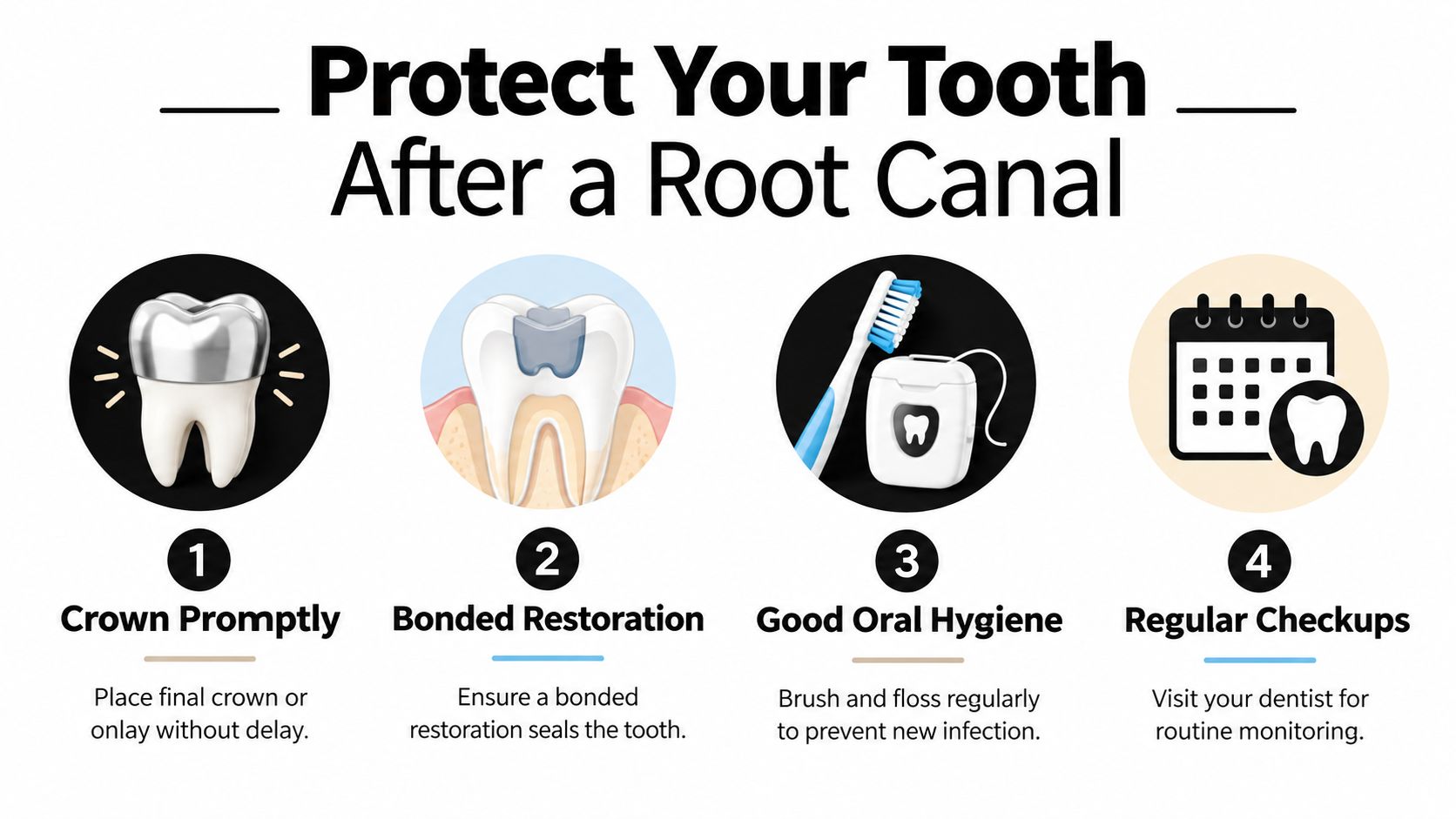
Good canal treatment needs a dependable seal and follow-through. Patients can reduce avoidable risks by protecting the tooth while it's waiting for its permanent restoration, maintaining routine dental care, and getting changes checked rather than ignoring them.
- Complete the final restoration promptly. Ask the dentist when the crown, onlay, or other definitive restoration should be placed. A temporary filling isn't a substitute for a durable long-term seal.
- Avoid heavy chewing on an unrestored tooth. Follow the treating dentist's instructions until the tooth has its final restoration, especially if it feels weak or tender.
- Keep up with dental care. Cleanings and exams help identify decay, restoration problems, or changes around the roots. Follow-up dental X-rays may be recommended to assess healing.
- Call about a new symptom. Persistent biting tenderness, a damaged crown, swelling, or a recurring gum pimple deserves a clinical assessment rather than a wait-and-see assumption.
A crown or onlay can protect a treated tooth from leakage and structural damage, but no restoration makes the tooth immune to new decay or fracture. Patients can learn more about the role of a final restoration in whether a crown is necessary after a root canal.
What to Expect at Ultra Smile DentalSpa in Miami
At Ultra Smile DentalSpa, a failed-root-canal consultation begins with a calm intake and a focused examination. Dr. Neda Bahmadi and the Miami team review the tooth's history, assess its restoration and surrounding tissues, and use imaging when indicated. Patients can then discuss whether retreatment, apical surgery, or extraction and replacement best fits the findings.
The practice coordinates root canal retreatment with crowns, implants, bone grafts, and restorative care. Same-day crown options may be available when appropriate, and the team can explain the treatment sequence before care begins. Bilingual staff, accepted insurance, and complimentary yearly whitening are among the practice's patient services. Patients near Downtown Miami, Midtown Miami, and Hallandale Beach can request a consultation without assuming that a recurring symptom means the tooth must be lost.
If a previously treated tooth is tender, swollen, or feels different, contact Ultra Smile DentalSpa to arrange an evaluation with Dr. Neda Bahmadi. The team can assess the cause and explain retreatment, surgery, or restorative options, including crowns and implants, so you can make an informed decision about your care.