A busy professional in Downtown Miami notices crooked front teeth in every video call and photo. Metal braces feel like the wrong fit for client meetings, dinners, and a packed calendar, so the search begins for a dentist near me who offers something more discreet. That search usually leads to one question, what is Invisalign treatment, and whether clear trays can realistically straighten teeth without brackets and wires. The honest answer is encouraging, but it isn't a simple yes for every smile.
Table of Contents
- What Is Invisalign Treatment
- How Invisalign Works Step by Step
- Who Is a Good Candidate for Invisalign
- Invisalign vs Traditional Braces
- Treatment Timeline and What to Expect
- Invisalign Cost and Insurance Considerations
- Choosing a Miami Provider for Invisalign
- Your Next Step Toward a Straighter Smile
What Is Invisalign Treatment
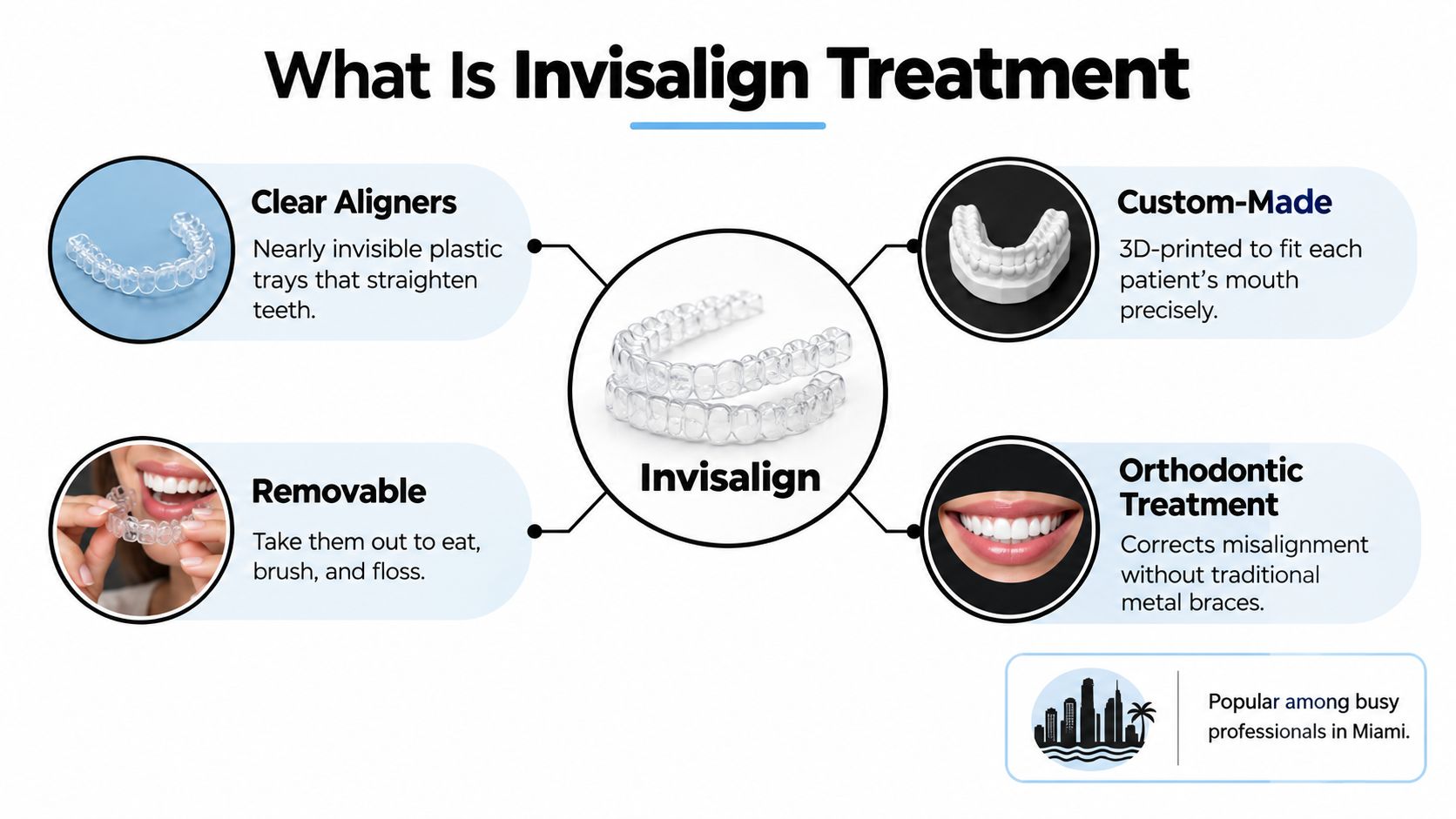
Invisalign is a form of clear-aligner orthodontic treatment that uses a sequence of custom-made, removable plastic trays to apply controlled forces and gradually reposition teeth. Its development reached a major milestone in 1998, when the U.S. Food and Drug Administration cleared the system, and commercial sales began in the United States in 1999, as documented in the history of Align Technology and its FDA clearance. Each tray looks like a thin, clear mouthguard shaped to fit one dental arch.
Unlike fixed braces, aligners don't stay glued to teeth. They're digitally designed around a three-dimensional treatment plan, with each tray representing a small stage of movement. A patient wears one set, then moves to the next, and the teeth shift a little more with every change. It's closer to following a mapped route than pushing teeth into place all at once.
What Daily Life Looks Like With Trays
Aligners come out for eating, drinking anything other than water, and oral hygiene. That removability is the feature most Miami adults notice first, because meals, coffee, brushing, and flossing stay close to normal. There's no list of forbidden foods, and no threading floss around wires.
Removable doesn't mean optional. The trays only move teeth while they're in the mouth, so convenience and discipline have to arrive together.
That trade-off shapes everything that follows in a consultation with a dentist in Miami, FL. Candidacy, timeline, attachments, cost, and retention all matter more than how invisible the plastic looks. A patient who understands those pieces early can judge whether aligners fit both the bite and the lifestyle, rather than choosing based on appearance alone.
Where Invisalign Fits in Modern Dental Care
- Cosmetic alignment: Mild crowding and small gaps often drive the first visit.
- Bite correction: Selected overbite, underbite, crossbite, and open-bite concerns may be treated.
- Broader planning: Alignment is often sequenced with cleaning and exams, teeth whitening, or restorative dentistry.
Invisalign is primarily used for crowding, spacing, and selected bite problems. Suitability still depends on tooth position, gum health, bone support, root shape, and bite complexity, which is why a proper examination comes before any promise about results.
How Invisalign Works Step by Step
Treatment starts with records, not trays. A dentist examines the teeth and gums, reviews dental x-rays, checks the bite, and confirms that active decay or gum disease won't undermine movement. A digital scan then captures the current position of every tooth and becomes the foundation for the plan.
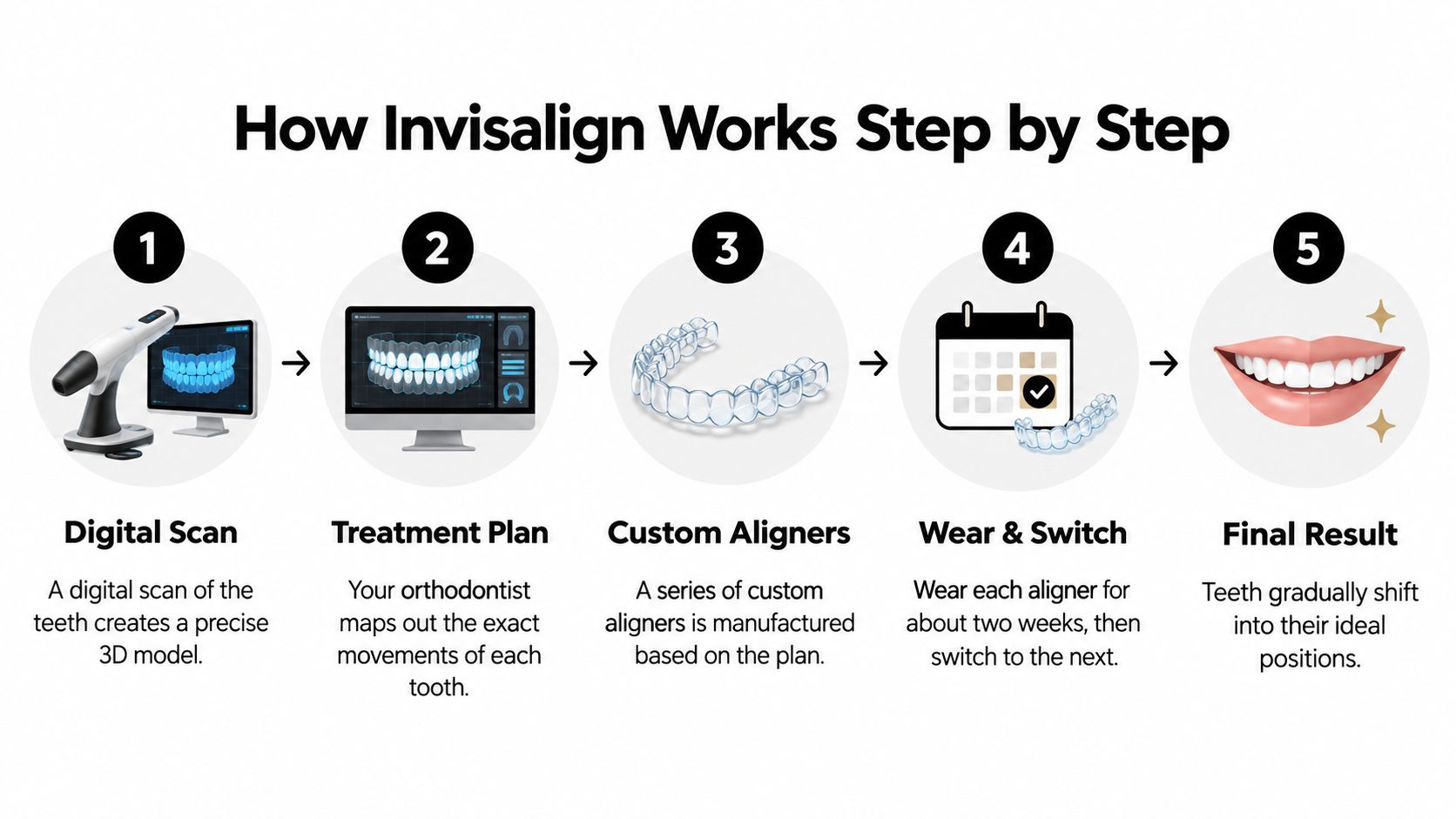
Digital treatment planning stages tooth movement through the ClinCheck platform, while SmartForce features, such as bonded composite attachments, pressure zones, and customized staging, modify force direction and retention when simple tray geometry is insufficient, according to a systematic review of clear aligner biomechanics and SmartForce design. The screen preview shows a projected endpoint, but it's a treatment objective, not a guarantee.
Each Tray Is One Small Frame
Think of the series like frames in a movie reel. One frame barely differs from the next, yet the full sequence tells a complete story. Skipping ahead doesn't speed up the ending, because the ligament and bone around each root need time to remodel in response to pressure.
- Scan and plan: A 3D model maps movement stage by stage.
- Wear and progress: Each aligner is worn as prescribed before the switch.
- Check tracking: Visits confirm teeth are following the digital plan.
- Refine if needed: Extra trays correct movements that lag behind.
Attachments deserve a plain explanation. These small, tooth-colored composite shapes act like handles, giving the smooth plastic something to grip for rotation, extrusion, or root control. Patients considering that detail can review how Invisalign attachments support specific tooth movements before treatment begins, so the bumps don't come as a surprise at the fitting appointment.
The short video below shows the general sequence from scan to finished smile in visual form.
Cleaning Is Part of the Mechanics
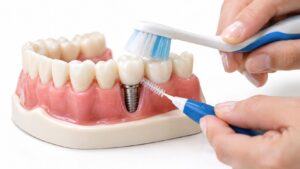
A cloudy, plaque-coated tray fits the day badly and smells worse. Aligners need gentle daily cleaning, and teeth need brushing before trays go back in, especially after meals. Practical guidance on rinsing, brushing trays, and avoiding hot water is available through smile care from DentalHealth.com, which helps patients build a routine that protects both enamel and plastic.
Who Is a Good Candidate for Invisalign
Candidacy is the section where honesty matters most. Clear aligners aren't a universal substitute for braces, and a discreet tray can't override biology. A clinical consensus review identifies Class I cases involving mild-to-moderate crowding, normal overjet and overbite, and tooth rotations below 20 degrees as situations in which clear aligners may be appropriate, as summarized in a consensus review of clear aligner case selection.
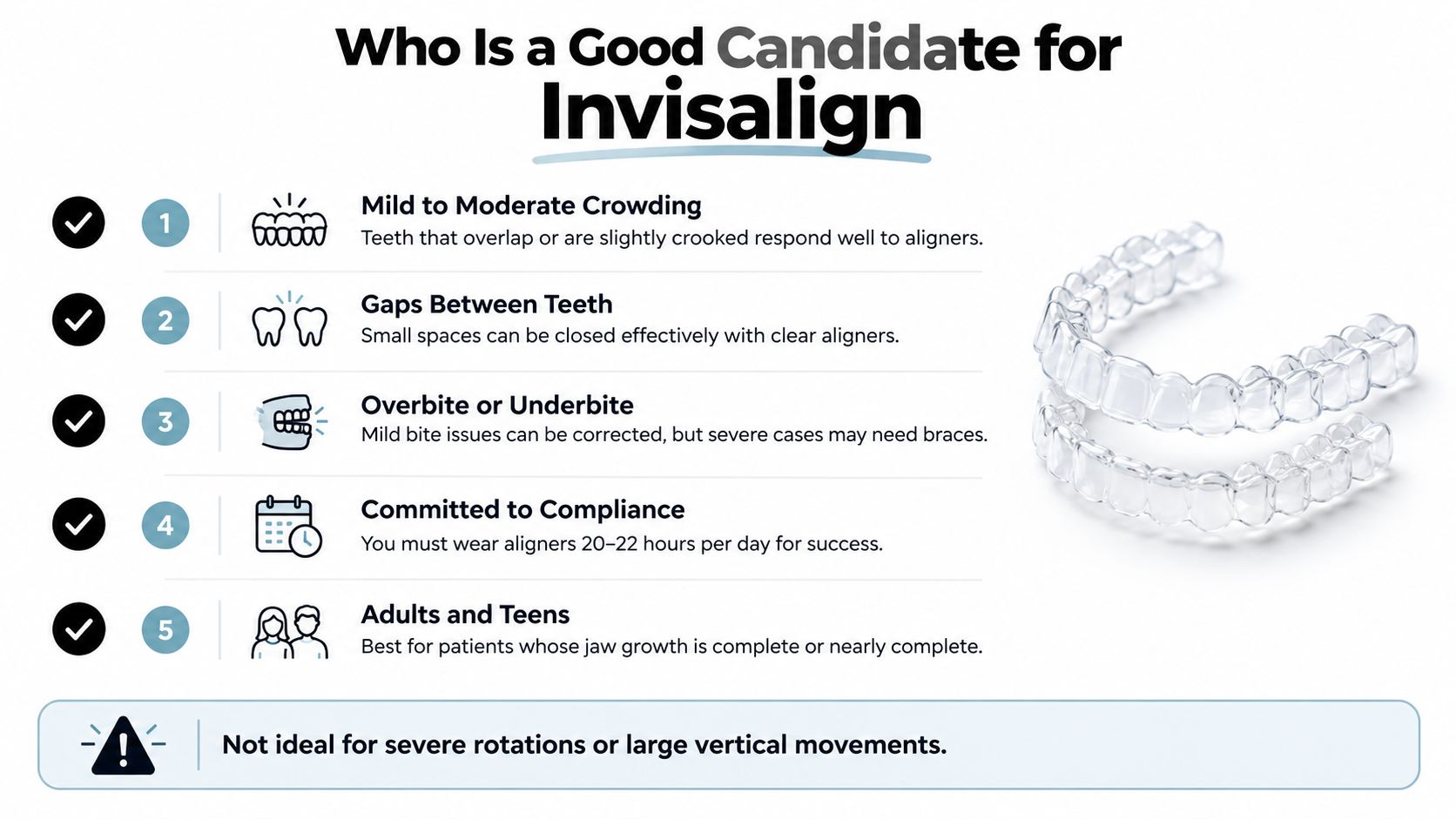
That profile describes many adults searching for a cosmetic dentist near me. Teeth overlap slightly, a small gap never closed, or earlier orthodontic results drifted after retainers were abandoned. Those concerns often respond predictably because the required movements stay within what tray pressure handles well.
What a Dentist Evaluates Before Saying Yes
- Gum and bone health: Inflamed tissue and weak support change the risk picture.
- Root position and shape: Roots must move safely through available bone.
- Bite relationships: Front teeth can look straight while back teeth still collide badly.
- Restorations and missing teeth: Crowns, bridges, or planned dental implants affect staging.
- Compliance history: A removable appliance fails when wear time slips.
Cases That Need a Longer Conversation
Severe rotations, large vertical movements, major front-to-back bite discrepancies, and plans involving tooth extraction require careful biomechanical design. Some patients still qualify with attachments, elastics, interproximal reduction, or refinement stages. Others get a more predictable result from fixed braces, or from a combined approach.
A useful question for any consultation: Which specific movements in this case are predictable with aligners, and which ones are uncertain?
That question separates a real treatment plan from a sales pitch. An online eligibility quiz can't palpate gum tissue, read radiographs, or test how teeth meet. A new patient exam with a qualified Miami dentist can, and it gives the patient alternatives when aligners aren't the most reliable route to the intended bite.
Invisalign vs Traditional Braces
Both systems move teeth with controlled force. The difference lies in how that force is delivered, who controls it day to day, and which movements each appliance handles best. Braces stay fixed, so the appliance works around the clock regardless of patient habits. Aligners depend entirely on the person wearing them.
Appearance drives many first conversations, and aligners clearly win on discretion. Comfort is more nuanced. Smooth plastic avoids bracket irritation on cheeks and lips, yet each new tray brings pressure for a few days. Braces create sore spots after adjustments, while aligners create a tight, squeezing sensation after every switch.
Invisalign vs Traditional Braces at a Glance
| Factor | Invisalign | Traditional Braces |
|---|---|---|
| Appearance | Clear trays, discreet in most settings | Visible brackets and wires |
| Eating | Trays removed, normal diet | Sticky and hard foods restricted |
| Cleaning | Normal brushing and flossing | Extra tools needed around brackets |
| Control | Patient controls wear time | Fixed appliance works continuously |
| Complex movements | Attachments and refinements may be needed | Strong control for difficult root movement |
| Appointments | Periodic tracking checks | Regular wire adjustments |
The Timeline Surprise Most Patients Miss
Aligners aren't automatically faster. In one randomized controlled trial involving 120 patients, clear-aligner treatment averaged 18.2 ± 3.1 months, compared with 14.5 ± 2.8 months for fixed appliances, as reported in a randomized trial comparing aligner and fixed appliance duration. That single trial doesn't set every patient's schedule, but it corrects the assumption that clear always means quicker.
The fastest appliance is usually the one matched correctly to the required movements, then actually used as directed.
Maintenance also differs in kind, not just effort. Braces demand meticulous cleaning around hardware that's always present. Aligners demand a repeatable routine of removal, storage, cleaning, and reinsertion, several times daily, at home, at work, and while traveling. Patients who enjoy structure often thrive. Patients who lose small objects regularly should weigh that before choosing.
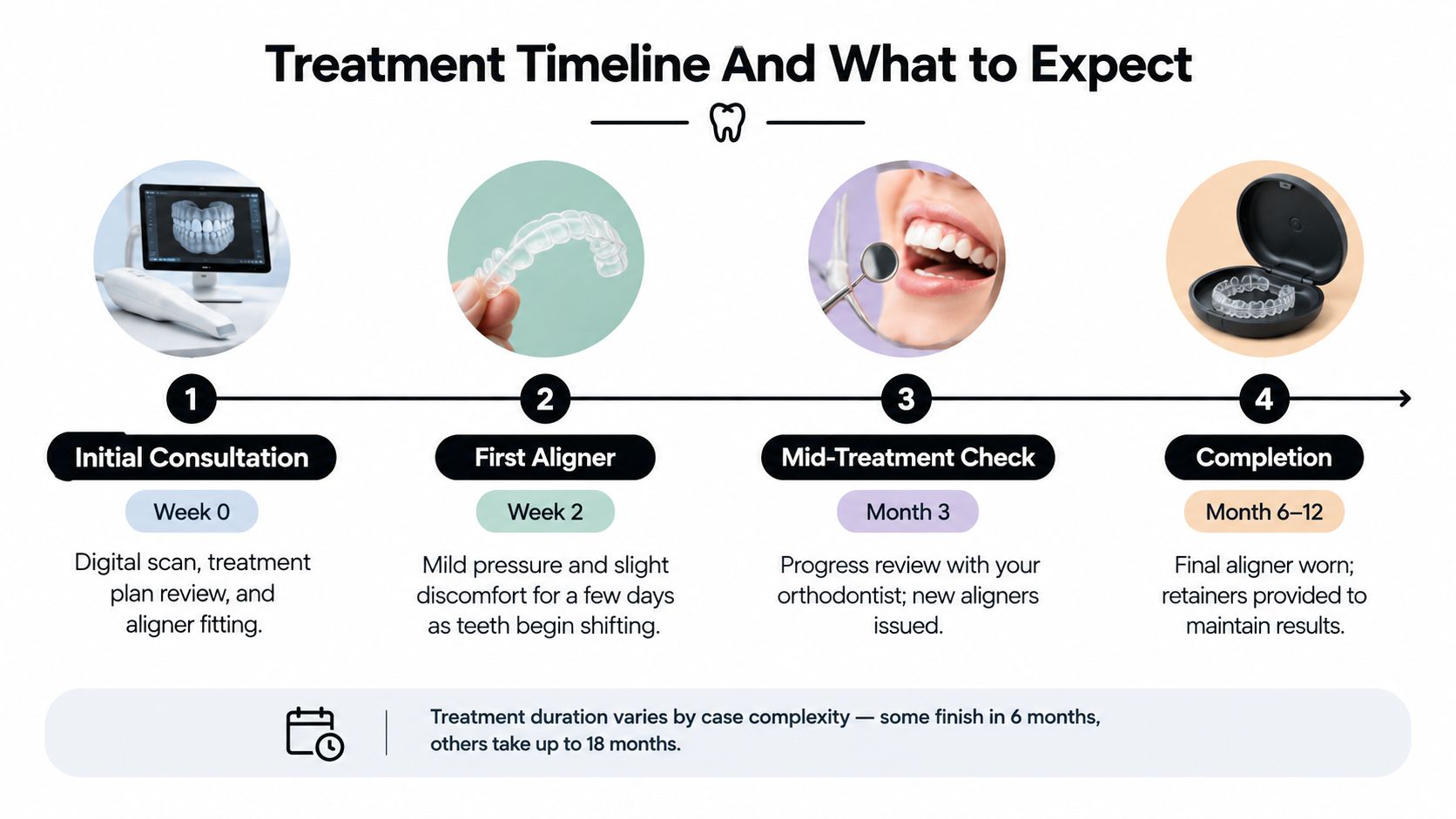
Treatment Timeline and What to Expect
There's no universal Invisalign calendar. Research comparing wear protocols found that approximately 22 hours of daily wear was more efficient for correcting mandibular irregularity than a 12-hour schedule, while the shorter schedule was adequate only for very mild upper-arch crowding in the studied circumstances, according to research comparing 22-hour and 12-hour aligner wear protocols. That finding explains why dentists repeat the wear instruction at nearly every visit.
The First Weeks Feel the Strangest
Early treatment brings a learning curve. Speech may sound slightly different until the tongue adapts, saliva flow increases at first, and new trays can cause temporary soreness. Eating routines change too, because snacking now involves removal, rinsing, brushing, and reinsertion. Most patients settle into the rhythm, but the first fortnight shouldn't be marketed as effortless.
- Consultation and scan: Records, bite analysis, and goal setting come first.
- First fitting: Attachments may be bonded and wear instructions reviewed.
- Active treatment: Trays change on the prescribed schedule with periodic checks.
- Refinement: Additional aligners fine-tune teeth that lag behind the plan.
- Retention: Retainers hold the result while tissues stabilize.
What Happens When Wear Time Slips
Missed hours don't announce themselves immediately. A tray starts seating less fully, a gap appears at one edge, and the next aligner fits worse than expected. Dentists call this loss of tracking. Sometimes extra days in the current tray solves it. Sometimes the plan needs new scans and refinement aligners, which extends treatment.
Practical rule: A lost tray, persistent pain, or a tray that won't seat fully deserves a call to the dental office, not a week of hoping.
Retention is the phase patients underestimate most. Teeth that moved over months will drift again without retainers, because the surrounding fibers retain memory of the old position. The final tray isn't the end of treatment. It's the handoff to a maintenance phase that protects the investment.
Invisalign Cost and Insurance Considerations
Cost questions deserve a direct answer, followed by an honest caveat. Fees vary with case complexity, treatment length, the number of aligners and refinements required, and whether other dental care must happen first. A short cosmetic correction and a full bite rehabilitation don't involve the same amount of planning, monitoring, or laboratory work.
Scale offers some context for how established the system is. Align Technology reported that more than 20 million people had been treated with Invisalign by 2025, a milestone reached approximately 28 years after the company's digital orthodontic innovation began, as noted in Align Technology reporting on global Invisalign patient milestones. Widespread adoption, however, doesn't create a standard price, because every plan is manufactured for one mouth.
What Actually Drives the Fee
- Complexity of movement: Rotations, bite correction, and extraction space closure add stages.
- Preliminary care: Cleanings, fillings, or gum treatment may need to come first.
- Refinements and retention: Policies on extra trays and retainers differ by practice.
- Monitoring: In-person supervision is part of safe, predictable care.
Insurance and Payment Planning
Many dental plans include some orthodontic benefit, though eligibility, age limits, and lifetime maximums vary widely between policies. Patients get the clearest picture when the practice verifies benefits against a specific diagnosis and treatment plan, rather than quoting from a generic fee sheet. For those without coverage, structured financing can spread the expense, and details are outlined in available Invisalign payment plan options for Miami patients.
An exact estimate requires an examination. Any quote given without records, x-rays, and a bite evaluation is a guess dressed as a number.
Comparing quotes between offices also requires comparing what's included. Attachments, refinement scans, retainer sets, and follow-up visits may be bundled in one fee and itemized in another. Asking for the full scope in writing protects patients from surprise costs mid-treatment.
Choosing a Miami Provider for Invisalign
Provider choice shapes Invisalign outcomes as much as tray design does. The software proposes movements, but a clinician decides whether those movements are biologically sensible, adjusts staging, and intervenes when teeth stop tracking. Patients searching for a dentist near me or an emergency dentist often underestimate how much ongoing supervision separates supervised treatment from a box of plastic.
Experience with case selection matters first. A provider who sometimes recommends braces, restorative dentistry, or no treatment at all is demonstrating judgment, not reluctance. Technology matters second, through accurate digital scanning, careful photographic records, and monitoring visits that catch problems while they're still small.
What a Local, Full-Service Practice Adds
Alignment rarely exists in isolation. A patient may need cleaning and exams before starting, teeth whitening after finishing, or planning around dental implants near me searches, crowns, or a future tooth extraction. A single Miami team coordinating cosmetic dentistry and general care keeps sequencing coherent, so aligners don't move teeth into conflict with planned restorations.
- Continuity: The same team tracks progress from scan to retainer.
- Access: A cracked tray or lost aligner gets local help quickly.
- Comfort: Longer appointments feel easier in a calm setting.
Ultra Smile DentalSpa serves Downtown Miami, Midtown Miami, and Hallandale Beach under Dr. Neda Bahmadi, DMD, pairing clinical dentistry with a spa-like setting that includes refreshments, aromatherapy, streaming entertainment, and a hot towel finish. For anxious patients, that environment isn't decoration. It's often the reason appointments happen.
Questions Worth Asking Any Provider
Patients can ask how refinements are handled, what retainers are included, how often progress is reviewed in person, and which movements in the specific case carry uncertainty. Clear, unhurried answers signal a practice that treats aligners as orthodontics, not as a retail product.
Your Next Step Toward a Straighter Smile
The core lesson about Invisalign is refreshingly unglamorous. The trays are advanced, the software is impressive, and the plastic is nearly invisible, yet none of that moves a single tooth by itself. Results come from a sound diagnosis, a realistic plan, consistent wear, and monitoring that catches drift early.
Patients who do best with aligners tend to share a profile. The case involves movements aligners handle predictably, the gums and bone are healthy, and daily routines can absorb removal, cleaning, and near-constant wear. When one of those elements is missing, a good dentist says so and explains the alternatives.
A Simple Self-Check Before Booking
- Routine readiness: Can meals, work, travel, and sleep accommodate tray discipline?
- Case fit: Has a clinician examined the bite, not just photographs?
- Long game: Is there commitment to retainers after the final tray?
Straight teeth are the visible goal. A stable, healthy bite that stays put is the actual goal, and it takes slightly longer to earn.
A consultation in Miami, FL turns speculation into specifics. Records and a digital scan reveal which movements are needed, whether attachments or refinements are likely, what the timeline may look like, and what treatment will cost. That visit also gives anxious patients a chance to experience the practice environment before committing to months of care.
Anyone weighing clear aligners against braces, or wondering whether minor crowding even needs treatment, benefits from that conversation. The next step isn't buying trays. It's getting an honest, individualized assessment, then deciding with full information and no pressure.
Adults in Downtown Miami, Midtown, and Hallandale Beach who want a clear, honest assessment of Invisalign candidacy can schedule a consultation that covers digital scanning, bite evaluation, timeline, and transparent costs in a calm, spa-like setting. Patients ready to start that conversation can visit Ultra Smile DentalSpa to request an appointment and learn whether clear aligners fit both the smile and the lifestyle behind it.