A sharp toothache at night, a cracked tooth during dinner, or sudden swelling before work can push anyone into panic. Individuals in that moment aren't comparing options calmly. They're typing emergency dentist services near me, hoping to find relief fast and avoid making the wrong call.
For adults searching for a dentist in Miami, FL, the hardest part is often deciding where to go first. Some dental problems need a hospital. Many need a dentist right away. Knowing the difference can protect your health, reduce cost, and get the actual problem treated instead of temporarily masked.
Table of Contents
- Your Guide to Finding an Emergency Dentist in Miami
- What Qualifies as a Dental Emergency
- Immediate First Aid for Common Dental Crises
- Emergency Dentist vs The ER Why Your Choice Matters in Miami
- What to Expect at Your Emergency Visit to Ultra Smile DentalSpa
- Aftercare and Preventing Your Next Dental Emergency
Your Guide to Finding an Emergency Dentist in Miami
Dental emergencies feel bigger when they happen outside normal hours. That's especially true when pain starts after work. Emergency visits for dental pain commonly peak between 17:00 and midnight, accounting for approximately 42.1% of all cases, as noted by Loud Family Dentistry's summary of emergency dentistry support data. For many Miami patients, the search starts late, under stress, and with limited patience.
That's why the first decision matters. A true emergency dentist is set up to diagnose tooth pain, swelling, broken teeth, lost restorations, and urgent infection risks in a way a general medical setting often isn't. A hospital can be essential for major trauma or breathing problems, but it usually isn't where definitive dental treatment happens.
Practical rule: If the problem starts in a tooth, gum, crown, filling, or jaw area and you can breathe and swallow normally, a dental office is usually the right first call.
Patients looking for a dentist near me in Miami often want three things right away:
- Pain relief now so they can function, sleep, or get through the day
- A clear diagnosis instead of guessing whether it's decay, a fracture, or infection
- A treatment path that solves the issue, whether that means a tooth extraction, root canal, crown repair, or follow-up restorative care
A local search should lead to a practical answer
A useful emergency dental visit shouldn't feel vague or rushed. The office should be able to tell you whether to come in immediately, what to do on the way, and whether your symptoms suggest urgent infection, trauma, or a problem that can safely wait until morning.
In Miami, that also means choosing a practice that can support next steps after the crisis passes. Many dental emergencies don't end with one visit. A broken tooth may need a crown. A hopeless tooth may later need dental implants near me searches to become relevant. A front tooth injury may lead to cosmetic dentist near me questions about appearance as well as function.
Quick relief matters. Definitive care matters more.
Calm, local guidance makes a difference when someone is trying to decide what to do in real time.
What Qualifies as a Dental Emergency
Some dental problems are urgent. Others are uncomfortable but can wait until business hours. The right decision depends on bleeding, swelling, trauma, and how quickly the condition can worsen.
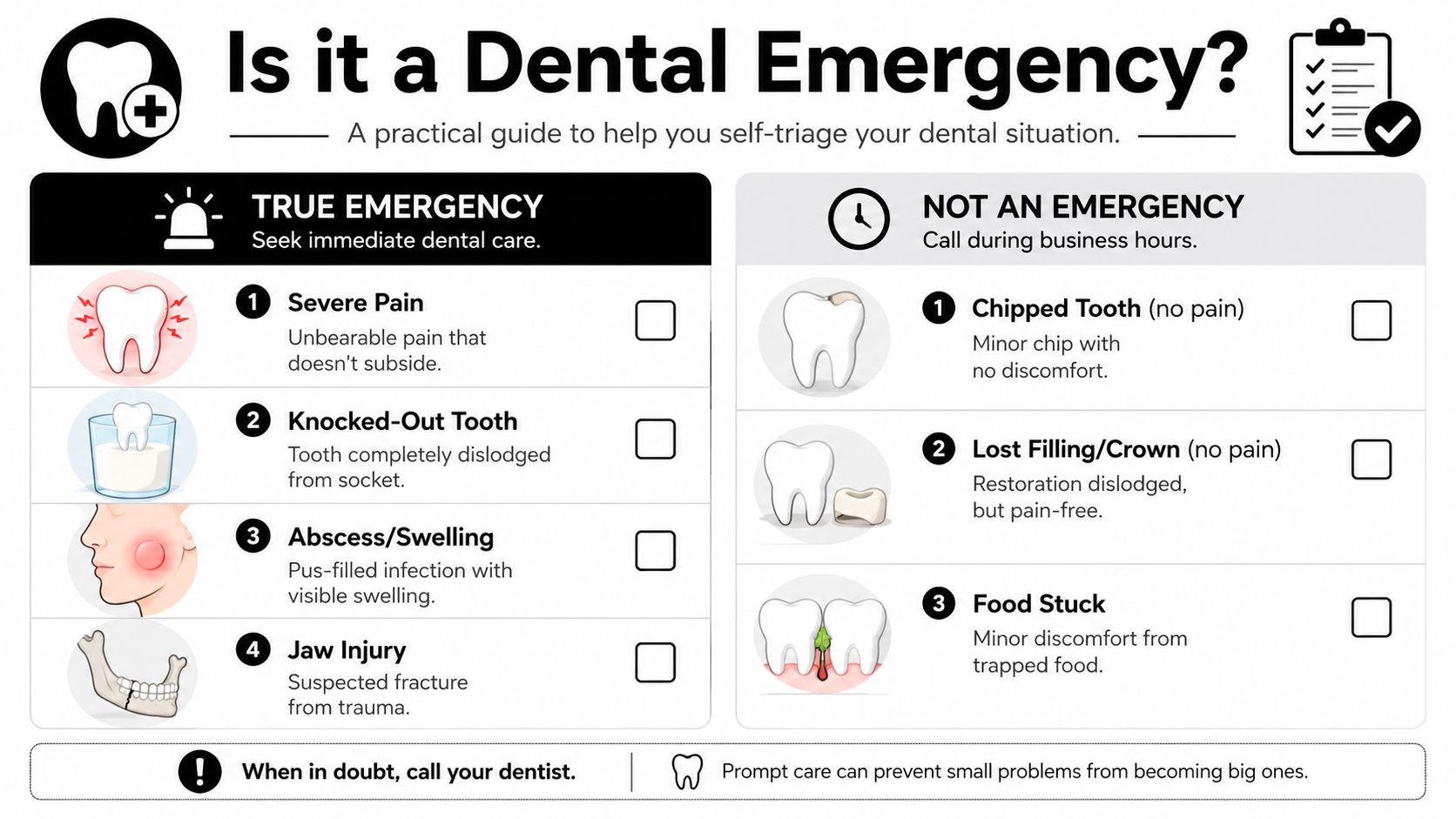
A dental emergency includes uncontrolled oral bleeding, an avulsed or knocked-out tooth, and severe pain or swelling that suggests acute infection. For a knocked-out tooth, time is critical because the tooth's viability drops significantly after 60 minutes, according to NYC Dentistry Center's emergency dental guidance.
Problems that need urgent dental care
Use this as a simple self-check.
- Bleeding that won't stop: If direct pressure for about 20 minutes doesn't control oral bleeding, it needs prompt attention.
- A knocked-out adult tooth: This is time-sensitive. The sooner a dentist sees it, the better the chance of saving it.
- Strong tooth pain with facial swelling: This can point to infection or an abscess that may spread.
- Rapid swelling in the gums or jaw: Swelling often means pressure, infection, or trauma that needs evaluation.
- A tooth fracture with pain or exposed inner tooth structure: These injuries can worsen quickly and become much more painful.
- Jaw injury after a fall or blow to the face: A suspected fracture needs immediate assessment.
Problems that usually can wait until business hours
Not every problem needs the same-day emergency slot.
| Concern | Usually urgent? | Why |
|---|---|---|
| Small chip with no pain | Usually no | It should still be checked, but it often isn't dangerous immediately |
| Lost filling or crown without pain | Usually no | The tooth is vulnerable, but many cases can wait until the next available appointment |
| Food stuck between teeth | Usually no | It's irritating, but it rarely qualifies as a true emergency |
| Mild sensitivity | Usually no | It may signal decay or wear, but it's not commonly an emergency by itself |
A patient doesn't need to diagnose the exact cause before calling. The point is to recognize the signs that shouldn't be ignored.
Severe pain, active swelling, and uncontrolled bleeding don't get better by being watched overnight.
If there's severe facial trauma, trouble breathing, or trouble swallowing, that moves beyond a routine dental emergency and into medical emergency territory.
Immediate First Aid for Common Dental Crises
The goal of first aid is simple. Protect the tooth or tissue, reduce pain, and avoid making the problem worse before treatment starts. Following first-aid instructions and getting prompt dental care is often effective. Seventy-five percent of patients with dental trauma or acute pain find symptom relief within 24 hours of intervention by an emergency dentist, according to Dental365's emergency dentist page.
Near the start of care, this is often the most useful step patients can take at home:

If a tooth gets knocked out
This is one of the few situations where minutes matter.
- Pick it up by the crown: Don't touch the root.
- Rinse gently if it's dirty: Use water briefly. Don't scrub it.
- Try to place it back into the socket: If it goes back in easily, hold it there gently.
- If it won't go back in, keep it moist: Milk is commonly used to transport it.
- Call right away: Delays lower the chance of saving the tooth.
If pain is severe or swelling is starting
Pain that throbs, radiates, or wakes someone up often means more than simple sensitivity.
- Rinse gently with warm salt water: This may help clean the area.
- Use a cold compress on the outside of the face: Standard first-aid instructions often use 20 minutes on and 20 minutes off for swelling control.
- Don't place aspirin on the gum or tooth: It can irritate soft tissue.
- Avoid chewing on that side: Pressure can increase pain.
A short video can help some patients follow the basics more calmly:
If a tooth breaks or a filling comes out
This problem can range from annoying to urgent depending on pain.
- Save any broken piece if you can find it
- Rinse the mouth with warm water
- Use gauze if there's light bleeding
- Avoid hard, crunchy, or very hot and cold foods
- Cover sharp edges carefully if needed until you're seen
For a lost filling or crown, avoid chewing on that side. If there's no pain, it may not be a middle-of-the-night emergency, but it still deserves prompt attention because the tooth is exposed.
If there is bleeding
Oral bleeding looks dramatic even when the injury is small, so the response should be simple and steady.
- Use clean gauze or a clean cloth
- Apply direct pressure
- Keep pressure in place for 10 to 15 minutes, or longer as instructed
- Stay upright
- Seek urgent care if it doesn't stop
Moist gauze for 10 to 15 minutes is a common first-aid measure to control bleeding before professional treatment. If bleeding remains uncontrolled, the situation should be treated as urgent.
Emergency Dentist vs The ER Why Your Choice Matters in Miami
For many Miami patients, the decision isn't whether to get help. It's where to go. That choice affects cost, wait time, and whether the problem is treated.
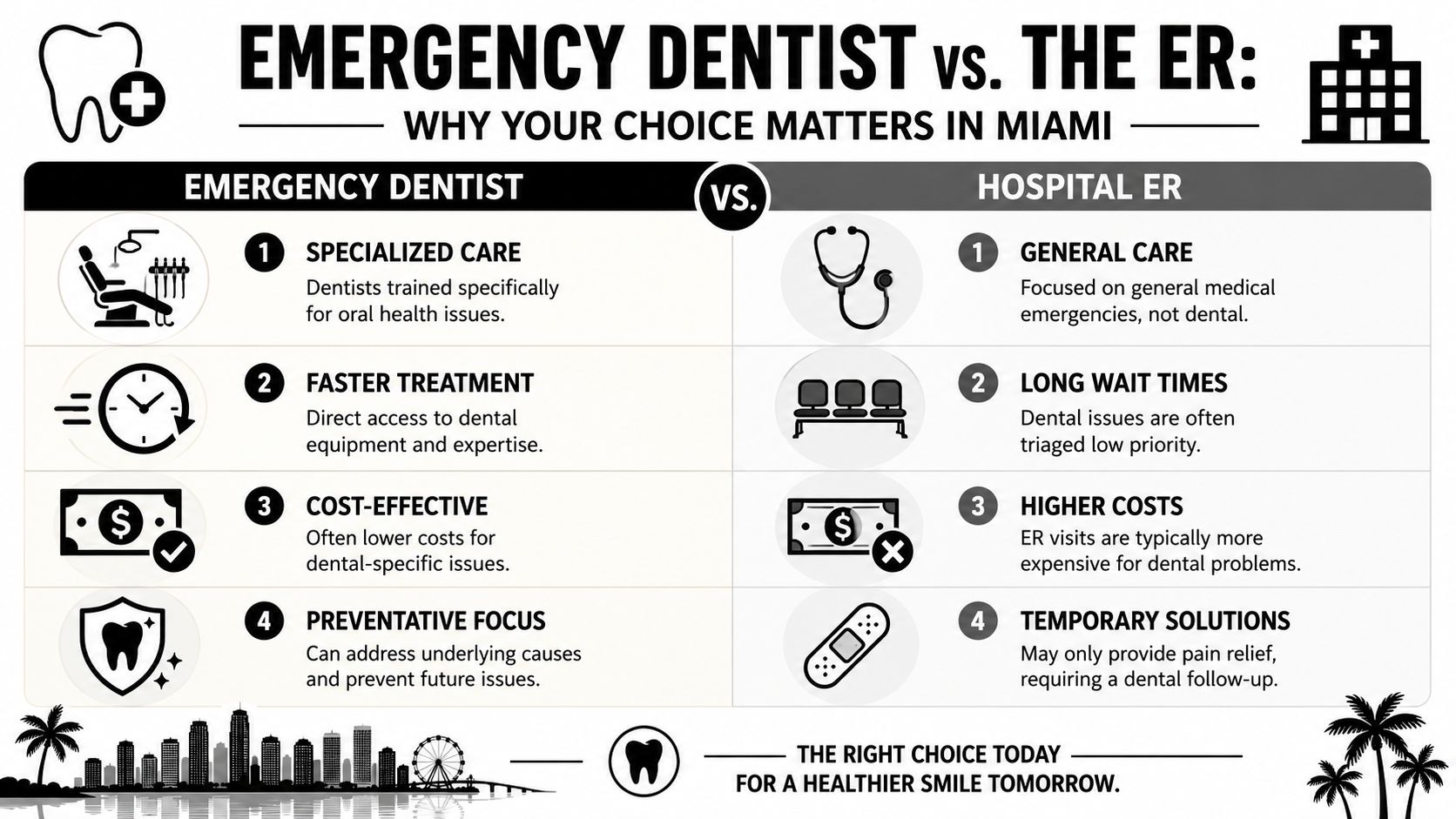
Nationally, dental-related emergency room use has been costly and persistent. The ADA estimates that redirecting roughly 2 million annual visits to dentists and clinics could save the U.S. healthcare system about $1.7 billion annually, as discussed in this Miami emergency dentist vs emergency room overview. That same source notes that in Florida, dental-related ER visits rose 43.6% over a decade, and nearly 80% of dental-related ER visits in 2009 involved preventable nontraumatic conditions such as abscesses and caries.
What the ER usually can and cannot do
A hospital ER can be the right place for major trauma, airway concerns, or serious medical complications. It usually isn't the right place for a straightforward toothache, broken filling, crown problem, or localized dental infection.
The reason is practical. ER teams can manage pain, screen for danger, and prescribe medication when appropriate. They generally don't provide the dental procedures that solve the cause, such as opening a tooth, re-cementing a crown, draining a dental abscess in a dental setting, or deciding whether a tooth extraction or root canal is the better option.
A dental office can usually move directly to diagnosis and treatment. That often means digital imaging, a targeted exam, and a clear plan for the tooth itself.
When the hospital is the right call
There are moments when a patient shouldn't wait for a dental office callback.
- Trouble breathing or swallowing: This can signal dangerous swelling.
- Severe facial trauma: A possible jaw fracture or broader injury needs medical evaluation.
- Uncontrolled bleeding: Especially if pressure isn't working.
- A dental injury with possible head injury: Medical assessment comes first.
A dental emergency belongs in a dental chair. A medical emergency belongs in a hospital.
For most patients searching emergency dentist in Miami, the smartest route is the provider who can deliver definitive dental care, not just temporary relief.
What to Expect at Your Emergency Visit to Ultra Smile DentalSpa
Severe tooth pain at 7 a.m. can make every hour feel longer. The visit should lower stress quickly by giving you a clear diagnosis, prompt pain relief, and a treatment plan that deals with the actual tooth, not just the symptoms.
Call first before coming in
Call before you leave home. That gives the team time to ask the right questions, judge how urgent the problem is, and prepare for the type of care you may need when you arrive.
That first conversation also helps sort out whether the tooth likely needs a temporary stabilizing step, immediate treatment, or a discussion about saving the tooth versus removing it. In an emergency setting, that kind of triage saves time and usually reduces unnecessary waiting.
What happens once you arrive
A good emergency visit starts with a focused history. Expect questions about when the pain started, whether swelling is spreading, whether you had recent trauma, and what makes the pain sharper or easier to tolerate.
After that, the exam moves with purpose.
- Targeted evaluation: The painful tooth, nearby gum tissue, bite, and any visible damage are checked
- Dental x-rays: These help show infection, decay, root involvement, fractures, or bone loss
- Clear diagnosis: You should hear a direct explanation of what is wrong and what needs attention first
- Same-visit relief when possible: This may include smoothing a sharp broken tooth, treating the source of infection, re-cementing a restoration, or stabilizing the area so you can function comfortably
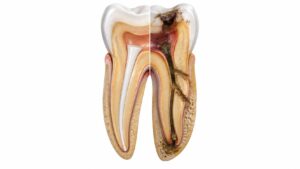
Different problems can feel similar to a patient in pain. A cracked tooth, a failing crown, and an abscess may all present as “tooth pain, but the right treatment is different in each case. That is why imaging and a hands-on exam matter more than guessing based on symptoms alone.
How treatment decisions are made
The goal is not only to get you through the day. The goal is to choose the treatment that gives the tooth its best chance, or to recommend removal when the tooth is no longer predictable to keep.
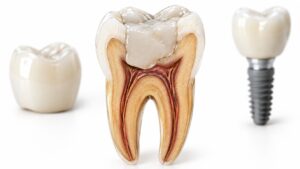
That conversation should include trade-offs. Some teeth can be relieved temporarily and restored later. Others need immediate endodontic treatment. If the tooth is too damaged, extraction may be the safer and more cost-conscious path than repeated temporary fixes. Patients weighing those options can review these root canal vs extraction considerations.
Ultra Smile DentalSpa provides this type of urgent evaluation in Miami, with emergency exams, dental x-rays, restorative treatment planning, and follow-up care that may include crowns, root canals, extractions, implants, and routine preventive visits.
Aftercare and Preventing Your Next Dental Emergency
Emergency treatment doesn't end when the numbness wears off. The first day or two after care usually determines how comfortable healing feels and whether irritation flares back up.
Simple aftercare that protects healing
The exact instructions depend on what was treated, but the basics are consistent.
- Follow eating instructions carefully: Soft foods are often easier on sore teeth and healing tissue.
- Avoid chewing on the treated side when advised: This protects temporary work and sensitive areas.
- Use prescribed or recommended medication exactly as directed: Skipping instructions often leads to unnecessary setbacks.
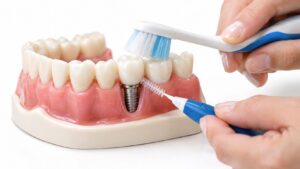
- Keep the area clean, gently: Cleanliness matters, but aggressive rinsing or brushing too soon can irritate healing tissue.
Patients recovering after an extraction often need more specific guidance about protecting the site, staying comfortable, and avoiding disruption to healing. This overview of what to do after having a tooth extracted can help reinforce those steps.
The emergency visit gets pain under control. Aftercare protects the result.
The long term way to avoid another crisis
Many dental emergencies begin as smaller problems that were painless, easy to ignore, or hard to fit into a busy schedule. A cracked filling, untreated decay, grinding damage, or gum inflammation can remain dormant until one day it turns into a weekend emergency.
Routine cleaning and exams, new patient exams, and dental x-rays help catch those issues sooner. For some patients, prevention also means a night guard for clenching, replacing old restorations before they fail, or handling a questionable tooth before it becomes an urgent tooth extraction case.
Cost keeps many adults from acting early. That barrier is real, especially for patients without strong coverage. A major gap in dental care affects uninsured adults because Medicaid and CHIP coverage is often limited. Penn Dental Medicine's discussion of low-income dental access highlights that issue, and it's why transparent pricing and help with payment options matter for both urgent and preventive care.
If dental pain, swelling, a broken tooth, or a lost restoration is disrupting your day in Miami, the next step is simple. Contact Ultra Smile DentalSpa to request an appointment, get guidance on whether your situation is urgent, and move toward treatment that addresses the cause instead of leaving you stuck with temporary relief.