A sudden toothache has a way of taking over the day. Eating becomes tricky, cold drinks sting, sleep gets interrupted, and the next question arrives fast. Is this tooth going to need a root canal, or does it need to come out?
That choice can feel heavy, especially when seeking a dentist in Miami, FL, an emergency dentist, or help with an urgent tooth extraction. Many patients want a straight answer, but they also want to know what life looks like after treatment. Will the tooth still function normally? Will recovery be hard? Will the smile change?
For patients in Downtown Miami, Midtown Miami, and Hallandale Beach, the decision often isn't just about stopping pain today. It's about protecting comfort, appearance, and long-term oral health in a setting that doesn't add more stress. A spa-like dental environment can make a difficult appointment feel manageable, especially for patients who already feel anxious about treatment.
Table of Contents
- Facing a Tough Choice for a Damaged Tooth in Miami
- When to Save a Tooth and When to Remove It
- Root Canal Therapy Explained Step by Step
- The Tooth Extraction Process What to Expect
- Comparing Key Decision Factors for Miami Patients
- Your Spa-Like Dental Experience at Ultra Smile DentalSpa
- Frequently Asked Questions and Your Next Steps
Facing a Tough Choice for a Damaged Tooth in Miami
A common dental emergency starts the same way. A patient feels a deep ache, notices swelling, or bites down and gets a sharp jolt through one side of the mouth. Then comes the exam, the X-rays, and the words patients often weren't expecting to hear. This tooth may need a root canal, or it may need to be removed.
That moment can create a lot of anxiety. Some patients worry about pain. Others think about time away from work, future costs, or what a missing tooth could do to their smile. In Miami, where many people balance busy schedules with social and professional demands, the choice feels personal very quickly.

What patients are usually dealing with
The signs that bring someone in for urgent dental care often include:
- Throbbing pain: discomfort that lingers or gets worse at night
- Sensitivity: a tooth that reacts sharply to hot, cold, or pressure
- Swelling: gum tenderness or fullness around one tooth
- Visible damage: a crack, deep cavity, or darkening tooth
- Chewing problems: pain that makes normal eating difficult
Some of these teeth can be saved. Some can't.
A rushed decision isn't the right decision. A damaged tooth needs a clear diagnosis first.
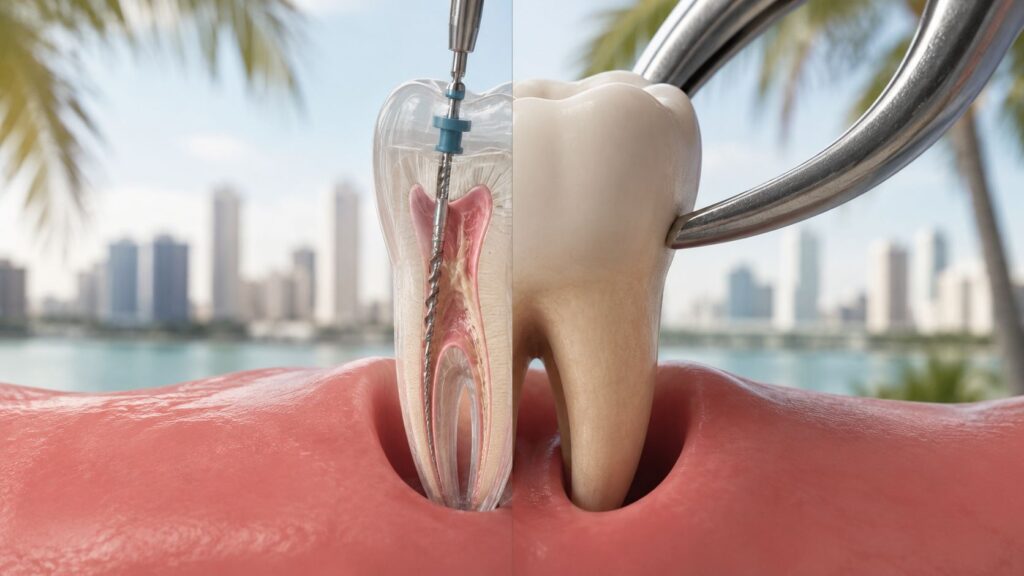
The most helpful mindset is this. Root canal vs extraction isn't a personality test and it isn't a one-size-fits-all rule. It's a clinical decision based on whether the tooth can still be restored into something stable, comfortable, and useful over time.
Why the setting matters
Patients looking for a dentist near me in Miami often focus on the procedure itself. That makes sense, but the experience around the procedure matters too. For people with dental anxiety, the environment can change how manageable the entire visit feels.
A calmer office, clear communication, modern imaging, and a gentle chairside approach help patients think clearly instead of reacting from fear. That matters whether the recommendation is to save the tooth through restorative dentistry or move forward with an extraction and replacement planning.
When to Save a Tooth and When to Remove It
Modern dentistry starts with a simple principle. If a natural tooth can be saved predictably, saving it is usually the preferred path. Keeping the tooth root and crown helps preserve chewing and supports the way the bite fits together.
A root canal has a function-preservation advantage because it keeps the natural tooth structure in place. Extraction leaves an empty socket that can affect bite alignment and often leads to later replacement needs, as explained in this clinical overview of root canal versus extraction.
When saving the tooth makes sense
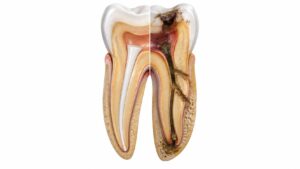
A dentist usually leans toward saving the tooth when the infection is inside the tooth, but the outer structure can still be rebuilt. A severely decayed tooth may still be restorable if there is enough healthy structure left above and below the gumline.
Other favorable signs include:
- Stable support: the tooth still has solid bone and gum support
- Manageable damage: decay or fracture hasn't made the tooth impossible to rebuild
- Useful position: the tooth plays an important role in chewing or smile appearance
- Restorable shape: a filling, buildup, or crown can protect it after treatment
When removal may be healthier
There are times when extraction is the more responsible recommendation. If the tooth is split in a way that extends too far, if decay reaches below a level that can be restored, or if support around the tooth is too compromised, trying to save it may only prolong discomfort and cost.
Practical rule: The right question isn't "Can anything be done?" It's "Can this tooth be restored in a way that stays healthy and functional?"
A tooth may also be considered non-restorable when repeated treatment would leave too little strong structure for a dependable final result. In those cases, removing the tooth and planning replacement can be more predictable than attempting to rescue a tooth that won't hold up.
The real trade-off
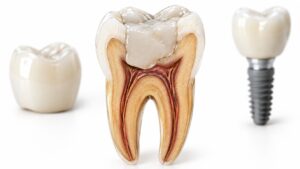
Patients often hear that extraction is quicker and root canal treatment is more involved. That's true in many cases, but the bigger issue is what comes next. Extraction may solve the immediate problem faster, yet it can shift the work to a later phase that may include dental implants near me, a bridge, or another restorative option.
That is why a careful exam matters so much. The recommendation should account for pain relief, function, appearance, and whether the result will still serve the patient well years from now.
Root Canal Therapy Explained Step by Step
Many people still associate root canals with old stories and outdated fear. Modern treatment is different. The goal is to remove infection, stop pain, and keep the natural tooth.
Root canal treatment is reported as virtually painless under local anesthesia, and the American Association of Endodontists is cited as finding patients six times more likely to describe it as painless than extraction. Recovery is also usually shorter, with many patients returning to normal activities within 1–2 days, according to Penn Dental Medicine's discussion of root canal treatment.
Step one begins with comfort
The appointment starts with a full evaluation and local anesthesia. Once the area is numb, the tooth and surrounding tissues are protected so the procedure stays clean and controlled.
For anxious patients, comfort measures can make a major difference. A soothing environment, distraction options, and a slower pace help reduce the tension many people feel before treatment even begins.
Cleaning the inside of the tooth
After the tooth is numb, a small opening is made so the infected or inflamed tissue inside can be removed. The narrow inner spaces of the tooth are cleaned carefully and shaped so they can be sealed.
This part of the procedure treats the source of the pain. The pressure and infection inside the tooth are what usually cause the throbbing, lingering discomfort patients notice before care.
Sealing and rebuilding
Once the inside of the tooth is cleaned, the space is sealed. The tooth then needs to be rebuilt so it can handle normal chewing again. Depending on how much structure remains, that may mean a filling, a buildup, or a crown.
The root canal removes infection. The restoration is what makes the tooth usable and protective again.
That final step matters more than many patients realize. A treated tooth without proper protection is more vulnerable to fracture and future problems.
What recovery usually feels like
Most patients feel relief that the deep, infected pain is gone. Some soreness around the area can happen for a short time after treatment, especially when chewing, but that is different from the pulsing pain of an untreated infection.
Patients are usually advised to:
- Follow chewing instructions until the tooth is fully restored
- Take prescribed or recommended medication as directed by the dental team
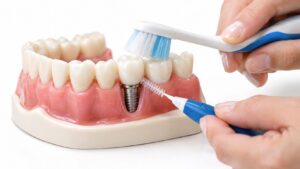
- Keep the area clean with normal brushing and flossing unless told otherwise
- Return for the final restoration so the tooth is protected
For patients comparing root canal vs extraction, this is often the key surprise. The procedure is designed to relieve pain, not create it.
The Tooth Extraction Process What to Expect
When a tooth can't be restored safely, extraction can protect the rest of the mouth from ongoing infection, swelling, and repeated breakdown. Patients often feel uneasy when they hear that a tooth needs to be removed, but the process is usually straightforward when the plan is clear and the area is fully numb.
Some extractions are simple. The tooth is loosened and removed once the surrounding tissues are anesthetized. Others are more complex and may involve sectioning the tooth or working around roots that are harder to access.
During the appointment
The dental team first reviews imaging, numbs the area thoroughly, and explains what sensations to expect. Pressure is common. Sharp pain shouldn't be.
If the tooth is broken, heavily decayed, or difficult to access, the extraction may be more involved than a routine removal. That doesn't automatically mean the experience will be worse. It means the technique is adapted to remove the tooth as gently and safely as possible.
After the tooth is removed
Healing starts in the socket. A blood clot forms, the tissue closes over time, and the area gradually stabilizes. Patients receive home care instructions to protect healing and reduce complications.
For patients who want a more detailed guide after the appointment, these post-extraction instructions from the practice explain what to do in the first stage of recovery.
The part many patients don't anticipate
The extraction itself is only one part of the decision. Once a tooth is gone, the space can affect chewing, appearance, and the way nearby teeth sit in the bite. That is why replacement planning matters, especially in visible areas or where chewing force is high.
Replacement options may include:
- Dental implants: a fixed option that restores the missing tooth space
- Bridges: a restoration that spans the gap using neighboring teeth
- Removable options: used in some cases when multiple teeth are missing
Patients searching for an emergency dentist often focus on immediate relief first. That's understandable. Still, a complete treatment plan should include what happens after the socket heals, not just how the tooth comes out.
Comparing Key Decision Factors for Miami Patients
A patient in Miami often comes in wanting one clear answer. Save the tooth or remove it. The right choice usually depends on what will leave you comfortable, chewing well, and confident about your smile six months and five years from now.
A side by side comparison helps, but the details matter.
| Factor | Root Canal Therapy | Tooth Extraction |
|---|---|---|
| Comfort & Recovery | Removes infected tissue while keeping the tooth in place. Recovery is often focused on tenderness in the treated tooth and surrounding area. | Removes the tooth and starts healing in the gum and bone. Recovery often includes protecting the socket and planning for what comes next. |
| Long-Term Function | Keeps the natural tooth in the bite if the tooth can be restored predictably. | Stops pain from a badly damaged tooth, but leaves a space that can change chewing and tooth position over time. |
| Cost & Treatment Planning | Often costs more at the start, especially if the tooth needs a crown after treatment. | Often costs less on day one, but replacement may add later expense and more appointments. |
| Cosmetic Outcome | Usually gives the best match for shape, spacing, and smile continuity when the final restoration is done well. | Can affect smile balance, gum contours, and bite support if the missing tooth is not replaced. |
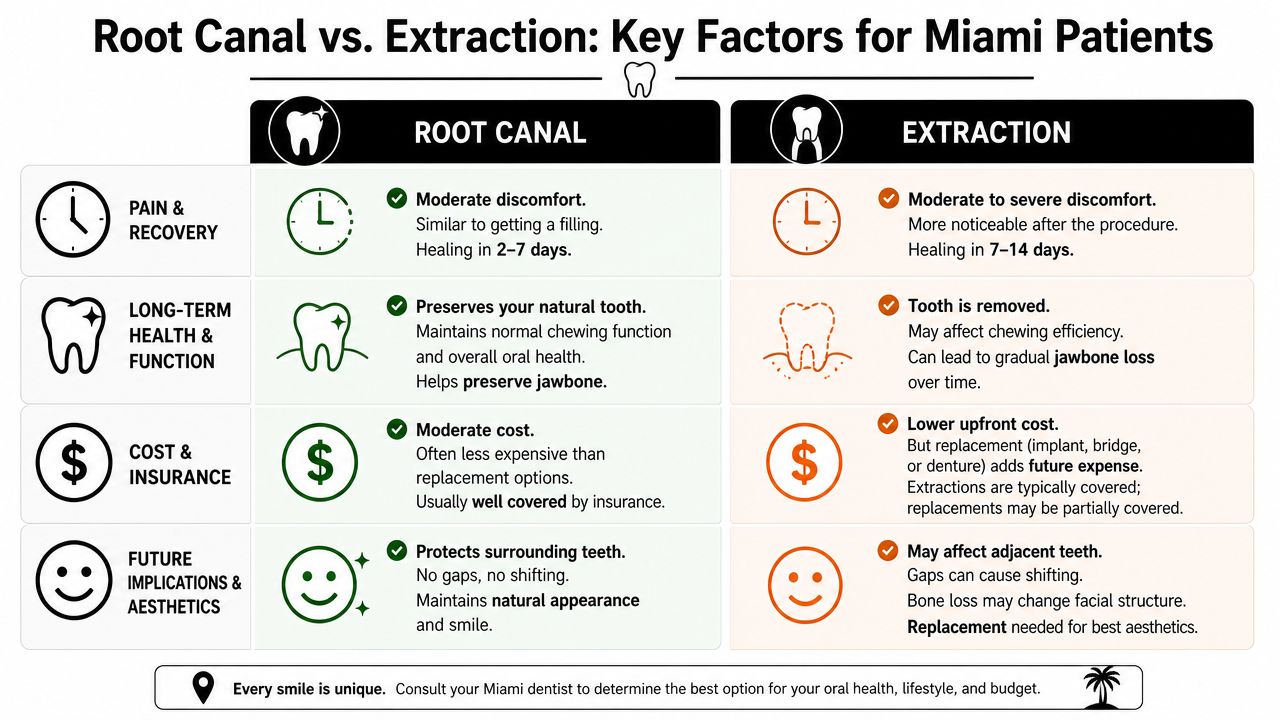
Comfort and recovery
Patients often assume extraction will feel simpler because the appointment can sound more straightforward. In practice, many root canals are easier on recovery than expected because the goal is to remove the infected pulp while keeping the tooth, the bite, and the surrounding bone undisturbed.
Extraction can still be the right treatment. It often is when the tooth is split, too weak to rebuild, or has lost too much support. The trade off is that healing does not end when the tooth comes out. The site has to close properly, and many patients then face a second decision about replacement.
Long-term function
The better question is not which procedure is faster. It is which plan gives that specific tooth a realistic future.
Research published in this Swedish population study on root-filled teeth and restoration timing found that root canal treated teeth were more likely to be lost when the final restoration was delayed. That matches what dentists see every week. A root canal can serve a patient well for years, but only if the tooth is sealed, rebuilt, and protected soon after treatment.
For patients comparing treatment fees with the full restorative plan, this page on root canal cost and treatment considerations in Miami can help frame the discussion.
A root canal succeeds in stages. Cleaning the inside of the tooth matters, and restoring the outside matters just as much.
A short visual overview can make the comparison easier to absorb.
Appearance and future planning
In a city where patients pay close attention to their smile, this part of the decision deserves real weight. Keeping a natural tooth usually gives the most natural result for contour, spacing, and bite feel, especially in visible areas. Even in the back of the mouth, preserving a tooth can help maintain balanced chewing and reduce stress on neighboring teeth.
If a tooth is removed, appearance is no longer just about the missing tooth. Gum shape, the timing of replacement, and the type of restoration all influence the final result. That is why many patients feel calmer once they see the full plan instead of making the choice based only on the first procedure.
Cost and the full treatment path
Patients deserve a direct answer here. Extraction is often the lower upfront cost. Root canal treatment often costs more at first, especially when a crown is part of the plan.
The larger financial question is what total care will involve. An extraction followed by an implant or bridge may mean more healing time, more visits, and a higher overall investment. Saving a tooth may require more precision at the start, but it can also reduce the need to rebuild the space later.
Ultra Smile DentalSpa provides this kind of restorative planning in Miami, including root canal treatment, crowns, extractions, implants, and follow up care. In our office, the decision is not presented as a sales pitch or a rushed yes or no. It is a guided choice built around comfort, appearance, function, and what will serve the patient best over time.
Your Spa-Like Dental Experience at Ultra Smile DentalSpa
Clinical skill matters, but so does the feeling a patient has while receiving care. Dental fear doesn't disappear just because a procedure is necessary. A thoughtful environment helps patients stay calmer, ask better questions, and move through treatment with less tension.
That is where a spa-style model changes the experience. Instead of feeling rushed from check-in to checkout, patients can expect a slower, more personalized atmosphere built around comfort.

What comfort looks like in practice
Small details shape the visit:
- Welcome touches: refreshments and a calmer arrival experience
- Sensory support: custom aromatherapy and a more soothing treatment setting
- Chairside distraction: streaming entertainment during procedures
- Gentle finish: a hot towel at the end of care
For anxious patients, these aren't extras. They help lower the stress that can make treatment feel harder than it is.
Communication matters just as much
Patients making a treatment decision need plain language, not pressure. Bilingual support, transparent treatment planning, and time for questions matter whether someone is coming in for a new patient exam, dental X-rays, a root canal, or a tooth extraction.
Comfort isn't only about numbing the tooth. It's also about making sure the patient understands the decision and feels cared for throughout it.
This approach also supports patients who may need broader services after the urgent issue is handled. A single damaged tooth sometimes opens the door to other needs, such as cleaning and exams, cosmetic dentistry, restorative dentistry, teeth whitening, or replacement planning with implants.
Why this matters for busy Miami patients
Many adults delay treatment because they expect dentistry to feel sterile, stressful, or difficult to fit into the week. A spa-like setting helps remove some of that resistance. It encourages patients to address pain early and move into treatment before a tooth gets worse.
That can make the whole experience feel more manageable, especially for patients in Downtown Miami, Midtown Miami, and Hallandale Beach who want efficient care without a cold clinical atmosphere.
Frequently Asked Questions and Your Next Steps
Patients often ask the same practical questions once the diagnosis is clear. The answers usually depend on the condition of the tooth, the bite, and what kind of long-term result is realistic.
In one comparative study, 43.5% of patients chose root canal therapy and 56.5% underwent extraction, and those who started root canal treatment reported a notable improvement in oral-health-related quality of life at follow-up, as noted in this comparative study of root canal therapy and extraction outcomes. That doesn't mean every tooth should be saved. It does show why many patients value keeping a tooth when the diagnosis supports it.
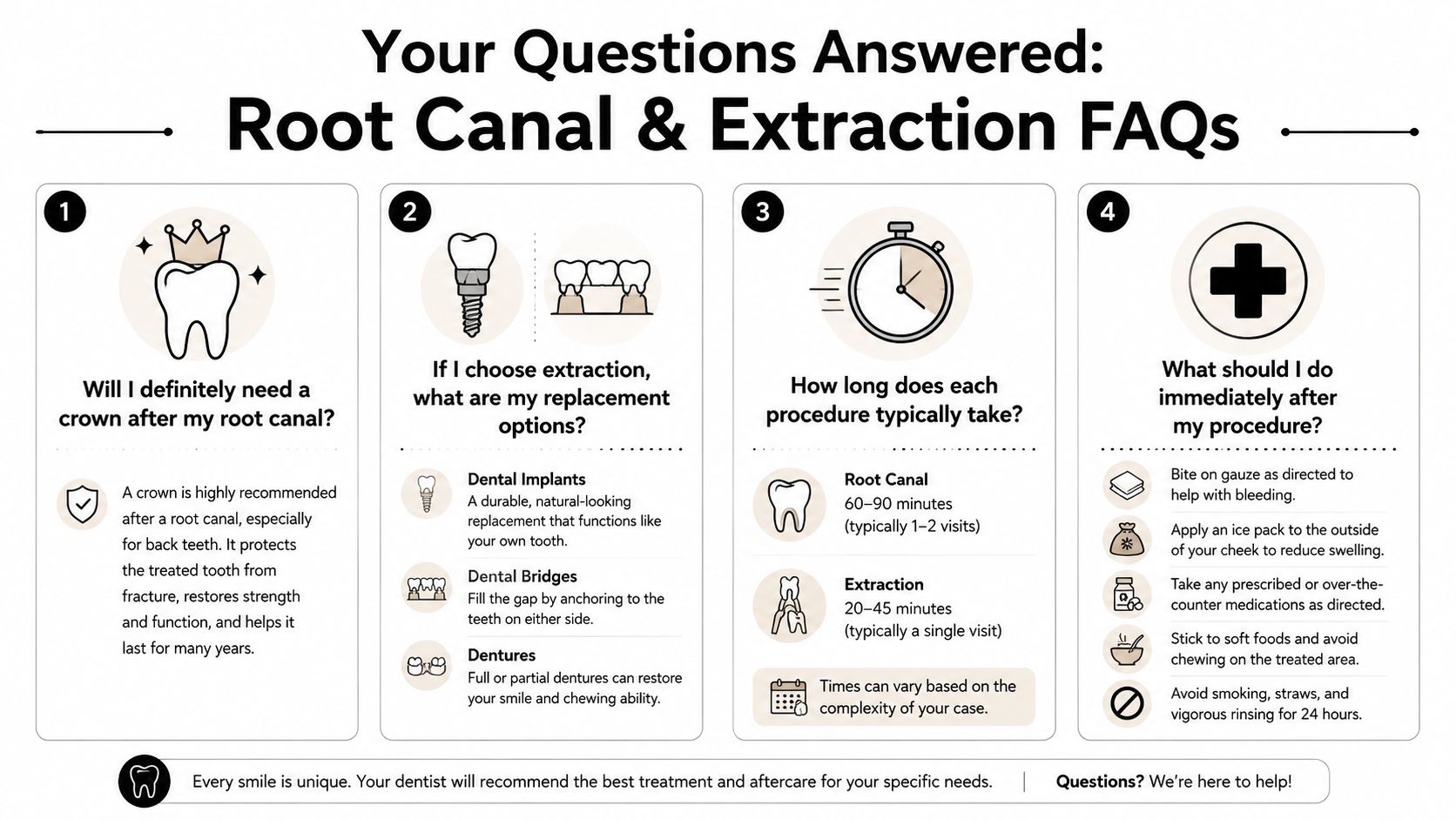
Will a root canal always need a crown
Not always. It depends on how much healthy tooth remains and how much chewing force the tooth handles. Back teeth often need stronger protection because they take more pressure during function.
If a tooth is extracted, what replaces it
Common options include a dental implant, a bridge, or in some situations a removable replacement. The right option depends on the location of the missing tooth, the health of the surrounding bone and gums, and the patient's goals for function and appearance.
Which option is faster
Extraction is often faster at the first visit. Root canal treatment may take more treatment planning because the goal is to keep and rebuild the tooth. The more important question is whether a faster first step creates more future treatment.
When should a patient call right away
Call promptly for swelling, severe toothache, pain with biting, a cracked tooth, or a tooth that suddenly becomes very sensitive. Those signs can point to a problem that gets harder to treat if it's ignored.
For patients in Miami who are comparing treatment options, the best next step is a clear exam, digital imaging, and a conversation that weighs comfort, function, appearance, and budget together.
If tooth pain is making daily life harder, scheduling a consultation with Ultra Smile DentalSpa is a practical next step. Patients in Miami, Downtown Miami, Midtown Miami, and Hallandale Beach can get a clear diagnosis, review whether the tooth can be saved, and discuss options for root canal treatment, tooth extraction, or replacement planning in a calm, comfort-focused setting.