What Makes Dental Implants Feel and Function Like Natural Teeth?
Missing teeth can change the way you eat, speak, and feel about your smile. Even one open space may make chewing less comfortable or cause you to avoid showing your teeth in photographs. When several teeth are missing, the effects can become even more noticeable.
Dental implants are often recommended because they replace teeth in a way that closely resembles their natural structure. Instead of resting only on the gums or depending entirely on neighboring teeth, an implant is placed in the jawbone and supports a customized restoration above the gumline.
Once treatment and healing are complete, an implant-supported tooth can look, feel, and function much like a natural tooth. However, it is important to understand that an implant is not biologically identical to the tooth it replaces.
At Ultra Smile DentalSpa, we use detailed examinations, CBCT imaging, personalized implant planning, and customized restorations to help patients replace one tooth, several teeth, or a larger section of their smiles. Here is what gives dental implants their natural-looking stability and function.
Dental Implants Replace the Missing Tooth Root
One of the biggest differences between dental implants and other tooth replacement options is what happens beneath the gums.
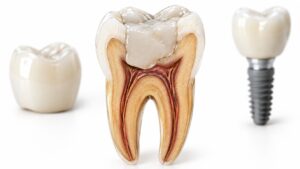
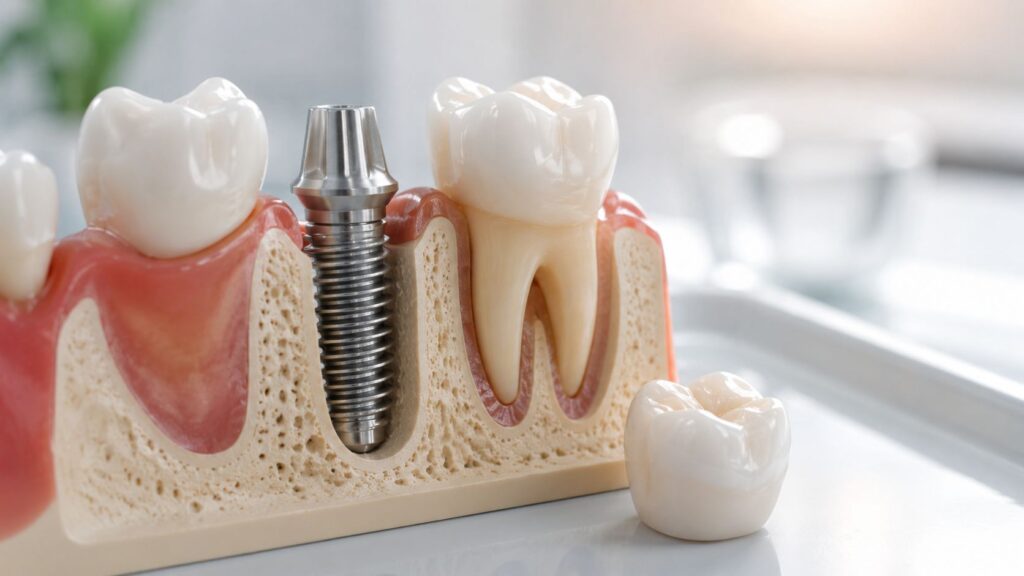
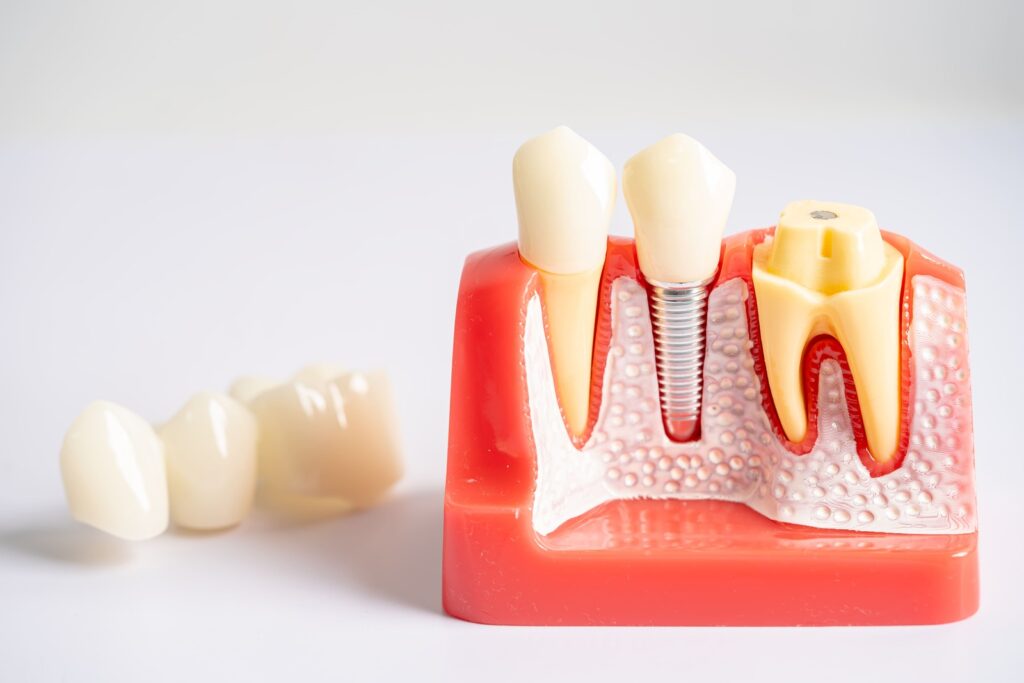
A natural tooth consists of a visible crown and a root anchored in the jawbone. A dental implant follows a similar basic design. The implant fixture is surgically placed into the jaw and functions as an artificial root. An abutment connects the implant to the visible crown, bridge, or denture restoration.
The FDA describes dental implants as medical devices placed in the jaw to restore chewing ability or appearance. They can support individual crowns, dental bridges, or dentures, depending on how many teeth need to be replaced.
Because an implant replaces the root rather than only filling the visible space, it provides support from below the gumline. This root-like foundation is one of the main reasons implant-supported teeth feel more secure during everyday activities.
The Implant Becomes Stable Within the Jawbone
After placement, the bone gradually forms a close connection with the implant surface through a process commonly called osseointegration. This healing process creates the stable foundation needed to support the final restoration.
At Ultra Smile DentalSpa, we use medical-grade titanium implant fixtures. Our implant treatment page explains that these fixtures integrate with the living bone cells in the jaw, creating a strong anchor for replacement teeth.
This stability allows chewing pressure to be supported by the jaw instead of only by the gum tissue. Once an implant is properly healed and restored, patients can generally use it for daily chewing much like a natural tooth.
Healing times vary. Bone quality, implant location, gum health, medical history, and whether bone grafting is necessary can all affect the treatment timeline. The implant should not be expected to provide full function until the dentist confirms that it is stable enough for the planned restoration.
A Customized Crown Recreates the Visible Tooth
The implant fixture provides support, but it is the dental crown that recreates the portion of the tooth visible when you smile.
An implant crown is designed around the space, neighboring teeth, gumline, and bite. The dentist considers several details, including:
- Tooth length and width
- Shade and translucency
- Surface texture
- Position within the smile
- Contact with neighboring teeth
- The way the upper and lower teeth meet
These small details can determine whether the crown blends naturally or looks separate from the rest of the smile.
An implant can be stable and healthy while the crown still looks unnatural if the shade, proportions, or gum contour are incorrect. For that reason, implant treatment requires both surgical planning and careful restorative design.
At our practice, we provide implant restorations along with customized crowns and bridges. The goal is to replace the missing tooth in a way that supports function while coordinating with the patient’s natural smile.
Implants Remain Secure While You Eat
Traditional removable dentures rest on the gums and may shift during meals if they do not fit securely. Implant-supported teeth are connected to fixtures anchored in the jaw, giving them greater stability.
That stability can make it easier to bite and chew without worrying that the replacement tooth will move out of position. The FDA recognizes restored chewing ability as one of the primary purposes of dental implants.
A single implant crown can replace one missing tooth, while several implants may support a bridge or larger prosthesis. The treatment design depends on the number of missing teeth, available bone, bite forces, and the condition of the remaining teeth.
Although implants can restore strong function, patients should still use common sense. Ice, hard candies, unpopped popcorn kernels, and other extremely hard objects can damage an implant crown just as they can crack a natural tooth or conventional crown.
Implant-Supported Teeth Do Not Depend on Healthy Neighbors
A traditional bridge commonly replaces a missing tooth by placing crowns on the teeth on either side of the space. Those supporting teeth must usually be reshaped to hold the bridge.
A single dental implant stands independently. When the neighboring teeth are healthy, this can allow the dentist to replace the missing tooth without removing healthy structure simply to create support.
The American Dental Association notes that implants may be worth discussing when patients do not want healthy tooth structure removed to accommodate a dental bridge.
Independence also contributes to the natural feeling of an implant. Instead of several teeth being connected as one unit, an individual implant crown can often be brushed and used more like a separate tooth.
That does not mean an implant is always preferable to a bridge. A bridge may be appropriate when neighboring teeth already require crowns, implant surgery is not recommended, or a patient prefers a different treatment timeline. The decision should be based on the complete condition of the mouth.
The Implant Helps Maintain Support in the Missing-Tooth Area
Natural tooth roots transfer pressure into the surrounding jawbone during chewing. After a tooth is removed, that stimulation changes, and the bone in the area may gradually lose volume.
Because a dental implant is positioned in the jaw, it can help maintain functional loading in the replacement area. This contributes to the root-like design that distinguishes implants from restorations that sit above the bone.
Adequate bone is necessary for stable implant placement. Some patients already have sufficient support, while others have experienced bone loss because the tooth has been missing for an extended period, an infection damaged the area, or the jaw naturally has limited width or height.
At Ultra Smile DentalSpa, we offer bone grafting when additional support is needed. A graft may be completed before implant placement or coordinated with dental implant treatment, depending on the patient’s anatomy and the amount of reconstruction required.
Precise Placement Supports Natural Function
Implants must be positioned with both the bone and the final tooth in mind. An implant placed at an unsuitable angle may make it difficult to create a crown that looks natural, fits the bite correctly, or remains easy to clean.
At our practice, we use cone beam computed tomography, or CBCT, to create three-dimensional images of the teeth, jawbone, and nearby structures. These images help us evaluate bone volume and plan the implant’s position, depth, and angle.
This planning is especially important in the front of the mouth, where small differences in tooth position or gum level can be visible. In the back of the mouth, implant placement must account for stronger chewing forces and the available restorative space.
Technology supports planning, but it does not replace clinical judgment. The doctor must also examine the gums, bite, neighboring teeth, facial proportions, and long-term restorative needs.
The Bite Is Adjusted for Comfort and Protection
A natural tooth is surrounded by a periodontal ligament containing specialized sensory structures. An implant connects directly with the bone and does not have the same ligament.
Clinical research has found that implants can develop useful tactile awareness, sometimes described as osseoperception, but their sensitivity is not exactly the same as that of natural teeth. A study comparing single implants and natural teeth found a small but statistically significant difference in tactile sensitivity.
This is why careful bite adjustment matters. The crown must contact the opposing teeth in a controlled way so the implant is not exposed to unnecessary pressure.
Patients who grind or clench may place stronger forces on implant crowns, natural teeth, and other restorations. A customized night guard may be recommended to protect the implant and surrounding dental work.
Once the bite is balanced and the patient becomes accustomed to the restoration, the implant-supported tooth may feel like a normal part of the mouth during eating and speaking. However, describing it as completely identical to a living natural tooth would not be accurate.
Implants Can Improve Confidence While Speaking and Smiling
A missing tooth, loose denture, or unstable replacement may affect pronunciation and make patients self-conscious during conversations.
Because implant-supported restorations remain securely attached, patients do not have to manage the same type of movement that may occur with an unstable removable appliance. This can make speaking, laughing, and smiling feel more comfortable.
Appearance also plays an important role. A properly designed implant crown fills the open space, follows the gumline, and complements the surrounding teeth. In visible areas, the dentist must carefully coordinate the crown’s color, shape, position, and emergence from the gum tissue.
These details help the restoration feel integrated into the smile rather than appearing to be an obvious replacement.

Dental Implants Still Require Daily Care
Implants do not develop cavities, but the gums and bone around them can become inflamed or infected. The National Institute of Dental and Craniofacial Research notes that inflammation around implants may cause bone loss and implant failure.
Daily brushing and cleaning around the sides of the implant are essential. Depending on the restoration, a dentist may recommend floss, interdental brushes, a water flosser, or another cleaning aid.
Professional examinations are also necessary. During these visits, the dental team can evaluate:
- Gum health
- Bone support
- Implant stability
- Crown condition
- Bite pressure
- Plaque accumulation
- Signs of grinding or clenching
The crown may eventually require repair or replacement even if the implant fixture remains healthy. Dental materials experience wear, and no restoration should be considered indestructible.
Personalized Planning Creates a More Natural Result
The natural feel of a dental implant does not come from one component alone. It results from the relationship between the implant fixture, jawbone, gums, abutment, crown, neighboring teeth, and bite.
At Ultra Smile DentalSpa, we evaluate the complete mouth before recommending treatment. Our implant planning considers bone availability, gum health, missing-tooth location, remaining teeth, medical history, appearance, and long-term maintenance.
We provide dental implants, bone grafting, crowns, bridges, dentures, and comprehensive restorative care through our Downtown Miami, Midtown Miami, and Hallandale Beach locations. Our practice also combines modern technology with a spa-inspired patient experience intended to make treatment feel more comfortable and understandable.
Dental implants feel and function like natural teeth because they replace the root, receive stable support from the jaw, and hold restorations customized for the patient’s bite and smile. They are not living teeth, but with precise planning, proper healing, and consistent care, they can provide a remarkably natural-looking and dependable way to restore missing teeth.
Ultra Smile DentaSpa
https://maps.app.goo.gl/aZyhKAnrJbTXqQFv8
(305) 676-5330
111 NE 32nd St, Miami, FL 33137, United States
https://www.ultrasmilemiami.com/