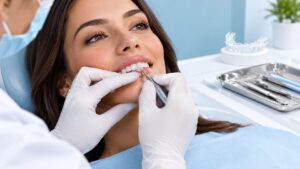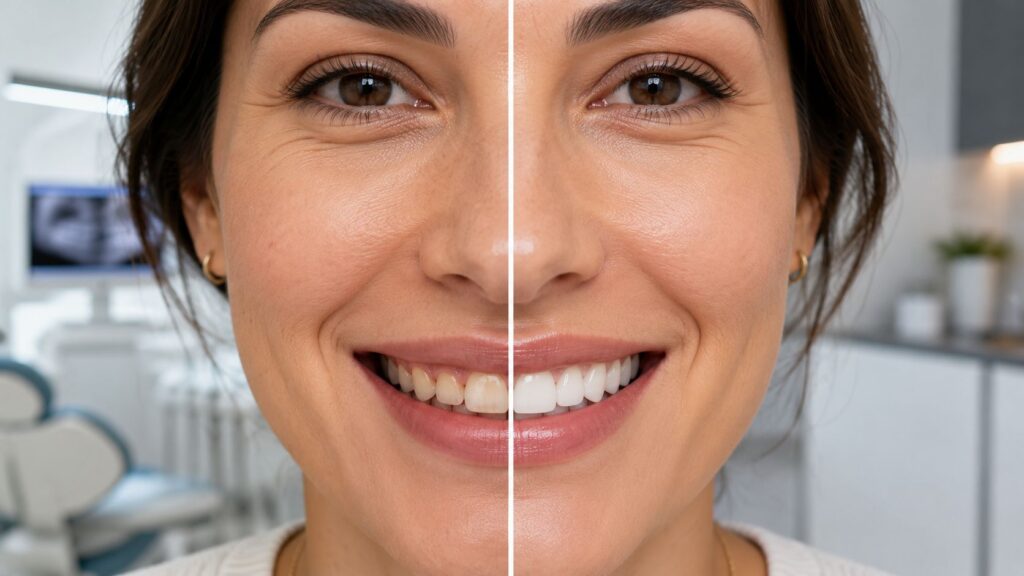
A patient sits down in my Miami office with the same concern I hear every week. The smile in photos looks darker than expected, one front tooth catches the light because of a chip, or a small gap now feels impossible to ignore in meetings and social settings. Veneers can address those problems, but the right decision comes from understanding the plan behind the result.
At Ultra Smile DentalSpa in Miami, I want patients to see more than polished before and after images. Porcelain veneers can change shade, shape, symmetry, and the way teeth show when you smile. Their long-term performance also depends on the basics being right first: healthy gums, stable bite forces, and enough enamel for predictable bonding.
That is why this guide uses a case-study approach. Each example breaks down the starting concern, why a specific veneer plan made sense, how long treatment usually takes, and what trade-offs had to be considered. Some patients need a full smile makeover. Others get a better result with fewer veneers, whitening, or bite correction before any cosmetic work begins.
Cost is part of that decision too, especially when the treatment plan changes from four veneers to eight or more. Patients comparing options can review our guide on veneer pricing in Miami to understand what affects the final investment.
The goal here is simple. Help you judge veneer before and after cases the way an experienced cosmetic dentist does, by looking at why the smile changed, not only how it photographs at the end.
Table of Contents
- 1. Case 1 The Full Smile Makeover for a Brighter, Broader Smile
- 2. Case 2 Closing a Front Tooth Gap Diastema
- 3. Case 3 Restoring Chipped and Worn-Down Teeth
- 4. Case 4 Masking Severe Intrinsic Discoloration
- 5. Case 5 Correcting Misshapen and Unevenly Sized Teeth
- 6. Case 6 The Pre-juvenation Smile Lift
- 7. Case 7 The Minimal-Prep Veneer Enhancement
- Before & After: 7 Veneer Cases
- Begin Your Smile Transformation in Miami
1. Case 1 The Full Smile Makeover for a Brighter, Broader Smile

A full smile makeover is the version of veneers before and after that often comes to mind first. The patient usually wants a brighter smile, straighter-looking front teeth, and a more balanced frame from one side of the smile to the other. In Miami, this is common among patients whose smiles have changed gradually over time from staining, older dental work, and enamel wear.
The starting point
This type of case often begins with several issues layered together. Coffee stains may be obvious. Lower front teeth may look crowded in photos. Old crowns on the front teeth may be a different shade than the neighboring teeth, which makes whitening alone a poor solution.
The strongest treatment plan starts with a healthy foundation. That means a professional cleaning and exam first, then replacing old front crowns if they no longer match or support the overall design. After that, upper and lower porcelain veneers can be shaped to brighten the smile and create a fuller, broader appearance.
Practical rule: Veneers don't hide bad planning. If crowns, gum contours, or bite forces are off, the final result won't look stable or natural.
Why this plan worked
In a full case, 8 upper and 8 lower porcelain veneers may be the right choice when the goal is uniform color and a wider smile arc. The process usually takes about 3 to 4 weeks and includes consultation, preparation, and final placement. It's not the fastest option, but it gives the lab and dentist enough room to refine shape, length, and shade.
Patients considering this level of treatment usually ask about cost early, and they should. A larger case is a real investment, especially when crowns are also being replaced. Ultra Smile DentalSpa explains that in detail during planning, and patients can review veneer cost information for Miami smile makeover planning.
For patients searching for a cosmetic dentist near me, this is also where provider selection matters most. A full makeover isn't just cosmetic dentistry. It overlaps with restorative dentistry, crown replacement, cleaning and exams, and long-term bite management.
2. Case 2 Closing a Front Tooth Gap Diastema

Some of the most dramatic veneers before and after results involve only two teeth. A front gap can draw the eye immediately, even when the rest of the smile is healthy and attractive. Many patients look at orthodontics first, then start searching for a faster cosmetic option.
A fast cosmetic fix with limits
When the bite is healthy and the spacing pattern is favorable, two porcelain veneers on the central incisors can close a gap beautifully. The treatment is conservative compared with a full smile makeover, and the timeline is often about 2 to 3 weeks. The key is proportion. Teeth can't just be made wider without considering facial balance and the width of the neighboring teeth.
Restraint matters. If the space is too large, veneers alone may create front teeth that look bulky. In those cases, orthodontics or a combined approach may be the better path. A careful exam by a dentist in Miami, FL helps determine whether veneers are the right solution or just the fastest one.
What makes this look natural
Successful gap-closure veneers usually preserve the patient's character while removing the feature that has caused years of self-consciousness. Texture, surface reflection, and edge shape have to match the surrounding natural teeth. If those details are ignored, two front veneers can stand out even when the color is correct.
Great veneers start below the tooth, not on top of it.
That principle matters in gap cases. A source discussing foundation-first veneer planning notes that online content often overemphasizes appearance while ignoring gum health, bite stability, and diagnostic smile design before preparation begins, and it describes a shift toward more structured pre-bonding evaluation among cosmetic dentists in recent years in this discussion of foundation-first veneer protocols.
For many patients, this kind of case feels simple. It isn't difficult when planned well, but it is precise.
3. Case 3 Restoring Chipped and Worn-Down Teeth
A patient sits down in my Miami office and says, "I chipped a front tooth." Sometimes that is true. Just as often, the chip is the final sign of a longer pattern of grinding, clenching, or bite imbalance that has been wearing the teeth down for years.
These cases deserve a closer look because short, flattened front teeth change more than appearance. They affect speech, edge position, and how much tooth shows when the lips are at rest. That is why a before and after photo only tells part of the story.
The cause of the chips was functional, not just cosmetic
For this type of case, the first question is not how fast veneers can be placed. The first question is why the enamel failed. If active bruxism is present, I plan protection before final porcelain is bonded. A custom night guard is often part of that plan, and in some patients I also adjust the sequence of treatment to make sure the bite is stable.
Clinical guidance on bruxism management supports a conservative approach that starts with identifying the habit, confirming the wear pattern, and protecting the teeth from continued overload, as outlined in this overview from the American Dental Association on bruxism.
That step matters. Veneers can restore length beautifully, but they should not be used to cover an active problem without controlling the forces that caused it.
Case study breakdown
In a typical worn-edge case, the patient usually dislikes how aged the smile looks and may also notice that the front teeth appear uneven in photos. Examination often shows small chips, shortened incisal edges, and a heavier bite pattern than the patient realized.
The treatment plan may involve 6 upper porcelain veneers, with a night guard made before or alongside the final restorations. In some cases, I also recommend minor reshaping, bite records, and a provisional phase so the new length can be tested during speech and function before the final veneers are delivered. That extra planning helps avoid a result that looks good in a mirror but feels wrong when the patient talks or chews.
The timeline is usually a little longer than a simple cosmetic case. There may be about a week for records and guard fabrication, then roughly 2 to 3 weeks for preparation, temporaries, laboratory work, and final bonding.
What patients notice after treatment
Patients usually notice the restored length first. The upper teeth show more naturally, the smile looks less collapsed, and the chipped edges no longer catch the light in an uneven way. If the proportions are handled well, the result looks younger without looking oversized.
A few practical decisions shape the outcome:
- Protection comes first: A night guard protects both natural teeth and new porcelain from repeated grinding forces.
- Material choice matters: Porcelain is often the better fit in worn-edge cases because it holds shape and surface polish better than direct composite in high-stress areas.
- Expectations should stay realistic: Veneers rebuild what has been lost, but they do not stop clenching on their own.
Patients sometimes arrive after a sudden fracture and assume they need a quick patch. In many of these cases, the better long-term answer is a full wear evaluation followed by a plan that restores the smile and protects it.
4. Case 4 Masking Severe Intrinsic Discoloration
A patient sits in my Miami office and says the same thing I hear in many stain cases: "My teeth are clean, but they still look dark in every photo." That usually points to intrinsic discoloration, meaning the color is inside the tooth structure rather than on the surface. Tetracycline staining is a classic example, and whitening often has limited effect.
Why the treatment plan is different
These cases need a masking plan, not a brightening plan. The first step is identifying how deep the discoloration runs and how visible it becomes in natural light, flash photography, and speech. A tooth can look manageable under operatory lighting and much darker at the incisal edge once the patient smiles outdoors.
That assessment changes material selection. Porcelain that looks beautiful in a mild whitening case can be too translucent here. In severe intrinsic staining, I usually design for more controlled opacity so the dark underlying color does not bleed through, while still keeping enough depth and texture for the result to look like enamel instead of a flat white shell.
The case study trade-off patients should understand
Patients often focus on shade alone. Shade matters, but coverage matters just as much.
A brighter veneer is not always the right veneer if the underlying tooth is gray or brown. In many of these cases, the better result comes from balancing three things carefully: opacity, brightness, and thickness. More masking power can require slightly more reduction than an ultra-thin veneer case. That is an important trade-off to discuss upfront.
The treatment plan often includes the full upper smile zone rather than only the front two or four teeth. If darker teeth sit next to newly bright veneers, the mismatch is easy to spot. Treating the visible upper teeth together creates a cleaner transition from the center of the smile outward.
What patients usually notice after bonding
The biggest change is consistency. The smile stops looking patchy under different lighting conditions, and the teeth no longer shift from yellow to gray depending on the angle. Good veneer work in these cases does not look chalky. It looks even, natural, and stable.
Porcelain is also a practical choice here because it maintains its appearance well over time when compared with direct composite, which is more prone to surface wear and staining. The American Dental Association notes that porcelain veneers resist stains better than composite veneers in routine clinical use, as outlined in this overview of veneer types and material differences from the ADA.
Patients with deep internal staining usually need coverage that hides color predictably, not another round of whitening.
In my practice, this is one of the most satisfying before-and-after categories because the patient usually has spent years trying to whiten teeth that were never going to respond the way they hoped. Once the diagnosis is correct, the veneer plan becomes much more straightforward.
5. Case 5 Correcting Misshapen and Unevenly Sized Teeth
Not every patient needs a broad smile makeover. Some smiles are healthy, bright, and generally aligned, but one or two teeth throw off the whole look. Peg laterals are a good example. These side incisors can be naturally small or tapered, which creates asymmetry even when the central teeth look fine.
Small teeth can create a big imbalance
The patient concern here is often specific and long-standing. The complaint usually isn't, "I hate my whole smile." It's, "Those two side teeth have always looked wrong." In those cases, a targeted veneer plan can be the most elegant option.
Using 4 upper veneers on the two central and two lateral incisors gives the dentist room to create proportion instead of enlarging the smaller teeth. That matters because the central incisors may need slight adjustment for shape and symmetry so the laterals don't look added on.
Why fewer veneers can be the better choice
This category highlights an important trade-off in cosmetic dentistry. More veneers aren't always better. Sometimes the most natural result comes from treating only the visible zone that controls balance.
Patients often ask whether bonding could do the same job. It can in some cases, but porcelain offers stronger long-term esthetics in situations where shape and polish are critical. Porcelain also dominates the market, representing 60% of the global veneers market share in 2026 according to this veneers market overview, which reflects its continued popularity for natural-looking smile design.
For a patient searching dentist near me because of a shape issue rather than pain, this is often one of the most satisfying categories of care. The change can be small in scope and still feel major in everyday confidence.
6. Case 6 The Pre-juvenation Smile Lift

A patient in this group usually says some version of the same thing. "I look tired in photos, but I do not think my teeth are bad." That distinction matters. The goal is not to create a different smile. The goal is to restore brightness, edge definition, and support so the smile looks fresher and more youthful without looking overdone.
In my Miami practice, this case often shows up in patients whose teeth are healthy but starting to reflect age. The enamel has lost some luster. The biting edges look flatter. The smile may appear narrower during speech or laughter, even if the teeth are still straight and functional.
How this case is planned
An 8-upper-veneer design is often a strong fit because it gives enough room to improve symmetry, widen the visible smile, and bring back a little length to the front teeth. The trade-off is restraint. Add too much length or choose a shade that is too opaque, and the result can look artificial on an otherwise natural face.
That is why I rely on photos, facial analysis, and a preview process before final bonding. Digitally guided planning helps patients see the direction of the case early and helps the dental team control shape, length, and midline details before porcelain is made. It also makes conversations more precise. Patients can point to what feels too long, too square, or too bright before anything becomes permanent.
Original concern, treatment plan, and timeline
The typical concern in this case is early aging of the smile rather than a single defect. Treatment usually starts with a full exam, records, and bite review. If the gums are inflamed or the teeth show signs of clenching, those issues need attention first because veneers look their best on a healthy foundation.
A common plan includes:
- 8 upper veneers: to restore brightness, improve edge position, and create a fuller smile display
- Professional cleaning and gum evaluation: to make sure the tissue line looks even around the final restorations
- X-rays and bite analysis: to rule out hidden decay, failing fillings, or wear patterns that could shorten veneer life
- Night guard if needed: to protect the new porcelain in patients who grind or clench
- Temporary veneers: to test length, phonetics, and overall comfort before the final set is placed
Most of these cases move over a few visits across two to three weeks, depending on lab workflow and whether any preliminary care is needed. Patients who are nervous about discomfort usually do well with this process. If that is a concern, it helps to review what porcelain veneer treatment typically feels like before starting.
What the result should look like
The best before and after in this category does not scream "cosmetic dentistry." It reads as healthier, brighter, and better rested. Friends may notice that the patient looks good without identifying exactly why.
That is the standard I look for in a pre-juvenation case. Better light reflection. Better proportions. More life in the smile, while still looking like the same person.
7. Case 7 The Minimal-Prep Veneer Enhancement

A patient comes in with healthy teeth, a good bite, and a smile that already looks nice in photos. The concern is usually smaller than in other veneer cases. Edges look a little flat, the color is uneven, or the front teeth need more symmetry. In Miami, I see this often in patients who want polish, not a dramatic change.
That is where minimal-prep veneers can make sense.
Conservative treatment still requires precise planning
Minimal prep only works when the starting point allows it. The teeth need enough room for porcelain so the final result stays natural in profile and does not look overbuilt. I check tooth position, facial proportions, lip movement, and how the edges show at rest before I decide how conservative the preparation can be.
Enamel matters here because veneers bond most predictably to enamel. The more bonding stays in enamel, the more controlled the fit, retention, and long-term maintenance tend to be. That is one reason I do not treat "minimal prep" as a marketing label. It is a case-selection decision.
What this case study usually looks like
The typical concern in this category is refinement, not repair. A patient may want a brighter shade, cleaner incisal edges, and small shape changes across the upper front teeth while keeping the smile recognizable.
The treatment plan is often limited to 6 upper veneers. In some cases, a light enamel adjustment is enough. In others, no-prep sounds appealing but would leave the teeth too full, so a small amount of reshaping gives the better result. That trade-off matters.
The timeline is usually short. Records, design, and final placement can often be completed over a few visits, assuming the bite is stable and no preliminary care is needed. Patients who are concerned about sensitivity usually do well with a conservative approach, and Ultra Smile DentalSpa explains that process clearly in its page on what porcelain veneer treatment feels like and whether veneers hurt.
Who fits this approach best
This approach fits patients with teeth that are already fairly straight, moderately light in color, and not heavily restored. It is less effective for teeth that are very dark, rotated, protrusive, or unevenly positioned. In those cases, trying to stay too conservative can create a bulky veneer or a result that does not match the rest of the smile.
The best before and after in this category looks effortless. The teeth appear cleaner, brighter, and more balanced, with subtle changes in shape and light reflection. Patients still look like themselves, just more polished.
Before & After: 7 Veneer Cases
| Case | Implementation complexity | Resource requirements | Expected outcomes | Ideal use cases | Key advantages |
|---|---|---|---|---|---|
| Case 1: Full Smile Makeover (Brighter, Broader Smile) | High, multi-arch restorative and cosmetic work | Extensive lab work, all-ceramic crowns, 16 veneers, multiple appointments | Dramatic, uniform, natural-looking full smile transformation | Patients with generalized staining, crowding, and mismatched restorations | Comprehensive, balanced result that addresses function and aesthetics |
| Case 2: Closing a Front Tooth Gap (Diastema) | Low, focused on two teeth | Two porcelain veneers, minimal prep, short lab turnaround | Precise gap closure with matched color/texture | Isolated diastema where bite is healthy and orthodontics is unwanted | Fast, conservative, cost-effective cosmetic fix |
| Case 3: Restoring Chipped and Worn-Down Teeth | Medium-high, includes functional therapy then restorations | Night guard fabrication + 6 veneers, coordination of functional and cosmetic care | Restored length, repaired chips, more youthful and durable smile | Patients with bruxism-related wear requiring both protection and aesthetics | Addresses root cause and cosmetic result for long-term success |
| Case 4: Masking Severe Intrinsic Discoloration | High, needs specialized materials and shading | Opaque porcelain veneers (10 upper), skilled ceramist, precise color control | Reliable masking of deep stains and bright, natural final shade | Intrinsic stains (e.g., tetracycline) unresponsive to whitening | Definitive color correction with carefully matched translucency/opacity |
| Case 5: Correcting Misshapen and Unevenly Sized Teeth | Low-medium, additive cosmetic sculpting | 4 veneers, lab shaping to build anatomy and proportion | Improved symmetry and proportion of anterior teeth | Peg laterals or localized tooth-size/asymmetry concerns | Conservative, additive approach to restore natural tooth shapes |
| Case 6: The "Pre-juvenation" Smile Lift | Medium, aesthetic redesign focused on aging signs | 8 upper veneers, shade selection for warm bright appearance | Younger, fuller-looking smile with improved lip support | Patients seeking anti-aging dental rejuvenation without radical change | Functional and aesthetic rejuvenation that enhances facial support |
| Case 7: Minimal-Prep Veneer Enhancement | Low, very conservative preparation | 6 minimal-prep veneers, precise lab work, minimal enamel removal | Subtle brightness and refined tooth edges while preserving enamel | Patients with healthy, well-aligned teeth desiring subtle improvement | Maximizes tooth preservation while delivering a polished cosmetic result |
Begin Your Smile Transformation in Miami
A patient sits down in my Miami office and says, "I like the idea of veneers, but I do not want teeth that look fake or a treatment plan I do not fully understand." That is the right place to start. Good veneer cases come from careful diagnosis, clear goals, and a plan built around the patient's face, bite, enamel, and long-term dental health.
The cases above show the cosmetic result. The next step is deciding whether that kind of result makes sense for your teeth. In practice, that means looking past shade and shape alone. Gum levels, tooth position, wear patterns, existing dental work, and habits like clenching all affect whether veneers are the right option or whether another treatment would serve you better.
Are You a Good Candidate for Porcelain Veneers in Miami
Porcelain veneers work well for many adults with healthy gums, stable teeth, and enough enamel for strong bonding. They are often a good fit for concerns like discoloration that does not respond to whitening, small chips, uneven edges, mild spacing, and teeth that are undersized or irregular in shape.
They are not the automatic answer for every smile.
Some patients do better with whitening, composite bonding, Invisalign, crowns, or restorative treatment before any cosmetic work begins. If the bite is unstable, the gums are inflamed, or older dental work is failing, those issues need attention first. In my experience, that early decision-making is what protects the final result.
At Ultra Smile DentalSpa, the process starts with a detailed exam and dental x-rays. That visit checks the teeth, gums, bite, and any conditions that could change the plan. A patient who needs fillings, crown replacement, treatment for grinding, or care for a damaged tooth may need that handled before veneer preparation. Patients with missing teeth or unstable restorations may also need to consider implant or restorative options first.
Your Veneers Questions, Answered FAQ
- How much do veneers cost in Miami? Cost depends on the material used, the number of teeth being treated, the complexity of the case, and whether other care is needed first. A patient with four additive veneers has a different plan from someone who needs bite adjustment, temporaries, and ten porcelain veneers. Ultra Smile DentalSpa provides a personalized quote after the consultation.
- Does getting veneers hurt? Veneer preparation and placement are usually comfortable with local anesthetic. After preparation, some patients notice short-term sensitivity to cold or pressure, especially if the teeth were already sensitive.
- How long do veneers last? Porcelain veneers can last many years when they are bonded well, designed properly, and maintained carefully. Longevity depends on daily home care, bite forces, night grinding, and regular dental follow-up.
- What's recovery like? Most patients go back to normal routines the same day. Mild sensitivity can happen for a short period, and speech may feel slightly different at first if the shape or length of the front teeth changes.
How to Maintain Your Veneers
Veneers still require the same disciplined home care as natural teeth. The porcelain does not decay, but the tooth structure around it can, and the gums still need to stay healthy.
- Brush and floss every day: The veneer covers the visible front surface, not the entire tooth.
- Keep up with dental visits: Cleanings and exams help monitor the veneer margins, gum tissue, and bite.
- Use a night guard if recommended: This matters for patients who clench or grind, especially during sleep.
- Avoid using your teeth as tools: Biting pens, opening packages, or chewing hard objects can chip porcelain or stress the bond.
Why Choose Ultra Smile DentalSpa for Cosmetic Dentistry
Choosing a cosmetic dentist in Miami means choosing clinical judgment as much as artistic skill. A smile can photograph well and still fail if the bite, enamel, or gum health were not assessed properly from the start.
Ultra Smile DentalSpa treats patients in Downtown Miami, Midtown Miami, and Hallandale Beach with cosmetic, general, and restorative dentistry in one setting. That gives patients one place to address smile design along with related needs such as crowns, same-day crowns, root canal treatment, night guards, implants, or extractions when those services are part of the right plan.
Dr. Neda Bahmadi leads the practice with a clear focus on fit, function, and natural-looking aesthetics. The office also puts real attention on patient comfort, especially for anxious adults, with a calm setting, custom aromatherapy, streaming entertainment during treatment, refreshments, and a soothing finish after visits.
If you are considering veneers, the goal is simple. Build a smile that looks right on your face, feels comfortable in daily life, and holds up well over time.
If you're ready to talk with Ultra Smile DentalSpa, schedule a consultation to discuss your smile goals, review your treatment options, and find out whether porcelain veneers are the right fit for your teeth, bite, and long-term oral health.