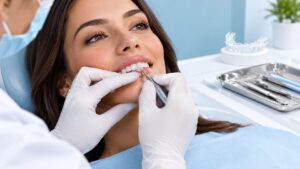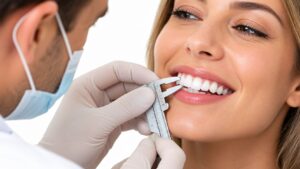
A broken, darkened, or heavily filled tooth can become an urgent problem at the worst possible time. A Downtown Miami professional may have a presentation the next morning, a Midtown parent may be trying to arrange care around a family schedule, or a patient commuting from Hallandale Beach may not have room for repeated appointments and a temporary crown.
A same-day crown may provide a practical alternative when the tooth is structurally suitable for a chairside restoration. At a Miami dental practice offering CAD/CAM dentistry, the tooth can be prepared, scanned, designed, milled, fitted, and bonded during one appointment. The technology saves time, but the better question is whether it also suits the tooth, bite, material needs, and long-term oral health.
Table of Contents
- Why Miami Patients Are Choosing Same Day Crowns
- The Technology Behind Chairside CAD/CAM Restorations
- Your Step-by-Step Procedure at Ultra Smile DentalSpa
- Comparing Same Day Crowns to Traditional Lab Crowns
- Determining Your Candidacy for a Single-Visit Crown
- Aftercare and Long-Term Durability of Your New Crown
- Schedule Your Consultation in Miami Today
Why Miami Patients Are Choosing Same Day Crowns
A patient searching for a dentist near me, a dentist in Miami, FL, or an emergency dentist often isn't looking for a lecture on dental technology. The immediate concern may be a fractured molar, a failing filling, sensitivity when drinking something cold, or a visible front tooth that no longer looks natural. Traditional crown treatment can require multiple visits and a temporary restoration between appointments, which can be difficult for patients with demanding work schedules, travel, childcare, or dental anxiety.
A same-day crown addresses the practical side of that problem by compressing the restorative workflow into one visit when the clinical situation allows it. The tooth is prepared, digitally scanned, designed on a computer, milled from a ceramic block, and placed during the same appointment. Patients don't need to manage a temporary crown while waiting for a laboratory restoration, and the dentist can assess the final fit and appearance before the patient leaves.
Clinical priority: Convenience matters, but preserving a healthy tooth and creating a stable bite matter more.
The approach has a long history. CEREC, one of the best-known chairside crown systems, began at the University of Zurich in 1980, when Werner Mörmann and Marco Brandestini developed the concept of fabricating ceramic restorations in the dental office. The first chairside CEREC treatment was completed on September 19, 1985, and the system entered commercial development in 1986 through Siemens, later known as Sirona. CEREC launched publicly by 1987, establishing the digital sequence used in modern chairside dentistry, digital capture, in-office design, milling, and placement, as documented by Dental Economics' history of digital dentistry.
For Miami patients considering a cosmetic dentist near me, the appeal also includes appearance. Ceramic can be selected and shaped to blend with surrounding teeth, making the treatment relevant to both restorative dentistry and cosmetic dentistry. The same evaluation may also identify a need for cleaning and exams, dental X-rays, a root canal, tooth extraction, or a different restoration entirely.
The Technology Behind Chairside CAD/CAM Restorations
CEREC is commonly associated with Chairside Economical Restoration of Esthetic Ceramics. The name describes the basic idea, but patients don't need to understand every software setting to understand the workflow. CAD means computer-aided design, while CAM means computer-aided manufacturing. Together, they allow the dentist to move from a digital model to a custom restoration without sending the case through an outside laboratory for fabrication.
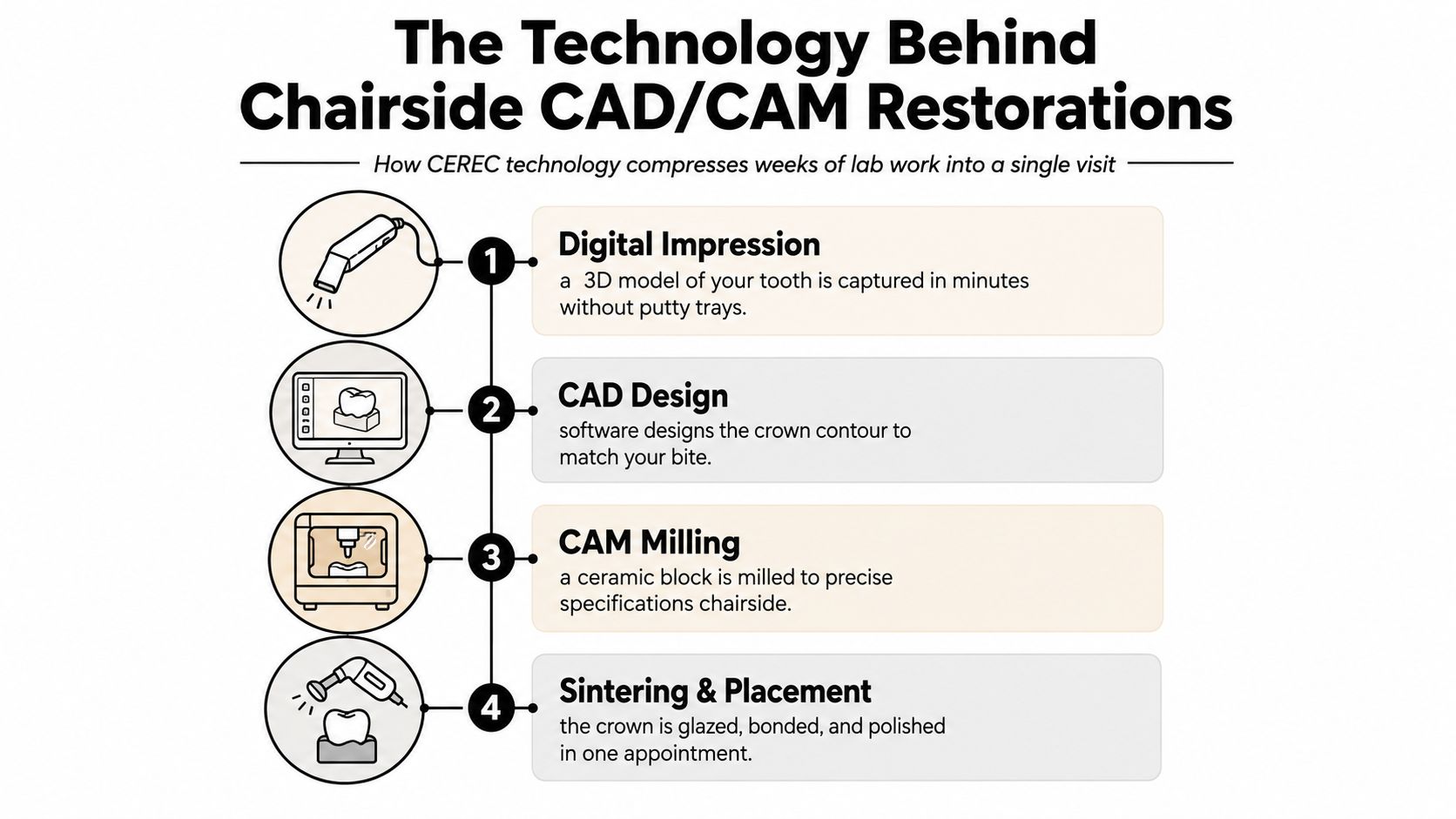
Four connected digital steps
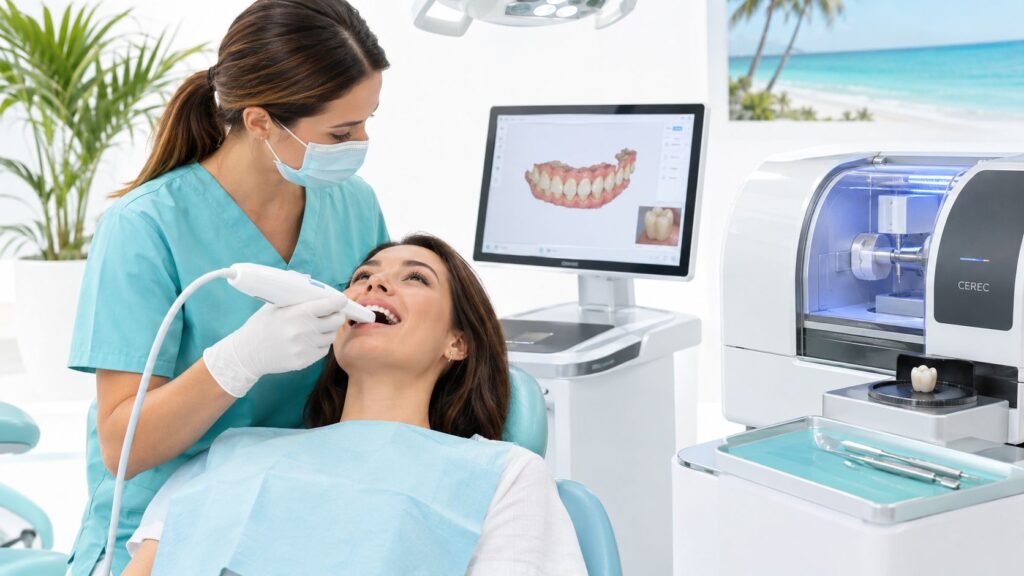
Digital capture: After the tooth is prepared, an intraoral scanner records the tooth and neighboring structures as a three-dimensional model. This replaces a conventional impression tray filled with putty and lets the dentist inspect the preparation on screen.
Virtual design: CAD software creates the crown contour. The dentist evaluates the margins, contact points, shape, and relationship to the patient's bite. The design is not automatic. Clinical judgment determines whether the proposed contours are appropriate for the tooth and surrounding tissues.
Chairside milling: CAM equipment mills the restoration from a ceramic block selected for the case. The machine follows the digital design, but material choice and machine geometry still influence the result.
Finishing and placement: The crown may be polished, glazed, or otherwise finished before the dentist checks its fit, bite, contacts, and appearance. Once the restoration is approved clinically, it is bonded to the prepared tooth.
The digital method can be highly repeatable, but it isn't identical for every material or every design. A five-axis milling study reported precision of 3.78 micrometers for glass crowns and 4.12 micrometers for zirconia crowns, while also finding that glass ceramic had higher overall trueness and zirconia showed more overmilling with the soft-milling protocol used, according to the Journal of Prosthodontics milling study. That distinction matters because a scanner is only one part of the process. Preparation quality, software, milling strategy, tool condition, and finishing all contribute to the final restoration.
Your Step-by-Step Procedure at Ultra Smile DentalSpa
A single-visit appointment begins with diagnosis, not with the milling machine. The dentist examines the tooth, reviews dental X-rays when needed, checks the surrounding gum tissue, and determines whether a crown is the right treatment. If the tooth needs a root canal, buildup, tooth extraction, or another procedure first, the treatment sequence changes.
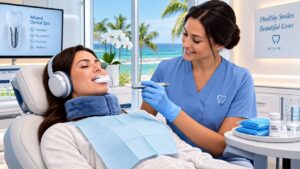
At Ultra Smile DentalSpa, led by Dr. Neda Bahmadi, the clinical workflow is paired with a calm, hospitality-focused setting. Patients may receive custom aromatherapy, streaming entertainment during treatment, refreshments, and a soothing hot towel finish. These details don't replace careful dentistry, but they can make a technology-heavy appointment feel less clinical and more manageable for patients who feel nervous in a dental chair.
What happens during the visit
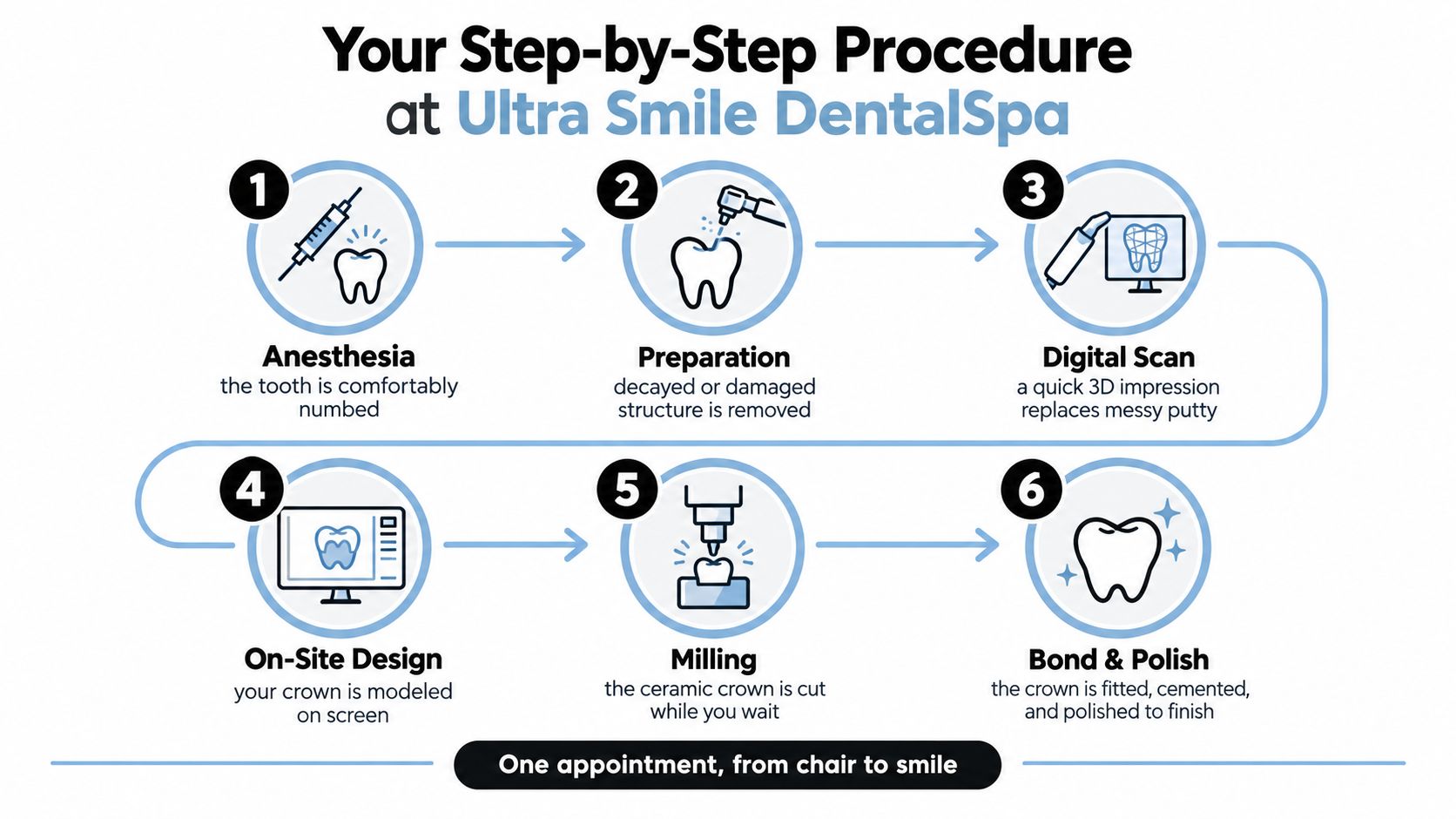
Anesthesia comes first. The tooth and nearby tissues are comfortably numbed before preparation begins. The dentist removes decay, old filling material, or damaged tooth structure while preserving as much sound structure as possible.
The scanner then captures the prepared tooth. Patients who dislike impression material may find the small scanning wand easier to tolerate than a putty tray. The resulting model includes the prepared tooth and neighboring teeth, giving the dentist information about contacts and bite.
The crown is designed on screen. The dentist reviews the restoration's shape and adjusts the contour to support function, gum health, and appearance. For a visible tooth, shade and surface character also receive attention.
The ceramic block is milled in the office. Patients don't need to sit through every technical detail, but the waiting period is part of the same appointment. Entertainment, aromatherapy, or a quiet treatment environment can make this phase feel less stressful.
The crown is tried in before bonding. The dentist checks the fit at the margins, the bite against the opposing teeth, and the contact with adjacent teeth. Adjustments may be made before final polishing and bonding.
The full appointment usually takes about 60 to 90 minutes, according to this patient guide to same-day crowns. Actual timing depends on the tooth, the amount of preparation required, the material selected, and whether additional treatment is necessary.
Comparing Same Day Crowns to Traditional Lab Crowns
The phrase “same day describes the timing of fabrication and placement. It doesn't automatically describe superior fit, longer service, or better aesthetics in every case. Traditional laboratory crowns remain useful when the tooth requires a material, design, or laboratory process that isn't appropriate for chairside milling.
Clinical comparisons have found CAD/CAM crown marginal gaps around 45 to 85 microns, within the commonly cited acceptable threshold of under 120 microns, with no statistically significant difference from conventional crowns for single-unit crowns, as reported in this comparison of same-day and traditional crowns. A separate in-vitro study found that slower, finer milling strategies produced better marginal fit than faster strategies. For one glass ceramic, mean deviations were 87 micrometers versus 146 micrometers, and for another, 111 micrometers versus 118 micrometers. The reported values remained below a 150-micrometer clinically acceptable gap, but the findings show why speed shouldn't be treated as the same thing as precision. These findings are detailed in the clinical milling analysis.
| Feature | Same Day Crown, CEREC | Traditional Lab Crown |
|---|---|---|
| Visits | Designed, fabricated, and placed in one appointment when suitable | Usually requires a preparation visit and a later placement visit |
| Impression | Digital scan | May use a physical impression or a digital laboratory workflow |
| Temporary restoration | Often avoided | Commonly used while the laboratory crown is fabricated |
| Materials | Chairside-compatible ceramic or other approved material | Broad range of ceramics, zirconia, metal, and layered options |
| Design control | Dentist designs and evaluates the restoration in the office | Dentist and laboratory technician share the design and fabrication process |
| Best fit | Time-sensitive, straightforward single-tooth restorations | Complex designs, demanding material requirements, or cases needing laboratory artistry |
Patients comparing materials can also review porcelain crowns versus metal crowns before a consultation. The decision should account for tooth location, remaining structure, bite forces, appearance, grinding habits, and the dentist's ability to control the selected workflow.
A 2025 clinical trial found that CAD/CAM-guided crown preparation shortened clinical operating time but found no significant difference in prosthetic fit, clinical success, or patient satisfaction compared with manual adjustment, as summarized in the digital crown preparation research. The practical conclusion is measured: same-day dentistry primarily improves scheduling and patient experience. The quality of the result still depends on diagnosis, preparation, software, milling, and final adjustment.
Determining Your Candidacy for a Single-Visit Crown
A same-day crown isn't the right answer for every damaged tooth. Before recommending one, the dentist needs to determine whether enough healthy structure remains to support the restoration, whether the root is stable, and whether the gum tissue can support a clean, maintainable margin. Patient-selection guidance also identifies active severe gum disease as a reason to treat the periodontal problem before proceeding, with dental X-rays used when needed to evaluate the tooth and root, as described in this same-day crown candidacy guide.
Situations that may work well
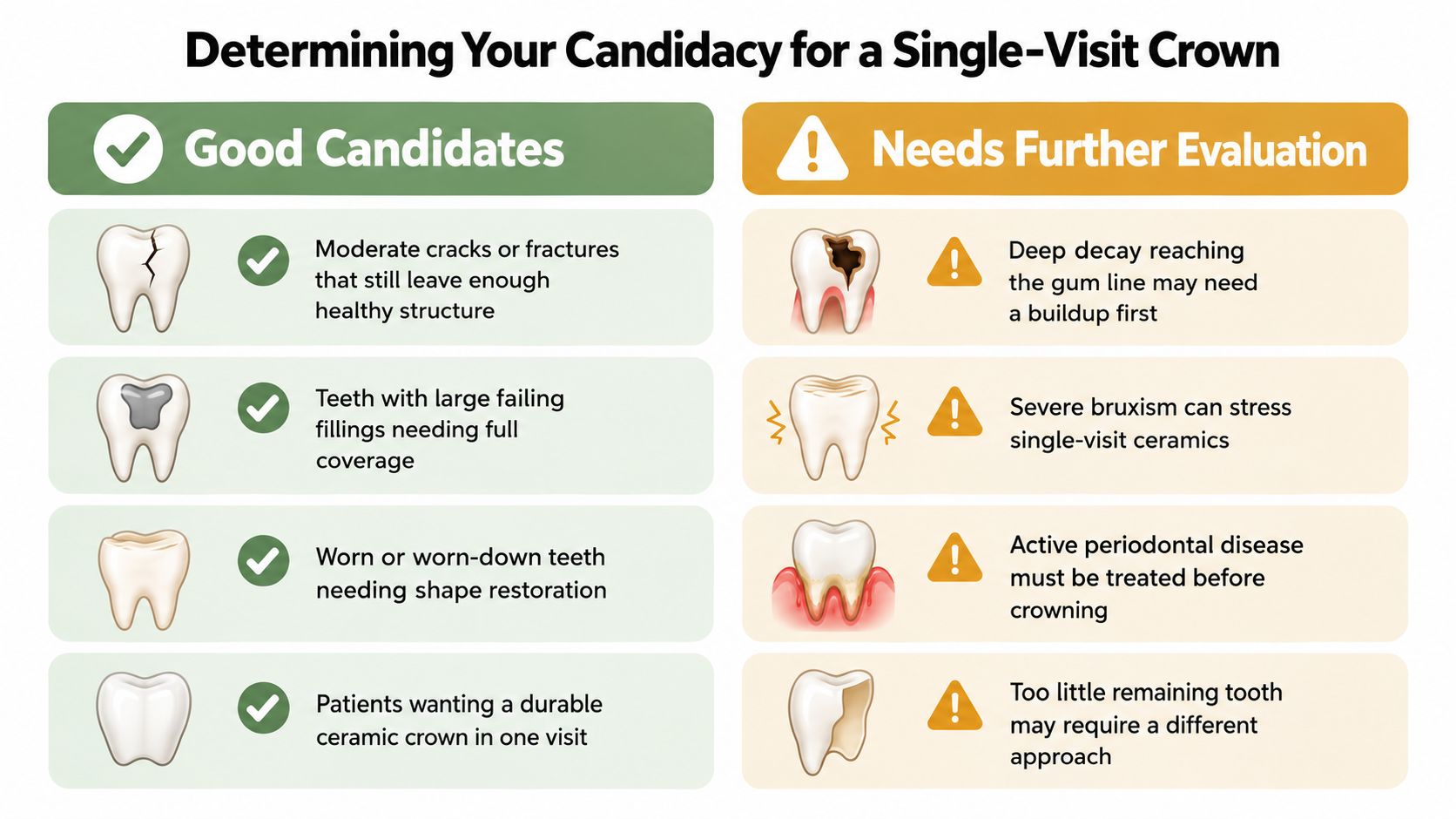
A tooth with a moderate crack, a large failing filling, or wear that has changed its shape may be a reasonable candidate if the remaining structure can support full coverage. A patient seeking a durable ceramic restoration in one visit may also be suitable when the bite and gum condition are stable.
The dentist must look beyond the visible damage. Decay that extends toward or below the gumline may require a buildup or a different approach. Severe bruxism can place heavy forces on ceramic, and too little remaining tooth structure may make a crown unreliable regardless of how quickly it can be milled.
Why the tooth's condition changes the recommendation
Recent clinical data reinforce the need for individualized planning. A 2026 retrospective cohort of 402 CAD/CAM composite resin crowns reported a 10.2% complication rate over a mean 30-month follow-up, with debonding the most common issue and crowns on vital teeth showing higher failure risk, according to the cohort study on CAD/CAM composite resin crowns. A separate 2025 study reported a 95.6% five-year cumulative survival rate for anterior CAD/CAM composite-resin crowns, but complications were significantly higher when buccolingual total occlusal convergence exceeded 20 degrees. These figures apply to specific study populations and materials, not to every same-day crown.
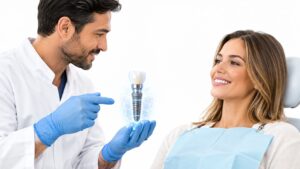
The message for patients is straightforward. Vital teeth, limited taper, severe damage, active gum disease, and complex bite conditions deserve closer evaluation. Some cases may be better served by a traditional lab crown, a root canal followed by a crown, or dental implants near me after tooth extraction when the tooth can't be predictably saved. An ethical treatment plan chooses the restoration that best protects long-term function, not merely the fastest workflow.
Aftercare and Long-Term Durability of Your New Crown
A newly bonded crown should be treated as part of the natural smile, not as a maintenance-free object. The crown itself can't decay, but the tooth beneath it and the gum around it remain vulnerable to plaque, inflammation, leakage, and new decay. Daily care protects both the restoration and the biological structures that support it.
Patients should brush carefully along the gumline and clean between the crowned tooth and its neighbors. Floss should be guided gently through the contact rather than snapped downward, especially while the tissues are settling after treatment. Regular cleanings and exams allow the dental team to monitor the crown margin, gum health, bite, and the adjacent teeth.
Practical rule: A crown restores a damaged tooth, but it doesn't remove the need for preventive dental care.
Hard habits can damage ceramic or overload the underlying tooth. Patients should avoid chewing ice, biting pens, opening packages with their teeth, or using a crowned tooth to test hard objects. Sticky foods can also challenge a restoration, particularly when the crown or surrounding tooth already has compromised structure.
Protecting the crown from grinding forces
Nighttime clenching and grinding can create repeated stress that patients may not notice. Signs can include morning jaw fatigue, worn opposing teeth, headaches, chipped enamel, or recurring fractures. A dentist may recommend a custom night guard when the bite and history suggest that additional protection is appropriate.
Patients can review how to care for dental crowns for practical maintenance guidance. A night guard doesn't replace diagnosis or correct every bite problem, but it can be part of a broader restorative dentistry plan.
Sensitivity immediately after treatment may occur, particularly when the tooth was extensively prepared. Persistent pain, a crown that feels high when biting, a loose restoration, swelling, or worsening sensitivity should prompt a dental call rather than self-treatment. A timely adjustment can prevent the patient from adapting to an uneven bite or placing unnecessary stress on the restoration.
The same preventive approach supports other services, including teeth whitening, composite fillings, Invisalign, dental implants, root canal treatment, and wisdom teeth extraction. A crown works best when the rest of the mouth receives consistent attention.
Schedule Your Consultation in Miami Today
The right crown decision starts with an examination rather than a promise of speed. A dentist evaluates the tooth's remaining structure, the root, the gums, the bite, and the patient's cosmetic and functional priorities. Dental X-rays and a new patient exam may be appropriate when the visible damage doesn't reveal what is happening below the gumline.
For patients in Downtown Miami, Midtown Miami, and Hallandale Beach, a same-day crown can reduce scheduling friction when a chairside restoration is clinically appropriate. It can also eliminate the temporary-crown stage and provide a permanent restoration during the same appointment, while digital design gives the dentist direct control over the fit and contours before bonding.
The consultation should also cover alternatives. A conventional laboratory crown may be the better choice for a complex preparation, demanding aesthetic design, material requirement, or heavy bite force. If the tooth can't be saved, treatment may involve tooth extraction followed by dental implants. If pain is severe or the tooth has fractured suddenly, an emergency dentist can determine whether urgent stabilization, root canal treatment, or another intervention is necessary.
Patients can expect transparent treatment planning, bilingual staff, accepted insurance options, and payment choices for those without coverage. The practice also provides broader dental care, including cosmetic dentistry, veneers, teeth whitening, restorative treatment, and preventive exams. A consultation gives patients the information needed to compare options without committing to a procedure that doesn't fit the tooth.
Ultra Smile DentalSpa offers digital same-day crown consultations, restorative dentistry, cosmetic care, and emergency evaluations in a calm Miami setting. Patients with a damaged or painful tooth can visit Ultra Smile DentalSpa to request an appointment and discuss whether a chairside crown, a traditional restoration, or another treatment offers the safest long-term result.