A small front-tooth chip often needs only composite bonding, while veneers, crowns, or dental implants may be appropriate for broader discoloration, major structural damage, or complete tooth loss. Direct anterior composite restorations have reported survival of 95.6% at 2 years, 88.6% at 5 years, and 92.5% at 8 years or longer, although those figures don't guarantee that every repair will remain cosmetically unchanged. Clinical review
A front tooth can break during a fall, darken gradually, wear down from grinding, or develop decay beneath what looks like a minor defect. Someone working in Downtown Miami may notice the problem during a video call, while another patient may catch a jagged edge in the mirror after an accident and immediately search for a dentist near me. The practical question is rarely just how to make the tooth look better. It's how to restore comfort and function while preserving as much healthy tooth structure as possible.
Ultra Smile DentalSpa serves patients seeking a dentist in Miami, FL for cosmetic and restorative care, including front-tooth repairs. A thoughtful treatment plan should account for the cause of the damage, the bite, the remaining enamel, gum health, and what maintenance will look like after treatment. Patients researching the broader role of local visibility and patient education can also explore Magnitude Marketing dental SEO, a resource about helping dental practices connect with people actively looking for care.
Table of Contents
- Why Repairing Front Teeth Matters in Miami
- Common Causes and Diagnosis of Front Tooth Damage
- Options for Repairing Front Teeth, Bonding, Veneers, Crowns, and Implants
- What the Research Says About Durability and Maintenance
- Choosing the Least Destructive Treatment First
- The Ultra Smile DentalSpa Experience in Miami
- Schedule Your Front Tooth Repair Consultation Today
Why Repairing Front Teeth Matters in Miami
A professional catches her reflection in a laptop screen and notices that one front tooth looks shorter than the other. She remembers the chip happened months earlier, but it has become harder to ignore during meetings, photos, and conversations. The discomfort may be emotional, but the dental issue is practical too. A chipped edge can collect plaque, interfere with the bite, or signal a deeper fracture.

Front teeth help with speech, biting, facial support, and the appearance of the smile. They're also exposed to falls, sports injuries, hard foods, nail biting, acidic drinks, clenching, and everyday wear. A small visible defect isn't automatically a cosmetic-only problem. If decay has weakened the tooth or a crack reaches deeper tissues, delaying an examination can make a conservative repair less suitable.
A visible problem can have a hidden cause
The World Health Organization identifies dental caries as the world's most common noncommunicable disease, affecting approximately 2.5 billion people. In the WHO European Region, major oral disease affected 50.1% of adults in 2019, while caries of permanent teeth affected 33.6% of the population, representing nearly 335 million cases. These figures place an individual chipped or discolored tooth within a much wider need for preventive and restorative dental care. WHO oral-health information
For a Miami patient, the right next step may be a polish, composite bonding, a veneer, a crown, or urgent treatment rather than an immediate cosmetic makeover. The safest choice starts with diagnosis, not with selecting the most permanent-looking material.
Practical rule: A front tooth should be evaluated before a cosmetic repair is chosen, especially when pain, sensitivity, swelling, bleeding, or a recent injury is present.
Common Causes and Diagnosis of Front Tooth Damage
Front-tooth damage usually falls into one of four patterns. Trauma can remove a corner or split the tooth. Bruxism, or repeated grinding and clenching, can flatten edges and place heavy stress on repairs. Acid erosion can thin enamel over time, while decay can hollow out the tooth beneath an apparently small break.
A dentist begins by asking how the damage occurred, whether the tooth has changed color, and whether cold, heat, biting, or release from a bite causes pain. The examination includes the tooth itself, neighboring teeth, gums, and the way the upper and lower teeth meet. That last part matters because a repair placed directly in a heavy bite is more likely to chip.
What the examination looks for
Dr. Neda Bahmadi and the Ultra Smile DentalSpa team may use a full oral exam, dental x-rays, and 3D imaging when the visible defect doesn't reveal the full problem. Imaging can help assess the root, bone, fracture pattern, or decay beneath a restoration. A digital scan may support shade planning and the design of a veneer, crown, or implant restoration.
A superficial enamel chip may need smoothing or a small addition of composite. A fracture that extends toward the gum, exposes the pulp, or leaves too little support may require more extensive treatment, including root-canal care. The difference can't be determined reliably from a photograph alone.
Diagnosis guides the repair
The clinician also evaluates moisture control, enamel versus dentin, existing fillings, tooth color, gum position, and parafunctional habits. A patient who grinds at night may need a night guard before or after restorative care. A patient with active decay or gum inflammation may need those conditions managed before cosmetic treatment.
Prompt assessment is particularly important after trauma. The NHS advises bringing a recovered tooth fragment to the dentist in milk or saliva because it may sometimes be bonded back onto the tooth. NHS guidance for a chipped, broken, or cracked tooth
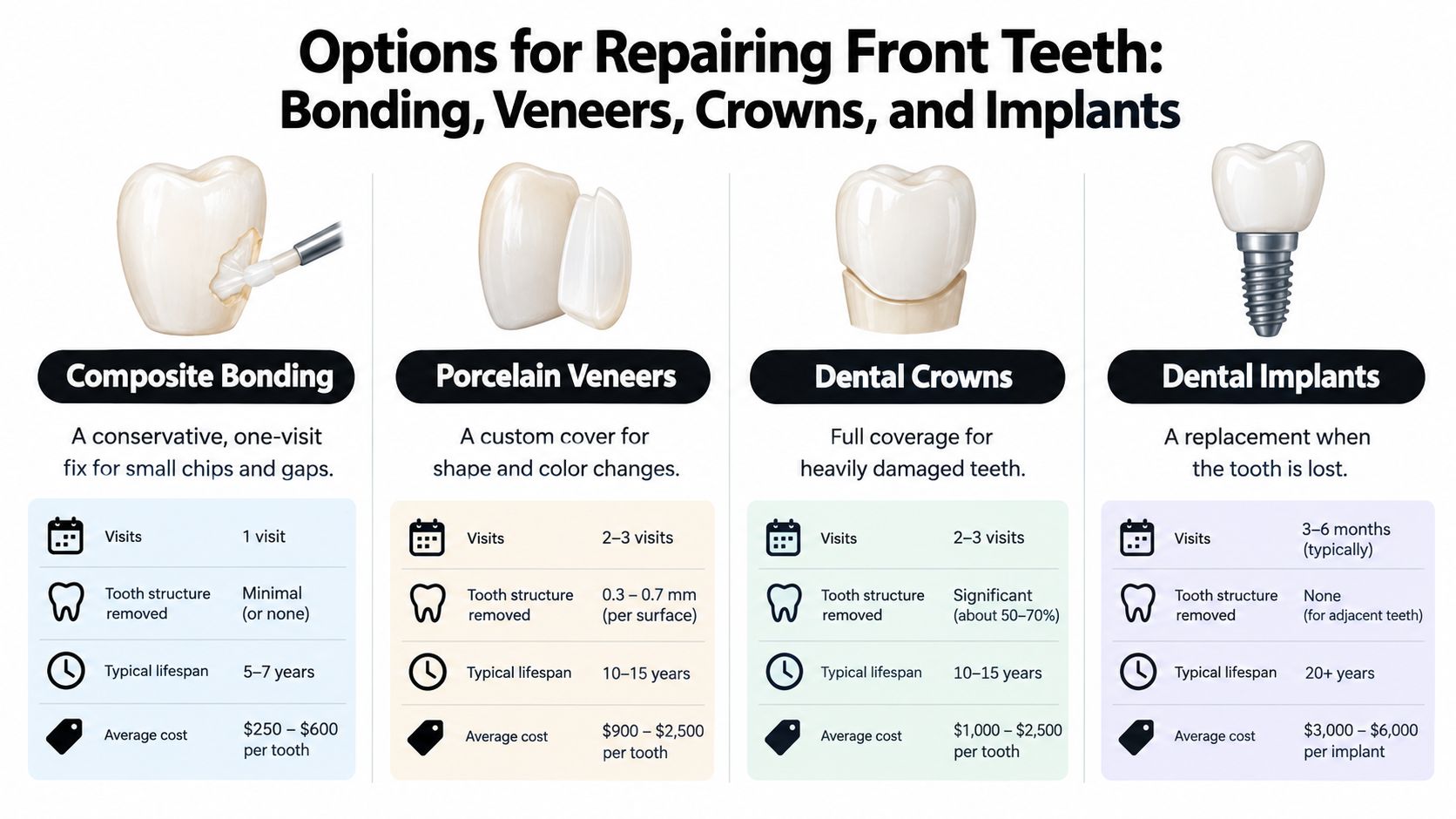
Options for Repairing Front Teeth, Bonding, Veneers, Crowns, and Implants
The four main options differ in how much tooth structure they use, how much coverage they provide, and how easily they can be repaired later. The least invasive option isn't automatically right, and the most extensive option isn't automatically more durable for a particular tooth.
Composite bonding
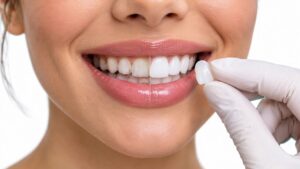
Direct resin composite is often appropriate for a small chip, localized fracture, minor gap, or limited change in edge shape when sufficient tooth structure remains. The dentist bonds tooth-colored material directly to enamel and dentin, builds the form in layers, cures it with light, and adjusts the bite and surface texture.
Bonding is conservative and may be completed in one visit with little or no tooth reduction. It also allows straightforward repair if a small portion chips later. Its limitations include susceptibility to fracture, staining, and wear under heavy loading. The American Dental Association reports that resin-matrix composite CAD/CAM blocks generally have flexural strengths of approximately 100 to 200 MPa and fracture toughness of 0.8 to 1.2 MPa·m^1/2, while offering comparatively low abrasivity to opposing teeth. ADA information on materials for indirect restorations
Porcelain veneers
A veneer covers the visible front surface rather than the entire tooth. It may suit broader discoloration, uneven proportions, selected gaps, or a larger cosmetic defect when the tooth remains structurally sound and enough enamel is available for bonding. Veneers can offer stable color and a highly controlled shape, but preparation may be irreversible and replacement is required if the veneer fractures.
Patients comparing porcelain veneers and composite bonding should ask how much enamel would remain, whether the concern is primarily cosmetic, and what happens if only one tooth needs to match older restorations.
Crowns
A crown covers the damaged tooth more extensively and may be indicated when decay, a large filling, a deep fracture, or root-canal treatment has left insufficient structure for bonding or a veneer. It can restore strength and shape, but it requires circumferential removal of tooth structure. A crown isn't the default response to every chip.
Dental implants
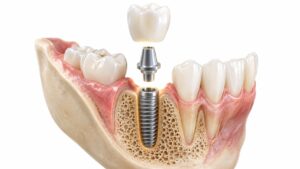
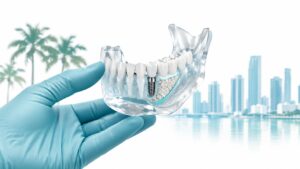
An implant-supported restoration replaces a front tooth that cannot be saved or has already been lost. It requires assessment of the gums, bone, neighboring teeth, and the planned appearance. An implant isn't a repair for a healthy tooth with a small defect. It's a replacement pathway when natural tooth preservation is no longer possible.
What the Research Says About Durability and Maintenance
Patients often ask how long a front-tooth repair will last. Clinically, survival means the restoration remains in place. In daily life, patients also judge smoothness, color, edge shape, comfort, and how well the repair matches neighboring teeth. A restoration may survive while still needing polishing, shade adjustment, edge repair, or replacement of a small area.
The evidence supports choosing materials according to the defect and the patient's bite. Reviews of anterior composite restorations report favorable outcomes over time, while also showing that tooth location, defect size, moisture control, biting forces, and habits affect repair or replacement rates. Systematic review of anterior composite restorations
Veneer longevity depends on the bonding surface
A retrospective study of 672 ceramic veneers in 189 patients, followed for 1 to 15 years, reported an observed survival rate of 98.4% and an estimated 15-year survival rate of 96%. Veneers bonded exclusively to enamel had an observed success rate of 99.3%. Estimated survival declined from 96.7% when enamel remained intact, to 95.3% in an intermediate group, and 93.9% in the group with the greatest dentin exposure. Clinical study of ceramic veneer survival
These findings favor preserving enamel when a veneer is appropriate. They do not mean a veneer remains visually perfect without care. A 2025 systematic review of anterior composite restorations for localized tooth wear reported 88% survival over 2 to 10 years, increasing to 93% over 2 to 7 years after removing an outlier study. The authors also noted that minor and major failures lowered practical success. Systematic review of anterior composite restorations
A restoration can remain technically present while the patient notices roughness, staining, edge wear, or a mismatch with neighboring teeth.
Maintenance includes examinations, careful hygiene, bite assessment, and polishing when appropriate. Patients who grind may benefit from a night guard. Hard objects, nail biting, frequent acid exposure, and poor moisture control during placement can shorten the useful cosmetic life of a repair. A conservative repair may therefore be the better first choice when it can meet the functional need, because maintenance or a small repair is often preferable to replacing a larger, permanently altered restoration.
Choosing the Least Destructive Treatment First
The least destructive treatment principle asks a simple question: What is the smallest intervention that can safely restore the tooth and satisfy the functional need? A small enamel chip with a stable bite may need smoothing or bonding. A tooth weakened by extensive decay or a deep fracture may need a crown, root-canal treatment, or extraction followed by replacement.
Direct composite can often be completed in one visit with little or no tooth reduction, while a crown requires circumferential removal of tooth structure. A cited long-term study also reported that veneers with bonding or preparation margins in dentin were approximately 10 times more likely to fail than those retained primarily by enamel. Clinical summary on conservative front-tooth treatment
Four questions should guide the decision
- How much healthy structure remains? A veneer needs a predictable bonding surface. A crown needs enough remaining tooth to support full coverage. An implant is considered only when the natural tooth can't be retained.
- How does the patient bite? A thin incisal repair may fail under clenching or grinding, even when the material and shade are carefully selected.
- Is the concern cosmetic or structural? Discoloration may call for whitening or a veneer after health is confirmed. A crack involving the pulp requires a different sequence.
- What is reversible or repairable? Composite can often be modified or repaired. Veneers and crowns commit the tooth to a more extensive restorative pathway.
A consultation for how much enamel is removed for veneers should include a discussion of additive design, diagnostic planning, enamel preservation, and alternatives. Patients should leave knowing not only what will look good today, but also what treatment would be available if the restoration fails later.
The Ultra Smile DentalSpa Experience in Miami
Front-tooth treatment should combine careful diagnosis with an environment that helps patients remain comfortable. Ultra Smile DentalSpa, led by Dr. Neda Bahmadi, DMD, provides general, cosmetic, and restorative dental services for patients in Downtown Miami, Midtown Miami, and Hallandale Beach. The practice offers custom aromatherapy, streaming entertainment, warm refreshments, and a hot towel finish alongside modern dental care.
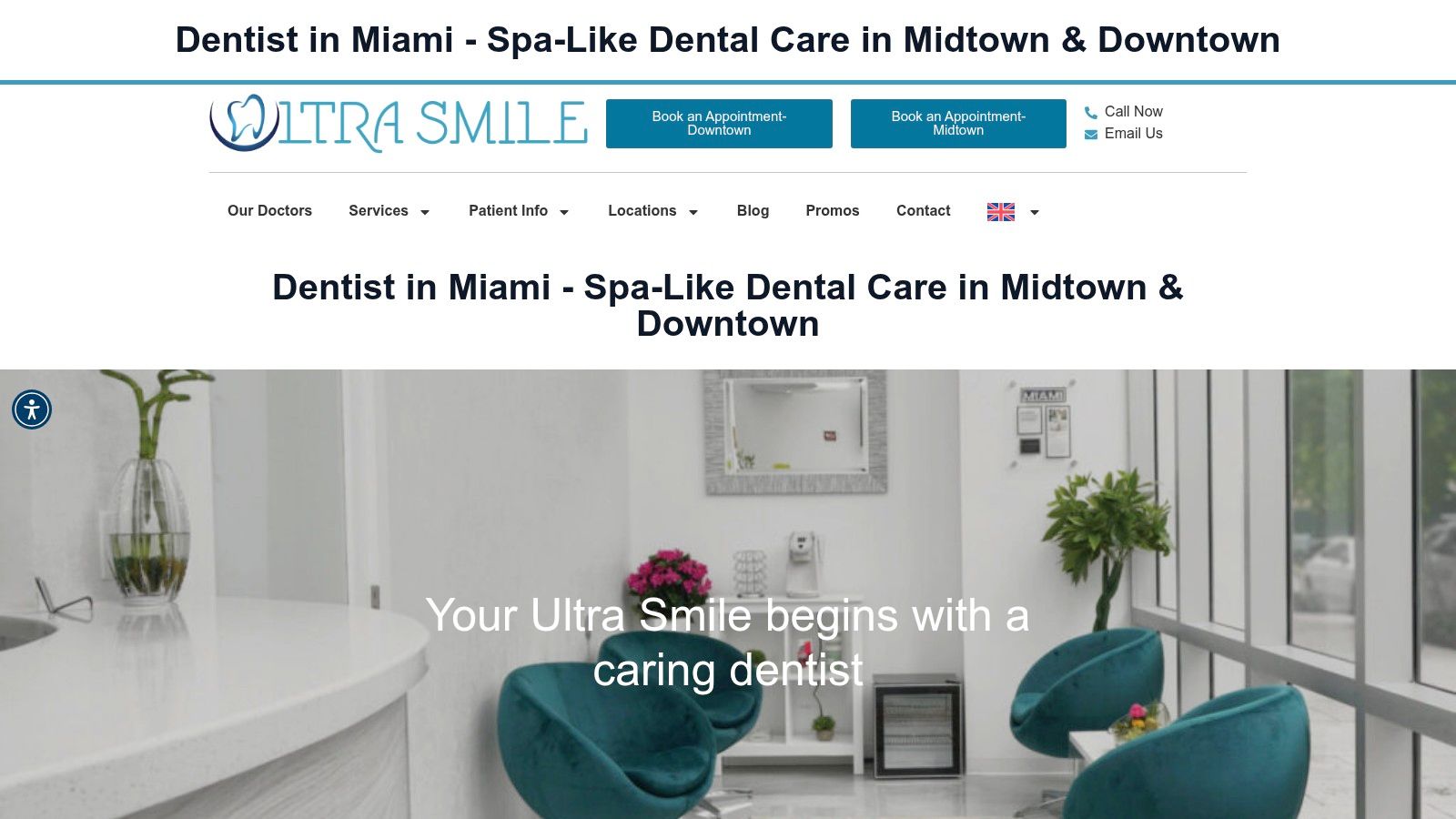
Clinical planning may include cleanings and exams, dental x-rays, composite fillings, crowns and bridges, veneers, teeth whitening, Invisalign, implants, bone grafts, root canals, night guards, and wisdom teeth extraction. Same-day crown technology and premium materials can support an efficient restorative workflow when a crown is clinically justified. Accepted insurance, bilingual staff, transparent treatment planning, and options for patients without coverage also help make the process more straightforward to understand.
Patients who want to understand how dental offices can manage calls and appointment communication may find AI phone staff for dentists useful as a separate operational resource. For the patient, the important point is direct access to clear answers about symptoms, scheduling, emergencies, and the next diagnostic step.
The practice's professional development and association memberships include the ADA, FDA, SFDA, AACD, and AAFE. That combination of clinical standards and comfort-focused details is particularly relevant for anxious adults who need a front-tooth repair but want the experience to feel calm, explained, and individualized.
Schedule Your Front Tooth Repair Consultation Today
A chipped front tooth shouldn't be dismissed just because the damage looks small. Decay, a crack, or an altered bite can make the tooth more vulnerable, while an untreated injury may lead to sensitivity, swelling, or a more involved restoration. An early examination gives the dentist a better opportunity to preserve healthy structure.
Patients should contact an Emergency dentist promptly after a significant injury, especially with severe pain, persistent bleeding, swelling, sensitivity, or a knocked-out adult tooth. NHS guidance states that a knocked-out adult tooth should ideally receive treatment within 30 minutes to 1 hour, with emergency care within 1 hour or as soon as possible. NHS dental treatment guidance
For a routine concern, the appointment can include a new patient exam, dental x-rays when needed, shade assessment, bite analysis, and a discussion of bonding, veneers, crowns, implants, or other restorative care. A patient searching for a Cosmetic dentist near me, Dental implants near me, or a provider for tooth extraction can receive a plan based on the condition of the tooth rather than a preset procedure.
Patients in Downtown Miami, Midtown Miami, Hallandale Beach, and nearby areas can schedule an evaluation before pain or damage escalates. The consultation should answer how much natural tooth structure can be preserved, whether treatment is urgent, and what maintenance the proposed repair will require.
Ultra Smile DentalSpa provides gentle evaluations and personalized cosmetic and restorative care for chipped, fractured, discolored, or missing front teeth. Visit Ultra Smile DentalSpa to request a consultation in the Miami area and discuss the most conservative safe path for restoring the smile.