A busy Miami professional may want straighter teeth before an important presentation, a family milestone, or the next vacation photo, but the thought of wearing metal brackets can feel out of step with daily life. Clear aligners offer a discreet alternative, although successful treatment still depends on careful diagnosis, realistic expectations, and consistent wear.
For adults searching for a dentist in Miami, FL, a cosmetic dentist near me, or invisible braces that fit a demanding schedule, the right consultation should address more than appearance. Tooth movement affects bite function, gum health, restorations, and long-term stability. A calming visit can make the process feel comfortable, while evidence-based planning determines whether aligners are the right tool.
Table of Contents
- A Discreet Path to a Confident Smile in Miami
- Who Is a Candidate for Clear Aligner Therapy
- Your Treatment Journey at Ultra Smile DentalSpa
- Comparing Invisible Braces and Traditional Metal Braces
- Understanding Costs and Insurance in Miami
- Daily Care and Lifestyle Adjustments
- Common Questions and Your Next Steps
A Discreet Path to a Confident Smile in Miami
Consider a professional in Downtown Miami who speaks with clients throughout the day and wants to close a visible gap without announcing orthodontic treatment. Or a parent in Midtown Miami who has postponed orthodontics because appointments, food restrictions, and metal brackets seem difficult to fit around work and family. For these adults, invisible braces for adults can provide a subtle way to improve alignment while keeping normal routines largely intact.
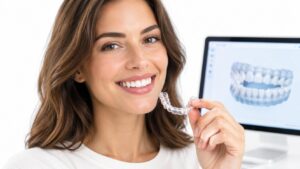
Clear aligners are thin, removable trays planned in sequence to guide teeth gradually. They're designed to address selected alignment and bite concerns without the appearance of traditional brackets and wires. Their value is practical as well as cosmetic. Patients can remove the trays for meals, dental cleaning, and important occasions, then return them promptly.
The category has grown well beyond a niche cosmetic service. The global clear aligners market was valued at USD 8.3 billion in 2025 and is projected to reach USD 56.8 billion by 2033, with a projected 27.0% CAGR from 2026 through 2033, according to Grand View Research's clear aligners market analysis. The same source projects adults to account for 74.42% of market demand in 2026, while another estimate places adult participation at 65% to 70% in 2025, showing how central adult treatment has become.
Aesthetic treatment still needs functional planning. A smile can look straighter while the bite remains unstable if the movement has not been designed carefully.
At Ultra Smile DentalSpa, adults from Downtown Miami, Midtown Miami, and Hallandale Beach can explore clear aligner treatment in an environment built around comfort and personal attention. Refreshments, custom aromatherapy, streaming entertainment, and a soothing hot towel finish can make a dental visit feel more relaxed, but comfort never replaces clinical assessment.
The most reassuring treatment experience combines both. Patients deserve a peaceful setting, modern scanning, clear explanations, and a candid discussion of what aligners can and can't do. A beautiful result should support comfortable chewing, cleanable tooth surfaces, healthy gums, and a stable bite, not merely create a more attractive photograph.
Who Is a Candidate for Clear Aligner Therapy
Clear aligners often work well for adults with mild to moderate crowding, spacing, selected bite concerns, and tooth positions that can be corrected through controlled staging. They can also help adults whose teeth have shifted after earlier orthodontic treatment. The trays are most useful when the planned movements are compatible with the biology of adult teeth and the patient can follow the wear schedule consistently.
The decision shouldn't be made from a smile photograph alone. A new patient exam, periodontal evaluation, dental x-rays, and a review of existing fillings, crowns, implants, and missing teeth help determine whether tooth movement is safe and practical. A cosmetic dentist near me search may identify convenient offices, but the more important question is whether the provider evaluates the entire mouth before recommending treatment.
Movements that need closer planning
A clear tray can apply force, but it doesn't control every movement with equal precision. In adult studies, rotational accuracy has ranged from 36% to 85%, with an average of about 65%, and evidence reviews report that fixed appliances can outperform aligners for some rotation and torque movements, as described in the PubMed evidence review.
That limitation matters for teeth that need substantial turning, root positioning, extrusion, intrusion, or movement related to extractions. Attachments, interproximal reduction, elastics, or temporary anchorage devices such as mini-screws may improve control. In some cases, traditional braces or a hybrid plan remains the more predictable choice.
Adult anterior open bite provides a useful example. A review found that clear aligners produced approximately 2.76 millimeters of correction in selected adult cases, with the effect attributed mainly to incisor extrusion, including about 0.85 millimeters of maxillary incisor extrusion and 0.86 millimeters of mandibular incisor extrusion, according to the published review in Orthodontics & Craniofacial Research. The result demonstrates that aligners can create real vertical changes, but largely through tooth movement rather than skeletal remodeling.
When another appliance may be wiser
A recent review found inconsistent results for vertical movements and better treatment quality with fixed appliances in extraction cases, while non-extraction cases showed no significant difference in some comparisons, as reported in the European Journal of Orthodontics review. That doesn't make braces preferable for every adult. It means appliance choice should follow the movement required, not the popularity of a product.
A thorough evaluation should answer several practical questions:
- Is the bite healthy enough for movement? Active gum disease, untreated decay, or an unstable restoration may need attention first.
- Can the teeth track the planned movements? Rotations and vertical corrections may require attachments, refinements, or additional mechanics.
- Will the patient wear the trays consistently? Clear aligners depend on active participation, unlike fixed brackets.
- Would tooth movement affect an implant or crown? Existing restorative work can change the treatment plan and the sequence of care.
The best candidate is not someone who wants invisible treatment. It's an adult whose clinical needs, lifestyle, and commitment align with what clear aligners can predictably accomplish.
Your Treatment Journey at Ultra Smile DentalSpa
Treatment begins with conversation, not a sales pitch. During the consultation, the dental team reviews the patient's smile concerns, bite, dental history, gum condition, restorations, and goals. Dental x-rays and other diagnostic records can identify concerns below the gumline or inside the bone that aren't visible in a smile photograph.
From digital records to a tailored plan
A digital scan captures the shape and position of the teeth without the discomfort of traditional impression material. The scan supports a three-dimensional treatment plan, allowing the clinician to assess spacing, crowding, bite relationships, and the sequence of planned movements. Patients can discuss the expected process before deciding whether clear aligners, braces, or an adjunctive approach is most appropriate.
The trays are produced as a series rather than as one appliance intended to accomplish everything at once. Each stage applies planned pressure, and progress visits allow the dental team to check fit, attachment condition, oral hygiene, and tracking. If a tooth isn't responding as expected, the plan can be adjusted instead of allowing a small problem to become a larger one.
The small details that create control
Attachments are tooth-colored shapes bonded to selected teeth. They aren't decorative extras. As explained in the clinical review of clear aligner attachments, attachments create a planned mismatch between the tray and tooth surface, helping control the direction, amount, and point where force is applied.
Some patients also need interproximal reduction, commonly called IPR. This carefully removes a small amount of enamel between selected teeth to create space and improve contact relationships. A review describes a typical prescribed amount of about 0.2 to 0.5 millimeters per contact area, with planning completed digitally and treatment sometimes staged across visits, as detailed in the review of IPR in clear aligner therapy.
The treatment schedule varies with complexity, tracking, refinements, and patient compliance. A 2026 scoping review reported average clear aligner treatment of 20.77 ± 6.43 months, compared with 27.47 ± 4.81 months for braces, but the review also emphasized that movement predictability depends on tooth shape and staging, as described in the Frontiers review of clear aligner treatment. A timeline should therefore be presented as a clinical estimate, not a promise.
A visit may include aromatherapy, streaming entertainment, and a warm towel at the end. Those touches can ease dental anxiety while the clinical team remains focused on fit, force control, gum health, and stable results.
After active movement, retainers hold the teeth in their new positions. Retention isn't an optional finishing detail. Teeth can shift over time, so the retainer plan should be explained before the final aligner is delivered.
Comparing Invisible Braces and Traditional Metal Braces
Adults often begin with an aesthetic preference, but the final decision should weigh visibility against control, hygiene, discipline, and the type of movement required. Clear aligners are removable and discreet. Metal braces remain visible and fixed, yet they can provide continuous force and detailed control for movements that are difficult to stage with trays.
| Feature | Invisible Braces (Clear Aligners) | Traditional Metal Braces |
|---|---|---|
| Appearance | Subtle and difficult to notice in ordinary conversation | Clearly visible brackets and wires |
| Eating | Trays are removed for meals, allowing normal food choices | Hard, sticky, and chewy foods may need to be avoided |
| Oral hygiene | Brushing and flossing can follow a familiar routine, with cleaning before trays are replaced | Brackets and wires require more careful brushing and specialized flossing |
| Comfort | Smooth plastic can reduce cheek and lip irritation, though pressure is still expected | Brackets and wires may irritate soft tissues and adjustments can cause soreness |
| Patient responsibility | High, because trays must be worn and replaced consistently | Lower for wear time because the appliance stays in place |
| Clinical control | Effective for appropriate mild to moderate cases, with attachments or adjuncts when needed | Strong control for complex rotations, torque, vertical movements, and extraction mechanics |
| Social flexibility | Trays can be removed briefly for important occasions | Appliance remains in place throughout treatment |
| Best fit | Adults who value discretion and can follow daily instructions | Patients needing substantial control or who may struggle with removable trays |
The convenience of aligners comes with a trade-off. Patients can enjoy meals without bracket restrictions, but every removal creates another opportunity to delay reinsertion. Braces don't require that decision, although they demand more care around food and cleaning.
Clinical choice should come before cosmetic preference. If a movement needs continuous, tooth-by-tooth control, a visible appliance may produce a safer and more predictable result.
For some adults, a combined approach is reasonable. Fixed braces may address the most demanding movement, followed by clear aligners for refinement, or aligners may handle the straightforward portion while a limited fixed appliance completes a stubborn detail. That approach isn't a failure of invisible braces. It's an example of matching the appliance to the biomechanics.
Understanding Costs and Insurance in Miami
The cost of invisible braces in Miami, FL, depends on the patient's starting condition and the amount of clinical work required. A straightforward alignment plan may involve fewer stages, while a complex bite, difficult rotation, attachment placement, IPR, refinements, or adjunctive mechanics can increase the treatment commitment.
A responsible estimate should be based on an exam rather than an advertised starting price. The written plan should identify what's included, such as diagnostic records, aligners, progress visits, refinements, attachments, retainers, and any treatment needed before orthodontics begins. Patients comparing dental implants near me, cosmetic dentistry, or orthodontic care should also understand that restorative treatment and aligner treatment may need to be sequenced.
Insurance benefits vary widely. Some plans offer adult orthodontic benefits, while others limit orthodontic coverage by age, diagnosis, appliance type, or lifetime maximum. In-network and out-of-network reimbursement can differ, and insurance may not cover every component of a clear aligner plan. The dental office can review available benefits, but the insurer makes the final determination.
What changes the financial picture
- Case complexity: More difficult movements can require additional planning, attachments, refinements, or adjuncts.
- Treatment sequence: Existing decay, gum disease, a damaged crown, or a tooth planned for extraction may need care before alignment.
- Retention: Retainers protect the result after active treatment and should be included in the financial discussion.
- Payment structure: Accepted insurance, financing, and staged payment options can make care easier to budget when coverage is limited.
Patients can review a practical discussion of invisible braces cost compared with traditional braces before an appointment, then request an individualized estimate after the clinical evaluation.
Orthodontic treatment can also support restorative dentistry by improving how teeth meet and how patients clean crowded areas. It may help reduce uneven contacts and protect a carefully planned smile, but it shouldn't be sold as a guarantee against future jaw pain, tooth extraction, or restorative work. A tooth extraction, dental implant, crown, or bridge may still be necessary when disease, damage, or missing teeth requires it.
Daily Care and Lifestyle Adjustments
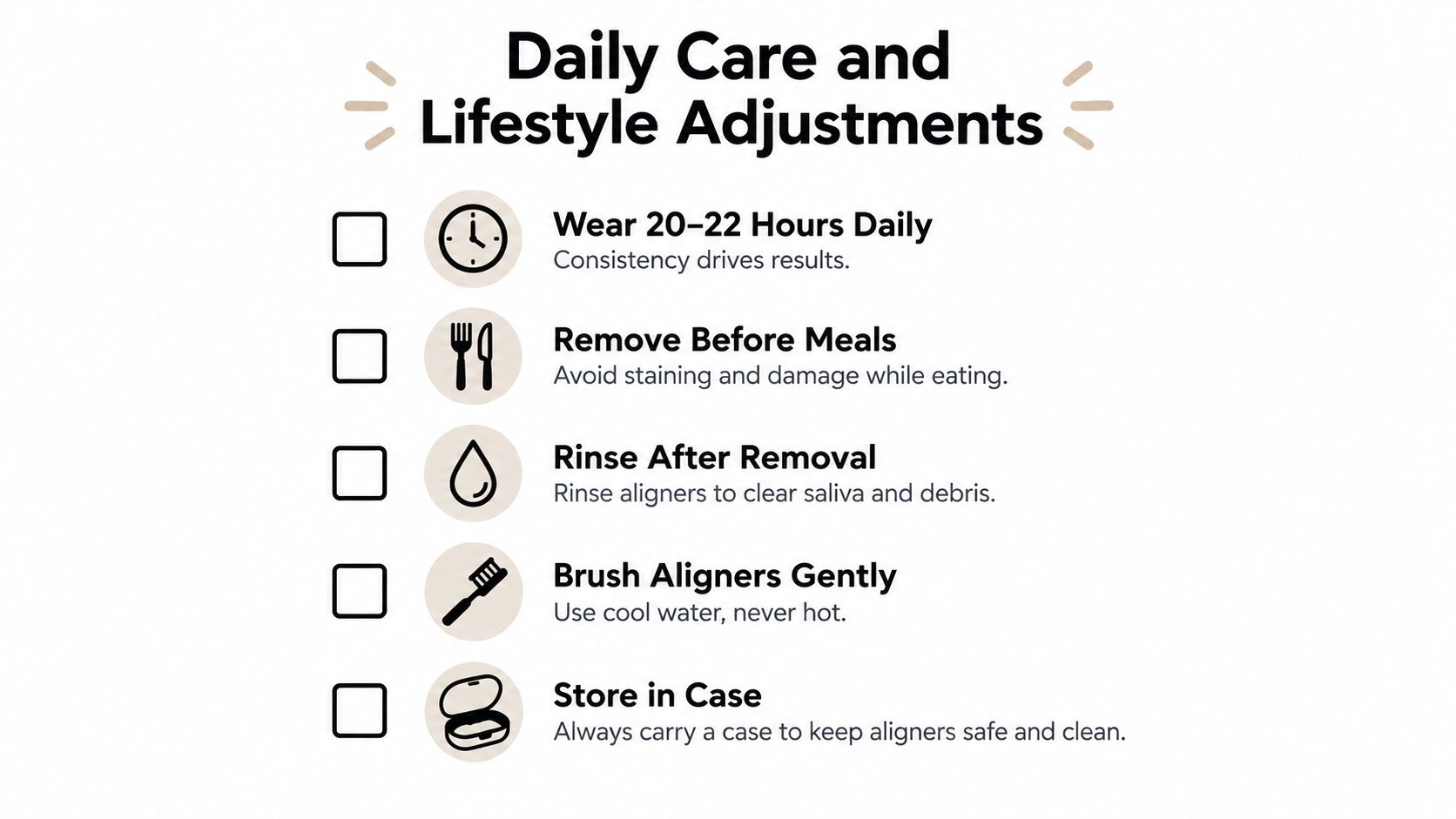
Clear aligners fit well into Miami's professional, social, and dining routines when patients treat wear time as a clinical requirement rather than a suggestion. Patients are generally instructed to wear trays for 20 to 22 hours each day, removing them mainly for eating and oral hygiene, as described in Healthline's guidance on invisible braces. Consistency gives each stage the opportunity to express the movement built into the plan.
A practical daily routine
Patients should remove trays before meals and before drinking anything other than plain water. The trays can then be rinsed, stored in a case, and replaced after the teeth have been brushed and flossed. Carrying the case prevents a common problem, leaving aligners wrapped in a napkin and accidentally discarding them at a restaurant or office.
Clean trays gently with cool water and a soft toothbrush. Hot water can distort plastic, and aggressive scrubbing may roughen the surface. The mouth also needs regular dental cleaning and exams during treatment because aligners can hold saliva and residue against teeth if hygiene slips.
A new tray may create pressure or tenderness as teeth begin responding. Patients can use the comfort measures recommended by the dental team, eat softer foods temporarily if needed, and contact the office if an aligner cuts the gums, no longer fits, or causes unusual pain. Persistent discomfort shouldn't be dismissed as a normal part of treatment.
Keeping treatment compatible with Miami life
Clear aligners can be removed for a business lunch, a wedding, travel, or a special dinner, but they should be returned promptly. A long social evening can reduce the day's wear time, especially when the patient forgets the trays in a purse or hotel bathroom.
Patients can review how to clean Invisalign aligners for a simple maintenance routine, while the treating dental team should provide instructions specific to the selected system. At the end of active treatment, retainers become part of the ongoing routine. Wearing them as directed helps preserve the alignment achieved through cosmetic dentistry.
Common Questions and Your Next Steps
Is treatment painful?
Clear aligners apply pressure, so tenderness can occur when a new tray begins guiding the teeth. Smooth plastic may be gentler on the cheeks and lips than brackets and wires, but aligners aren't completely sensation-free. Pain that is severe, persistent, or associated with swelling needs professional assessment rather than self-treatment.
Can aligners affect speech?
Some adults notice a temporary change in speech while the tongue adjusts to the trays. Reading aloud and speaking normally can help the adjustment, but a persistent speech concern should be discussed at a progress visit. Proper fit also matters, since an ill-fitting tray can affect comfort and pronunciation.
Can adults with crowns or implants use invisible braces?
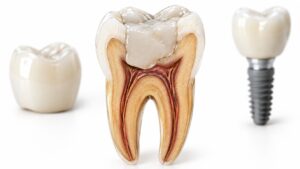
Possibly, but the plan requires careful review. Crowns can move with the natural tooth beneath them, while a dental implant is fixed in the bone and doesn't move like a natural tooth. The clinician may plan movement around an implant, use the implant as a reference point, or coordinate orthodontics with restorative dentistry.
What if a patient needs a tooth extraction or other dental care?
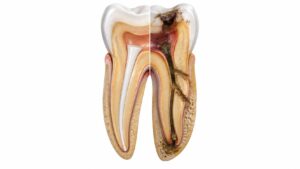
Decay, gum disease, a damaged tooth, or a wisdom tooth concern may need treatment before aligners begin. A patient searching for an emergency dentist should address pain, swelling, trauma, or infection promptly instead of placing a tray over an unresolved problem. Services such as tooth extraction, root canal treatment, crowns, dental implants, and bone grafting may be coordinated with orthodontic planning when clinically necessary.
A consultation with an experienced cosmetic dentist near me can clarify whether aligners, traditional braces, or a combined plan best fits the patient's anatomy and goals. Ultra Smile DentalSpa serves adults in Downtown Miami, Midtown Miami, and Hallandale Beach with invisible braces, Invisalign, general dentistry, restorative care, cosmetic services, and bilingual patient support in a calm clinical setting.
Adults considering invisible braces can schedule a consultation at Ultra Smile DentalSpa for a complete smile assessment, digital planning, and an honest discussion of clear aligners versus braces. The practice combines gentle, spa-like comfort with careful treatment planning so patients can pursue a straighter smile without overlooking bite function or long-term oral health.