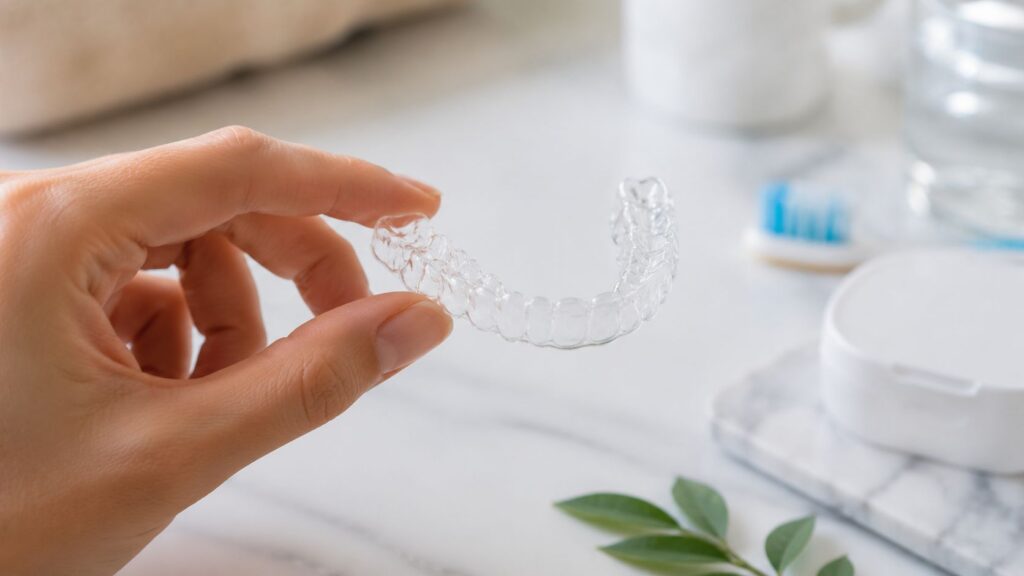
Late at night, the desire for how to straighten teeth naturally often means the mirror has already become part of the routine. Maybe it's a front tooth that overlaps in photos, a gap that's become more noticeable, or crowding that makes flossing frustrating. Many adults in Miami want a simpler, more natural fix before calling a dentist near me or booking with a cosmetic dentist near me.
That hope makes sense. Individuals often prefer to avoid anything that feels invasive, expensive, or complicated. But teeth don't respond to wishful thinking, social media hacks, or posture tips the way the internet often suggests. Safe smile improvement starts with knowing what can help, what can't, and which professional options can deliver a healthier result in a comfortable setting.
Table of Contents
- The Reality of a Naturally Straight Smile
- Supportive Habits for Optimal Dental Health
- The Dangers of DIY Teeth Straightening Trends
- Professional Paths to a Straighter Smile in Miami
- Your Consultation at Ultra Smile DentalSpa in Miami
- Begin Your Journey to a Confident Smile Today
The Reality of a Naturally Straight Smile

The first truth is often the most reassuring one. If teeth aren't naturally straight, that doesn't mean anything is wrong. It means that person is normal.
Why perfect alignment is uncommon
According to research discussed here on naturally straight teeth, only approximately 35% of adults worldwide possess naturally straight teeth without any dental intervention, and in the US, that number may be as low as 21%. Misalignment is the rule for most adults, not the exception.
Biology explains a lot of that. Teeth and jaw size don't always match neatly, so crowding, spacing, and small rotations are common even in otherwise healthy mouths. That's why so many smiles that look effortless on screen are the result of cosmetic dentistry or orthodontic treatment.
Practical rule: A beautiful smile often looks natural because treatment was done well, not because no treatment was done.
What natural methods can and can't do
Natural habits may support oral health, but they don't reliably create meaningful tooth movement. If a person has a tiny spacing issue or a very mild cosmetic concern, the appearance may improve slightly with better oral care or habit correction. That isn't the same as aligning teeth in a predictable, healthy way.
For example, someone bothered by spacing may want to review options for fixing gaps between teeth before trying internet advice that overpromises. A gap, overlap, or bite issue usually needs a specific plan.
Patients looking for a dentist in Miami, FL often ask whether a more natural path exists because they want to protect their enamel, avoid pain, and keep treatment simple. Those are smart goals. The safer answer isn't a home hack. It's choosing the least invasive professional solution that fits the bite, gum health, and cosmetic priorities.
Supportive Habits for Optimal Dental Health
Natural habits still matter. They just need the right job description.
Daily habits that support a healthier mouth
Dental professionals confirm that significant tooth movement requires professional intervention because teeth don't naturally straighten without sustained mechanical force, and habits like mewing offer limited, unpredictable shifts rather than a true substitute for treatment, as explained in this overview of natural straightening claims.
That doesn't mean home care is useless. It means home care supports the foundation.
- Brush crowded areas carefully. Crooked teeth create more hiding places for plaque. A soft toothbrush, fluoride toothpaste, and patient brushing along the gumline help lower the risk of inflammation and decay.
- Floss where food gets trapped. Tight contacts and overlap make flossing harder, but those are the places that need the most attention.
- Break pressure habits. Thumb-sucking, tongue-thrusting, nail-biting, and constant chewing on pens can place repeated force on teeth and the bite.
- Pay attention to clenching. A night guard may be appropriate if grinding is wearing edges down or straining the jaw.
- Keep up with cleaning and exams. Regular dental care, new patient exams, and dental X-rays help catch issues early.
When habits help and when they don't
Posture, lip posture, breathing patterns, and jaw tension can affect comfort and function. Better body habits may reduce strain. They don't replace orthodontic mechanics.
A useful way to think about it is support versus correction.
| Goal | Helpful at home | Usually requires professional care |
|---|---|---|
| Cleaner crowded teeth | Better brushing and flossing | Sometimes alignment treatment |
| Less jaw tension | Habit awareness, night guard if prescribed | Bite evaluation |
| Straighter appearance | Very limited effect from habits | Aligners, bonding, veneers, or other supervised care |
Good habits protect teeth. They don't deliver reliable orthodontic movement on their own.
For adults searching for dental care, cleaning and exams, or even an emergency dentist after a chipped edge or sudden bite discomfort, this distinction matters. Home care keeps the mouth healthier. Straightening requires diagnosis, planning, and controlled force.
The Dangers of DIY Teeth Straightening Trends
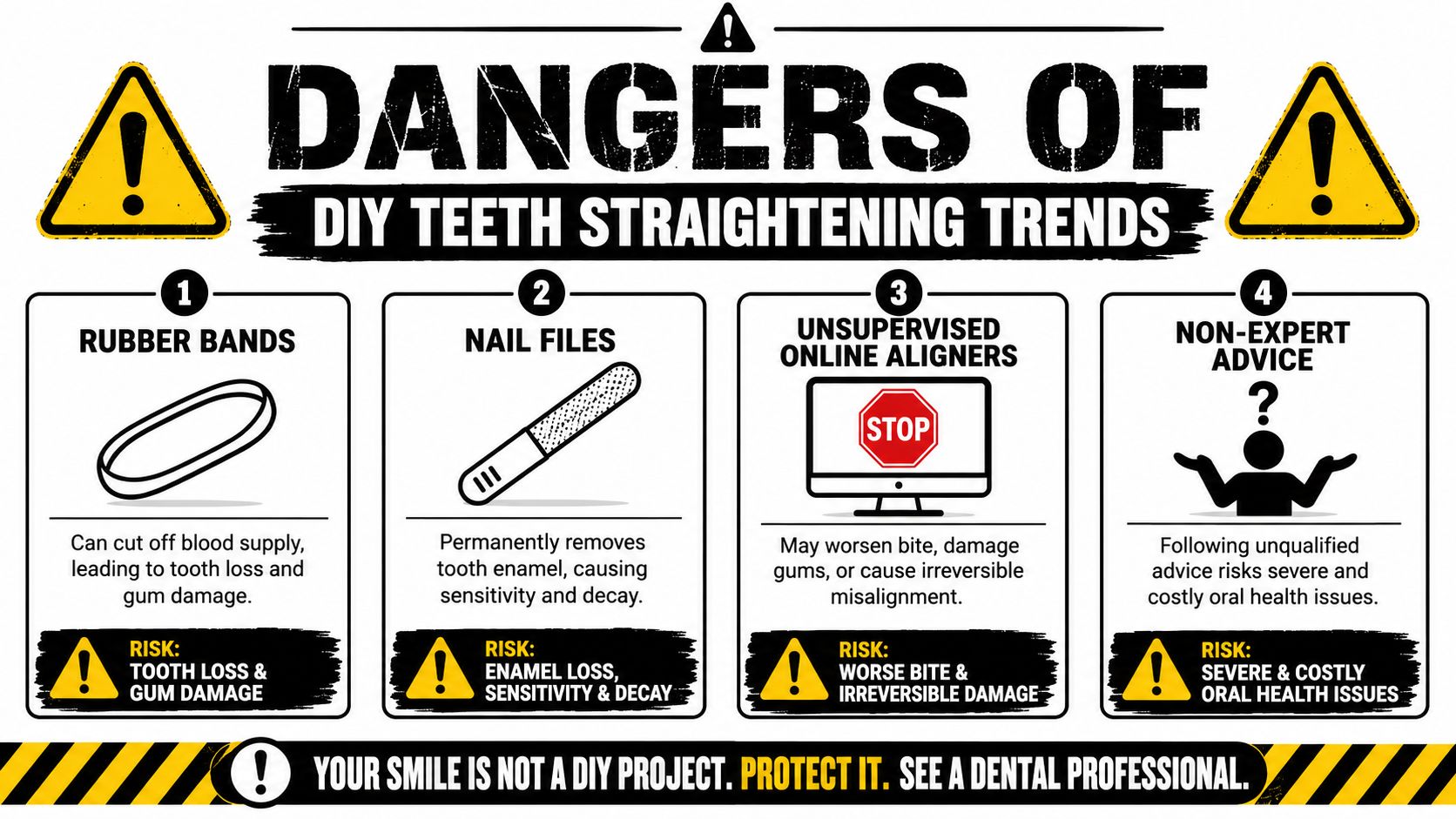
DIY teeth straightening usually looks harmless at first. A rubber band. A nail file. A mail-order tray. Advice from a video that says, "Just do this for a few weeks." The danger is that teeth don't move safely just because something creates pressure.
Popular trends that put teeth at risk
Some of the most common at-home methods are also the most damaging.
- Rubber bands around teeth. These can slip under the gums and damage the supporting structures around the tooth.
- Filing teeth to make them look straighter. Enamel doesn't grow back. Once it's removed, sensitivity and future damage become much more likely.
- Unsupervised online aligners. Without an in-person exam, X-rays, and bite tracking, trays can move teeth in the wrong direction.
- Non-expert advice. A friend, influencer, or comment section can't assess roots, bone support, gum health, or hidden decay.
These methods can make a cosmetic issue worse while creating a medical one. A patient who begins with mild crowding can end up with gum recession, unstable bite contact, loosened teeth, or pain while chewing.
Why supervision matters
The American Association of Orthodontists warns that moving teeth is a medical procedure, and 13% of their member orthodontists have seen patients who suffered irreparable harm from DIY teeth straightening attempts, according to this report on DIY straightening risks.
That warning deserves attention because tooth movement affects more than the visible front surfaces. Roots, bone, gums, and the bite all have to work together. If one part is ignored, the smile may look worse, feel worse, or become harder to restore later.
If a method promises straight teeth without exams, X-rays, or follow-up, the risk isn't convenience. The risk is hidden damage.
This is also where broader dental services become important. Someone harmed by DIY treatment may need restorative dentistry, gum care, bite adjustment, or even tooth extraction if damage becomes severe. Trying to save time can create a much longer path back to oral health.
Professional Paths to a Straighter Smile in Miami
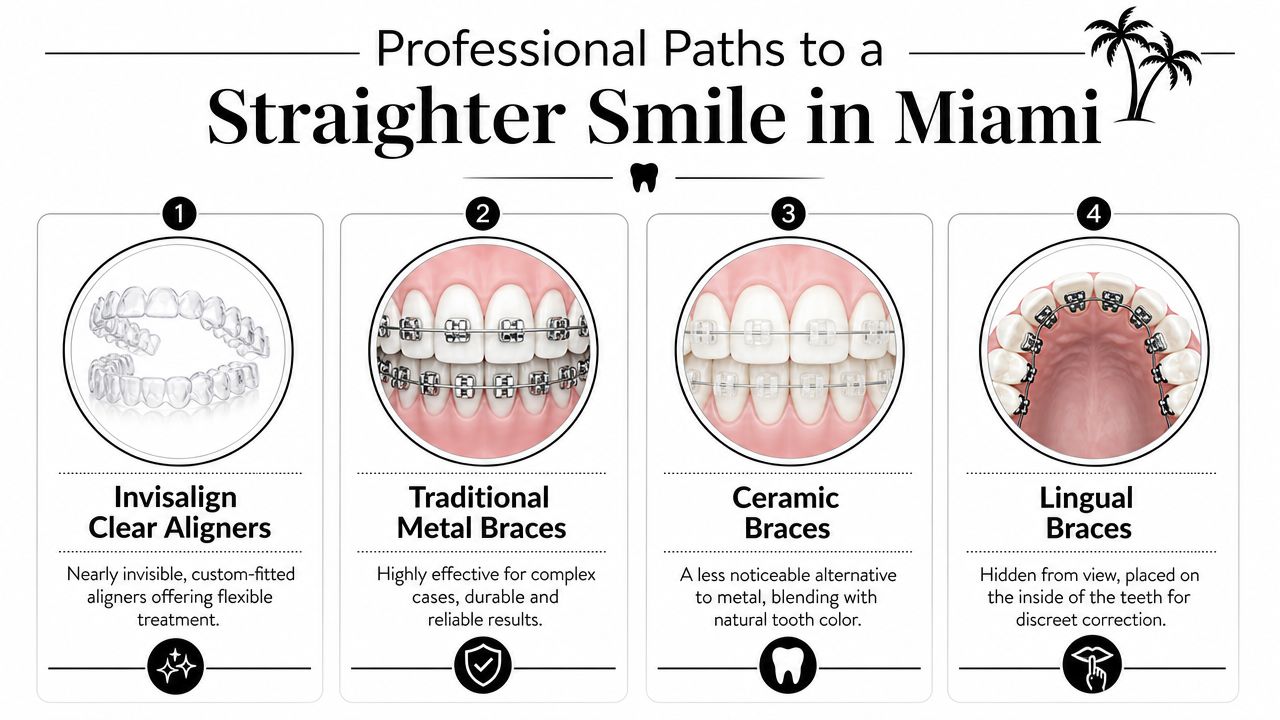
If the question is how to straighten teeth naturally, the better clinical answer is often how to achieve a smile that looks natural, feels healthy, and fits the face without taking unnecessary risks.
How professional options compare
Proven non-brace methods like clear aligners, veneers, and bonding require professional diagnosis and supervision, and clear aligners typically take 6 to 18 months with dentist oversight to avoid structural damage.
Here is how the main options compare in everyday terms:
| Treatment | Best for | What patients like | Trade-off |
|---|---|---|---|
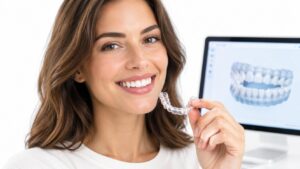
| Clear aligners such as Invisalign | Mild to moderate alignment issues | Removable, discreet, planned movement | Requires consistency and monitoring |
| Veneers | Cosmetic reshaping for selected cases | Fast smile transformation | Irreversible preparation for veneers |
| Dental bonding | Small chips, minor gaps, subtle shape corrections | Conservative and efficient | Best for limited cosmetic concerns |
| Traditional orthodontic care | More complex movement or bite correction | Broad capability | More visible treatment |
A person searching cosmetic dentist near me often doesn't need the same treatment as someone searching for bite correction. That's why real planning matters more than trends.
For readers comparing options, teeth straightening without braces in Miami is often the right place to start when appearance and comfort are both priorities.
Choosing the right treatment for your goals
Some patients want actual movement. Others want the appearance of straightness. Those aren't the same thing.
- Choose clear aligners when teeth need guided repositioning and the bite has to be respected.
- Choose bonding for small cosmetic refinements when the teeth are mostly in a good position already.
- Choose veneers when shape, color, symmetry, and alignment appearance all need improvement together.
- Ask about restorative planning if missing or damaged teeth are part of the picture. In some cases, dental implants near me, crowns, or bridges may need to be part of the long-term plan.
A straighter smile isn't one-size-fits-all. The best option depends on whether the real problem is spacing, crowding, wear, missing teeth, or bite imbalance.
Professional care also tends to be more efficient than people expect. Cosmetic corrections for very mild cases may be completed quickly with bonding or veneers, while cases involving true tooth movement need more time and monitoring. The difference is predictability. Treatment follows a plan instead of trial and error.
Your Consultation at Ultra Smile DentalSpa in Miami
For many adults, the hardest part isn't choosing between Invisalign, bonding, or veneers. It's booking the first appointment. Anxiety, busy schedules, and bad past experiences often delay care much longer than the dental issue itself.
What happens at the first visit
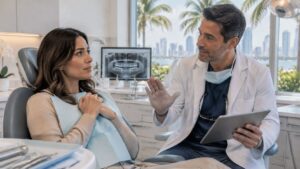
A cosmetic consultation in Miami should feel clear, calm, and thorough. The visit typically starts with a conversation about what's bothering the patient most. Some mention crowding in photos. Others are focused on uneven edges, old dental work, or discomfort while chewing.
From there, the dentist evaluates the smile, bite, gums, and underlying support. That may include dental X-rays, photos, and digital scanning so treatment isn't based on a guess. Professional teeth straightening treatments also correct crooked or crowded teeth and bite problems, and they typically range from six to 24 months depending on complexity, which is why the consultation matters so much.
A calm setting for cosmetic and restorative planning
At Ultra Smile DentalSpa, the experience is designed to feel more comfortable than a standard dental visit. Patients are welcomed into a spa-like environment with details that help reduce tension from the moment they arrive. That matters for adults who have postponed care, especially those looking for a dentist in Miami, FL who understands dental anxiety.
The conversation isn't limited to straightening. If the exam shows decay, worn fillings, a cracked tooth, missing teeth, or wisdom tooth concerns, the treatment plan can also include restorative dentistry, teeth whitening, tooth extraction, same-day crowns, root canals, or implant planning. A smile goal is easier to reach when the whole mouth is healthy first.
- Comfort-focused visit. Patients can expect a gentle environment, calming touches, and clear communication.
- Modern diagnostics. Imaging and scans help determine whether the best next step is aligners, bonding, veneers, or another service.
- Personalized planning. The recommendation depends on the smile, bite, and schedule, not a preset formula.
- Support for busy adults and families. Downtown Miami, Midtown Miami, and Hallandale Beach patients often need efficient care that still feels unhurried.
The best consultation leaves a patient feeling informed, not pressured.
That difference is what helps people move from searching online to finally getting answers in person.
Begin Your Journey to a Confident Smile Today
The idea of straightening teeth naturally is appealing because it sounds simple and gentle. But the safest route to a naturally beautiful smile usually isn't found in a hack, gadget, or trend. It's found in a personalized treatment plan that protects enamel, gums, roots, and bite function while improving appearance.
For some adults, that plan may involve Invisalign. For others, bonding, veneers, whitening, or restorative care may be the smarter answer. If crowding has made oral hygiene difficult, a professional evaluation can also help prevent bigger problems that lead to pain, urgent visits, or more extensive treatment later.
People searching for a dentist near me, cosmetic dentist near me, emergency dentist, or dental implants near me in Miami often start with one question and discover that several concerns are connected. A careful exam can show whether the issue is cosmetic, functional, or both.
A confident smile doesn't have to look artificial. It should look like a healthier, more balanced version of the smile that fits the face naturally. That's the goal of modern cosmetic dentistry when it's done well.
Ready to stop guessing and get real answers? Ultra Smile DentalSpa offers a calm, spa-like dental experience for patients in Miami who want safe, personalized options for straighter teeth, cosmetic dentistry, restorative care, emergency dental needs, and more. Schedule a consultation with Dr. Neda Bahmadi to discuss Invisalign, veneers, bonding, whitening, implants, or a full smile plan designed around comfort, health, and natural-looking results.