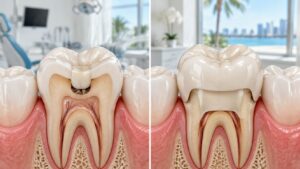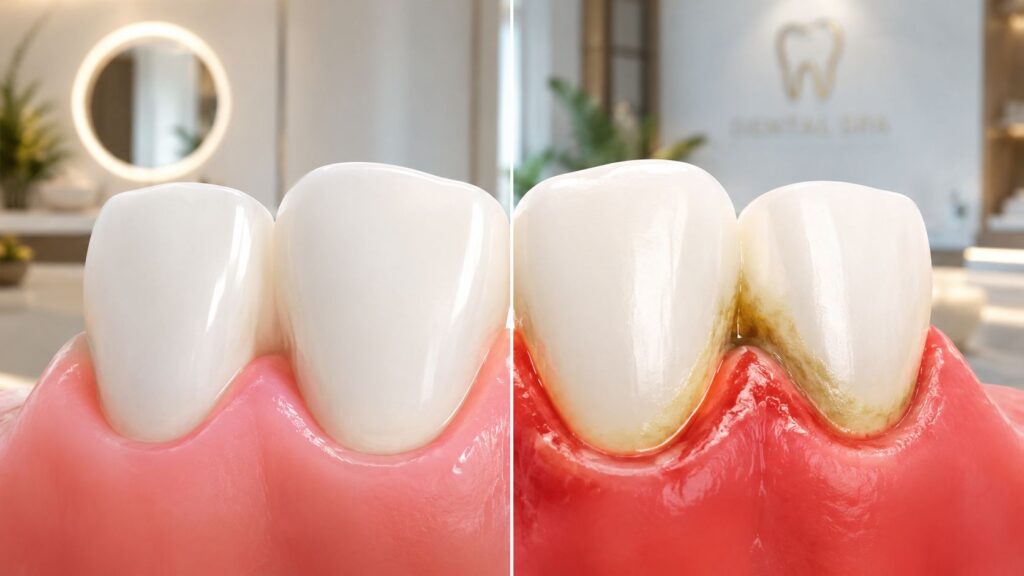
Bleeding gums during brushing can feel minor at first, especially if the rest of the mouth seems fine. In Miami, that moment often turns into a bigger question, whether the problem is simple gingivitis or something more serious like periodontal disease. For patients who want a calm, careful answer from a dentist in Miami, FL, Ultra Smile DentalSpa, led by Dr. Neda Bahmadi, DMD, offers that conversation in a setting designed to feel more soothing than stressful, with refreshments, aromatherapy, and gentle care for anxious patients.
| Criterion | Gingivitis | Periodontitis |
|---|---|---|
| Tissue involved | Gums only | Gums plus supporting tissues |
| Reversibility | Reversible with plaque control and professional cleaning | Not simply undone by brushing and flossing alone |
| Common signs | Redness, swelling, bleeding | Deep pockets, recession, bone loss |
| What it means | Earliest stage of gum disease | Advanced stage and a leading cause of tooth loss |
A lot of readers start with the same confusion. If the gums bleed, does that automatically mean the disease is advanced, or can it still be turned around? The answer depends on whether the inflammation is still confined to the gums or has moved into the tissues that hold the teeth in place.
Table of Contents
- Dentist in Miami FL for Gum Health
- Gingivitis and Periodontal Disease Overview
- Comparing Gingivitis and Periodontitis Criteria
- How Gingivitis Progresses to Periodontitis
- Why Self Checks Miss Periodontal Disease
- Real Patient Scenarios at Our Miami DentalSpa
- Schedule Your Gentle Gum Exam in Miami
- Frequently Asked Questions About Gum Disease
Dentist in Miami FL for Gum Health
A person notices pink in the sink, pauses for a moment, and starts wondering whether brushing harder caused the bleeding. That is often the point where a careful gum evaluation matters most, because the difference between gingivitis and periodontal disease is not always visible at home. At Ultra Smile DentalSpa, patients from Downtown Miami, Midtown Miami, and Hallandale Beach can have that concern checked in a calm setting that does not feel rushed or clinical.
A gentle visit can change the whole experience
For someone with dental anxiety, even a gum check can feel intimidating. A spa-like atmosphere helps lower that tension, especially when the visit includes thoughtful details like refreshments, aromatherapy, and a steady, gentle pace. That matters because people often delay care when they think bleeding gums are a small problem that can wait.
Practical rule: bleeding gums deserve attention sooner, not later, because early gum inflammation can still be reversible.
Dr. Neda Bahmadi, DMD approaches gum health the same way many Miami patients want to be treated, with clear explanations, careful exams, and a focus on comfort. That combination matters for adults who want a trusted dentist in Miami for gum health, cleaning and exams, dental x-rays, and a new patient visit that answers their questions.
Why local care matters
Miami patients often juggle work, family, and long commutes, so a convenient dentist in Miami, FL can make it easier to follow through on treatment. That is especially true when the concern is something like gum disease, where the early signs may look mild but still deserve a professional opinion.
Local care keeps the process close to home, makes follow-up easier, and gives patients a place to return if they later need restorative dentistry, tooth extraction, dental implants near me solutions, or even an emergency dentist for sudden pain or swelling. In that sense, gum care is often the first step in a bigger plan for long-term oral health.
Gingivitis and Periodontal Disease Overview
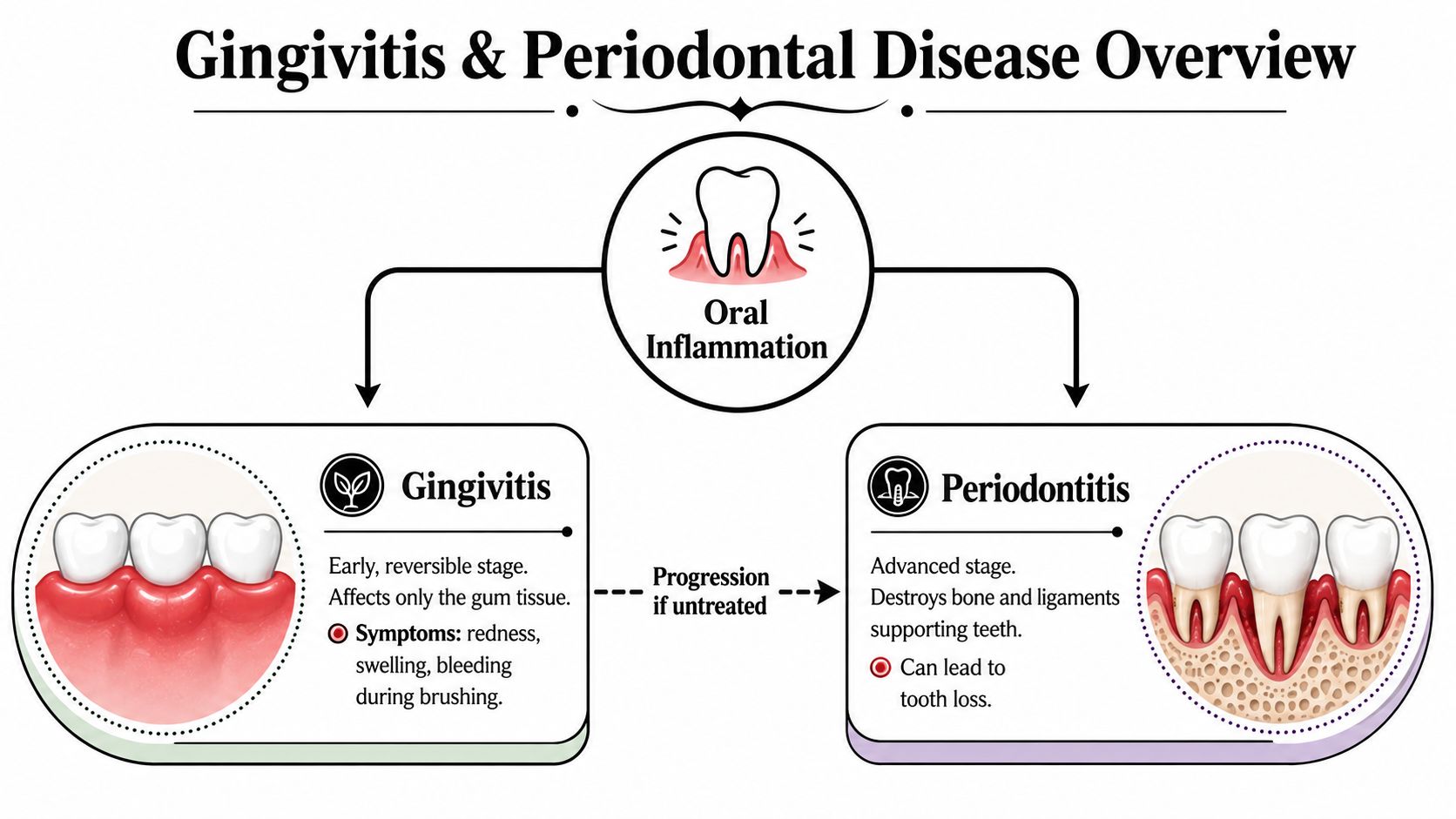
A patient may feel fine and still have gum disease starting below the surface. That is why gingivitis and periodontal disease cannot be judged by a quick glance in the mirror alone. Gingivitis is the earliest stage, limited to the gums themselves, while periodontitis reaches the deeper support around the teeth and can keep progressing even before symptoms feel dramatic. The CDC describes gingivitis as the mildest type of gum disease and notes that it can be prevented and reversed with good oral hygiene, while periodontitis involves bone loss around the teeth and is a leading cause of tooth loss. CDC gum disease facts
How the early stage starts
Plaque along the gumline is the usual starting point. As it lingers, the gums can turn red, swell, and bleed more easily during brushing or flossing. That pattern often surprises patients, because the mouth may not hurt much at first. The change is happening in the tissue, even if the person does not feel a major problem yet.
A close look at the research helps explain why self-checks miss so much. A major NIH review describes gingivitis as a reversible inflammation linked to plaque accumulation, and it notes that it can affect up to 90% of the population. The same review also explains that periodontal disease remains one of the most common oral conditions worldwide. NIH review on periodontal disease
Why periodontitis is different
Periodontitis reaches beyond the gum surface. It affects the structures that hold teeth in place, so the concern is no longer only redness or swelling at the gumline. Once the deeper support starts breaking down, the problem can keep moving even if the gums do not look dramatically worse to the patient at home.
That hidden early stage is part of what makes self-checks unreliable. The same NIH review notes that, in classic U.S. population data, over 50% of adults had gingivitis, about 30% had adult periodontitis based on periodontal pockets of 4 mm or more, and less than 5% had severe pockets of 6 mm or more. NIH review on periodontal disease
For patients, the difference matters in a very practical way. Gingivitis is inflammation in the gums, like a warning light on the dashboard. Periodontitis is inflammation that has moved deeper and begun weakening the support under the teeth. A home routine can often help the first stage settle down, but once support tissue is affected, the answer is usually a professional exam and treatment plan. In Miami, a gentle gum exam at a dental spa setting can make that check feel calmer and more comfortable, while giving a more reliable answer than self-checks alone.
Important distinction: if the supporting tissues are already damaged, brushing and flossing alone can't rebuild what's been lost.
Comparing Gingivitis and Periodontitis Criteria
A patient may see pink, healthy-looking gums in the mirror and assume everything is fine, then learn at a gentle Miami DentalSpa exam that the deeper support around the teeth has already changed. That is why this comparison matters. Gingivitis and periodontitis can start with similar surface signs, but they do not affect the mouth in the same way, and they do not call for the same response.
Gingivitis vs Periodontitis at a Glance
| Criterion | Gingivitis | Periodontitis |
|---|---|---|
| Stage | Earliest stage of gum disease | Later stage of gum disease |
| Main problem | Inflammation in the gums | Inflammation plus damage to the tissues that hold teeth in place |
| Reversibility | Reversible with cleaning and plaque control | Damage is not simply reversed by brushing and flossing |
| Common signs | Red, swollen, bleeding gums | Deep pockets, gum recession, bone loss, and changes that may not hurt at first |
| Clinical concern | Warning sign | Destructive disease |
| What the exam shows | Surface irritation around the gumline | Changes below the gumline that may be hidden from self-checks |
The deeper problem is often missed at home because early periodontitis can stay quiet. A person may notice bleeding while brushing and still not feel pain, and that silence can create a false sense of safety. In that situation, the mirror shows only part of the story, while a professional exam can check pocket depth, tissue attachment, and other changes that are not visible on a quick self-check.
That matters because many people respond to what they can see, not to what is developing underneath. Gingivitis usually stays closer to the surface, while periodontitis affects the structures that support the teeth. A home routine can often calm the first stage, but once the support tissues are involved, the focus shifts to a dental exam and a treatment plan that matches what is happening below the gumline.
What patients usually miss
Bleeding gets the most attention, but it does not tell the full story. Some patients assume that bleeding means the disease must already be severe, while others assume mild discomfort means the problem cannot be serious. Both assumptions can lead to the wrong conclusion.
A patient can also have gum tissue that looks only mildly irritated while a dentist finds deeper changes with probing and a close look at the supporting structures. That is why the exam matters more than a quick glance in the bathroom mirror. At Ultra Smile Miami, a laser therapy for gingivitis visit can be part of a calm, careful approach when early inflammation needs professional attention.
Bottom line: the same mouth can show irritation without showing the full extent of damage, so the stage cannot be confirmed by looks alone.
How Gingivitis Progresses to Periodontitis
Gingivitis usually comes first. A major NIH and NCBI review notes that it's a reversible inflammation caused by plaque accumulation, and classic U.S. population data published in 1998 found that over 50% of adults had gingivitis while about 30% had adult periodontitis and less than 5% had severe pockets. That pattern shows the common early stage and the smaller, more destructive stage that follows when inflammation isn't controlled. NIH review on periodontal disease
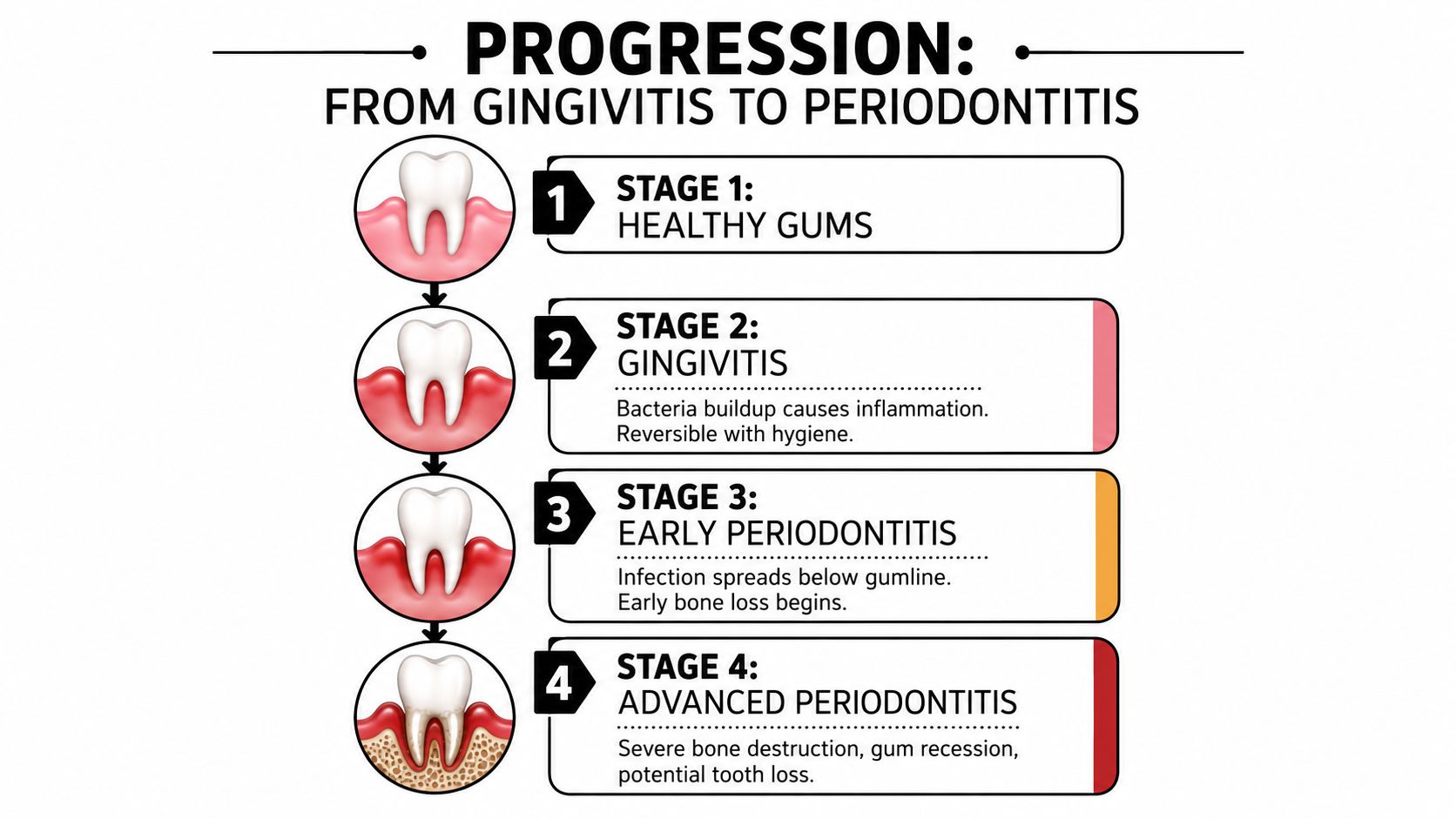
The timeline from irritation to tissue loss
At the start, plaque collects along the gumline and the gums respond with inflammation. If that buildup keeps sitting there, the inflamed area can deepen, creating spaces where debris and bacteria collect more easily. Over time, those spaces can become deep pockets, and once that happens, the infection has a better path below the gumline. Frisco Periodontal blog
As the pocketing increases, the gums can start to pull away from the teeth. That recession, along with bone loss, marks the shift into periodontitis. In practical terms, the mouth moves from a surface problem to a structural one.
Why timing changes the outcome
The historical lesson is straightforward. Gingivitis is widespread and reversible, but periodontitis is the smaller subset that brings irreversible loss. Global evidence summarized in UK government materials notes that around 10% of the world's population has evidence of severe periodontal disease, and about half of all adults have some evidence of moderate disease. NIHR evidence summary
Miami patients often ask whether waiting a few months matters. With gum disease, it can. The longer inflammation stays active, the more opportunity it has to move below the gumline. Regular cleaning and exams interrupt that process before support is lost.
A visual reminder helps here. Healthy gums can move toward gingivitis, and untreated gingivitis can progress into periodontitis with pocket formation and bone loss. That's the point where care shifts from routine maintenance to more involved treatment.
A closer look at periodontal therapy options can also help patients understand what comes next after diagnosis. Laser therapy for gingivitis is one example of how treatment conversations may expand once inflammation is identified.
Why Self Checks Miss Periodontal Disease
A mirror check in the bathroom can catch blood on the brush or a gumline that looks red, but it cannot show what is happening under the surface. Early gum disease may stay quiet, and periodontitis can also be painless at first, so a self-check may miss the stage where the problem has already moved deeper. Healthline overview of gingivitis vs periodontitis
Why symptoms don't always match severity
What you see in the mirror can be smaller than the problem below the gumline. One person may notice only light bleeding while brushing, while the tissue around the teeth is already changing. Another patient may feel almost nothing and still have a periodontal problem that is getting worse.
That is why the question is not just whether gums bleed. The question is whether the support around the teeth is still healthy, and that takes a dental exam to confirm. X-rays and periodontal measurements can show pocket depth and bone changes that a mirror cannot reveal.
What a professional exam adds
A gentle exam gives the dental team a clearer picture of the gums, the spaces around the teeth, and any hidden changes in the bone. For patients who feel nervous, that kind of reassurance matters as much as the diagnosis. A calm visit with clear explanations replaces guessing with a plan.
Key point: home checks can raise a flag, but they cannot confirm the stage with confidence.
That is why Miami patients searching for a dentist near me often do better with an exam than with more self-monitoring. The goal is not to create fear. The goal is to find the problem while it is still manageable and before it becomes harder to reverse.
Real Patient Scenarios at Our Miami DentalSpa
A Downtown Miami professional comes in after months of noticing bleeding during brushing. The mouth otherwise feels fine, so the concern has been easy to dismiss. In a visit like that, a gentle exam and cleaning can clarify whether the problem is early inflammation or something deeper, and the spa-like setting helps the appointment feel calmer than the patient expected.

Different patients, different needs
A Hallandale Beach retiree might notice loosening or gum recession instead of bleeding. In that situation, the concern often goes beyond cleaning alone, because deep pockets can collect plaque and food debris more easily, which can keep inflammation active. Treatment may need to include periodontal care, and if tooth support is already severely compromised, restorative options can come into the conversation.
A Midtown Miami parent with dental anxiety may delay care until the gums are visibly irritated. For that patient, a calm environment matters, especially when the visit includes custom aromatherapy, streaming entertainment, and a hot towel finish. That kind of comfort doesn't change the diagnosis, but it can make follow-through much easier.
When gum disease changes the treatment plan
Once periodontitis has developed, the focus shifts from simple reversal to controlling infection and protecting what remains. Deep pockets can form between the teeth and gums, and those spaces make it easier for debris to collect and for inflammation to continue. Frisco Periodontal blog
That's also the point where treatment may overlap with other dental needs. Some patients later need tooth extraction, others may ask about dental implants near me, and some need restorative dentistry to rebuild comfort and function. The right plan depends on what the exam shows, not on guesswork at home.
For Miami families, that clarity is reassuring. It turns a vague gum concern into a practical next step.
Schedule Your Gentle Gum Exam in Miami
The most useful next move is a professional exam that shows whether the gums are inflamed or whether periodontal damage is already present. Ultra Smile DentalSpa offers a welcoming consultation, dental x-rays, new patient exams, and transparent treatment planning for gum concerns, along with care that can also support patients who need tooth extraction or emergency dentist help. Accepted insurance and bilingual staff make the visit easier for many local patients, including those from Downtown Miami, Midtown Miami, and nearby neighborhoods.
What the visit usually feels like
The experience starts with a conversation, not a rush. Patients can expect clear explanations, a gentle approach, and a setting designed to reduce anxiety rather than amplify it. Refreshments, aromatherapy, streaming entertainment, and a soothing finish are part of that calmer experience.
Some patients are also comparing treatment paths for more advanced needs, including surgery or replacement options. A related guide on the difference between oral surgery and specialist periodontal care can help frame those choices. Oral surgeon vs periodontist
Why action matters now
Gum disease rarely improves by hoping it will settle on its own. Early inflammation can still be reversed, but periodontitis can move below the gumline, and that's where the damage becomes harder to undo. A timely visit gives the dental team a chance to catch the problem early and protect the teeth that are already in place.
For patients comparing options, Ultra Smile DentalSpa also fits into broader smile-care plans that may include cosmetic dentist near me concerns, teeth whitening, dental implants, and routine cleaning and exams. The key is starting with the right diagnosis.
Frequently Asked Questions About Gum Disease
Can gingivitis come back after treatment? Yes, if plaque builds up again, inflammation can return. Good home care and regular dental visits help keep the gums stable.
How often should Miami patients get cleanings and exams? That depends on the condition of the gums and the dentist's recommendation after a new patient exam. Patients with gum concerns usually benefit from staying on a consistent maintenance schedule.
Is teeth whitening safe if gum disease is present? Whitening is usually not the first step when gums are inflamed. The gums should be evaluated and treated first so the smile is healthier before cosmetic care moves forward.
What counts as emergency dental care for gum pain? Sudden swelling, severe discomfort, or a change in how the teeth fit together can all deserve prompt attention. A same-day evaluation may be appropriate when symptoms feel urgent.
If bleeding gums, recession, or persistent irritation have been on the mind, Ultra Smile DentalSpa can help sort out the difference between gingivitis and periodontal disease with a gentle exam and clear next steps. Visit Ultra Smile DentalSpa to schedule a consultation and get a calm, professional evaluation in Miami.