Dental implants have an overall success rate of roughly 95% to 97% over ten years. Individual outcomes depend heavily on patient health, lifestyle choices, bone support, oral hygiene, and the skill of the dental provider.
That headline gives Miami patients a reassuring starting point, but it doesn't answer the most important question: what is the likely outcome for a specific patient? A healthy nonsmoker with stable gums and adequate bone may have a different prognosis from someone with uncontrolled diabetes, active periodontal disease, heavy tobacco use, or a history of failed implants.
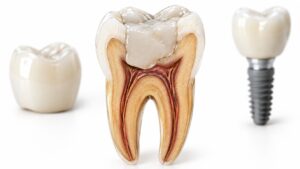
A dental implant replaces a missing tooth root and supports a crown, bridge, or denture. The treatment can restore chewing ability, appearance, and confidence, but the result depends on careful planning before surgery and consistent maintenance afterward. Patients searching for dental implants near me, a dentist near me, or a dentist in Miami, FL should look beyond a single percentage and ask how the provider evaluates personal risk.
Table of Contents
- What Is a High Dental Implant Success Rate?
- Understanding Survival Versus True Success
- Factors That Influence Your Implant Success Rate
- The Timeline for Implant Healing and Osseointegration
- Warning Signs and How to Maintain Your Implants
- Choosing the Right Dental Implant Provider in Miami
What Is a High Dental Implant Success Rate?
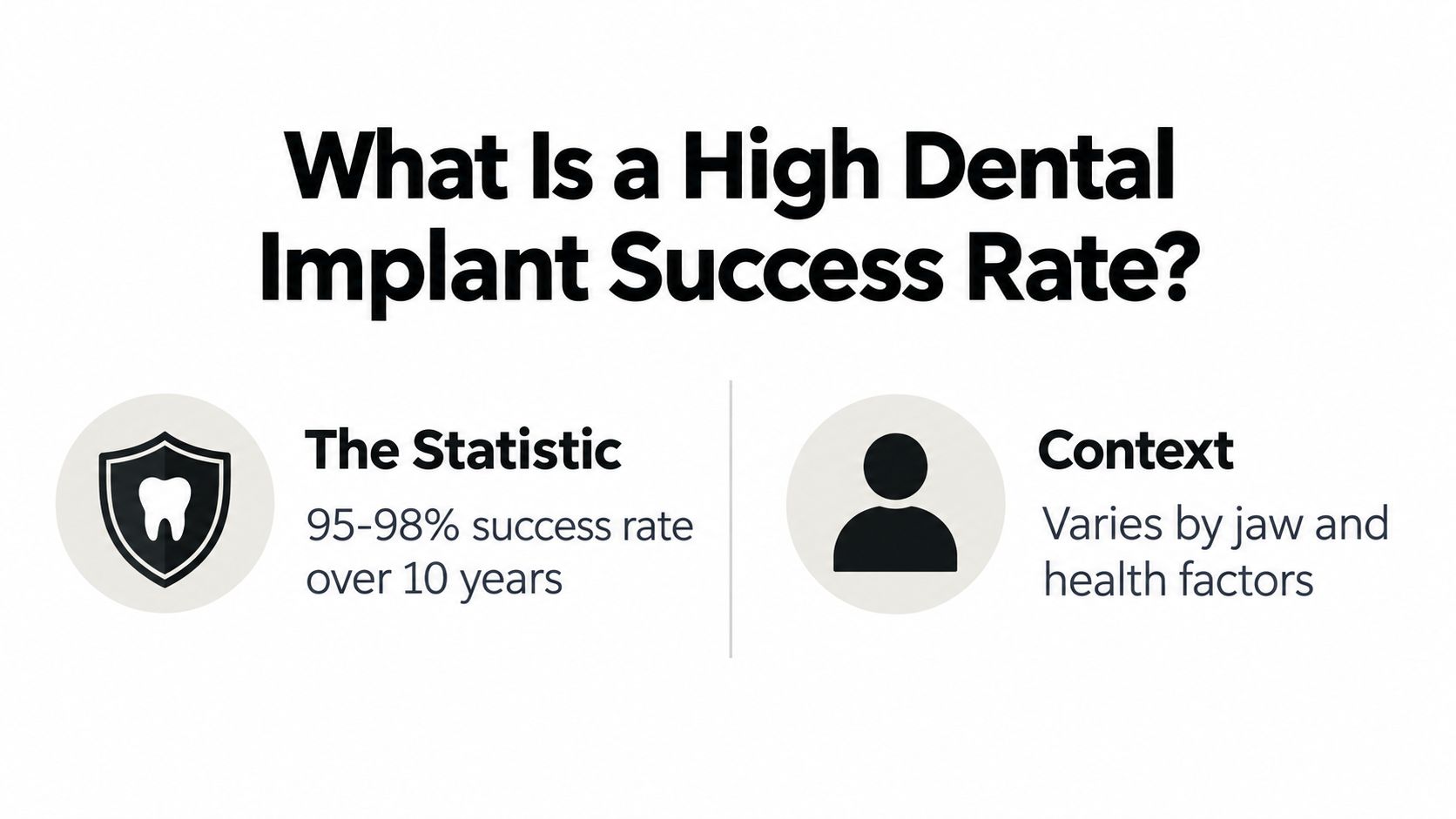
A high dental implant success rate means that most implants remain stable, functional, and healthy over the period being studied. Modern evidence shows that implants have very high medium- and long-term survival, although the reported figure changes according to the definition of success, the follow-up period, and how researchers collect their data. StatPearls summarizes implant success as above 97% over ten years, while also describing minimum success criteria of 85% at five years and 80% at ten years.
Consider two patients receiving a single implant in Miami. The first has healthy gums, follows postoperative instructions, attends regular dental exams, and doesn't smoke. The second has untreated gum disease and clenches heavily at night. Both may receive the same type of implant, but their risk profiles aren't the same. The implant material matters, yet the surrounding bone, gum tissue, bite, and daily habits matter just as much.
The statistic needs context
Patients often hear a number such as 95% to 97% and assume it guarantees a perfect result. It doesn't. A published rate describes a group of patients studied under specific conditions. It can't replace dental X-rays, a medical history review, a gum evaluation, and an assessment of bone volume.
The 2024 long-term evidence is especially useful because it shows why a single headline can mislead. In a 20-year meta-analysis of dental implant outcomes, prospective studies reported a mean survival rate of 92%, with a 95% confidence interval of 82% to 97%, while retrospective studies reported 88%, with a 95% confidence interval of 78% to 94%. When imputed data were included, the prospective estimate was 78%, with a 95% confidence interval of 74% to 82%.
What patients should ask
A trustworthy consultation should explain whether a quoted figure refers to implant survival, restoration performance, or true biological success. It should also identify factors that could move an individual outcome toward the higher or lower end of published results.
Practical rule: A useful prognosis is personalized. It connects the patient's bone, gums, health history, bite, and habits to a treatment plan.
For patients comparing a cosmetic dentist near me, an emergency dentist, or a provider offering restorative dentistry, the same principle applies. The most reassuring answer isn't an exaggerated promise. It's a clear explanation of what can be controlled and how the practice will monitor healing.
Understanding Survival Versus True Success
Survival usually means that an implant remains in the mouth and continues to function. An implant may be counted as surviving even when a patient has inflammation, bone loss, discomfort, or a restoration that requires repair. Success generally uses stricter standards. It may require stable bone levels, healthy surrounding tissue, no persistent pain or infection, and acceptable chewing and cosmetic function.
That difference explains why survival and success figures don't always match. In an earlier systematic review, five-year survival was 96.363% for single crowns, 94.525% for fixed partial dentures, and 91.27% for implant-tooth-supported prostheses. The review also reported failure rates of 0.684, 0.881, and 1.514 per 100 prosthesis-years, respectively. These figures come from a systematic review of implant-supported restorations, and they describe specific restoration types rather than every possible implant case.
Why definitions change the result
Researchers may measure the implant, the crown, the complete prosthesis, or the patient's biological health. Each choice produces a different outcome measure. A crown can need replacement while the implant underneath remains stable. Conversely, an implant can still be present while disease around it threatens the bone.
Earlier long-term comparisons illustrate the distinction clearly. A group of 1,022 implants followed for seven years had a cumulative survival of 92.2%, but cumulative success was only 83.4% when stricter biological and functional requirements were applied. Survival answered the question, “Is the implant still present? Success asked a more demanding question, “Is the implant healthy, stable, comfortable, and functioning as intended?
| Measure | What it generally tells patients |
|---|---|
| Implant survival | Whether the implant remains in place and usable |
| Restoration survival | Whether the crown, bridge, or denture continues to function |
| Implant success | Whether the implant also meets stricter health and performance criteria |
| Long-term maintenance | Whether the surrounding gums, bone, and restoration remain stable |
A patient choosing dental implants should care about both measurements, but true success is more meaningful for long-term oral health. A careful dentist won't use survival alone to dismiss bleeding, mobility, recurring discomfort, or progressive bone loss.
The distinction also helps explain why maintenance remains important after a successful procedure. An implant doesn't develop cavities like a natural tooth, but the gum tissue and supporting bone can still become inflamed. Regular cleaning and exams help detect changes before a manageable concern becomes a serious complication.
Factors That Influence Your Implant Success Rate
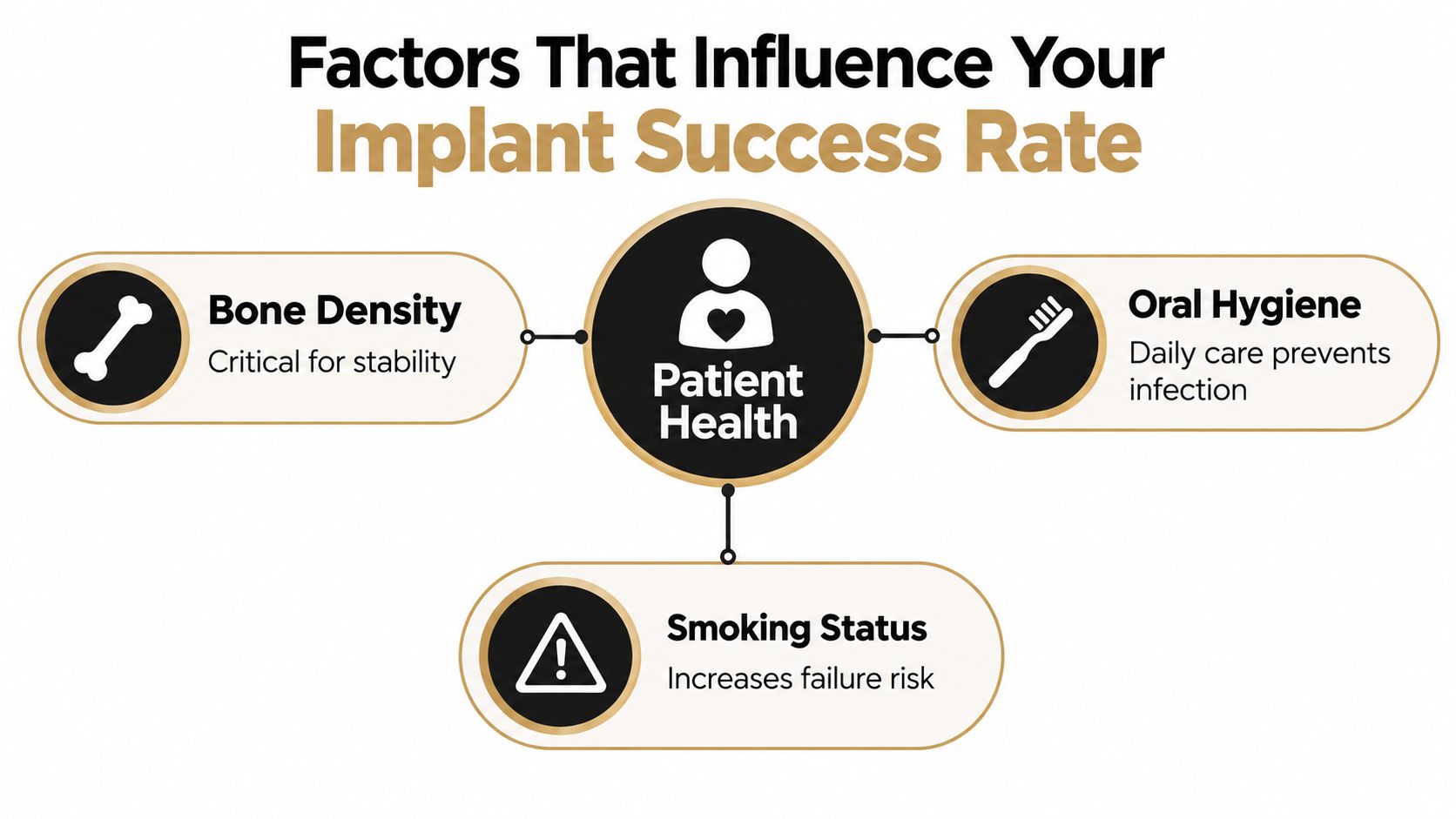
The strongest prognosis usually comes from several favorable conditions working together. Patients with healthy gums, adequate bone, controlled medical conditions, good oral hygiene, and no tobacco exposure generally offer the surgical team a more predictable environment. Risk rises when several unfavorable factors overlap.
A scoping review of early and late implant failure describes failure as multifactorial rather than device-only. Early loss was linked mainly to smoking, uncontrolled diabetes, poor bone quality, periodontitis, radiotherapy, titanium hypersensitivity, and surgical error. Late loss was more often associated with peri-implant disease and mechanical overload.
Patient health and daily habits
Smoking can impair healing and increase the chance of early complications. Uncontrolled diabetes can affect the body's ability to heal and manage infection. Active periodontal disease can also threaten the tissues that support an implant. A patient doesn't need perfect health to be considered for treatment, but medical conditions should be reviewed and managed before surgery.
Bruxism, or forceful grinding and clenching, can place excessive pressure on the implant and crown. A night guard may be appropriate for some patients. Good brushing, interdental cleaning, professional maintenance, and prompt treatment of gum inflammation give the supporting tissues a better chance to remain healthy.
Bone support and site selection
An implant needs stable bone for initial support. If the jaw has lost volume after tooth loss, a bone graft or another preparatory procedure may be considered. Grafted sites can require more planning, and they aren't automatically equivalent to native bone.
A 2024 review found that immediate implant placement after tooth extraction was associated with an odds ratio of 3.509 for early failure, while bone augmentation was associated with an odds ratio of 1.742 in the reviewed analysis. Patients can read the review of early dental implant failure risk factors for the study context. These figures don't predict an individual result, but they show why timing and site preparation deserve careful discussion.
Patients who want to understand whether treatment can proceed without grafting can review dental implants without a bone graft as part of their consultation preparation.
Surgical planning and provider skill
Provider skill affects diagnosis, implant positioning, primary stability, bite design, and the management of complications. Modern planning may use three-dimensional imaging and computer-guided placement to evaluate anatomy before surgery. A strong provider also knows when immediate placement isn't appropriate and when periodontal treatment, smoking cessation, medical coordination, or grafting should come first.
A realistic consultation doesn't just ask whether an implant can be placed. It asks what conditions must be improved before placement.
The Timeline for Implant Healing and Osseointegration
Implant treatment usually begins with an examination, dental X-rays or three-dimensional imaging, and a review of medical and dental history. The dentist evaluates the missing tooth area, neighboring teeth, gum health, bone support, bite, and the timing of any tooth extraction. If infection or gum disease is present, treatment may be needed before implant surgery.
From placement to stability
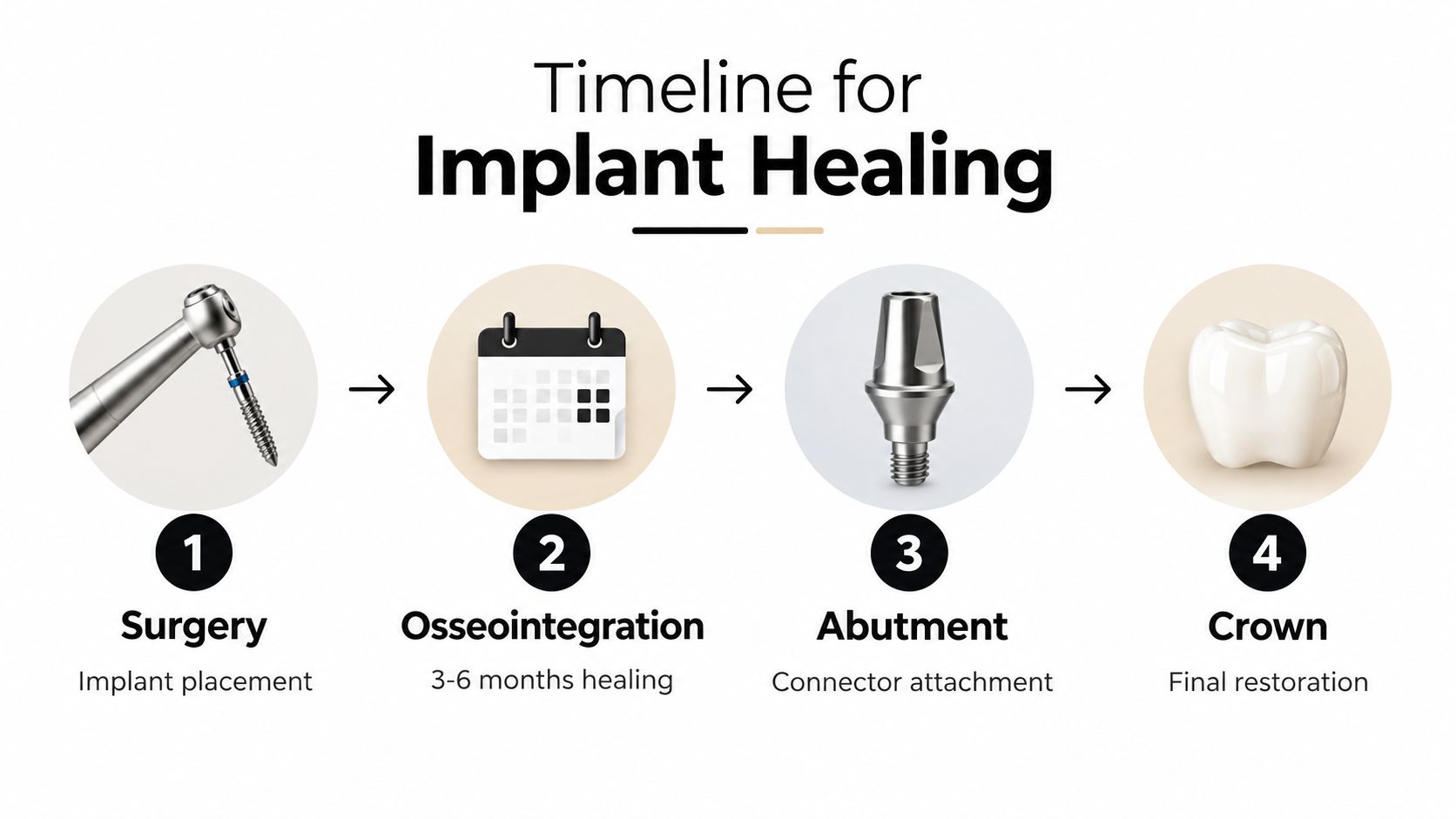
During surgery, the implant is positioned in the jawbone. Osseointegration is the healing process in which bone forms a stable connection with the implant surface. The implant needs time to become secure before it supports the final crown or another permanent restoration.
Healing commonly takes several months, and the exact duration depends on bone quality, location, primary stability, overall health, and whether grafting was needed. Some patients receive a temporary tooth during healing, while others may wait until the implant is ready for the connector and final restoration.
The sequence typically includes:
- Evaluation and planning: Imaging and clinical examination guide the position and restoration design.
- Surgical placement: The implant is placed, and the site begins healing.
- Osseointegration: Bone gradually stabilizes the implant.
- Abutment placement: A connector joins the implant to the crown or prosthesis.
- Final restoration: The crown, bridge, or denture is fitted and adjusted for comfort and function.
Patients should avoid judging the final result during the early healing stage. Temporary soreness, swelling, or changes in chewing can occur after surgery, but worsening symptoms require professional advice. A detailed dental implant healing timeline can help patients prepare questions for the consultation.
Warning Signs and How to Maintain Your Implants
Most implant patients move through treatment without major problems, but early communication protects the result. Persistent or worsening pain, swelling, bleeding around the implant, pus, an unpleasant taste or odor, or a loose crown should prompt a call to the dental office. Mobility of the implant itself is particularly important because a stable implant shouldn't move under normal function.
A loose crown isn't always the same as a failed implant. The crown or connector may need adjustment or repair while the implant remains stable. Only a clinical examination and appropriate imaging can determine the cause.
Daily care protects the supporting tissues
An implant restoration needs consistent care around the crown and gumline. Patients should follow the cleaning method recommended for their restoration, use an interdental cleaner when appropriate, and avoid treating a bleeding area as something to ignore. Professional cleanings allow the dental team to remove buildup and assess tissue health in areas that are difficult to inspect at home.
Regular dental exams also help monitor the bite. Mechanical overload from clenching, grinding, or an imbalanced restoration can place stress on the implant system. A dentist may recommend a night guard or an adjustment when the bite creates unnecessary force.
When to contact the office
- Persistent discomfort: Pain that doesn't improve as expected deserves an examination.
- Bleeding or swelling: These signs can indicate inflammation around the implant.
- Movement: A loose crown or implant should be assessed promptly.
- Changes in appearance: Gum recession, exposed implant components, or altered bite may signal a developing concern.
- Systemic changes: New medical diagnoses, medication changes, or difficulty controlling diabetes should be shared with the dental team.
Maintenance matters: An implant doesn't get cavities, but its surrounding gums and bone still need daily care and professional monitoring.
Patients in Miami can include implant maintenance with broader dental care such as cleaning and exams, new patient exams, dental X-rays, restorative dentistry, or cosmetic dentistry. A practice that provides thorough follow-up can identify oral health changes before they interfere with comfort or function.
Choosing the Right Dental Implant Provider in Miami
The provider selected for implant treatment should offer more than a surgical appointment. Patients should look for a clinician who evaluates bone and gum health, explains alternatives such as tooth extraction or bone grafting, reviews medical risks, and plans the final crown before placing the implant. Clear communication is part of safe treatment because patients need to understand healing, maintenance, possible complications, and expected function.
Ultra Smile DentalSpa, led by Dr. Neda Bahmadi, DMD, provides implant planning and restorative care in Downtown Miami, Midtown Miami, and Hallandale Beach. The practice uses three-dimensional imaging and computer-guided placement techniques to map the procedure before physical treatment begins. Its services include bone grafting, same-day crowns, implants, crowns and bridges, root canals, wisdom teeth extraction, night guards, and other general, cosmetic, and restorative dentistry.
Questions for a Miami consultation
A prospective patient can ask:
- How will the practice evaluate bone volume and gum health?
- Is immediate placement appropriate, or would delayed placement be safer?
- Could smoking, diabetes, grinding, or a previous implant failure affect the plan?
- What imaging and surgical guidance will be used?
- What temporary restoration, if any, will be available during healing?
- How will the crown be designed and adjusted after integration?
- What follow-up and maintenance schedule will protect the implant?
A calming environment can also matter, particularly for patients searching for a dentist near me because of dental anxiety. Ultra Smile DentalSpa combines clinical planning with a spa-like patient experience, including comfort-focused amenities, bilingual staff, transparent treatment planning, and care across several dental services. Those features don't replace clinical judgment, but they can make it easier for patients to attend consultations and follow through with treatment.
The most reliable provider is the one that gives a patient-specific explanation rather than promising the same dental implant success rate to everyone. A careful assessment should show which risks are present, which can be improved, and how the practice will support the implant after the final crown is placed.
Patients considering dental implants, bone grafting, tooth extraction, or restorative care in Miami can schedule a personalized consultation with Ultra Smile DentalSpa. The team can evaluate bone and gum health, explain the expected healing process, and create a treatment plan suited to the patient's goals and medical history.