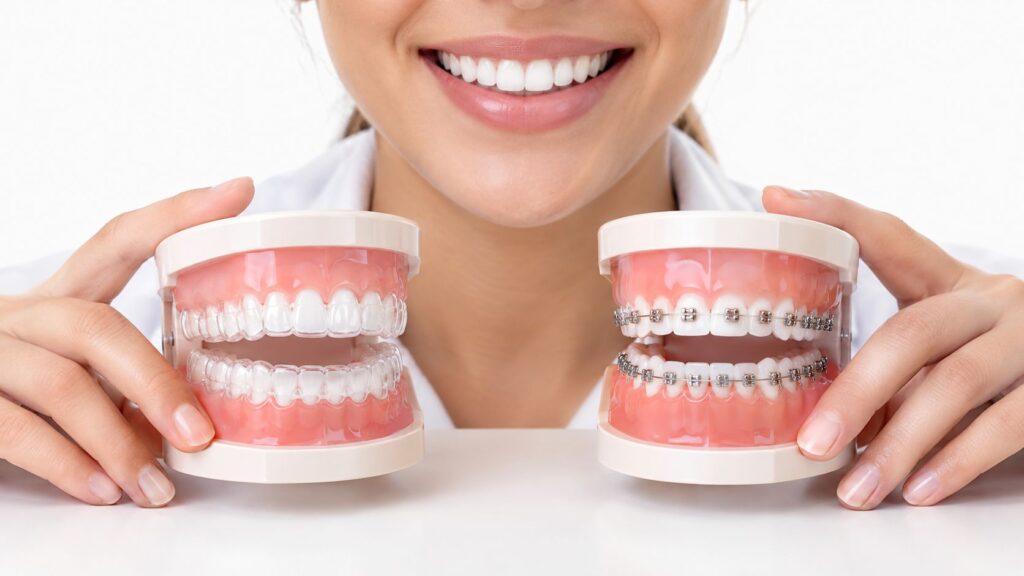
In 2026, Invisalign treatment and traditional braces are highly comparable in price, with both options typically ranging from $3,000 to $7,500 depending on case complexity and provider expertise. The final out-of-pocket cost can shift after insurance, refinements, replacement trays, and other treatment details are included.
A Miami professional comparing smile options often starts with one simple question: “Will clear aligners cost much more than braces? The honest answer is that the old assumption of Invisalign as an automatically premium treatment no longer fits every case. A consultation with a dentist in Miami, FL can reveal whether removable aligners or fixed braces better match the patient's teeth, bite, schedule, and budget.
Patients searching for a cosmetic dentist near me usually care about appearance, but price isn't the only measure of value. The right comparison includes comfort, compliance, treatment predictability, follow-up care, retainers, and the health of the smile after alignment.
Table of Contents
- Understanding the True Cost of Invisalign and Traditional Braces
- Breaking Down the Price Factors for Miami Patients
- Variables That Influence Your Final Orthodontic Quote
- Comparing Treatment Timelines and Daily Lifestyle Impact
- Navigating Insurance and Financing Options for Orthodontics
- Evaluating Candidacy and Long-Term Value for Your Smile
- Starting Your Smile Transformation at Ultra Smile DentalSpa
Understanding the True Cost of Invisalign and Traditional Braces
A Miami adult comparing orthodontic options may find Invisalign described as expensive on one site and traditional braces presented as the cheaper choice on another. The difference often reflects case complexity, what the fee includes, and how consistently treatment is followed. Comparing Invisalign with traditional braces therefore requires a personalized quote, because either option can cost more depending on the clinical plan and provider.
The 2026 Invisalign affordability guide reports that 53.5% of more than 300 surveyed U.S. orthodontists and general dentists said their Invisalign cases cost the same as or less than braces. It also places braces without insurance between $3,000 and $7,500, showing why clear aligners should not automatically be treated as the more expensive choice.
| Treatment option | Common U.S. cost information |
|---|---|
| Invisalign | $1,800 to $9,500 per treatment course |
| Adult Invisalign average | About $5,700 |
| Traditional metal braces | $3,000 to $7,000 |
| Braces without insurance | $3,000 to $7,500 |
These figures are broad U.S. reference points, not a promise of what a Miami patient will pay. Local overhead, provider experience, case difficulty, and the level of supervision can all affect the final fee. The ranges should guide questions, not replace an examination.
Practical rule: A treatment quote should explain what the fee includes, not just name the appliance.
Ask whether the estimate covers scans, examinations, attachments, adjustments, refinements, retainers, and follow-up visits. With Invisalign, wearing aligners as directed also affects treatment efficiency. Missed wear time can extend treatment and create additional visits or refinements, changing the total economics of an apparently lower starting price. Fixed braces reduce that compliance burden, although they require careful cleaning and regular adjustments.
For someone searching for a dentist near me in Miami, the useful first step is a consultation that connects the price to the clinical plan. A mild alignment concern may fit within the lower part of a range, while complex bite correction can require more planning, supervision, and time. A new patient exam and dental x-rays help determine which estimate reflects the patient's actual needs.
Breaking Down the Price Factors for Miami Patients
A clear aligner quote can look higher at first, yet the final out-of-pocket cost depends on more than the appliance. Treatment complexity, provider fees, supervision, compliance, and Miami's local pricing all shape the economics. The 2026 Invisalign comparison guide reports that braces without insurance may cost $3,000 to $7,500, while the Invisalign pricing page gives a nationwide braces range of $3,000 to $10,000 and says Invisalign is usually priced comparably.
Average orthodontic treatment costs
CareCredit survey data shows clear aligners averaging less than metal braces, which challenges the assumption that aligners always carry a premium.
| Treatment Type | Average Cost |
|---|---|
| Clear aligners | $5,108 in the cited CareCredit survey |
| Metal braces | $6,343 in the cited CareCredit survey |
| Ceramic braces | $5,834 in the cited CareCredit survey |
| Lingual braces | $9,221 in the cited CareCredit survey |
These averages are reference points, not personal estimates. Traditional metal braces aren't always the least expensive option, and “invisible treatment does not automatically belong to a separate premium tier. The Colgate cost explanation describes overlapping Invisalign and braces ranges, which helps explain why two Miami patients with different treatment plans may receive similar quotes.
What the ranges mean locally
Miami fees reflect case requirements, provider experience, age, location, and the level of monitoring included. An office serving Downtown Miami, Midtown Miami, or Hallandale Beach may structure its fees differently from another practice, even when two patients appear to have similar crowding.
The appliance is only one part of the financial comparison. Aligners may require consistent daily wear, and missed wear time can extend treatment or lead to refinements and extra visits. Braces reduce that compliance burden, but they require careful cleaning, periodic adjustments, and attention to broken components. A lower starting fee may therefore become less economical if treatment takes longer or requires additional supervision.
Compare written plans rather than promotional prices. Confirm whether the fee includes scans, examinations, attachments, adjustments, refinements, retainers, and follow-up visits. A Miami consultation should connect those costs to the proposed tooth movements and the expected monitoring schedule. That comparison gives adults a clearer view of total treatment economics before they choose an appliance.
Variables That Influence Your Final Orthodontic Quote
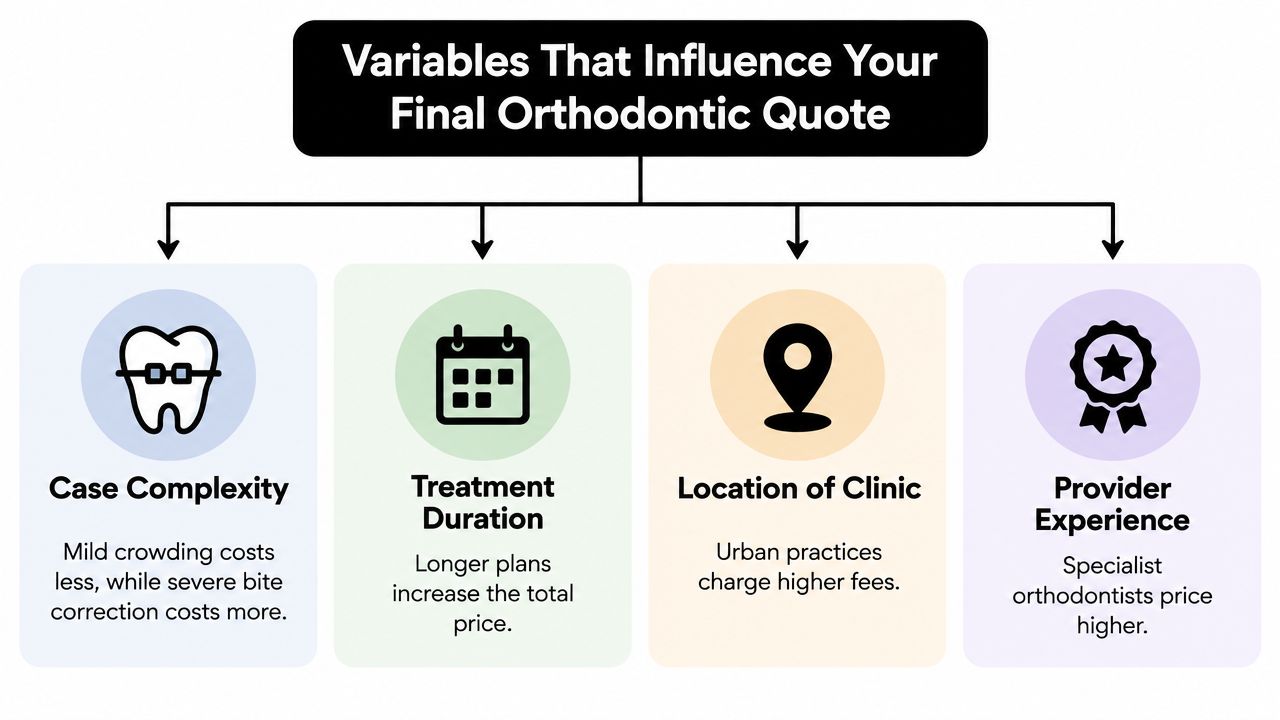
An adult may receive two very different orthodontic estimates after an initial consultation. The final figure starts with the condition of the teeth, the bite, and the treatment objective, not a promotional appliance price. Examination, digital scans, and dental x-rays help determine the movement required and whether other dental care should come first.
Case complexity changes the scope
Limited front-tooth crowding may need a shorter, narrower plan than significant rotations, spacing, bite correction, or treatment involving several arches. Complex movement usually requires more planning, monitoring, and possible refinement. Case complexity, provider fees, age, and geography all influence the final cost.
Restorative care can change the total dental budget before orthodontic treatment begins. Active decay, gum problems, a damaged tooth, or an unstable crown may need attention before alignment is appropriate. A filling, crown, or periodontal treatment is separate from the appliance fee, but it still affects what the patient pays overall.
Treatment duration affects planning
Longer treatment can mean more visits, continued appliance management, and more opportunities for refinements or repairs. The expected duration depends on the movements required and the patient's cooperation. A reliable estimate should explain the proposed sequence and monitoring schedule instead of promising one standard timeline.
Clinic location and provider expertise matter
Miami's practice overhead, technology, staffing, and local pricing can influence the quote. Fees may also differ between an office serving Downtown Miami, Midtown Miami, or Hallandale Beach and another practice with a different operating structure. A provider's experience with complex adult cases may affect the fee as well.
A higher quote does not automatically provide better value, and a lower quote does not automatically reduce total treatment cost. Ask what clinical oversight and problem resolution are included.
Ask before accepting an estimate: Does the fee include scans, attachments or brackets, refinements, retainers, and follow-up care?
Insurance and treatment policies complete the picture
Insurance may pay part of orthodontic treatment, depending on eligibility, plan limits, and coverage rules. Adults should confirm the expected benefit and remaining balance before comparing quotes. The policy should also explain charges for lost aligners, broken brackets, missed visits, or additional trays.
Review the written treatment agreement carefully. The most useful comparison is the expected out-of-pocket total, including compliance-related costs and follow-up care, rather than the appliance's starting price alone.
Comparing Treatment Timelines and Daily Lifestyle Impact
The lowest initial estimate may not create the lowest total cost if the treatment doesn't fit the patient's routine. Aligners depend on consistent daily wear and safe storage. Braces remain attached, which reduces the chance of forgetting them but creates different cleaning and food restrictions.
A Miami professional who attends frequent meetings may value the discreet appearance and removability of Invisalign. The same patient may struggle if meals, travel, or long workdays make it difficult to keep trays in place. Lost trays, missed wear time, or delayed appointments can interfere with progress and may lead to extra treatment steps.
Invisalign fits some routines better
Clear aligners can be removed for eating, brushing, and certain activities. Patients can clean their teeth without navigating around brackets and wires, but they must remember to replace the trays consistently. The treatment plan works best for adults who can follow instructions, protect the aligners, and attend scheduled reviews.
Traditional braces offer continuous attachment. Patients don't remove them during the day, so compliance with wearing the appliance is less of an issue. They do need careful brushing around brackets, attention to food choices, and prompt communication if a wire or bracket causes discomfort.
Convenience has a financial side
Convenience shouldn't be reduced to appearance. A removable appliance may save time during meals and hygiene, while a fixed appliance may offer more control when a patient is unlikely to follow a removable-wear routine. The more closely the treatment matches daily behavior, the less likely avoidable complications are to disrupt the plan.
Patients considering an emergency dentist after a broken bracket or damaged appliance should ask how urgent orthodontic concerns are handled. A dental office that clearly explains repair and follow-up policies helps patients avoid confusion when an unexpected problem occurs.
For more detail about planning expectations, patients can review the Invisalign treatment timeline before discussing their own case with a dental professional.
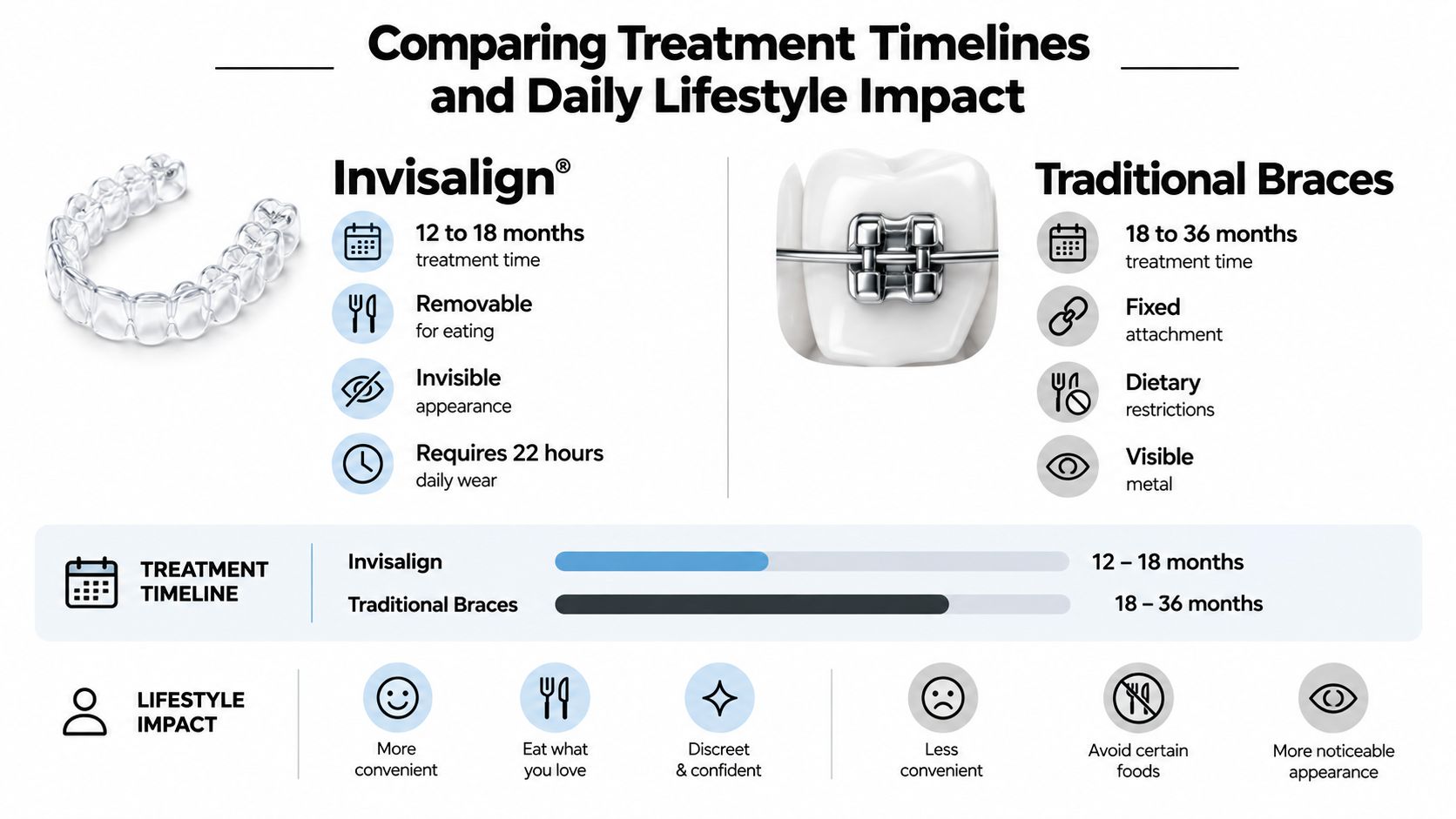
A reliable comparison asks two questions: Which appliance can address the clinical problem, and which one can the patient manage consistently? The answer may favor Invisalign for one adult and braces for another, even when their visible alignment appears similar.
Navigating Insurance and Financing Options for Orthodontics
Insurance rarely settles the full cost difference between Invisalign and traditional braces. Coverage can depend on age, plan design, orthodontic eligibility, waiting rules, exclusions, and the remaining benefit. Adults should request a written benefits explanation instead of assuming that a plan will pay the same amount for every appliance.
Verify benefits before treatment begins
Call the insurer, or ask the dental office to review the available information. Confirm these points before approving treatment:
- Orthodontic eligibility: Does the plan include adult orthodontic benefits?
- Covered treatment: Are clear aligners and traditional braces handled under the same benefit?
- Maximum benefit: Is there a lifetime orthodontic maximum?
- Remaining balance: What portion should remain after the insurer processes the claim?
- Payment timing: Does the plan pay throughout treatment or after specific milestones?
Insurance often covers only part of orthodontic care. Compare the estimated out-of-pocket total, not just the advertised treatment price. The final balance may also reflect case complexity, compliance, refinements, and local Miami fees.
Use available payment tools
Patients with a Health Savings Account or Flexible Spending Account may be able to use eligible pre-tax funds for qualified dental expenses, subject to the rules of the specific account and plan. The dental office can provide documentation, but the account administrator determines eligibility.
A written financing plan can divide the balance into scheduled payments. Review the deposit, payment amount, financing fees, due dates, and the policy for additional visits or refinements. Ultra Smile DentalSpa provides information about Invisalign payment plans for patients discussing ways to manage treatment costs.
Financial question to ask: “What is the estimated total I may pay from start to retention, after insurance and likely treatment components?
Ask whether retainers are included, how replacements are priced, and whether post-treatment checks carry separate fees. These details reveal the treatment economics more clearly than a headline estimate. A lower initial quote may not remain lower if the plan excludes important follow-up services or if inconsistent aligner wear creates extra appointments. The most useful comparison is the expected total for completing and maintaining treatment, adjusted for the appliance that fits the patient's clinical needs and daily routine.
Evaluating Candidacy and Long-Term Value for Your Smile
Price matters, but suitability comes first. Clear aligners can be a strong choice for qualifying adults who want discreet treatment and can manage removable trays. Traditional braces may be more appropriate when a case needs fixed control, broader movement, or a treatment approach less dependent on daily discipline.
A dentist evaluates crowding, spacing, rotations, the bite relationship, gum health, existing restorations, and jaw function. Severe overbites, complex bite discrepancies, or difficult rotations may require fixed appliances or a more involved plan. Milder alignment concerns may be suitable for invisible braces, although only an examination can determine that.
Alignment supports oral health
Straightening teeth can make daily cleaning easier in areas where crowding traps plaque. It can also support a more balanced bite and reduce the likelihood that uneven contact contributes to wear. Orthodontic care doesn't replace cleaning and exams, dental x-rays, fluoride care, or treatment for active dental disease.
A healthy foundation protects the investment. If decay or gum inflammation remains untreated, alignment alone won't create long-term stability. Patients may need restorative dentistry, including a crown, bridge, or other treatment, before or after orthodontic care.
Consider future restorative needs
A well-planned smile transformation can support the preservation of natural teeth, but it can't guarantee that tooth extraction or dental implants will never be needed. Trauma, decay, gum disease, and other conditions can still affect a tooth. Patients who already have missing teeth may need a coordinated plan involving orthodontics and dental implants near me, including assessment of bone and the position of neighboring teeth.
The same principle applies to cosmetic goals. Teeth whitening, veneers, and other cosmetic dentistry services may be considered after alignment, but they shouldn't substitute for treating disease or instability. A consultation should separate cosmetic preferences from health priorities.
Patients should judge value through three lenses:
- Clinical fit, whether the appliance can deliver the required movement.
- Lifestyle fit, whether the patient can follow the care routine.
- Long-term stability, whether retention and ongoing dental care are understood.
That framework is more useful than choosing solely by the lowest starting fee.
Starting Your Smile Transformation at Ultra Smile DentalSpa
Ultra Smile DentalSpa serves patients in Downtown Miami, Midtown Miami, and Hallandale Beach with general, cosmetic, restorative, and orthodontic care. Led by Dr. Neda Bahmadi, DMD, the practice offers Invisalign and invisible braces for qualifying patients, along with cleanings and exams, dental x-rays, crowns, veneers, teeth whitening, root canals, tooth extraction, wisdom teeth extraction, bone grafts, and dental implants.
The patient experience combines clinical planning with a calming setting. Patients may receive refreshments, custom aromatherapy, streaming entertainment during procedures, and a hot towel finish. Bilingual staff, accepted insurance, transparent treatment planning, and options for patients without coverage help address practical concerns before treatment begins.
A consultation can include an assessment of the bite, dental health, aesthetic goals, and daily routine. Patients can ask for a clear comparison between Invisalign and traditional braces, including what the quoted fee covers, how refinements are handled, and what retention will require.
The practice also provides thorough care when orthodontic needs overlap with restorative or cosmetic concerns. A patient may need a tooth extraction, a crown, or implant planning before pursuing a final smile design, and coordinated evaluation can help keep those decisions connected.
The following video offers another introduction to the practice environment and patient experience.
Schedule a personalized Invisalign or traditional braces consultation with Ultra Smile DentalSpa to review candidacy, treatment economics, insurance, and payment options. The Miami team can also coordinate related cosmetic, restorative, or emergency dental services so the smile plan supports long-term oral health.