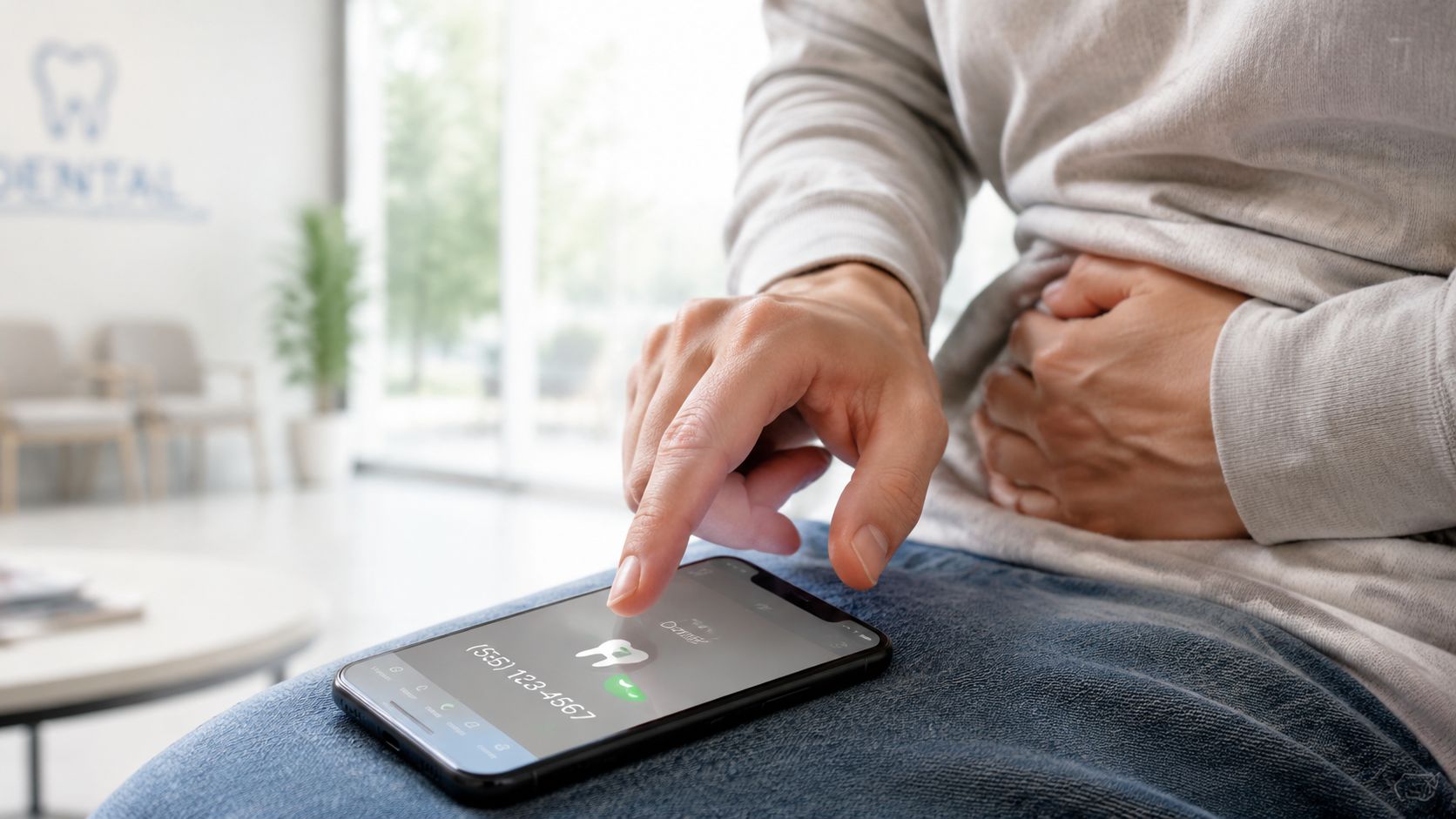
The phone is open to a dental office number, but the call button remains untouched. The thought of the drill, a previous painful visit, an unexpected bill, or a dentist noticing years of skipped appointments can make the stomach tighten before an appointment is even scheduled. For adults searching for a dentist for dental anxiety in Miami, FL, the first step isn't forcing fear away. It's finding a dental team that understands what the fear is protecting you from and builds care around that concern.
Dental anxiety doesn't have to prevent cleaning and exams, dental X-rays, tooth extraction, restorative dentistry, cosmetic dentistry, dental implants, or emergency dental services. A careful evaluation can help match communication, pacing, comfort measures, and optional sedation to the patient, the procedure, and the medical history.
Table of Contents
- Why Dental Anxiety Keeps People From Getting Care
- Understanding the Triggers Behind Dental Fear
- Sedation and Comfort Options for Anxious Patients
- Questions to Ask Before You Book Your First Visit
- What to Expect During Your First Appointment
- Why Ultra Smile DentalSpa Is Built for Anxious Patients
Why Dental Anxiety Keeps People From Getting Care
A patient may spend years promising to call after a tooth stops hurting, a filling breaks, or sensitivity becomes impossible to ignore. Then the discomfort fades, the appointment gets postponed, and the next flare-up feels even more threatening. Avoidance can turn a manageable dental issue into a more involved visit, which may reinforce the original fear.
That reaction deserves respect. A person lying back with a mouth open, unfamiliar instruments nearby, and limited ability to speak can feel exposed and powerless. Dental anxiety also affects far more people than many patients realize. A 2021 systematic review and meta-analysis of 31 studies involving more than 72,000 adults estimated global dental fear and anxiety at 15.3%, with 12.4% experiencing high anxiety and 3.3% severe anxiety. The prevalence varies by country and measurement method, but the benchmark shows that searching for a dentist who treats anxious patients is a sensible healthcare decision, not an embarrassment. (Systematic review of global dental fear and anxiety)
Recent U.S. evidence shows how broadly fear can affect adults. In a 2025 American Dental Association survey of 1,003 U.S. adults, 72.6% reported being afraid of going to the dentist, including 45.8% with moderate fear and 26.8% with severe fear. (American Dental Association report on dental fear)
A practical rule: A patient doesn't need to wait until fear disappears before requesting care. The right first appointment can be designed to make participation possible.
For someone looking for a dentist near me or a dentist in Miami, FL, an anxiety-aware office should offer more than a promise to be gentle. The practice should ask about triggers, explain each step, agree on a stop signal, and allow the patient to make decisions without pressure. That approach gives the patient control before treatment begins.
Understanding the Triggers Behind Dental Fear
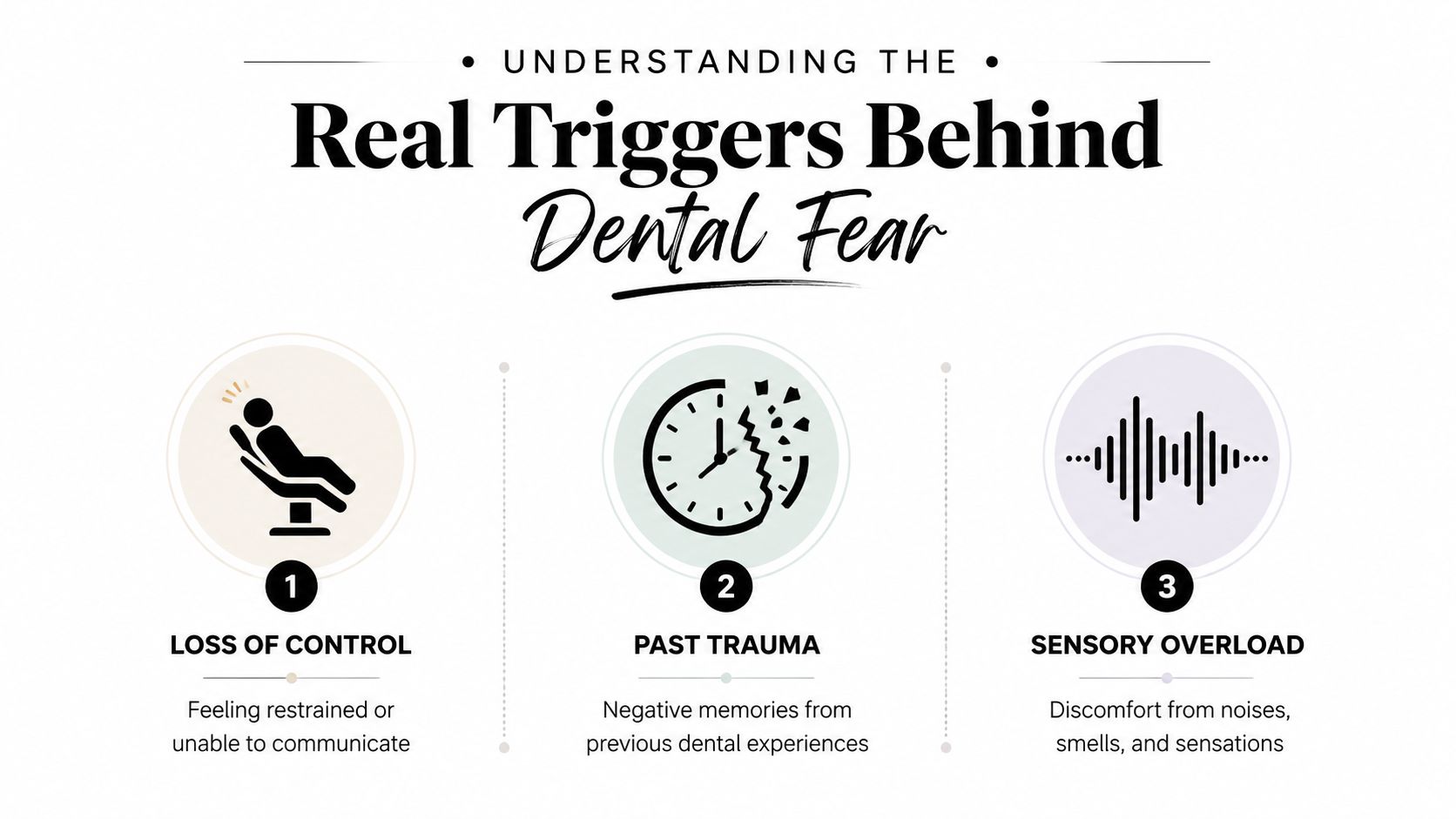
A patient can sit in the treatment chair fearing several things at once. Pain and needles matter, yet judgment, unexpected costs, unfamiliar sounds, smells, or loss of control may be just as important. Each concern requires a different response from the dental team.
A recent patient survey identified anticipated pain or discomfort as a concern for 59% of respondents, cost for 49%, past unpleasant experiences for 48%, sounds and smells for 39%, and embarrassment about oral health for 39%. (Delta Dental 2025 oral health and wellness report) These findings give patients a practical way to assess a prospective dentist. Sedation can reduce physical tension, but it does not answer questions about pricing, privacy, judgment, or decision-making.
Match the response to the trigger
- Loss of control: Agree on a hand signal, allow pauses, and explain what will happen before using an instrument.
- Past trauma: Listen without minimizing the experience, then adjust the appointment's order, pace, and language.
- Cost uncertainty: Provide a written treatment plan, explain alternatives, and review expected fees so the patient does not feel financially trapped.
- Sensory overload: Offer headphones or streaming entertainment, use a calm treatment room, and discuss sounds or smells before care begins.
- Embarrassment: Conduct a non-judgmental exam. The dentist's role is to identify problems and offer solutions, not shame someone for delayed care.
A useful question is not only, “Does this office offer sedation? Ask, “How does this office help patients who fear judgment, feel overwhelmed, or need to stop? A 2025 randomized trial found IV sedation reduced anxiety most, while oral midazolam offered better safety. A 2026 systematic review estimated high dental anxiety at 18% worldwide across 9,267 participants, supporting individualized decisions rather than one medication pathway. (Recent evidence on dental anxiety strategies)
A good dentist for dental anxiety treats fear as a spectrum. One patient may need a conversation and a slow examination. Another may need staged visits, behavioral support, and sedation for an extraction or longer restorative procedure. The evaluation should start with the patient's specific trigger, then combine communication, environment, and optional sedation as appropriate.
Sedation and Comfort Options for Anxious Patients
Sedation can help, but it works best as one part of a wider comfort plan. The appropriate option depends on anxiety severity, medical history, medications, pregnancy status, the length of the procedure, and the patient's ability to follow pre- and post-appointment instructions.
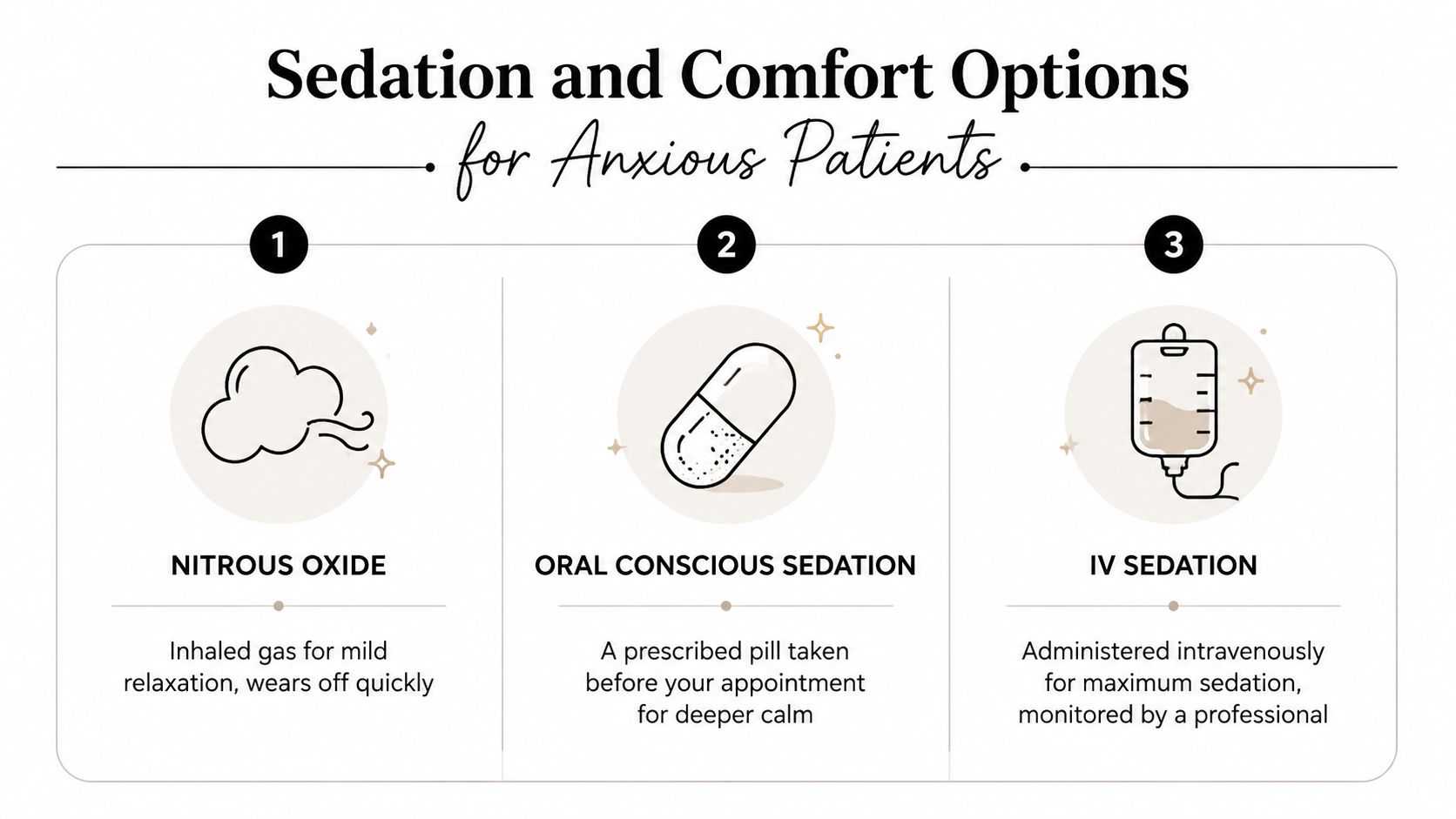
Comparing common options
| Option | How It Works | Best For |
|---|---|---|
| Nitrous oxide | Inhaled nitrous oxide and oxygen can create a relaxed, lighter feeling while the patient remains responsive. | Mild to moderate anxiety, routine care, and patients who want a quick recovery. |
| Oral conscious sedation | A prescribed oral medication produces deeper relaxation while the patient remains able to respond. | More pronounced anxiety or procedures that may feel difficult to tolerate without additional support. |
| IV sedation | Medication is administered intravenously, with professional monitoring during care. | Selected patients with significant anxiety or procedures requiring a deeper level of sedation. |
A systematic review and meta-analysis estimated 99.9% treatment-completion success in adult nitrous oxide trials and 94.9% overall, with 91.9% success in pediatric cases. (Evidence on nitrous oxide sedation success) Completion is a useful operational measure, but it doesn't mean nitrous oxide is the right choice for every adult. Sedation should follow an assessment, and reviews caution against relying on medication alone when communication, staged visits, and behavioral support are needed.
Non-sedation measures can be decisive. A stop signal gives the patient a brake pedal. Headphones or streaming entertainment can reduce exposure to clinical sounds. A longer, staged appointment can make it easier to pause, explain, re-numb, or postpone treatment without turning the visit into a race.
Before accepting sedation: Ask what the patient will feel, what preparation is required, whether a responsible adult must provide transportation, how monitoring works, and what activities should be avoided afterward.
The evidence also supports behavioral care for suitable patients. A review of CBT and exposure-based approaches reported 73% of children and adolescents completed all stages of a behavioral avoidance test compared with 13% receiving treatment as usual, while 64% no longer met dental-anxiety diagnostic criteria compared with 18% in controls. (Review of behavioral treatment for dental anxiety) The same evidence highlights the need for appropriate patient selection and follow-up, since 15% of one CBT cohort didn't complete therapy. For adults, the lesson is practical: a dentist should match intensity to the person's motivation, severity, and treatment needs.
Questions to Ask Before You Book Your First Visit
The phone call is part of the appointment. A patient can screen a dental office before sitting in the chair, and the quality of the answers often reveals whether anxiety-aware care is built into the practice or just used as a marketing phrase.
Start with the care process
Ask, “How does the practice handle patients with dental anxiety? A useful answer should describe specific actions, such as a consultation before treatment, permission before each step, a stop signal, quiet breaks, and a willingness to stage care. “Everyone here is gentle sounds reassuring, but it doesn't tell the patient what will happen.
Ask whether the dentist offers a no-pressure consultation or examination-only first visit. Patients who have avoided care may need time to understand findings before agreeing to cleaning, fillings, a root canal, tooth extraction, or another procedure. The office should also explain how long the initial visit usually takes and whether dental X-rays are recommended.
Clarify sedation and safety
Questions about nitrous oxide, oral conscious sedation, and IV sedation should include more than availability. Ask which options fit different levels of anxiety, who monitors the patient, what medical information the office needs, and what transportation or recovery arrangements apply.
A patient should disclose current medications, relevant medical conditions, previous reactions to sedatives, and pregnancy status when applicable. The dentist can then decide whether sedation is appropriate and whether local anesthesia, behavioral support, staged visits, or another combination offers a safer solution.
Remove financial surprises
Ask how the office presents findings, alternatives, insurance, and out-of-pocket costs before treatment begins. This matters especially when anxiety comes from cost uncertainty rather than physical discomfort. Patients can also review Ultra Smile DentalSpa's guidance on how to choose a dentist before making the call.
A strong response should leave the patient feeling informed, not rushed. Red flags include pressure to schedule extensive treatment immediately, irritation when a patient asks for pauses, vague sedation answers, or reluctance to discuss fees in advance.
What to Expect During Your First Appointment
Predictability reduces the burden of the unknown. An anxiety-sensitive first visit should begin with a calm welcome, an opportunity to explain personal triggers, and a conversation about what the patient does and doesn't want to happen that day.
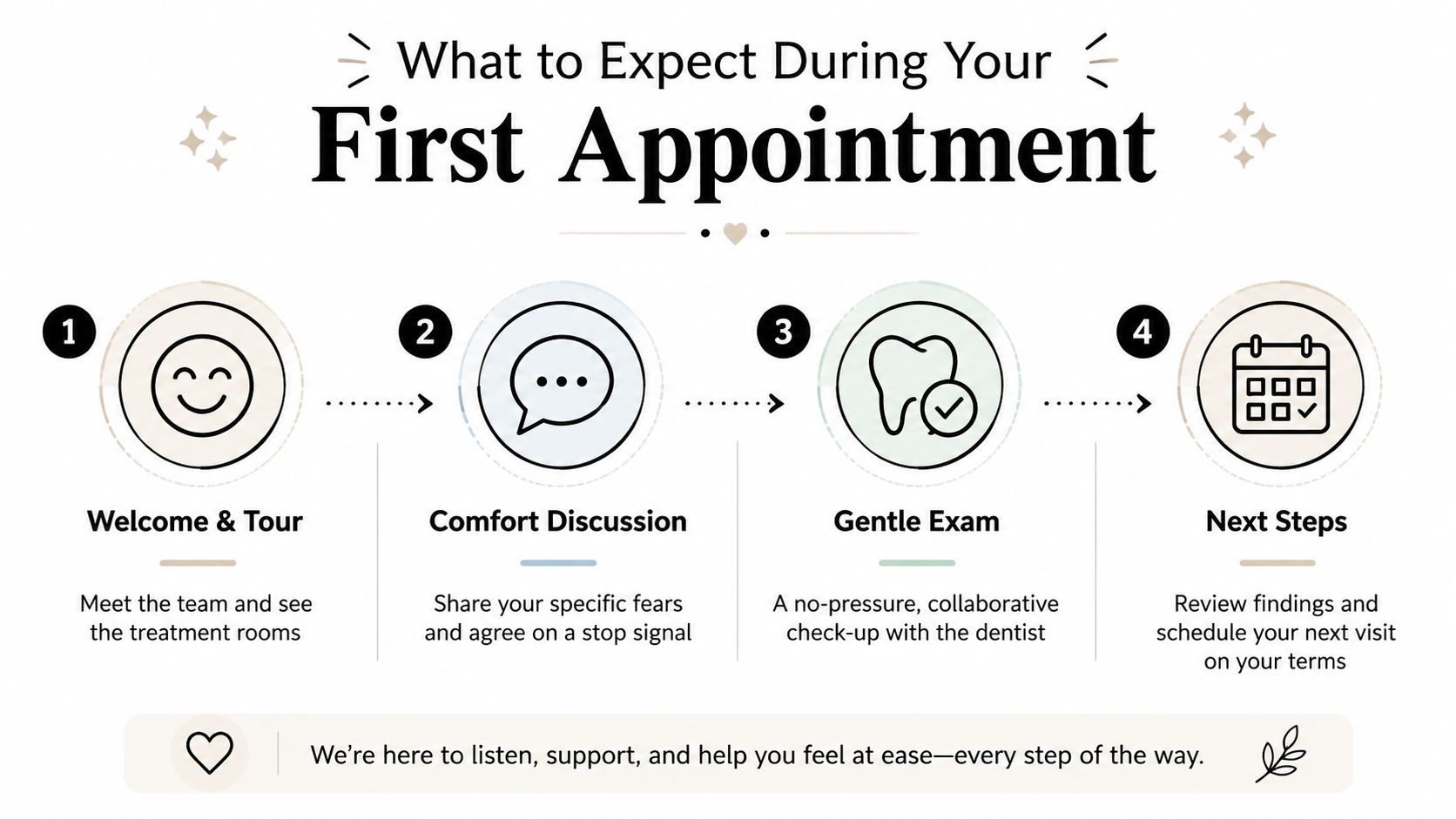
Four parts of a manageable visit
- Welcome and orientation: The patient meets the team, completes health information, and becomes familiar with the treatment area. Knowing where the chair, instruments, and exits are can make the room feel less unfamiliar.
- Comfort discussion: The dentist or team member asks what triggers fear, agrees on a pause signal, and explains how communication will work while the patient is reclined.
- Gentle examination: The dentist evaluates the teeth, gums, bite, and areas of concern at a pace the patient can tolerate. Updated digital dental X-rays may be recommended when they are clinically useful, but the reason should be explained.
- Next steps: Findings, options, timing, and expected costs are reviewed without forcing a same-day treatment decision.
A first appointment doesn't need to become a filling, cleaning, tooth extraction, or surgical procedure just because the patient made it through the door. The point is to establish trust and gather the information needed for safe planning. A patient who needs dental implants near me, an emergency dentist, cosmetic dentistry, or restorative care can begin with a consultation and diagnostic plan.
Patients can complete Ultra Smile DentalSpa's new patient forms ahead of time if doing so feels easier. They should also write down medications, previous dental experiences, specific sensory triggers, questions about sedation, and the signal they want to use if they need a pause.
Why Ultra Smile DentalSpa Is Built for Anxious Patients
Ultra Smile DentalSpa in Miami combines dental treatment with a calmer, spa-inspired setting. Under the care of Dr. Neda Bahmadi, DMD, the practice emphasizes gentle, meticulous dentistry, modern technology, transparent treatment planning, and ongoing professional education. Dr. Bahmadi maintains affiliations with the ADA, FDA, SFDA, AACD, and AAFE, reflecting continued engagement with the dental profession and aesthetic dentistry.
The comfort details are practical rather than decorative. Patients are welcomed with refreshments, custom aromatherapy, streaming entertainment during procedures, and a soothing hot towel finish. These features can help address sensory concerns and make the appointment feel more personal, while clear explanations and individualized planning address fear of judgment and loss of control.
Care that continues beyond anxiety management
An anxiety-friendly practice still needs to manage the full range of dental needs. Ultra Smile DentalSpa provides general and cosmetic dentistry, including cleaning and exams, composite fillings, crowns and bridges, same-day crowns, veneers, teeth whitening, invisible braces and Invisalign, root canals, night guards, wisdom teeth extraction, dental implants, and bone grafting. Emergency dentistry is also available for urgent concerns that shouldn't wait.
Implant treatment can remain a sound option when bone volume is limited and grafting is clinically appropriate. A systematic review reported implant survival in grafted bone ranging from 97.3% to 100%, with mean survival of 98.5% across included studies. (Systematic review of implants in grafted bone) Another recent augmented implant cohort reported 97.83% success and 2.17% failure, supporting grafting when jawbone volume is insufficient. (Clinical evidence on bone grafting for implants)
Patients looking for a cosmetic dentist near me, Dental implants near me, or an emergency dentist in Miami can request a consultation that begins with their comfort needs. Ultra Smile DentalSpa serves patients near Downtown Miami, Midtown Miami, and Hallandale Beach, with bilingual staff, accepted insurance, and options for patients without coverage.
Ultra Smile DentalSpa offers anxiety-aware dental care in Miami, including calm consultations, personalized comfort measures, sedation discussions, emergency dentistry, tooth extraction, cosmetic treatment, restorative care, and dental implants. Patients who are ready to replace avoidance with a manageable first step can visit Ultra Smile DentalSpa to request an appointment or consultation.