Finding a new dentist in Miami often starts the same way. A person searches dentist near me, opens a long list of offices, sees pages of reviews, and still isn't sure who to trust. That uncertainty gets stronger when the search is tied to a real need, such as tooth pain, a broken filling, interest in dental implants near me, or the hope of finally finding a cosmetic dentist near me who makes care feel comfortable.
Miami gives patients choices, and that's a good thing. As of 2024, the United States has 202,485 professionally active dentists, which means patients aren't limited to one office and can realistically compare providers for competence, communication, and compassion, according to the ADA dentist workforce data. For someone looking for a dentist in Miami, FL, that means the best decision usually comes from knowing what to check, not from clicking the first listing.
The right dental home should do more than clean teeth. It should help with prevention, pain relief, emergencies, long-term planning, and smile goals. It should also make visits feel clear and manageable, especially for patients who have delayed care because of fear, confusion, or bad past experiences.
Table of Contents
- Finding Your New Dentist in Miami Can Be Simple
- Start with Credentials and Clinical Expertise
- Evaluate the Range of Services and Technology
- Prioritize Your Comfort and the Patient Experience
- Clarify Insurance Acceptance and Payment Policies
- Read Reviews and Prepare Questions for Your Visit
- Your Search for a Miami Dentist Ends Here
Finding Your New Dentist in Miami Can Be Simple
The search feels overwhelming when every office promises gentle care, modern treatment, and beautiful results. In practice, how to choose a dentist comes down to a handful of checks that reveal whether a practice is organized, qualified, current, and patient-centered. A good decision isn't based on one perfect ad or one glowing review. It's based on patterns.

Miami patients often balance several priorities at once. They want a convenient dentist in Miami, FL, but they also want someone who explains treatment clearly, handles emergencies well, and offers services beyond basic cleanings and exams. That matters whether the need is routine dental care, dental x-rays, new patient exams, teeth whitening, or urgent help from an emergency dentist after sudden pain or injury.
What actually matters first
A strong checklist usually starts with four questions:
- Is the dentist properly credentialed: State licensure and professional standing come first.
- Can the office handle more than the basics: Full-service care reduces referrals and delays.
- Does the team make patients feel at ease: Comfort affects whether people return for care.
- Are costs explained clearly: Confusing billing can ruin an otherwise good experience.
Practical rule: A dental office should be easy to verify, easy to contact, and easy to understand before a patient ever sits in the chair.
Why a checklist works better than instinct
Many people choose a practice because the website looks polished or the office is close to home. Those things matter, but they don't tell the whole story. A nearby office that lacks modern imaging or has poor communication can create more stress than convenience. On the other hand, a practice that combines preventive care, restorative dentistry, cosmetic options, and urgent care can become a reliable long-term home for everything from a tooth extraction to a smile upgrade.
A smart search should leave patients feeling calmer, not more confused. The best choice usually becomes obvious once credentials, technology, comfort, and transparency are reviewed side by side.
Start with Credentials and Clinical Expertise
A clean office and a friendly front desk are nice. Neither replaces professional qualifications. The first filter in choosing a new dentist should always be credentials.
The non-negotiables
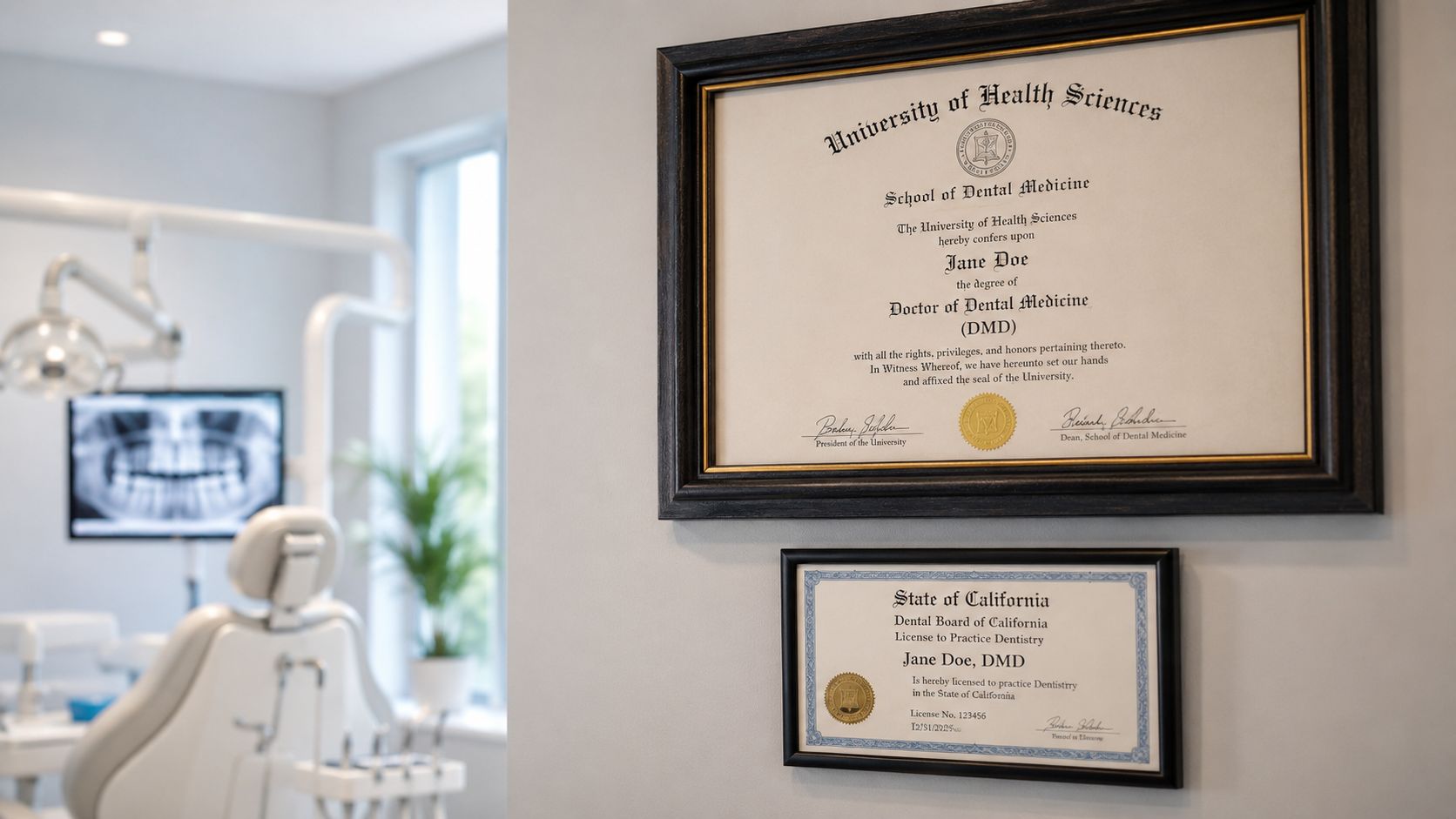
Every patient should confirm that a dentist holds an appropriate dental degree, maintains active state licensure, and stays connected to recognized professional organizations. Membership in organized dentistry matters because it signals ongoing accountability and commitment to professional standards.
For Florida patients, this step is straightforward. When verifying a dentist's credentials in Florida, patients must confirm the dentist is licensed through the Florida Board of Dentistry lookup process described here, which provides public access to licensing status, educational background, and any disciplinary history.
A second check is equally important. MouthHealthy guidance states that credential verification should include checking for active ADA membership, license status, and NPI registration. It also advises patients considering cosmetic or complex restorative work to ask for before-and-after photos and documented complication information, as noted in the MouthHealthy guide to choosing a dentist.
What expertise looks like in real life
Clinical expertise isn't just a diploma on a wall. It shows up in treatment planning, case selection, communication, and continuing education. Dentistry changes quickly. Materials improve, digital tools become more precise, and treatment methods evolve. A dentist who keeps learning is usually better prepared to offer sound options instead of defaulting to outdated habits.
For cosmetic dentistry, restorative work, and implant planning, patients should listen carefully to how a dentist explains choices. A strong clinician doesn't rush to the most expensive procedure. A strong clinician explains why a filling, crown, veneer, implant, night guard, root canal, or extraction is appropriate and what trade-offs come with each option.
Some patients focus on friendliness alone. Trust should start with verified qualifications, then move to communication and bedside manner.
A simple way to compare dentists
The easiest way to compare clinical credibility is to look for these markers:
| Checkpoint | What to look for |
|---|---|
| License | Active Florida license with public verification |
| Professional membership | Active involvement in organizations such as the ADA |
| Continuing education | Signs the dentist stays current with newer methods and materials |
| Case discussion | Clear explanations, realistic options, and willingness to answer questions |
| Complex care readiness | Proper planning tools and documentation for advanced treatment |
A patient searching for a dentist near me shouldn't feel awkward about asking direct questions. Good practices expect them. In fact, a thoughtful conversation about credentials and experience often reveals more than any advertisement ever could.
Evaluate the Range of Services and Technology
A dentist may be excellent at routine care and still not be the right long-term fit. One of the biggest practical differences between offices is whether they can provide a full scope of treatment in one place.
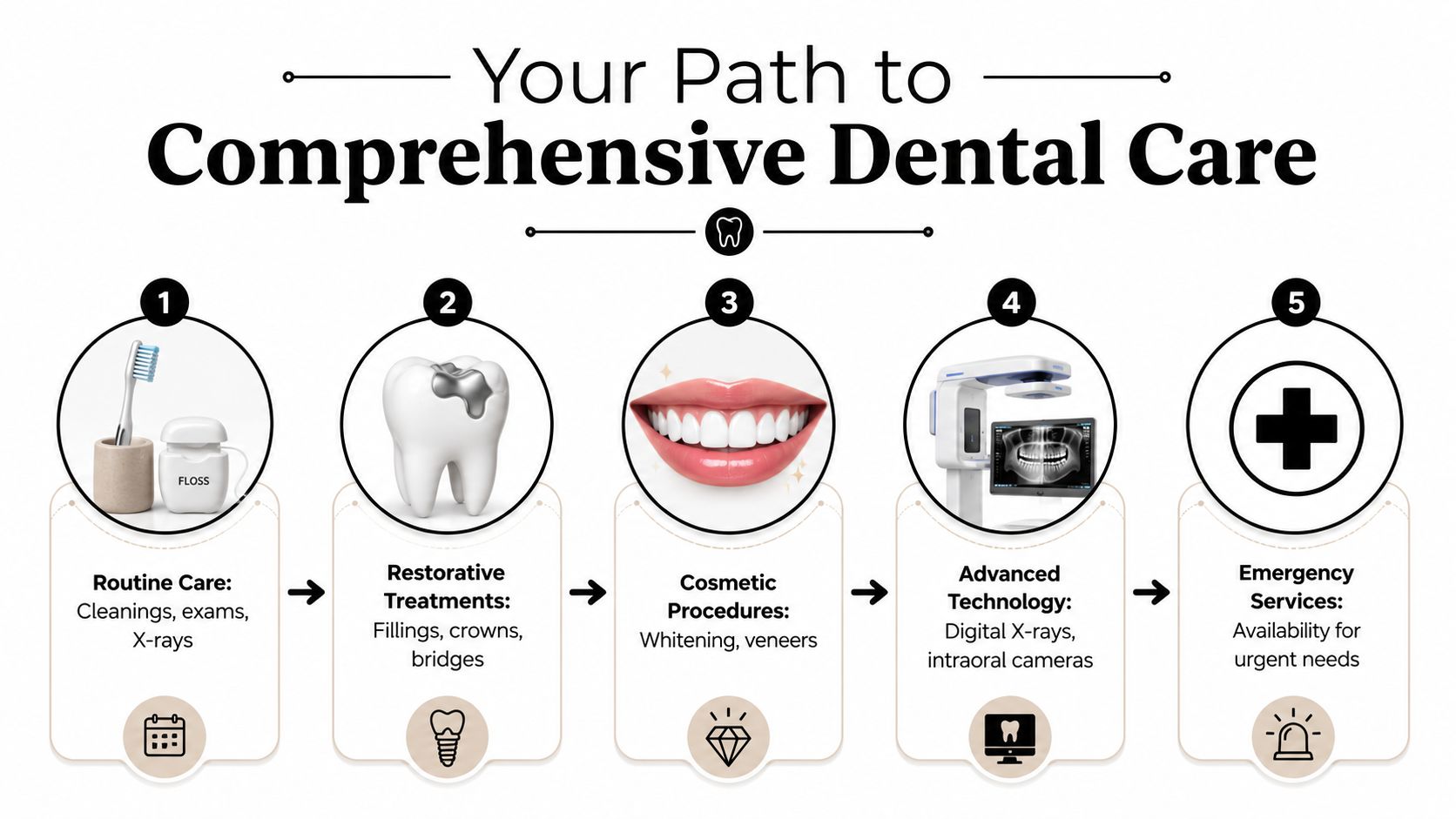
A well-equipped practice can often handle cleaning and exams, fillings, crowns, bridges, cosmetic dentistry, whitening, invisible braces, implant planning, root canals, guards for clenching, and urgent care. That matters because treatment needs rarely stay in one category. A patient who starts with a cleaning may later need a crown. Someone looking for teeth whitening may also want veneers. A painful cracked tooth may eventually require a tooth extraction or a restorative replacement.
Why service range matters
Complete care creates continuity. The dentist sees the full picture, not just one isolated problem. That leads to more coherent planning and fewer moments where a patient has to start over with another office, repeat records, or juggle multiple schedules.
This is especially important for patients considering implants or cosmetic work. A provider who can evaluate gum health, bite function, imaging, and final aesthetics together is in a better position to build a stable result than one who only addresses the surface problem.
Patients comparing offices can review a practice's full treatment scope through a dental procedures list and use it as a shortcut for understanding whether the office is built for long-term care or only for basic maintenance.
Technology should improve care, not just sound impressive
Technology is useful when it makes diagnosis clearer and treatment more efficient. It shouldn't be there just for marketing. Patients should specifically look for offices equipped with digital X-rays, intraoral cameras, and 3D imaging technology, because these tools improve diagnostic precision and reduce the time needed for examinations, according to this guidance on choosing the right dental practice in Florida.
That translates into real benefits during everyday care:
- Digital X-rays: Faster imaging with clear diagnostic detail during exams and emergency visits.
- Intraoral cameras: Better patient understanding because the problem can be seen on screen, not just described.
- 3D imaging: Better planning for implants, extractions, and complex restorative treatment.
What works and what doesn't
A helpful way to judge a practice is to compare outcomes, not slogans.
| Situation | What works | What doesn't |
|---|---|---|
| New patient exam | Clear imaging, visual explanations, organized records | Vague explanations and rushed diagnosis |
| Emergency dentist visit | Same-day assessment tools and practical pain-relief planning | Sending patients elsewhere for basic urgent evaluation |
| Restorative dentistry | In-house capability for crowns, bridges, and planning | Fragmented referrals for common procedures |
| Dental implants near me search | 3D planning and full-case coordination | Implant discussions without advanced imaging |
Technology should help a dentist diagnose earlier, explain better, and treat more precisely. If it doesn't improve one of those three things, it isn't adding much value.
Prioritize Your Comfort and the Patient Experience
A technically skilled dentist can still be the wrong fit if the office makes patients tense from the moment they walk in. Comfort isn't a luxury. It's part of good care.
Many adults in Miami postpone visits because of anxiety, a past painful experience, embarrassment about how long it's been, or fear of hearing bad news. A patient-centered office recognizes that reality and responds with patience, calm explanations, and an environment that lowers stress rather than adding to it.
Why comfort changes outcomes
When patients feel respected and at ease, they ask better questions. They return for follow-up care. They don't wait until a small cavity turns into a toothache or an infection. Comfort supports consistency, and consistency protects oral health.
The Academy of General Dentistry and the ADA strongly recommend that patients call or visit more than one dentist before making a decision. That advice matters because personality, pace, and communication style aren't visible on a website. They become obvious in the first call, the first consultation, and the first exam.
What to notice during a first interaction
Patient experience isn't just about whether the receptionist sounds friendly. The details matter:
- Communication style: Does the team explain things plainly or hide behind jargon?
- Pacing: Does the office feel rushed, or does the dentist leave room for questions?
- Physical environment: Is the space calm, clean, and thoughtfully organized?
- Anxiety support: Does the team acknowledge nervous patients and adapt accordingly?
A strong dental home makes people feel informed, not judged. That matters whether the visit is for preventive care, new patient exams, a cosmetic consultation, or an urgent problem requiring an emergency dentist.
Real trade-offs patients should consider
Some offices are efficient but impersonal. Others are warm but disorganized. The best practices combine both. Patients shouldn't have to choose between kindness and clinical quality, or between a soothing environment and serious treatment capability.
A comfort-focused office often stands out in small ways. The front desk answers questions without impatience. The treatment coordinator explains next steps clearly. The dentist doesn't interrupt. The room feels less clinical and more intentional. For people with dental anxiety, these details can completely change whether they keep avoiding care or finally move forward.
A good patient experience doesn't distract from clinical care. It makes clinical care easier to receive.
Clarify Insurance Acceptance and Payment Policies
Financial confusion is one of the fastest ways to turn a reasonable dental visit into a frustrating one. Patients don't need every answer before booking, but they do need clarity.
The most useful approach is simple. Call the office and ask direct questions before the first appointment. A strong front desk team should be able to explain whether the practice accepts the patient's plan, how benefits are checked, and what options exist if insurance doesn't cover the full treatment.
Questions worth asking before booking
These questions save time and prevent surprises:
- Do you accept this insurance plan: Give the exact plan name, not just the insurance company.
- Can your team help explain my benefits: Patients often know they have coverage but don't know what it includes.
- What if there's no insurance: Ask whether the office offers payment arrangements or other support.
- How are treatment estimates presented: Clear written estimates help patients plan.
Patients comparing offices in Miami can review insurance information for Ultra Smile DentalSpa as an example of the kind of financial transparency that helps new patients make decisions confidently.
What transparent billing looks like
Transparent practices usually do a few things well. They explain what is known before treatment begins. They separate insurance estimates from guaranteed coverage. They discuss alternatives when several treatment paths are possible.
This matters for everything from routine exams to larger cases involving crowns, implants, cosmetic treatment, or a tooth extraction. The point isn't to find the cheapest office. The point is to find one that communicates clearly, respects budgets, and helps patients move forward without confusion.
A patient should never feel pressured into care that hasn't been explained clinically and financially. Good dentistry includes both.
Read Reviews and Prepare Questions for Your Visit
Reviews can help, but only when they're read with some discipline. A high star count alone doesn't tell patients much about how an office operates.
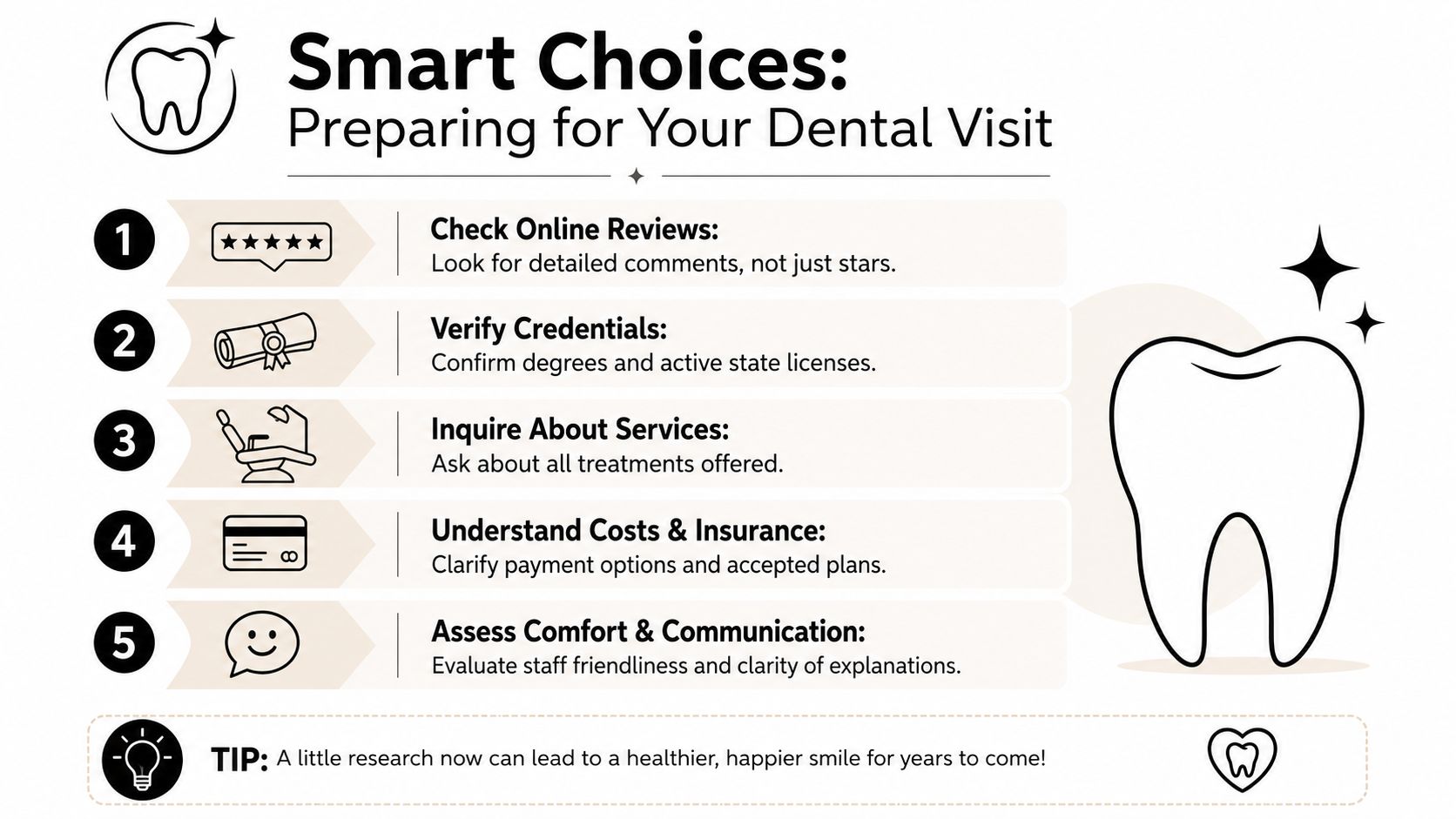
For a dentist in Miami, FL, patients should prioritize practices with a high overall rating, such as 4.5 to 5 stars, while also reading comments about professionalism, attentiveness, cleanliness, and staff behavior rather than relying only on the star count, according to this guidance on choosing the best dentist in Miami.
How to read reviews intelligently
Patterns matter more than isolated praise or complaints. A useful review search looks for consistency across topics.
- Look for comments about gentleness: Especially helpful for anxious patients.
- Check office cleanliness mentions: Repeated comments usually reflect reliable habits.
- Notice staff communication: Billing, scheduling, and follow-up often show up here.
- Read beyond cosmetic praise: A beautiful office doesn't guarantee strong care.
One angry review doesn't automatically disqualify a practice. One glowing review doesn't confirm excellence either. A consistent pattern of detailed, believable feedback is what matters.
Questions to bring to the first call or consultation
Patients don't need a long script. A few smart questions will reveal a lot:
| Question | Why it matters |
|---|---|
| How do you handle dental emergencies | Important for patients searching for an emergency dentist before they actually need one |
| What technology do you use during exams | Helps confirm whether the office uses modern diagnostics |
| Do you offer treatment beyond routine care | Useful for anyone interested in restorative dentistry, whitening, veneers, or implants |
| How do you explain treatment options | Reveals whether communication is clear and collaborative |
| What should a new patient expect at the first visit | Sets expectations and reduces anxiety |
Reviews should support, not replace, judgment
Online feedback is one piece of the decision. It shouldn't outweigh direct evidence from a consultation, a credential check, and the quality of answers the office provides. Some patients choose based entirely on review platforms and end up disappointed because they never asked about services, emergency access, or treatment philosophy.
The best first visit usually feels orderly, informative, and calm. Patients should leave with answers, not more uncertainty.
A patient searching cosmetic dentist near me, dental implants near me, or dentist near me should use reviews as a screen, then let the consultation confirm the fit.
Your Search for a Miami Dentist Ends Here
Choosing a dentist doesn't have to stay complicated. The best decision usually becomes clear when a practice checks every important box: verified credentials, modern diagnostics, wide-ranging services, a calm patient experience, and straightforward financial communication.
For patients in Miami, FL, that standard matters whether the need is preventive dental care, dental x-rays, new patient exams, teeth whitening, restorative dentistry, a tooth extraction, help from an emergency dentist, or long-term planning for implants and cosmetic treatment. The right office should make care feel organized, respectful, and dependable from the first call onward.
Patients in Downtown Miami, Midtown Miami, and Hallandale Beach don't need to settle for rushed appointments or unclear treatment conversations. A great dental home should support oral health, comfort, appearance, and peace of mind at the same time.
If you're looking for a trusted Ultra Smile DentalSpa team in Miami, this is the place to start. Dr. Neda Bahmadi and the team combine full-service dentistry, advanced technology, and a spa-like experience designed for comfort. From cleanings and exams to cosmetic dentistry, dental implants, emergency care, and restorative treatment, patients throughout Downtown Miami, Midtown Miami, and Hallandale Beach can schedule a consultation and experience dental care that feels clear, modern, and supportive.