A temporary crown can make an ordinary Miami morning feel surprisingly complicated. A patient may pause before breakfast, wonder whether coffee is too hot, brush more cautiously than usual, and worry that one wrong bite will undo the dental work. Those concerns are understandable, and a calm, practical routine usually makes the provisional phase much easier.
When looking for a dentist in Miami, FL, temporary crown care isn't only about protecting a cap. It helps protect the prepared tooth, the gum tissue, and the fit of the permanent restoration. The guidance below explains what matters, what to avoid, and when to contact a dental office.
Table of Contents
- Navigating Life With a New Temporary Crown in Miami
- Essential Daily Care and Eating Guidelines
- Managing Sensitivity and Discomfort Effectively
- Troubleshooting Loose or Dislodged Crowns
- Ensuring Long-Term Success for Your Final Crown
- Your Next Steps for Comfortable Dental Care in Miami
Navigating Life With a New Temporary Crown in Miami
A Miami patient leaving a crown appointment may notice mild sensitivity, a different bite, or an unfamiliar feeling near the gumline. The temporary crown can feel delicate because it is designed to serve as a provisional restoration while the permanent crown is being made. That doesn't mean normal life has to stop. It means eating, brushing, and flossing need a little more care.
Temporary crowns are usually worn briefly, often about 1 to 3 weeks, because they protect the prepared tooth during the time needed to create the permanent restoration, as explained by the Cleveland Clinic's dental crown guidance. The exact schedule comes from the treating dentist, particularly when laboratory work, additional treatment, or a different restorative plan is involved.
Why the provisional crown matters
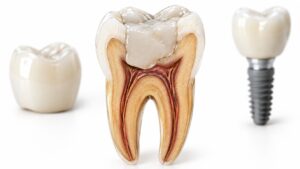
The temporary crown covers a tooth that has been shaped for restoration. It helps limit exposure, supports comfortable function, and keeps the tooth in the position needed for the final crown. A patient who treats it as disposable may accidentally create a problem that affects the next appointment.
Modern crown development accelerated after the late nineteenth century. Logan introduced the Richmond Crown in 1885, and Land improved crown design in 1886 with the first fused porcelain inlay and crown backed by platinum foil, according to this history of dental crown materials and development. Permanent crowns are built for durability, while temporary crowns are intentionally easier to remove, so the provisional cement is more vulnerable to disruption.
Patients seeking a same-day crown option in Miami may have a different treatment pathway, depending on the tooth, materials, and clinical assessment. A dental team can explain whether a temporary crown is needed or whether an in-office restoration can reduce the waiting period.
Essential Daily Care and Eating Guidelines
The safest routine combines low-risk eating with disciplined plaque control. Temporary cement isn't intended to hold a restoration permanently, and food can collect near the crown's edges or cement line. Gentle habits protect retention without neglecting the surrounding gums.
Make meals easier on the crown
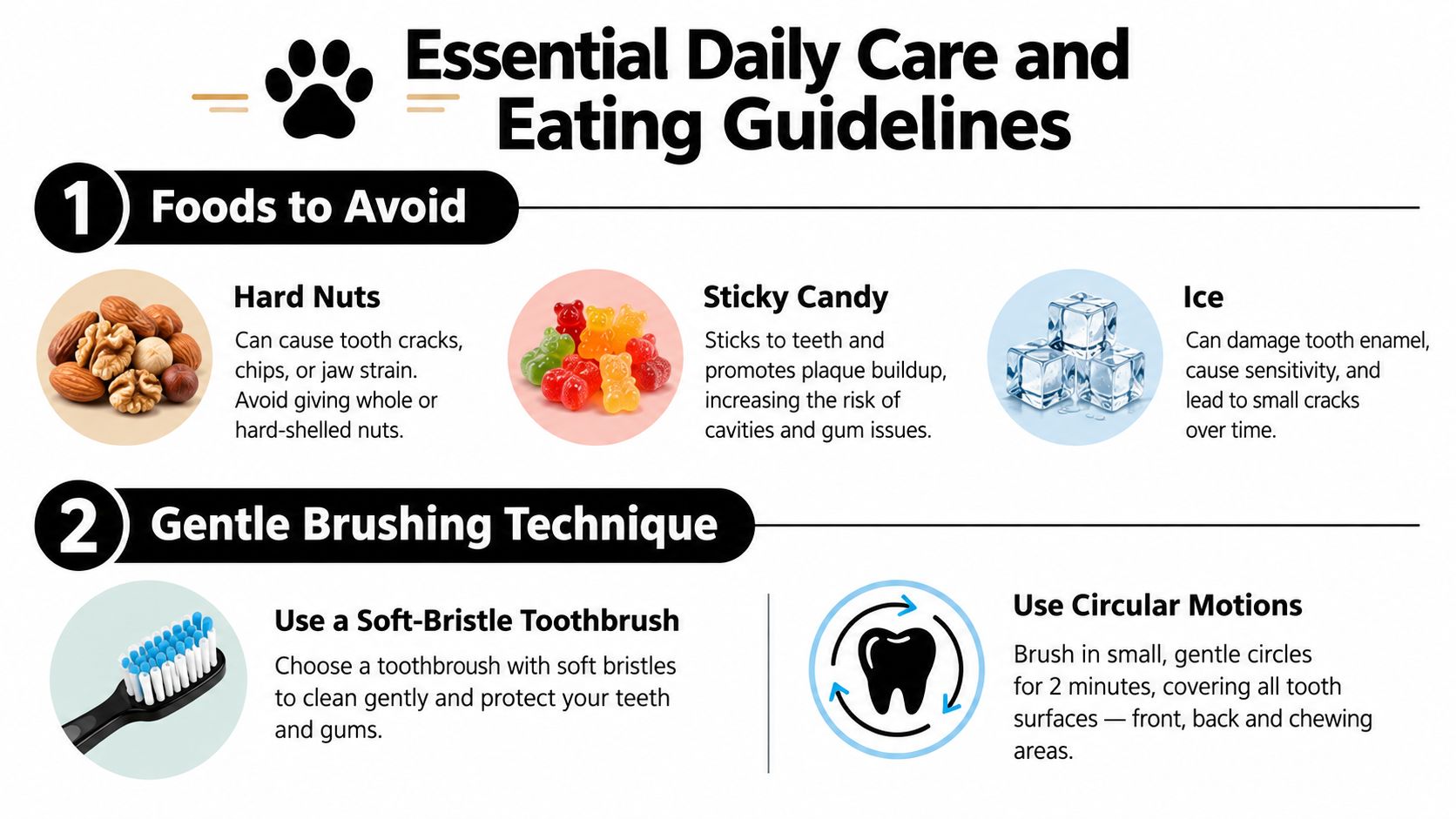
Chew on the opposite side whenever possible, especially during the first part of the provisional period. Choose foods that don't require forceful biting, and cut firmer foods into smaller pieces rather than testing the crown with a single hard bite.
Avoid:
- Hard foods: Nuts, ice, raw carrots, popcorn, and hard candy can stress or fracture the temporary restoration.
- Sticky foods: Caramel and chewing gum can pull against the crown and provisional cement.
- Tough foods: Steak, bagels, and other chewy foods can place sustained pressure on the crown.
- Temperature extremes: Very hot or very cold foods and drinks may trigger sensitivity.
- Sugary foods near the margin: Sugar can collect around the crown and gumline, where leakage or decay may become a concern.
These examples are consistent with patient guidance on foods to avoid with a temporary crown. Eating slowly is useful. Biting on ice, opening packaging with the teeth, and testing the crown with hard objects are not.
Brush and floss without lifting the crown
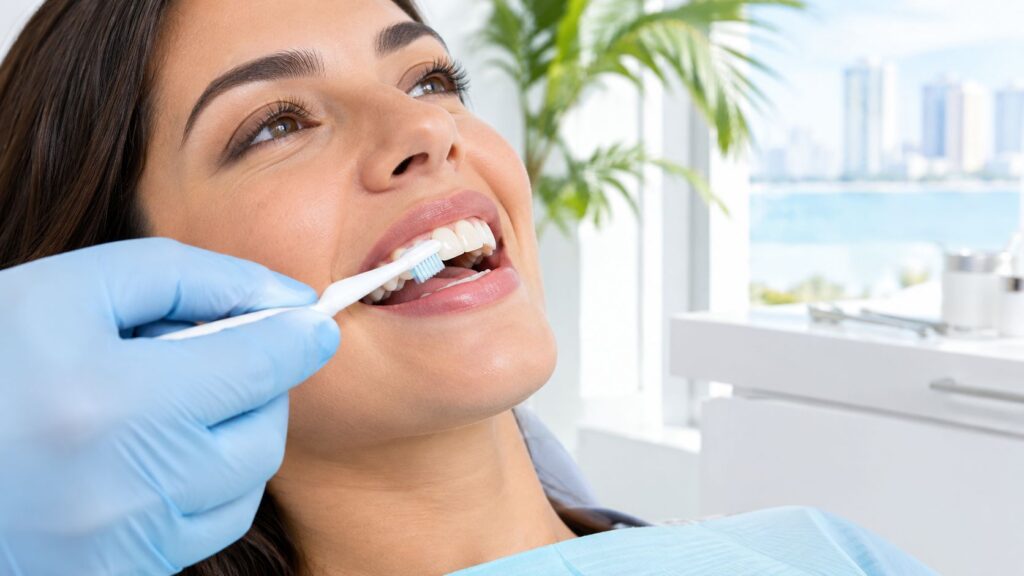
Use a soft-bristled toothbrush and clean the crown, gumline, and neighboring teeth with light pressure. Gentle strokes remove plaque without the aggressive scrubbing that can irritate the gums or disturb the provisional cement.
Flossing requires a specific motion. Slide the floss carefully between the teeth, clean the sides, and remove it by pulling it out through the side rather than snapping it upward. The upward motion can catch the crown's edge and loosen it. Patients who find regular floss difficult should ask the dental team whether an interdental cleaner or a low-setting Waterpik is appropriate for their situation.
Practical rule: Clean the area every day, but don't trade vigorous technique for better hygiene. Around a temporary crown, controlled movement works better than force.
Some cement instructions call for a short period without eating after placement because the material needs time to set. Reported setting times range from about 5 minutes for some temporary cements to about 30 minutes in certain post-operative crown instructions, as shown in the Cavex temporary cement instructions. The dentist's specific instruction takes priority.
Managing Sensitivity and Discomfort Effectively
Mild sensitivity after a temporary crown can occur as the tooth and surrounding tissues settle. Cold water, hot coffee, sweet foods, and pressure during chewing may feel more noticeable than usual. The right response is measured protection, not panic.

Reduce common triggers
For a few days, choose lukewarm drinks and softer foods if temperature or chewing causes discomfort. Keep very hot and very cold items away from the crowned tooth, and chew on the opposite side when practical. A toothpaste formulated for sensitive teeth may help some patients, particularly when sensitivity is mild and short-lived.
Over-the-counter pain relief may be suitable for some adults, but medication choices depend on allergies, medical conditions, pregnancy status, and other medicines. A patient should follow the product label and ask a pharmacist or dentist when unsure. Dental offices can also advise whether the symptoms fit a normal post-treatment response.
Know when discomfort needs attention
Sensitivity that gradually settles is different from pain that becomes sharper, throbs, or interferes with sleep. Swelling, a bad taste, gum redness, pain when biting, or discomfort that doesn't improve deserves a prompt dental assessment. These signs can indicate that the crown's fit, the tooth, or the surrounding gum tissue needs review.
A comfortable practice should make it easy for anxious patients to report changes without feeling they are overreacting. A brief call to a Miami dental office can clarify whether the patient should monitor the symptom, adjust eating habits, or return for an examination.
Persistent or worsening pain isn't something a patient should simply tolerate until the permanent crown appointment.
Troubleshooting Loose or Dislodged Crowns
A crown that rocks, clicks, feels high, or catches during flossing should be treated as a clinical issue. Temporary restorations can fail even when a patient follows instructions. In a retrospective cohort of CAD/CAM resin-based temporary restorations, researchers reported 14.1% fracture and 18.1% decementation over a median follow-up of 362 days, while another clinical evaluation reported an overall retention loss rate of 13%, with most losses attributed to fracture, according to the reported temporary crown clinical data.
Those figures describe longer-term clinical use and don't predict what will happen to a particular patient. They do show why looseness shouldn't be ignored. A dislodged temporary crown can leave the prepared tooth exposed to sensitivity, contamination, movement, and damage.
What to do immediately
- Stop chewing on that side. Choose soft foods and avoid temperature extremes until the dental team provides guidance.
- Call the dental office promptly. Explain whether the crown is loose, partially detached, cracked, or completely out.
- Save the crown if it has fallen out. Place it in a clean container and bring it to the appointment.
- Don't force it back into place. Pressing, twisting, or repeatedly checking it with the tongue or fingers can worsen the problem.
- Seek urgent help for severe symptoms. Significant pain, swelling, bleeding, or a sharp broken edge warrants prompt evaluation.
A dental professional may be able to clean and re-cement the temporary crown, or may decide that a replacement is safer. Patients shouldn't use household glue or attempt a permanent repair at home. A temporary pharmacy product should only be considered if a dentist specifically recommends it, because the wrong material or position can interfere with the final fit.
Ensuring Long-Term Success for Your Final Crown
The temporary crown is part of the final restoration process, not a meaningless placeholder. It protects the prepared tooth from movement, gum overgrowth, and decay while the permanent crown is pending. “Just keep it clean is incomplete advice because timing and fit matter as much as daily hygiene.
Protect the conditions needed for final placement
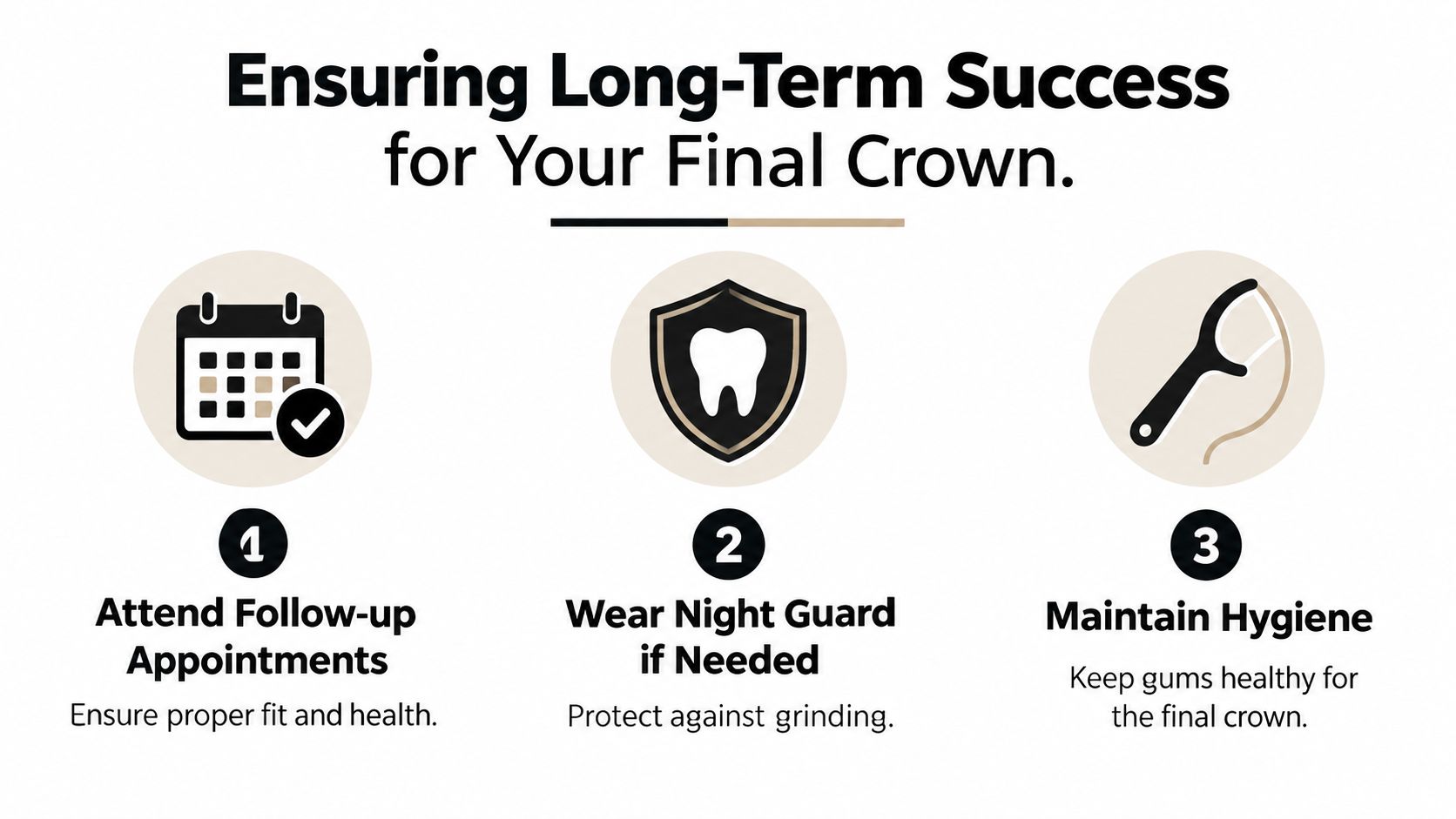
If a temporary crown stays loose or remains in place beyond the planned period, adjacent teeth can shift and gum tissue can grow into the space. Either change can make the final restoration harder to fit properly. A follow-up appointment lets the dentist check the crown, the bite, the gumline, and the prepared tooth before the permanent crown is placed.
Patients with grinding or clenching may also need a night guard after the dentist evaluates their bite. The appropriate appliance depends on the restoration and the patient's habits, so it shouldn't be selected without professional guidance.
The final crown can only be placed accurately when the tooth and surrounding tissues remain stable.
A 2024 retrospective cohort study reported a 98% survival rate for 3D-printed temporary crowns made with Permanent Crown Resin, as described in the research on 3D-printed temporary crown restorations. That finding supports a broader clinical point: durability can depend on fabrication method and material, not only on patient behavior. Care still matters, regardless of how the temporary crown was made.
Patients can review broader dental crown care information for Miami treatment and bring questions to the follow-up visit. Regular cleaning and exams, dental X-rays when clinically indicated, and timely restorative care all support a healthier environment for the final crown.
Your Next Steps for Comfortable Dental Care in Miami
Daily habits support more than short-term comfort. Choosing manageable foods limits pressure on the temporary crown, while a soft-bristled brush and careful sideways floss removal help control plaque without pulling at its edge. These choices protect the gum tissue and prepared tooth, giving the final restoration a healthier foundation.
Record the placement date, which tooth was treated, and any change in sensitivity or bite. Sharing those details helps the dental team decide whether an adjustment, re-cementation, or closer evaluation is appropriate. A small change reported early is easier to address than a problem discovered at the next planned visit.
A calm visit can answer practical questions
A patient deciding whether to see an emergency dentist or pursue a longer restorative plan can ask how the temporary crown fits into the sequence of treatment. The dentist should explain the material, expected timing, home care, and follow-up in plain language. For anxious adults, an unhurried appointment and a quiet, welcoming setting can make decisions feel more manageable.
If an examination reveals decay, gum concerns, or a missing tooth, the same team can coordinate cleaning and exams, dental X-rays, or restorative work so the final crown is placed in a healthy mouth. Each step has a purpose: stable tissues and a clean working area support a more predictable result.
Protect the crown from hard and sticky foods, clean it gently, watch for changes, and contact the office promptly if it loosens or falls out.
Ultra Smile DentalSpa provides restorative consultations, crown care, same-day crown technology, emergency dental services, and broader care for patients in Miami, including Downtown Miami, Midtown Miami, and Hallandale Beach. Visit Ultra Smile DentalSpa to schedule an appointment or consultation about a temporary crown, sensitivity, a loose restoration, or the next step toward a comfortable final result.