Is teeth whitening safe for enamel if the gel has a lower peroxide concentration, or can the formulation itself create risk? That question matters because peroxide strength is only one part of a safe cosmetic treatment. Gel pH, exposure time, tooth condition, gum health, and professional supervision all influence whether whitening remains comfortable and predictable.
Adults searching for a dentist near me, a dentist in Miami, FL, or a cosmetic dentist near me often want a brighter smile without trading away long-term oral health. Professional whitening can be compatible with enamel safety when the treatment is appropriately selected, limited, and monitored. At Ultra Smile DentalSpa, patients can discuss whitening alongside cleaning and exams, dental x-rays, restorative dentistry, dental implants, tooth extraction, and emergency dental services when those needs affect cosmetic planning.
Table of Contents
- How Whitening Agents Interact with Tooth Enamel
- Why Gel pH Matters More Than Peroxide Strength
- Comparing Professional Treatments and At-Home Kits
- Who Should Delay Whitening and Signs to Watch For
- The Ultra Smile DentalSpa Experience in Miami
- Protecting Your Bright Smile Long After Treatment
How Whitening Agents Interact with Tooth Enamel
The central concern is understandable: if peroxide passes through the tooth, does that mean the enamel is being stripped away? The answer is more nuanced. The American Dental Association identifies hydrogen peroxide and carbamide peroxide as the main whitening agents. Carbamide peroxide releases approximately one-third of its content as hydrogen peroxide, which then moves through the tooth to break down discoloring compounds. The American Dental Association's whitening guidance explains that hydrogen peroxide can pass through enamel and dentin to the pulp in about 15 minutes.
That movement helps explain temporary sensitivity. The pulp contains nerves, so peroxide reaching that area can produce short-lived cold sensitivity or brief discomfort. The ADA lists temporary tooth sensitivity and gingival inflammation as the most common adverse effects of vital-tooth whitening. Sensitivity therefore signals a biological response to treatment exposure, not automatic proof that enamel has been permanently destroyed.
What determines enamel safety
A whitening treatment should be judged by more than the word “peroxide. Clinically relevant variables include:
- Formulation: Hydrogen peroxide and carbamide peroxide behave differently as they release active peroxide.
- Exposure: Longer contact gives the gel more opportunity to affect sensitive areas.
- Frequency: Repeated applications without recovery time can increase discomfort and unpredictability.
- Starting condition: Decay, cracks, exposed roots, erosion, gum inflammation, and defective restorations can make treatment unsuitable.
A patient considering whitening can also review practical guidance on how to protect enamel while whitening, especially when comparing professional care with unsupervised products. A dental examination remains more important than any general checklist because the same gel can feel very different on healthy enamel versus exposed dentin or a cracked tooth.
Patients concerned about erosion should also understand the difference between whitening and structural loss. Whitening changes the appearance of natural tooth color. Enamel erosion removes tooth structure. A dentist evaluating a patient for cosmetic dentistry should look for erosion, recession, cracks, cavities, and gum disease before recommending bleaching. More information about this distinction is available in Ultra Smile DentalSpa's guide to enamel erosion.
Clinical rule: Temporary sensitivity deserves attention, but it should be interpreted alongside the patient's examination findings, treatment regimen, and recovery after whitening.
Why Gel pH Matters More Than Peroxide Strength
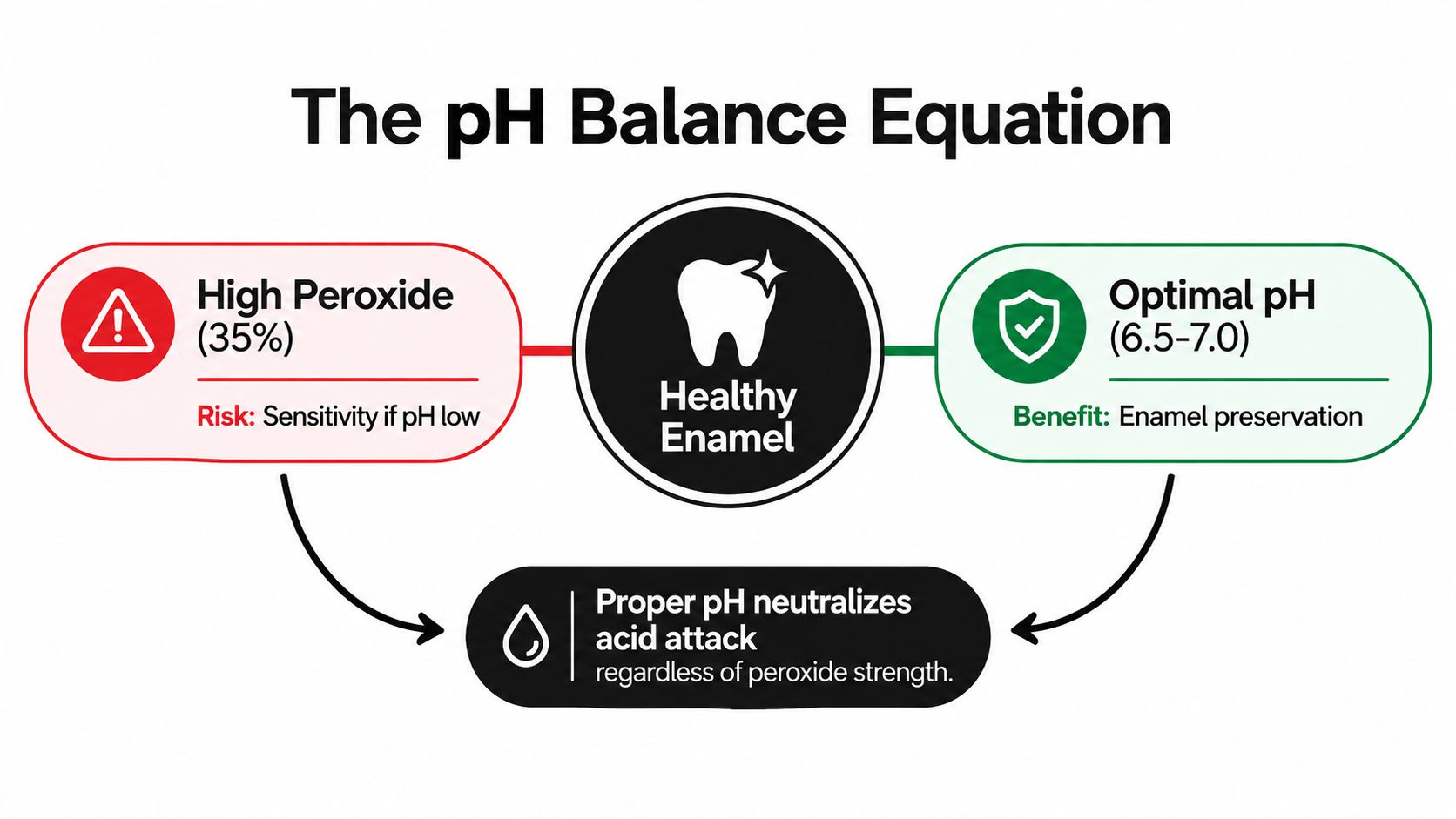
A lower peroxide concentration isn't automatically the gentlest option. The gel's pH and buffering system can change how the formulation interacts with enamel, so a product with less peroxide may still be uncomfortable or more disruptive if it is strongly acidic.
A recent review found that acidic-pH bleaching gels were associated with greater enamel-surface alteration, more peroxide diffusion, and higher sensitivity than neutral, stable-pH gels. The review included only four randomized clinical trials, so the clinical evidence remains limited, but the direction is important for patients comparing professional whitening, strips, generic trays, and LED systems. The review on pH and bleaching safety supports evaluating formulation chemistry rather than relying on peroxide percentage alone.
Questions worth asking before treatment
A patient doesn't need to become a chemist to make a sound decision. A cosmetic dentist should be able to explain:
- The gel's pH: Is it neutral, buffered, or acidic?
- Contact time: How long will the material remain on the teeth?
- Soft-tissue protection: How will the gums, cheeks, and lips be isolated?
- Sensitivity planning: What happens if cold sensitivity develops?
- Restoration planning: Will crowns, veneers, or fillings remain visibly darker?
This is similar to choosing a skincare product for reactive skin. A patient comparing a fragrance-free toner for sensitive skin may consider pH and formulation rather than focusing on one ingredient alone. Teeth deserve the same level of attention to the complete formula.
Light activation also shouldn't be treated as a guarantee of greater safety. A 2025 review reported that physicochemical approaches using low concentrations may reduce sensitivity and enamel damage, but long-term outcome stability and structural effects remain under study. Patients should ask what the light is intended to accomplish and whether the protocol relies on controlled chemistry, heat, dehydration, or a combination of factors.
For Miami adults, the practical takeaway is straightforward: ask about peroxide concentration, pH, buffering, isolation, and exposure time together. That conversation is more useful than choosing a product based on a single percentage printed on packaging.
Comparing Professional Treatments and At-Home Kits
Professional whitening and store-bought kits aren't interchangeable. In-office treatment gives the dental team control over the examination, isolation, gel placement, exposure, and response. Dentist-directed take-home trays offer more flexibility, but they still depend on a properly fitted tray and precise instructions. Store-bought strips and generic trays may be convenient, yet they can't account for every tooth shape, restoration, gumline, crack, or exposed root.
A dentist-directed home protocol can be a sensible middle option. An in-situ study found that home-use protocols with 10% carbamide peroxide produced no statistically significant change in superficial enamel microhardness when used under the study conditions. The in-situ enamel study supports following a dentist's instructions exactly, rather than extending wear time or repeating applications whenever the shade seems insufficient.
Professional vs. over-the-counter whitening
| Feature | In-office professional | Dentist-directed take-home | Store-bought OTC kits |
|---|---|---|---|
| Examination | Teeth and gums can be evaluated first | Prescribed after clinical review | No individualized dental assessment |
| Tray fit | Treatment can be carefully controlled in the practice | Custom fit can limit gel contact with gums | Generic fit may allow uneven coverage |
| Soft-tissue protection | Professional isolation and monitoring | Instructions guide placement and cleanup | Excess gel may contact gingiva |
| Convenience | Completed in a supervised dental setting | Used at home according to a personalized plan | Immediately available without supervision |
| Adjustments | The clinician can respond to sensitivity or irritation | The dentist can modify the plan | The patient must decide whether to stop |
| Restorations | Shade planning can be discussed before whitening | The plan can account for visible restorations | Uneven color may be harder to anticipate |
What tends to work, and what doesn't
A cosmetic dentist near me can help determine whether in-office care or custom take-home trays suit the patient's goals. Professional isolation protects the gums from unnecessary contact, while a custom tray can distribute gel more evenly than a generic product. Neither option removes the need for diagnosis, because whitening won't correct decay, cracks, gum disease, or mismatched restorations.
The practical differences between supervised and store-bought whitening are also outlined in this comparison of professional whitening and store-bought products. Patients should stop rather than improvise if they develop sharp pain, significant gum irritation, or sensitivity that doesn't settle after treatment is paused.
Who Should Delay Whitening and Signs to Watch For
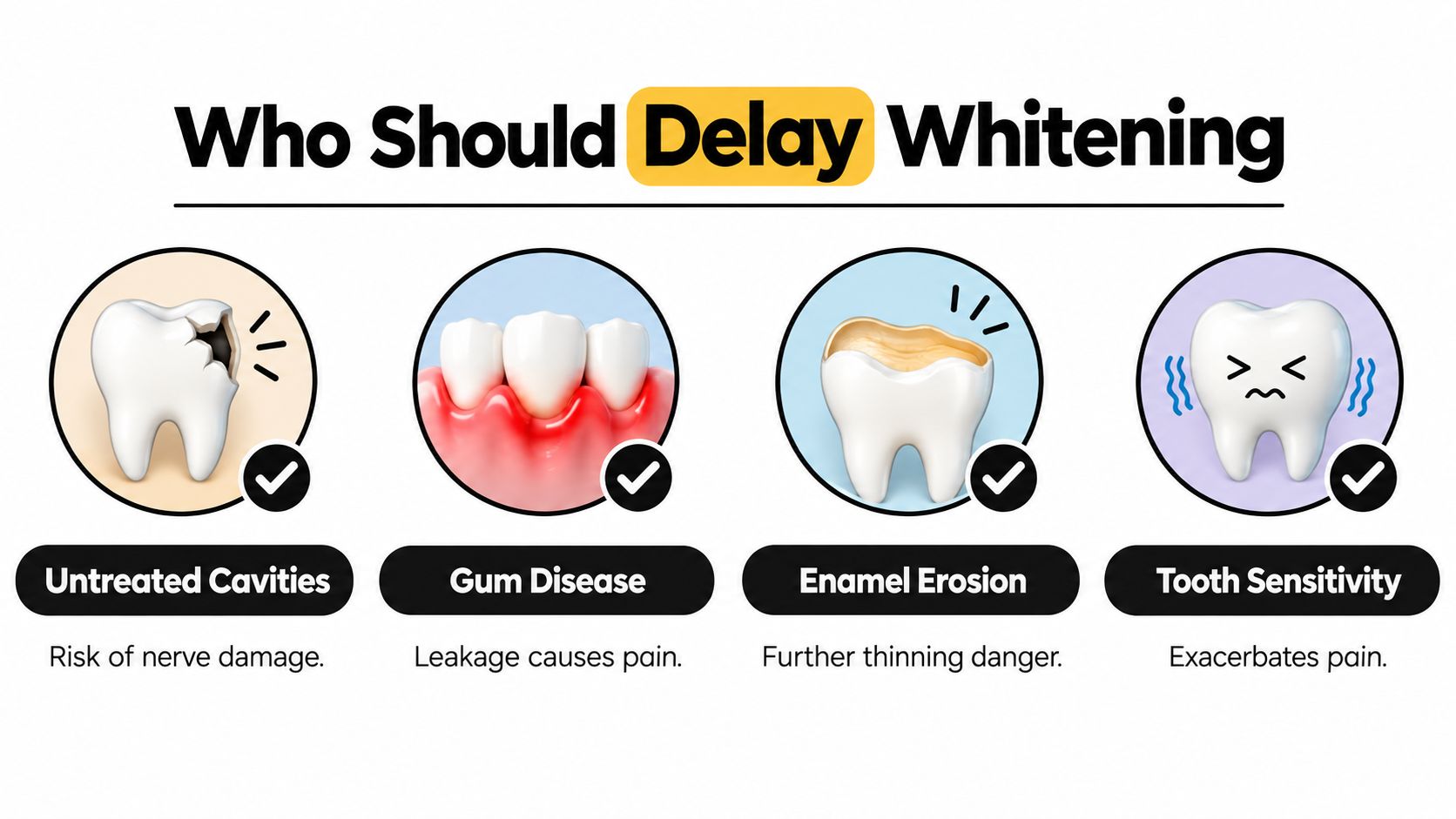
Whitening should wait when the mouth needs treatment first. Peroxide can reach vulnerable tissues through decay, cracks, exposed dentin, or areas where the gum has receded. It also won't whiten crowns, veneers, bridges, or fillings in the same way as natural enamel, so applying bleach before restorative planning can leave a smile with mismatched shades.
NHS guidance states that whitening isn't recommended for people with active tooth decay or gum disease, and that a professional examination should identify problems requiring treatment before cosmetic whitening begins. The NHS patient guidance on tooth whitening also identifies short-term cold sensitivity and gum irritation as possible effects. Patients who are pregnant or breastfeeding, or children under 18, should discuss suitability with a dental professional because whitening may not be recommended.
Begin with a clinical check
A new patient exam, cleaning and exam, and dental x-rays may be appropriate before treatment. The dentist can assess:
- Cavities and cracks: These can allow peroxide to reach sensitive inner tissues.
- Gum inflammation or disease: Inflamed tissue may react more strongly to gel contact.
- Erosion and exposed roots: Thinner or unprotected areas can increase sensitivity.
- Existing restorations: Crowns, veneers, fillings, and bridges won't change shade like natural teeth.
Patients should also watch the response after whitening. Brief sensitivity can occur, but severe translucency, persistent sharp pain, or gum irritation that continues after stopping treatment warrants a dental review. Continuing to apply gel through pain is not a safe strategy, and changing to a stronger product can make the underlying problem harder to identify.
Stop and schedule an examination if discomfort becomes sharp, localized, or persistent, or if the gums remain irritated after the whitening session has ended.
A general dentist can address the underlying condition before cosmetic care. Depending on the diagnosis, treatment may include restorative dentistry, periodontal care, a root canal, tooth extraction, or another appropriate service. Patients searching for an emergency dentist because of intense pain should receive an evaluation rather than attempting to mask symptoms with whitening.
The Ultra Smile DentalSpa Experience in Miami
A whitening visit should feel calm without becoming casual about safety. Ultra Smile DentalSpa serves patients in Downtown Miami, Midtown Miami, and Hallandale Beach, combining a clinical evaluation with an environment designed to reduce dental anxiety.
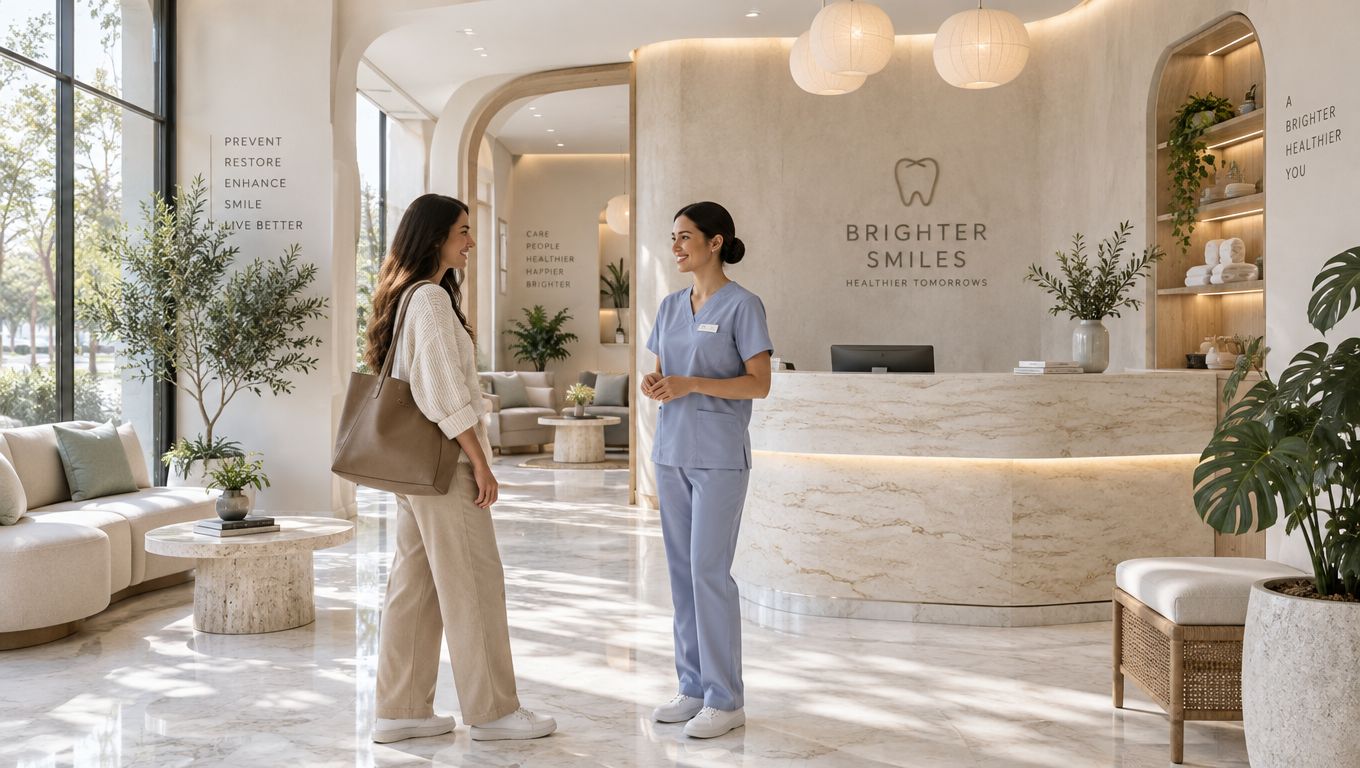
The visit begins with discussion of the patient's cosmetic goals, sensitivity history, existing dental work, and oral-health concerns. A cleaning and exam can remove surface buildup and help the team determine whether whitening is appropriate. If the patient needs dental x-rays, restorative treatment, a dental implant consultation, or wisdom teeth extraction first, those needs can be incorporated into the broader plan rather than overlooked for a quick cosmetic result.
Dr. Neda Bahmadi and the team pair this clinical process with hospitality intended to make the appointment easier. Patients may be offered refreshments, custom aromatherapy, streaming entertainment during treatment, and a soothing hot towel finish. These details don't replace diagnosis or isolation, but they can help patients remain relaxed while the team performs careful, precise work.
A typical professional whitening appointment includes protection of the soft tissues, controlled application of the selected material, and attention to sensitivity. Ultra Smile DentalSpa offers professional in-office whitening using a chemically activated hydrogen peroxide gel without heat or UV or laser light, followed by a fluoride or desensitizing gel intended to soothe the teeth. Patients should discuss the exact formulation, pH, exposure time, and suitability during consultation because a safe protocol must match the individual mouth.
The practice's approach can be seen in its patient-care environment and treatment philosophy.
Patients who need broader care can discuss veneers, composite fillings, crowns and bridges, same-day crowns, invisible braces or Invisalign, implants and bone grafts, root canals, night guards, and wisdom teeth extraction alongside cosmetic dentistry. That makes the consultation useful for people who started with a whitening question but need a coordinated plan for a healthy, balanced smile.
Protecting Your Bright Smile Long After Treatment
The first priority after whitening is recovery. High-concentration peroxide can temporarily soften enamel in laboratory conditions, while later exposure to remineralizing agents significantly increases measured hardness. Laboratory research on enamel recovery after whitening highlights why post-treatment care should be part of the protocol, not an afterthought.
Patients can protect comfort and shade by following the treating dentist's instructions, avoiding acidic foods and drinks immediately after treatment, and choosing a non-abrasive toothpaste. Gentle brushing matters, particularly when the teeth feel sensitive. Fluoride or calcium and phosphate support may be recommended when clinically appropriate.
Maintenance should remain individualized
A bright smile lasts more predictably when patients maintain daily dental care and attend regular cleanings and exams. Whitening shouldn't substitute for plaque control, treatment of gum disease, or restorative care. Patients with crowns, veneers, or fillings should also plan shade changes with the dentist so future restorations match the desired natural-tooth color.
Ultra Smile DentalSpa provides ongoing care for established patients, including complimentary yearly whitening. Patients should confirm current eligibility and details with the practice, since office policies can change.
Ultra Smile DentalSpa offers supervised teeth whitening in a calming Miami setting, with an oral-health evaluation, controlled materials, and comfort-focused care. Schedule a consultation through Ultra Smile DentalSpa to discuss enamel safety, sensitivity, existing restorations, and the right path to a brighter smile.