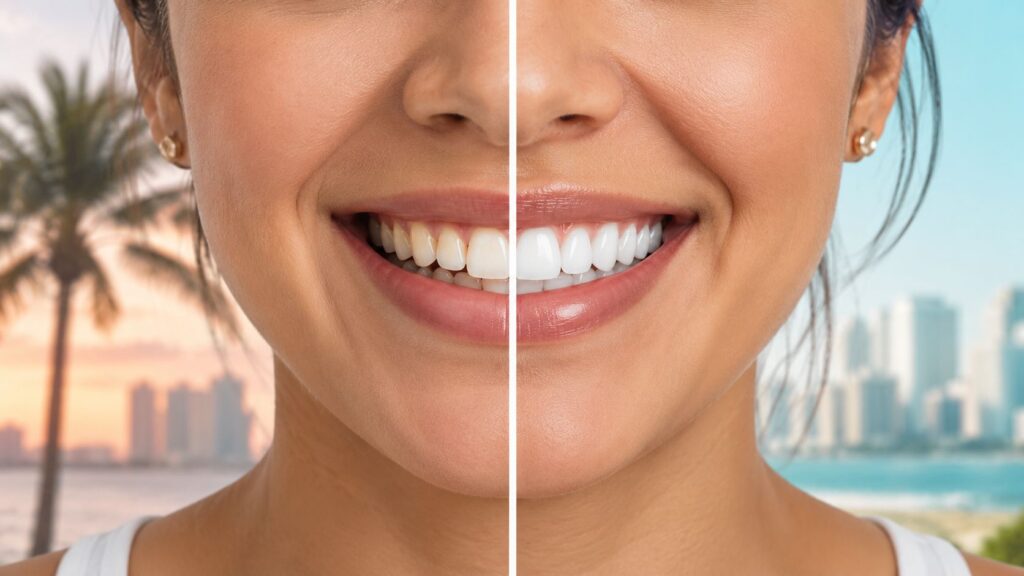
Feeling self-conscious about a smile can shape everyday behavior in quiet ways. Many people in Miami hide their teeth in photos, smile with their lips closed, or put off consultations because they assume the fix will be too invasive, too complicated, or too obvious. In reality, modern cosmetic dentistry offers several paths, and the right one depends on what bothers the patient, what needs to function well, and how much natural tooth structure should be preserved.
At Ultra Smile DentalSpa, smile makeover planning starts with the person, not the procedure. Some patients want a brighter, camera-ready look. Others need to replace missing teeth, correct wear, or improve alignment before any cosmetic work makes sense. This smile makeover before after gallery focuses on those distinctions, so the transformation is easier to understand than a simple photo alone.
Research helps explain why these makeovers matter to patients. One widely cited perception study reported that 99.7% of Americans see a smile as an important social asset, 74% believe an unattractive smile can affect career success, and 50% are dissatisfied with their own smile. Those numbers help explain why cosmetic dentistry in Miami has become such a strong patient-driven service.
Table of Contents
- 1. Case Study 1 The Full Smile Transformation
- 2. Case Study 2 Closing Gaps & Correcting Shape with Porcelain Veneers
- 3. Case Study 3 Replacing Missing Teeth with Dental Implants & Crowns
- 4. Case Study 4 Straightening a Crooked Smile with Invisalign
- 5. Case Study 5 Revitalizing an Aging Smile with Crowns & Bridges
- 6. Case Study 6 A Simple but Impactful Whitening & Bonding Makeover
- 7. Case Study 7 The All-on-4® Full Arch Restoration
- 7 Smile Makeovers: Before & After Comparison
- Ready for Your Own 'After' Photo? Start Your Miami Smile Makeover
1. Case Study 1 The Full Smile Transformation
A common smile makeover before after case in Miami starts with a patient who dislikes several things at once. Teeth may look yellow, older crowns may not match nearby teeth, and minor crookedness can make the whole smile appear uneven even when the teeth are healthy enough to keep.
At Ultra Smile DentalSpa, this kind of transformation is usually planned as a sequence rather than a single appointment. Whitening may improve the underlying shade first, then porcelain veneers and selected crowns can be designed to create a more balanced smile line, better symmetry, and cleaner color continuity across the front teeth.
Starting Point
This patient wanted a brighter smile that looked polished but not artificial. The concern wasn't one chipped tooth or one dark tooth. It was the overall mismatch. Different materials, different shades, and slight positional irregularities were competing with each other every time the patient smiled.
Digital Smile Design is especially useful here because it lets the patient preview shape, proportion, and edge position before final restorations are placed. That matters in cosmetic dentistry because patients often know when something looks off, even if they can't describe it clinically.
Practical rule: The best full-smile makeover doesn't make every tooth identical. It makes the smile look coherent.
Why This Combination Works
A mixed plan works when each treatment has a clear job.
- Whitening improves the base shade: It helps natural teeth look fresher before any final ceramic work is selected.
- Crowns replace failing older dentistry: They restore teeth that need more coverage or structural support.
- Veneers refine visible front teeth: They improve color, shape, and minor alignment issues without rebuilding the entire mouth.
What doesn't work is forcing veneers onto teeth that need crowns, or using crowns on every visible tooth when more conservative treatment would do the job. Public smile galleries often focus on the final brightness, but the true quality of the result comes from material choice, bite planning, and whether the restorations suit the patient's facial features.
For patients searching for a cosmetic dentist near me or a dentist in Miami, FL, this is often the makeover that delivers the most dramatic visible change while still feeling personalized.
2. Case Study 2 Closing Gaps & Correcting Shape with Porcelain Veneers
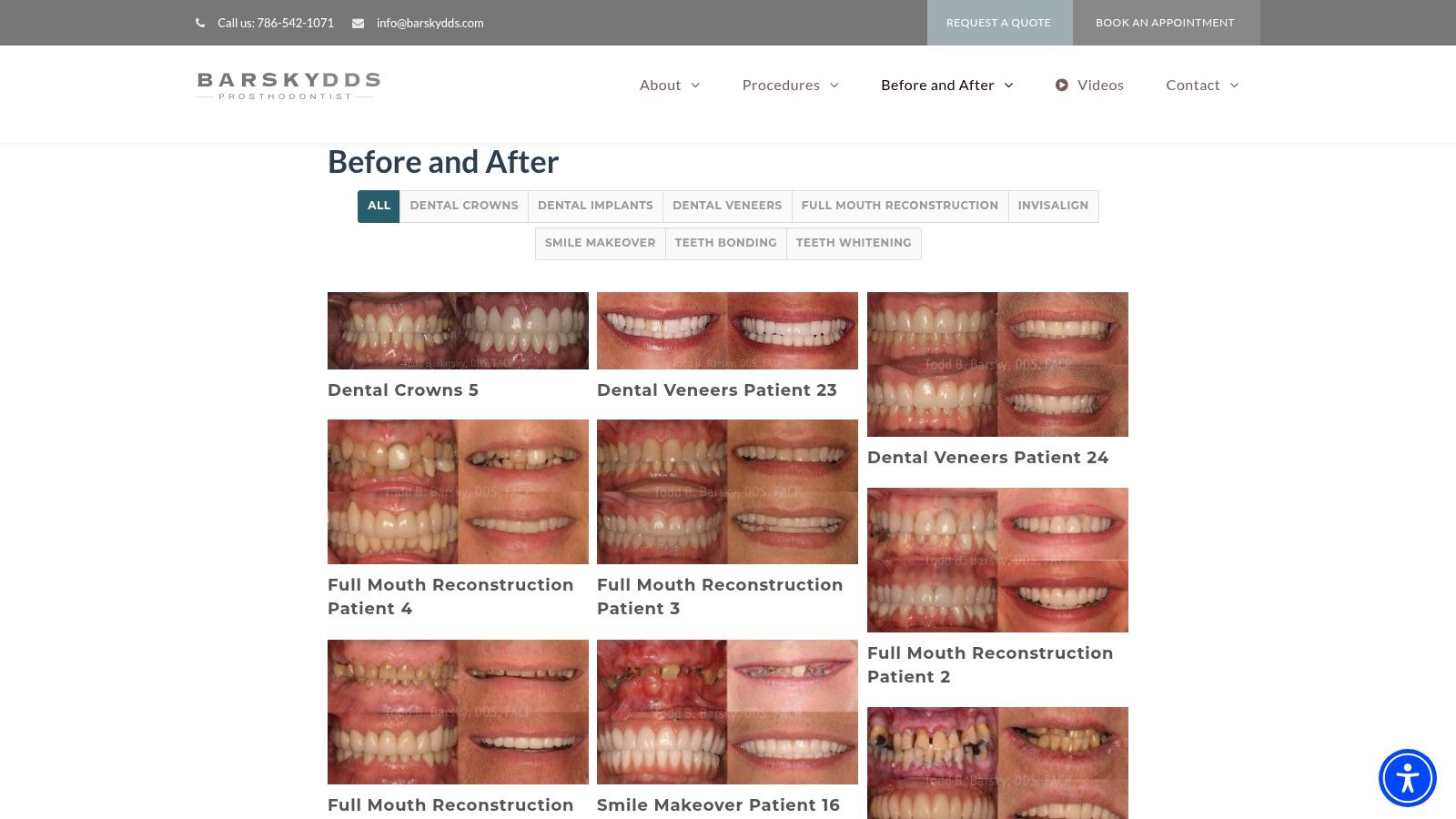
A front gap can dominate a smile even when the teeth are healthy. In this example, the patient liked the general condition of the teeth but disliked the spacing, the narrow appearance of the smile, and the shape of the front teeth in photos.
Porcelain veneers are often the fastest route when the patient wants a cosmetic change without committing to orthodontic treatment. Clinical guidance commonly uses the 4-8-10 veneer planning rule, where 4 veneers cover the central incisors, 8 extend canine to canine, and 10 reach the first premolars, with typical enamel preparation of 0.3 to 0.7 mm and common longevity estimates of 10 to 15 years for porcelain versus 5 to 7 years for composite.
What the Patient Wanted
The patient wanted the central gap closed and the smile made fuller across the visible front zone. Instead of moving teeth over time, veneers changed the visible proportions of the teeth so the smile looked wider and more symmetrical almost immediately after final placement.
That approach works well when spacing is the main concern and the bite allows for cosmetic reshaping. It doesn't work as well when the gap is part of a more complex alignment or bite issue that really needs orthodontics first.
The Veneer Tradeoff
Veneers are conservative compared with older, aggressive cosmetic methods, but they aren't reversible in the casual sense many patients assume. Small enamel reshaping is still reshaping. That's why veneer planning has to be exact, especially for younger patients and for anyone choosing treatment mainly for esthetics.
For patients considering this route, how long veneers typically last depends on the material, bite forces, and maintenance habits. That maintenance conversation should happen before treatment, not after the smile reveal.
A beautiful after photo matters. The better question is whether the treatment choice was right for the tooth underneath it.
3. Case Study 3 Replacing Missing Teeth with Dental Implants & Crowns

Not every smile makeover before after story begins with healthy teeth that need cosmetic refinement. Some begin with a missing front tooth, an aging bridge, or a failing restoration that makes the patient avoid smiling altogether.
That was the issue in this case. The patient had a visible missing tooth problem and wanted a replacement that felt secure, looked natural, and didn't depend on a temporary-looking solution.
What Was Really Being Fixed
From the outside, the concern looked cosmetic. Functionally, it was more than that. Missing teeth affect how a person bites, how food is chewed, and how surrounding teeth carry pressure over time. A front-tooth gap can also change speech and lip support in subtle but important ways.
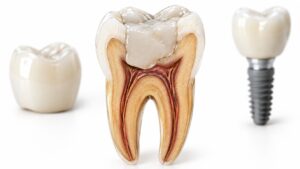
A well-planned implant with a crown restores more than appearance. It rebuilds the missing unit in a way that supports long-term stability when the patient is a good candidate for implant treatment.
Why Implants Often Outperform a Patchwork Fix
This type of case often involves stages. A failing bridge may need to be removed. The implant site may need to heal. The final crown has to match adjacent teeth in color, shape, and translucency. The visible result can look simple, but the planning is layered.
What works is patience and sequencing. What doesn't work is rushing to place a cosmetic fix on top of unresolved structural problems.
- Implants restore a missing tooth independently: Nearby teeth don't have to do the work of supporting a bridge if they don't need coverage themselves.
- Crowns finish the visible result: The implant crown has to be designed to blend into the smile, not just fill a space.
- Restorative planning protects esthetics: In the front of the mouth, gum shape and tooth emergence matter as much as the crown color.
For patients searching for dental implants near me in Miami, cosmetic dentistry and restorative dentistry find their clearest overlap. The best result should look natural in photos and feel dependable at dinner, at work, and in daily life.
4. Case Study 4 Straightening a Crooked Smile with Invisalign
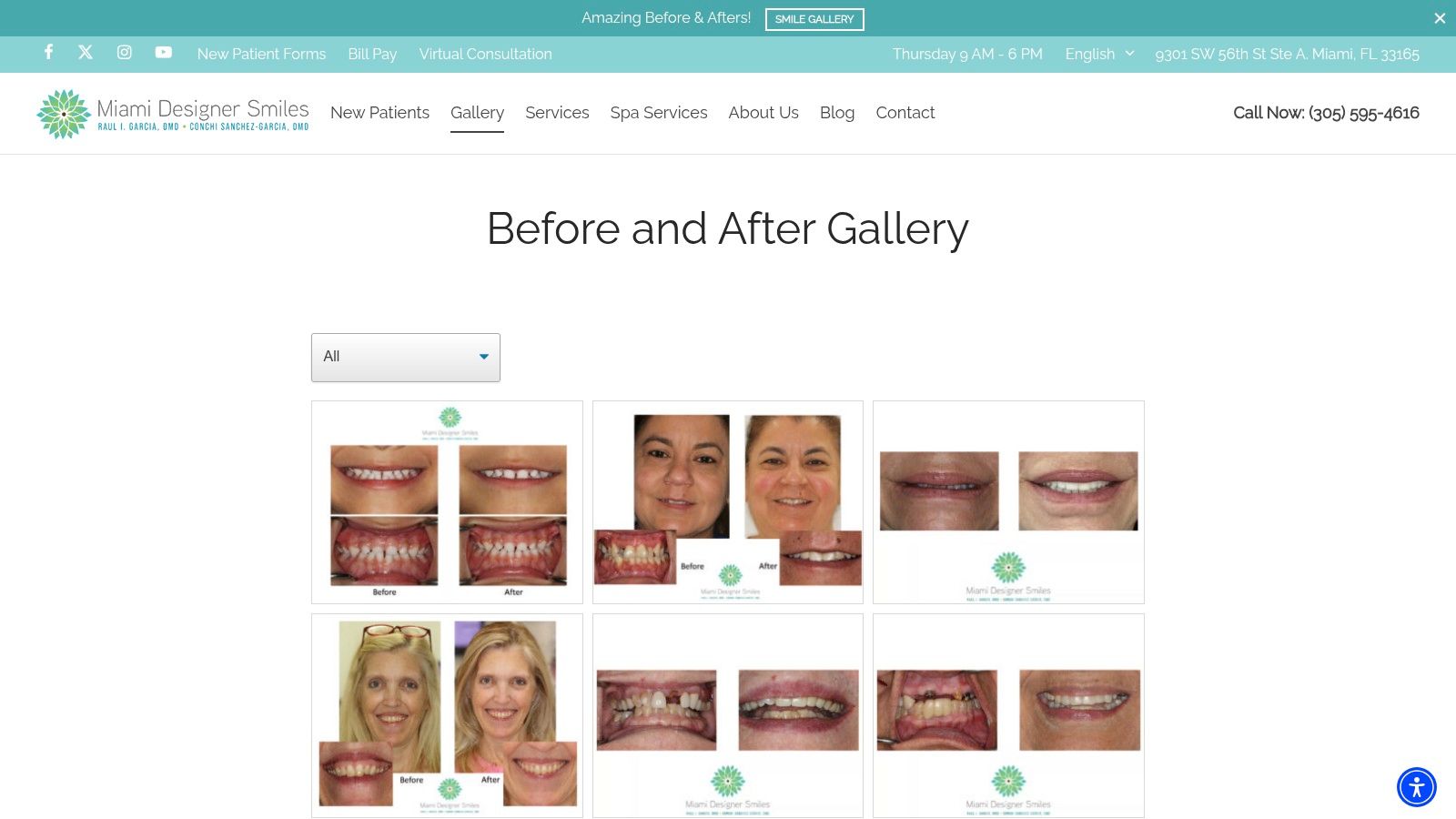
Some patients don't need porcelain or crowns first. They need teeth moved into better positions. In this case, crowding along the lower teeth and rotation in the upper front teeth made the smile look irregular, even though the teeth themselves were otherwise good candidates for conservative treatment.
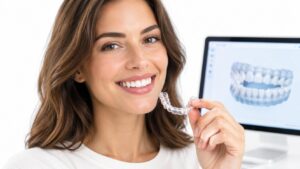
Invisalign is often the cleanest answer when the patient wants a discreet option and is willing to follow instructions closely. Clear aligners can make a major visual difference while preserving natural tooth structure, which matters when cosmetic improvement can be achieved by movement rather than covering teeth.
The Appeal of Clear Aligners
This patient wanted a straighter smile without metal braces. That request is common among working adults in Downtown Miami and Midtown Miami, especially people who spend a lot of time in meetings, on camera, or in client-facing roles.
The before-and-after change from Invisalign often looks subtle at each stage, then striking at the end. Teeth that overlap can look cleaner, longer, and brighter because they sit in better alignment and reflect light more evenly.
What Works and What Doesn't
Invisalign works best when the patient wears the aligners as prescribed and returns for monitoring. It also works well when the treatment goal is realistic. Some smiles need aligners alone. Others benefit from whitening or bonding after alignment is complete.
What doesn't work is using veneers to hide crowding that should first be corrected orthodontically. That shortcut can create bulkier-looking teeth and force unnecessary reduction of enamel.
Clear aligners are often the most conservative cosmetic tool available because they improve the position of the natural teeth instead of masking it.
For patients looking for a cosmetic dentist near me who also offers restorative and preventive care, this matters. Straight teeth are easier to clean, easier to monitor during cleaning and exams, and often easier to maintain over time with routine dental care and dental x-rays.
5. Case Study 5 Revitalizing an Aging Smile with Crowns & Bridges
Aging smiles usually don't change because of one dramatic event. They change slowly. Teeth wear down, edges flatten, older restorations darken, and metal-based work can begin to show at the margins. Patients often say the same thing: the smile looks tired.
In this case, worn teeth and a failing bridge made the smile look older than the rest of the patient's face. The correction involved rebuilding shape, refreshing color, and replacing compromised restorative work with materials that looked more natural in the smile zone.
When a Smile Looks Tired
Cosmetic improvement here is tied closely to structure. Teeth that have lost length can make the lower face look collapsed or less supported. Restoring that length with crowns and bridges can change how the smile frames the lips and how the bite functions.
This isn't a one-size-fits-all makeover. Some patients need selective crowns. Others need bridge replacement combined with bite adjustments and maintenance planning so the new work isn't overloaded.
The Long View Matters
A strong before-and-after result shouldn't be judged only on delivery day. In larger crown-based cases, long-term follow-up is one of the most meaningful benchmarks. A documented 20-crown smile makeover case with a 10-year follow-up underscores that stability over time matters as much as the initial cosmetic reveal.
That principle is especially important in Miami cosmetic dentistry, where patients often want bright, youthful results but also need restorations that can handle real chewing forces. What works is designing the smile with longevity in mind. What doesn't work is chasing an ultra-white, ultra-flat look that ignores bite, wear patterns, or the strength demands on the final restorations.
6. Case Study 6 A Simple but Impactful Whitening & Bonding Makeover
Some of the most satisfying smile makeover before after results don't involve veneers, implants, or crowns at all. A patient with decent alignment, healthy enamel, and only a few small imperfections can often get a fresher smile with whitening and cosmetic bonding.
That was the case here. Small chips at the edges of the front teeth and mild discoloration were making the smile look less polished than the patient wanted. The patient wasn't looking for a dramatic redesign. A cleaner, brighter version of the existing smile was enough.
A Conservative Cosmetic Upgrade
Whitening improves overall brightness. Bonding then fine-tunes shape, closes tiny irregular spaces, and softens edge wear. When performed carefully, the result can look very natural because the teeth still look like themselves, only more even and refreshed.
This approach also appeals to patients who want a lower-commitment cosmetic option before considering more involved restorative dentistry. It can be a smart first step for someone exploring cosmetic dentistry in Miami, FL without wanting to start with porcelain.
Best for the Right Patient
Bonding is useful, but it has limits. It isn't the best answer when teeth are heavily worn, heavily discolored, or exposed to strong bite pressure that may chip resin repeatedly. In those situations, porcelain or other restorative options may serve the patient better.
The strongest part of this type of makeover is restraint.
- Whitening lifts the whole smile: It can improve appearance without changing tooth shape.
- Bonding corrects details: Chips, uneven edges, and minor asymmetries can often be refined in a focused way.
- Enamel preservation stays central: If conservative treatment can achieve the patient's goal, that's usually the right place to start.
For many patients who search dentist near me because an event, job change, or personal milestone is approaching, this kind of makeover delivers a visible result without making the smile look overdone.
7. Case Study 7 The All-on-4® Full Arch Restoration
The most dramatic transformations usually involve full-arch restoration. Patients who are living with loose dentures, multiple failing teeth, advanced breakdown, or repeated emergency dental visits often aren't looking for a small cosmetic upgrade. They want stability.
In this example, the patient had an upper denture that no longer felt secure and lower teeth that were becoming increasingly unreliable. Eating and speaking were stressful. Smiling felt risky because the prosthesis never felt fully dependable.
When a Full-Arch Solution Makes Sense
All-on-4® treatment is often considered when enough teeth are compromised that piecemeal repair no longer makes practical or financial sense. Instead of restoring one tooth at a time and hoping the remaining teeth hold up, the plan shifts to rebuilding the full arch with implant support.
This kind of treatment can also reduce the frustration patients feel with removable dentures. For many people, the emotional relief is just as important as the visible esthetic change.
Fixed Teeth Change Daily Life
The final result is about more than a brighter smile. Patients often value the return of confidence while speaking, eating in public, and laughing without worrying that a denture will move. That day-to-day reliability is why full-arch implant treatment is often described as life-changing.
A removable denture still has a role for some patients, but it isn't the same experience as fixed implant-supported teeth. Patients comparing the two can review how implant-supported options differ from traditional dentures before deciding on the right path.
The best full-arch makeover restores dignity as much as teeth.
This type of case also shows why public galleries can be incomplete. A dramatic after photo may hide major decisions about surgery, healing, hygiene, maintenance, and whether the patient wanted a removable or fixed solution.
7 Smile Makeovers: Before & After Comparison
| Case Study | Implementation Complexity | Resource Requirements | Expected Outcomes | Ideal Use Cases | Key Advantages |
|---|---|---|---|---|---|
| Case Study 1: Full Smile Transformation (Veneers, Whitening, Crowns) | High – multiple coordinated cosmetic procedures and DSD planning | High – premium porcelain, lab work, gum contouring, several appointments | Dramatically whiter, straighter, balanced and durable natural-looking smile | Patients with discoloration, old crowns, and minor misalignment wanting a full aesthetic upgrade | Comprehensive result, high aesthetic control, long-lasting stain-resistant materials |
| Case Study 2: Closing Gaps & Correcting Shape with Porcelain Veneers | Moderate – focused veneer treatment with predictable steps | Moderate – multiple veneers, lab fabrication, 2 main appointments | Gaps closed, teeth reshaped for a symmetrical, wider smile quickly | Patients with diastemas or small/misshapen teeth seeking a fast alternative to orthodontics | Rapid transformation, conservative vs. ortho, highly aesthetic porcelain finish |
| Case Study 3: Replacing Missing Teeth with Dental Implants & Crowns | High – surgical implant placement plus restorative phases | High – implant hardware, surgical time, healing period, custom crowns | Permanent tooth replacement that restores function and blends esthetically | Single-tooth replacement or failing bridge cases needing a durable solution | Long-term stability, natural feel, restores chewing and adjacent tooth health |
| Case Study 4: Straightening a Crooked Smile with Invisalign | Moderate – planned aligner sequence and monitoring | Moderate – aligner system, periodic visits, optional whitening | Straighter teeth and improved bite with nearly invisible treatment | Adults with mild-to-moderate crowding who prefer discreet orthodontics | Aesthetic, comfortable, predictable timeline with whitening add-on option |
| Case Study 5: Revitalizing an Aging Smile with Crowns & Bridges | Moderate–High – multiple crown/bridge preparations and restorations | High – porcelain crowns/bridges, possible same-day CAD/CAM technology | Restored tooth shape, strength and a more youthful, functional smile | Worn dentition, failing restorations, older patients seeking rejuvenation | Functional restoration, high-value procedures, option for same-day efficiency |
| Case Study 6: Whitening & Bonding Makeover | Low – simple in-office procedures, minimal invasiveness | Low – chairside bonding materials and whitening session(s) | Brighter, more uniform smile with repaired small chips in few visits | Patients with minor chips, slight discoloration, or time/budget constraints | Affordable, immediate results, conservative and reversible approach |
| Case Study 7: All-on-4® Full Arch Restoration | Very high – extractions, strategic implant placement, full-arch prosthesis | Very high – surgical team, multiple implants, custom prosthesis, extended follow-up | Fixed full-arch teeth restoring function, facial support, and confidence | Extensive tooth loss, failing dentures, or patients seeking fixed full-mouth solution | Life-changing functional outcome, "teeth-in-a-day" option, highest clinical value |
Ready for Your Own 'After' Photo? Start Your Miami Smile Makeover
A patient often arrives with a simple request. They want teeth that look brighter, straighter, or less worn in photos. After the exam, the underlying question becomes clearer. Which treatment will improve the smile without creating new problems for the bite, the gums, or the teeth themselves?
That is why before-and-after photos are only the starting point. A strong result depends on matching the plan to the person. Some patients need whitening and bonding in two visits. Others need Invisalign before veneers, or an implant before any cosmetic work makes sense. The sequence matters as much as the materials.
For patients in Downtown Miami, Midtown Miami, and Hallandale Beach, the next step should be a personal evaluation rather than trying to copy someone else's result. A proper consultation includes checking tooth structure, gum health, existing crowns or fillings, bite alignment, and habits such as grinding or clenching. Those details affect whether veneers, crowns, implants, bonding, or clear aligners will hold up well and look natural.
Ultra Smile DentalSpa approaches smile makeovers with that level of planning. Cosmetic and restorative treatment can be coordinated in one office, which makes decisions clearer and treatment more efficient. If a patient also has a broken tooth, an old failing restoration, a missing tooth, or an urgent dental problem, those issues can be addressed as part of the same overall plan instead of being treated separately and out of order.
Comfort matters too.
Dr. Neda Bahmadi and the team focus on making the process calm, clear, and predictable. Patients should understand what is being recommended, how long it should take, what maintenance will be required, and where the trade-offs are. Veneers can change shape and color quickly, but they are not the first choice for every case. Invisalign can improve alignment conservatively, but it takes time and patient compliance. Implants can restore a missing tooth beautifully, but only after the bone and gums are properly evaluated.
A smile makeover should feel exciting because the plan makes sense, not because the photos look dramatic. The right treatment can improve appearance, restore function, and give patients confidence in how their smile will look a year from now, not just on the day the final photos are taken.
A consultation can clarify what is possible for a brighter, straighter, healthier smile in Miami. Patients in Downtown Miami, Midtown Miami, and Hallandale Beach can schedule a visit to discuss their goals, review options such as veneers, Invisalign, crowns, bridges, whitening, or dental implants, and leave with a treatment plan built around comfort, function, and long-term results.