Custom hard-acrylic night guards typically last 3 to 5 years with proper care, while soft and over-the-counter boil-and-bite guards usually last 6 months to 2 years. The actual answer depends on the guard's material, fit, grinding intensity, and condition.
A patient may wake up in Miami with a sore jaw, a morning headache, or a night guard that has developed a small crack across the biting surface. The immediate question is understandable: Is the guard still protecting the teeth, or has it become another source of trouble?
There isn't one replacement date that works for every patient. A light clencher may use the same well-fitted appliance for several years, while moderate-to-severe grinding can shorten replacement intervals to roughly 1 to 3 years or even less, as described in clinical guidance on night guard durability and replacement. Patients considering a dentist in Miami, FL, a dentist near me, or a consultation for jaw discomfort can use the signs below to decide when professional evaluation makes sense.
Table of Contents
- Why Night Guard Lifespan Matters and What to Expect
- Custom vs Boil-and-Bite vs OTC Night Guards
- What Shortens or Extends a Night Guard's Life
- Daily Care Habits That Make a Night Guard Last Longer
- Warning Signs That It Is Time to Replace a Night Guard
- Cost, Insurance, and the Value of a Custom Fit
- When to See a Miami Dentist About Your Night Guard
Why Night Guard Lifespan Matters and What to Expect
A night guard is designed to place a protective layer between the upper and lower teeth during sleep. It can help limit direct tooth-to-tooth contact and reduce the stress placed on enamel, fillings, crowns, veneers, and other dental work. But the appliance also receives that repeated pressure, so it gradually changes as the patient clenches or grinds.
The practical lifespan ranges
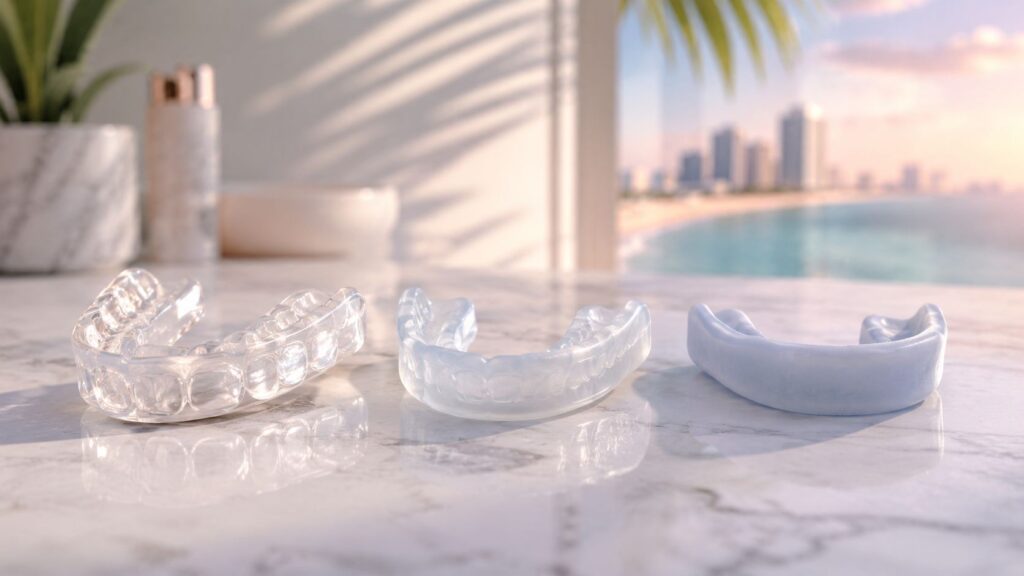
The material usually provides the first useful estimate:
- Custom hard-acrylic guards commonly last 3 to 5 years or longer with proper care, according to night guard lifespan guidance from Proteethguard.
- Soft guards often last about 6 months to 2 years, with heavier grinding shortening that period.
- Over-the-counter and boil-and-bite guards commonly wear out sooner. One dental source reports that store-bought guards may last only 6 months to 1 year, while another notes that they can break down within a few months, as outlined by Varinos Dental's replacement guidance.
Those ranges aren't promises. A thick, rigid appliance may last longer in a patient with light clenching than in a patient who applies strong pressure every night. Conversely, a guard that looks intact may already be thin in the areas receiving the most force.
Practical rule: A night guard should be judged by its wear, fit, and the patient's symptoms, not by the calendar alone.
Ultra Smile DentalSpa fits and adjusts custom night guards for patients in Miami, including people in Downtown Miami, Midtown Miami, and nearby communities. The purpose of a visit isn't to sell a replacement. A dental team can examine the teeth, assess the appliance, check the bite, and determine whether the guard remains suitable for the patient's current grinding pattern.
Custom vs Boil-and-Bite vs OTC Night Guards
A patient who clenches hard may wear through a soft, poorly fitted guard quickly, while someone with lighter grinding may keep a simpler appliance usable longer. The material and fit affect protection, comfort, and the wear cues we look for during appointments at Ultra Smile DentalSpa in Miami.
Comparing the available options
A custom night guard is made from dental impressions or a digital scan. It is shaped around the patient's teeth and bite, then adjusted so it stays secure without unnecessary bulk. Hard acrylic and other rigid materials can provide controlled force distribution and may tolerate repeated clenching well. Patients can review the material choices in this guide to what night guards are made of.
A boil-and-bite guard is softened at home and molded around the teeth. It usually fits more personally than a stock tray, but the result depends on the molding technique. Uneven shaping, excess flexibility, or thinning can leave some areas carrying more pressure.
A stock OTC guard is ready to wear and convenient for short-term use. Its fit is less individualized, so it may feel loose or bulky and may not spread biting pressure evenly.
| Type | Typical Lifespan | Fit | Best For |
|---|---|---|---|
| Custom hard acrylic | 3 to 5 years or longer with proper care (Proteethguard) | Designed from an impression or scan | Patients needing durable, controlled protection |
| Boil-and-bite | Often shorter than a custom appliance | Molded at home, with variable precision | Temporary or budget-conscious use |
| Stock OTC | 6 months to 1 year in common reports | Ready-made and less individualized | Short-term convenience |
Why fit affects durability
Fit changes how force reaches the appliance. A guard that rocks, slips, or flexes unevenly can develop localized thinning, rough areas, or cracks. It may also feel uncomfortable enough that the patient stops wearing it consistently.
At Ultra Smile DentalSpa, fitting and adjustment help reveal whether a guard is wearing evenly or failing in one high-pressure area. Replacement should follow those findings and changes in symptoms, rather than a calendar date alone. For store-bought appliances, Varinos Dental's replacement guidance also supports watching for breakdown and loss of function.
A custom guard may require more money initially. Its value depends on how well it protects the teeth, remains comfortable, and continues fitting the current bite. A patient with persistent grinding may spend less over time by using an appliance that can be evaluated and adjusted instead of repeatedly replacing guards that wear or shift quickly.
What Shortens or Extends a Night Guard's Life
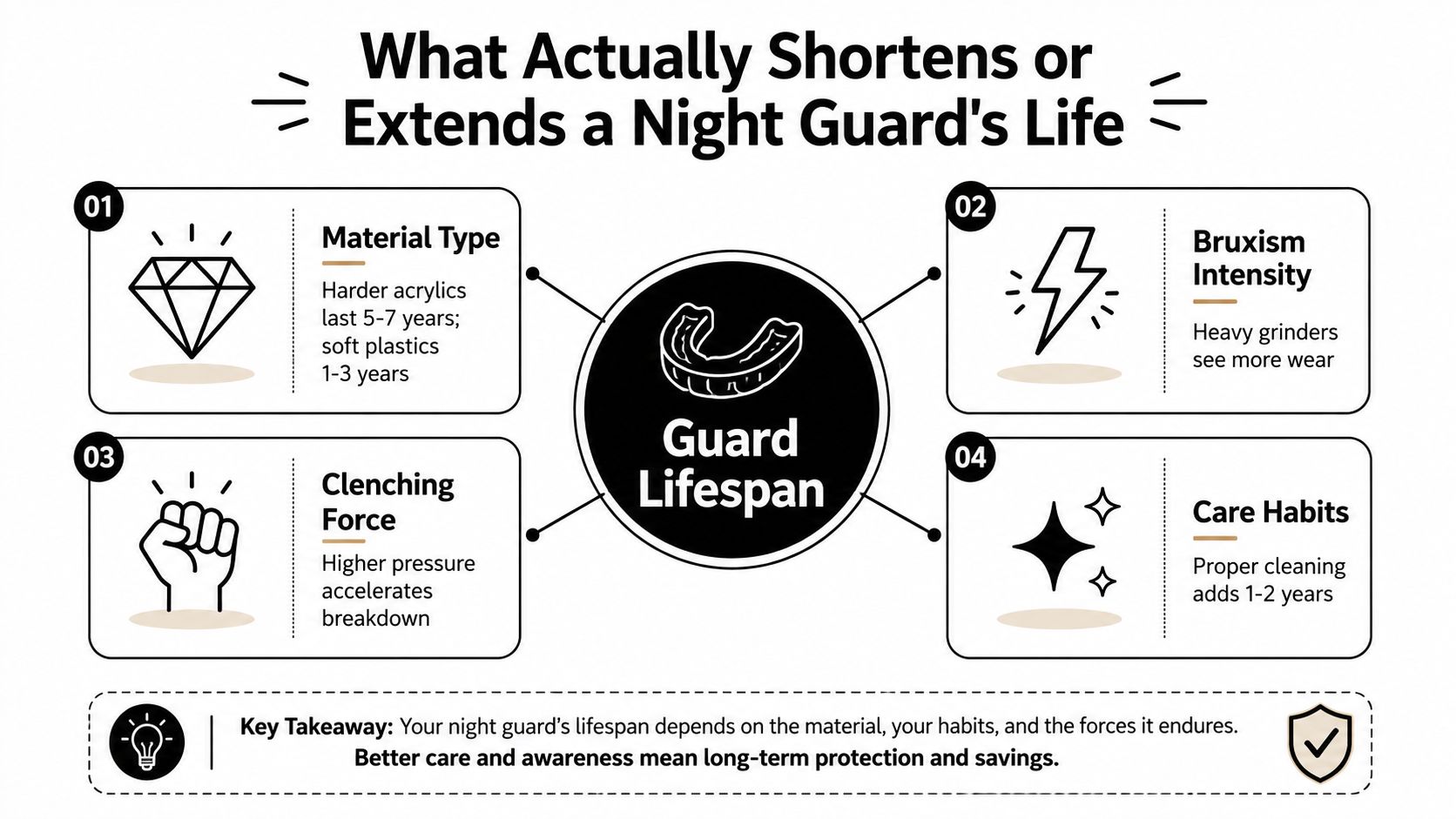
A guard's replacement timing depends on what happens during sleep and how it looks and feels in use. Four factors shape that timeline: material, bruxism intensity, fit, and care. At Ultra Smile DentalSpa, these are the same details we review when fitting and adjusting guards for Miami patients.
Material sets the baseline
Material hardness affects resistance to wear. A systematic review found the lowest volumetric loss in PEEK occlusal devices. In the reviewed comparison, rigid 3D-printed, light-polymerized, heat-polymerized, and milled materials performed similarly. Thermoformed and autopolymerized materials showed more wear, while flexible 3D-printed materials showed the greatest wear. These findings appear in the PubMed-indexed review of occlusal device materials.
That review also reported an inverse hardness-to-wear relationship of r=-.93; P<.001, meaning harder materials generally retain thickness and occlusal form longer under bruxism loading. Material choice still requires judgment. Rigidity, thickness, bite position, and comfort affect whether a patient will wear the guard consistently and whether it remains appropriate as the bite changes.
Grinding intensity changes the timeline
Light clenching may leave a guard useful for several years. Moderate-to-severe grinding can shorten that period to roughly 1 to 3 years or less, according to the durability summary from Proteethguard.
Patients often cannot judge nighttime force accurately. During an Ultra Smile DentalSpa evaluation, a dentist can check flattened tooth surfaces, matching wear patterns, muscle tenderness, and thinning or grooves on the appliance. These findings give a clearer replacement signal than the sound of grinding alone.
Fit and care complete the picture
A guard that shifts can wear unevenly. Heat, pressure from heavy objects, or damp storage may change its shape or contribute to odor.
Replacement should follow the guard's condition and the patient's symptoms, not a fixed calendar interval. A Miami patient with light clenching and a stable bite may keep the same appliance useful longer than someone with intense bruxism or recent restorative dental work. A new morning headache, jaw tenderness, altered fit, visible thinning, or a crack deserves an examination and possible adjustment or replacement.
Daily Care Habits That Make a Night Guard Last Longer
Good night guard care doesn't require an elaborate routine. It requires consistency and a few safeguards against bacteria, scratches, moisture, and heat.
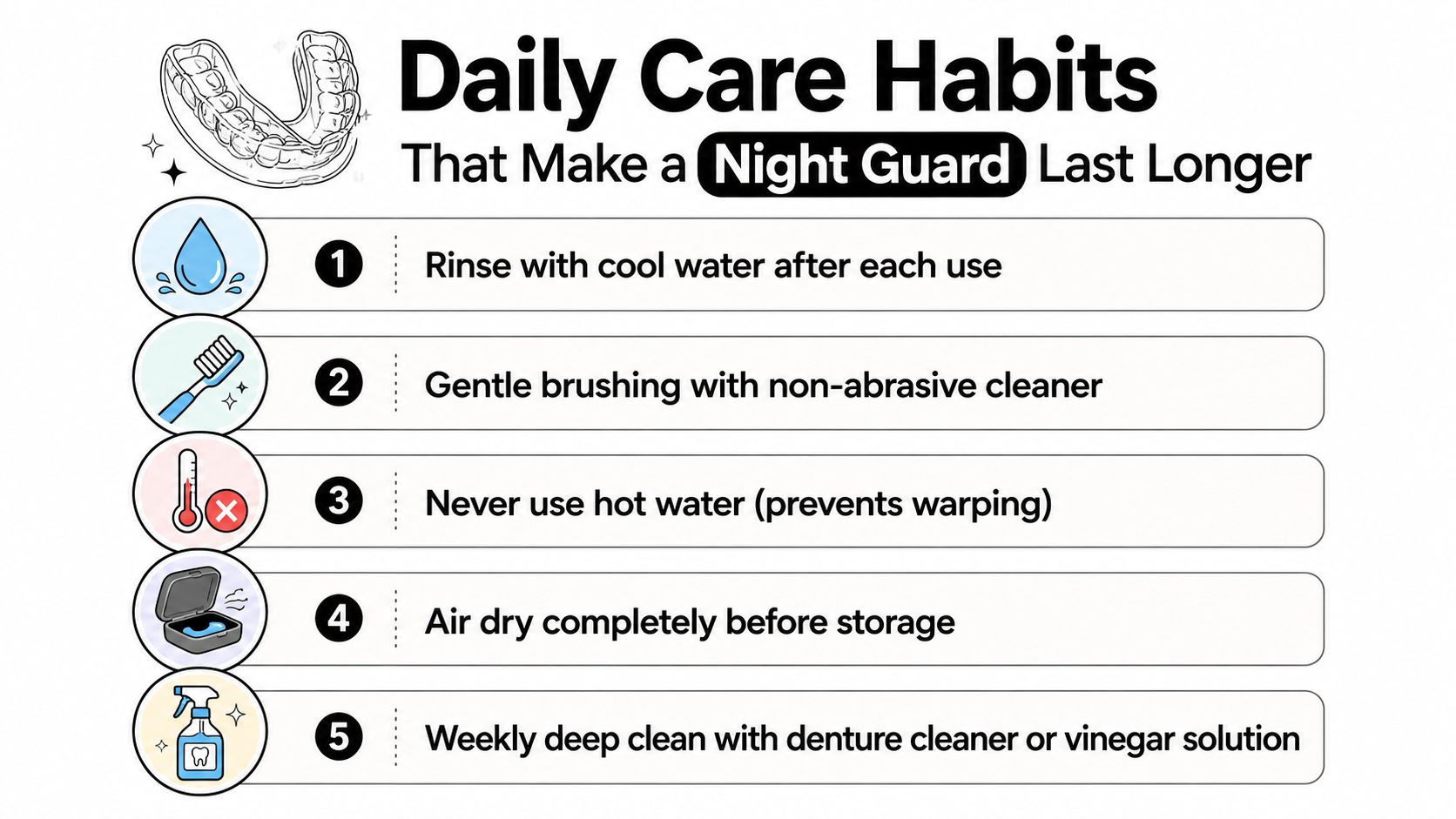
A simple morning routine
After removing the appliance, rinse it with cool water. This clears away saliva and loose debris before it dries on the surface. Hot water should be avoided because heat can warp the appliance and change its fit.
Use a soft toothbrush and a mild, non-abrasive cleaner. Regular toothpaste can contain abrasive ingredients that scratch some guard materials, creating surfaces where residue can collect. A gentle cleaning product made for retainers or dentures may be more appropriate than whitening toothpaste or harsh household cleaners.
Storage matters between uses
Let the guard air dry completely before placing it in a ventilated case. A closed case that traps moisture can encourage odor and buildup, while an open countertop can expose the appliance to dust, pets, and accidental damage.
A useful routine includes:
- Rinse after use: Cool water removes fresh saliva and loose particles.
- Brush gently: A soft brush and mild cleaner help avoid unnecessary surface scratches.
- Avoid heat: Keep the guard away from hot water, direct sunlight, and hot car interiors.
- Use a ventilated case: Airflow helps the appliance dry before storage.
- Deep clean periodically: A denture or retainer soak can help remove buildup. Some patients use a diluted vinegar solution, but the material and manufacturer's instructions should guide that choice.
Bring the guard to appointments
Patients often notice a crack but miss gradual thinning. Bringing the appliance to cleaning and exam visits lets the dental team inspect the biting surface, edges, fit, and contact points. An adjustment may restore comfort in some cases, while significant wear may call for a replacement.
These habits also support oral hygiene. A clean, dry appliance is less likely to hold unpleasant odors and residue against the teeth overnight. Consistent care can't stop bruxism, but it can help the guard remain cleaner, more comfortable, and serviceable for longer.
Warning Signs That It Is Time to Replace a Night Guard
A night guard may need replacement before it completely breaks. The most useful clues come from two places: what the patient can see and what the patient feels.
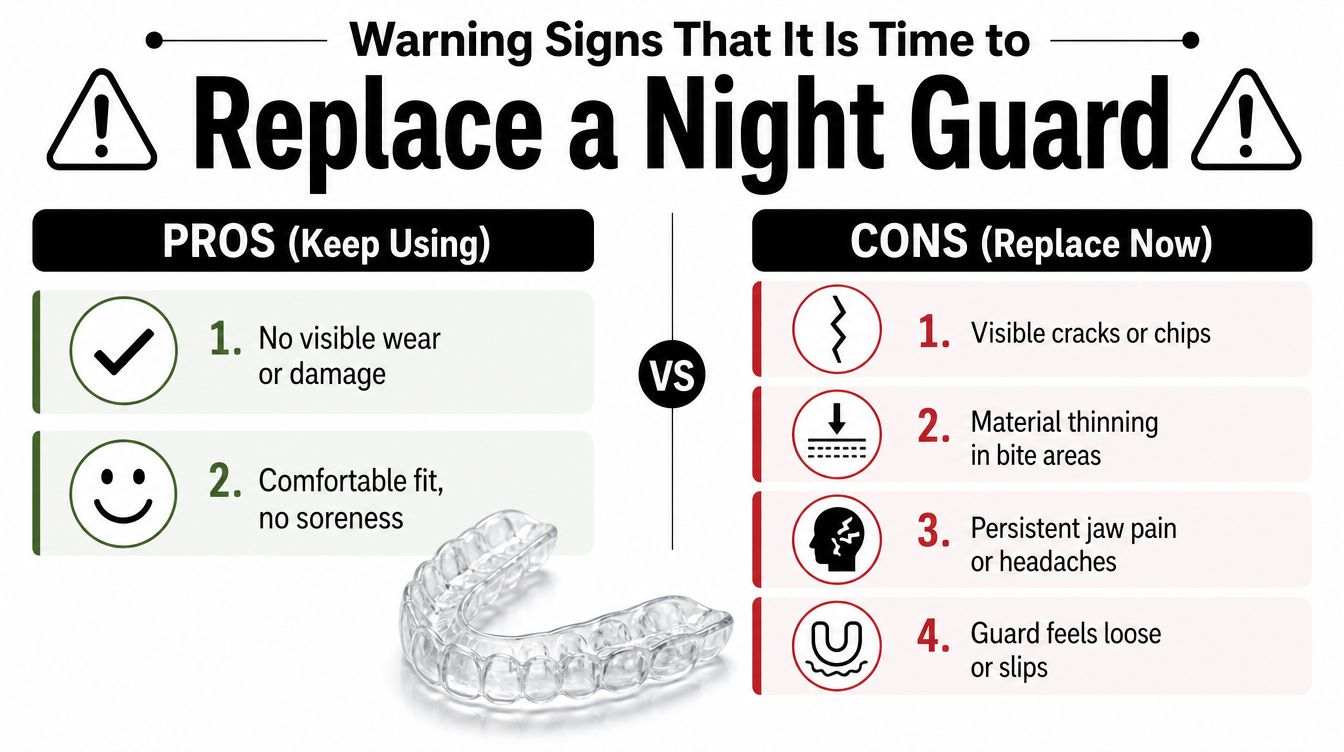
Visible changes
Inspect the guard under good light. Look for:
- Cracks or chips: Even a small fracture can expand with repeated pressure.
- Thinning: A biting area that was once flat and substantial may become visibly worn.
- Holes or deep grooves: These can indicate that the appliance no longer provides the same barrier.
- Rough edges: Sharp or irregular areas can irritate the gums, cheeks, or tongue.
- Persistent discoloration or odor: If proper cleaning doesn't resolve the change, the material may be deteriorating or holding buildup.
A guard can remain wearable while losing thickness in the exact area where protection is most needed. That's why visual inspection should be paired with a professional evaluation when wear is obvious or uncertain.
Symptoms deserve equal attention
Replacement may be appropriate when:
- Jaw soreness returns: Morning tenderness can signal that the current appliance isn't controlling contact comfortably.
- Headaches recur: New or returning morning headaches deserve assessment rather than automatic self-treatment.
- The bite feels different: Teeth that no longer meet normally after removing the guard may indicate a fit or occlusal concern.
- The appliance feels loose or tight: A guard that slips, rocks, or suddenly feels difficult to seat may no longer match the teeth.
- Sensitivity develops: New sensitivity to pressure or temperature can point to tooth wear or another dental issue.
Clinical perspective: A fixed replacement date is less useful than a guard's condition, the patient's symptoms, and the findings from a dental exam.
The following video provides a visual introduction to night guards and their role in protecting the teeth.
Patients shouldn't wait for a guard to split in half before asking for help. A Miami dentist can determine whether the issue is appliance wear, a bite change, tooth damage, or an unrelated source of jaw pain.
Cost, Insurance, and the Value of a Custom Fit
The lowest purchase price isn't always the lowest long-term cost. A stock guard may be inexpensive at the beginning, but frequent replacement can make the overall expense less predictable. A custom guard generally costs more upfront, yet a durable appliance that remains comfortable and properly fitted may reduce the need for repeated purchases.
Custom night guards are commonly reported to last about 1 to 5 years, depending on material, fit, and grinding severity, as described by Crossroads Dental Arts' discussion of night guard materials and lifespan. That range is broad because a hard acrylic appliance used by a light clencher behaves differently from a softer appliance exposed to heavy grinding.
A value calculation patients can use
Patients can compare more than the sticker price:
- Replacement frequency: How often will the appliance likely need evaluation or replacement?
- Comfort: Will the patient wear it consistently, or will bulk and movement make regular use difficult?
- Protection: Does the material and fit suit the amount of clenching or grinding?
- Existing dental work: Could a poorly fitting appliance place unnecessary stress on crowns, veneers, fillings, or implants?
- Professional oversight: Does the purchase include assessment, fitting, and possible adjustment?
Insurance coverage varies by plan and clinical documentation. Some dental plans may contribute toward a custom night guard when a dentist prescribes it for documented bruxism, so patients should verify benefits before treatment. Ultra Smile DentalSpa helps Miami patients review available coverage and discuss payment options when insurance doesn't cover the full service.
The right question isn't, “How cheap is this guard? It's, “Will this appliance fit correctly, protect the mouth, and remain useful for the way this patient grinds?
When to See a Miami Dentist About Your Night Guard
A professional visit makes sense when a night guard no longer feels predictable. Patients should schedule an evaluation if morning jaw pain or headaches return, the appliance feels loose or tight, visible cracks or thinning appear, or the teeth feel different after waking.
A visit is also reasonable when the guard seems fine but has been used for a long time without inspection. Subtle wear can change the biting surface before the patient notices a dramatic failure. A dentist can compare the guard with the teeth, assess contact points, and determine whether an adjustment, repair, or replacement is appropriate.
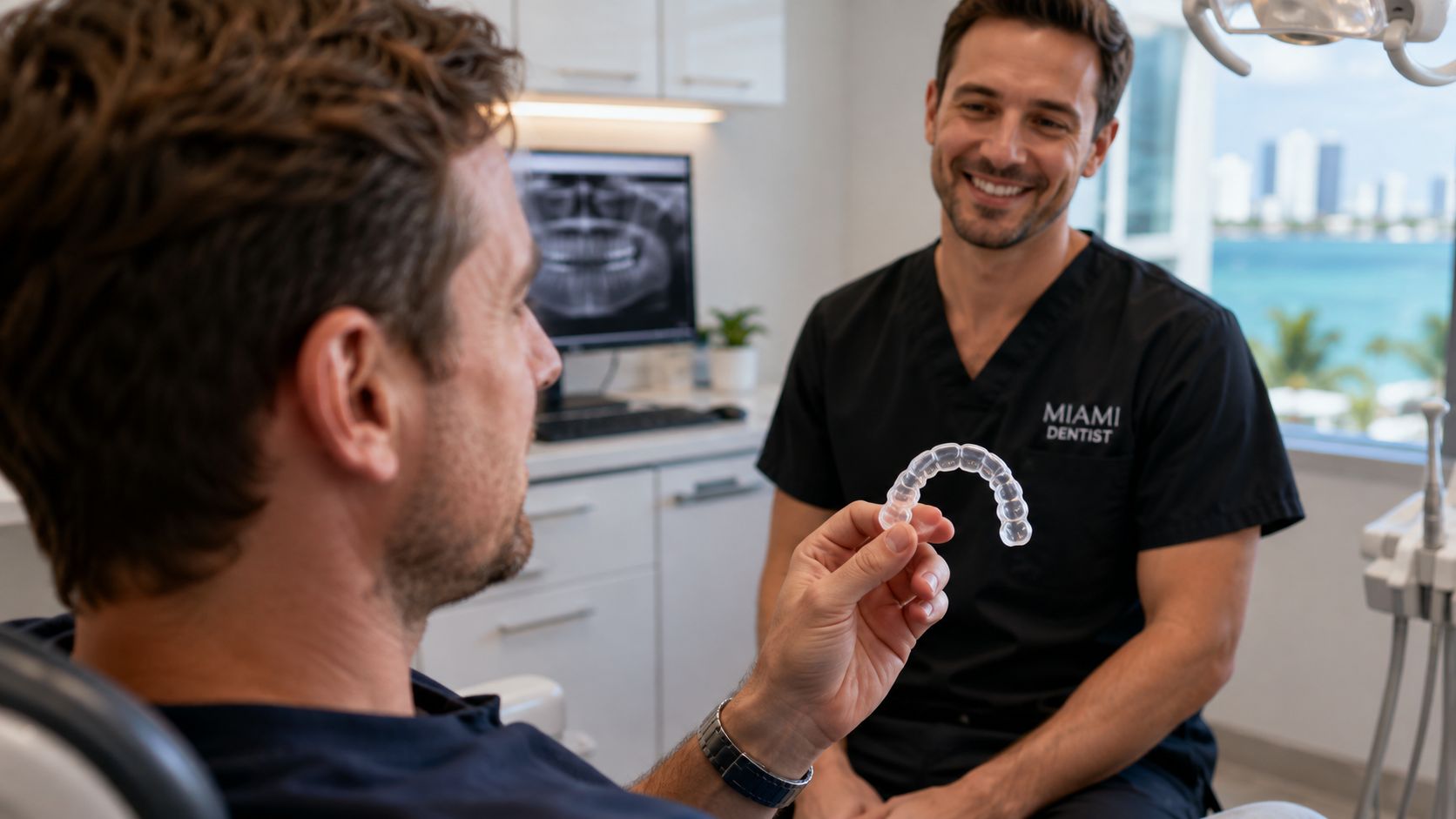
What a consultation can clarify
At a Miami dental appointment, the team may:
- Review symptoms: Jaw tightness, headaches, tooth sensitivity, and morning bite changes can help identify whether the current guard remains effective.
- Inspect the appliance: The dentist can evaluate cracks, thinning, rough areas, discoloration, and fit.
- Assess grinding signs: Tooth wear and muscle tenderness may indicate whether the patient needs a different material or design.
- Check dental work: Crowns, veneers, fillings, implants, and natural teeth may require different protective considerations.
- Plan the next step: The recommendation may be continued use, an adjustment, a new impression or scan, or a replacement appliance.
A night guard is one part of bruxism care. Patients with persistent jaw discomfort, clicking, restricted movement, or recurring symptoms may benefit from a broader assessment of the jaw joints and muscles. Additional information about guards and related concerns is available in Ultra Smile DentalSpa's guide to night guards, bruxism, and TMJ disorders.
Ultra Smile DentalSpa provides custom night guard consultations, impressions, fabrication coordination, fitting, and adjustments for Miami patients. The practice also offers broader dental care, including cleaning and exams, dental X-rays, restorative dentistry, cosmetic dentistry, dental implants, teeth whitening, Invisalign, wisdom teeth extraction, tooth extraction, and emergency dental services when a guard issue is accompanied by acute pain or dental damage.
Patients searching for a dentist near me, an emergency dentist, a cosmetic dentist near me, or dental implants near me may need different types of care, but the first step remains the same: an accurate evaluation of the mouth and the patient's immediate concern.
Schedule a night guard evaluation with Ultra Smile DentalSpa in Miami to review fit, wear, symptoms, and replacement options. The team can help determine whether an adjustment or custom appliance is appropriate and coordinate additional dental care when grinding has affected teeth or existing restorations.